

What do you think?

Вдовий пароход
Ничего я не знаю, не умею. И всё же это была работа, а работать было необходимо, чтобы жить. А жить надо было непременно, неизвестно для чего, но надо! Никогда ещё я не была так жадна на жизнь. Меня радовал, меня страстно интересовал мир со всеми своими подробностями: лиловым асфальтом улиц, бегучими дымами в небе, зелёной прошлогодней травой, лезущей из-под грязного снега грубым символом бессмертия... Книги на русском языке #ReadRussia
492 pages, Paperback
First published January 1, 1981
About the author
I. Grekova
33 books14 followersPen name of Elena Sergeevna Ventsel, a pun on y in mathematics, which sounds in russian as "igrek".
Ratings & Reviews
Friends & Following
Create a free account to discover what your friends think of this book!
Community Reviews
Displaying 1 - 19 of 19 reviews

March 17, 2026
At work we have a collection of books from Vigaro, which is a feminist publishing house that sometimes republishes old and forgotten novels by women (peak the 16 reviews!). This caught my eye because I find the USSR an intriguing setting, and I have enjoyed Russian novels in the past!
It was an interesting glimpse into a little Soviet flat where four widows have been placed. It was quite grim and harsh, but this made the ties between the women more hopeful. It reminded me of My Brilliant Friend how it was super focused on a domestic setting but you pick up so much about another time and place.
It was an interesting glimpse into a little Soviet flat where four widows have been placed. It was quite grim and harsh, but this made the ties between the women more hopeful. It reminded me of My Brilliant Friend how it was super focused on a domestic setting but you pick up so much about another time and place.
February 6, 2025
Книга, обязательная для всех, кто "можем повторить". Чудовищные последствия войны на самом обычном "бытовом" уровне.

September 23, 2026
Как всегда, Елена Сергеевна проникновенно пишет о разбитых судьбах советских людей… Трогает до глубины души, заставляет сопереживать и оставляет множество вопросов после прочтения последних страниц.

July 3, 2012
Very readable Soviet book about lives in a communal apartment. Compassionate and moving. And very Russian.
February 6, 2025
Книга обязательная к изучению для тех, кто "может повторить". Страшная книга про уничтожение жизни.

December 26, 2009
I thoroughly enjoyed this short novel about widows living in a communal apartment during and after World War 2. Grekova's understanding of psychology and the specific demands of the era make Ship of Widows an absorbing book about interdependence, among other things. (My blog has more here, with general plot information but no specific spoilers.)

September 11, 2020
I loved this quiet, simple but sometimes intense story of ordinary Russian women living in the wake of the Great Patriotic War.
July 21, 2026
Elena Ventzel worked her day job as a Soviet mathematician in probability theory, where the letter y stands in for the unknown (the French say "i grec," which handed her the pen name I. Grekova). In "The Ship of Widows" from 1979, she swaps her equations for five women packed into one Moscow communal flat, each of them a variable the war left unsolved.
They share cramped quarters and precious little else at the start. Olga, once a concert pianist, carries an old injury from the front and a grief with its own tempo. Anfisa, working class with a past she stows below deck, pours her surviving strength into raising a son. Ada, an opera singer cast out of her theatre, brings glamour, gossip, and a diva's flair for grand scenes into rooms that already ration space by the square centimetre.
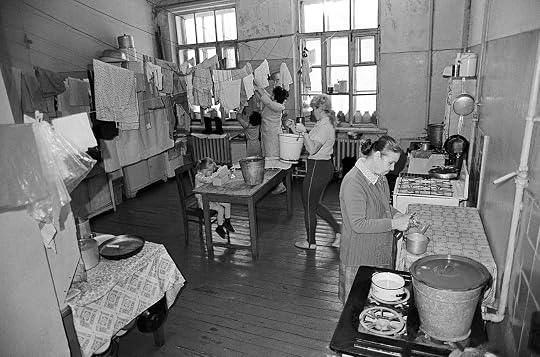
Grekova keeps every woman a distinct figure, well clear of the Soviet type. Their squabbles across a shared kitchen, their fragile alliances, their competing claims on one bathroom, all of it carries the grain of lived fact.
Around these five, Stalin's Russia grinds on. Raising a healthy child in such tight lodging becomes a daily gamble against the numbers. Poverty and crowding deal out fresh indignities by the hour, privacy grows scarce, and the ban on religion sits beside the official lies while ordinary people get reduced to digits in one bleak official sum.
What forms among the women resembles a fragile crew. They bicker and bruise one another, then hold their course together when hardship presses in from every side. Grekova builds their closeness slowly, so it comes hard-won, plausible, charted across the passing years.
The raw feeling runs so hot that you might forget a craftsperson shaped every page, the sly triumph of a mathematician moonlighting as a storyteller. Each loss carries its full weight, each ration coupon is an edge of indignity.
On paper, five widows crammed into four narrow rooms should total pure misery. Ventzel solved for y, that trusty placeholder mathematicians reach for whenever a quantity stays unknown, and found grief, endurance, and the stubborn business of getting through one more grinding year. Grekova turns up a surprising remainder, a stubborn buoyancy that keeps the vessel and its passengers afloat. The odds ran against them from page one, and that is the very reason every small survival counts.
❤️ 🇮🇱
They share cramped quarters and precious little else at the start. Olga, once a concert pianist, carries an old injury from the front and a grief with its own tempo. Anfisa, working class with a past she stows below deck, pours her surviving strength into raising a son. Ada, an opera singer cast out of her theatre, brings glamour, gossip, and a diva's flair for grand scenes into rooms that already ration space by the square centimetre.
Grekova keeps every woman a distinct figure, well clear of the Soviet type. Their squabbles across a shared kitchen, their fragile alliances, their competing claims on one bathroom, all of it carries the grain of lived fact.
Around these five, Stalin's Russia grinds on. Raising a healthy child in such tight lodging becomes a daily gamble against the numbers. Poverty and crowding deal out fresh indignities by the hour, privacy grows scarce, and the ban on religion sits beside the official lies while ordinary people get reduced to digits in one bleak official sum.
What forms among the women resembles a fragile crew. They bicker and bruise one another, then hold their course together when hardship presses in from every side. Grekova builds their closeness slowly, so it comes hard-won, plausible, charted across the passing years.
The raw feeling runs so hot that you might forget a craftsperson shaped every page, the sly triumph of a mathematician moonlighting as a storyteller. Each loss carries its full weight, each ration coupon is an edge of indignity.
On paper, five widows crammed into four narrow rooms should total pure misery. Ventzel solved for y, that trusty placeholder mathematicians reach for whenever a quantity stays unknown, and found grief, endurance, and the stubborn business of getting through one more grinding year. Grekova turns up a surprising remainder, a stubborn buoyancy that keeps the vessel and its passengers afloat. The odds ran against them from page one, and that is the very reason every small survival counts.
❤️ 🇮🇱

August 18, 2025
I. Grekova is a pseudonym for Elena Ventsel (to mask her gender), and it is based off of the math symbol igrek (y) for an unknown number, as she was a mathmetician by profession in the Soviet Union. In this (fiction) novel, she beautifully depicts the life of a communal apartment during and after WWII. Creating a world of five widows with vastly different personalities, and Ventsel stunningly details their intertwining yet separate lives. This novel is a page-turning, wonderfully written story that examines the experience of women in the USSR.

March 20, 2018
The story of five women brought together during WWII in Russia. A book about interdependence and the daily life of Soviets during the war. Well informed.

July 8, 2018
sublime. if you ever lived with roommates, youll be larfin allot. the literal translation of the russian title is 'one flew over the cucks nest' and if that dont entice you, go to hell

June 29, 2021
Diezgan paredzamas komunālās kaislības.
September 14, 2025
$2 from norx goodwill, not bad. what a tough story, anita <3
March 27, 2026
hauntingly depressing

March 31, 2023
En esta parte del mundo, poco se sabe de la vida cotidiana de cualquier habitante en la extinta Unión Soviética. “La nave de las viudas” describe la lucha cotidiana de cinco mujeres que por diferentes razones quedan viudas después de la Segunda Guera Mundial en Moscú y conviven en un departamento en el que cada una tiene su propia habitación y se enfrentan a diversas vicisitudes.
Elena Sergeevna Ventzel (originaria de Estonia, parte del imperio ruso, 1907-2002) utilizó el seudónimo Irina Grekova (I. Grekova, Edivisión, México) para escribir “La nave de las viudas”; de profesión fue matemática pero cuentista de corazón cuya vocación hereda de sus padres ya que su madre enseñaba literatura, mientras que su padre, matemáticas.
Grekova recibió el Doctorado en Ciencias y después de cumplir los 50 años comenzó a escribir adquiriendo el seudónimo Grekova, que es un símbolo matemático que significa ‘cantidad desconocida’.
Durante la Segunda Guerra Mundial se exige la presencia de hombres y mujeres, unos para defender el frente de guerra, ellas realizando diversas tareas de enfermería, logística, mensajería; las ciudades y pueblos se quedan llenos de mujeres que esperan a combatientes que en su mayoría no volverán. La novela de I. Grekova describe la vida de cinco mujeres una vez terminada la guerra: viven en un viejo edificio en el que interactúan y se enfrentan a sus mayores temores y traumas. Algunas son madres con hijos sin padres, otras deben enfrentar al desempleo y la burocracia o el alcoholismo de viejos combatientes. La nada fácil convivencia entre mujeres que dejaron su juventud atrás se muestra en cada página del libro.
Desde hace algunos años se promueve el ‘cohousing’ -vivienda colaborativa en la que se comparten espacios como la cocina o áreas de descanso entre habitantes de edificios o residencias, aunque cada uno posee su espacio porpio- como un gran descubrimiento reciente, cuando ya fue practicado hace décadas en otras zonas del mundo. Grekova lo muestra en su interesante libro, en condiciones de posguerra.
Elena Sergeevna Ventzel (originaria de Estonia, parte del imperio ruso, 1907-2002) utilizó el seudónimo Irina Grekova (I. Grekova, Edivisión, México) para escribir “La nave de las viudas”; de profesión fue matemática pero cuentista de corazón cuya vocación hereda de sus padres ya que su madre enseñaba literatura, mientras que su padre, matemáticas.
Grekova recibió el Doctorado en Ciencias y después de cumplir los 50 años comenzó a escribir adquiriendo el seudónimo Grekova, que es un símbolo matemático que significa ‘cantidad desconocida’.
Durante la Segunda Guerra Mundial se exige la presencia de hombres y mujeres, unos para defender el frente de guerra, ellas realizando diversas tareas de enfermería, logística, mensajería; las ciudades y pueblos se quedan llenos de mujeres que esperan a combatientes que en su mayoría no volverán. La novela de I. Grekova describe la vida de cinco mujeres una vez terminada la guerra: viven en un viejo edificio en el que interactúan y se enfrentan a sus mayores temores y traumas. Algunas son madres con hijos sin padres, otras deben enfrentar al desempleo y la burocracia o el alcoholismo de viejos combatientes. La nada fácil convivencia entre mujeres que dejaron su juventud atrás se muestra en cada página del libro.
Desde hace algunos años se promueve el ‘cohousing’ -vivienda colaborativa en la que se comparten espacios como la cocina o áreas de descanso entre habitantes de edificios o residencias, aunque cada uno posee su espacio porpio- como un gran descubrimiento reciente, cuando ya fue practicado hace décadas en otras zonas del mundo. Grekova lo muestra en su interesante libro, en condiciones de posguerra.

July 30, 2008
I was given this book for my birthday, years ago when I was still in University.
I liked it very much, it gave me more insight in the daily life, struggles and the way of thinking of people in the former USSR. We here had no other way (then) to learn anything about that, but from books, or an occasional movie that was shown on a Slavic night.
This book was an eye opener for me.
I liked it very much, it gave me more insight in the daily life, struggles and the way of thinking of people in the former USSR. We here had no other way (then) to learn anything about that, but from books, or an occasional movie that was shown on a Slavic night.
This book was an eye opener for me.

November 16, 2009
Excellent post-WWII Soviet fiction. This author has a realistic, yet gripping style, will keep you turning those pages! Depressing subject matter but well worth reading...

December 16, 2009
I started to read this and realized it seemed awfully familiar. Guess I've read it before. 3 stars because of the fact that it wasn't that memorable. But it's not bad.
March 9, 2013
Glimpse into the lives of USSR women before and after WW11, so sad.
Displaying 1 - 19 of 19 reviews