

What do you think?

Goethe : Egmont
This is a reproduction of a book published before 1923. This book may have occasional imperfections such as missing or blurred pages, poor pictures, errant marks, etc. that were either part of the original artifact, or were introduced by the scanning process. We believe this work is culturally important, and despite the imperfections, have elected to bring it back into print as part of our continuing commitment to the preservation of printed works worldwide. We appreciate your understanding of the imperfections in the preservation process, and hope you enjoy this valuable book.
110 pages, Paperback
First published January 1, 1788
About the author
Johann Wolfgang von Goethe
13.6k books7,323 followersA master of poetry, drama, and the novel, German writer and scientist Johann Wolfgang von Goethe spent 50 years on his two-part dramatic poem
Faust
, published in 1808 and 1832, also conducted scientific research in various fields, notably botany, and held several governmental positions.
George Eliot called him "Germany's greatest man of letters... and the last true polymath to walk the earth." Works span the fields of literature, theology, and humanism.
People laud this magnum opus as one of the peaks of world literature. Other well-known literary works include his numerous poems, the Bildungsroman Wilhelm Meister's Apprenticeship and the epistolary novel The Sorrows of Young Werther .
With this key figure of German literature, the movement of Weimar classicism in the late 18th and early 19th centuries coincided with Enlightenment, sentimentality (Empfindsamkeit), Sturm und Drang, and Romanticism. The author of the scientific text Theory of Colours , he influenced Darwin with his focus on plant morphology. He also long served as the privy councilor ("Geheimrat") of the duchy of Weimar.
Goethe took great interest in the literatures of England, France, Italy, classical Greece, Persia, and Arabia and originated the concept of Weltliteratur ("world literature"). Despite his major, virtually immeasurable influence on German philosophy especially on the generation of Georg Wilhelm Friedrich Hegel and Friedrich Wilhelm Joseph von Schelling, he expressly and decidedly refrained from practicing philosophy in the rarefied sense.
Influence spread across Europe, and for the next century, his works inspired much music, drama, poetry and philosophy. Many persons consider Goethe the most important writer in the German language and one of the most important thinkers in western culture as well. Early in his career, however, he wondered about painting, perhaps his true vocation; late in his life, he expressed the expectation that people ultimately would remember his work in optics.
George Eliot called him "Germany's greatest man of letters... and the last true polymath to walk the earth." Works span the fields of literature, theology, and humanism.
People laud this magnum opus as one of the peaks of world literature. Other well-known literary works include his numerous poems, the Bildungsroman Wilhelm Meister's Apprenticeship and the epistolary novel The Sorrows of Young Werther .
With this key figure of German literature, the movement of Weimar classicism in the late 18th and early 19th centuries coincided with Enlightenment, sentimentality (Empfindsamkeit), Sturm und Drang, and Romanticism. The author of the scientific text Theory of Colours , he influenced Darwin with his focus on plant morphology. He also long served as the privy councilor ("Geheimrat") of the duchy of Weimar.
Goethe took great interest in the literatures of England, France, Italy, classical Greece, Persia, and Arabia and originated the concept of Weltliteratur ("world literature"). Despite his major, virtually immeasurable influence on German philosophy especially on the generation of Georg Wilhelm Friedrich Hegel and Friedrich Wilhelm Joseph von Schelling, he expressly and decidedly refrained from practicing philosophy in the rarefied sense.
Influence spread across Europe, and for the next century, his works inspired much music, drama, poetry and philosophy. Many persons consider Goethe the most important writer in the German language and one of the most important thinkers in western culture as well. Early in his career, however, he wondered about painting, perhaps his true vocation; late in his life, he expressed the expectation that people ultimately would remember his work in optics.
Ratings & Reviews
Friends & Following
Create a free account to discover what your friends think of this book!
Community Reviews
Displaying 1 - 30 of 59 reviews

January 28, 2017
“Ist dies die Welt, von deren Wankelmut, Unzuverlässigkeit ich viel gehört und nichts empfunden habe? Ist dies die Welt?” (Klärchen)
Egmont’s passionate lover Klärchen shouts out her frustration at the mediocrity, cowardice and lack of reliability in the world, consisting of people who are lukewarm in their commitments, and want convenience rather than passionate love and freedom of thought.
“Is this the world?”
Klärchen, a female mirror of the proud, free spirit Egmont, can’t understand the political side of society, just like her lover, whose honest joie de vivre costs him his life. Caution, political thought, planning and manipulating are not his qualities, even in the face of disaster. He is free, he enjoys his life, and wants others to enjoy theirs as well. A truly tolerant soul, as long as no one takes his freedom away from him:
“Er will mein Leben und mein Glück, und fühlt nicht, dass der schon tot ist, der um seiner Sicherheit willen lebt!”
If you only live to secure your safety tomorrow, Egmont argues, you are already dead today.
But he can’t ignore the fact that political life around him takes a different stand. Set in the era of rebellion against Spanish rule in the Netherlands and Belgium, and of clashes between different Christian faiths, Egmont’s call for liberty of the individual is weak compared to the powers whose interests are at stake. His friend and rival Wilhelm von Oranien represents the cautious, long-term approach which will ultimately be more successful.
“Egmont” is a display of strong, yet different personalities in politically troubled societies. It is a play raising the question if you are willing to sacrifice your ideals to fit into the world, how much you are willing to fight for your freedom of choice, and how much honesty is possible in a delicate diplomatic situation. Goethe, always passionate artist and careful scholar in one person, does not offer a definite answer.
He rather shows that these different personalities exist in all layers of society, and in all religious communities.
If Klärchen and Egmont stand for absolute freedom to live your life according to your pleasure and happiness, Wilhelm von Oranien symbolises political intelligence in his actions towards Spanish power.
Alba, on the other hand, takes on the role of executor, of hardliner in the name of society, while his son Ferdinand identifies with the character of Egmont, and breaks in a similar way, in the face of his father’s definition of political power, which makes him choke and lose his idealistic, passionate love of life.
“Is this the world?”
Ferdinand’s despair echoes Vonnegut’s character Proteus in Player Piano, living within a powerful corporate framework, but feeling the emptiness and meaninglessness of a purely ritualistic privilege. Joining the rebellious forces without hope, except for the mark in the historical records, Proteus’ fate is similar to Egmont’s or Klärchen’s or Ferdinand’s, it is in fact shared with rebellious people in oppressive communities around the world.
This is the world, and it goes on, as Vonnegut puts it in Player Piano, even beyond Judgment Day. Checking the historical facts around the Egmont drama, the contemporary reader will see that it rings true there as well. The record of his execution had consequences, long-term.
You can kill the spirit of freedom temporarily, but not forever!
Egmont’s passionate lover Klärchen shouts out her frustration at the mediocrity, cowardice and lack of reliability in the world, consisting of people who are lukewarm in their commitments, and want convenience rather than passionate love and freedom of thought.
“Is this the world?”
Klärchen, a female mirror of the proud, free spirit Egmont, can’t understand the political side of society, just like her lover, whose honest joie de vivre costs him his life. Caution, political thought, planning and manipulating are not his qualities, even in the face of disaster. He is free, he enjoys his life, and wants others to enjoy theirs as well. A truly tolerant soul, as long as no one takes his freedom away from him:
“Er will mein Leben und mein Glück, und fühlt nicht, dass der schon tot ist, der um seiner Sicherheit willen lebt!”
If you only live to secure your safety tomorrow, Egmont argues, you are already dead today.
But he can’t ignore the fact that political life around him takes a different stand. Set in the era of rebellion against Spanish rule in the Netherlands and Belgium, and of clashes between different Christian faiths, Egmont’s call for liberty of the individual is weak compared to the powers whose interests are at stake. His friend and rival Wilhelm von Oranien represents the cautious, long-term approach which will ultimately be more successful.
“Egmont” is a display of strong, yet different personalities in politically troubled societies. It is a play raising the question if you are willing to sacrifice your ideals to fit into the world, how much you are willing to fight for your freedom of choice, and how much honesty is possible in a delicate diplomatic situation. Goethe, always passionate artist and careful scholar in one person, does not offer a definite answer.
He rather shows that these different personalities exist in all layers of society, and in all religious communities.
If Klärchen and Egmont stand for absolute freedom to live your life according to your pleasure and happiness, Wilhelm von Oranien symbolises political intelligence in his actions towards Spanish power.
Alba, on the other hand, takes on the role of executor, of hardliner in the name of society, while his son Ferdinand identifies with the character of Egmont, and breaks in a similar way, in the face of his father’s definition of political power, which makes him choke and lose his idealistic, passionate love of life.
“Is this the world?”
Ferdinand’s despair echoes Vonnegut’s character Proteus in Player Piano, living within a powerful corporate framework, but feeling the emptiness and meaninglessness of a purely ritualistic privilege. Joining the rebellious forces without hope, except for the mark in the historical records, Proteus’ fate is similar to Egmont’s or Klärchen’s or Ferdinand’s, it is in fact shared with rebellious people in oppressive communities around the world.
This is the world, and it goes on, as Vonnegut puts it in Player Piano, even beyond Judgment Day. Checking the historical facts around the Egmont drama, the contemporary reader will see that it rings true there as well. The record of his execution had consequences, long-term.
You can kill the spirit of freedom temporarily, but not forever!

October 30, 2022
4 ️⭐
”Tis from bird that ye must look for better times than those your poor fathers have known. Let not your children inquire at some future day, “Where is he? Where are the better times ye promised us?””
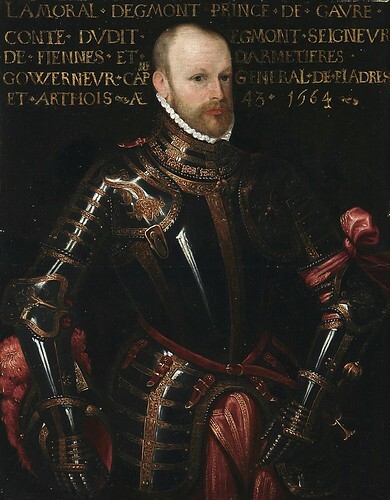
Lamoral, Count of Egmont
I admit it! I initially only read this as further peripheral to Beethoven’s life and times and while I’m aware of how preposterous this might sound, particularly to avid Goethe fans, I’d like it to reflect the (probably disproportionate) admiration that I have for the great composers rather than a misguided lack of respect for the extraordinary polymath, Johann Wolfgang von Goethe. Rest assured; however I came about this work, I walk away an admirer of both men.
Beethoven composed the overture and incidental music, Egmont, Op.84, for Goethe’s play (originally produced in 1798) between 1809 and 1810. An overture followed by nine pieces for Soprano and full symphony orchestra. If you’re a fan of B’hove’s symphonies (particularly 3 and 5) and you’ve not heard this, you’ll want to amend that, it’s definitely worthwhile and knocks it out of the park in terms of matching the overall tone and intention of Goethe’s play. Of all the pieces, the overture is largely considered the best and has seen the greatest longevity with many seemingly being completely unaware of the nine pieces that follow it, but I assure you the work, as a whole, is excellent.
I keep reading that Ludwig would’ve been drawn to and inspired by the themes of justice and liberty in Goethe’s play, and I agree; in fact, I’ll add rebellion, nationalism, heroism and triumph to that list too. At the time Beethoven was composing the work, Vienna was itself being occupied by Napolean's army so Beethoven wouldn't have had to search all that deeply for inspiration. The only problem is, there is no discernible justice in Goethe’s play, only countless injustices and the cost of one’s liberty comes at the ultimate premium.
”As if goaded by invisible spirits, the sun-steeds of time bear onward the light car of our destiny; and nothing remains for us but, with calm self-possession, firmly to grasp the reins, and now right, now left, to steer the wheels here from the precipice and there from the rock. Whither he is hasting, who knows? Does any one consider whence he came?”
Goethe’s play is set in the mid-16th Century; a period in which the Netherlands suffered under rule of Roman Catholic Spain. King Phillip II, after a victorious war against the French, appoints his sister, Margarete, as Regent of the Netherlands, much to the chagrin of the inhabitants who would’ve preferred to see their own local hero, Count Egmont, in the position. In any case, she does an admirable job in bringing relative peace to the area but her approach is moderate and the King sends orders (likely influenced by the silver tongue of the wretched and self-serving Duke of Alva) that the inquisition is to continue against the protestants, and any other conflicting religious groups; they are to be crushed with an iron fist and the Duke is being sent to see it through.
The Dutch hero, Egmont (aka. Ned Stark) is a paragon of loyalty and service, justice and liberty. The conqueror of St.Quintin, the hero of Gravelines, he is admired, almost worshipped, by the people (as evidenced by many a “Hoorah!” in his name). The King (… but really the Duke!) sees Egmont as a threat — a Dutchman with such a following may at any time incite rebellion — and while Egmont is not in fact a rebel (his first scene sees him restoring order amongst a group of townspeople and promoting reform from above rather than rebellion) the potential energy of his symbolic power with respect to a people’s resistance as well as his unwavering commitment to true justice puts him in a precarious position.
Goethe paints broad thematic strokes ranging from the gloriously melodramatic betrayal and unrequited love to human ideals such as heroism, justice and, in this case most importantly, freedom or liberty!
***MAJOR SPOILERS AHEAD***
Must true liberty – no bullshit freedom – always come at the greatest cost? Must we meet our maker in order that ourselves or others be truly liberated? It seems that way in Goethe’s play. Or is he saying, rather, that that is the value of freedom and we all must have the courage to pay the ultimate price?
Clara (Klärchen), Egmont’s lover, unable to save the man she loves from death, finds liberation (rather arbitrarily) from her own heartache and impotence, in suicide. Personally, I think she might also have just been trying to escape that stage 5 clinger, Brackenburg!
”I am powerless!—Oh, bind me that I may not despair; hurl me into the deepest dungeon, that I may dash my head against the damp walls, groan for freedom, and dream how I would rescue him if fetters did not hold me bound.—Now I am free, and in freedom lies the anguish of impotence.”
Egmont sees his execution (I said spoilers!) as "dying for freedom". Becoming, in his final act (however passive) a symbol/martyr for the people in hope of inciting an uprising. One might interpret the final scene of the play as a rather bleak, gloomy affair without knowledge of Beethoven’s score but, in fact, the final piece, at Goethe’s request, is the glorious and triumphant ‘Siegessymphonie’ (Victory Symphony), signifying Victory in Death and foretelling of a Dutch Liberation to come.
Putting aside the very specific benefits of reading this as mere supplementary material for a LVB biography, I’m so glad to have been introduced to Goethe through this work. Though, I believe, not a particularly successful play in its own time, I found this to be a very fine work and if Goethe is capable of such diverse and nuanced characterisation, as well as depth of thematic exploration in such a short piece, I’ll be delighted to see what he can do in a larger format. I've heard that Goethe's work is, perhaps, no longer read as much as it deserves today, in English-speaking countries as a result of the translations never quite being able to do his exquisite prose justice. I had no such issues here. I was generally enthralled largely because of the charming aesthetic value of the dialogue. If this is indeed far poorer than the original German than that shit must be euphoric and I envy anyone able to read it!
Auf Wiedersehen!
”If my life was a mirror in which thou didst love to contemplate thyself, so be also my death. Men are not together only when in each other’s presence — the distant, the departed, also live for us. I shall live for thee, and for myself I have lived long enough.”
”Tis from bird that ye must look for better times than those your poor fathers have known. Let not your children inquire at some future day, “Where is he? Where are the better times ye promised us?””
Lamoral, Count of Egmont
I admit it! I initially only read this as further peripheral to Beethoven’s life and times and while I’m aware of how preposterous this might sound, particularly to avid Goethe fans, I’d like it to reflect the (probably disproportionate) admiration that I have for the great composers rather than a misguided lack of respect for the extraordinary polymath, Johann Wolfgang von Goethe. Rest assured; however I came about this work, I walk away an admirer of both men.
Beethoven composed the overture and incidental music, Egmont, Op.84, for Goethe’s play (originally produced in 1798) between 1809 and 1810. An overture followed by nine pieces for Soprano and full symphony orchestra. If you’re a fan of B’hove’s symphonies (particularly 3 and 5) and you’ve not heard this, you’ll want to amend that, it’s definitely worthwhile and knocks it out of the park in terms of matching the overall tone and intention of Goethe’s play. Of all the pieces, the overture is largely considered the best and has seen the greatest longevity with many seemingly being completely unaware of the nine pieces that follow it, but I assure you the work, as a whole, is excellent.
I keep reading that Ludwig would’ve been drawn to and inspired by the themes of justice and liberty in Goethe’s play, and I agree; in fact, I’ll add rebellion, nationalism, heroism and triumph to that list too. At the time Beethoven was composing the work, Vienna was itself being occupied by Napolean's army so Beethoven wouldn't have had to search all that deeply for inspiration. The only problem is, there is no discernible justice in Goethe’s play, only countless injustices and the cost of one’s liberty comes at the ultimate premium.
”As if goaded by invisible spirits, the sun-steeds of time bear onward the light car of our destiny; and nothing remains for us but, with calm self-possession, firmly to grasp the reins, and now right, now left, to steer the wheels here from the precipice and there from the rock. Whither he is hasting, who knows? Does any one consider whence he came?”
Goethe’s play is set in the mid-16th Century; a period in which the Netherlands suffered under rule of Roman Catholic Spain. King Phillip II, after a victorious war against the French, appoints his sister, Margarete, as Regent of the Netherlands, much to the chagrin of the inhabitants who would’ve preferred to see their own local hero, Count Egmont, in the position. In any case, she does an admirable job in bringing relative peace to the area but her approach is moderate and the King sends orders (likely influenced by the silver tongue of the wretched and self-serving Duke of Alva) that the inquisition is to continue against the protestants, and any other conflicting religious groups; they are to be crushed with an iron fist and the Duke is being sent to see it through.
The Dutch hero, Egmont (aka. Ned Stark) is a paragon of loyalty and service, justice and liberty. The conqueror of St.Quintin, the hero of Gravelines, he is admired, almost worshipped, by the people (as evidenced by many a “Hoorah!” in his name). The King (… but really the Duke!) sees Egmont as a threat — a Dutchman with such a following may at any time incite rebellion — and while Egmont is not in fact a rebel (his first scene sees him restoring order amongst a group of townspeople and promoting reform from above rather than rebellion) the potential energy of his symbolic power with respect to a people’s resistance as well as his unwavering commitment to true justice puts him in a precarious position.
Goethe paints broad thematic strokes ranging from the gloriously melodramatic betrayal and unrequited love to human ideals such as heroism, justice and, in this case most importantly, freedom or liberty!
***MAJOR SPOILERS AHEAD***
Must true liberty – no bullshit freedom – always come at the greatest cost? Must we meet our maker in order that ourselves or others be truly liberated? It seems that way in Goethe’s play. Or is he saying, rather, that that is the value of freedom and we all must have the courage to pay the ultimate price?
Clara (Klärchen), Egmont’s lover, unable to save the man she loves from death, finds liberation (rather arbitrarily) from her own heartache and impotence, in suicide. Personally, I think she might also have just been trying to escape that stage 5 clinger, Brackenburg!
”I am powerless!—Oh, bind me that I may not despair; hurl me into the deepest dungeon, that I may dash my head against the damp walls, groan for freedom, and dream how I would rescue him if fetters did not hold me bound.—Now I am free, and in freedom lies the anguish of impotence.”
Egmont sees his execution (I said spoilers!) as "dying for freedom". Becoming, in his final act (however passive) a symbol/martyr for the people in hope of inciting an uprising. One might interpret the final scene of the play as a rather bleak, gloomy affair without knowledge of Beethoven’s score but, in fact, the final piece, at Goethe’s request, is the glorious and triumphant ‘Siegessymphonie’ (Victory Symphony), signifying Victory in Death and foretelling of a Dutch Liberation to come.
Putting aside the very specific benefits of reading this as mere supplementary material for a LVB biography, I’m so glad to have been introduced to Goethe through this work. Though, I believe, not a particularly successful play in its own time, I found this to be a very fine work and if Goethe is capable of such diverse and nuanced characterisation, as well as depth of thematic exploration in such a short piece, I’ll be delighted to see what he can do in a larger format. I've heard that Goethe's work is, perhaps, no longer read as much as it deserves today, in English-speaking countries as a result of the translations never quite being able to do his exquisite prose justice. I had no such issues here. I was generally enthralled largely because of the charming aesthetic value of the dialogue. If this is indeed far poorer than the original German than that shit must be euphoric and I envy anyone able to read it!
Auf Wiedersehen!
”If my life was a mirror in which thou didst love to contemplate thyself, so be also my death. Men are not together only when in each other’s presence — the distant, the departed, also live for us. I shall live for thee, and for myself I have lived long enough.”
July 27, 2026
اگمونت یک درام تاریخی به نوشته گوته است در پنج پرده که نوشتنش اثر ۱۳ سال زمان برده. در این اثر شاهد تغییر سبک گوته به کلاسیسم وایمار هستیم و در حقیقت این اثر در نقطهی تلاقی سه جریان مهم ادبی؛ عصر روشنگری، جنبش طوفان و طغیان و کلاسیسیسم وایمار قرار دارد و تراژدی سیاسی را با تأملی فلسفی دربارهی آزادی در هم میآمیزد.
اتفاق اصلی نمایشنامه از همون ابتدا تقریبا قابل پیشبینیه. دوک آلبا برای سرکوب آزادیخواهان اومده و اورانژ بارها به اگونت هشدار میده و ازش میخواد که فرار کنه اما اگمونت باور داره محبوبیتش بین مردم و دست عدالت در نهایت نجاتش میده.
درونمایه اصلی نمایشنامه تقابل آزادی و استبداده. اگمونت که فراتر از یک شخصیت تاریخی و نماد آزادی و شرافته در مقابل حکومت اسپانیا و دوک آلبا که نماد قدرت مطلق و نظم آهنینه که برای بقا از هیچ خشونتی دریغ نمیکنه، قرار داره. در این بین اورانژ هم قرار داره که مخالف سیاستهای دوک آلباست اما برخلاف خوشبینی اگمونت او ماهیت قدرت و سیاست را به خوبی درک میکنه و فرار میکنه.
کلرشن که تماما ساخته ذهن گوته است تنها معشوقه اگونت نیست بلکه نماد وفاداری و فداکاریه و در مقابل عامه مردم که اسما دوستدار و پیرو اگمونت هستن قرار داره. (اکنون آنهایی که میخواستند فرزندانشان دنیای بدون اگمونت را نبینند کجا هستند؟)
و در نهایت تجسم کلرشن در نظر اگمونت در صحنه پایانی نماد امید و آرمان آزادیه که به مرگ اون معنا میبخشه.
اگمونت پر از دیالوگهایی قابل تامل درباره شجاعت، مسئولیت، قدرت و آزادیه و پیام بسیار قوی در خودش داره گرچه از نظر شخصیتپردازی از پیچیدگی زیادی برخوردار نیست.
جالبه بدونین که بتهوون به دلیل علاقهاش به این اثر برای اجراش روی صحنه موسیقی ساخته و قطعه مشهود اورتور اگمونت حالا از خود نمایشنامه شناخته شدهتره و کاملا حس و حال نمایش رو میرسونه.
نکته جالب دیگه اینه که در پرده آخر و در صحنه صحبت پایانی کلرشن بازی با نور به گونهایه که نور سو سو میزنه و آروم آروم خاموش میشه. این برای کسانی که نمایش رو به صورت زنده میدیدند بسیار عجیب بوده چون تا قبل از اون غالبا برای نمایش از شمع استفاده میشد و به همین دلیل هم ما با پردهها و صحنههای زیادی طرفیم تا این شمعها به سرعت تعویض بشن. ولی در این نمایش از چراغ نفتی استفاده شد که قابلیت بسیار خوبی توی نورپردازی نمایش میداد.
در کل این اثر رو به دلیل ترکیب تاریخ با ظرافتها و زیبایی های ادبی و نمادین و پایان شاعرانهاش به علاقهمندان ادبیات و نمایشنامههای کلاسیک پیشنهاد میکنم.
اتفاق اصلی نمایشنامه از همون ابتدا تقریبا قابل پیشبینیه. دوک آلبا برای سرکوب آزادیخواهان اومده و اورانژ بارها به اگونت هشدار میده و ازش میخواد که فرار کنه اما اگمونت باور داره محبوبیتش بین مردم و دست عدالت در نهایت نجاتش میده.
درونمایه اصلی نمایشنامه تقابل آزادی و استبداده. اگمونت که فراتر از یک شخصیت تاریخی و نماد آزادی و شرافته در مقابل حکومت اسپانیا و دوک آلبا که نماد قدرت مطلق و نظم آهنینه که برای بقا از هیچ خشونتی دریغ نمیکنه، قرار داره. در این بین اورانژ هم قرار داره که مخالف سیاستهای دوک آلباست اما برخلاف خوشبینی اگمونت او ماهیت قدرت و سیاست را به خوبی درک میکنه و فرار میکنه.
کلرشن که تماما ساخته ذهن گوته است تنها معشوقه اگونت نیست بلکه نماد وفاداری و فداکاریه و در مقابل عامه مردم که اسما دوستدار و پیرو اگمونت هستن قرار داره. (اکنون آنهایی که میخواستند فرزندانشان دنیای بدون اگمونت را نبینند کجا هستند؟)
و در نهایت تجسم کلرشن در نظر اگمونت در صحنه پایانی نماد امید و آرمان آزادیه که به مرگ اون معنا میبخشه.
اگمونت پر از دیالوگهایی قابل تامل درباره شجاعت، مسئولیت، قدرت و آزادیه و پیام بسیار قوی در خودش داره گرچه از نظر شخصیتپردازی از پیچیدگی زیادی برخوردار نیست.
جالبه بدونین که بتهوون به دلیل علاقهاش به این اثر برای اجراش روی صحنه موسیقی ساخته و قطعه مشهود اورتور اگمونت حالا از خود نمایشنامه شناخته شدهتره و کاملا حس و حال نمایش رو میرسونه.
نکته جالب دیگه اینه که در پرده آخر و در صحنه صحبت پایانی کلرشن بازی با نور به گونهایه که نور سو سو میزنه و آروم آروم خاموش میشه. این برای کسانی که نمایش رو به صورت زنده میدیدند بسیار عجیب بوده چون تا قبل از اون غالبا برای نمایش از شمع استفاده میشد و به همین دلیل هم ما با پردهها و صحنههای زیادی طرفیم تا این شمعها به سرعت تعویض بشن. ولی در این نمایش از چراغ نفتی استفاده شد که قابلیت بسیار خوبی توی نورپردازی نمایش میداد.
در کل این اثر رو به دلیل ترکیب تاریخ با ظرافتها و زیبایی های ادبی و نمادین و پایان شاعرانهاش به علاقهمندان ادبیات و نمایشنامههای کلاسیک پیشنهاد میکنم.

November 26, 2025
Eine verhältnismäßig ungnädige Bewertung eines GR-Freundes hat Goethes letztes Genie-Drama wieder auf meine Leseliste gespült. Die Einstufung als letzten Heber von Sturm und Drang in Max Josef Wolffs Darstellung hat den Entschluss beschleunigt, zumal ich noch mit der Hemmung zur Wiederaufnahme von Faust II zu kämpfen hatte. Eines vorweg: Der Titelheld ist zwar ein massiv überschätzter Lump, dem Goethe keine Chance lässt, sich frische Sympathien zu erobern. Doch trotz aller Schwächen als Trauerspiel gefällt mir Egmont xmal besser als die teilweise tollkühn gereimten Laudanum-Räusche des alten Goethe.
In Sachen Bewertung gehe ich absolut d'accord mit Schillers Verriss, Goethes Egmont ist halt ein Flachleger, der im Verlauf des Stücks keine Bäume ausreißt, während die historische Gestalt ein Familienvater mit 11 Kindern war und wohl auch sonst vollkommen anders aufgestellt als der hochadelige Bürgermädchenurlauber.
Auch sonst hat Goethes jugendlicher Graf aktiv kaum eine Chance die Sympathien zu gewinnen, die Heldentaten liegen noch weiter in der Vorgeschichte als bei Othello. Die Liebe des Adeligen zu einem der Natur näher stehenden Mädel aus den unteren Schichten ist ein Erbstück von Rousseau, wie Wolff aufgezeigt hat. Auch Fausts rasche Abschweifung vom ultimativen Wissensdrang zum Gretchen fällt unter diese Erbschaften, aber das wird wenigstens eine echte Tragödie daraus.
Für Nachgeborene, die Schillers dramatische Architektur verinnerlicht haben, ist Egmont nicht mehr als eine Reihung von Szenen. Die Vertrautheit mit Schiller hat sich auf meine Lektüre im Grundstudium entsprechend ausgewirkt, das Stück entwickelt als Ganzes keinen Zug, Peripetie?? Fehlanzeige.
Aber der Vergleich mit dem mythologischen Wortgebimmel von Faust II macht Egmont zu Lesegenuss. Mit der Struktur und dem Identifikationspotenzial beim Helden hapert es zwar, Liebestode haben, nachdem Wagner das Thema überstrapaziert hat, auch ein gewisses G'schmäckle, aber die Einzelszenen haben etwas für sich. Insofern drei Sterne, kann aber auch jede Rezi nachvollziehen, die einen Stern höher oder tiefer ins Regal greift.
In Sachen Bewertung gehe ich absolut d'accord mit Schillers Verriss, Goethes Egmont ist halt ein Flachleger, der im Verlauf des Stücks keine Bäume ausreißt, während die historische Gestalt ein Familienvater mit 11 Kindern war und wohl auch sonst vollkommen anders aufgestellt als der hochadelige Bürgermädchenurlauber.
Auch sonst hat Goethes jugendlicher Graf aktiv kaum eine Chance die Sympathien zu gewinnen, die Heldentaten liegen noch weiter in der Vorgeschichte als bei Othello. Die Liebe des Adeligen zu einem der Natur näher stehenden Mädel aus den unteren Schichten ist ein Erbstück von Rousseau, wie Wolff aufgezeigt hat. Auch Fausts rasche Abschweifung vom ultimativen Wissensdrang zum Gretchen fällt unter diese Erbschaften, aber das wird wenigstens eine echte Tragödie daraus.
Für Nachgeborene, die Schillers dramatische Architektur verinnerlicht haben, ist Egmont nicht mehr als eine Reihung von Szenen. Die Vertrautheit mit Schiller hat sich auf meine Lektüre im Grundstudium entsprechend ausgewirkt, das Stück entwickelt als Ganzes keinen Zug, Peripetie?? Fehlanzeige.
Aber der Vergleich mit dem mythologischen Wortgebimmel von Faust II macht Egmont zu Lesegenuss. Mit der Struktur und dem Identifikationspotenzial beim Helden hapert es zwar, Liebestode haben, nachdem Wagner das Thema überstrapaziert hat, auch ein gewisses G'schmäckle, aber die Einzelszenen haben etwas für sich. Insofern drei Sterne, kann aber auch jede Rezi nachvollziehen, die einen Stern höher oder tiefer ins Regal greift.

September 14, 2011
All the action is in the final Act. Egmont is an interesting tale, made slightly bizarre by Goethe's obsession with suicide and death. Though it's a tragedy, our hero meets his end bravely and victoriously. While the characters of Egmont, Clara, and the Duke seem to fit the usual archetypes, the most fascinating characters are that of Brackenburg and Ferdinand. As typical of Goethe, the language is beautiful and evocative. The best way to enjoy the story is to listen to Beethoven's incidental music written for the play and try to read it through his perspective. One of the major themes oh Egmont is unjust imprisonment and Beethoven made it clear in his lifetime that he felt isolated and imprisoned by his hearing loss. Just as Egmont accepts his fate, Beethoven would eventually accept his deafness as the will of God. This was also the attitude of the hero Florestan in Fidelio. There are other similarities between Egmont and Beethoven's opera 'Fidelio' including themes of heroism, self sacrifice, rising against tyranny, class issues, female courage and love's loyalty. Beethoven would also have appreciated the allusions to nature and would have related to several characters. To me, it is fascinating to draw the parallels between the composer and the writings of Goethe, whom he adored.

August 12, 2025
Egmont by Wolfgang Goethe
Goethe is not one of my favorite writers. Egmont is far from being short listed as a major work, at least by this “reviewer”. I guess that is all I have to say about Egmont per se, the rest is what the play made me think of.
Faust is included with another ninety nine works among the best that human beings have ever created. I know I have read through Faust, when I was about eighteen, I know the subject and it is very meaningful and to an atheist like I used to be, it may even sound enticing:
Sell your soul to the Devil and you made it- you get all the benefits and lose something immaterial, without substance, which most of the people seldom acknowledge. And then the devil might not exist.
In the new religion I am cooking, the Devil may play no part at all, even if one of the major precepts will be to accept all the major, peaceful faiths. In other words, you are Christian…that’s fine; we have no quarrel with you and so on.
Pointy two, or somewhere up front; we take all the positive traits: serenity, compassion, empathy from Buddhism…perhaps without the reincarnation, which I am not sure if it does occur.
Point three- Positive psychology has proved that being religious help you get a longer, healthier and happier life. Stretching this point a bit, or very much: we need religion to get the Holy Grail and, indeed miracles are for real: you believe in God and His unlimited powers and…bingo, you made it, Heaven on earth.
I am not sure about the role of Mephisto, but this reminds me of something that took place in an American TV series, recounted by Tal Ben-Shahar: here in the version that I remember
“This bad guy, from the mob, dies and finds himself in a gorgeous place, where a nice looking figure asks him:
- What do you want?
- What do you mean?
- You can ask for anything
- Well I want food, wine, entertainment, massage…
- You can have it all
The dead mobster indulges in hedonic pleasure, but after a while he is bored. He asks for the “Angel”:
- hey , I am bored
- Well, you had all you wanted
- Yes, but I want something to do, some work
- You can have it all, except the chance to make an effort for it
- I want to go to the “other” place then –and he is thinking, better hell than this boredom
- This is the other place…and a devious smile appears on the phony angel’s face…
Mephistopheles can appear in various guises.
I know only about sixteen words in German, without einz, zwei…. Raus, Ich liebe dich, zimmer…
But mysteriously, I have learned from somewhere –“Das Ewig Weibliche”. In the Romanian translation it was something like the feminine eternal will take us to the sublime heights.
This was a line I have started to use in my efforts to win the attention of girls, and, sometimes it worked.
It is a paradox to have such a strong feeling that Germans are cold and to use a German, of all languages text, to try and warm and win over hearts.
Well, thank you Goethe.
www.realini.blogspot.ro
Posted 11th June 2014 by realini
Goethe is not one of my favorite writers. Egmont is far from being short listed as a major work, at least by this “reviewer”. I guess that is all I have to say about Egmont per se, the rest is what the play made me think of.
Faust is included with another ninety nine works among the best that human beings have ever created. I know I have read through Faust, when I was about eighteen, I know the subject and it is very meaningful and to an atheist like I used to be, it may even sound enticing:
Sell your soul to the Devil and you made it- you get all the benefits and lose something immaterial, without substance, which most of the people seldom acknowledge. And then the devil might not exist.
In the new religion I am cooking, the Devil may play no part at all, even if one of the major precepts will be to accept all the major, peaceful faiths. In other words, you are Christian…that’s fine; we have no quarrel with you and so on.
Pointy two, or somewhere up front; we take all the positive traits: serenity, compassion, empathy from Buddhism…perhaps without the reincarnation, which I am not sure if it does occur.
Point three- Positive psychology has proved that being religious help you get a longer, healthier and happier life. Stretching this point a bit, or very much: we need religion to get the Holy Grail and, indeed miracles are for real: you believe in God and His unlimited powers and…bingo, you made it, Heaven on earth.
I am not sure about the role of Mephisto, but this reminds me of something that took place in an American TV series, recounted by Tal Ben-Shahar: here in the version that I remember
“This bad guy, from the mob, dies and finds himself in a gorgeous place, where a nice looking figure asks him:
- What do you want?
- What do you mean?
- You can ask for anything
- Well I want food, wine, entertainment, massage…
- You can have it all
The dead mobster indulges in hedonic pleasure, but after a while he is bored. He asks for the “Angel”:
- hey , I am bored
- Well, you had all you wanted
- Yes, but I want something to do, some work
- You can have it all, except the chance to make an effort for it
- I want to go to the “other” place then –and he is thinking, better hell than this boredom
- This is the other place…and a devious smile appears on the phony angel’s face…
Mephistopheles can appear in various guises.
I know only about sixteen words in German, without einz, zwei…. Raus, Ich liebe dich, zimmer…
But mysteriously, I have learned from somewhere –“Das Ewig Weibliche”. In the Romanian translation it was something like the feminine eternal will take us to the sublime heights.
This was a line I have started to use in my efforts to win the attention of girls, and, sometimes it worked.
It is a paradox to have such a strong feeling that Germans are cold and to use a German, of all languages text, to try and warm and win over hearts.
Well, thank you Goethe.
www.realini.blogspot.ro
Posted 11th June 2014 by realini
March 3, 2024
Читати було доволі цікаво через опрацювання тем Реформації, політики поневоленого народу й волі загалом. Нідерланди 16 століття це щось типу України 18 століття, коли ще були якісь надії на благоразуміє правління нації-агресора (тут Іспанії) й відповідно бажання з ними мирно й вільно(sic!) співіснувати. Повстання протестантів псують всю псевдоідилію й іспанці хочуть перепідкорити нідерландців винищенням місцевих графів-улюбленців народу. Історія показала в чому вони були неправі, а сам твір захопливо розповідає про волелюбного графа Егмонта, в усіх діях якого іспанці бачили натяки на можливу державну зраду й який стане символом волі для нідерландців.
Після прочитання дізнався про існування овертюри Бетховена на цю трагедію й вона теж чудова, тому рекомендую
Після прочитання дізнався про існування овертюри Бетховена на цю трагедію й вона теж чудова, тому рекомендую

November 27, 2025
واپسین سخنان اگمنت:
«بیا ای ملت رشید، گامهای بلند بردار و از میان این خونها بگذر! الههی پیروزی تو را رهبری خواهد کرد! چنان که دریا سدهای کشور تو را میشکند تو نیز دیوار ستم و بیدادگری را فرو ریز و کسی را که به نادرستی میهن تو را از آن خود میداند و بر آن بیشرمانه فرمان میراند در امواج خشم و کینهی خود فرو بر و او را از روی خاک خود بشوی!
به راه آزادی جان میسپارم؛ برای همان آزادی که زندگی کرده و شمشیر زدهام و به راه آن نیز اکنون ستمدیده جان میبازم.
از داشته و خواستهی خود دفاع کنید! برای نجات آنچه نزد شما گرامی است، برای آزادی، شادمانه کشته شوید. چنانکه من کشته میشوم و سرمشق فداکاری میدهم.»
«بیا ای ملت رشید، گامهای بلند بردار و از میان این خونها بگذر! الههی پیروزی تو را رهبری خواهد کرد! چنان که دریا سدهای کشور تو را میشکند تو نیز دیوار ستم و بیدادگری را فرو ریز و کسی را که به نادرستی میهن تو را از آن خود میداند و بر آن بیشرمانه فرمان میراند در امواج خشم و کینهی خود فرو بر و او را از روی خاک خود بشوی!
به راه آزادی جان میسپارم؛ برای همان آزادی که زندگی کرده و شمشیر زدهام و به راه آن نیز اکنون ستمدیده جان میبازم.
از داشته و خواستهی خود دفاع کنید! برای نجات آنچه نزد شما گرامی است، برای آزادی، شادمانه کشته شوید. چنانکه من کشته میشوم و سرمشق فداکاری میدهم.»

June 19, 2023
Irgendwann einmal kaufte ich mir Goethe in (oder besser nach) der Berliner Ausgabe. Also über 50 Bände. Alles was man von Goethe lesen möchte. Und was man braucht, um als Bildungsbürger gelten zu können. Die braucht aber eine Menge Platz im Regal, und so entschied ich mich jetzt, die Ausgabe auf den Dachboden zu verdammen. Denn in Wirklichkeit ist die sechs-bändige Inselausgabe mehr als ausreichend. Aber um mein Gewissen zu erleichtern, las ich jetzt den Egmont.
Und um es gleich zu sagen, ich kann schon verstehen, dass das heute nicht mehr (so oft) auf die Bühne kommt.
Wir befinden uns in Brüssel. Die Niederländer wollen nicht mehr Untertanen des spanischen Königs sein und sich lieber ihrem Protestantismus hingeben und Bilder stürmen. Ganz besonders unbeliebt sind die vielen neu eingesetzten Bischöfe.
Herzog Alba soll für Ordnung sorgen. Der Held Egmont ist nun einerseits loyal gegen den König und anderseits freiheitsliebend. Und der Kern des Stücks besteht in einer langen Diskussion der beiden über das Staatsrecht. Jedenfalls wird der gute Mann gefangen, und da auch der Sohn des Alba es nicht verhindern kann, hingerichtet. Aus ist.
Zurück bleibt das trauernde Klärchen. Eine Frauengestalt, die nicht gerade zu den Großen gezählt zu werden verdient. Immerhin darf sie sagen: „So laß mich sterben! Die Welt hat keine Freuden auf diese!“ Und wir verdanken ihr das geflügelte Wort Himmelhoch jauchzend, zum Tode betrübt. Leider verschmäht sie den treuen Brackenburg, der einsehen muss, dass er keine Chance hat: „Er war der reiche Mann und lockte des Armen einziges Schaf zu besseren Weide herüber. [...] In Schmerzen floß mein Leben von mir nieder, und zu verschmachten hofft ich jeden Tag.“
Und um es gleich zu sagen, ich kann schon verstehen, dass das heute nicht mehr (so oft) auf die Bühne kommt.
Wir befinden uns in Brüssel. Die Niederländer wollen nicht mehr Untertanen des spanischen Königs sein und sich lieber ihrem Protestantismus hingeben und Bilder stürmen. Ganz besonders unbeliebt sind die vielen neu eingesetzten Bischöfe.
Herzog Alba soll für Ordnung sorgen. Der Held Egmont ist nun einerseits loyal gegen den König und anderseits freiheitsliebend. Und der Kern des Stücks besteht in einer langen Diskussion der beiden über das Staatsrecht. Jedenfalls wird der gute Mann gefangen, und da auch der Sohn des Alba es nicht verhindern kann, hingerichtet. Aus ist.
Zurück bleibt das trauernde Klärchen. Eine Frauengestalt, die nicht gerade zu den Großen gezählt zu werden verdient. Immerhin darf sie sagen: „So laß mich sterben! Die Welt hat keine Freuden auf diese!“ Und wir verdanken ihr das geflügelte Wort Himmelhoch jauchzend, zum Tode betrübt. Leider verschmäht sie den treuen Brackenburg, der einsehen muss, dass er keine Chance hat: „Er war der reiche Mann und lockte des Armen einziges Schaf zu besseren Weide herüber. [...] In Schmerzen floß mein Leben von mir nieder, und zu verschmachten hofft ich jeden Tag.“

December 7, 2022
Goethe Egmont ve Beethoven Egmont Incidental müziği. Her ikisi hürriyet ve bağımsızlık düşüncesini çok önemli bulan adamlar. Napolyon’un kendini imparator ilan etmesi üzerine yaşanan hayal kırıklığını bir nebze olsa da Beethoven Egmont’ta teselli bulur.

January 29, 2020
Egmonti - Tragjedi ne Pese Akte, Johann Wolfgang Goethe
Egmonti, Tragjedi ne Pese Akte, eshte nje drame e shkruar nga poeti, filozofi, romancieri e dramaturgu i madh gjerman Johan Wolfgang Goethe. Drama i kushtohet personazhit heroik e tragjik, Lamoral Egmont, princ dhe gjeneral i shquar holandez i shekullit XV.
Marre parasysh kontekstin ne te cilin zhvillohen ngjarjet, Vendet e Ulta qe sot njihen si Holanda dhe Belgjika ne ate kohe ishin nen pushtimin e Spanjes katolike. Ne nje moment mbreti i Spanjes dergon Duken e Alves bashke me ushtrine e tij ne menyre qe te vendos rendin dhe ligjin ne menyre rigoroze, te refuktoje ne menyre te theksuar te drejtat dhe lirite themelore te njerezve e po ashtu te beje perndjekjen e protestanteve te cilet ishin cak i inkuzicionit spanjoll.
Me te marre vesh per ardhjen e Dukes se Alves ne keto vende, njerezit e rendesishem te politikberjes lokale vendosin te ikin dhe te mos perballen me despotizmin dhe tiranine qe pritej te vendosej.
Por perjashtim ben Princi Lamoral Egmont, i cili vinte nga nje familje fisnike holandeze dhe ishte i brumosur me vlera te larta njerezore. Egmonti per dallim nga te tjeret, zgjodhi perballjen me Duken e Alves kundrejt ikes, zgjodhi te fliste hapur dhe sinqerisht kundrejt heshtjes dhe nenshtrimit, zgjodhi dinjitetin kundrejt peruljes dhe servilizmit. Egmonti nuk pranoi te dorezonte te drejtat dhe lirite themelore te popullit te tij pavaresisht qe keto cuan ne burgosjen e pastaj edhe ekzekutimin e tij.
Por perfundimi tragjik i Egmontit ishte pikenisje e nje revolte te madhe popullore kunder pushtetit tiranik spanjoll, e cila pastaj rezultoi me clirimin dhe pavaresimin perfundimtar te Holandes.
Goethe permes kesaj drame thellesisht politike na tregon qe lufta per ideale te larta, per lirine e dinjtitetin mund te kete pasoja tragjike por qe ideja e tyre mbetet gjalle dhe ne fund triumfon.
Nderkohe, gjeniu i muzikes klasike Beethoven, si nje admirues i madh i vepres se Goethes, e i kesaj drame ne vecanti, vendosi t’ia kushtoje nje overture permes se ciles e pershkruan ne menyre te shkelqyeshme dhe te jashtezakonshme tragjedine egmontiane.
Egmonti, Tragjedi ne Pese Akte, eshte nje drame e shkruar nga poeti, filozofi, romancieri e dramaturgu i madh gjerman Johan Wolfgang Goethe. Drama i kushtohet personazhit heroik e tragjik, Lamoral Egmont, princ dhe gjeneral i shquar holandez i shekullit XV.
Marre parasysh kontekstin ne te cilin zhvillohen ngjarjet, Vendet e Ulta qe sot njihen si Holanda dhe Belgjika ne ate kohe ishin nen pushtimin e Spanjes katolike. Ne nje moment mbreti i Spanjes dergon Duken e Alves bashke me ushtrine e tij ne menyre qe te vendos rendin dhe ligjin ne menyre rigoroze, te refuktoje ne menyre te theksuar te drejtat dhe lirite themelore te njerezve e po ashtu te beje perndjekjen e protestanteve te cilet ishin cak i inkuzicionit spanjoll.
Me te marre vesh per ardhjen e Dukes se Alves ne keto vende, njerezit e rendesishem te politikberjes lokale vendosin te ikin dhe te mos perballen me despotizmin dhe tiranine qe pritej te vendosej.
Por perjashtim ben Princi Lamoral Egmont, i cili vinte nga nje familje fisnike holandeze dhe ishte i brumosur me vlera te larta njerezore. Egmonti per dallim nga te tjeret, zgjodhi perballjen me Duken e Alves kundrejt ikes, zgjodhi te fliste hapur dhe sinqerisht kundrejt heshtjes dhe nenshtrimit, zgjodhi dinjitetin kundrejt peruljes dhe servilizmit. Egmonti nuk pranoi te dorezonte te drejtat dhe lirite themelore te popullit te tij pavaresisht qe keto cuan ne burgosjen e pastaj edhe ekzekutimin e tij.
Por perfundimi tragjik i Egmontit ishte pikenisje e nje revolte te madhe popullore kunder pushtetit tiranik spanjoll, e cila pastaj rezultoi me clirimin dhe pavaresimin perfundimtar te Holandes.
Goethe permes kesaj drame thellesisht politike na tregon qe lufta per ideale te larta, per lirine e dinjtitetin mund te kete pasoja tragjike por qe ideja e tyre mbetet gjalle dhe ne fund triumfon.
Nderkohe, gjeniu i muzikes klasike Beethoven, si nje admirues i madh i vepres se Goethes, e i kesaj drame ne vecanti, vendosi t’ia kushtoje nje overture permes se ciles e pershkruan ne menyre te shkelqyeshme dhe te jashtezakonshme tragjedine egmontiane.

December 21, 2016
I loved every page of the book and I may or may not have lost a couple of tears at the end.....
December 15, 2025
Egmont by Wolfgang Goethe
Goethe is not one of my favorite writers. Egmont is far from being short listed as a major work, at least by this “reviewer”. I guess that is all I have to say about Egmont per se, the rest is what the play made me think of.
Faust is included with another ninety nine works among the best that human beings have ever created. I know I have read through Faust, when I was about eighteen, I know the subject and it is very meaningful and to an atheist like I used to be, it may even sound enticing:
Sell your soul to the Devil and you made it- you get all the benefits and lose something immaterial, without substance, which most of the people seldom acknowledge. And then the devil might not exist.
In the new religion I am cooking, the Devil may play no part at all, even if one of the major precepts will be to accept all the major, peaceful faiths. In other words, you are Christian…that’s fine; we have no quarrel with you and so on.
Pointy two, or somewhere up front; we take all the positive traits: serenity, compassion, empathy from Buddhism…perhaps without the reincarnation, which I am not sure if it does occur.
Point three- Positive psychology has proved that being religious help you get a longer, healthier and happier life. Stretching this point a bit, or very much: we need religion to get the Holy Grail and, indeed miracles are for real: you believe in God and His unlimited powers and…bingo, you made it, Heaven on earth.
I am not sure about the role of Mephisto, but this reminds me of something that took place in an American TV series, recounted by Tal Ben-Shahar: here in the version that I remember
“This bad guy, from the mob, dies and finds himself in a gorgeous place, where a nice looking figure asks him:
- What do you want?
- What do you mean?
- You can ask for anything
- Well I want food, wine, entertainment, massage…
- You can have it all
The dead mobster indulges in hedonic pleasure, but after a while he is bored. He asks for the “Angel”:
- hey , I am bored
- Well, you had all you wanted
- Yes, but I want something to do, some work
- You can have it all, except the chance to make an effort for it
- I want to go to the “other” place then –and he is thinking, better hell than this boredom
- This is the other place…and a devious smile appears on the phony angel’s face…
Mephistopheles can appear in various guises.
I know only about sixteen words in German, without einz, zwei…. Raus, Ich liebe dich, zimmer…
But mysteriously, I have learned from somewhere –“Das Ewig Weibliche”. In the Romanian translation it was something like the feminine eternal will take us to the sublime heights.
This was a line I have started to use in my efforts to win the attention of girls, and, sometimes it worked.
It is a paradox to have such a strong feeling that Germans are cold and to use a German, of all languages text, to try and warm and win over hearts.
Well, thank you Goethe.
Goethe is not one of my favorite writers. Egmont is far from being short listed as a major work, at least by this “reviewer”. I guess that is all I have to say about Egmont per se, the rest is what the play made me think of.
Faust is included with another ninety nine works among the best that human beings have ever created. I know I have read through Faust, when I was about eighteen, I know the subject and it is very meaningful and to an atheist like I used to be, it may even sound enticing:
Sell your soul to the Devil and you made it- you get all the benefits and lose something immaterial, without substance, which most of the people seldom acknowledge. And then the devil might not exist.
In the new religion I am cooking, the Devil may play no part at all, even if one of the major precepts will be to accept all the major, peaceful faiths. In other words, you are Christian…that’s fine; we have no quarrel with you and so on.
Pointy two, or somewhere up front; we take all the positive traits: serenity, compassion, empathy from Buddhism…perhaps without the reincarnation, which I am not sure if it does occur.
Point three- Positive psychology has proved that being religious help you get a longer, healthier and happier life. Stretching this point a bit, or very much: we need religion to get the Holy Grail and, indeed miracles are for real: you believe in God and His unlimited powers and…bingo, you made it, Heaven on earth.
I am not sure about the role of Mephisto, but this reminds me of something that took place in an American TV series, recounted by Tal Ben-Shahar: here in the version that I remember
“This bad guy, from the mob, dies and finds himself in a gorgeous place, where a nice looking figure asks him:
- What do you want?
- What do you mean?
- You can ask for anything
- Well I want food, wine, entertainment, massage…
- You can have it all
The dead mobster indulges in hedonic pleasure, but after a while he is bored. He asks for the “Angel”:
- hey , I am bored
- Well, you had all you wanted
- Yes, but I want something to do, some work
- You can have it all, except the chance to make an effort for it
- I want to go to the “other” place then –and he is thinking, better hell than this boredom
- This is the other place…and a devious smile appears on the phony angel’s face…
Mephistopheles can appear in various guises.
I know only about sixteen words in German, without einz, zwei…. Raus, Ich liebe dich, zimmer…
But mysteriously, I have learned from somewhere –“Das Ewig Weibliche”. In the Romanian translation it was something like the feminine eternal will take us to the sublime heights.
This was a line I have started to use in my efforts to win the attention of girls, and, sometimes it worked.
It is a paradox to have such a strong feeling that Germans are cold and to use a German, of all languages text, to try and warm and win over hearts.
Well, thank you Goethe.

May 22, 2020
This play was unexpectedly brilliant. Goethe truly was the most versatile of writers. In Egmont he pulls off that Shakespearean trick, off seamlessly combining the view of the people with the view of the ruler, but envelopes the whole action of this political tragedy in his own nature vision of the art of politics.
June 29, 2025
EGMONT. Zuvörderst also. (Er wirft den Mantel ab und steht in einem prächtigen Kleide da.)
[...]
EGMONT. Bist du zufrieden? Ich versprach dir, einmal spanisch zu kommen.
KLÄRCHEN. Ich bat Euch zeither nicht mehr drum; ich dachte, Ihr wolltet nicht.
[...]
EGMONT. Bist du zufrieden? Ich versprach dir, einmal spanisch zu kommen.
KLÄRCHEN. Ich bat Euch zeither nicht mehr drum; ich dachte, Ihr wolltet nicht.

October 30, 2021
Goethe's Egmont drama has long been a favorite on the stage, where it enjoys the advantage of Beethoven's musical setting. - Charles Eliot
Some good quotes from the play:
Act I, Scene II
Regent, quoting Egmont: He answered “Were the Netherlanders but satisfied as to their constitution! The rest would soon follow.”
Machiavel: There was, perhaps, more truth than discretion or piety in his words. How can we hope to acquire and to maintain the confidence of the Netherlander, when he sees that we are more interested in appropriating his possessions, than in promoting his welfare, temporal or spiritual?
Act I, Scene III
Clara: I cannot help it, I must treat him kindly. Often without a thought, I return the gentle, loving pressure of his hand. I reproach myself that I am deceiving him, that I am nourishing in his heart a vain hope. I am in a sad plight! God knows, I do not willingly deceive him. I do not wish him to hope, yet I cannot let him despair!
Act II, Scene II
Carpenter: I am always uneasy when tumults arise among the mob—among people who have nothing to lose. They use as a pretext that to which we also must appeal, and plunge the country in misery.
Vansen: I had an old master once, who possessed a collection of parchments, among which were charters of ancient constitutions, contracts, and privileges. He set great store, too, by the rarest books. One of these contained our whole constitution; how, at first, we Netherlanders had princes of our own, who governed according to hereditary laws, rights, and usages; how our ancestors paid due honour to their sovereign so long as he governed them equitably; and how they were immediately on their guard the moment he was for overstepping his bounds. The states were down upon him at once; for every province, however small, had its own chamber and representatives.
Vansen: You citizens, forsooth! You live only in the present; and as you tamely follow the trade inherited from your fathers, so you let the government do with you just as it pleases. You make no inquiry into the origin, the history, or the rights of a Regent; and in consequence of this negligence, the Spaniard has drawn the net over your ears.
Vansen: Ay! But our ancestors kept a sharp look-out. If they thought themselves aggrieved by their sovereign they, would perhaps get his son and heir into their hands, detain him as a hostage, and surrender him only on the most favourable conditions. Our fathers were men! They knew their own interests! They knew how to lay hold on what they wanted, and to get it established! They were men of the right sort! and hence it is that our privileges are so clearly defined, our liberties so well secured.
Jetter: Bravo! Bravo! Not exert arbitrary power.
Soest: Nor exhibit caprice.
Another: And not sanction them in others! That is the main point. Not sanction them, either directly or indirectly.
Carpenter: That now is just our misfortune! With all due deferences, your grace, ’tis the idle portion of the community, your drunkards and vagabonds, who quarrel for want of something to do, and clamour about privilege because they are hungry; they impose upon the curious and the credulous, and, in order to obtain a pot of beer, excite disturbances that will bring misery upon thousands. That is just what they want. We keep our houses and chests too well guarded; they would fain drive us away from them with fire-brands.
Egmont: You shall have all needful assistance; measures have been taken to stem the evil by force. Make a firm stand against the new doctrines, and do not imagine that privileges are secured by sedition. Remain at home; suffer no crowds to assemble in the streets. Sensible people can accomplish much.
Egmont: ". . . those who are bent upon discovering a meaning where nothing is meant. . . ."
Orange: What if the sentence were to precede the trial? punishment, the sentence?
Regent: I am old enough in state affairs to understand how people can be supplanted, without being actually deprived of office.
Machiavel. So important a step thus suddenly?
Regent. ’Tis harder than you imagine. He who is accustomed to rule, to hold daily in his hand the destiny of thousands, descends from the throne as into the grave.
Some good quotes from the play:
Act I, Scene II
Regent, quoting Egmont: He answered “Were the Netherlanders but satisfied as to their constitution! The rest would soon follow.”
Machiavel: There was, perhaps, more truth than discretion or piety in his words. How can we hope to acquire and to maintain the confidence of the Netherlander, when he sees that we are more interested in appropriating his possessions, than in promoting his welfare, temporal or spiritual?
Act I, Scene III
Clara: I cannot help it, I must treat him kindly. Often without a thought, I return the gentle, loving pressure of his hand. I reproach myself that I am deceiving him, that I am nourishing in his heart a vain hope. I am in a sad plight! God knows, I do not willingly deceive him. I do not wish him to hope, yet I cannot let him despair!
Act II, Scene II
Carpenter: I am always uneasy when tumults arise among the mob—among people who have nothing to lose. They use as a pretext that to which we also must appeal, and plunge the country in misery.
Vansen: I had an old master once, who possessed a collection of parchments, among which were charters of ancient constitutions, contracts, and privileges. He set great store, too, by the rarest books. One of these contained our whole constitution; how, at first, we Netherlanders had princes of our own, who governed according to hereditary laws, rights, and usages; how our ancestors paid due honour to their sovereign so long as he governed them equitably; and how they were immediately on their guard the moment he was for overstepping his bounds. The states were down upon him at once; for every province, however small, had its own chamber and representatives.
Vansen: You citizens, forsooth! You live only in the present; and as you tamely follow the trade inherited from your fathers, so you let the government do with you just as it pleases. You make no inquiry into the origin, the history, or the rights of a Regent; and in consequence of this negligence, the Spaniard has drawn the net over your ears.
Vansen: Ay! But our ancestors kept a sharp look-out. If they thought themselves aggrieved by their sovereign they, would perhaps get his son and heir into their hands, detain him as a hostage, and surrender him only on the most favourable conditions. Our fathers were men! They knew their own interests! They knew how to lay hold on what they wanted, and to get it established! They were men of the right sort! and hence it is that our privileges are so clearly defined, our liberties so well secured.
Jetter: Bravo! Bravo! Not exert arbitrary power.
Soest: Nor exhibit caprice.
Another: And not sanction them in others! That is the main point. Not sanction them, either directly or indirectly.
Carpenter: That now is just our misfortune! With all due deferences, your grace, ’tis the idle portion of the community, your drunkards and vagabonds, who quarrel for want of something to do, and clamour about privilege because they are hungry; they impose upon the curious and the credulous, and, in order to obtain a pot of beer, excite disturbances that will bring misery upon thousands. That is just what they want. We keep our houses and chests too well guarded; they would fain drive us away from them with fire-brands.
Egmont: You shall have all needful assistance; measures have been taken to stem the evil by force. Make a firm stand against the new doctrines, and do not imagine that privileges are secured by sedition. Remain at home; suffer no crowds to assemble in the streets. Sensible people can accomplish much.
Egmont: ". . . those who are bent upon discovering a meaning where nothing is meant. . . ."
Orange: What if the sentence were to precede the trial? punishment, the sentence?
Regent: I am old enough in state affairs to understand how people can be supplanted, without being actually deprived of office.
Machiavel. So important a step thus suddenly?
Regent. ’Tis harder than you imagine. He who is accustomed to rule, to hold daily in his hand the destiny of thousands, descends from the throne as into the grave.
September 18, 2024
I do not believe that this is a play about "tyranny" or "liberty" or any such moralistic nothings. If you think so you are I'm sorry to say that you are quite literally Brackenberg, in whom Goethe manifests perhaps the finest depiction in all literature of the friend-zoned simp.
Yes, the eponymous Egmont is concerned with "freedom" of his country (the Netherlands) in so far as its citizens wish to be able to exercise their historic rights, but how so?
The play is set after the division of Charles V's global Hapsburg Empire. Charles V came into possession of the Lowlands by inheritance and was loved by its people who saw his reign as legitimate. This is expressed in the opening pages by the common characters of the play (a shopkeeper, a tailor, a candlemaker and a soapboiler), and both they and Egmont have sympathy for his daughter, the Regent Margaret.
Their issue is not that they do not wish to be ruled, but that they do not wish to be ruled by one who is unworthy, as Philip II and The Duke of Alba, who, as Egmont expresses it would "deprive them of their ancient rights, grasp their possessions, curtail the fine privileges of the aristocracy, for whose sake alone the noble man would dedicate body and should to his service." It is not simply freedom which is advocated, but a noble freedom on a higher level, freedom to participate in an ancient hierarchical order in which the "privileges of the aristocracy" are preserved as much as the privileges of the people.
This historic turmoil, the Reformation also being in full swing, is really just the backdrop for the interplay of these aristocratic characters. These are the players of great humanity and agency of whom I write, not only Egmont but Margaret, Orange, Alba, all are shown to be characters of insight, purpose, heroism and above all who know their own nature.
Margaret is amenable to Machiavelli's question that "Does not a people prefer to be ruled by its own kind, in its own fashion, rather than by standers [...] who apply strange standards and who rule harshly and without sympathy?" She is philosophical about what she has achieved as Regent of the Netherlands - "the good I have done here probably looks like nothing form a distance, simply because it was good" - and at last accepts with nobility the necessity of resigning her position: "If one is accustomed to rule [...] one descends from the throne as into a grave. But sooner an remain a sceptre among the living and with hollow gestures lay claim to a place which another has inherited, possesses, and enjoys."
More importantly, 'The Iron Duke' also has a strong sense of history: the viewer discerns this in how he speaks to his blooming natural son of this being "the first great day you have known" and his declaration he takes "pleasure only in the accomplished act". In the moment of his greatest agency as he sets his trap he is aware of how "time presses [...] a great work will have been done or missed" and how, like Caesar "at the moment of decision, I am placed between two evils. As into a lottery urn, I plunge my hand into the dark future". His is as heroic a being as Egmont's but by Fortune they are opposed. As Egmont remarks to his lover of the Regent: "I wish her well. Each of us has his own aims. But that is neither here not there." Perhaps Goethe would have us judge not on the aims, but on the conduct...
Whilst the working characters are named and have frequent stage time, they are passive and ignoble. Their role is confined to gossip and exposition. When the opportunity comes for them to avenge Egmont, in the span of the play itself they do not act. Of this class, only Egmont's mistress Clara achieves a consummation of her passion and humanity by self-destruction when she is unable to marshal the masses to avenge their erstwhile-beloved noble, as expressed in her rebirth as the Goddess Victory in Egmont's vision.
Yes, this is something else to consider. Why, in a play set in the modern world, in the Reformation no less, does Egmont evoke classical deities so frequently?
If Egmont achieves a moral triumph over Alba, it is not because he is good and Alba bad, but rather he elevates his humanity to a higher plane of intensity.
Egmont, a man who "wears his head as high as if the hand of Majesty were not suspended over it." Egmont, who questions "if you take life too seriously, what is it worth?". Egmont, who declares "if I must fall, let a thunderbolt, a gale, even a false step hurl me down into the depths [...] I have never disdained to stake my all in war for the slightest gain, like any decent soldier."
How does this reminiscence of his make you feel? "I would hurry forth as soon as possible, fling myself upon my horse with deep-drawn breath, and away to the wide champaign, man's natural element, where, exhaling from the earth, nature's richest treasures are poured forth around us, while, from the wide heavens, the stars shed down their blessings through the still air; where, like earth-born giants, we spring aloft, invigorated by our Mother's touch; where our entire humanity and our human desires throb in every vein; where the desire to press forward, to vanquish, to snatch, to use his clenched fist, to possess, to conquer, glows through the soul of the young hunter; where the warrior, with rapid stride, assumes his inborn right to dominion over the world; and, with terrible liberty, sweeps like a desolating hailstorm over the field and grove, knowing no boundaries traced by the hand of man."
Goethe shows us breadth and depth of what it is, or could be, in the figure of Egmont. Highly recommended to read whilst listening to Beethoven's incidental music (Opus 84) composed for this very purpose.
But do not be taken in by my words. Read or watch the play yourself and make up your own mind. "Strange that other people's thoughts have such influence on us! [...] Away! It's an alien drop in my blood. Let my sound nature throw it out again!"
Yes, the eponymous Egmont is concerned with "freedom" of his country (the Netherlands) in so far as its citizens wish to be able to exercise their historic rights, but how so?
The play is set after the division of Charles V's global Hapsburg Empire. Charles V came into possession of the Lowlands by inheritance and was loved by its people who saw his reign as legitimate. This is expressed in the opening pages by the common characters of the play (a shopkeeper, a tailor, a candlemaker and a soapboiler), and both they and Egmont have sympathy for his daughter, the Regent Margaret.
Their issue is not that they do not wish to be ruled, but that they do not wish to be ruled by one who is unworthy, as Philip II and The Duke of Alba, who, as Egmont expresses it would "deprive them of their ancient rights, grasp their possessions, curtail the fine privileges of the aristocracy, for whose sake alone the noble man would dedicate body and should to his service." It is not simply freedom which is advocated, but a noble freedom on a higher level, freedom to participate in an ancient hierarchical order in which the "privileges of the aristocracy" are preserved as much as the privileges of the people.
This historic turmoil, the Reformation also being in full swing, is really just the backdrop for the interplay of these aristocratic characters. These are the players of great humanity and agency of whom I write, not only Egmont but Margaret, Orange, Alba, all are shown to be characters of insight, purpose, heroism and above all who know their own nature.
Margaret is amenable to Machiavelli's question that "Does not a people prefer to be ruled by its own kind, in its own fashion, rather than by standers [...] who apply strange standards and who rule harshly and without sympathy?" She is philosophical about what she has achieved as Regent of the Netherlands - "the good I have done here probably looks like nothing form a distance, simply because it was good" - and at last accepts with nobility the necessity of resigning her position: "If one is accustomed to rule [...] one descends from the throne as into a grave. But sooner an remain a sceptre among the living and with hollow gestures lay claim to a place which another has inherited, possesses, and enjoys."
More importantly, 'The Iron Duke' also has a strong sense of history: the viewer discerns this in how he speaks to his blooming natural son of this being "the first great day you have known" and his declaration he takes "pleasure only in the accomplished act". In the moment of his greatest agency as he sets his trap he is aware of how "time presses [...] a great work will have been done or missed" and how, like Caesar "at the moment of decision, I am placed between two evils. As into a lottery urn, I plunge my hand into the dark future". His is as heroic a being as Egmont's but by Fortune they are opposed. As Egmont remarks to his lover of the Regent: "I wish her well. Each of us has his own aims. But that is neither here not there." Perhaps Goethe would have us judge not on the aims, but on the conduct...
Whilst the working characters are named and have frequent stage time, they are passive and ignoble. Their role is confined to gossip and exposition. When the opportunity comes for them to avenge Egmont, in the span of the play itself they do not act. Of this class, only Egmont's mistress Clara achieves a consummation of her passion and humanity by self-destruction when she is unable to marshal the masses to avenge their erstwhile-beloved noble, as expressed in her rebirth as the Goddess Victory in Egmont's vision.
Yes, this is something else to consider. Why, in a play set in the modern world, in the Reformation no less, does Egmont evoke classical deities so frequently?
If Egmont achieves a moral triumph over Alba, it is not because he is good and Alba bad, but rather he elevates his humanity to a higher plane of intensity.
Egmont, a man who "wears his head as high as if the hand of Majesty were not suspended over it." Egmont, who questions "if you take life too seriously, what is it worth?". Egmont, who declares "if I must fall, let a thunderbolt, a gale, even a false step hurl me down into the depths [...] I have never disdained to stake my all in war for the slightest gain, like any decent soldier."
How does this reminiscence of his make you feel? "I would hurry forth as soon as possible, fling myself upon my horse with deep-drawn breath, and away to the wide champaign, man's natural element, where, exhaling from the earth, nature's richest treasures are poured forth around us, while, from the wide heavens, the stars shed down their blessings through the still air; where, like earth-born giants, we spring aloft, invigorated by our Mother's touch; where our entire humanity and our human desires throb in every vein; where the desire to press forward, to vanquish, to snatch, to use his clenched fist, to possess, to conquer, glows through the soul of the young hunter; where the warrior, with rapid stride, assumes his inborn right to dominion over the world; and, with terrible liberty, sweeps like a desolating hailstorm over the field and grove, knowing no boundaries traced by the hand of man."
Goethe shows us breadth and depth of what it is, or could be, in the figure of Egmont. Highly recommended to read whilst listening to Beethoven's incidental music (Opus 84) composed for this very purpose.
But do not be taken in by my words. Read or watch the play yourself and make up your own mind. "Strange that other people's thoughts have such influence on us! [...] Away! It's an alien drop in my blood. Let my sound nature throw it out again!"

April 27, 2016
This work has the power to profoundly move those able to read it in the original German. Beethoven was inspired to compose a symphonic score for the work. Stefan Zweig in the "World of Yesterday" described it as a masterpiece. Unfortunately, Egmont's charms are essentially absent when rendered into English prose.
First performed in 1789, the work clearly belongs to the revolutionary era as the hero Egmont, a Flemish General, is executed by the Spaniard Duke of Alba, because of his vocal defense of the rights of the local nobility and burghers in the Spanish Netherlands. Egmont's martyrdom will set off a successful revolt led by William of Orange.
Unfortunately none of his works very well in translation. The final scene in which the condemned Egmont sees a vision of the triumphant Goddess liberty is particularly ghastly. Schiller rightfully describes it as ‘a death leap into a world of opera’.
First performed in 1789, the work clearly belongs to the revolutionary era as the hero Egmont, a Flemish General, is executed by the Spaniard Duke of Alba, because of his vocal defense of the rights of the local nobility and burghers in the Spanish Netherlands. Egmont's martyrdom will set off a successful revolt led by William of Orange.
Unfortunately none of his works very well in translation. The final scene in which the condemned Egmont sees a vision of the triumphant Goddess liberty is particularly ghastly. Schiller rightfully describes it as ‘a death leap into a world of opera’.

September 9, 2022
The Beginnings of the Dutch Revolt
1 Sept 2022 – Melbourne
I think I’ve just discovered the German version of Shakespeare plays. Not so much the ‘German Shakespeare’ but the plays that German highschool students have to suffer through and come out the end absolutely hating it. Then again this play is written by Goethe, and since Goethe is considered the ‘German Shakespeare’, I probably shouldn’t be all that surprised. It is a shame though because this is actually a pretty cool play about a pretty cool time in history.
While I’m tempted to call Egmont the Dutch Braveheart, namely that his execution at the hands of the Spanish Habsburgs sparked a forty year insurgency that pretty much brought about the end of the Spanish supremacy in Europe, there are some differences. While I’m not all that familiar with Braveheart (having only watched the film), Egmont doesn’t come across as a warrior in the same way that Braveheart does. However, it is clear from the play that he is a very influential and much-loved lord in the Netherlands.
While it might seem to be the tragedy of Egmont, I’d probably instead describe it as the tragedy of Phillip II of Spain. Okay, there is a lot of background to this story that unless you are familiar with the Reformation, and European history, you might not quite understand it. Anyway, the Spanish royalty had inherited the Holy Roman Empire, which was a loose collection of states under the rule of an Emperor. The thing is that the Emperor really ruled in name only, and the people that had the power were the lords of the various states. However, when the Spanish inherited the crown, who were absolute monarchs in Spain, they attempted to apply the same rule over the Holy Roman Empire. Oh, and there was also this Catholic vs Protestant issue as well.
Anyway, throughout the play we hear of how mobs are storming the northern cities, fighting against the Spanish, and pretty much going around destroying any symbol of Catholicism in the churches. In fact, if you go into the churches in the Netherlands today you will notice that all of walls are whitewashed, which hails back to this period in history. Mind you, looking at the walls, I do wonder if it is possible to remove the whitewash, but I suspect that it isn’t, and if you did attempt to remove it then you would pretty much destroy whatever is on the walls underneath. I do remember being in a church in Utrecht and some of it had fallen off, and I could see a part of the artwork underneath.
Goethe uses a very interesting technique in this book, a technique that Homer uses in The Odyssey. The entire first act consists of scenes where the characters simply speak about Egmot, and he doesn’t appear on stage until act 2. The next interesting thing is that Egmont only interacts with the characters once, with the exception of Ferdinand, which highlights a conflict in that Ferdinand is a good friend to Egmont, but is also loyal to the Spanish Empire. This is particularly the case in the last scene where they are speaking in Egmont’s cell.
What stands out is that Egmont is painted as being a Christlike figure. Through the first part of the play we are told how he is a good and wise leader. Then when he enters the first section of the scene, where he is speaking to his chancellor, we see him making wise and just decisions on the state of affairs. So, it is clear that Goethe is painting a picture of Egmont as being a wise and just man. However, there is one very important scene, set in Brussels, where the mob is crowding, which represents the chaos that is erupting across the Netherlands (yes, Brussels was part of the Netherlands at that time). However, Egmont enters the scene and pretty much calms everybody down, and brings an end to the rioting that was breaking out across the city. This calming influence is important because when he is removed, it is no longer there, and history pretty much tells us what happened.
It is interesting that even though we know what is going to happen when he visits the Spanish duke, and the fact that Orange decides not to come, he goes anyway. This is where Egmont once again speaks of his loyalty to the Spanish king, however the core issue of the conflict arises – while he is loyal to the King, he is also protestant. Further, the main issue of the freedom of the Netherlands is constantly raised – the King wants authoritarian rule, however the Dutch certainly do not want this. The thing is that when he is arrested, which is another reflection on Egmont’s Christlike nature, is that pretty much all of his friends and allies desert him. However, like in the film Braveheart, when he is executed, these allies suddenly reappear, which results in the 40-year insurgency that drove the Spanish crown to bankruptcy.
It is a very interesting time in history, and the play itself is masterfully crafted. Then again, this is not surprising since it appears that it took Goethe a decade to write. Then again I do get the impression that he is something like a perfectionist. It is a shame that a lot of these plays are pushed down students' throats during high school so that later on in life they aren’t able to appreciate the beauty of the work.
1 Sept 2022 – Melbourne
I think I’ve just discovered the German version of Shakespeare plays. Not so much the ‘German Shakespeare’ but the plays that German highschool students have to suffer through and come out the end absolutely hating it. Then again this play is written by Goethe, and since Goethe is considered the ‘German Shakespeare’, I probably shouldn’t be all that surprised. It is a shame though because this is actually a pretty cool play about a pretty cool time in history.
While I’m tempted to call Egmont the Dutch Braveheart, namely that his execution at the hands of the Spanish Habsburgs sparked a forty year insurgency that pretty much brought about the end of the Spanish supremacy in Europe, there are some differences. While I’m not all that familiar with Braveheart (having only watched the film), Egmont doesn’t come across as a warrior in the same way that Braveheart does. However, it is clear from the play that he is a very influential and much-loved lord in the Netherlands.
While it might seem to be the tragedy of Egmont, I’d probably instead describe it as the tragedy of Phillip II of Spain. Okay, there is a lot of background to this story that unless you are familiar with the Reformation, and European history, you might not quite understand it. Anyway, the Spanish royalty had inherited the Holy Roman Empire, which was a loose collection of states under the rule of an Emperor. The thing is that the Emperor really ruled in name only, and the people that had the power were the lords of the various states. However, when the Spanish inherited the crown, who were absolute monarchs in Spain, they attempted to apply the same rule over the Holy Roman Empire. Oh, and there was also this Catholic vs Protestant issue as well.
Anyway, throughout the play we hear of how mobs are storming the northern cities, fighting against the Spanish, and pretty much going around destroying any symbol of Catholicism in the churches. In fact, if you go into the churches in the Netherlands today you will notice that all of walls are whitewashed, which hails back to this period in history. Mind you, looking at the walls, I do wonder if it is possible to remove the whitewash, but I suspect that it isn’t, and if you did attempt to remove it then you would pretty much destroy whatever is on the walls underneath. I do remember being in a church in Utrecht and some of it had fallen off, and I could see a part of the artwork underneath.
Goethe uses a very interesting technique in this book, a technique that Homer uses in The Odyssey. The entire first act consists of scenes where the characters simply speak about Egmot, and he doesn’t appear on stage until act 2. The next interesting thing is that Egmont only interacts with the characters once, with the exception of Ferdinand, which highlights a conflict in that Ferdinand is a good friend to Egmont, but is also loyal to the Spanish Empire. This is particularly the case in the last scene where they are speaking in Egmont’s cell.
What stands out is that Egmont is painted as being a Christlike figure. Through the first part of the play we are told how he is a good and wise leader. Then when he enters the first section of the scene, where he is speaking to his chancellor, we see him making wise and just decisions on the state of affairs. So, it is clear that Goethe is painting a picture of Egmont as being a wise and just man. However, there is one very important scene, set in Brussels, where the mob is crowding, which represents the chaos that is erupting across the Netherlands (yes, Brussels was part of the Netherlands at that time). However, Egmont enters the scene and pretty much calms everybody down, and brings an end to the rioting that was breaking out across the city. This calming influence is important because when he is removed, it is no longer there, and history pretty much tells us what happened.
It is interesting that even though we know what is going to happen when he visits the Spanish duke, and the fact that Orange decides not to come, he goes anyway. This is where Egmont once again speaks of his loyalty to the Spanish king, however the core issue of the conflict arises – while he is loyal to the King, he is also protestant. Further, the main issue of the freedom of the Netherlands is constantly raised – the King wants authoritarian rule, however the Dutch certainly do not want this. The thing is that when he is arrested, which is another reflection on Egmont’s Christlike nature, is that pretty much all of his friends and allies desert him. However, like in the film Braveheart, when he is executed, these allies suddenly reappear, which results in the 40-year insurgency that drove the Spanish crown to bankruptcy.
It is a very interesting time in history, and the play itself is masterfully crafted. Then again, this is not surprising since it appears that it took Goethe a decade to write. Then again I do get the impression that he is something like a perfectionist. It is a shame that a lot of these plays are pushed down students' throats during high school so that later on in life they aren’t able to appreciate the beauty of the work.

July 24, 2017
I got a game of thrones vibe. I mean it feels like the story of Ned Stark. Somehow. I read it because I know the ouverture Beethoven composed after it. But the ouverture has a happy ending, I am quite confused.

December 31, 2025
Goethe und Schiller haben sich beide von der spanischen Herrschaft Philipp II. im 16. Jahrhundert inspirieren lassen und ihre Stücke Egmont und Don Carlos kurz hintereinander vollendet (1787). Das war mir gar nicht so bewusst, als ich Goethes Egmont begonnen habe und ist mir dann allmählich klar geworden, während ich das Buch gelesen habe.
Beide Stücke thematisieren Aufstände (u. a. den Bildersturm) in den Niederlanden, wobei Schiller dem Prinzen Don Carlos folgt, der sich in Spanien aufhält und in die Frau seines Vaters verliebt ist und sich eigentlich nur für Politik interessiert, weil sie es ihm ans Herz legt, während Goethe den Grafen Egmont zur Hauptfigur erwählt, der sich etwa zur selben Zeit in den Niederlanden befindet. Beide Figuren könnten unterschiedlicher nicht sein: Rückblickend betrachtet ist Don Carlos ein recht kindischer Hauptcharakter, der nicht darüber hinwegkommt, dass sein Vater die Frau geheiratet hat, die ihm versprochen war, während dieser einen Floh ins Ohr gesetzt bekommt, dass die beiden ihn hinter seinem Rücken betrügen. Der politische Konflikt in den Niederlanden dient eher als Kulisse für die zwischenmenschlichen Intrigen und Kränkungen am Hofe. Besondere Rollen spielen der Marquis von Posa und der intrigante Herzog von Alba, der anstatt von Don Carlos in die Niederlande entsandt wird.
Eben jener Herzog von Alba taucht als Antagonist im Egmont wieder auf. Der Grad von Egmont ist als werteorientierter, politischer Sympathieträger geschrieben, der den Konflikt, der sich um die spanische Herrschaft über die Niederländer, aber auch um Religion dreht, ohne Gewalt lösen möchte und in den Niederlanden allgemein beliebt ist, wie immer wieder betont wird. Der Herzog von Alba möchte die Aufständigen hingegen niederschlagen, den Katholizismus gegen reformatorische Bewegungen verteidigen und mit eiserner Hand im Namen von Philipp II. regieren.
Dort liegt auch meine größte Kritik an Goethes Theaterstück: Der Herzog von Alba fühlt sich einfach ein bisschen zu platt an, er hat aus meiner Sicht keine wirkliche Motivation, wieso er den Grafen Egmont töten sollte. Im Buch ist die einzige Erklärung für diese politische Entscheidung der kleingeistige, niederträchtige Charakter des Herzogs. Seine Entscheidung, den Grafen gefangenzunehmen, ist schon gefallen, bevor die beiden ihre politischen Differenzen überhaupt erörtert haben.
Obwohl sich auf dem Papier Don Carlos wie der langweiligere Charakter anhört, fand ich Schillers Interpretation insgesamt spannender und einfallsreicher. Philipp und sein Sohn haben in Schillers Werk einen von beiden Seiten nachvollziehbaren Konflikt, der sich bis in die politischen Entscheidungen Philipps erstreckt. Der Konflikt zwischen Egmont und Alba hingegen hat sich mir nicht so richtig erschlossen. Egmont hat keine Ecken und Kanten und der Herzog von Alba keine guten oder zumindest verständlichen Qualitäten. Deshalb gebe ich Don Carlos insgesamt den Vorzug, freue mich aber trotzdem, dass ich zufällig über Goethes Egmont gestolpert bin. :)
Beide Stücke thematisieren Aufstände (u. a. den Bildersturm) in den Niederlanden, wobei Schiller dem Prinzen Don Carlos folgt, der sich in Spanien aufhält und in die Frau seines Vaters verliebt ist und sich eigentlich nur für Politik interessiert, weil sie es ihm ans Herz legt, während Goethe den Grafen Egmont zur Hauptfigur erwählt, der sich etwa zur selben Zeit in den Niederlanden befindet. Beide Figuren könnten unterschiedlicher nicht sein: Rückblickend betrachtet ist Don Carlos ein recht kindischer Hauptcharakter, der nicht darüber hinwegkommt, dass sein Vater die Frau geheiratet hat, die ihm versprochen war, während dieser einen Floh ins Ohr gesetzt bekommt, dass die beiden ihn hinter seinem Rücken betrügen. Der politische Konflikt in den Niederlanden dient eher als Kulisse für die zwischenmenschlichen Intrigen und Kränkungen am Hofe. Besondere Rollen spielen der Marquis von Posa und der intrigante Herzog von Alba, der anstatt von Don Carlos in die Niederlande entsandt wird.
Eben jener Herzog von Alba taucht als Antagonist im Egmont wieder auf. Der Grad von Egmont ist als werteorientierter, politischer Sympathieträger geschrieben, der den Konflikt, der sich um die spanische Herrschaft über die Niederländer, aber auch um Religion dreht, ohne Gewalt lösen möchte und in den Niederlanden allgemein beliebt ist, wie immer wieder betont wird. Der Herzog von Alba möchte die Aufständigen hingegen niederschlagen, den Katholizismus gegen reformatorische Bewegungen verteidigen und mit eiserner Hand im Namen von Philipp II. regieren.
Dort liegt auch meine größte Kritik an Goethes Theaterstück: Der Herzog von Alba fühlt sich einfach ein bisschen zu platt an, er hat aus meiner Sicht keine wirkliche Motivation, wieso er den Grafen Egmont töten sollte. Im Buch ist die einzige Erklärung für diese politische Entscheidung der kleingeistige, niederträchtige Charakter des Herzogs. Seine Entscheidung, den Grafen gefangenzunehmen, ist schon gefallen, bevor die beiden ihre politischen Differenzen überhaupt erörtert haben.
Obwohl sich auf dem Papier Don Carlos wie der langweiligere Charakter anhört, fand ich Schillers Interpretation insgesamt spannender und einfallsreicher. Philipp und sein Sohn haben in Schillers Werk einen von beiden Seiten nachvollziehbaren Konflikt, der sich bis in die politischen Entscheidungen Philipps erstreckt. Der Konflikt zwischen Egmont und Alba hingegen hat sich mir nicht so richtig erschlossen. Egmont hat keine Ecken und Kanten und der Herzog von Alba keine guten oder zumindest verständlichen Qualitäten. Deshalb gebe ich Don Carlos insgesamt den Vorzug, freue mich aber trotzdem, dass ich zufällig über Goethes Egmont gestolpert bin. :)
This entire review has been hidden because of spoilers.

June 20, 2025
Johann Wolfgang von Goethe’s play Egmont is featured in volume 19 of Harvard Classics (1909), alongside other works by Goethe,
Hermann and Dorothea
and
Faust, Part 1
, and Christopher’s Marlowe’s play Dr. Faustus. Editor Charles W. Eliot understandably didn’t include Goethe’s sequel to Faust. Egmont is slow to get moving, but by acts 4 and 5 I was engrossed. Using Shakespeare’s tragic dramatic structure, Goethe was making an argument for freedom from tyranny. He also provides an interesting look into the world of the Spanish Netherlands (1556 to 1714).
The title character Lamoral, Count of Egmont, Prince of Gavere (1522–1568) was a real person who can be seen as a martyr for liberty. His unjust execution, depicted in this play, caused an uprising that eventually led to the independence of the Netherlands. Egmont has several interesting characters and good scenes, with the protagonist’s debate with the despotic Duke of Alba in Act 4, Scene 2 being of particular interest for me. What can I say, I love a good examination of the conflict between freedom and security/order.
******************************************************************************************

[Image: Cover of the Delphi Classics’ The Harvard Classics]
Citation:
Goethe, J.W. (2018). Egmont (A. Swanwick, Trans.). In C. W. Eliot (Ed.), The Harvard classics [eBook]. Delphi Classics. https://www.delphiclassics.com/shop/t... (Original work published 1787)
Title: Egmont
Author(s): Johann Wolfgang von Goethe (1749-1832), Anna Swanwick (1813-1899, English translation)
Year: 1787
Series: The Harvard Classics (1909): Volume 19 - Delphi Complete Harvard Classics and Shelf of Fiction
Genre: Fiction - Stage Play: Tragedy, History
Date(s) read: 6/19/25 - 6/20/25
Book 124 in 2024
*******************************************************************************************
The title character Lamoral, Count of Egmont, Prince of Gavere (1522–1568) was a real person who can be seen as a martyr for liberty. His unjust execution, depicted in this play, caused an uprising that eventually led to the independence of the Netherlands. Egmont has several interesting characters and good scenes, with the protagonist’s debate with the despotic Duke of Alba in Act 4, Scene 2 being of particular interest for me. What can I say, I love a good examination of the conflict between freedom and security/order.
******************************************************************************************
[Image: Cover of the Delphi Classics’ The Harvard Classics]
Citation:
Goethe, J.W. (2018). Egmont (A. Swanwick, Trans.). In C. W. Eliot (Ed.), The Harvard classics [eBook]. Delphi Classics. https://www.delphiclassics.com/shop/t... (Original work published 1787)
Title: Egmont
Author(s): Johann Wolfgang von Goethe (1749-1832), Anna Swanwick (1813-1899, English translation)
Year: 1787
Series: The Harvard Classics (1909): Volume 19 - Delphi Complete Harvard Classics and Shelf of Fiction
Genre: Fiction - Stage Play: Tragedy, History
Date(s) read: 6/19/25 - 6/20/25
Book 124 in 2024
*******************************************************************************************

February 13, 2024
در زمانی که اگمنت قهرمان این نمایشنامه میزیسته هلند تحت نفوذ اسپانیا یعنی زیر سلطهی سلاطین سلسلهی هابسبورگ بوده است.بر اثر ظهور لوتر آلمانی و کالون سوئیسی و ملانشتون آلمانی، که هر سه مجدد دین مسیح بودند بسیاری از مردم کشورهای اروپا مخصوصاً مردم درس خوانده و بعضی از کشیشان و اشراف به مذهب پروتستان گرویدند. از همان آغاز نهضت تجدید دین مسیح بسیاری از پیروان مذهب جدید از بزرگان و نجیبزادگان و علما در اسپانیا و نقاط دیگر اروپا به واسطهی اقدامات کشیشان متعصب و همراهی و تأیید فیلیپ دوم پادشاه اسپانیا از سلسله هابسبورگ، در زندان به انواع عقوبتها تسلیم شدند و بر خرمن آتش جان دادند.
مذهب پروتستان در سال ۱۵۲۰ اعلان شد.
از سال ۱۵۶۶م جنگهای آزادیطلبانهی مردم این کشورها برخلاف روحانیت کاتولیک و حکومت اجنبی شروع شد و تا
سال ۱۶۶۸ م ادامه یافت.
برای تخفیف مظالم حکومت و کلیسا سه نفر از اشراف هلند که مورد توجه شارل پنجم و فیلیپ دوم یعنی پدر و پسر واقع شده و در جنگها به هر دو خدمت کرده و به پیروزیهایی رسیده بودند، یکی کنت اگمنت و دیگر شاهزاده گیوم دو رانژ و دیگری کنت هورن عریضهای در تاریخ ۱۵۶۳م به پادشاه نوشتند و همچنین سیصد نفر از متوسطین اشراف در سال ۱۵۶۶م نزد نایبالسطنه، یعنی مارگرت دوپارم، و شورای او رفتند و از او تقاضا کردند تا به زجر و شکنجههای مذهبی خاتمه دهد.
در جریان سال ۱۵۶۶م عدهای از پیروان مذهب پروتستان که در تاریخ به اسم بتشکنها یاد شدهاند، در چند نقطه به مجسمههای قدیسان و به اماکن مقدس حمله بردند.
در ۲۲ اوت ۱۵۶۷م دوک آلبا، که مردی سفاک و سنگدل بود، با لشکریان اسپانیایی به شهر بروکسل وارد شد تا با قوهی قهریه به شورش و بلوا خاتمه دهد.
آلبا دادگاهی با نام شورای شورش تشکیل داد که مردم آن را شورای خون نامیدند و در ظرف یک روز برای ۵۰۰ نفر تقاضای اعدام کرد.
اگمنت نیز در بامداد روز پنجم ژوئن ۱۵۶۸ در میدان شهر بروکسل در حضور اهالی شهر کشته شد.
این نمایشنامه به حدی جلوهگاه حالات جوانی شاعر است که خود همیشه با خواندن آن به یاد ایام جوانی میافتاده و خاطرات گذشته را تازه میکرده است. از این جهت است که هنوز این نمایشنامه مقام خود را در ادبیات آلمانی نگاه داشته است و وسیلهی تحریک احساسات جوانان آزادیخواه و افسران و افراد نظامی است.
مذهب پروتستان در سال ۱۵۲۰ اعلان شد.
از سال ۱۵۶۶م جنگهای آزادیطلبانهی مردم این کشورها برخلاف روحانیت کاتولیک و حکومت اجنبی شروع شد و تا
سال ۱۶۶۸ م ادامه یافت.
برای تخفیف مظالم حکومت و کلیسا سه نفر از اشراف هلند که مورد توجه شارل پنجم و فیلیپ دوم یعنی پدر و پسر واقع شده و در جنگها به هر دو خدمت کرده و به پیروزیهایی رسیده بودند، یکی کنت اگمنت و دیگر شاهزاده گیوم دو رانژ و دیگری کنت هورن عریضهای در تاریخ ۱۵۶۳م به پادشاه نوشتند و همچنین سیصد نفر از متوسطین اشراف در سال ۱۵۶۶م نزد نایبالسطنه، یعنی مارگرت دوپارم، و شورای او رفتند و از او تقاضا کردند تا به زجر و شکنجههای مذهبی خاتمه دهد.
در جریان سال ۱۵۶۶م عدهای از پیروان مذهب پروتستان که در تاریخ به اسم بتشکنها یاد شدهاند، در چند نقطه به مجسمههای قدیسان و به اماکن مقدس حمله بردند.
در ۲۲ اوت ۱۵۶۷م دوک آلبا، که مردی سفاک و سنگدل بود، با لشکریان اسپانیایی به شهر بروکسل وارد شد تا با قوهی قهریه به شورش و بلوا خاتمه دهد.
آلبا دادگاهی با نام شورای شورش تشکیل داد که مردم آن را شورای خون نامیدند و در ظرف یک روز برای ۵۰۰ نفر تقاضای اعدام کرد.
اگمنت نیز در بامداد روز پنجم ژوئن ۱۵۶۸ در میدان شهر بروکسل در حضور اهالی شهر کشته شد.
این نمایشنامه به حدی جلوهگاه حالات جوانی شاعر است که خود همیشه با خواندن آن به یاد ایام جوانی میافتاده و خاطرات گذشته را تازه میکرده است. از این جهت است که هنوز این نمایشنامه مقام خود را در ادبیات آلمانی نگاه داشته است و وسیلهی تحریک احساسات جوانان آزادیخواه و افسران و افراد نظامی است.

May 1, 2026
Goethen ainakin Wikipedian mukaan tuottoisan keskikauden näytelmä Egmont tarjosi mainiota lukemista vapunpäivän hellekelille. Näytelmä alkaa hitaasti, mutta saa loisteliaan päätöksen lähestulkoon täydellisessä, ylevässä loppusoitossa.
Selkeästi vielä romantiikkaan kallellaan oleva teos lähestyy pienikokoisuudessaan jo novellia, ja luokin, ainakin minun katsannossani, vain yhden keskeisen teemallisen ristiriitaisuuden. Alkupuolen pitkät poliittiset selostukset tuntuvat melko puisevilta eivätkä tunnu tuovan näytelmään mitään olennaista; Macciavelli on toki mukava tavata, vaikka hahmo ei tässä mitään olennaista vaikuta tavoittavan.
Egmontin elämänasenne sen sijaan tuntuu tavoittavan jotain olennaista. Sotaisa ja miehuullinen kreivi ei ole vaikean tunne-elämän kanssa kamppaileva Werther tai Tasso, vaan elämään kepeästi ja ilomielellä suhtautuva hetkessäeläjä. Pieniä heikkouksiaan lukuunottamatta Egmont esiintyy kuin esimerkillisenä hahmona, jonka elämänmyönteistä asennetta Goethe, oikein mainiosti, näyttää alleviivaavan.
Egmont ei kuitenkaan ole taipuvainen kaikkeen eteen tulevaan; hänen terveen idealistinen, uskolla ihmisten hyvyyteen perusteltu ihanteensa on ihmisen vapaus kaikista kontrollihakuisen järjestyksen kahleista. Eräässä keskustelussa Egmont päätyy kannattamaan demokratiaa monarkiaa vastaan ja asettuu näin jopa yllättävän nykyaikaisten ihanteiden kannalle; sikäli kirja jo enteilee pian syttyvää Ranskan suurta vallankumousta.
Näytelmän upeassa lopussa yhdistyy paljon hienoja teemoja, joita tässä en spoilereita varoakseni liiaksi ala käymään läpi. Järkyttävyydessään seesteisessä lopussa kuin kaikuvat jo Faustin viimeiset sanat Goethen suurimmasta teoksesta.
Selkeästi vielä romantiikkaan kallellaan oleva teos lähestyy pienikokoisuudessaan jo novellia, ja luokin, ainakin minun katsannossani, vain yhden keskeisen teemallisen ristiriitaisuuden. Alkupuolen pitkät poliittiset selostukset tuntuvat melko puisevilta eivätkä tunnu tuovan näytelmään mitään olennaista; Macciavelli on toki mukava tavata, vaikka hahmo ei tässä mitään olennaista vaikuta tavoittavan.
Egmontin elämänasenne sen sijaan tuntuu tavoittavan jotain olennaista. Sotaisa ja miehuullinen kreivi ei ole vaikean tunne-elämän kanssa kamppaileva Werther tai Tasso, vaan elämään kepeästi ja ilomielellä suhtautuva hetkessäeläjä. Pieniä heikkouksiaan lukuunottamatta Egmont esiintyy kuin esimerkillisenä hahmona, jonka elämänmyönteistä asennetta Goethe, oikein mainiosti, näyttää alleviivaavan.
Egmont ei kuitenkaan ole taipuvainen kaikkeen eteen tulevaan; hänen terveen idealistinen, uskolla ihmisten hyvyyteen perusteltu ihanteensa on ihmisen vapaus kaikista kontrollihakuisen järjestyksen kahleista. Eräässä keskustelussa Egmont päätyy kannattamaan demokratiaa monarkiaa vastaan ja asettuu näin jopa yllättävän nykyaikaisten ihanteiden kannalle; sikäli kirja jo enteilee pian syttyvää Ranskan suurta vallankumousta.
Näytelmän upeassa lopussa yhdistyy paljon hienoja teemoja, joita tässä en spoilereita varoakseni liiaksi ala käymään läpi. Järkyttävyydessään seesteisessä lopussa kuin kaikuvat jo Faustin viimeiset sanat Goethen suurimmasta teoksesta.

September 6, 2017
Eine packende Staatstragödie mit großen Charakteren, die leider in der ersten Hälfte zu viel Exposition und blasse Prosa packt, aber in einem großartigen Finale endet.
Egmont hätte eine Historie von Shakespeare sein können, wie ein Henry oder Richard. Am besten kann man es vielleicht mit Julius Cäsar oder Anthony and Cleopatra vergleichen, die große Charaktere und Szenen bieten, aber gleichzeitig nicht überall glänzen und zwischendurch meandern.
Tragischer als Romeo und Julia könnte man Egmont nennen, wo gleich drei befreundete Charaktere zusammen dem Untergang entgegen gehen, interessanterweise auch mit einer Flasche Gift in einer Nebenrolle.
Egmont ist ein ähnlich humaner und fast zu perfekter Charakter wie Iphigenie, zeigt aber durchaus Schwächen vor allem der Disziplin, und scheitert ähnlich wie Ned Stark aus Game of Thrones an seiner zu korrekten und aufrichtigen Staatspolitik.
Das tragische Ende und die fehlende königliche Gnade bieten einen interessanten Kontrast zu Iphigenie, nur verstärkt Egmont diesen leider auch mit glanzloser Prosa statt wunderschöner, metrischer Dichtung.
Trotzdem ist Egmont eine zeitlose Trägödie auf dem Level von Shakespeare's Cäsar, die auf der Bühne mit Effekten wie Trommeln und der Siegessymphonie unheimlich ergreifend sein muss.
Egmont hätte eine Historie von Shakespeare sein können, wie ein Henry oder Richard. Am besten kann man es vielleicht mit Julius Cäsar oder Anthony and Cleopatra vergleichen, die große Charaktere und Szenen bieten, aber gleichzeitig nicht überall glänzen und zwischendurch meandern.
Tragischer als Romeo und Julia könnte man Egmont nennen, wo gleich drei befreundete Charaktere zusammen dem Untergang entgegen gehen, interessanterweise auch mit einer Flasche Gift in einer Nebenrolle.
Egmont ist ein ähnlich humaner und fast zu perfekter Charakter wie Iphigenie, zeigt aber durchaus Schwächen vor allem der Disziplin, und scheitert ähnlich wie Ned Stark aus Game of Thrones an seiner zu korrekten und aufrichtigen Staatspolitik.
Das tragische Ende und die fehlende königliche Gnade bieten einen interessanten Kontrast zu Iphigenie, nur verstärkt Egmont diesen leider auch mit glanzloser Prosa statt wunderschöner, metrischer Dichtung.
Trotzdem ist Egmont eine zeitlose Trägödie auf dem Level von Shakespeare's Cäsar, die auf der Bühne mit Effekten wie Trommeln und der Siegessymphonie unheimlich ergreifend sein muss.
July 12, 2026
Egmont tra mito e paradosso.
Nel suo dramma, pubblicato nel 1788, Goethe evoca le vicende del conte di Egmont, principe di Gaure, (sec. XVI) luogotenente di Filippo II nelle Fiandre, travolto dall’inasprirsi della rivolta scoppiata nei Paesi Bassi per l’inacerbirsi della repressione contro il protestantesimo dilagante. Goethe si serve con grande libertà dei dati storici: ad esempio, cambia nome allo stesso Egmont, da ‘Lamoral’ a ‘Heinrich’. Ciò che gli interessa è mostrare come Egmont, leale e valoroso soldato al servizio dei sovrani Carlo V e Filippo II, e al tempo stesso amato e rispettato dal popolo dei Paesi Bassi, venga, per un involontario paradosso, a trovarsi in urto con il potere sovrano rappresentato dal Duca d’Alba, inviato a sedare la rivolta dei Paesi Bassi. Militare intrepido, ma impreparato a questo tipo di conflitto che lo coglie di sorpresa, Egmont finisce condannato e giustiziato come traditore di quel sovrano che aveva fedelmente servito. Ma la sua morte ne farà, per il popolo dei Paesi Bassi, la mitica figura ispiratrice di una nuova grande rivolta, destinata a sconfiggere per sempre l’oppressione straniera.
Nel suo dramma, pubblicato nel 1788, Goethe evoca le vicende del conte di Egmont, principe di Gaure, (sec. XVI) luogotenente di Filippo II nelle Fiandre, travolto dall’inasprirsi della rivolta scoppiata nei Paesi Bassi per l’inacerbirsi della repressione contro il protestantesimo dilagante. Goethe si serve con grande libertà dei dati storici: ad esempio, cambia nome allo stesso Egmont, da ‘Lamoral’ a ‘Heinrich’. Ciò che gli interessa è mostrare come Egmont, leale e valoroso soldato al servizio dei sovrani Carlo V e Filippo II, e al tempo stesso amato e rispettato dal popolo dei Paesi Bassi, venga, per un involontario paradosso, a trovarsi in urto con il potere sovrano rappresentato dal Duca d’Alba, inviato a sedare la rivolta dei Paesi Bassi. Militare intrepido, ma impreparato a questo tipo di conflitto che lo coglie di sorpresa, Egmont finisce condannato e giustiziato come traditore di quel sovrano che aveva fedelmente servito. Ma la sua morte ne farà, per il popolo dei Paesi Bassi, la mitica figura ispiratrice di una nuova grande rivolta, destinata a sconfiggere per sempre l’oppressione straniera.

September 9, 2021
“In joy and in sorrow, be thoughtful”
“Egmont” is a historical play by Johann Goethe written in 1788. It is set in Brussels in 16th c.
Egmont wants to fight against the despotism of Duke of Alba. Even though Egmont has many supporters, no one comes to help him when he is imprisoned. However, he still believes that his people will not forsake him. The only one who actually wants to save him, is his mistress Clare. She is trying to begin a revolution but there is no person who listens to her.
The play is interesting when the important characters appear. But it is a little bit tedious when citizens come out. They are too numerous and it is difficult to remember who is who. But probably they are relevant to display the state of mind of the people.
“Egmont” is a historical play by Johann Goethe written in 1788. It is set in Brussels in 16th c.
Egmont wants to fight against the despotism of Duke of Alba. Even though Egmont has many supporters, no one comes to help him when he is imprisoned. However, he still believes that his people will not forsake him. The only one who actually wants to save him, is his mistress Clare. She is trying to begin a revolution but there is no person who listens to her.
The play is interesting when the important characters appear. But it is a little bit tedious when citizens come out. They are too numerous and it is difficult to remember who is who. But probably they are relevant to display the state of mind of the people.

June 17, 2026
wow, genuinely terrific prose. and what stylistic tirades and speeches from the characters. i just adore every word in the page-long arguments between characters, so well crafted. my only complaint is that sometimes it can be overly wordy and thus a bit frustrating to read.
in all, goethe fucking cooked with this one
in all, goethe fucking cooked with this one

March 18, 2025
Well, that's not an easy lecture for an average (someone may say even below-average) reader like me.
The story is based on real facts, as Lamoral, Count Egmont was a general who fought for the independence of the Netherlands against the Spanish invaders, personalized by the ruthless Duke of Alba.
So Egmont may be brave, but his fate is not the happiest one...
The story is based on real facts, as Lamoral, Count Egmont was a general who fought for the independence of the Netherlands against the Spanish invaders, personalized by the ruthless Duke of Alba.
So Egmont may be brave, but his fate is not the happiest one...

Displaying 1 - 30 of 59 reviews