Lyrical and compelling, Spirit of Place examines the British landscape as it’s portrayed in literature and art. English landscape painting is often said to be an eighteenth-century invention, yet when we look for representations of the countryside in British art and literature, we find a story that begins with Old English poetry and winds its way through history, all the way up to the present day. In Spirit of Place , Susan Owens illuminates how the British landscape has been framed, reimagined, and reshaped by generations of creative thinkers. To offer a panoramic view of the countryside throughout history, Owens dives into the work of writers and artists from Bede and the Gawain Poet to Thomas Gainsborough, Jane Austen, J. M. W. Turner, and John Constable, and from Paul Nash and Barbara Hepworth to Robert Macfarlane. Richly illustrated, including manuscript pages, early maps, paintings, film stills, and photographs, Spirit of Place is a compelling narrative of how we have been shown the British landscape. 80 illustrations
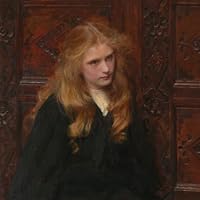
Spirit of Place weaves a path of exploration throughout the history of the depiction of landscape in British history. This book is not so much a history of the depiction of landscape and more a look at how feeling towards the British landscape has changed and how art and literature have reflected this. Therein lies the joy of this book. Today there is a familiarity with how enlightenment views and a better understanding of the landscape through cartography and the work of the Ordnance Survey, influenced the nation to become more interested in landscape. This period saw the careers of artists like Turner and Constable flourish. Any person who has visited a British gallery can see how the Victorians and Pre-Raphaelite Brotherhood immersed themselves in the romance and poetry of a long haired maiden walking through a woodland, harking back to the so called ‘purity’ of our medieval history.
But there is so much more to enjoy and discover within this book especially looking at how different factors have shaped reactions towards the British landscapes. How the Anglo-Saxon’s held a suspicious hostility towards the landscape due to the danger and exposed nature of the roads available to them. How Daniel Defoe was more moved by the sight of bales of recently woven cloth drying on the side of a valley in industrial Yorkshire than he was by the crags of the Peak District. These earlier views about our landscapes were shaped and developed by the exploration of artists and writers and led us to the appreciation and desire for conservation that dominates our contemporary view of our green and pleasant land.
Furthermore here are excellent examples of Twentieth Century landscape art and how the constancy and ageless beauty of English fields and meadows, peaks and woods have been explored and re-invented by John Piper, A. E Houseman, Derek Jarman, Ted Hughes, Paul Nash and Eric Ravilious. These iconic words and images of the British Landscapes were born from some of the most traumatic periods of the century. These sections are a joy to read and are a reminder that although landscape art has not always been the most revered in the pantheon of art history, in the Nineteenth and Twentieth Century, British artists and writers were producing work about and sometimes within the landscapes that we call home.
Reading the book is like walking through the most perfectly curated exhibition where somehow, mountains, lakes, wild heath land, and pastoral farmland have been captured and displayed by some of the best artists and Writers the country has had to offer.
Of course, Thames and Hudson have published this book beautifully, the illustrations, photographs and full colour reproductions of paintings make the book a beautiful volume and a title that readers will want to pick back up off the shelf again and again. There is a little piece of joy to read and look at on every page.
Excellent book. The earlier chapters (the book is arranged chronologically) need quite a bit of concentration but from the halfway mark, from the Romantics to the present it's an absolute joy. A few more colour illustrations wouldn't have gone astray
I have pondered my rating on this book - 3 star or 4. It got 4, but only just and in a different mood would have received only 3. It's a very pleasing object full of illustrations and full colour pictures as you might expect on a book about the relationship between artists and the British landscape. Those artists are mainly those involved in visual arts (painters, print makers and a small amount on sculptors) and writers (poets and prose writers). It talks both about them as people and their works.
It is written in an engaging and easy style, expecting the reader to be intelligent and interested in passages on sometimes relatively obscure artists (well, obscure for the non-specialist at least). I was introduced to several books on walking and engaging with nature I have not heard of before and will look out for.
The book is presented historically, starting around 600 CE and moving through to almost the current era, curtailed I suppose by the inevitable ending it had to have to be published. There are broad themes through the chapters. I mostly enjoyed it, but to be honest it is more like reading a scrapbook of snippets than giving you any overarching themes that the chapter structure implies. Yes there is a general sense that artists' relationship with nature has changed and continues to change, but nothing systematic appears even though the writing tries to give it a structure. Having said that, the snippets in themselves are mostly interesting and for me uncovered a wealth of material I was unaware of.
"Spirit of Place" ist eine Exploration der britischen Landschaft und ihrer Wahrnehmung in Kunst und Literatur. Beginnend im 7. Jahrhundert u.Z. fühlen sich die Ausführungen von Owens fast schon an wie eine gleichsam lockere und informative Führung durch eine Musemsausstellung - neben der britischen Landschaft definitiv noch eine Sache, die ich in den vergangenen zwei Jahren vermisst habe! Ein paar Passagen habe ich zwar übersprungen, weil sich Sichtweisen und Erlebnisse einer Zeitperiode naturgemäß (pun intended!) stark ähneln, aber unterm Strich eine entspannende, anschauliche Alltagsflucht in Buchform.
Although I was looking forward to this one, I found this book a little dry to be honest.
I got the impression that the author got bogged down in insignificant minutiae of certain authors, artists, painters etc and there was an overabundance of quotes/reproductions of swathes of texts from their works which became a bit laborious to read.
I skim read a few sections and glossed over those that held no interest for me (sadly too many sections were like this).
All in all, I think the author was reaching with too broad a hand to try and cover all the subjects she wanted to. This in turn made the book toilsome to get through.
An epic, if sometimes broad, view of how the British landscape has been perceived by artists and writers throughout history. The scope is huge and Owens does an incredible job of introducing you to dozens of key figures - giving you a sense of who they were, what they made, and what made them tick. It does lean heavier on art than my particular interests and it is a little overwhelming given how much it is covering. However, it is enlightening and fascinating and I felt it helped me to situate my relationship with the landscape amongst a crowded history of British artists' and writers' relationships to it.
A satisfyingly complex and nuanced dive into the relationship between ‘place’ within Britain, and the relationship artists of varying mediums through history have built relationships with the landscape. An essential read for any artist creating place-based or place-informed works. The research is phenomenally in-depth and comprehensive. I’ll definitely read this again to re-absorb the brilliant insights.
It's impressive how much information a book this concise can contain. So enjoyable, so complementary in its integration of art, literature and nature, and just such a great overall read
I picked this up in the V&A bookshop not expecting it to be so comprehensive given its compact size. Really impressive and engaging writing, and a book I’m sure to consult and come back to again and again.
Part history, part art, part literature. This is a wonderful read through the centuries of artists and writers connection with the British landscape. It is well written and enjoyable to read.