Jump to ratings and reviews
Rate this book

Ik voel me in de hele wereld thuis

Rate this book
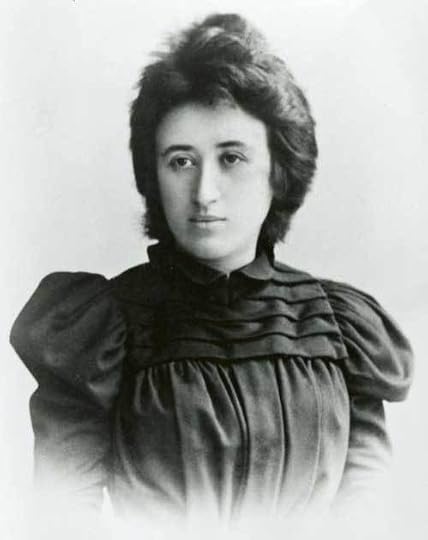
Moed, humor, een intens gevoel voor schoonheid, doorzettingsvermogen, kracht – dat zijn de eigenschappen van Rosa Luxemburg (1871–1919) die in het oog springen bij lezing van de brieven van deze dwarse denker. Luxemburg is onder het stof van de tijd verdwenen, en menigeen zal alleen haar tragische biografie bij benadering kennen: met Karl Liebknecht in de roerselen net na de Eerste Wereldoorlog vermoord.

Deze selectie brieven met een nawoord van Joke Hermsen toont zoveel meer. Luxemburg schrijft de brieven uit de gevangenis aan vrienden, strijdkameraden, vriendinnen, bewonderaars, redacteurs. Ze laat een bijzonder krachtige persoonlijkheid zien die niet snel bij de pakken neerzit, integendeel: vaak moet ze andere ervan overtuigen dat er hoop is, dat het goedkomt. Ze schrijft over dieren en bloemen die ze door de tralies ziet, ze schrijft over mooie herinneringen, over hoop, en ze veegt vriendinnen die haar wat kwijnend voorkomen fel de mantel uit.

De selectie van de brieven die Van Oorschot in de jaren ’50 en ’70 al uitgaf in de vertaling van M. Verdaasdonk is opgefrist en uitgebreid met enkele nieuwe brieven.

‘De brieven blinken uit in subtiliteit en fijnzinnigheid en behoren volgens haar vriendin Henriette Roland Holst “tot de mooiste van de wereldliteratuur”.’ - Joke J. Hermsen

198 pages, Paperback

First published February 1, 2020

Loading...
Loading...

About the author

Rosa Luxemburg

504 books915 followers
Rosa Luxemburg (Rosalia Luxemburg, Polish: Róża Luksemburg) was a Marxist theorist, philosopher, economist and activist of Polish Jewish descent who became a naturalized German citizen. She was successively a member of the Social Democracy of the Kingdom of Poland and Lithuania, the Social Democratic Party of Germany(SPD), the Independent Social Democratic Party and the Communist Party of Germany.

In 1915, after the SPD supported German involvement in World War I, she co-founded, with Karl Liebknecht, the anti-war Spartakusbund (Spartacist League). On 1 January 1919 the Spartacist League became the Communist Party of Germany (KPD). In November 1918, during the German Revolution she founded the Die Rote Fahne (The Red Flag), the central organ of the Spartacist movement.

She regarded the Spartacist uprising of January 1919 in Berlin as a blunder, but supported it after Liebknecht ordered it without her knowledge. When the revolt was crushed by the social democrat government and the Freikorps (WWI veterans defending the Weimar Republic), Luxemburg, Liebknecht and some of their supporters were captured and murdered. Luxemburg was drowned in the Landwehr Canal in Berlin. After their deaths, Luxemburg and Karl Liebknecht became martyrs for Marxists. According to the Federal Office for the Protection of the Constitution, commemoration of Rosa Luxemburg and Karl Liebknecht continues to play an important role among the German far-left.

Ratings & Reviews

What do you think?
Rate this book

Friends & Following

Create a free account to discover what your friends think of this book!

Community Reviews

5 stars
35 (43%)
4 stars
31 (38%)
3 stars
12 (14%)
2 stars
3 (3%)
1 star
0 (0%)
Displaying 1 - 15 of 15 reviews
Profile Image for Ilse.
563 reviews4,646 followers
March 24, 2023
I lie here alone and in silence, enveloped in the manifold black wrappings of darkness, tedium, unfreedom, and winter – and yet my heart beats with an immeasurable and incomprehensible inner joy, just as if I were moving in the brilliant sunshine across a flowery mead. And in the darkness I smile at life, as if I were the possessor of charm which would enable me to transform all that is evil and tragical into serenity and happiness. But when I search my mind for the cause of this joy, I find there is no cause, and can only laugh at myself.” – I believe that the key to the riddle is simply life itself, this deep darkness of night is soft and beautiful as velvet, if only one looks at it in the right way.

(Breslau, mid December 1917, letter to Sophie Liebknecht)

The correspondence of Rosa Luxemburg is considered among the most beautiful of the twentieth century – and from the selection of the letters in this book culled and annotated by the Dutch philosopher Joke Hermsen, I am inclined to concur with the ones considering her letters a literary treasure, finding myself marking sentence after sentence, revelling in her thoughts and wisdom like Marcel’s mother and grandmother in the letters of Madame de Sévigné in La Recherche du temps perdu.

29bd683d43fe0da95db08d0ea8138b29

Where my high expectations on Joke Hermen’s essay Het tij keren on Luxemburg and Hannah Arendt weren’t entirely met reading it last year, this collection, and particularly the letters from the eventful year 1917, surpassed them, as I hadn’t imagined Luxemburg also could write in a poetical, erudite and playful register, with a keen eye for the natural world.

"I feel at home in the entire world, wherever there are clouds and birds and human tears", Rosa Luxemburg (1871-1919) wrote on 16 February 1917 to her close friend and comrade Mathilde Wurm, from the fortress of Wronke (near to Posen) where she was incarcerated for her political activities - and this life-enhancing, open-minded and high-spirited quotation (that gave this selection of her letters its title) sets the tone of many a letter of the Polish-born social revolutionary and writer - Marxist, philosopher, economist, anti-war activist.

More than giving insight into Luxemburg’s political thoughts, this selection of letters shows Rosa Luxemburg as a woman of fine sensibilities.

The collection includes letters written to some of the leading figures in the international labour and socialist movements (Karl Kautsky, Clara Zetkin) but especially focusses on letters written to her closest friends and comrades (Sophie (Sonia) Liebknecht and Louise Kautsky), and a her lovers (Kostja Zetkin, Hans Diefenbach). More than on her political, economic and social views and theories, these letters shed a light on Luxemburg’s tough and combative, but also radiant and generous personality and inner life; they bring to the fore a woman who was not only a bright star when heartening her friends while in a pretty tough situation herself, but also a woman passionate about the natural world, with a keen eye for birds and plants (her studies at the University of Zurich included botany, zoology and geology, later she switched to politics and economics) and about literature (the letters are peppered with poems and book discussions and requests to her friends for sending her particular books).

At times her fierceness made me smile – an avid reader herself, she recommends that people should go outside more often instead of reading books.

One doesn’t need to be a socialist or communist or revolutionist to be inspired by Rosa’s buoyance, commitment, resilience and generosity speaking from these letters.

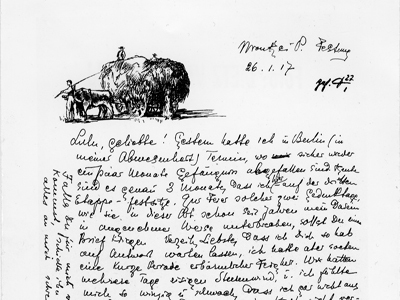
rosa-letter-to-lulu-4bd601a24a321b7c8807a6f3e0d2eda8

Take this letter she wrote to Sophie Liebknecht, wife of Rosa’s comrade Karl Liebknecht, at the moment Karl was imprisoned for his political thoughts just like Rosa: :

Oh, Sonyichka I’ve lived through something sharply, terribly painful here. Into the courtyard where I take my walks there often come military supply wagons, filled with sacks or old army coats and shirts, often with bloodstains on them … They’re unloaded here [in the courtyard] and distributed to the prison cells, [where they are] patched or mended, then loaded up and turned over to the military again. Recently one of these wagons arrived with water buffaloes harnessed to it instead of horses. This was the first time I had seen these animals up close. They have a stronger, broader build than our cattle, with flat heads and horns that curve back flatly, the shape of the head being similar to that of our sheep, [and they’re] completely black, with large, soft, black eyes. They come from Romania, the spoils of war. … The soldiers who serve as drivers of these supply wagons tell the story that it was a lot of trouble to catch these wild animals and even more difficult to put them to work as draft animals, because they were accustomed to their freedom. They had to be beaten terribly before they grasped the concept that they had lost the war and that the motto now applying to them was “woe unto the vanquished” [vae victis]… There are said to be as many as a hundred of these animals in Breslau alone, and on top of that these creatures, who lived in the verdant fields of Romania, are given meager and wretched feed. They are ruthlessly exploited, forced to haul every possible kind of wagonload, and they quickly perish in the process. —And so, a few days ago, a wagon like this arrived at the courtyard [where I take my walks]. The load was piled so high that the buffaloes couldn’t pull the wagon over the threshold at the entrance gate. The soldier accompanying the wagon, a brutal fellow, began flailing at the animals so fiercely with the blunt end of his whip handle that the attendant on duty indignantly took him to task, asking him: Had he no pity for the animals? “No one has pity for us humans,” he answered with an evil smile, and started in again, beating them harder than ever. … The animals finally started to pull again and got over the hump, but one of them was bleeding … Sonyichka, the hide of a buffalo is proverbial for its toughness and thickness, but this tough skin had been broken. During the unloading, all the animals stood there, quite still, exhausted, and the one that was bleeding kept staring into the empty space in front of him with an expression on his black face and in his soft, black eyes like an abused child. It was precisely the expression of a child that has been punished and doesn’t know why or what for, doesn’t know how to get away from this torment and raw violence. … I stood before it, and the beast looked at me; tears were running down my face—they were his tears. No one can flinch more painfully on behalf of a beloved brother than I flinched in my helplessness over this mute suffering. How far away, how irretrievably lost were the beautiful, free, tender-green fields of Romania! How differently the sun used to shine and the wind blow there, how different was the lovely song of the birds that could be heard there, or the melodious call of the herdsman. And here—this strange, ugly city, the gloomy stall, the nauseating, stale hay, mixed with rotten straw, and the strange, frightening humans—the beating, the blood running from the fresh wound. … Oh, my poor buffalo, my poor, beloved brother! We both stand here so powerless and mute, and are as one in our pain, impotence, and yearning.

Who writes with such heartfelt compassion about the suffering of animals - expanding the circle of empathy in times in which such was rather uncommon and at a time of unnameable human suffering and manslaughter with the first world war ongoing - only deserves admiration for inspiring others with her high moral standards.

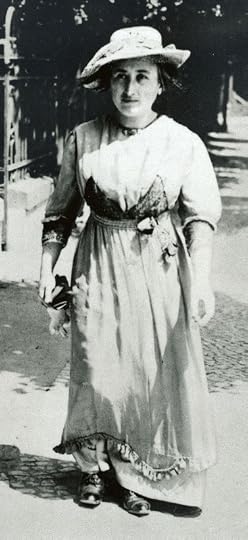
rosa-photo


Here can be found a beautifully illustrated outline of Rosa’s life and times. A more comprehensive edition of her letters, in English, is The Letters Of Rosa Luxemburg.
Profile Image for Loranne Davelaar.
161 reviews21 followers
April 20, 2020
Wil voor altijd over tuinierende Rosa Luxemburg lezen die vond dat ze ganzenhoeder had moeten worden in plaats van coole revolutionair
Profile Image for Xander.
471 reviews2 followers
March 18, 2022
Interessante verzameling van brieven die Rosa Luxemburg schreef tussen 1894 en 1919. De brieven uit de periode 1894 tot de Eerste Wereldoorlog betreffen vooral discussies over publicaties met uitgevers, kennissen en vrienden, alsook enkele persoonlijke correspondentie met haar trouwste vrienden (o.a. de Kautsky's en de Liebknechten). Gedurende deze periode was Luxemburg hard aan het werk binnen de socialistische beweging, voornamelijk in Duitsland, met af en toe een internationale uitstap (bijv. in 1905 toen ze Sint Petersburg bezocht tijdens de revolutie daar).

Vanaf de Eerste Wereldoorlog bevatten de brieven vooral persoonlijke correspondentie waarbij het conflict constant terugkomt. Luxemburg werd in 1916 ook veroordeeld voor landverraad, nadat ze pleitte voor pacifisme (in 1906 was ze al eerder opgesloten in Warschau i.v.m. haar rol in de Russische revolutie in 1905, maar ze wist via Finland te vluchten naar Duitsland) en haar verblijf in de gevangenis ademt door iedere brief.

In de meest persoonlijke brieven vertelt Luxemburg over haar fascinatie met de natuur (vogels, planten, etc.) en haar behoefte aan alleen-zijn en de gevoelens die deze neiging oproept. Veelal wordt ze geprezen voor haar liefdevolle vertellingen over deze bewondering voor de natuur, haar strijd voor een betere toekomst voor de mensheid en de menselijke, al te menselijke aspecten die naar voren komen in iedere brief. Ook haar treurnis over de vernietiging van de natuur door cultuur (i.e. urbanisatie en industrialisering) zullen herkenbaar zijn voor moderne lezers.

In één van de opgenomen brieven bekritiseert ze Lenin en co voor hun aanpak van de socialistische revolutie in Rusland. Ergens anders claimt ze dat dit enkel kan uitdraaien op geweld en onderdrukking. Zelf staat ze vooral democratisch socialisme voor: burgers, werknemers, consumenten moeten zélf eigenaar worden van overheden, bedrijven en producten. Hiermee neemt ze expliciet afstand van de Russische revolutionairen.

Het probleem met dit naïeve standpunt is het centrale probleem van het socialisme (en anarchisme en libertarisme), namelijk: Hoe bewapen je je als collectief tegen machtswellustelingen? Een bestaand systeem (kapitalisme en imperialisme in dit geval) bekritiseren en afbreken is één, een nieuw systeem optuigen zónder dat het ontaard in totalitarisme is iets anders. In deze zin speelt Luxemburg een nóg kwaadaardiger rol dan Lenin of Stalin, omdat ze, uiteindelijk, dezelfde ideeën aanhangt alleen het verpakt in een zoetsappig moreel verhaal waartegen verzet wordt ontmoedigd en ontwapend.

Uiteindelijk is het onmogelijk een samenleving rondom een ideologie op te tuigen zonder geweld toe te passen. Daarvoor is een samenleving te verdeeld in behoeften, wensen, verlangens en belangen. Dit is dan ook het centrale uitgangspunt van alle collectivistische ideologieën uit de 20e eeuw - allen ontaardden in totalitaire repressieve regimes.

Het is interessant om daarbij een persoonlijkheidskenmerk op te merken dat aanwezig is bij vrijwel alle mensen die socialisme aanhangen: de afkeer van individuele mensen en concrete situaties en de hang naar universele concepten en abstracte theorieën. Luxemburg heeft meer met vlinders, zonnebloemen en roodborstjes dan met mensen - zij strijd voor de mensheid, voor mensenrechten, voor rechtvaardigheid. Allerlei concepten die heel aantrekkelijk en moreel goed klinken (wie kan er tégen zijn?) maar die compleet los staan van de werkelijkheid, waarin daadwerkelijke mensen in concrete toestanden bestaan.

Deze abstrahering van de wereld en individuele mensen is een fundamenteel beginsel van alle gewelddadige ideologieën. Ze is ook terug te vinden in de moderne ideologieën van duurzaamheid (red de planeet! red de mensheid! - nevermind de concreet bestaande mensen), cultuurrelativisme (alle culturen zijn moreel gelijkwaardig! alle conflicten zijn onze schuld!), etc.

Er zit een kwaadaardigheid verscholen in al deze denktrends die vaak onbesproken en dus onweerlegd blijft, maar die ook gigantische negatieve impact heeft op het welzijn en de welvaart van miljoenen daadwerkelijk bestaande mensen. De Ruslandcrisis anno 2022 en de Green New Deal van de EU zijn hier fantastische voorbeelden van.
Profile Image for Herman.
199 reviews43 followers
November 5, 2020
****(*) Sommige brieven zijn zo mooi en in een heldere poëtische stijl geschreven en verdienen dubbel en dik de volle vijf sterren.
Profile Image for Casper.
256 reviews21 followers
May 24, 2020
Ik maak een wandeling door de natuur, ergens aan de rand van de stad Haarlem. In mijn rugzak heb ik Ik voel me in de hele wereld thuis, de bundeling brieven van Rosa Luxemburg die onlangs is verschenen. Ik besef dat ik nu doe wat zij het liefste deed: wandelen en mijmeren in de buitenlucht. En al overleed Luxemburg in 1919 en zijn deze brieven dus al meer dan honderd jaar oud, de geluiden van de vogels en de kikkers, de geur van de bloemen en het gevoel van de wind in je nek voelen voor een wandelaar in 2020 nog precies hetzelfde.

Rosa Luxemburg schreef het merendeel van de brieven in dit boek vanuit de gevangenis. Ze was actief als socialist, marxist en revolutionair en schreef tijdens haar leven (1871-1919) vele kritische artikelen en boeken over politiek en economie. Haar pacifistische betogen werden haar niet in dank afgenomen in het Duitsland tijdens de Eerste Wereldoorlog en daarom moest ze het grootste deel van de oorlog doorbrengen achter tralies. Ook in de jaren voor de oorlog zat ze al een aantal keer vast... Lees de rest van mijn bespreking hier
Profile Image for Lizanne.
26 reviews1 follower
May 17, 2020
In haar scherpzinnig en kraakhelder geschreven brieven schetst Rosa Luxemburg een vurig betoog over revolutie, moed, politiek, literatuur, vriendschap en de liefde voor natuur. Zonder te vervallen in romantisch gemijmer laat zij ons dromen over wolken, vogelgezang, de lente en het geluk van botanie. Ik lees en onderstreep haar eigenzinnige woorden en blijf mij verwonderen over de pracht van deze bundel.
Profile Image for lex.
140 reviews30 followers
December 27, 2020
Liefde, compassie en levensvreugde van een onverzettelijke heldin.
Profile Image for Minne Van Der Mast.
31 reviews6 followers
January 26, 2025
Beste brievenbundel die ik ooit heb gelezen. Scherp, beeldend, grappig, diepgaand, met referenties naar kunst, literatuur en politiek, terwijl ze zelf in de gevangenis zat. Fenomenaal. Nu heel gauw een biografie van haar lezen!
Profile Image for Will.
493 reviews1 follower
July 31, 2020
‘(...) het kwam vandaag plotseling in me op dat ik mezelf bewust misleid en mezelf de gedachte influister dat ik nog een normaal menselijk bestaan leid, terwijl om mij heen eigenlijk een atmosfeer van wereldondergang heerst.’
Profile Image for Baran.
10 reviews
January 11, 2022
Er is iets enorm ontluisterend aan het idee van een socialist als Rosa Luxembourg die letterlijk vanuit de hoogst mogelijke maatschappelijke stand manoeuvreert en beredeneert wat de behoeftes dienen te zijn van de fabrieksarbeider. Prima, haar moraliteit, intellectualisme en liefde voor de arbeider staan buiten kijf - maar het ondergraaft het ideologische zwaartepunt van het socialisme en uiteindelijk de politieke motivatie van veel van Rosa's werk. Zelfs honderd jaar na dato zien we nog steeds dat er niemand voor de arbeider is op hoogopgeleide intellectuelen en rechts-extreme populisten na. De minutieuze intellectuele hersenspinsels en naturalistische betogen van Rosa in haar brieven zijn mooi, maar voelen na een tijd versleten aan en doen je afvragen of je hetzelfde boek aan het lezen bent als de positieve lezers op deze pagina.
Profile Image for Hannah.
151 reviews5 followers
May 26, 2022
Ik ben erachter dat ik brieven lezen moeilijk vind. Je leest maar één kant, er zitten weglatingen in en in dit geval heb je ook nog eindnoten in plaats van voetnoten en dan moet je dus steeds achterin kijken wat de uitleg is. Maar, het werk zelf is wel erg interessant en ik wil meer lezen van Luxemburg. Alleen geen brieven.
Profile Image for Melissa.
97 reviews
Read
March 1, 2023
💛💛💛💛💛💛💛💛💛💛💛
Profile Image for rosa weis.
94 reviews
January 6, 2026
“Ik weet nog helemaal niet wat er allemaal van mij wordt. Ik ben immers, zoals je weet, ook een land van onbeperkte mogelijkheden.”

aan mijn mooie, lieve naamgenoot. wat een eer dat ik meer dan een eeuw later nog steeds jouw meest innerlijke en intieme gedachten mag lezen.
ik omarm je vele malen. je R
Displaying 1 - 15 of 15 reviews