

What do you think?

The Floating Book
Venice, 1468. Wendelin von Speyer has just arrived from Germany with the foundations of a cultural revolution: Gutenberg's movable type. Together with the young editor Bruno Uguccione and the seductive scribe Felice Feliciano, he starts the city's first printing press. While Bruno and Felice become entwined in an obsessive love triangle with a beautiful Dalmatian woman named Sosia, Wendelin tempts the fates by publishing the first edition of the erotic Roman poems of Catullus -- a move that will enrage the church, scandalize the city, and change all of their lives forever.
The Floating Book is a ravishing novel of letters and lust, intrigue and betrayal -- a chillingly beautiful debut that few readers will soon forget.
The Floating Book is a ravishing novel of letters and lust, intrigue and betrayal -- a chillingly beautiful debut that few readers will soon forget.
490 pages, Paperback
First published January 1, 2003
About the author
Michelle Lovric
113 books171 followersMichelle Lovric is a novelist, writer and anthologist.
Her third novel, The Remedy, was long-listed for the 2005 Orange Prize for Fiction. The Remedy is a literary murder-mystery set against the background of the quack medicine industry in the eighteenth century.
Her first novel, Carnevale, is the story of the painter Cecilia Cornaro, described by The Times as the possessor of ‘the most covetable life’ in fiction in 2001.
In Lovric’s second novel, The Floating Book, a chorus of characters relates the perilous beginning of the print industry in Venice. The book explores the translation of raw emotion into saleable merchandise from the points of view of poets, editors, publishers – and their lovers. The Floating Book, a London Arts award winner, was also selected as a WH Smith ‘Read of the Week’.
Her first novel for young adult readers, The Undrowned Child, is published by Orion. The sequel is due in summer 2010.
Her fourth adult novel, The Book of Human Skin, is published by Bloomsbury in Spring 2010.
Lovric reviews for publications including The Times and writes travel articles about Venice. She has featured in several BBC radio documentaries about Venice.
She combines her fiction work with editing, designing and producing literary anthologies including her own translations of Latin and Italian poetry. Her book Love Letters was a New York Times best-seller.
Lovric divides her time between London and Venice. She holds a workshop in her home in London with published writers of poetry and prose, fiction and memoir.
Her third novel, The Remedy, was long-listed for the 2005 Orange Prize for Fiction. The Remedy is a literary murder-mystery set against the background of the quack medicine industry in the eighteenth century.
Her first novel, Carnevale, is the story of the painter Cecilia Cornaro, described by The Times as the possessor of ‘the most covetable life’ in fiction in 2001.
In Lovric’s second novel, The Floating Book, a chorus of characters relates the perilous beginning of the print industry in Venice. The book explores the translation of raw emotion into saleable merchandise from the points of view of poets, editors, publishers – and their lovers. The Floating Book, a London Arts award winner, was also selected as a WH Smith ‘Read of the Week’.
Her first novel for young adult readers, The Undrowned Child, is published by Orion. The sequel is due in summer 2010.
Her fourth adult novel, The Book of Human Skin, is published by Bloomsbury in Spring 2010.
Lovric reviews for publications including The Times and writes travel articles about Venice. She has featured in several BBC radio documentaries about Venice.
She combines her fiction work with editing, designing and producing literary anthologies including her own translations of Latin and Italian poetry. Her book Love Letters was a New York Times best-seller.
Lovric divides her time between London and Venice. She holds a workshop in her home in London with published writers of poetry and prose, fiction and memoir.
Ratings & Reviews
Friends & Following
Create a free account to discover what your friends think of this book!
Community Reviews
Displaying 1 - 30 of 66 reviews

January 25, 2020
Welcome to Venice, 1468, a place where very few people appear to be genuinely happy with their lives. Free spirited Sosia Simeon is the lover of many men, as well as being married to a man that she despises. On the Grand Canal's edge the business adventurer Wendelin von Speyer sets up the first printing press in Venice and sets out in search of a book that can make him lots of money. He takes the risk of publishing Catullus, the poet whose desperate and unrequited love inspired the most tender and erotic poems of antiquity, a scandal is set in motion that could rock everyone's lives in Venice forever! I found the different characters a tad bit confusing/similar at times and the writing not that accessible, but the sum of the whole is yet another sterling read centred around books and reading :). 7 out of 12.
January 8, 2008
"I stood simmering, goose-skinned and wisp-tongued in the milk of the moonlight, until the douse of rain chased me into the prattlng shadows of the portico...I paced her name all the way home through ribbed curtains of water. Above me rose-colored lightning embroidered the drowning sky with hectic stitches.
Love is only worth what you pay for it, I told myself at the start."
Poetry in prose!!! Michelle Lovric chooses the most unexpected words to create completely original phrases. Her ability to integrate such poetry into a novel of this depth and complexity absolutely astounds me.
But her delectable writing isn't the only reason to devour this work of art: Every single character in her cast is so well-developed, individual and believable that, by the time you close the cover, you'll feel as if you lived the lives of each of them.
Few writers could marry Lovric's sumptuous word choice and style, believable characters and complex, parallel story lines -- fewer of them would attempt to fold in even a smidgeon of the dense amount of semi-true historical substance on which she builds the story's foundation.
All in all, The Floating Book is a gorgeous work of fiction about the beginning of the world's fascination with print; vast cultural and religious differences clashing over Venetian waters; and "indecent" poetry from an era long-gone, finding its way through time to haunt each of us.
Because Catullus was a real man--a real poet--in Ancient Rome, and his poems, much to the chagrin of the Catholic church, did find their way into the heart of Venice hundreds of years after their conception.
The most profound, though-provoking, yet basic idea this novel demonstrates is that our basic wants and needs as human beings, throughout near-infinite passages of time, remain the same: food, shelter, health, to love and be loved.
Would the you and I of 1,000 years ago be remarkably the same as we are today? Lovric's answer, I believe, would be a resounding "yes."
Love is only worth what you pay for it, I told myself at the start."
Poetry in prose!!! Michelle Lovric chooses the most unexpected words to create completely original phrases. Her ability to integrate such poetry into a novel of this depth and complexity absolutely astounds me.
But her delectable writing isn't the only reason to devour this work of art: Every single character in her cast is so well-developed, individual and believable that, by the time you close the cover, you'll feel as if you lived the lives of each of them.
Few writers could marry Lovric's sumptuous word choice and style, believable characters and complex, parallel story lines -- fewer of them would attempt to fold in even a smidgeon of the dense amount of semi-true historical substance on which she builds the story's foundation.
All in all, The Floating Book is a gorgeous work of fiction about the beginning of the world's fascination with print; vast cultural and religious differences clashing over Venetian waters; and "indecent" poetry from an era long-gone, finding its way through time to haunt each of us.
Because Catullus was a real man--a real poet--in Ancient Rome, and his poems, much to the chagrin of the Catholic church, did find their way into the heart of Venice hundreds of years after their conception.
The most profound, though-provoking, yet basic idea this novel demonstrates is that our basic wants and needs as human beings, throughout near-infinite passages of time, remain the same: food, shelter, health, to love and be loved.
Would the you and I of 1,000 years ago be remarkably the same as we are today? Lovric's answer, I believe, would be a resounding "yes."

March 22, 2011
Perhaps this is a lovely book and it just wasn't the right time for me to read it. It had the makings of a good book.
Now that I think about it, though, it didn't really. It had some characters with potentially engaging biographies and a great setting. But that's not enough to make a good book.
The epistolary style of the first chapter (and intermittent ones after that) was not well done and was painful to read. The two young male protagonists were written far too similarly even though they were meant to be very different characters. The women were carbon copies, and there was altogether too much emotionless, purely physical, disposable sexual relationships. That would have been fine if there had been a point, or if the writing had been better, or there had been more of an original plot, but there was just a lack of too many things to let this book really get off the ground.
Now that I think about it, though, it didn't really. It had some characters with potentially engaging biographies and a great setting. But that's not enough to make a good book.
The epistolary style of the first chapter (and intermittent ones after that) was not well done and was painful to read. The two young male protagonists were written far too similarly even though they were meant to be very different characters. The women were carbon copies, and there was altogether too much emotionless, purely physical, disposable sexual relationships. That would have been fine if there had been a point, or if the writing had been better, or there had been more of an original plot, but there was just a lack of too many things to let this book really get off the ground.

November 16, 2019
Books like this book, this book specifically, should be added to a canonical "Venice" collection of art and literature. Since the city of Venice itself is severely at risk of being drowned and washed away by climate change, at least readers and art lovers have a chance to be immersed in the place as it existed throughout different points in history.
Here in this book we see the late 1400s, and the city's inhabitants are richly imagined and detailed.
Venice is amazingly stuffed full of contradictions. Luscious vs. grotesque. Gentle vs. brutal. Sweet vs. rotten. The author describes the city like it's a sentient entity, like it's a woman with breath and life, who is capable of decisions. Readers can imagine themselves on the streets, bridges, and boats. We imagine the vendors selling the world's best goods, as Venice is at the center of many trade routes. The produce was so modern! Grilled pumpkin, baked pears! The fish market has a never ending smell, but everyone welcomes that nourishment!
And the characters who compose the plot of this book fit into the puzzle and highlight even more of the contradictions. And really it's not entirely like they are in control of their fate. The city controls them. We see a German printer who falls in love with a Venetian girl; he lets himself become vulnerable to love, but he unwisely disregards the evil that is ever-present in the streets and canals. We see men in power who become helpless when they fall in love with an evil woman. We see a Jewish doctor, a good man, but consumed by guilt. We see a nunnery which is not a house of God, but instead more like a murky estuary, where corpses arrive daily, and the sisters spend their days hemming shrouds. And above the crypt of this nunnery, rumors say that the sisters manage a brothel.
As far as the "plot" goes, it's about the poet Catullus, who lived around 60 B.C., who wrote beautiful, filthy poetry. In 1468 a printer in Venice decided to print a volume of these, for public distribution. Results include rumors of counterfeit money production, public executions of printers, monks and friars declare that hell has arrived in Venice, and books are burned.
We also wonder about witchcraft and insanity; it's impossible to measure how much evil roams throughout the streets and squares. Dreams shift into nightmares.
I was overall impressed how pure goodness, and also pure evil live side by side, and it is described so beautifully in this book! And it's also amazing to read about how good and evil blend together. Pure states are transient!
Here in this book we see the late 1400s, and the city's inhabitants are richly imagined and detailed.
Venice is amazingly stuffed full of contradictions. Luscious vs. grotesque. Gentle vs. brutal. Sweet vs. rotten. The author describes the city like it's a sentient entity, like it's a woman with breath and life, who is capable of decisions. Readers can imagine themselves on the streets, bridges, and boats. We imagine the vendors selling the world's best goods, as Venice is at the center of many trade routes. The produce was so modern! Grilled pumpkin, baked pears! The fish market has a never ending smell, but everyone welcomes that nourishment!
And the characters who compose the plot of this book fit into the puzzle and highlight even more of the contradictions. And really it's not entirely like they are in control of their fate. The city controls them. We see a German printer who falls in love with a Venetian girl; he lets himself become vulnerable to love, but he unwisely disregards the evil that is ever-present in the streets and canals. We see men in power who become helpless when they fall in love with an evil woman. We see a Jewish doctor, a good man, but consumed by guilt. We see a nunnery which is not a house of God, but instead more like a murky estuary, where corpses arrive daily, and the sisters spend their days hemming shrouds. And above the crypt of this nunnery, rumors say that the sisters manage a brothel.
As far as the "plot" goes, it's about the poet Catullus, who lived around 60 B.C., who wrote beautiful, filthy poetry. In 1468 a printer in Venice decided to print a volume of these, for public distribution. Results include rumors of counterfeit money production, public executions of printers, monks and friars declare that hell has arrived in Venice, and books are burned.
We also wonder about witchcraft and insanity; it's impossible to measure how much evil roams throughout the streets and squares. Dreams shift into nightmares.
I was overall impressed how pure goodness, and also pure evil live side by side, and it is described so beautifully in this book! And it's also amazing to read about how good and evil blend together. Pure states are transient!
November 23, 2008
I thought that this was a pretty confusing book. It went back and forth from 63BC Rome to Venice in 1540something. Of course, most of it was set in Venice which has to give it extra points. Unfortuantely, the city takes a back seat to the characters and a very twisted plot.
Maybe it was because I only got to read this book in small time periods - several chapters, maybe 100 pages at a time, but I just couldn't work up any reason to care about any of the main characters and their reasons for what they did were weird and didn't always make sense to me.
One of the main characters, Sosia who had almost been raped and was abused by Venician soldiers, goes on throughout the story, having sex with pretty much every Venitian in the city except her own husband.
In the last chapter, it's finally explained that when she had the
encounter with the soldiers, they didn't rape her because "she wasn't good enough for a Venitian". Ok, maybe I glossed over that fact, but in the beginning, it didn't seem to make much sense or seem of much importance, but it ended up to be her whole reason for living.
The arrival of the 1st printing press in Venice and the reaction to it (especially since they decide to print a set of poems from the Roman poet Catullus) who was considered extremely risque in the 1400's but would actually be more of a G rating these days, not that anyone young would actually like to read them. So anyway, we have a bunch of "love" triangles that include both those bound in Sosia's revenge and the attempt to sell the books.
Of course, she had to throw in a mad priest, who tried to stop the printing of not only the poems but blasted the inventiaon of the printing press itself. Of course there was the lonely but kind Jewish Dr. who was Sosia's husband (in name only), the lovesick apprentice, odd artisitc types who did weird things with both people and art, blah, blah, blah...
For me it was too many characters, few of whom I cared about and some interesting stuff on the effect of the printing press at the time of its invention. This book was the winner of the London Arts Writers Awards. Either they are really out of touch or I am!
Maybe it was because I only got to read this book in small time periods - several chapters, maybe 100 pages at a time, but I just couldn't work up any reason to care about any of the main characters and their reasons for what they did were weird and didn't always make sense to me.
One of the main characters, Sosia who had almost been raped and was abused by Venician soldiers, goes on throughout the story, having sex with pretty much every Venitian in the city except her own husband.
In the last chapter, it's finally explained that when she had the
encounter with the soldiers, they didn't rape her because "she wasn't good enough for a Venitian". Ok, maybe I glossed over that fact, but in the beginning, it didn't seem to make much sense or seem of much importance, but it ended up to be her whole reason for living.
The arrival of the 1st printing press in Venice and the reaction to it (especially since they decide to print a set of poems from the Roman poet Catullus) who was considered extremely risque in the 1400's but would actually be more of a G rating these days, not that anyone young would actually like to read them. So anyway, we have a bunch of "love" triangles that include both those bound in Sosia's revenge and the attempt to sell the books.
Of course, she had to throw in a mad priest, who tried to stop the printing of not only the poems but blasted the inventiaon of the printing press itself. Of course there was the lonely but kind Jewish Dr. who was Sosia's husband (in name only), the lovesick apprentice, odd artisitc types who did weird things with both people and art, blah, blah, blah...
For me it was too many characters, few of whom I cared about and some interesting stuff on the effect of the printing press at the time of its invention. This book was the winner of the London Arts Writers Awards. Either they are really out of touch or I am!
This entire review has been hidden because of spoilers.

August 16, 2010
The von Speyer brothers are German printers who have set up business in Venice. This novel follows their fortunes, through financial crisis, literary and religious scandal and plagues. The novel focusses on the drama around the printers' decision to publish the poetry of Catallus, who was considered to be highly controversial at the time.
The whole novel is filled with beautifully imagined historical detail and vivid characters including a thieving cat!
The whole novel is filled with beautifully imagined historical detail and vivid characters including a thieving cat!

February 25, 2019
This was pretty good. The dreamy descriptions of Venice were beautiful. I wasn't as into the second half because my favorite character began to disintegrate and it was very upsetting to read. Overall, a good read, but not as gripping as I had hoped and overly long.
Girl Xoxo Monthly Motif Challenge 2019
February: Cover Love
Girl Xoxo Monthly Motif Challenge 2019
February: Cover Love

August 26, 2012
This book took me 3 months to read. It never takes me longer than a week to read anything. I hate giving up. Basically this book is about sex and love. But that is being too kind.
It just dragged on and on, and I wanted to smack various people. Sosia... a boorish whore who was bitter and embraced being a whore. It was so, "I'm a whore, deal with it, fuck you!" I just summed up Sosia's role for the entire book in a vulgar sentence.
Gentilia just an insane nun and weird character. Her only redeeming quality was it was her actions that finally brought the book to climax and close. Part of her story remained unresolved. The author did more than hint about Gentilia's sexual desires for her brother, but then just dropped the thread. Coming on to her brother, and having her brother reject her would have made some sense. Otherwise, why let us deal with Gentilia's sexual problems if they were irrelevant to the story.
Lusietta always whining over magic and evil, to the point where almost destroyed her life over it.
The different threads never seemed to truly come together in a climax that made sense. The end was both forced and unsatisfying, because you waited waaaaaay too long for the inevitable.
Not one woman of redeeming character. The men- caricatures of men. They all like to
Just a crappy book and a waste of time.
It just dragged on and on, and I wanted to smack various people. Sosia... a boorish whore who was bitter and embraced being a whore. It was so, "I'm a whore, deal with it, fuck you!" I just summed up Sosia's role for the entire book in a vulgar sentence.
Gentilia just an insane nun and weird character. Her only redeeming quality was it was her actions that finally brought the book to climax and close. Part of her story remained unresolved. The author did more than hint about Gentilia's sexual desires for her brother, but then just dropped the thread. Coming on to her brother, and having her brother reject her would have made some sense. Otherwise, why let us deal with Gentilia's sexual problems if they were irrelevant to the story.
Lusietta always whining over magic and evil, to the point where almost destroyed her life over it.
The different threads never seemed to truly come together in a climax that made sense. The end was both forced and unsatisfying, because you waited waaaaaay too long for the inevitable.
Not one woman of redeeming character. The men- caricatures of men. They all like to
Just a crappy book and a waste of time.

May 16, 2015
Não posso dizer que Amei este Livro, mas o facto é que gostei bastante. Não me agarrou como Cola Super 3, mas quando passavam vários dias sem lhe pegar sentia Saudades de o Ler. Não estava mesmo nada à espera daquele Final para Sósia.

December 20, 2007
I have no idea why I won't admit I don't like this book since it's taking me months to read even halfway. But I persevere. Because I'm stupid.

May 20, 2026
Novel set in mid 15th Century VENICE
#fromourbookshelves
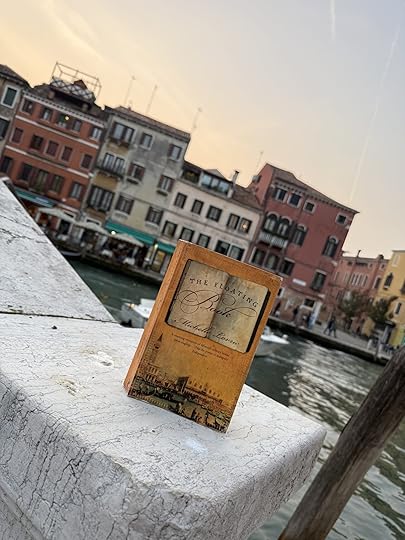
This novel has been on my bookshelves for many a year and as I was heading for Venice and #VeniceNoir, it seemed like the perfect choice. It has been out of print for a while but now it seems to be available once again.
Sosia is a young Dalmation woman has found her way to La Serenissima with members of her family. Shehas endured terrible torture on the journey. It is surmised that her traumatic experiences have moulded her into the woman she now is; and that woman is a compulsive seeker of pleasures, of carnal connection, and her husband is at his wit’s end to know how to manage their union. We are told that even her name has a ‘sinister’ meaning in Italian (something along the lines of a double or Doppelgänger in today’s parlance, but what it meant back then is not really made clear).
Sosia seems to suffer from hyperosmia, in that she can detect a variety of smells on people, what they have eaten or whether they have recently had a sexual encounter, and this gives her a strange aura, causing people to swerve her in the street. Even the courtesans keep a wary eye on her. She is married but her husband is at pains to escape her presence. Thus, early on, the reader senses that she is different and may well come to play an interesting part in an unusual storyline.
We then meet young Bruno Uguccione, who teams up with the scribe Felice Feliciano. 15th Century Venice is the place for a young man, and he takes up a position in the von Speyer (da Spira in Italian) printing works. This is all told over a couple of pages – it feels the author quickly had to set the scene in order to proceed with her story. And that devices is entrenched in the narrative and proves to be a little problematical, on repeat, as the story unfolds. A further device is letter writing, which serves to fill out the storyline.
Sosia’s story is one coloured by sexual liaisons, and when the novel was first published in the early 21st Century, it perhaps seemed racy. Now it feels just a little tawdry and tedious. I had hoped for a story that was on a par with Sarah Dunant’s “In The Company of the Courtesan“, also set in Venice just a few decades later, but the lightness of touch and the character development in that novel are lacking in this novel.
There is also mention of an evolving story set in Rome in the 1st Century BCE and this feels a little discombobulating and random – until there is understanding for its inclusion.
Venice of the 15th Century comes through loud and clear in this novel, it is beautifully evoked in the skilled hands of this author. The grime, the mists, the people and the smells, sights and sounds all meld and become a powerful character that informs the story. It is rare to find such a rich evocation that is so transportive and lyrical in one. And yet. It is clear the author has done a huge amount of research and has fed her findings into the narrative with enormous enthusiasm, which can make the novel feel quite unwieldy at times. We learn all kinds of things about the printing trade, Bellini, contraception and more, and on one level it is interesting but on another it feels just too overwhelming. The overkill of information really needed the attention of an editor.
I had such high hopes for this novel, given I had kept it to take on a trip to Venice, but felt a little dated both in content and format (tiny printing coming in at nearly 500 pages), so it sadly felt a little disappointing.
#fromourbookshelves
This novel has been on my bookshelves for many a year and as I was heading for Venice and #VeniceNoir, it seemed like the perfect choice. It has been out of print for a while but now it seems to be available once again.
Sosia is a young Dalmation woman has found her way to La Serenissima with members of her family. Shehas endured terrible torture on the journey. It is surmised that her traumatic experiences have moulded her into the woman she now is; and that woman is a compulsive seeker of pleasures, of carnal connection, and her husband is at his wit’s end to know how to manage their union. We are told that even her name has a ‘sinister’ meaning in Italian (something along the lines of a double or Doppelgänger in today’s parlance, but what it meant back then is not really made clear).
Sosia seems to suffer from hyperosmia, in that she can detect a variety of smells on people, what they have eaten or whether they have recently had a sexual encounter, and this gives her a strange aura, causing people to swerve her in the street. Even the courtesans keep a wary eye on her. She is married but her husband is at pains to escape her presence. Thus, early on, the reader senses that she is different and may well come to play an interesting part in an unusual storyline.
We then meet young Bruno Uguccione, who teams up with the scribe Felice Feliciano. 15th Century Venice is the place for a young man, and he takes up a position in the von Speyer (da Spira in Italian) printing works. This is all told over a couple of pages – it feels the author quickly had to set the scene in order to proceed with her story. And that devices is entrenched in the narrative and proves to be a little problematical, on repeat, as the story unfolds. A further device is letter writing, which serves to fill out the storyline.
Sosia’s story is one coloured by sexual liaisons, and when the novel was first published in the early 21st Century, it perhaps seemed racy. Now it feels just a little tawdry and tedious. I had hoped for a story that was on a par with Sarah Dunant’s “In The Company of the Courtesan“, also set in Venice just a few decades later, but the lightness of touch and the character development in that novel are lacking in this novel.
There is also mention of an evolving story set in Rome in the 1st Century BCE and this feels a little discombobulating and random – until there is understanding for its inclusion.
Venice of the 15th Century comes through loud and clear in this novel, it is beautifully evoked in the skilled hands of this author. The grime, the mists, the people and the smells, sights and sounds all meld and become a powerful character that informs the story. It is rare to find such a rich evocation that is so transportive and lyrical in one. And yet. It is clear the author has done a huge amount of research and has fed her findings into the narrative with enormous enthusiasm, which can make the novel feel quite unwieldy at times. We learn all kinds of things about the printing trade, Bellini, contraception and more, and on one level it is interesting but on another it feels just too overwhelming. The overkill of information really needed the attention of an editor.
I had such high hopes for this novel, given I had kept it to take on a trip to Venice, but felt a little dated both in content and format (tiny printing coming in at nearly 500 pages), so it sadly felt a little disappointing.

July 23, 2020
This book is about Renaissance Venice and as such it was immediately a must-read for me. I have had a life-long love affair (bordering on obsession) with Venice and have visited La Serenissima no less than 5 times, with more trips planned for the future, once this lockdown is over. In fact, because this novel also deals with a time where different plagues were almost commonplace, it was also an exercise in comparison between what was done then and now in times of deadly illness. It had me cringing inside more than once (aaargh don't touch them!!!) but of course, "what we know now" and all that.
So this is a book about the Republic of Venice, printing, classical poetry, sexual politics, love, obsession, being a foreigner, psychosis, witchcraft, ghosts, class, religion, race...did I forget anything? Yep there is a lot crammed into the 480-ish pages; no wonder my reading pace was a little off the mark. I found myself questioning why I was struggling with the book, because ostensibly, I was loving every minute of it, but the only thing I can pin-point was the sheer amount of detail and protagonists that were telling this story.
There are two main story threads running through the book: Catullus's letters to his brother Lucius, describing his relationship with his lover Clodia, the muse for his famous 'Lesbia' poetry, and the primary tale of Sosia Simeon and her Filofax of lovers/clients in Venice in the 1470s. Her paths cross with various Venetian nobles and artists, and Bruno, a copyist in a new printing venture. We also see as protagonists Wendolin Speyer (a German printer who is tasked with printing the book of Catullus poems), his new wife Lussetia, Rabino Simeon (Sosia's cuckold husband and a Jewish doctor), Fra Fillipo (an anti-printing, anti-sex, pretty much anti-venetian priest) and Bruno's slightly unhinged sister, Gentilia, who is a nun in the infamous convent of Sant'Angelo di Contorta.
My main criticism in this book is that the frequent change of pov's made the story seem disjointed and hard to follow. I often felt like I was following one character through the maze of calles and canal bridges only to lose them and pick up the trail of another character and shadow them instead. Maybe this was the author's intent, I don't know, but certainly when I did get to the last act of the novel I felt as though I had stepped out from the gloom into the dazzling light and space of Piazza San Marco.
I'm so glad that I did stick around to get that reward, because it was a satisfying pay-off. All the sprawling threads were woven tighter and tighter together and tied off into a neat bow.
So on first glance, it seems like this book shouldn't work - it has too many characters, a sprawling narrative, confusing switches of protagonist and style - but there is also so much here to love. The prose is poetical, the detail is alluring, the characters are strong (although many are horrible or very frustrating people), the setting is vibrant and real and I really did enjoy the plot. This book is like a good stew. When all the ingredients are combined it's wonderful, despite the quality of some of its parts.
Thus, in my mind, this book is best compared to Venice itself: a hot mess of sensual overload and beauty that sits alongside its own stagnant decay. And yes, just like Venice, I want to visit it again someday.
So this is a book about the Republic of Venice, printing, classical poetry, sexual politics, love, obsession, being a foreigner, psychosis, witchcraft, ghosts, class, religion, race...did I forget anything? Yep there is a lot crammed into the 480-ish pages; no wonder my reading pace was a little off the mark. I found myself questioning why I was struggling with the book, because ostensibly, I was loving every minute of it, but the only thing I can pin-point was the sheer amount of detail and protagonists that were telling this story.
There are two main story threads running through the book: Catullus's letters to his brother Lucius, describing his relationship with his lover Clodia, the muse for his famous 'Lesbia' poetry, and the primary tale of Sosia Simeon and her Filofax of lovers/clients in Venice in the 1470s. Her paths cross with various Venetian nobles and artists, and Bruno, a copyist in a new printing venture. We also see as protagonists Wendolin Speyer (a German printer who is tasked with printing the book of Catullus poems), his new wife Lussetia, Rabino Simeon (Sosia's cuckold husband and a Jewish doctor), Fra Fillipo (an anti-printing, anti-sex, pretty much anti-venetian priest) and Bruno's slightly unhinged sister, Gentilia, who is a nun in the infamous convent of Sant'Angelo di Contorta.
My main criticism in this book is that the frequent change of pov's made the story seem disjointed and hard to follow. I often felt like I was following one character through the maze of calles and canal bridges only to lose them and pick up the trail of another character and shadow them instead. Maybe this was the author's intent, I don't know, but certainly when I did get to the last act of the novel I felt as though I had stepped out from the gloom into the dazzling light and space of Piazza San Marco.
I'm so glad that I did stick around to get that reward, because it was a satisfying pay-off. All the sprawling threads were woven tighter and tighter together and tied off into a neat bow.
So on first glance, it seems like this book shouldn't work - it has too many characters, a sprawling narrative, confusing switches of protagonist and style - but there is also so much here to love. The prose is poetical, the detail is alluring, the characters are strong (although many are horrible or very frustrating people), the setting is vibrant and real and I really did enjoy the plot. This book is like a good stew. When all the ingredients are combined it's wonderful, despite the quality of some of its parts.
Thus, in my mind, this book is best compared to Venice itself: a hot mess of sensual overload and beauty that sits alongside its own stagnant decay. And yes, just like Venice, I want to visit it again someday.
February 26, 2020
It is a pity that such good writing is fairly wasted on a convoluted and unbelievable plot. And after pages and pages of frustrating misunderstandings and hair-raising events, all of a sudden all's well that ends well?
There is very little character development for the main characters, and I could not work up any empathy for the central figure of Sosia, until almost at the very end we find out what made her how she was. Nor did I have any patience for Lucietta's crazed jealous (and unfounded ravings). The whole reads like a Gothic romance novel, except that the writing style is really beautiful. Added to that you have the parallel story of Catullus and his paramour Lesbia, which is based on the poet's life and mirrors some of the plot in medieval Venice, and which somehow intersects with the story.
What I found interesting was the information about the history of printing in Venice, and the scandals surrounding the printing of an ancient Roman poetry book by Catullus. Also interesting are the historical references to the unjust and partly hostile treatment of Jews and other foreigners (such as Sosia) and the social analysis contained therein.
Some of the characters are actual historical figures, including the printers Wendelin and Johann and people associated with them. It is a pity that the author deemed it necessary to weave so many threads into this story, when perhaps a much simpler and more realistic plot centering mainly on the printers (without crazed nuns practicing witchcraft and the like) may have sufficed.
There is an afterword, which lays out the whole context and informs us of what was invented and what was based on facts. That part was actually very useful and almost more interesting than the book to me.
There is very little character development for the main characters, and I could not work up any empathy for the central figure of Sosia, until almost at the very end we find out what made her how she was. Nor did I have any patience for Lucietta's crazed jealous (and unfounded ravings). The whole reads like a Gothic romance novel, except that the writing style is really beautiful. Added to that you have the parallel story of Catullus and his paramour Lesbia, which is based on the poet's life and mirrors some of the plot in medieval Venice, and which somehow intersects with the story.
What I found interesting was the information about the history of printing in Venice, and the scandals surrounding the printing of an ancient Roman poetry book by Catullus. Also interesting are the historical references to the unjust and partly hostile treatment of Jews and other foreigners (such as Sosia) and the social analysis contained therein.
Some of the characters are actual historical figures, including the printers Wendelin and Johann and people associated with them. It is a pity that the author deemed it necessary to weave so many threads into this story, when perhaps a much simpler and more realistic plot centering mainly on the printers (without crazed nuns practicing witchcraft and the like) may have sufficed.
There is an afterword, which lays out the whole context and informs us of what was invented and what was based on facts. That part was actually very useful and almost more interesting than the book to me.
July 24, 2018
This book was recommended by a book group member whose taste in books is pretty reliable, but this book didn’t meet my expectations. I gave it three stars for the atmosphere of Venice created by the author and some lyrical writing, but the two central female characters were unbelievable. So I gave it two stars overall. Both characters, we learn in an author’s note at the end, were invented. One was so unlikely as to be a caricature of a whore, a Jewish whore roaming the streets of Venice and seducing noblemen. The other becomes delusional over a piece of furniture from a particular house. I have traveled in Italy and understand the importance of witchcraft right up to the present century, but this was badly overdone. The problem with historical fiction is: how much fiction should be inserted into what is actually a very interesting historical period and some important events in the history of printing. As printed books replaced handcrafted books, who gained and who lost? It feels as though the author diluted the power of the history by creating unlikely female characters.

August 22, 2020
This is a book about the Republic of Venice, and because, at one point, I was obsessed with Venice in the Renaissance, I read a lot of books with this theme.
A business entrepreneur Wendelin von Speyer sets up the first printing press in Venice and created a great scandal by printing his first book Catullus, a poet who wrote the most erotic poems in the antiquity. Catullus in his letters to his brother describes his love for Clodia his lover, who is the muse of his poetry “Lesbia”. Venice in the 1400s, and on to the modern days, was a wealthy town frequented by rich merchants, artists, powerful religious figures and nobles, it was obvious the town swarmed with prostitutes of high class, such as Sosia Simeon, the personage of the primary tale of this book. The book is also about love, sex, politics, religion, obsession, psychosis, witchcraft, ghosts, and so much more. The details of Venice are dreamy and create great emotions, the characters couldn’t be more real. Michelle Lovric ‘s writing is lyrical and very original. I like her style and I recommend this book.
A business entrepreneur Wendelin von Speyer sets up the first printing press in Venice and created a great scandal by printing his first book Catullus, a poet who wrote the most erotic poems in the antiquity. Catullus in his letters to his brother describes his love for Clodia his lover, who is the muse of his poetry “Lesbia”. Venice in the 1400s, and on to the modern days, was a wealthy town frequented by rich merchants, artists, powerful religious figures and nobles, it was obvious the town swarmed with prostitutes of high class, such as Sosia Simeon, the personage of the primary tale of this book. The book is also about love, sex, politics, religion, obsession, psychosis, witchcraft, ghosts, and so much more. The details of Venice are dreamy and create great emotions, the characters couldn’t be more real. Michelle Lovric ‘s writing is lyrical and very original. I like her style and I recommend this book.

November 7, 2019
I couldn’t finish it, I very very rarely don’t finish a book. I usually push through but I struggled to get half way and I just couldn’t go on.
The characters seemed to have hope of being interesting to start with but if 200 pages isn’t enough to make them come alive then I’m sorry I just don’t have the time to continue. So much promise. A great time in history, a beautiful location, so much to work with, but it all went horribly wrong. Or maybe not so much wrong as just nowhere.
Now to move on to a book that hopefully I don’t find myself drifting off to think about my grocery shopping list while reading.
The characters seemed to have hope of being interesting to start with but if 200 pages isn’t enough to make them come alive then I’m sorry I just don’t have the time to continue. So much promise. A great time in history, a beautiful location, so much to work with, but it all went horribly wrong. Or maybe not so much wrong as just nowhere.
Now to move on to a book that hopefully I don’t find myself drifting off to think about my grocery shopping list while reading.
May 21, 2022
This year I decided to read only the many books on shelves all around the house - no buying or borrowing (except for book club). I bought this one many years ago because it takes place in Renaissance Venice, a place and period I love. I enjoyed the atmosphere, and learned about Venetians of that time, some history, and the early process of printing & what people of the time were reading. I did not get attached to the characters & even disliked several of them, & the writing was overly “wordy”. But I don’t regret reading it for the above mentioned reasons.

August 25, 2020
Purchase The Floating Book here for just $10!
This novel follows the start of the first printing press in 15th century Venice. This story of letters, love, lust and betrayal is a debut that will linger in your mind long after you're finished.
Anastasia - The Book Grocer
This novel follows the start of the first printing press in 15th century Venice. This story of letters, love, lust and betrayal is a debut that will linger in your mind long after you're finished.
Anastasia - The Book Grocer
January 16, 2022
It took me soooo long to read this book, but I persevered. Now finished, I'm not sure why I kept at it. It was recommended by a friend. I'm having a hard time figuring out what was the author's objective in writing the story other than portraying a period in time. There was little that made me feel positive about life and I felt sadness for most of the characters. Probably the book that I've liked least of the many books I've read over the past several years.
January 17, 2018
When it comes to the art of painting pictures, in form of words, I haven't read any novel which can be as good as this one. The analogies are simply beautiful.
But story wise I often found it lagging and at times boring too. Would've loved it more, if it was shorter. The last few chapters and climax are very satisfying though.
But story wise I often found it lagging and at times boring too. Would've loved it more, if it was shorter. The last few chapters and climax are very satisfying though.

May 11, 2018
Really four and 1/2 . There was a section of about 60-80 pages at the 300 page mark that I found booring and slow. Up to that point I was in love with the book, especially the way the Catullus story was told and the inclusion of his poetry, so when I ran into that patch...well it hit me hard. Still, I had to give it more than a 4.

November 30, 2020
1.5* rounded up for now. There were a lot of elements in this that should have been good, such as the development of printing and the competition between printers and clergy. The author did her research. But there wasn't enough detail to make those parts come alive, so mostly it was just awful people behaving awfully.

February 20, 2022
Ima be honest. I give up at Chapter 3, Part 4. Ive tried so hard to stick it out as long as I can but theres no redeeming quality for this book. Ive always loved Lovrics novels but this one is too superfluous and it feels forced.
None of the characters are relatable, not Sosia, not Bruno, not Johann, not Felice. Its been a hard read and I just give up.
None of the characters are relatable, not Sosia, not Bruno, not Johann, not Felice. Its been a hard read and I just give up.

January 10, 2024
The book provided rich details about life in Venice during the 15th century. I particularly enjoyed the fact that it had multiple plot lines and was multi-layered. However, I didn't develop enough liking for the characters to be invested in the outcome.
June 10, 2019
Why do people who don’t finish reading a book get to do a review?


September 1, 2026
I loved the historical research that went into this book, and overall, I was interested throughout.

February 3, 2017
This is a difficult tome to write a review about - dense with historical fact with a touch of artistic licence, based on real characters and the very real first printing of Catullus (book of love poems) in 1472 in Venice by the German printer, Wendelin von Speyer.
Rich in book history content, beautiful prose and a deluge of colourful imagery, this is not light reading and I can whole-heartedly concur with some of the other reviewers in how difficult they found this to get through. This is a lavish and sumptuous late medieval meal with many courses, spices and wine. Permeated with the sex and grime of a medieval Venice life, this book is essentially about the lives of the people who orbited the printing of the Catullus. The reader can tell who is narrating from the change in font in each chapter.
Part Two is where we are introduced to the German printers and what they make of Venice ... "I see it as a hollow, airy Venice, reconstructed from these fragments, a coloured shell of the city, a kind of book of the city, the city expressed in tow dimension, more beautiful than it is in three. This it the true soul of Venice, this bubble-city in my dreams. She's like a transparent floating book, where the pages are concepts visible in colour. Not a thing of the mind, but a piece of beauty dedicated to the senses alone."
When the Catullus is created, Lovric provides us with a vision of how it feels ... "I rocked it in my arms. It was a big thing, at least seven inches by ten. It gave me its rich smell and then the creamy silk of its pages. It had no biding yet; it was too young, vulnerable as a naked baby sparrow before it grows its feathers ... I raised a page to see which watermarks he'd used - the bull's head with the crown, the scales, the scissors, the castle, the lily, the dragon ... but my man stayed my hand and said, 'No, just look a the words, this time'."
I've enjoyed The Book of Human Skin, and would not hesitate to read Carnevale, her first novel based on the story of the painter Cecilia Cornaro.
Rich in book history content, beautiful prose and a deluge of colourful imagery, this is not light reading and I can whole-heartedly concur with some of the other reviewers in how difficult they found this to get through. This is a lavish and sumptuous late medieval meal with many courses, spices and wine. Permeated with the sex and grime of a medieval Venice life, this book is essentially about the lives of the people who orbited the printing of the Catullus. The reader can tell who is narrating from the change in font in each chapter.
Part Two is where we are introduced to the German printers and what they make of Venice ... "I see it as a hollow, airy Venice, reconstructed from these fragments, a coloured shell of the city, a kind of book of the city, the city expressed in tow dimension, more beautiful than it is in three. This it the true soul of Venice, this bubble-city in my dreams. She's like a transparent floating book, where the pages are concepts visible in colour. Not a thing of the mind, but a piece of beauty dedicated to the senses alone."
When the Catullus is created, Lovric provides us with a vision of how it feels ... "I rocked it in my arms. It was a big thing, at least seven inches by ten. It gave me its rich smell and then the creamy silk of its pages. It had no biding yet; it was too young, vulnerable as a naked baby sparrow before it grows its feathers ... I raised a page to see which watermarks he'd used - the bull's head with the crown, the scales, the scissors, the castle, the lily, the dragon ... but my man stayed my hand and said, 'No, just look a the words, this time'."
I've enjoyed The Book of Human Skin, and would not hesitate to read Carnevale, her first novel based on the story of the painter Cecilia Cornaro.

June 16, 2014
This is a beautifully written book, full of poetic lines and sumptuous descriptions. The characters are individual and vibrant (though many of them aren't nice people) and Venice herself floats in and out of the mist to enchant the reader.
Real historical people mix with invented characters and we learn about the setting up of the printing press and the formulation of Latinate lettering (as opposed to the German Gothic typeface). Translations of Catullus' poetry head the chapters - and that's a bonus, introducing us (well, me, anyway) as it does to previously undiscovered delights.
As far as the plot is concerned, there really didn't seem to be much of substance there but that didn't really matter, though it left a vague feeling of dissatisfaction.
The character of Sosia was difficult to empathise with - yes, she'd had a traumatic experience when young but her bitterness and cold-heartedness made her unattractive. I felt more for her poor husband, though he wasn't entirely innocent.
Lusieta started off as a delightful character but gradually became irritating, though I suppose the fact one can feel this way about a fictional creation is an indication of how skilful the writer is.
Gentilia (a name I kept reading as as genitalia) was, frankly, barking. So none of the female characters were exactly sympathetic, wheras the men had a bit more soul and seemed mainly to suffer at the hands of these odd women.
Hmm... I may need to think about this a bit more.
Well worth reading though, for its beautiful turns of phrase and its insights into the early days of printing and background to Catullus' poetry.
Real historical people mix with invented characters and we learn about the setting up of the printing press and the formulation of Latinate lettering (as opposed to the German Gothic typeface). Translations of Catullus' poetry head the chapters - and that's a bonus, introducing us (well, me, anyway) as it does to previously undiscovered delights.
As far as the plot is concerned, there really didn't seem to be much of substance there but that didn't really matter, though it left a vague feeling of dissatisfaction.
The character of Sosia was difficult to empathise with - yes, she'd had a traumatic experience when young but her bitterness and cold-heartedness made her unattractive. I felt more for her poor husband, though he wasn't entirely innocent.
Lusieta started off as a delightful character but gradually became irritating, though I suppose the fact one can feel this way about a fictional creation is an indication of how skilful the writer is.
Gentilia (a name I kept reading as as genitalia) was, frankly, barking. So none of the female characters were exactly sympathetic, wheras the men had a bit more soul and seemed mainly to suffer at the hands of these odd women.
Hmm... I may need to think about this a bit more.
Well worth reading though, for its beautiful turns of phrase and its insights into the early days of printing and background to Catullus' poetry.

January 26, 2011
"The Floating Book" mixes two stories in totally diferent time frames, that of the poet Catulus in ancient Roman times, and that of the main characters of the book during Venice's golden age. The devices by which the stories are bound are two: Catulus book of poetry, which is printed for the first time by one of the main characters, and a somewhat difficult to explain feminine doll that Catulus had made to represent his lover, and which ends in the hands of the printer's wife. Even though Catulus tale is used only to frame the Venetian episode the reader finds his/herself also enthralled by this unrequited love story.
The Venetian setting is very authentic, and anybody who has been to Venice can almost pinpoint some of the places described, and even the feelings caused by the city. And the life that the city itself exudes explains in many cases the behaviour of some of the characters.
The Venetian setting is very authentic, and anybody who has been to Venice can almost pinpoint some of the places described, and even the feelings caused by the city. And the life that the city itself exudes explains in many cases the behaviour of some of the characters.
Displaying 1 - 30 of 66 reviews