Jump to ratings and reviews
Rate this book

Little Boy Lost

Rate this book
Hilary Wainwright, an English soldier, returns to a blasted and impoverished France during World War Two in order to trace a child lost five years before. But is this small, quiet boy in a grim orphanage really his son? And what if he is not? In this exquisitely crafted novel, we follow Hilary’s struggle to love in the midst of a devastating war.

Facing him was a thin little boy in a black sateen overall. Its sleeves were too short and from them dangled red swollen hands too big for the frail wrists. Hilary looked from these painful hands to the little boy’s long thin grubby legs, to the crude coarse socks falling over shabby black boots that were surely several sizes too large. It’s a foreign child, he thought numbly . . .

Marghanita Laski was born in 1915 to a family of Jewish intellectuals in Manchester; Harold Laski, the socialist thinker, was her uncle. She was the author of six novels and a celebrated critic. She died in 1988.

232 pages, Paperback

First published January 1, 1949

69 people are currently reading
3246 people want to read

About the author

Marghanita Laski

36 books68 followers
English journalist, radio panelist, and novelist: she also wrote literary biography, plays, and short stories.

Laski was born to a prominent family of Jewish intellectuals: Neville Laski was her father, Moses Gaster her grandfather, and socialist thinker Harold Laski her uncle. She was educated at Lady Barn House School and St Paul's Girls' School in Hammersmith. After a stint in fashion, she read English at Oxford, then married publisher John Howard, and worked in journalism. She began writing once her son and daughter were born.

A well-known critic as well as a novelist, she wrote books on Jane Austen and George Eliot. Ecstasy (1962) explored intense experiences, and Everyday Ecstasy (1974) their social effects. Her distinctive voice was often heard on the radio on The Brains Trust and The Critics; and she submitted a large number of illustrative quotations to the Oxford English Dictionary.

An avowed atheist, she was also a keen supporter of the Campaign for Nuclear Disarmament. Her play, The Offshore Island, is about nuclear warfare.

Ratings & Reviews

What do you think?
Rate this book

Friends & Following

Create a free account to discover what your friends think of this book!

Community Reviews

5 stars
575 (36%)
4 stars
674 (42%)
3 stars
269 (16%)
2 stars
54 (3%)
1 star
16 (1%)
Displaying 1 - 30 of 265 reviews
Profile Image for Emily May.
2,223 reviews321k followers
July 26, 2024
This is a quiet, beautiful and sad story set shortly after the end of World War II, in which a man travels to Paris in search of his missing five year old son.

Little Boy Lost is emotional in a very undramatic way. I got to the end and was surprised to find tears in my eyes because the power of the story crept up so gradually.

Hilary Wainwright doesn't know if his son was killed by Nazis in the war, if he is labouring in horrific conditions somewhere, or if he has found an adoptive family to love him. A friend points him in the direction of a French orphanage and a little boy named Jean who may or may not be the child he has lost.

For a relatively short book, it has a lot to say. We witness not just the main issue of a man connecting with a young boy and trying to determine if he is his missing son, but also Hilary's struggles and grief. A lot of his actions are selfish, but I think one can empathize with him somewhat after all he has been through.

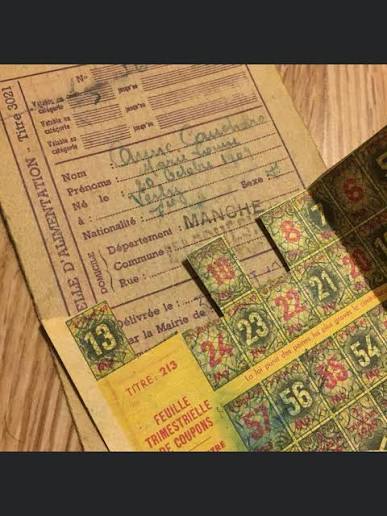
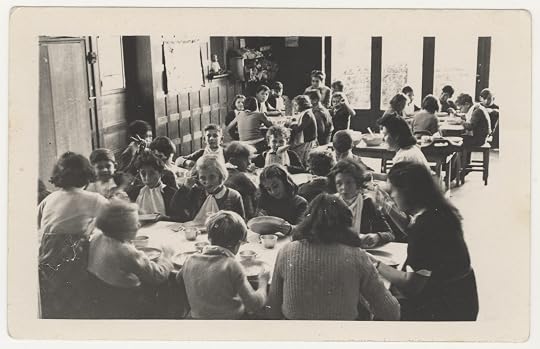
It is also a portrait of a postwar France I knew very little about. I was unaware of the extent of deprivation in France following liberation from Nazi rule, and the amount of children left orphaned and under the care of institutions that didn't have the money to feed them.

Another hidden gem unearthed by Persephone Books.
Profile Image for Ian.
982 reviews60 followers
December 3, 2019
This is the first of the writers I’ve followed up after reading about them in “The Book of Forgotten Authors”, which I read in October. Prior to that I’d not heard of Marghanita Laski. I had heard of her uncle, Harold Laski, who was prominent in the Labour Party in the 1930s and 1940s.

In the chaos of France in 1940, British officer Hilary Wainwright gets separated from his French wife and baby son. Back in Britain Wainwright has a job in Intelligence, and in 1942 he hears from a contact in the French Resistance that his wife has been arrested and shot by the Gestapo. His son has disappeared. Three years later the same contact tells him of a boy in an orphanage in a small town 50 miles from Paris. Circumstantial evidence suggests the boy may be Wainwright’s lost son. Wainwright visits the orphanage to meet the boy, but how can he be sure?

This is a short novel and in some ways it’s a simple tale, but I was impressed with Laski’s creation of the character of Wainwright. At times he isn’t the most attractive of personalities. Largely it’s because he is damaged goods. The loss of his wife and son has left him defensive and unwilling to get close to anyone new. He’s the sort of character whose faults make him more believable. Another strong point of the novel is the way the author creates the atmosphere of France in 1945. Laski lived in Paris for a year in 1937-38 and there’s clearly something of her in Wainwright, who considers pre-war France “the most civilised country on earth”. By contrast, France in 1945 is a place of ruined buildings and desperate poverty, with a poisonous atmosphere created from the bitterness of the Occupation, and the degree to which each person collaborated. The economy is dominated by the Black Market.

Wainwright’s meetings with the boy in the orphanage gradually build up the story, and in the last few chapters he is faced with the decision of whether to accept the child or not. I won’t give away the ending of course. Suffice to say these chapters had my full attention.
Profile Image for Elyse Walters.
4,010 reviews11.9k followers
July 12, 2022
Hilary Wainwright, a British poet — and intellectual
was briefly married to a Frenchwoman, (but to whom he loved passionately), was killed by the Gestapo during WWII in Paris shortly after giving birth to a baby boy….. a child Hilary didn’t know anything about until Christmas Day - 1943- years later….five or six years later.

The ‘period of history- was horrific— (never forgotten—but not prime tale we ultimately follow)
“We know that many children have been packed naked into trains with quicklime on the floor, so that when these trains arrived at the gas chambers, it was quite economical, because nearly all the children were dead already. They have killed children at the Gestapo
headquarters in Paris, throwing acid at their naked bodies”.

Hilary, (unusual male name), had been working for the resistance in England working post WWII.
This story is about Hilary returning to France - post WWII - in search of this young boy….who was found living in an orphanage. We meet the nuns who guild Hilary through his emotional journey.
After finding the boy—Little Jean— Hilary was not sure if he is his or not— and he certainly knows nothing about being a father. This book was written a long before DNA testing. There is no proof that ‘Little Jean’ was Hilary’s son.
Hilary was so worried of taking the wrong child. What if Jean wasn’t his? But it seemed pretty clear that either little Jean was his son, or that his son was beyond human reach.

This little heartbreaking tale was also heartwarming.
Towards the end there is a scene where Hilary takes the boy to the circus. My heart melted as one grown man and one little boy begin to bond.
Little Jean made a gesture of generosity to an animal that seemed to Hilary very much like his wife, Lisa would have done. (a very memorable scene)

Visually and emotionally it was touching to imagine ‘hands-coming-together’ - both the adult had of Hilary and the child’s hand of little Jean.

‘Little Lost Boy’ is a timeless novel about love, emotion, and a man’s search not only about finding his son but finding himself.
Hilary needed to come to terms with his own sense of loss. It required real courage from him to ‘open’ to the possibility of pain, loss, and love …to trust…’to allow’ for happiness.
He meets another woman, Nelly- a Parisian niece of a hotel owner.
Nelly helped Hilary understand the difference between lust and love and even for him to reevaluate what he considered his perfect relationship with Lisa.
The final few pages were tension-filled- and gorgeous……
a book of just the right length…. with a satisfying ending …

a little sample writing….
“It’s a belief that we English intellectuals have totally discarded, he mused. We are bored and resentful if we are expected to be companionable with anyone not of our own sort—unless that’s to say, he’s a left-wing politically conscious tramway-worker. And that, I suppose, is why our work lacks universality; we deliberately encase ourselves in an esoteric coterie and lack the material to generalize about human emotions”.

This was a wonderful thought provoking book!

Many thanks - again - to Antoinette for introducing me to the classic books
published through Persephone Books.


Profile Image for Fiona MacDonald.
809 reviews198 followers
September 25, 2017
I went into this story unsure and a bit wary, it didn't resonate much with me. But the more I read the more I realized I was falling in love with every aspect of the tale. Hilary is a poet and widower, who goes to France, due his friend Pierre's belief that his long lost son has been taken in by an orphanage. Hilary hasn't seen his son since the day of his birth 5 years ago, and therefore knows nothing about him or even whether he would recognize him again. Spending his time in a run down and stifling hotel with strange and unfriendly people, Hilary can only count on the brief meetings with the little boy Jean to make him come alive. He of course has no idea whether boy is his or not, and soon time and money are running out for him to make a decision.
I cannot describe how beautifully written this book is. Each page flows like liquid art, and tugs on my heartstrings. I finished it and started crying.
Profile Image for Cecily.
1,322 reviews5,337 followers
July 14, 2015
Written and set shortly after WW2, it tells the story of Hilary, an English widower and poet, looking for his son in Paris, whom he last saw on the day of his birth nearly five years earlier. It is incredibly poignant, but in a very light, natural way and, very unusually, nearly had me in tears towards the end.

I've only read two Laskis, but this and The Victorian Chaise-Longue are largely about the loss of a child, albeit told in very different genres, and one from a male perspective and the other from a female one.

Hilary has many unresolved emotions about his troubled relationship with his mother (characterised by "hostility and bitterness" from the first page), the certainty of his wife’s death and the uncertainty of his son’s existence, and this translates into awkwardness between him and Pierre (friend of his wife’s who tries to find his son) and indeed with everyone else. He subsequent relationships with a couple of women show him in a very bad light.

The boy who may be his son is living in an orphanage and Hilary meets him and takes him out for the afternoon several days running. Jean is bright and endearing, but Hilary is unsure whether he is his son and equally unsure whether he wants him to be. It is a sort of love story, a bit like a blind date: mutual uncertainty, not knowing rules of how to behave, both wary of being hurt and unsure what they want. For Hilary, both as a child and as a possible parent, I suppose the key question is whether any parent better than no parent? Which of them is the boy of the title?

Hilary doesn’t know how to be a father, is unsure whether he wants to be ("I am being destroyed" by upsetting his simple, ordered, private and unemotional life) and struggles to comprehend the degree of deprivation in Jean’s life thus far and to what extent he should enrich it. When he tries, by buying red gloves, they don't fit. He weighs up duty and possible means of escape from fatherhood and as the reader, you inevitably wonder what would you do, given that the child may not be your own.

The descriptions of France very soon after the end of the war have a rawness that a historical novel written nowadays would struggle to achieve: not just the physical scars, but lingering distrust between suspected collaborators and suspected resistance, corruption arising from black marketeering, loosening morals etc.

Real (Cona) coffee is explicitly mentioned in chapter 1 and I think Hilary's reaction to what he is served in the orphanage highlights the contrast with his own entrenched material privilege. He has suffered emotional trauma in many ways, but he has always been cushioned by the comfort of good things. He doesn't even need to work. Consequently, he takes them for granted, sometimes reacts like a truculent child when he is denied them and giving such treats is an automatic and in some senses easy (no emotional cost) response for him. Hilary wants good things and is used to feeling entitled to them. He knows it is morally wrong to buy black market goods, but comfort food/drink trumps it because he is too immature to do otherwise.

There is so much in this story that the reader doesn't know (especially details about Hilary's relationship with his dead father and living mother), but that echoes the unknowns in Hilary's life, the biggest of which is never knowing for sure whether Jean is his son (not an issue with normal adoption). Hilary has some self-awareness ("my writing and my reading and all the other substitutes I have found for emotion" and "I must guard myself against emotion"), but is rarely able to overcome his weakness, snobbery and utilitarian approach to other people.

The ending is superbly apt.

With the right director it would make a great, atmospheric film, but so far it’s only been done as a Bing Crosby musical (ugh!).
Profile Image for Ivana Books Are Magic.
523 reviews301 followers
June 15, 2017
I read this novel years ago and as it sometimes happens, I failed to realize its importance. Recently, I've rediscovered and reevaluated it. I realized that I had intentionally overlooked a great many things. Moreover, while I was rereading it, I realized that many of the sentences from this novel had been engraved in my mind all the long. Perhaps it is more accurate to say that I underestimated Little Boy Lost. I didn't really forget about it, rather- my first impressions proved to be a bit off. It took me a while to fully understand the literary potential of this short novel.

I can remember (and clearly enough) how I felt about Little Boy Lost when I first read it. Years back, I have put it into something like- ' superb writing but quite depressive' category. I admitted that the writing was brilliant, but I didn't get 'the big picture'. To put things into perspective- this is a story about Hillary, an English intellectual who returns into post-war France to look for his son. Hillary, still grieving for his wife, is not really sure is he up for the whole parenting thing. Hillary is uncertain whether he is the father of a boy he visits in the French orphanage- or is he really that uncertain? Perhaps he is just not willing to accept the responsibility for the boy.


My chief problem with it was the selfishness of the main character. I did agonize a great deal over the protagonist's behaviour while I was reading Little Boy Lost the first time. While I can't say that I approve of Hillary's behaviour now, this time I found it easier to emphasize with him. As of recently, I've noticed how much information about Hillary is revealed in the first chapter- if one pays attention to it. I've realized that this novel is written with great care. It may be that now I'm able to see the 'method in the madness'. However, the novel as a whole actually makes perfect sense to me. Jean, the child protagonist of this novel, captured my heart once again. All the characters seem more clear in this second reading- perhaps I didn't agonize as much because I knew how it is going to end? Even the behaviour of the protagonist makes sense when viewed in its context- not that it is justified, but it is understandable.

Little Boy Lost is, to tell the truth, very depressing at times. For its briefness, it is not the easiest read from an emotional point of view. I think it mainly due to the fact that this novel is so successful at capturing the post war atmosphere. I think a lot of us imagine that an end of a war (any war) brings the end to the suffering. In this sense, we're often badly mistaken. The end of the war doesn't fix everything. The feelings of loss, despair and hopelessness do not end when a war is over, as one might think. On contrary, there is something about post war years that is hauntingly sad. Everyone is tired, yet there is no rest to be had.

Life must go on, and one feels guilt for both wanting to continue one's normal life and not wanting to go on. If one doesn't feel like pretending all is back to normal, one feels a traitor to progress and life. On the other hand, if one embraces future, one feels like he is traitor to lost lives and tragedies. Not to mention all the deaths and destruction, corruption and war profiteers, rise in criminal activity (smuggling, drugs etc). As Frank Herbert said, warfare leaves a feeling of moral ambiguity, a sense of 'let’s be merry and forget tomorrow'. Wars don’t end when they end- that’s the most frightening thing about them. As far as the post-war atmosphere goes, Laski is a triumph at capturing it. She is so good at recreating this post war feeling, that she makes one feel very sad. But such is the power of literature and really- we wouldn't want it any other way.


Having recently reread Little Boy Lost, I have not only uncovered a whole new level to this novel, but I also realized that this novel stayed with me in ways that I didn't even realize. As I was rereading it, paragraph by paragraphed, I realized that I have been thinking about this novel quite often- I just didn't directly link my thoughts with it. Nevertheless, the way I think about many of the subjects covered in this novel was influenced by this novel. So, I must give credit where credit is due. This novel is a little masterpiece. Don't be fooled by its size (only 158 pages in edition I own), Little Boy Lost is a profound novel about loss and hope. I do recommend it.

Profile Image for Antoinette.
1,050 reviews240 followers
April 14, 2022
If you are looking for an absolutely heartrending, brilliant book this is it!

Hilary Wainright has gone back to Paris post WWII in search of his missing son. Other than seeing him as a newborn, he has not seen him in 5 years. He had heard that his wife had been killed by the Gestapo, but thought that his son had been taken to safety. Is the child found at an orphanage his? How can he be sure?
Hilary does not always come across as a sympathetic person. He comes off as an uptight Brit, an intellectual snob and a man devoid of feelings. He is scared to let himself “feel” again..
“He said to himself, It’s been so long now since the boy was lost. I’ve had over two years to make myself invulnerable to emotion. I can do without comfort now. I am content to live in my memories. All that is important now is that no one should disturb my memories. “
So much as he is unsympathetic, it is easy to feel sorry for him.

The destruction and deprivations in France post WWII were well depicted.

I could not put this book down. I needed to know if father and son were reunited or not. I have never read anything else by this author, but I definitely intend to.
I loved this book! A favourite for sure.

Published : 1949
Profile Image for Josh.
379 reviews261 followers
December 9, 2023
The title is pretty straight-forward, so you know in a sense of what you're getting yourself into when reading this book. A boy is lost, gone, deceased, missing, etc, but you're not exactly sure as you start the story. There is an obvious theme, while there is another less obvious one underneath. The Nazi invasion of France during WWII directly or indirectly caused a maelstrom of destruction by Allied bombing, mostly from the UK and US, which in turn caused France's economy to be almost non-existent after the war ended. Inflation was ridiculous and buying anything of worth had to be purchased on the black market. Whether Laski wrote this book to serve as a metaphor of France prior to the Marshall plan, I am not exactly sure; on the other hand, you find depth in the psyche of your main character, Hilary Wainwright.

Hilary has suffered loss, but haven't many in the world at this time? Laski writes him as being cold, somewhat anti-social, and I as the reader can relate. Does that make me a bad person? Do we read books and find such sad and perhaps cynical qualities in the characters and then look in the mirror and think "Am I really that bad?"

As an introvert, I find reading as not just an escape of the world, but as a way to look at a character that I can relate to - - to find someone that doesn't make you feel alone in the way you think. This book served that task, yet still made me think that it wasn't only about a man who had lost his son, but about a country who had lost its identity for a short time.
Profile Image for Karen.
45 reviews59 followers
July 20, 2018
This is the third book i've read by Marghanita Laski and i've got to say now my favourite.
This book will take you on one hell of an emotional roller coaster ride !
'Little Boy Lost 'tells the story of Hilary Wainwright who returns to post-war France in search of his son.Years earlier, Hilary had left France to return to England because of the war, leaving behind his pregnant wife Lisa.
Hilary receives a letter from the Foreign Office, saying they've heard through unspecified sources, that Lisa has died at the hands of the Gestapo in Paris.
So now years later Hilary goes back to France in search of his son, asking himself, is this child really his, and if so does he want him?
This book is haunting and you just keep turning the pages wanting to know what happens.
I highly recommend this book to all
Profile Image for Tania.
1,041 reviews125 followers
September 30, 2018
A beautifully written and heart-breaking novel. It tells the story of Hilary Wainwright, who has to leave his wife and new-born son in occupied France during WW2. Thinking them safe while he does his bit, he discovers that Lisa has been caught and killed by the Gestapo, but not before she smuggled her young son out of the flat. What follows is the search for his lost Son.
It starts off fairly slowly but by the time I was halfway through, I was hooked and couldn't put it down. I did find Hillary hard to like at times, but was full of pity (mostly) for him.
Profile Image for The Book Whisperer (aka Boof).
345 reviews264 followers
May 7, 2010
What a fabulous little book, yet again, from Marghanita Laski. I only read The Victorian Chaise-Longue a month or so ago so when I saw this book in a random independent bookshop in Whitby I snatched it off the shelf eagerly.

The book starts at Christmas in England with Hilary Wainwright enjoying a family day at his Mothers house when there is a knock at the door. A weary French man introduces himself as Pierre and tells him that the son Hilary had only seen once the day after he was born (to his French wife, Lisa) is missing and he wants to help find him. Hilary knows that Lisa was killed by the Gestapo but he has never known what happened to his son.

Fast forward two year, after the war (WW2), Hilary sets off for Paris to meet Pierre and hear of his progress in the search for his little boy. The Paris that Hilary once knew is not the Paris that he is now confronted with as he steps off the bus into the rubble. Laski depicts the once vibrant and bustling city that has been reduced to decay brilliantly: she managed to convey the fact that there was an entire loss of culture as well as just buildings and streets. It wasn’t the Paris I know and love today and it wasn’t the Paris that Hilary had known and loved before the war.

The story then moves to a town further North in France (only named A____) in the book, where Hilary is following up a lead from Pierre that his son had been taken to an orphanage there. Hilary now has to face the fact that not only is his beloved France changed but so, maybe, are his feelings towards the son he had alway longed for. What if he didn’t know if the child was his or not? How could he be sure? And did he still want the child? Hilary states a few times that he doesn’t want to he hurt again, that he can’t experience that loss again, and maybe he should forget about the boy and go back to England.

As his daily visits to the orphanage (orchestrated by the nuns under a cover story), Hilary must decide what he really wants and if the boy does turn out to be his son, does he want his as a part of his life?

Little Boy Lost is a wonderful book: it skips along at a lively pace that keeps your interest entirely but is gentle enough to allow you to ponder the the potential outcomes and appreciate the clarity of the narrative the all the while. And, as with The Victorian Chaise-Longue, the very last sentence packs such a wallop!
Profile Image for Chrissie.
2,811 reviews1,421 followers
October 9, 2010
Daisy, I just received a message that you liked a review I had written for a completely different book, The Bridge on the Drina. Thank you! It got me thinking how important it is to tell others when we DON'T like a book. Perhaps we can warn others..... Little Boy Lost finishes with a "sophisticated " afterword explaing why the book is so wonderful, so marvelous, so accomplished. I read it and thought - huh? I don't agree at all! This so reminds me of those highbrow reviews by art critics that explain why we should love what we are looking at, but get it all wrong. They completely miss what I am feeling.

The indecision and naivéte of the man who had to decide whether the little boy sitting there in the orphanage in a little village outside Paris after WW2 could possibly be his son irritated me to pieces! I hated his behavior. I hated the cowardice of this adult. I hated the selfishness of this man who demanded to know with 100% certainty if the wretched little boy really was his own son. His need to know for sure, that infuriated me. Who was the little boy lost? The adult or the child? Take a guess!

Even more horrible was the cop out way in which the author chose to end the book!!! Just a flip of one page and everything changed. Was there an explnation? No, none! In addition, I guessed the role Binkie would play one third of the way thorugh the book! Neither do I think the author so remarkably decribed post war France and black market corruption.

Don't expect to smile or chuckle or laugh. No, not even once!

What a huge disappointment.
Profile Image for Cphe.
194 reviews5 followers
August 4, 2025
Quite a tear jerker, a father's quest to find his long lost son in the aftermath of WW11. Well written and poignant, this is a story that creeps up on you. Appreciated the ending because right up until the last page the reader could never be sure of the outcome.
Profile Image for Kirsty.
2,792 reviews190 followers
September 30, 2016
With the exception of one book on the Persephone list (Heat Lightning by Helen Hull), I have very much enjoyed those which I have read so far. I purchased Little Boy Lost just a week or two before I started reading it, and began it whilst on a trip to London. I was so engrossed that I probably would have missed my stop, had King’s Cross not been the end of the line.

I cannot do the fabulous blurb of this book justice, so I have copied it below:

Hilary Wainwright, an English soldier, returns to a blasted and impoverished France during World War Two in order to trace a child lost five years before. But is this small, quiet boy in a grim orphanage really his son? And what if he is not? In this exquisitely crafted novel, we follow Hilary’s struggle to love in the midst of a devastating war.

“Facing him was a thin little boy in a black sateen overall. Its sleeves were too short and from them dangled red swollen hands too big for the frail wrists. Hilary looked from these painful hands to the little boy’s long thin grubby legs, to the crude coarse socks falling over shabby black boots that were surely several sizes too large. It’s a foreign child, he thought numbly . . .”

Little Boy Lost has many layers within it – grief, love, loss, the French Resistance movements, friendships, displacement – and everything has been so well balanced. I do not wish to give too much away in my review, but the arc of the story is perfect, the characters �� particularly the children – marvellously drawn, and the psychology believable. It has been beautifully written, and Laski’s is a style which is incredibly easy to immerse oneself into. I was on tenterhooks throughout, and this much adored novel ranks among my favourite Persephones so far.

Hilary Wainwright, an English soldier, returns to a blasted and impoverished France during World War Two in order to trace a child lost five years before. But is this small, quiet boy in a grim orphanage really his son? And what if he is not? In this exquisitely crafted novel, we follow Hilary’s struggle to love in the midst of a devastating war.

“Facing him was a thin little boy in a black sateen overall. Its sleeves were too short and from them dangled red swollen hands too big for the frail wrists. Hilary looked from these painful hands to the little boy’s long thin grubby legs, to the crude coarse socks falling over shabby black boots that were surely several sizes too large. It’s a foreign child, he thought numbly . . .”
Profile Image for Paula.
579 reviews259 followers
February 11, 2021

Marghanita Laski nos mete dentro de la cabeza de Hilary. A través de sus ojos vemos una Francia destruida, empobrecida, corrupta y miserable, pero conservando el orgullo y la cabeza muy alta. Igual que Hilary, Francia tiene que reconstruirse y no perderse en la felicidad de un pasado lejano ni sumirse en el terror y la desolación del pasado cercano. Ambos, Hilary y Francia, deben mirar para adelante y empezar de nuevo, rescatar la esperanza, aunque sea en un niño de tan solo cinco años.

En resumidas cuentas, es un libro sobre sentimientos y deberes, sobre traiciones a otros y a uno mismo. Sobre renacer de los escombros, sobre el amor. Una obra tan emocionante como emotiva. Una auténtica maravilla.

Profile Image for James Field.
Author 27 books139 followers
February 20, 2021
A curious book this, about an Englishman searching for his lost infant son in France just after WW2. Laski wrote this book just after the war too, and it shows its age, stuffed with adverbs, adjectives, and telling rather than showing.
It's a heartbreaking story, well worth a read for its stunning portrayal of war-torn France, but the hero, because of his weak morals, is a tough person to cheer for. Also, the plot is obvious and falls flat on its face at the end.
Profile Image for Jeslyn.
306 reviews12 followers
October 14, 2016
Outstanding book, with one of the best final sentences ever.

On the surface, this story is about an Englishman, Hilary Wainwright, who returns to post-WWII France on a reluctant journey to find his son, John, whom he last saw as a newborn five years before and whose mother was killed during the war. Through the assistance of his wife's friend, Pierre, a child has been located that may very well be John, and Wainwright must now try to determine whether this child is indeed his own, though it becomes increasingly clear that there will be no facts to assist him - he will have to go on feelings alone, not an appealing prospect at all. As with all great novels, there is so much more swirling around and under the story.

Laski is a master of fleshing out characters by what she omits as much as by what she reveals - she accomplishes in mere paragraphs what many authors fail to achieve in hundreds of pages. Her command of pace is brilliant, dragging the reader through events that are by no means certain to go the way the reader would expect or hope. Her descriptions of Wainwright's whiling away time until his appointments to see the child are agonizing to read, but also mimic his reluctance to conclusively decide whether the child is truly his son. So much of the book unspools in fits and starts; no route is direct, literally or figuratively, and it works perfectly here.

Kudos to Persephone Books for bringing this first-rate book back into print.

Profile Image for Chari.
190 reviews69 followers
March 25, 2018
El corazón encogido se mantuvo durante las últimas páginas de la lectura.. expectante ante cuál sería la determinación final que adoptaría el personaje principal del libro.

Mi segundo Marghanita Laski, un libro de ficción que relata una historia de realismo social con tintes dramáticos, no podía ser más diferente del primero suyo que leí no hace mucho, La chaise-longue victoriana, de terror psicológico con tintes esta vez góticos.
Ambos me han gustado tanto que me encantará seguir leyendo a esta escritora.
Profile Image for Melody Schwarting.
2,133 reviews82 followers
August 28, 2025
I found, for only the second time in my life, a bookstore in the US that carries Persephone, and looked up the various titles on Goodreads (because Persephone doesn't blurb their books) to see what they were about and which might be worth purchasing. Dominika's review made the choice an easy one. Little Boy Lost is a profoundly beautiful, morally challenging, moving novel. I simply adored it. No easy questions--no easy answers. And the ending, a deliberate rejection of an alternative popular worldview at the time (trying not to give spoilers!).

-----

"'We have thought for years in terms of movements and groups,' she said, 'never of individuals. We have accepted the judgment of groups and we have subordinated our morality to them.' And she said, 'I know now that that was wrong. The only good thing we can do, the only goodness we can be sure of, is our own goodness as individuals and the good that we can do individually. As groups we often do evil that good may come and very often the good does not come and all that is left is the evil we have pointlessly done.'" (14)

"I'm tired with 'collaborationist' as a term of abuse; we each did under the Germans what we were capable of doing; what that was, was settled long before they arrived." (32)
Profile Image for Ali.
1,241 reviews393 followers
January 21, 2008
I don't know quite how to describe this one - execept to say it is almost unbearably poignant at times. Originally published in 1949 - it tells the story of Hilary Wainwright and the search for his young son. In 1942 Hilary learns his son - who he beived was being cared for by a woman in occupied France, who rescued the child following Hilary's wife's death - is in fact lost, possibly somewhere in France. In 1945 Hilary goes in search of his son, with the help of a french man Pierre. But Hilary is a tortured soul - a poet - he now finds himself resistant to feelings of love since his wifes death, and wonders if he really wants this child at all. I won't say much more about the story as I know there are other Persephone fans out there who might one day read this book. But I found this such a wonderfuly moving book, that at times made me furious too, that I had to read it slowly, I had to put it down and walk away from it at times. It is however hugely memorable, and the sort of book I will read again.
Profile Image for We Are All Mad Here.
694 reviews81 followers
June 19, 2021
I sometimes have trouble deciding whether to rate a book based on how much I enjoyed it, versus how good I thought it was. In this case I am going with the former - Little Boy Lost was good, but I did not particularly enjoy reading it.

In the Afterword Anne Sebba refers to Hilary, the protagonist, as "a sympathetic character even though not all his qualities are admirable," and I would heartily disagree with her. Hilary is almost entirely unsympathetic, even when you throw a murdered wife and lost baby into his history. He is possibly the most arrogant, egotistical, selfish and childish character I've read in recent memory. His ugly thoughts and attitudes made me feel like the sooner I could be done with him, the better. That he was the personification of this sad and adorable little boy's hope - well, Little Boy Lost, indeed.

This is the 28th book published by Persephone and the 13th I've read.
9 reviews5 followers
December 14, 2008
First of all - I need to tell you how I found this books (which was out of circulation until recently). I was watching the best book show ever called the Book Show, which airs on Sky. On one of their shows they featured a bookstore called Persephone, which is in the Bloomsbury district. You can also order books on-line at Persephone Books London. The owner recommended Little Boy Lost as a great book for disussion for anyone participating in a Book Club. It has many subjects to discuss - which I found true. Wish I belonged to a book club. Anyway - why I need to also tell you about this book is because of what Persephone books has been doing - and I think quite successfully. They take books that have been out of print by mostly women writers and have given them a new lease on life. I would never have discovered this book, or any of the others that I have ordered recently, unless Persephone Books had breathed new life and re-published them. Anyone travelling to London and who loves books - this is a must visit. Looks like the area surrounding the bookstore is quite charming as well. A quick synopsis and bacground - the book is set in the beginning years after world war 2 - in Paris and then on to a small town north of paris, which the writer calls A_____. The protanonist is a young English man, whose wife dies a brutal death in the hands of the Gestapo in Paris. There is a child. But the child is whisked away and a stranger come to notify the English man that the child may be alive. This is a compelling story from so many angles. There is the mystery of whether or not the child is his, to the coming to terms with making a decision and having actually to grow up and make a decision himself. This is about self-awareness. This is about taking responsibility. I haven't read a book like this in such a long time. I was sorry to see it end.
Profile Image for Rosemary.
2,196 reviews101 followers
July 19, 2014
Heart-wrenching. Could kill Hilary at times - many times, in fact - but little Jean "walks right into your heart" as the Afterword says.
Profile Image for Girl with her Head in a Book.
644 reviews208 followers
July 20, 2016
Review published here: http://girlwithherheadinabook.co.uk/2...

Little Boy Lost was a book that made me smile, get very teary-eyed and have to blink a lot and then finally, shout at the book until my boyfriend told me to pipe down. It runs a full emotional gamut yet despite a premise that could seem predictable – a parent searching for his missing child – this is a novel which is anything but. Set in France very shortly after the end of the war, this is as much a cynical look at post-war Europe as it is a story of individual people. While the little boy of the title could be taken to mean Hilary Wainright’s missing son, Hilary himself is pathetic and lost too, as are so many of the people he meets. This is no sentimental story with guaranteed happy ending – I was alarmed to realise that it was filmed in 1953 with Bing Crosby in the lead – there are no heroes here, only lost children and we have no idea if they will have the courage to find each other.

Hilary Wainright is a cliche of an upper class English intellectual – he is a poet, writer, he served bravely in the war. We meet him at Christmas in his mother’s house, in the middle of the war. Amongst the chaos of his nephews’ enjoyment of the festivities, he is thinking of his own child far away in France. Later that evening, he receives a visitor, Pierre, who confirms that Hilary’s wife is indeed dead but that her plan to get their son to a place of safety has failed. The infant boy is lost, gone who knows where – it will be impossible to divine his fate until after the conflict is over. It is several years later, upon the arrival of peace, that Pierre, who has made it his mission to recover the child, summons Hilary to France, believing that he may have tracked down that lost little boy.

There are several ways to take this novel – on the one hand it is a simple seek and discovery plot, but yet not so because Hilary is not so sure that he really wants to find his child. He managed to smuggle himself back into France at around the time of the boy’s birth but little John only ever existed in theory, as an expression of Hilary’s love for his wife, a love that Hilary remembers most fondly via poetry rather than through a tangible person. Parental yearning is absent – Hilary does not understand children, does not care for them, he has no longing for this baby of his who has grown up unattended, he has told his mother and relatives that the child is definitively dead and indeed there is no certainty that this is not so. So, there is another level to the story, as we watch Hilary, the emotionally shut down survivor – he served in the army, helped hide British soldiers, as did his wife but is he now ill-fitted for a peacetime domestic life?

Hilary is a very difficult character to warm to – he is the worst kind of intellectual; selfish, unbending, both high and narrow-minded, irritable, easily-offended – and he does little over the course of the novel to endear himself to the reader. His ideals have no basis in practicality and one wonders what sort of a husband he might have made his adored Lisa had the war not intervened. Pierre is the one who is manning the search with Hilary even refusing to provide a photo of himself aged five since that would have involved admitting to his mother that there was a chance the boy was still alive. Upon finally arriving in France, Hilary wonders to Pierre what part these people walking past in the street played during the occupation – Pierre replies that he has found it easier not to dwell on this. Pierre handles the highly-strung Hilary with care, surrounding him with like-minded people, but still this is not enough – Hilary takes against him once and for all when he discovers that the man is a Gaullist.

The descriptions of post-war France are truly grim – this is a land that has lost all claims to morality. Published in 1949, Little Boy Lost comes long before the myth of the Resistance began, it is a portrait of a country picking itself up with a bad hangover, shame-faced and unable to meet the eye of those who know exactly what it did when it thought nobody was watching. Hilary comes to the no-horse town of A_, fifty miles from Paris and location of the orphanage where his child may be living. It is an awful place, the only available hotel is run by the appalling Leblancs – as one local explains, when the Nazis were in town, ‘there were some who brought out the worst wine and some who brought out the best,’ the Leblancs call into the latter category. Hilary has a disgust of all of these people and of the poverty across France, yet finds himself all too willing to pay black market prices if it means that he too gets the better wine.

The book is lifted when Hilary visits the orphanage and is introduced by the nuns to little Jean, who is a truly endearing child. Still , it is here that the tension truly begins to rise due to Hilary’sincreasing determination to reach absolute certainty about whether the boy is his before he will claim him. We see the pathetic state of the orphanage, how little Jean has no personal belongings, despite magpieing away broken toys and pebbles. We hear from the orphanage Mother that like all his fellows, Jean is mal-nourished since unlike Hilary, the orphanage cannot afford to pay for the black market. Once he reaches six, Jean will not be able to claim free milk and so will become anaemic and will most likely contract rickets. There is also the likelihood of him catching tuberculosis since some of the children are carriers.

Laski does a fantastic job at conveying the rhythms of French speech in her writing – although it is all written in English, I could imagine little Jean’s piping French as he walked along beside Hilary, and indeed the words of the other adults around him. Hilary, whose French was fluent but non-native seems different. There is a break at one point when Hilary visits the home of an elderly lady who spent her childhood summers in England and there the speeches change. Laski’s prose is phenomenal but it is this true ear for dialogue which takes her novel to a whole other level.

The exchanges between Jean and Hilary could so easily have been hackneyed, with Hilary rediscovering emotion too quickly or in too saccharine a fashion. Instead, Hilary is uncertain, unused to children. He buys little Jean gloves which then fail to fit, leaving the child heartbroken and also passionately attached to these, his first ever present. Hilary takes the child to the funfair but does not know how to handle an over-excited young boy. Hilary has been restricting himself for years to meaningless sexual encounters, relationships devoid of depth and is now unsure how to approach someone who has needs and is desperate for affection. There is never any guarantee that Hilary will decide to take little Jean away with him – we have seen him make bad decisions throughout the novel, turning away Pierre on a minor point of principle, paying the Leblancs extra to access the black market and Hilary is not at all sure that he wants to take on a child, even if there is a chance that it is his own child.

The elderly lady with the English manners has a very prescient observation on the legacy that war has left them, “To me, the most horrible thing is hearing everyone excusing themselves on the ground that deceit was started against the Germans and has now become a habit. It would have been better to have been honest, even with Germans, than to end by deceiving each other and finally by deceiving ourselves.” Hilary puts his selfishness down to his grief and bereavement, that his beautiful love with Lisa has been spoiled, that they may not now ever live the ideal life on a farm in the countryside that he wrote about, the inspiration behind this poetry which so many of his fellow intellectuals celebrate him for. Yet has this perhaps not become a habit, has he not deliberately lost himself since it was easier to remain a boy rather than take on the mantle of a man?

Little Boy Lost is a haunting novel, not just because of the final pages which were emotionally testing to put it mildly, but also because of the wider point which Laski makes about the state of Europe after the war. Little Jean was only one lost little boy – aged five, it was so very easy to make him happy, but there is the heavy suspicion that nobody will have the time to try. There were a great many like him, just as there were a great many who met their ends along with Hilary’s wife Lisa. These dark fates peek out from the sidelines of the novel, a story written with the harshness of a lived experience. Laski manages to make her portrait of the post-war world beautiful but it is painful nonetheless. I have never reached the final line of a novel with more relief – a truly stunning book.
Profile Image for Pascale.
1,366 reviews66 followers
April 20, 2018
Although this is Laski's most famous novel, I found it far less satisfactory than the pitiless "To Bed With Grand Music". What Laski seems to me especially good at is the unadorned description of complete egoists without a moral compass. I do not agree with Anne Seba who writes in the afterward to the Persephone reprint that LBL "describes a man's search to find himself, to come to terms with his own sense of loss and to find the courage to love again in the full knowledge that this will open himself up to the renewed possibilities of pain." It seems to me that, like Deborah (in "To Bed"), Hilary is someone who has no use for his child. If it wasn't for his friend Pierre, he would never have made the slightest attempt to find his lost son. When he is forced to spend time getting to know John at the under-endowed orphanage where the boy has fetched up, he behaves abysmally, right up to the extraordinary scene where he decides to take some tart to the circus rather than the famished child who hasn't had a single treat since his mother died. Laski gives too convincing a portrait of a cold fish for the final coup de théâtre to be credible. Throughout the book, Hilary puts his creature comforts first, spending lavishly on black market treats for himself while being openly scornful of the people who sell him these goods. He wants the esteem of the boy's maths teacher and his mother without having to do anything to earn it. He hides behind the need to know for sure whether the boy is his own flesh and blood to postpone his decision, which is very cruel to the boy, and refuses to see that adopting the boy, whether he is his son or not, would be the right thing to do, if only because of the lack of resources of the orphanage. Given all this, the Christmas Carol ending felt to me totally false. That at the very minute when Hilary makes up his mind to take the boy, John should utter a word which proves that he is indeed Wainwright Junior makes a mockery of the whole story. Unless Laski meant it as some kind of parable that God will smile on the first act of kindness from a thoroughly despicable individual?
Profile Image for Barb H.
709 reviews
October 22, 2010
Initially, I felt that the narrative of this book was flat and stilted. As I continued on, I began to see what this author had hoped to accomplish. This is not uplifting, as one might expect from a post WW II novel. It is the tale of an Englishman, Hillary Wainright, who has endured the very worst tragedies that occured in those times. He was off fighting in the war, when his wife was murdered by the Gestapo in France. To compound this, his infant son disappeared.
The story commences three years after these events, with the appearance of Pierre, an old friend who,for reasons of his own, has set out on a quest for the child. He directs Hillary to an orphanage in a remote village where there is a little boy who could possibly be his child. It is there that he spends time with the boy and is faced with a dilemma whether the child is his own.

Laski has provided us with a very dark accounting. The atmosphere of the town is grim and decaying, still shattered from both World Wars. The orphanage is pitiful and depressing, lacking any brightness for the young inhabitants. Our main character, Hillary, damaged from his war experiences, is often apathetic and indecisive. One must cringe at some of the choices he made. Overall, I felt a sense of foreboding and doom, fully expecting some catastrophe. I am still wavering between 2-3 stars for my rating. After all, I did read the whole book and wanted to see the conclusion.
Profile Image for Blaine.
343 reviews38 followers
December 31, 2023
I'm growing to recognise the particular atmosphere of the European postwar novel, the deprivation, the lingering corruption, division, and degraded civilisation, the scars of war, are common to this novel, The World, My Wilderness Camus's The Fall and Panter Downe's One Fine Day, and no doubt many others.

This wasn't the best of them. There was an occasional awkwardness in the writing, a lack of depth in the portrayal of Hilary and it bothered me that more minor characters tended to appear and disappear when needed, without any depth themselves. But I liked the descriptions of postwar France and the sense that recovery from the pervasive corruption and debasement of war would be long and difficult. The plot was engaging, it was a fluent read, and the novel sustained the suspense of the lost child (both of them, 😉) very well.

Glad I read it, but I probably won't be going back for more -- unless I can find a copy of her Tory Heaven at a library or at a reasonable price. Sounds amusing and of more than historical relevance.
Displaying 1 - 30 of 265 reviews

Join the discussion

Can't find what you're looking for?

Get help and learn more about the design.