Do you want to take your fiction writing to the next level? LEARN FROM THE MASTERS
"Adam Sexton taught me how to read like a writer--and, in a way, how to write like a reader. For without first considering the experience of reading stories--seriously, thoroughly, the way Sexton does--you can't possibly write one worth reading." --Tara McCarthy, author of Love Will Tear Us Apart
Many writers believe that if they just find the right teacher or workshop, their writing will reach new heights of skill. But why not learn from the best? In his popular workshops in New York City, creative writing instructor Adam Sexton has found that the most effective way for any writer to grasp on the elements of fiction is to study the great masters. Master Class in Fiction Writing is your personal crash course in creative writing, with the world's most accomplished fiction writers as your guides.
You will art of characterization from Jane AustenStyle and voice from Ernest HemingwayDialogue from Iris MurdochDescription from Vladimir Nabokov The timeless techniques of plotting in the work of Joseph ConradThe ingenious structure of James JoycePoint of view from Toni MorrisonOver the course of just ten chaptersyou can master all the components of great shortstory and novel writing. These are the most important lessons any writer can learn--a truly "novel" approach to writing that will enrich, inform, and inspire.
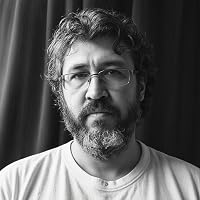
ADAM REID SEXTON is the author, editor, or adapter of more than ten published books. His fiction and nonfiction have been published in the Bellevue Literary Review, the Boston Phoenix, Edible Brooklyn and Edible Manhattan, the Mississippi Review, the New York Times, Palimpsest, Post Road, and the Village Voice, as well as on the Websites babble.com and offassignment.com, among others.
Sexton is a Senior Lecturer in the English department at Yale University, where he teaches creative writing. He has lectured at the Folger Shakespeare Library in Washington, D.C., in Central Park, and elsewhere. He has been interviewed about writing and literature by Time, the Washington Post, and npr.com, and one of his classes was broadcast on BBC radio.
Sexton received his B.A. in English from the University of Pennsylvania, where he was a Benjamin Franklin Scholar, and his M.F.A. in Fiction Writing from the School of the Arts at Columbia University.
I liked it a lot better than I thought I would, after fighting through the intro and forward. Both were full of the usual bushwa about whether or not writing can be taught. The answer to that debate is always going to be "sort of," so why rehash it at every opportunity? Sexton is a little self funny; at one point he jokes about his own "in my book" joke, which was irritating.
But once, I got to the meat of the book, I was impressed. It's well-organized, well-written and Sexton's examples are spot on. I have to say, I learned some stuff. Plus, I now have an urge to reread "Lolita."
Get it, read it ... but skip the intro and forward.
I have mostly finished this book, but I am re-reading and digesting certain parts. Sexton does a great job framing different elements of fiction (structure, character, plot, dialogue, etc.)around the work of a writer who is a master of that element. I thought it was particularly useful on the topic of plot and how character drives plot--something I have heard before, but this book does a good job of illustrating and exploring that concept.
I use this book regularly in my creative writing teaching. The style is clear and authoritative, and Sexton uses great examples from literature to illustrate points on style, voice, tone, dialogue, point of view and more. Contains useful reading suggestions, too.
This was one of the most helpful writing books I've ever read. I gained a wealth of knowledge that I know has improved my writing. I highly recommend it.
Master Class in Fiction Writing (2006) by Adam Sexton is a useful tool and guide along the way of crafting memorable fiction.
There is something to be said about craft books on writing and their humble aim to produce better writers. And the something that should be said is that more of such books are printed annually with readers, namely would-be-hopeful-disillusioned writers, snatching them up in blissful dreams of making it BIG: getting into print and becoming an official, real-live author. The other something that also should be added is that once a writer has made it into print the publishing world will likely chew them up and spit them out.
After all, publishing has now become a print-on-demand business venture—especially with Random House and Penguin’s recent merger last October—and money, not art, is to be made. Nevertheless, writers seek out craft books that should inspire, mitigate a transition from non-published, abject writer to non-published, abject writer that is slightly better in ability and skill. “For in each generation,” writes Ford Madox Ford in The English Novel as if it were yesterday, “an enormous amount of insipid art is turned out by inferior students receiving their instruction at the hands of academic instructors. That cannot be helped. But the fact remains that to a real master possessed of a real individuality the study of methods of his predecessors must be of enormous use” (118).
The fact does remain, however, that writers, published or not, student or scholar, are often guided—to mountaintop or off a cliff—by such attempts to explain the mad, complex world of writing. In Master Class in Fiction Writing, Adam Sexton’s attempt to produce better writers, readers are left with a vast amount of knowledge designed more to express the author’s skill as a Brobdingnagian reader—matched, luckily, by this reader—than to form a coherent, structured plan on fiction writing.
To begin, Master Class in Fiction Writing must be purchased along with several other key works in literature if the craft book is to be fully understood, and Mr. Sexton recommends (coming non to short to that of an official order) for the reader to stop at each chapter and read another novel—not the best approach for any writer, experienced or otherwise. The only exception is in the first chapter, titled “Story Structure: ‘Araby’”, where Sexton reprints James Joyce’s short story in its entirety. The following chapters coincide with these readings in exact order: Sense and Sensibility by Jane Austen; “The Secret Sharer” by Joseph Conrad; Rabbit, Run by John Updike; Iris Murdoch’s 1961 novel A Severed Head; As I lay Dying by Faulkner; Beloved by Toni Morrison; A Farewell to Arms by Hemingway; and, finally—gasp!—Lolita by Nabokov.
No wonder Sexton calls it a “master class” and that it is; but just by taking a look at this list one should quickly ascertain that this craft book will likely instruct the writer in how to be a better reader of literature and establish a keen skill on how to analyze such books in the future. Most serious writers, therefore, will have read these works—luckily, I had—and Sexton’s craft book can be read uninterrupted and with relative ease. For the amateur reader, however, Master Class in Fiction Writing will actually cost more time and more money than other craft books on writing that are out there due to the fact that Sexton requires an accompaniment of other books to support his insights on how to become a better writer (/reader).
Since Sexton often requires the reader to leave his book in order to read another, a writer might be better served closing Sexton’s book and picking up Roy Peter Clark’s Writing Tools: 50 Essential Strategies for Every Writer. In about as many pages as Master Class in Fiction Writing, Writing Tools accomplishes what Sexton attempts to do but eventually falters and staggers into more rumination than prescriptive or descriptive instruction. Clark in Writing Tools skillfully guides the reader-writer from the lowest forms of grammar (e.g., subject and verbs, adverbs, punctuation, etc.) through a helpful instruction on special effects, including seeking original images to varying sentence and paragraph length for effect to tuning the voice of the writer.
Clark continues in the last half of the book to delve deeper into the larger schemes of novel writing, which includes using dialogue as form of an action and the writer’s goal of generating suspense and internal cliffhangers; the final section suggests useful habits before, during, and after the act of writing. Writing Tools is a well-rounded craft book that allows the reader to read a chapter each week and finish the novel in one year. The reader, however, will not want to put this book down.
Returning to Sexton’s master class, much can be taken from the book to apply to the trade of writing. Master Class in Fiction Writing is much broader in scope than Writing Tools, and to some readers this is needed to proceed to a higher level of learning. Sexton weaves the alternative reading assignments flawlessly into lectures on conflict, climax, characterizing, plot, observation, descriptive writing, dramatic tension, attributives, and point-of-view, to name a few. The final two sections covering A Farewell to Arms and Lolita are exceptional in their analysis but somewhat lacking in their duties to teach writers how to become better. It is like having a tour guide point to “La Joconde” and tell the would-be painter everything he knows of how Leonardo da Vinci came to create such a beautiful and masterful work of art portraying a plain woman sitting and smiling. Such artists need this, and for those artists Sexton aims his mental prowess.
At one point, Sexton explains that A Farewell to Arms is “the rare novel that lacks not only consequences but significant exposition, as well—a feat presumably close to impossible that Hemingway nonetheless accomplishes with aplomb” (188). The first sentence of the following paragraph reads: “The structure of A Farewell to Arms is classic: Frederic wants Catherine” (Sexton 188). On and on Sexton proceeds, as he has done through the entire book, more captivated by the sound of his own voice than providing clear and coherent instruction in how to write better. He does shine however in occasional moments of clarity and wit. In Chapter 9: “The World of Story: Lolita”, Sexton extrapolates on technique: “With a strong conflict at his story’s core, a writer is actually freer to characterize more deeply, to describe at greater length” (203); and later on page 209:
The writer’s description of even the most ordinary aspects of a scene is physical and focused, as on page 92 when Lolita comes to Humbert “dimly depraved, the lower buttons of her shirt unfastened.” Sure Nabokov serves up an abstract generalization (“dimly depraved”), but he immediately supports that with concrete specifics (“the buttons”). Lolita’s physical setting has been observed and described with a combination of precision (one of the writer’s favorite words) and originality that is almost peerless.
It is in these moments that Sexton truly shines and is well-worth the time and effort of reading. He is able to explain a writing skill and produce simultaneously a vivid example from a notable book (the same is also true for Clark’s Writing Tools). What also make Master Class in Fiction Writing a rather handy book to have around the writing desk are the “Suggestions for Further Reading” sections Sexton places at the end of each chapter.
What we don’t have here—don’t mind the Guns N’ Roses pun—is a failure to communicate, either with Clark or Sexton. Clark’s Writing Tools is an extremely useful book for any writer, amateurish or seasoned, while Sexton’s Master Class in Fiction Writing is aimed at a much finer point on the reader-writer spectrum. If Sexton’s book is a “master class” then let Clark’s Writing Tools be an “undergraduate review” in writing, at the most basic and most complex levels. Needless to say, both these books are going to add value to any writer who reads them, and Ford was surely correct when he surmised: “If what you write is to please you must see how your predecessors did it” (139). And that is why, for most—those crazed-dedicated who seek publication—writing and reading are such a grand pleasure to be had.
Works Cited
Clark, Roy Peter. Writing Tools: 50 Essential Strategies for Every Writer (2006). New York: Little Brown and Company, 2008. Print.
Ford, Ford Madox. The English Novel (1930). Manchester: Carcanet Press Ltd., 1997. Print.
Sexton, Adam. Master Class in Fiction Writing: Techniques from Austen, Hemingway, and Other Greats. New York: McGraw-Hill, 2006. Print.
This book is excellent with plenty of extremely useful advise; however, the author tends to interject his own opinion about the required works (and other works) and, much to my extreme irritation, often spoils the ending both of the "required" reading and other classics. If you've read these classics, or are so familiar with them that you know the entire story by heart despite never actually having read the books themselves, this is no big deal; I, however, was not familiar with the plots of books such as Jane Eyre or Moby-Dick, and as neither book is required reading in this book I wasn't really expecting him to cite major plot points in such works as examples. Spoilers aplenty are also given for the required reading, but he usually warns you to read the books beforehand.
As for the books he requires you to read, some are excellent and some, I think, could have been better. Sense and Sensibility, Araby and Lolita are wonderful examples of characterization, structure and story, respectively (and great books overall); The Secret Sharer, Rabbit, Run, and Beloved, however, I found agonizing to read (I didn't even finish the last two). A Farewell to Arms I enjoyed somewhat (it's better than the godawful The Sun Also Rises, anyway), but I think The Old Man and the Sea is a better example of the Hemingway style (which is what the author was going for) and a better book overall. A Severed Head was hilarious and a good example of good dialogue, but it was sometimes difficult to read.
In all, it's a great book that I would definitely recommend; it's just not flawless.
Not bad. I think this format of studying literature and techniques would have worked far better as an actual class than as a book, but as you cannot buy a mass-produced class from your bookstore, this will have to do. I liked the way Sexton has structured his book using case studies to illustrate the effectiveness of various techniques, but at times he can be a bit black and white and about ideas, and has a habit of mocking the prevailing attitudes of english major students/teachers in a way to seem accessible.
A school read that I found to be absolutely useless. I don't read classical literature, which could be why my opinion is so strong about this book. Obscure references to things I've never read nor ever will read.
This book makes me feel like I literally (pun intended) when to university for English Lit. I rarely read any books twice. But I assure I will be referring to parts of it in the future when I buy it. Adam Sexton, this book is a Godsend.