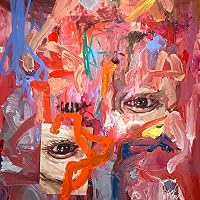
Comic, dark and insightful, What Happened? is the new and essential collection of Hanif Kureishi's finest literary essays and fiction.
No topic is too fringe or too mainstream for this insatiable―and much-loved―author. From social media to the ancient classics, from appraisals of David Bowie to Georges Simenon to Keith Jarrett, this is the latest literary 'event' in a unique body of work that displays Kureishi's characteristic boundless curiosity and wit. What Happened? is as much about the very fact of Kureishi’s catholic appetite for culture as his observations and insights themselves, and any new book in his oeuvre is a justification for celebration.
Hanif Kureishi is the author of novels (including The Buddha of Suburbia, The Black Album and Intimacy), story collections (Love in a Blue Time, Midnight All Day, The Body), plays (including Outskirts, Borderline and Sleep With Me), and screenplays (including My Beautiful Laundrette, My Son the Fanatic and Venus). Among his other publications are the collection of essays Dreaming and Scheming, The Word and the Bomb and the memoir My Ear at His Heart.
Kureishi was born in London to a Pakistani father and an English mother. His father, Rafiushan, was from a wealthy Madras family, most of whose members moved to Pakistan after the Partition of India in 1947. He came to Britain to study law but soon abandoned his studies. After meeting and marrying Kureishi’s mother Audrey, Rafiushan settled in Bromley, where Kureishi was born, and worked at the Pakistan Embassy.
Kureishi attended Bromley Technical High School where David Bowie had also been a pupil and after taking his A levels at a local sixth form college, he spent a year studying philosophy at Lancaster University before dropping out. Later he attended King’s College London and took a degree in philosophy. In 1985 he wrote My Beautiful Laundrette, a screenplay about a gay Pakistani-British boy growing up in 1980’s London for a film directed by Stephen Frears. It won the New York Film Critics Best Screenplay Award and an Academy Award nomination for Best Screenplay.
His book The Buddha of Suburbia (1990) won the Whitbread Award for the best first novel, and was also made into a BBC television series with a soundtrack by David Bowie. The next year, 1991, saw the release of the feature film entitled London Kills Me; a film written and directed Kureishi.
His novel Intimacy (1998) revolved around the story of a man leaving his wife and two young sons after feeling physically and emotionally rejected by his wife. This created certain controversy as Kureishi himself had recently left his wife and two young sons. It is assumed to be at least semi-autobiographical. In 2000/2001 the novel was loosely adapted to a movie Intimacy by Patrice Chéreau, which won two Bears at the Berlin Film Festival: a Golden Bear for Best Film, and a Silver Bear for Best Actress (Kerry Fox). It was controversial for its unreserved sex scenes. The book was translated into Persian by Niki Karimi in 2005.
He was appointed Commander of the Order of the British Empire (CBE) in the 2008 New Year Honours.
Kureishi is married and has a pair of twins and a younger son.
If I had a nickel for every time I read essay collection by an author named Hanif, I would have 2 this month alone. I really liked Birdy Num-Num, If Their Lips Weren't Sealed by Fear, We Are the Pollutants, Travelling to Find Out and My Beautiful Box Set Binge. The reference to Keith Johnstone was too real for me.
Hanif Kureishi is one of a small group of authors where I end up reading pretty much everything they’ve published. It’s a relationship that stretches back to when I was a student in the mid nineties reading ‘The Black Album’ for the first time. So I was very sorry to hear that, earlier this year, he suffered a tragic accident that has appeared to have left him paralysed. I’ve often said that Kureishi’s best writing is his non fiction essays. This collection is a mixture of these, with a smattering of short stories - some of the work here is as good as anything he’s written - I particularly liked the essay on Bowie (presumably written in the aftermath of his untimely death) and the essay ‘We Are the Pollutants’ about diversity and the efforts of a section of the establishment to suppress it. He also writes perceptively (as he has in the past) about fanaticism and fundamentalism. Even with her current paralysis, Kureishi continues to write. Hopefully he will recover and more collections like this will appear.
After crashing out of one very difficult and unrewarding book I saw this at the library and was intrigued. After an evening with this I dumped the too hard Lionel Shriver and cruised along with Hanif's effortless guidance through a series of engaging and flowing experiences. By the time I finished it I wanted to start again; something unusual these days. There are no spoilers here just entertaining mastery of language and ideas with humour and some occasional name dropping. I now want to explore the writer's work again.
Hanif Kureishi é uno scrittore e sceneggiatore inglese di origini pakistane. Ha scritto testi teatrali, più di 10 romanzi, racconti e saggi e fino all'altro ieri io ne ignoravo completamente l'esistenza. Questo libro - forse la copertina - mi ha semplicemente chiamata e l'ho preso a scatola chiusa. "Cosa é successo?" é una raccolta di saggi e racconti particolarmente dinamici, leggeri, ironici e acuti che, insieme, ci restituiscono lo sguardo curioso e mai banale di questo autore sul mondo che lo circonda. Il titolo é una domanda e riflette l'interrogarsi di Kureishi e il suo tentativo di dare un senso ai cambiamenti politici e culturali dell'ultimo decennio. Le sue riflessioni spaziano dalla musica, alla politica, all'immigrazione e le serie TV, e l'insieme é davvero una raccolta di riflessioni e meditazioni sul presente che mi ha tenuta incollata dalla prima all'ultima pagina! Che belle le scoperte casuali!
I thought it would be a book about being an immigrant in the UK. As someone who had previously immigrated to the UK too, I was looking for books that I can relate to. To the experience of being different, being told to integrate, and yet how the goal post keeps moving. But his personal experience of that, of the tension growing up, of the tension with his family. There was actually very little about that.
The intro and the first story were promising but it quickly deteriorated into unrelated fiction, stories about David Bowie, Simenon, etc. sometimes I would get a glimpse of the book I thought this could be..
The biggest disappointment was that the author is simply too preoccupied with dicks, which is not a sentence I imagined I’d say in a good reads review He oscillates between decent writing, obscene writing and awkwardly moralistic writing
I would not recommend this, it’s disappointing and disjointed.
Ottima l'idea di un libro che mescola saggi e racconti, il che conferisce al tutto un ritmo di lettura perfetto. Kureishi è incisivo soprattutto nel raccontare il contesto inglese in cui è cresciuto e che ha visto cambiare, con un'attenzione costante alle sue origini e al tema dell'integrazione. È una raccolta molto eterogenea, per cui ci sono spunti per tutti i gusti e la lettura è sempre piacevole. Qualche racconto in più non avrebbe stonato.
Well written analysis of society, late stage capitalism, London in all its glamorous addictions and the rise of fundamentalism and fascism. Hugely important read, harrowing or moving essays like Nowhere and hopeful stories centring ice cream and love - the musings on free speech absolutism were particularly interesting. And on values that Europeans/British try to claim as theirs but are and have always been universal, just the playing field has been made different.
such an odd book. If vacillates between brilliantly conceived writing and being whiny and self important. The fictional chapters are really well done. The autobiographical ones give the reader a lot to think about this very complicated (and pretty bitter) writer. It took me months to finish it.