Bei dem Tiefstand des Blut- und Geistesadels war es nicht zu verwundern, da� eine dritte Menschenklasse provisorisch die Macht an sich ri� die Plutokratie. Die Verfassungsform, die Feudalismus und Absolutismus abl�ste, war demokratisch; die Herrschaftsform plutokratisch. Heute ist Demokratie Fassade der Plutokratie: weil die V�lker nackte Plutokratie nicht dulden w�rden, wird ihnen die nominelle Macht �berlassen, w�hrend die faktische Macht in den H�nden der Plutokraten ruht. In republikanischen wie in monarchischen Demokratien sind die Staatsm�nner Marionetten, die Kapitalisten Drahtzieher: sie diktieren die Richtlinien der Politik, sie beherrschen durch Ankauf der �ffentlichen Meinung die W�hler, durch gesch�ftliche und gesellschaftliche Beziehungen die Minister.
An die Stelle der feudalen Gesellschaftsstruktur ist die plutokratische getreten: nicht mehr die Geburt ist ma�gebend f�r die soziale Stellung, sondern das Einkommen. Die Plutokratie von heute ist m�chtiger als die Aristokratie von gestern: denn niemand steht �ber ihr als der Staat, der ihr Werkzeug und Helfershelfer ist.
Als es noch wahren Blutadel gab, war das System der Geburtsaristokratie gerechter als heute das der Geldaristokratie: denn damals hatte die herrschende Kaste Verantwortungsgef�hl, Kultur, Tradition w�hrend die Klasse, die heute herrscht, alles Verantwortungsgef�hles, aller Kultur und Tradition bar ist.
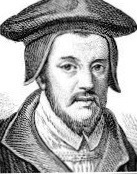
Richard Nikolaus Eijiro, Count of Coudenhove-Kalergi, was an Austrian-Japanese politician, and philosopher. He was a pioneer of European integration, he served as the founding president of the Paneuropean Union for 49 years.
His parents were Heinrich von Coudenhove-Kalergi, an Austro-Hungarian diplomat, and Mitsuko Aoyama, the daughter of an oil merchant, antiques-dealer, and major landowner in Tokyo.
His childhood name in Japan was Aoyama Eijiro. He became a Czechoslovak citizen in 1919 and then took French nationality from 1939 until his death.
Richard Coudenhove-Kalergi’s Practical Idealism occupies an unusual position in twentieth-century political thought. Best known as the founder of the Pan-European movement, Coudenhove-Kalergi here offers not a programmatic blueprint for continental federation, but a speculative philosophical essay that blends ethics, sociology, and cultural criticism. Written in the aftermath of the First World War, the book reflects the disorientation of European elites confronting the collapse of imperial orders and the perceived moral exhaustion of liberal civilization. Practical Idealism thus functions both as a diagnosis of modernity’s crisis and as an attempt to reconcile aristocratic idealism with the material realities of mass society.
The central argument of the book is that history is driven not primarily by economic forces or democratic majorities, but by creative minorities—what Coudenhove-Kalergi terms a “new aristocracy of the spirit.” Against what he sees as the leveling tendencies of egalitarian democracy, he proposes a form of meritocratic elitism grounded in intellectual excellence, ethical responsibility, and cultural leadership. This elite, rather than ruling through coercion or inherited privilege, would guide society through persuasion, example, and the cultivation of higher values. Idealism, in Coudenhove-Kalergi’s formulation, must therefore become “practical”: translated into institutions, norms, and leadership structures capable of shaping political life.
A significant portion of the book is devoted to a critique of mass democracy and nationalism. Coudenhove-Kalergi associates both with short-termism, emotional politics, and cultural mediocrity. Nationalism, in particular, is portrayed as an anachronistic force that fragments European civilization and prevents the emergence of a higher political unity. In contrast, Practical Idealism anticipates themes later developed in his Pan-European writings: the need for transnational cooperation, the cultivation of a shared European culture, and the transcendence of parochial loyalties. While these ideas are not yet fully institutionalized in the text, they are philosophically grounded in his belief that ethical progress requires political forms that match the scale of modern civilization.
Coudenhove-Kalergi’s style is eclectic and at times aphoristic, drawing on Nietzschean elitism, Platonic notions of guardianship, and elements of Christian and humanist moral philosophy. This syncretism gives the book its intellectual energy, but also its weaknesses. Arguments are often asserted rather than systematically demonstrated, and sociological generalizations occasionally rely on speculative or culturally biased assumptions. Most controversially, certain passages reflect early twentieth-century preoccupations with race, heredity, and hierarchy that are deeply problematic from a contemporary perspective. While these elements were not unusual in the interwar intellectual climate, they significantly limit the book’s normative appeal today and require careful contextualization.
Nevertheless, Practical Idealism remains an important document for understanding the ideological foundations of European federalism and elite-driven liberal internationalism. Its insistence that political renewal depends on moral and cultural leadership anticipates later debates about technocracy, post-national governance, and the crisis of democratic legitimacy. At the same time, its skepticism toward mass participation highlights enduring tensions between democracy and expertise in modern political orders.
Practical Idealism is best read not as a coherent political program, but as a manifesto of interwar European idealism grappling with the collapse of nineteenth-century certainties. Its blend of visionary ambition and aristocratic pessimism captures a moment when intellectuals sought to salvage civilization through ethical renewal and supranational integration. While many of its assumptions are dated or objectionable, the book remains of scholarly interest for students of European integration, elite theory, and the intellectual history of the interwar period.
This is a very strange book. It is cringilly racial essentialist at times, but it’s not racist in the way suggested by the Goodreads subtitle, which I believe to be a later addition.
The last third of the book is the most interesting. The author proposes a “muscular, courageous” peace movement, which would be tied to a super national European organization. This organization would preserve current peace by freezing current national borders, and banning any wars to change them. It would then slowly right injustices and prevent the emergence of new causes of war by: (1) slowly dissolving the importance of interstate borders within the organization (eg freedom of movement) (2) establishing English or Esperanto as a lingua Franca (3) encouraging countries to compete in sport (except hunting which is too bloody) and human rights for their citizens rather than fighting wars (4) the capitalists and marxists tolerate eachother, and slowly synthesize their ideas/techniques over the very long run (5) the establishment of ‘peace propaganda’ offices (eg Erasmus program, making war seem uncool)
This vision seems remarkably similar to the actual development and success of the EU! And apparently this guy was one of the leaders of the movement. He also identifies mass refugee migration, especially from the ‘mongoloid’(cringe!) races as posing a threat to this model.
The first two thirds of the book is the sort of philosophical meditation you’d sort of expect from a sophomore someone trying to synthesize Marx and Nietczche at the end of WWI. Some of it still feels fresh, for example when discussing the political competition between the urban intelligentsia and the rural Junkers, and how this emerges from their different values. Of course he then essentialists these perspectives racially a bit (no points for guessing which (((race))) is the examplar of the urban intellectual — he also calls Chinese more philosophically developed but less technologically sophisticated than westerners) that’s par for the course for a writer in his Setting, and he’s remarkably egalitarian and anti- eugenics war about it.
Does he actually want to eliminate race and national identity altogether, through miscegenation, as his critics accuse? He doesn’t say, explicitly, but it is a natural inference. He himself was an interesting hybrid: Japanese and Czech. Is it nationally chauvinistic to wish that everyone should be a mix like you?
2 stars for the decent first part, +1 stars for the really interesting international peace plan +1 star for the interesting history -1 star for cringe racism.
This book is much lauded by some and condemned by others for allegedly promoting a plan for the destruction of European identity through systematic race mixing. The front cover of this edition bears the subtitle, "The Kalergi Plan to Destroy European Peoples." While the author does support a general strengthening of pan-European identity, I cannot find a plan for the destruction of national identity, nor anything at all about race-mixing.
Can someone explain what is going on here? Have I bought a defective copy leaving out some chapters, or is there a problem with the translation, or what?
The "Historical Introduction" of this book puts a lot of words into Kalergi's mouth that he otherwise did not transcribe - at least not in Practical Idealism. Unfortunately this book has gained traction among propagators of the Great Replacement conspiracy theory as proof-positive literature to secure its legitimacy. It's a shame, as it's otherwise a decent work of political theory.
Yes, Kalegri did explicitly assert that the European race, as we know it, will case to exist: "In ten thousand years history will be divided in the pre-and post-technological ages. The Europeans – who, by that time will be long extinct – will, as the fathers of the technological world change, be praised as saviors." He also references the future of a "Eurasian-Negroid" race, on page 30. I don't think many have read past this page, as the message of the book lies towards the end, where he criticizes historical pacifism, and offers a revised strategy for pacifists which he believes is more practical in achieving idealistic peace. That's the point - not eliminating the white race. His assertions of a discontinued white race is much more along the lines of pattern prediction than a nefarious agenda.
All that aside, the book is enlightening on 1920s-era political thought, especially while having the knowledge of World War 2 - a conflict which Kalegri fears and loosely predicts, sometimes with inaccuracy and sometimes being spot on.
The book foreshadows many key developments in the European Union's trajectory, particularly in its economic, social, and military philosophies. While I find many of the author's ideas (and the subsequent execution by the EU) often misguided, the text provides a fascinating window into the socioeconomic thought of the european aristocratic class in the 1920s.
As other reviewers have noted, the book can at times feel antisemitic, albeit in a way that differs from the implications of its posthumous subtitle. This aspect largely reflects the prevailing attitudes of the era, and is common to many books of the time.
If I could give this book 0 stars, I would. It does not even deserve a single star. Too much binary thinking (e.g., there are only two schools of philosophy, etc.); radically racist ideology; too many false assertions; ramblings of a racist, fringe-leftist moron. One of the worst books I've had the displeasure of reading.
Practical Idealism es el resultado de lo que pasa cuando un aristócrata aburrido se convence de que puede salvar al mundo escribiendo manifiestos desde su escritorio de caoba. Coudenhove-Kalergi, que jamás tocó un arado ni sudó fuera de un salón de baile, fantasea con una "aristocracia espiritual" formada oh sorpresa por tipos como él: cultos, refinados y convenientemente alejados de la sucia plebe. El pueblo, claro, aparece en su libro como un montón de bárbaros incapaces, esperando ser guiados como borregos por una casta de iluminados que combinarían la fuerza de un caballero medieval con la sabiduría de un sabio griego. Qué conveniente.
El conde se agarra a la tecnología como quien se agarra a un clavo ardiente: cree que las máquinas nos emanciparán, pero nunca se pregunta si los idiotas que las manejan no usarán ese poder para destruirse unos a otros aún más rápido. Su solución para la decadencia europea es mezclar todas las razas y culturas hasta crear un "hombre planetario" (sí, suena a secta de autoayuda), porque claro, en su cabeza, cuanto más mezcladitos estemos, menos problemas habrá. Como si la estupidez humana se diluyera genéticamente.
La ingenuidad de Kalergi da vergüenza ajena: cree que la historia se mueve por ideales elevados y no por intereses, codicia y golpes bajos. Imagina una Europa unida porque sí, como si las naciones fueran a soltar sus odios ancestrales después de un brindis en Viena. Su fe en una élite intelectual incorruptible es tan conmovedora como absurda: basta con mirar a cualquier universidad o parlamento para ver que donde hay títulos, no siempre hay virtud, y que los más letrados pueden ser también los más ruines.
Practical Idealism no es un manifiesto de “extinción de Europa” como los paranoicos de siempre repiten: es algo mucho peor. Es un manual de supremacismo liberal y occidentalocéntrico escrito con la arrogancia de quien se cree un mesías aristócrata. Kalergi no propone borrar a los europeos: propone que Europa conquiste culturalmente al resto del mundo, mezclándolo y rehaciéndolo a su imagen y semejanza. La famosa mezcla racial de “eurasiático-negroides” que promueve no es un llamado a la diversidad alegre, sino a la uniformización bajo el modelo europeo. No pide que los europeos desaparezcan: pide que todos los pueblos no europeos dejen de ser lo que son para convertirse en europeos de segunda generación.
Kalergi, convencido de la supremacía ética y cultural de Europa, ve el mestizaje no como un acto de igualdad, sino como un acto de absorción: una herramienta para que las antiguas civilizaciones orientales, africanas y asiáticas imiten y adopten la forma de ser europea hasta perder sus rasgos distintivos. El objetivo no es convivir, sino homologar. El proyecto de "unificación" no es una hermandad de culturas: es la disolución de todas bajo un molde europeo que, casualmente, ya es superior desde su punto de vista.
Y todo esto se envuelve en el ropaje hipócrita del “idealismo práctico”. La aristocracia del espíritu que propone no sería más que un nuevo clero ilustrado europeo, blanco, moderno gobernando al mundo mestizo en nombre de unos valores universales que en realidad son profundamente eurocéntricos. Esta no es la destrucción de Europa: es su canonización obligatoria como el modelo definitivo para el género humano.
Kalergi no soñaba con la desaparición de Europa, soñaba con la desaparición de todo lo que no fuera Europa. Su liberalismo es tan inclusivo como un ladrón que invita a tu casa para desvalijarla y luego decirte que ahora vives mejor. Su idealismo es un colonialismo de guante blanco: no ya de armas y ejércitos, sino de escuelas, idiomas, costumbres, genes. Todo absolutamente todo subordinado a la misma idea: Europa como centro natural e inevitable del mundo.
Leer Practical Idealism hoy es asistir a una clase magistral de cómo el liberalismo puede ser más imperialista que cualquier dictadura, más uniformador que cualquier totalitarismo. No, no es un libro “contra los blancos”: es un libro que exalta la visión más miserable del eurocentrismo, esa que pretende "salvar" al mundo convirtiéndolo en una copia cultural subordinada de sí mismo.
Kalergi no era un enemigo de Europa. Era el peor tipo de amigo: el que ama tanto su mundo que prefiere aniquilar todo lo ajeno antes que verlo coexistir.
This is not the copy I read. The sub-title is not original but added by others and is extremely misleading, helping to propagate a lie. There is no 'Kalergi plan' to destroy white Europeans (as many on the right side of the political spectrum like to preach) to be found within this book. The closest I could find was an almost throwaway (in the sense that it was not dwelled or expounded upon nor repeated) line to how future Europeans (and mankind generally) will look like Egyptians, through mutual understanding, togetherness and peace. If there was any plan or vision of Kalergi it was one for a united, peaceful and productive Europe, in which its people attain power, freedom leisure, and culture.
There are 3 books or essays. The first covers society, the second technology (and how with careful ethics it will lead to a human utopia), and the third promotes pacifism. Despite being over 100-years old, many of the ideas still hold merit.
Practical idealism is heroism; practical materialism is eudaimonism. Whoever does not believe in ideals has no grounds to act idealistically, or to fight and suffer for ideals. For he knows and recognises only a single value: desire, and recognises just one evil: pain. Heroism requires belief and commitment to an ideal: the conviction that there are higher values than pleasure and greater evils than pain.
I agree that the subtitle here is misleading. Obviously Kalergi did not publish it like so. It is an interesting read though on the seeding of the idea of a United European States. You can understand a lot of the current struggles of the EU to ever more centralize power and trying to create a more authoratarian US in Europe. This book gives historical perspective of the direction the EU been going and current day events. There is nothing new under the sun, just aristocrats trying to build an empire.