

What do you think?
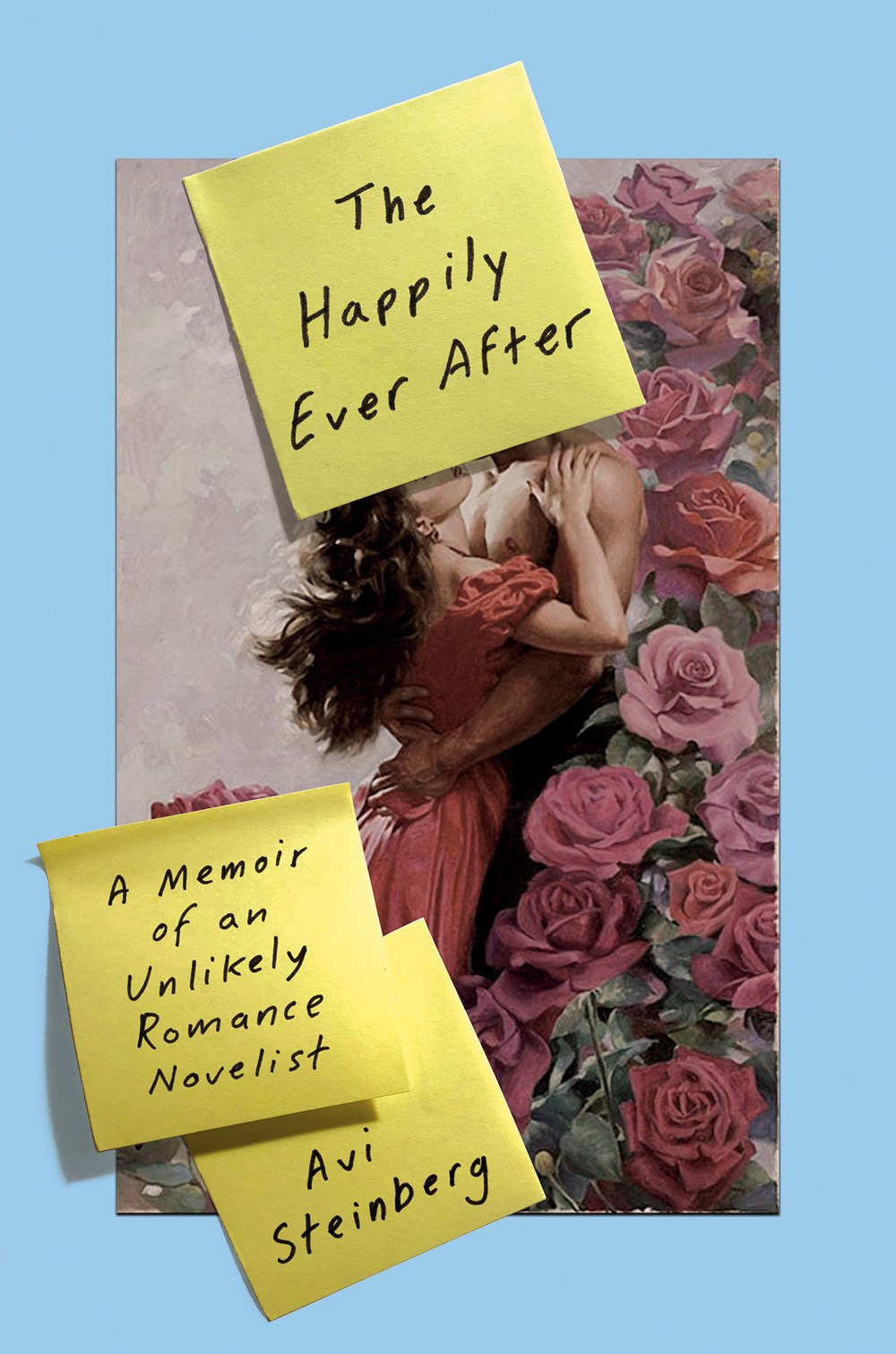
The Happily Ever After: A Memoir of an Unlikely Romance Novelist
A memoir about writing a novel about searching for love.
Is romance dead? Is that why there are so many vampires in today's romance novels? When Avi Steinberg's love life took a grim turn, he did what he always does: He consulted his old books, the usual cast of Great (Very Serious, Usually Male) Authors. And he immediately realized that these books were part of the problem. Instead, he began to read romances, the books he--like so many of us--have been conditioned to dismiss as "trashy." What he discovered was a genre that was tremendously diverse and daring, along with a vast network of innovative writers who were keeping the novel as alive as ever. His own relationship problems, he realized, came down to a failure of his imagination. And so he set out on a quest to write and publish a romance novel and to find real-life love.
A hybrid of memoir, travelogue, and critical essay, The Happily Ever After chronicles an adventure in a brave new world of literature. Steinberg offers a report from the trenches of romance, moving between major industry conferences and writing groups at the local bar as he works and reworks his romance novel idea. He reveals the inside scoop from a major romance publishing house, crisscrosses the country meeting mysterious ghostwriters and Fabio's great unsung rival, and offers a running take on the fascinating history of romance writing, the genre that invented, and continues to reinvent, the modern novel. Along the way he meets many readers, each of whom sheds light on why we are so fascinated by--and phobic of--romance fiction and what the vitality and fractiousness of our biggest genre says about us.
With quirky wit and disarming honesty, Steinberg captures an often misunderstood literary culture and learns, from its devoted practitioners, how to take the Happily Ever After seriously in his own life.
Is romance dead? Is that why there are so many vampires in today's romance novels? When Avi Steinberg's love life took a grim turn, he did what he always does: He consulted his old books, the usual cast of Great (Very Serious, Usually Male) Authors. And he immediately realized that these books were part of the problem. Instead, he began to read romances, the books he--like so many of us--have been conditioned to dismiss as "trashy." What he discovered was a genre that was tremendously diverse and daring, along with a vast network of innovative writers who were keeping the novel as alive as ever. His own relationship problems, he realized, came down to a failure of his imagination. And so he set out on a quest to write and publish a romance novel and to find real-life love.
A hybrid of memoir, travelogue, and critical essay, The Happily Ever After chronicles an adventure in a brave new world of literature. Steinberg offers a report from the trenches of romance, moving between major industry conferences and writing groups at the local bar as he works and reworks his romance novel idea. He reveals the inside scoop from a major romance publishing house, crisscrosses the country meeting mysterious ghostwriters and Fabio's great unsung rival, and offers a running take on the fascinating history of romance writing, the genre that invented, and continues to reinvent, the modern novel. Along the way he meets many readers, each of whom sheds light on why we are so fascinated by--and phobic of--romance fiction and what the vitality and fractiousness of our biggest genre says about us.
With quirky wit and disarming honesty, Steinberg captures an often misunderstood literary culture and learns, from its devoted practitioners, how to take the Happily Ever After seriously in his own life.
272 pages, Hardcover
First published August 11, 2020
About the author
Avi Steinberg
6 books139 followersAvi Steinberg's first book, Running the Books: The Adventures of an Accidental Prison Librarian, was a San Francisco Chronicle Best Book of the Year. He is a regular contributor to The New Yorker’s Culture Desk blog. His essays have appeared in The New York Times Magazine, Salon, The Paris Review Daily and n+1.
Ratings & Reviews
Friends & Following
Create a free account to discover what your friends think of this book!
Community Reviews
Displaying 1 - 29 of 29 reviews
August 18, 2020
I don't usually write book reviews, but I was shocked by the misinformation in the negative reviews on here. The author does NOT claim that Anna Karenina and Madam Bovary are romances. On the contrary. He says that Karenina and Bovary are romance *readers* which is why, in his view, their misogynistic authors dispense with them so cruelly. He also argues that Tolstoy, Flaubert, and other Dead Male Writers cribbed from the romance writers of their day. It's a very important argument in his book, that the classic novel owes a lot to the romance.
The last word is given to romance readers, not Tolstoy: "Despite Tolstoy’s claim that happiness is so common that it is banal, the readers of romance, who are the democratic plurality of readers, know better. They know that happiness is painfully rare, and precious, and a story worthy of telling and retelling."
Another key point in this book is that the romance world is much more democratic than literary fiction. As a writer, Steinberg loves this, and it really shows in his book. His romance writing group is a very important part of the story. He enjoys meeting dozens of writers (beginners as well as established voices), editors, and even a cover model. He discusses RWA's fraught attempts to deal with racism. And, for many pages, he interviews "Tina," a major ghostwriter (this section is one of my favorites in the book). But what makes the romance world wonderful, its "radically democratic potential," he says, "is also a deep mine for the greedy." And here Steinberg discusses Amazon scammers, *letting romance authors themselves* speak about how they have been impacted by Amazon's policies. So yes, good and bad sides to publishing with Amazon -- but certainly not all bad. And what interests him is the potential for collective action: "There is a labor war brewing in romance."
I was curious to see a lot of romance readers reacting negatively to Steinberg's hyper-critical discussion of literary fiction, his critique of the canonical authors. I'm not a romance expert (I read in many genres) but my favorite parts of the book were all of the discussions of the romance world. The writing group is such a witty recurring cast of characters, and the section with Tina is fantastic. I also really appreciated the insight into structural issues in the romance world: the good and bad aspects of the publishing industry, the problems with racism, etc.
Maybe what confused the reviewers here is that this nonfiction book about romance had an arc: the author goes from being clueless about the romance genre to learning more and more about it. He starts with a hunch that the Dead Male Classics hated romance novels so much they literally went about killing off romance readers in their stories. And that hunch turns out to be correct, but it doesn't mean that he automatically knows how to write a romance novel. He has to figure it out by learning a lot, reading a lot, and listening to romance writers. I appreciated that humility.
The last word is given to romance readers, not Tolstoy: "Despite Tolstoy’s claim that happiness is so common that it is banal, the readers of romance, who are the democratic plurality of readers, know better. They know that happiness is painfully rare, and precious, and a story worthy of telling and retelling."
Another key point in this book is that the romance world is much more democratic than literary fiction. As a writer, Steinberg loves this, and it really shows in his book. His romance writing group is a very important part of the story. He enjoys meeting dozens of writers (beginners as well as established voices), editors, and even a cover model. He discusses RWA's fraught attempts to deal with racism. And, for many pages, he interviews "Tina," a major ghostwriter (this section is one of my favorites in the book). But what makes the romance world wonderful, its "radically democratic potential," he says, "is also a deep mine for the greedy." And here Steinberg discusses Amazon scammers, *letting romance authors themselves* speak about how they have been impacted by Amazon's policies. So yes, good and bad sides to publishing with Amazon -- but certainly not all bad. And what interests him is the potential for collective action: "There is a labor war brewing in romance."
I was curious to see a lot of romance readers reacting negatively to Steinberg's hyper-critical discussion of literary fiction, his critique of the canonical authors. I'm not a romance expert (I read in many genres) but my favorite parts of the book were all of the discussions of the romance world. The writing group is such a witty recurring cast of characters, and the section with Tina is fantastic. I also really appreciated the insight into structural issues in the romance world: the good and bad aspects of the publishing industry, the problems with racism, etc.
Maybe what confused the reviewers here is that this nonfiction book about romance had an arc: the author goes from being clueless about the romance genre to learning more and more about it. He starts with a hunch that the Dead Male Classics hated romance novels so much they literally went about killing off romance readers in their stories. And that hunch turns out to be correct, but it doesn't mean that he automatically knows how to write a romance novel. He has to figure it out by learning a lot, reading a lot, and listening to romance writers. I appreciated that humility.

November 20, 2020
The Happily Ever After
By Avi Steinberg
This was an unusual read for me and quite the interesting topic that I did enjoy and wanted to especially read for Nonfiction November. Part memoir, essays and musings about romance novels, happy ever after's and also delving into his own life and his recent divorce. I found this funny and the honesty raw and appreciated.
By Avi Steinberg
This was an unusual read for me and quite the interesting topic that I did enjoy and wanted to especially read for Nonfiction November. Part memoir, essays and musings about romance novels, happy ever after's and also delving into his own life and his recent divorce. I found this funny and the honesty raw and appreciated.

no-thank-you
April 24, 2020Definite addition to the no thank you pile. Read a romance instead.
https://twitter.com/JenReadsRomance/s...
https://twitter.com/JenReadsRomance/s...

August 14, 2020
meh to blah. Steinberg has done some research into how the romance genre works, the tropes, and some of the writing groups and conventions. Woven into this is Steinberg's own story of learning to write romance, particularly the emotional connection between the characters that underpins every book in the genre.
However, the "here is how the romance industry works" feels very cursory. It's not a grand tour. He hits 50 Shades, but goes no further down that rabbit hole. He cloaks a lot of insiders in the genre with false names, including a prominent publisher (I'm fairly certain I know who that publisher and editor is) and while he quotes panelists, he rarely names the speaker (and those panels aren't secret or anything, they can be fact-checked). He spends a lot of time talking to cover model CJ Hollenbach and with a ghost-writer, but that doesn't really move the book along. And while he has his reasons for gravitating to the Amish romance subgenre (it has to do with being raised Orthodox Jewish, and the similarities between the two religions, and ALSO the garbage reason that Jewish romance isn't a thing *eyeroll so hard because racism*) his insistence on that genre also seems to cut his exploration of the whole genre short. (And despite Steinberg's presence at the 2019 Rita awards and some discussion of the major push for inclusion in those awards, he seems to miss a lot of big things that went down in the genre.)
When I got back into reading romance in 2012 I read something like 170 romance novels that year and BARELY SCRATCHED THE SURFACE. I feel like I did more of a grand tour.
However, the "here is how the romance industry works" feels very cursory. It's not a grand tour. He hits 50 Shades, but goes no further down that rabbit hole. He cloaks a lot of insiders in the genre with false names, including a prominent publisher (I'm fairly certain I know who that publisher and editor is) and while he quotes panelists, he rarely names the speaker (and those panels aren't secret or anything, they can be fact-checked). He spends a lot of time talking to cover model CJ Hollenbach and with a ghost-writer, but that doesn't really move the book along. And while he has his reasons for gravitating to the Amish romance subgenre (it has to do with being raised Orthodox Jewish, and the similarities between the two religions, and ALSO the garbage reason that Jewish romance isn't a thing *eyeroll so hard because racism*) his insistence on that genre also seems to cut his exploration of the whole genre short. (And despite Steinberg's presence at the 2019 Rita awards and some discussion of the major push for inclusion in those awards, he seems to miss a lot of big things that went down in the genre.)
When I got back into reading romance in 2012 I read something like 170 romance novels that year and BARELY SCRATCHED THE SURFACE. I feel like I did more of a grand tour.

November 11, 2020
This was definitely a different book than I was expecting. I was intrigued that a male author who specializes in intense researches would take on romance novels.
I am an avid romance reader and just found myself frustrated with this author's viewpoint. I don't feel this was a valid interpretation of what readers are looking for out of romance.
I did appreciate the attention that was placed in this work, but overall it did not work for me.
Thank you Double Day and Netgalley for the arc of this in exchange for my honest opinion.
I am an avid romance reader and just found myself frustrated with this author's viewpoint. I don't feel this was a valid interpretation of what readers are looking for out of romance.
I did appreciate the attention that was placed in this work, but overall it did not work for me.
Thank you Double Day and Netgalley for the arc of this in exchange for my honest opinion.

July 15, 2020
I did enjoy reading this, but I think it tries to do a bit too much. Is it a peek into the workings of the romance industry? A defense of a much-maligned genre? A memoir about a man trying to write a romance novel? A memoir about a man realizing that happily ever after is within his grasp, and all he has to do is say yes to it? It's actually all of these things, but the pinballing back and forth between them in such a short book is liable to give a reader a bit of whiplash. It works well as a memoir of a nonfiction writer trying to find his voice in a different genre, and Steinberg's own love story is beautifully and sensitively told, but in order to work as a history of/defense of/backstage pass to the genre, it would have needed to go much more in-depth.
For example, despite the time Steinberg spends at the RT and RWA conferences and hanging out with publisher types and cover models, he only begins to scratch the surface of the enormous problem of racism in the romance world. One presumes the manuscript was turned in before the late 2019-early 2020 implosion of RWA, but perhaps the book could have addressed the efforts of the many romance authors who have spent years fighting racism and injustice in publishing and professional organizations.
Many thanks to NetGalley for the opportunity to read and review!
For example, despite the time Steinberg spends at the RT and RWA conferences and hanging out with publisher types and cover models, he only begins to scratch the surface of the enormous problem of racism in the romance world. One presumes the manuscript was turned in before the late 2019-early 2020 implosion of RWA, but perhaps the book could have addressed the efforts of the many romance authors who have spent years fighting racism and injustice in publishing and professional organizations.
Many thanks to NetGalley for the opportunity to read and review!

May 4, 2022
I lively, well written book not only of the author's experience becoming a romance writer, but the obstacles he met along the way. He also details those who helped him find his writing voice and genre.

May 15, 2020
Happily Ever After: A Memoir of an Unlikely Romance Novelist review from a romance author.
In this memoir, Steinberg paints himself as a hapless, awkward, recently divorced man who recognizes that he’d like to change. He wants a real-life HEA, and therefore studies romance novels. I’m pretty sure he’s the non-threatening guy you end up next to in the checkout line, who somehow gets you talking about everything and nothing, feeling like you’ve met a kindred spirit. This memoir contains many of these kinds of anecdotes about people he met on his journey to becoming a romance novelist and finding his happily-ever-after.
The best parts of this memoir are the stories about his love life. Even when talking about his recent divorce, he’s respectful of his partner and the dissolution of what should have been his future. Later, he paints beautiful images of his feelings towards Ania, his girlfriend and now wife, enjoying precious but ordinary moments and yet is unable to articulate his feelings at the moment. He seems to be scared to reveal his feelings and instead makes jokes. He admits to struggling with emotional expression in real life, but his writing about love is delicate and charming. If he were a character in a romance novel, he’d be the beta male—great intentions, shy, maybe a touch oblivious, but absolutely devoted.
My least favorite part is his foray into the literary critique of romance. He cites novels from a century ago, meandering through his personal thoughts that romance readers and authors are often subjected to condescension, though he never addresses the why of this belief. He looks for the answers in literary critiques rather than psychology and it gets a bit ponderous. In part two, he seems to struggle with the genre promise of romance, suggesting that Eat, Pray, Love could be considered romance. (No.) Nor does he seem to recognize his own privilege. He rails against Amazon and its many faults but fails to recognize that most authors do not have the opportunity to publish with traditional publishers. Traditional publishing editors decide which books get published, acting as gatekeepers and telling authors what stories they want. Independent publishing through Amazon, Wattpad, etc., allows authors to write the story they want to write, even though they may have been told there was no market. Amazon and others allow authors to find their niche audiences and he doesn’t seem to consider how that has changed the face of publishing. Now traditional publishers recognize the readership for diverse romance, including many new subgenres such as dolphin shifters and queer Regency.
In all honesty, as a romance author and reader, I had some eye-rolling moments while reading part one, part two had some dark moments and pacing issues, but I loved part three. In the structure of romance, the second part of the story is generally when the hero falters, and perhaps Steinberg’s trudging through old literary critiques and 90s romance legends was his way of honoring the genre. However, he quickly redeems himself when he writes about love. I adored his discussion about loving Ania’s bookshelves as an insight into who she really is and offering to mix their collections when they move in together. I realize it’s a bibliophile thing, but the idea of intermingling books, those very intimate parts of our psyche, was truly romantic. His journey from divorced to married is sweet and charming and left me with all the warm and fuzzy HEA feelings.
I received a copy of this book through Netgalley in exchange for an honest review. I believe readers who enjoy memoir, literary fiction, and literary fiction critique, as well as those who enjoy the promise of love and a happily-ever-after will enjoy this book.
In this memoir, Steinberg paints himself as a hapless, awkward, recently divorced man who recognizes that he’d like to change. He wants a real-life HEA, and therefore studies romance novels. I’m pretty sure he’s the non-threatening guy you end up next to in the checkout line, who somehow gets you talking about everything and nothing, feeling like you’ve met a kindred spirit. This memoir contains many of these kinds of anecdotes about people he met on his journey to becoming a romance novelist and finding his happily-ever-after.
The best parts of this memoir are the stories about his love life. Even when talking about his recent divorce, he’s respectful of his partner and the dissolution of what should have been his future. Later, he paints beautiful images of his feelings towards Ania, his girlfriend and now wife, enjoying precious but ordinary moments and yet is unable to articulate his feelings at the moment. He seems to be scared to reveal his feelings and instead makes jokes. He admits to struggling with emotional expression in real life, but his writing about love is delicate and charming. If he were a character in a romance novel, he’d be the beta male—great intentions, shy, maybe a touch oblivious, but absolutely devoted.
My least favorite part is his foray into the literary critique of romance. He cites novels from a century ago, meandering through his personal thoughts that romance readers and authors are often subjected to condescension, though he never addresses the why of this belief. He looks for the answers in literary critiques rather than psychology and it gets a bit ponderous. In part two, he seems to struggle with the genre promise of romance, suggesting that Eat, Pray, Love could be considered romance. (No.) Nor does he seem to recognize his own privilege. He rails against Amazon and its many faults but fails to recognize that most authors do not have the opportunity to publish with traditional publishers. Traditional publishing editors decide which books get published, acting as gatekeepers and telling authors what stories they want. Independent publishing through Amazon, Wattpad, etc., allows authors to write the story they want to write, even though they may have been told there was no market. Amazon and others allow authors to find their niche audiences and he doesn’t seem to consider how that has changed the face of publishing. Now traditional publishers recognize the readership for diverse romance, including many new subgenres such as dolphin shifters and queer Regency.
In all honesty, as a romance author and reader, I had some eye-rolling moments while reading part one, part two had some dark moments and pacing issues, but I loved part three. In the structure of romance, the second part of the story is generally when the hero falters, and perhaps Steinberg’s trudging through old literary critiques and 90s romance legends was his way of honoring the genre. However, he quickly redeems himself when he writes about love. I adored his discussion about loving Ania’s bookshelves as an insight into who she really is and offering to mix their collections when they move in together. I realize it’s a bibliophile thing, but the idea of intermingling books, those very intimate parts of our psyche, was truly romantic. His journey from divorced to married is sweet and charming and left me with all the warm and fuzzy HEA feelings.
I received a copy of this book through Netgalley in exchange for an honest review. I believe readers who enjoy memoir, literary fiction, and literary fiction critique, as well as those who enjoy the promise of love and a happily-ever-after will enjoy this book.

December 29, 2020
Witty and enjoyable, Avi Steinberg's book is by turns funny and a little heartbreaking.
We as readers get to follow his personal journey as well as the historical journey of novels in general, and romance novels in particular, and he does it with dry and stinging humor, as well as a sense of longing and desire to really want to understand love and romance in ways that are new to him.
One of my favorite moments in the book is when one romance reader informs him that as a writer, he gets to decide on the ending - this is an important life message for Steinberg, and a truly poignant moment that has stuck with me.
I also identified with Steinberg, as it is clear to me that we come from similar backgrounds. Based on his descriptions, it is clear that my children attended the same summer camp that he did, and so we have that in common - and everything that comes along with it. In addition, as an English major (and now college professor), I too have read many of the 'important' novels, but in the last couple of years, I have gravitated more toward romance novels, and discovered, as did the author, that I now have more in common with most of the worlds' readers. (And FYI Avi, I always hated Karenina and felt that Tolstoy clearly knew nothing about women).
I have recommended this book to my department chair whose area of expertise is the romantic period in literature, and whose favorite novel is Wuthering Heights. I can't wait to talk to him about this book.
This is a relatively short and easy read. The voice is genuine, and the 'characters' (real people) are memorable. I especially love the Boston Romance Writers group - they sound like a hoot!
We as readers get to follow his personal journey as well as the historical journey of novels in general, and romance novels in particular, and he does it with dry and stinging humor, as well as a sense of longing and desire to really want to understand love and romance in ways that are new to him.
One of my favorite moments in the book is when one romance reader informs him that as a writer, he gets to decide on the ending - this is an important life message for Steinberg, and a truly poignant moment that has stuck with me.
I also identified with Steinberg, as it is clear to me that we come from similar backgrounds. Based on his descriptions, it is clear that my children attended the same summer camp that he did, and so we have that in common - and everything that comes along with it. In addition, as an English major (and now college professor), I too have read many of the 'important' novels, but in the last couple of years, I have gravitated more toward romance novels, and discovered, as did the author, that I now have more in common with most of the worlds' readers. (And FYI Avi, I always hated Karenina and felt that Tolstoy clearly knew nothing about women).
I have recommended this book to my department chair whose area of expertise is the romantic period in literature, and whose favorite novel is Wuthering Heights. I can't wait to talk to him about this book.
This is a relatively short and easy read. The voice is genuine, and the 'characters' (real people) are memorable. I especially love the Boston Romance Writers group - they sound like a hoot!

July 3, 2020
When I first heard about this book, I was curious. As a long-time romance fan, I'm naturally protective of outsiders thinking that writing a romance novel is a quick way to make a buck. And it seemed that the only reason this book was published is because it was about a man writing romance. Not that men can't write romance, but again, I'm naturally suspicious. I can't say that this book allayed my fears, especially the first 5 pages. When you start throwing Madame Bovary and Anna Karenina, and calling them romances. Look, I liked parts of this book, mainly the bits where Steinberg writes about his process and his reasons for writing an Amish romance. He grew up in an Orthodox Jewish family, and he related in many ways to the Amish. I even enjoyed reading about his romance with his now wife. It was interesting to see how writing a romance novel opened him up emotionally.
Unfortunately that's only like 1/3 of the book. The rest was frankly pretty boring. And admittedly I skimmed over most of it, because it just wasn't riveting. There is a book to be written about the romance industry, RWA, etc. but this book isn't it. In the end, I wasn't sure who the intended audience for this book, romance fans, readers who like memoirs. It seemed like a bit of mash-up and not a very successful one.
Unfortunately that's only like 1/3 of the book. The rest was frankly pretty boring. And admittedly I skimmed over most of it, because it just wasn't riveting. There is a book to be written about the romance industry, RWA, etc. but this book isn't it. In the end, I wasn't sure who the intended audience for this book, romance fans, readers who like memoirs. It seemed like a bit of mash-up and not a very successful one.

February 8, 2021
So I picked up this book because I was interested, and a little skeptical, about a man delving into romance as a genre. I found that I truly enjoyed this book, I think that everyone can gain something from romance media, but I especially think that romance as a genre can be extremely helpful for men to connect to their emotions.
And ultimately this book crosses over many aspects from the romance publishing industry, to commentary on classic novels (whether or not they fit the romance genre and how that skews how they are talked about and viewed), along with the author’s personal experience with romance and love.
It is a book with a “jack of all trades” feel so if you want to read something just specifically about one of the previously stated topics, then I think you are better off finding a more specialized book.
But as a beginner romance reader I really enjoyed the way these topics were discussed and applied to the author’s own life. Because I’d like to think I’m trying to live in my own romance story, impatiently moving through this chapter and working towards my own happy ending.
And ultimately this book crosses over many aspects from the romance publishing industry, to commentary on classic novels (whether or not they fit the romance genre and how that skews how they are talked about and viewed), along with the author’s personal experience with romance and love.
It is a book with a “jack of all trades” feel so if you want to read something just specifically about one of the previously stated topics, then I think you are better off finding a more specialized book.
But as a beginner romance reader I really enjoyed the way these topics were discussed and applied to the author’s own life. Because I’d like to think I’m trying to live in my own romance story, impatiently moving through this chapter and working towards my own happy ending.

June 25, 2021
This memoir was so well written and entertaining! The background information about Romance Books, Writing and Publishing was thorough but only added to the book, nothing felt as though it weighed down the plot of the author's experiences. Knowing more about the industry (the good, bad, sexy, and ugly) from an insider makes me appreciate the genre more, as well as understand the controversies I've noticed online in the past few years.
I appreciated the arguments made FOR the romance genre, and explanations of how it began and grew throughout history. I especially LOVED the author's examination of Jane Austen's Northanger Abbey, how cultural and political eras such as the 1970s women's liberation movement influenced romance, and a deep dive introduction of fanfiction and how romance has thrived within that space (and how it has been challenged by the vagaries of publishing *cough, Amazon, cough* and the personal nature of the original online communities).
If you like romance or, even more importantly, don't... read this book!
I appreciated the arguments made FOR the romance genre, and explanations of how it began and grew throughout history. I especially LOVED the author's examination of Jane Austen's Northanger Abbey, how cultural and political eras such as the 1970s women's liberation movement influenced romance, and a deep dive introduction of fanfiction and how romance has thrived within that space (and how it has been challenged by the vagaries of publishing *cough, Amazon, cough* and the personal nature of the original online communities).
If you like romance or, even more importantly, don't... read this book!
Read
January 10, 2023Interesting story of a male writer who decides to become a ghost romance novelist (using a womans name). It tells of tons and tons of research and observations of how romance is one of the most highly read types of literature and yet fans fall into two categories: slightly embarrassed by reading it, or proud of reading it. Mostly consumed by women, many many from the middle of the United States.
He details the Romantic Times convention and what the sessions are titled, what a writer learns or is challenged to write as an assignment. More details on the people he meets and authors stories, inspirations etc. A big write up on Fabio and other cover models and how rich they are as well as if they are nice people or not.
Interesting reading for about 75 pages, after that it's just more of the same and got boring. I almost felt like he took a PHd project and made it into a novel. The author is a good writer with a nice way of observing the everyday and the absurd. He has a nice turn of phrase.
He details the Romantic Times convention and what the sessions are titled, what a writer learns or is challenged to write as an assignment. More details on the people he meets and authors stories, inspirations etc. A big write up on Fabio and other cover models and how rich they are as well as if they are nice people or not.
Interesting reading for about 75 pages, after that it's just more of the same and got boring. I almost felt like he took a PHd project and made it into a novel. The author is a good writer with a nice way of observing the everyday and the absurd. He has a nice turn of phrase.
October 2, 2020
I loved this memoir - I found it equal parts sweet, honest, interesting, and funny, all while discussing a genre I thought I did not generally dabble in. Now I can recognize my penchant for romcoms and the pivotal "happy ending," despite my tendency to gravitate towards the ominous "literary fiction." Steinberg writes pretty, easy to digest prose, and I found so much of this memoir interesting, as it revealed so much about myself as a reader as well. As I'm writing this, I realize even more so how much I love a happy ending - and the idea of merging my bookshelves with a man is probably (like my girl Ania says) one of the most romantic things I've ever heard. If you're looking for some interesting literary analysis and something light to remind you that there is hope in this otherwise dark and dismal world, I highly recommend this read!
February 19, 2021
This book was amazing, I loved it! I was surprised by some of the negative reviews! I don’t usually write reviews but had to write this one just to say that it was a very informative, interesting- even funny at times- and insightful memoir! This might be the first author that acknowledges that male authors “stole” the novel as a genre from women because it was a money maker and to keep women in their “place”!
“Scholars today have confirmed what was common knowledge back then: that until the 1840s, novels were written and read primarily by women. Many of these scholars have also noted that, stating in the 1840s, male writers, en masse, began to move into the novel form- into the genres they had once derided as vulgar and sill and unmanly, and this dangerous to morals- because that was where the readers, the money, and the fame had shifted.”
“Scholars today have confirmed what was common knowledge back then: that until the 1840s, novels were written and read primarily by women. Many of these scholars have also noted that, stating in the 1840s, male writers, en masse, began to move into the novel form- into the genres they had once derided as vulgar and sill and unmanly, and this dangerous to morals- because that was where the readers, the money, and the fame had shifted.”

June 26, 2020
Steinberg is an ex- Orthodox Jewish NYC journalist going through a divorce. So why not research and try his skill in the Romance genre, a multi-million-dollar publishing industry. He's off to Author/Fan Conventions, meeting Fabios, shadowing editors, studying the power of cover art, romance history, joins a romance writers' group, therapy, and finds love. It takes emotional honesty to write good romance fiction with a requisite HEA (happily ever after.) With a 2-book contract in the Amish Suspense Romance niche, you can read this fascinating fun memoir and his first novel as Dana Becker in August. What I learned- there is no guilt in the pleasure, feminists have endorsed, the mysoginist tropes have changed, and the "bodice-ripper" is almost an inside joke among readers.
September 11, 2020
Read if you: Want a funny, intriguing, and revealing look at the romance industry from a first-time romance novelist.
If you're interested in the ins-and-outs of writing a romance novel, you should read this. It's a balanced look at the industry, from the passionate fans, to the millions it makes for publishers, the disrespect it unfairly endures, and the racism African-American authors and other underrepresented authors face in the industry. Steinberg also weaves his own unexpected romance and his own attempt at writing a romance throughout the narrative.
Librarians/booksellers: Definitely purchase if you have a local writers group, especially if it is romance focused.
Many thansk to Nan A. Talese and Edelweiss for a digital review copy in exchange for an honest review.
If you're interested in the ins-and-outs of writing a romance novel, you should read this. It's a balanced look at the industry, from the passionate fans, to the millions it makes for publishers, the disrespect it unfairly endures, and the racism African-American authors and other underrepresented authors face in the industry. Steinberg also weaves his own unexpected romance and his own attempt at writing a romance throughout the narrative.
Librarians/booksellers: Definitely purchase if you have a local writers group, especially if it is romance focused.
Many thansk to Nan A. Talese and Edelweiss for a digital review copy in exchange for an honest review.

August 3, 2021
As I was poking around in the new book shelf at the library, this tumbled out and landed at my feet. I decided it was sign, so checked it out. A good book on the romance novel business, from the point of view of a guy who wants to break into the business (straight white males writing romances very rare). Turns out it's a grinding treadmill that's being ruined by Amazon. So I'll pass on that career path. Biggest flaw is the author is moody and depression prone, so can seem whiny and melodramatic at times. But if you are wondering if you could write romance novels, this book is informative.

November 9, 2020
In this somewhat uneven memoir, the author explores the world of romance fiction, becoming a romance writer himself, while navigating his own real-life romance. I found his descriptions of attending big romance publishing events and his efforts to find his own niche in romance writing considerably more interesting than his personal romance, which seemed to take over the book at some point, and not to its benefit.
January 7, 2023
(Start and end dates are approximations)
Really enjoyed Steinbergs writing— very funny and well written. But while he spends so much time defending the romance genre, it doesn’t seem like it’s something HE is actually passionate about— it does seem like he got into it himself in order to make money.
Really enjoyed Steinbergs writing— very funny and well written. But while he spends so much time defending the romance genre, it doesn’t seem like it’s something HE is actually passionate about— it does seem like he got into it himself in order to make money.
June 3, 2026
A sincere and personal exploration of the history, business, and work of Romance novels. I was especially interested in the history of the business and the work of women writers. I’d be interested to hear his thoughts on events in the world of Romance since he wrote it- Fourth Wing, Heated Rivalry etc.
May 6, 2020
I really enjoyed this funny, feminist, very "pro-romance genre" memoir about how books - and the community surrounding them - can come to the rescue for even the world's most awkward, dejected, clueless guy.

November 1, 2020
Pleasantly surprised by this! Didn’t know what to expect but I loved the memoir aspects plus the history lessons on the romance genre as a whole. If you’re curious about the writing process or you enjoy romance—even if you’ve never read a romance model—try this.
December 25, 2024
Very clever! Beautiful writing! Steinberg twines together analysis of romance literature, his own journey as a romance writer, and his own personal happily ever after story. Very well-written and readable!

September 24, 2020
I listened to this as an audio book. It was as you'd expect, not deep. I learned a lot about the sub genres in romance, without really learning about their essence. Is there essence in romance?

October 11, 2020
Interesting exploration of romance novels, romance writing and reading, and romance in life.
March 22, 2021
This was a great audiobook to listen to...it was fun and engaging. It brought me out of my otherwise blah mood. I stuck with it, which I don't normally do with audiobooks!

April 3, 2021
I thought this was so fun, the jaunt through the history and sociology of the genre. After it, I even got inspired to try to read one and ... it was terrible. But this was still fun to read.
February 22, 2023
Sort of DNFd it but mostly because I got the gist of the book. Very cool premise and pretty cool romance history moment. But eh
Displaying 1 - 29 of 29 reviews