

What do you think?
Babylon 5 omniverse
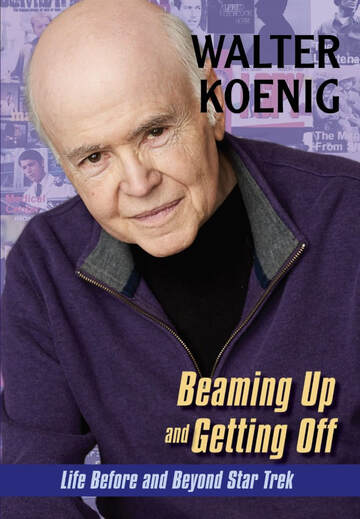
Beaming Up and Getting Off: Life Before and Beyond Star Trek
Beaming Up and Getting Off: Life Before and Beyond Star Trek returns Walter’s 1998 memoir Warped Factors: A Neurotic's Guide to the Universe to print after too long an absence. But this is no mere reprint – Walter has revitalized the material and expanded upon it by nearly 100 pages, taking us into 2020 with his unique candor, disarming humor, and surprising revelations about life in and out of Star Trek.
378 pages, Hardcover
First published October 16, 1998
Ratings & Reviews
Friends & Following
Create a free account to discover what your friends think of this book!
Community Reviews
Displaying 1 - 29 of 29 reviews

May 13, 2022
I wanted and expected to like this book more than I ended up doing.
I am not sure why I never clicked with Walter Koenig and the story of his life.
I simply could not get completely interested.
Maybe I will come back to it Someday and try again.
DNF after 5 of 18 chapters (and a quick skimming of the first Star Trek chapter).
I am not sure why I never clicked with Walter Koenig and the story of his life.
I simply could not get completely interested.
Maybe I will come back to it Someday and try again.
DNF after 5 of 18 chapters (and a quick skimming of the first Star Trek chapter).

September 7, 2012
I will freely admit that I am a huge nerd who has a soft spot for science fiction and television, so it becomes apparent that I'm a Star Trek fan easily enough, so I had read Shatner's Star Trek Memories before picking up Koenig's book. While I expected another person's point of view on the cultural phenomenon that Star Trek became, Koenig's book offered much more. Another reviewer referred to it as more of a conversation that a book and I agree wholeheartedly. Koenig does not just give us one slice of his life, but instead gives us a view of his life and how he has came to interpret it, discussing his "other shoe theory", the disappearance and reappearance of his father, and how life shaped him and allowed him to interpret his surroundings through what he admits is a neurotic view.
Along the way, we get glimpses of "Old Hollywood" merging with the new, Koenig's experiences with his various agents, and even modern insight into acting and how, despite the belief that everyone who does it is either famous and rich or at least infamous, it is still often a working man's craft. Undoubtedly my favorite Star Trek actor's memoir, it becomes not about one show's effects, but about one man's experience from his birth, how he worked his way into something that became a cultural phenomenon, and how he continued after the greater part of that experience was over. In doing this, Koenig creates not only a work of cultural interest, but displays the human side of an actor who does, indeed, pen a "Neurotic's Guide to the Universe." Whether or not you are "neurotic", there is something about Koenig's writing that is immediately likeable and human, something that is not present in many actors' autobiographies.
Along the way, we get glimpses of "Old Hollywood" merging with the new, Koenig's experiences with his various agents, and even modern insight into acting and how, despite the belief that everyone who does it is either famous and rich or at least infamous, it is still often a working man's craft. Undoubtedly my favorite Star Trek actor's memoir, it becomes not about one show's effects, but about one man's experience from his birth, how he worked his way into something that became a cultural phenomenon, and how he continued after the greater part of that experience was over. In doing this, Koenig creates not only a work of cultural interest, but displays the human side of an actor who does, indeed, pen a "Neurotic's Guide to the Universe." Whether or not you are "neurotic", there is something about Koenig's writing that is immediately likeable and human, something that is not present in many actors' autobiographies.

March 11, 2020
I recently got into Star Trek (I know, I know, where have I been?) and, as a Chekov fan, I was excited to read Walter's autobiography. I'm immensely glad I did. This book elicited a wide range of emotions in me. There were parts that gave me a good laugh (e.g. his being asked to sacrifice a chicken in a hotel room), parts that brought a tear to my eye (e.g. the death of his brother), parts that made me palm my face and go “Walter, Walter, Walter... I love you but you’re killing me, man” (e.g. his faking being hit by a rivet to get money for a car), and parts that made me want to pull my hair out in frustration (e.g. his not getting the part as Charles Manson in Helter Skelter; Railsback did a fine job but how awesome would it have been to see Walter in that role?). Just about every emotion on the spectrum I felt while reading this. I think what I appreciated most about it, though, was how candid and intimate it was. I come away from it with the sense that Walter is a good friend of mine, even though I've never met him.
I would have liked a bit more detail here and there. I don’t remember him mentioning anything about his role on Gidget where he starred alongside Sally Field, or I Spy where he starred opposite Bill Cosby (I was actually looking forward to reading about I Spy because I thought it was neat that he got to drive a speedboat in the episode he was in and wanted to know what that was like), or his role in The Virginian.
Still, I highly enjoyed the book and look forward to reading the updated version of Walter's autobiography, Beaming Up and Getting Off.
I would have liked a bit more detail here and there. I don’t remember him mentioning anything about his role on Gidget where he starred alongside Sally Field, or I Spy where he starred opposite Bill Cosby (I was actually looking forward to reading about I Spy because I thought it was neat that he got to drive a speedboat in the episode he was in and wanted to know what that was like), or his role in The Virginian.
Still, I highly enjoyed the book and look forward to reading the updated version of Walter's autobiography, Beaming Up and Getting Off.
January 20, 2022
Walter Koenig is of course best known for his portrayal of Ensign Pavel Chekov in the Star Trek original series. It is impossible to dispute that even though it was a supporting character, the role made him very well known and guaranteed significant attention for the rest of his life. Therefore, his place in the Star Trek universe alone would make a book about himself interesting.
Unfortunately, this book is more about the extreme neuroses that Koenig deals with. In some instances, it is surprising that he managed to fill the acting roles that he has performed. Nervous tics, occasionally an almost complete inability to speak and similar issues constantly recur. While it is of course the life of Koenig, it is nowhere near as interesting as his life within Star Trek. In many ways it comes across as his personal catharsis.
Fans of Star Trek will find some nice morsels about his involvement in the genre from the original series through the six feature films featuring the original cast. Much of it, specifically the dominance of Shatner in setting up the scenes, has been stated many times. Koenig revels in the times when Shatner tried to take over the direction to put greater emphasis on himself, only to have the director stand their ground and overrule Shatner.
I enjoyed this book, but tired of reading of yet another personal difficulty. Koenig was handed the acting role of a lifetime when cast as Chekov yet seems determined to emphasize the difficulties rather than the personal and lifetime accolades that have come his way.
Unfortunately, this book is more about the extreme neuroses that Koenig deals with. In some instances, it is surprising that he managed to fill the acting roles that he has performed. Nervous tics, occasionally an almost complete inability to speak and similar issues constantly recur. While it is of course the life of Koenig, it is nowhere near as interesting as his life within Star Trek. In many ways it comes across as his personal catharsis.
Fans of Star Trek will find some nice morsels about his involvement in the genre from the original series through the six feature films featuring the original cast. Much of it, specifically the dominance of Shatner in setting up the scenes, has been stated many times. Koenig revels in the times when Shatner tried to take over the direction to put greater emphasis on himself, only to have the director stand their ground and overrule Shatner.
I enjoyed this book, but tired of reading of yet another personal difficulty. Koenig was handed the acting role of a lifetime when cast as Chekov yet seems determined to emphasize the difficulties rather than the personal and lifetime accolades that have come his way.

Read
May 6, 2020This is an update on his previous memoirs, Chekov's Enterprise and Warped Factors. Since I didn't read either one of those, all of this material is new to me, but there are one hundred additional pages that weren't included in the previous books. For Babylon 5 fans, I should mention that there is an introduction by J. Michael Straczynski , the creator of that series. I was provided with a digital review copy by publicist Jennifer Musico.
I enjoy reading memoirs. Most are focused on events. They tend to avoid being too candid about the subject's thoughts and feelings. I found Walter Koenig refreshingly honest.
For all his flaws, which are very visible in Beaming Up and Getting Off, I would call Walter Koenig a mensch. This is a Yiddish term for decent human being.
For my complete review see https://shomeretmasked.blogspot.com/2...
I enjoy reading memoirs. Most are focused on events. They tend to avoid being too candid about the subject's thoughts and feelings. I found Walter Koenig refreshingly honest.
For all his flaws, which are very visible in Beaming Up and Getting Off, I would call Walter Koenig a mensch. This is a Yiddish term for decent human being.
For my complete review see https://shomeretmasked.blogspot.com/2...

June 9, 2025
Synopsis (from the book flap): This is Koenig's story--from growing up as the neurotic child of Russian immigrants in 1940s Manhattan through his rise to Star Trek fame as Pavel Chekov, Russian navigator of the U.S.S. Enterprise, and beyond. Not a typical Hollywood memoir, Warped Factors is anything but aloof. Koenig's very human narrative is full of the kind of insecurities and quirks anyone can relate to. With wry wit, striking candor, and a true gift for storytelling, Koenig takes us on a sometimes bumpy, but often hilarious trip through his galaxy....Of course, this amusing memoir will take us behind the scenes of Star Trek, with fresh perspectives not only on the cast members themselves but also on the development and evolution of the megalithic sci-fi legend....Finally, Koenig offers candid reflections not only on the Star Trek years but on his life and career since. Most notable are his well-received stints on stage and his role as the insidious Alfred Bester on television's Bablyon 5.
I've now read all available biographies/autobiographies/memoirs about or by every member of the Classic Trek except for James Doohan. I still need to get myself a copy of Beam Me Up, Scotty. Unfortunately, Koenig's memoir is the least engaging yet. He spends a great deal of time talking about his "other shoe" moments...moments waiting for the ill-fated other shoe to drop. When he just tells his story, he can be quite entertaining, but there are too many moments where he steps out of narrative mode to mention something and then say "more on that later." Or to tell us for the upmpteenth time how he was waiting for things to turn bad. Or to tell us how he totally misinterpreted someone's motives because of his own insecurities and hang-ups. Yes--I realize that he gave us a big clue to his nature in the subtitle but we didn't need to be hit repeatedly over the head with the idea of how neurotic he is. We get it.
In many ways, his memoir is the most down-to-earth of those I've read, so it definitely earns points there. And when he allows himself to just tell the stories he does show the wry wit mentioned in the burb above. I would have enjoyed more of that and less waiting about for the other shoe to drop. But, after all, it's his story and I'm sure he needed to get that off his chest.
An interesting addition to the Star Trek lore I have already read--and a book for fans.
First posted on my blog My Reader's Block.
I've now read all available biographies/autobiographies/memoirs about or by every member of the Classic Trek except for James Doohan. I still need to get myself a copy of Beam Me Up, Scotty. Unfortunately, Koenig's memoir is the least engaging yet. He spends a great deal of time talking about his "other shoe" moments...moments waiting for the ill-fated other shoe to drop. When he just tells his story, he can be quite entertaining, but there are too many moments where he steps out of narrative mode to mention something and then say "more on that later." Or to tell us for the upmpteenth time how he was waiting for things to turn bad. Or to tell us how he totally misinterpreted someone's motives because of his own insecurities and hang-ups. Yes--I realize that he gave us a big clue to his nature in the subtitle but we didn't need to be hit repeatedly over the head with the idea of how neurotic he is. We get it.
In many ways, his memoir is the most down-to-earth of those I've read, so it definitely earns points there. And when he allows himself to just tell the stories he does show the wry wit mentioned in the burb above. I would have enjoyed more of that and less waiting about for the other shoe to drop. But, after all, it's his story and I'm sure he needed to get that off his chest.
An interesting addition to the Star Trek lore I have already read--and a book for fans.
First posted on my blog My Reader's Block.

May 29, 2020
Without question, the primary audience for Walter Koenig's new update to his 1999 memoir, Warp Factors, will be Star Trek fans who remember Koenig best for his role as Ensign Pavel Chekov in the original Star Trek along with aficionados of his role as the evil Alfred Bester in Babylon Five. Such fans shouldn't be disappointed, even those who previously read Warp Factors.
There may be those who question the value of a new version of Koenig's autobiography as it might not seem, at first glance, all that much has happened in the actor's life in two decades. Well, that's only if you are looking for insights into popular screen roles. In fact, Koenig has much to talk about in an additional 100 pages that is new and does so with his very engaging writing style. In fact, I'd say Chekov and Bester aside, any reader wishing for insights into an actor's life in Hollywood from the '50s to the present should easily enjoy Beaming Up.
That's mainly because Koenig is a very expressive writer, his story full of self-deprecating humor, lots of colorful imagery, and the fact he doesn't merely recite events and anecdotes but shares his feelings and reactions to the moments, people, triumphs and missteps that impacted his life. Among other topics, He discusses his Jewish cultural background and his work ethic, his lesser known projects, including those never produced or those seen by small audiences. But never does the reader sense an agenda, a venting, a man settling any scores. We meet a man presenting himself openly and honestly with a wisdom accrued from experience with a lively approach to his craft and behind-the-scenes life.
I'll admit, the story lags from time to time, mostly during his recounting of his appearances at fan conventions. Those were anecdotes he couldn't not include, of course, and I noticed one story he told an audience at a convention I attended wasn't included in the book. He did retell it later in a radio interview I had with him and hope to get him to retell in a similar interview soon. As they used to say, stay tuned . . .
True, Koenig's descriptions of his early years as Chekov on Star Trek are not the long heart of the book some might hope for. But that is more than made up for in his tales regarding later projects, such as his working in fan-made web-episodes and his thoughts about Anton Yelchin taking over the Chekov role in the 2009 reboot trilogy. I think I already knew this, but I was surprised to read Koenig was 31 when he was cast to be Star Trek's answer to Davy Jones of The Monkees. Among the disappointments of his professional life, the purpose of his casting became a bit muted when CBS shifted the show's time slot to Friday nights when the young audience Chekov was supposed to appeal to weren't watching. At least, not then.
But any reader interested in an autobiography well-told that is guaranteed to be entertaining should give this one a try, whether or not you're a fan of sci-fi television. There's so much more to the life and times of Walter Koenig and so much surprising wisdom to enjoy. Beam on up and get off with Walter Koenig for your summer reading and beyond--
This review first appeared at BookPleasures.com on May 29, 2020:
https://waa.ai/e0S9

October 15, 2021
Life: Walter Koenig was born in 1936 in Chicago. He had a rough upbringing, with his father having Communist ties when that was not good. He was a sensitive child to say the least, but found an outlet in acting. After his father’s passing, he went away to university and eventually got into acting. Occasional parts started here and their, he got married, and then along came Star Trek. He was added to get younger viewers to watch, and because Takei was off making a movie. After Trek, Koenig kept acting but also turned to writing with a book and scripts getting done, and also teaching new actors. He does conventions as well, and the movies. Koenig suggests film ideas for Star Trek, which are not used, and admits to being in a bad mood for number VI. This book came out before the passing of his son.
Shatner: Does not like him, but easily admits Shatner is a great actor. Also does not like Nimoy, thinks he choose to be standoffish on purpose.
Thoughts: This book is a slight redo of a previous one, and has been redone again since this one. Koenig goes into long detail about his mental states all through his life, and his feelings towards people around him that were unkind growing up and as adults. He admits to therapy all through his life, which is a positive sign. Koenig also seems to have very thin skin, and tells tales where he is the victim of course. It gets old fast. Ultimately for me, this was the hardest of the bios to get through. Koenig babbles on and on about all sorts of stories that seem to have no point or little point, and sometimes with Too Much Information. It seem that Koenig considers himself some great undiscovered writer for the ages, and it just feels pretentious.
Shatner: Does not like him, but easily admits Shatner is a great actor. Also does not like Nimoy, thinks he choose to be standoffish on purpose.
Thoughts: This book is a slight redo of a previous one, and has been redone again since this one. Koenig goes into long detail about his mental states all through his life, and his feelings towards people around him that were unkind growing up and as adults. He admits to therapy all through his life, which is a positive sign. Koenig also seems to have very thin skin, and tells tales where he is the victim of course. It gets old fast. Ultimately for me, this was the hardest of the bios to get through. Koenig babbles on and on about all sorts of stories that seem to have no point or little point, and sometimes with Too Much Information. It seem that Koenig considers himself some great undiscovered writer for the ages, and it just feels pretentious.

August 14, 2026
I’ve read most of Shatner’s memoirs, and both of Leonard’s, but not Jimmy’s, George’s, or Nichelle’s. (I wish De Kelley had written one.) So why did I read Walter’s? Because it was available in audio format, and on sale, to boot. (George’s memoir is technically available as an audiobook, but at only 3 hours, is so abridged as to be not worth the investment.)
The book ends when Babylon 5 is still in production, and I see from the (rather confusing) Goodreads listing that the book has been updated and retitled. But not reissued in audio.
Oddly, I had the same feeling after finishing this book as I did after finishing one of Shatner’s. I now know who Walter’s 2nd grade teacher was, what plays he did in elementary school, and that he was not above scamming food and lodging as a college student, with the help of his brother. But I still have no idea who he is, other than someone who makes his living in the business of show, and that he likes it when people like his work. Who doesn’t?
Nowadays, I see Trek alums from subsequent series posting video from convention floors, roaming around, interacting with fans, and having an absolute blast. It makes me sad that the unique pressure cooker atmosphere of the original series, and the way everyone but Shatner and Nimoy were treated as disposable by producers during the movie years didn’t allow that cast to bond as a family the way TNG and later shows did.
July 6, 2017
This is a memoir of Walter Koening. An interesting tale. Its the third memoir/biography of the Star Trek cast and I always find it interesting to compare the different actors time on the show as well as where they came from and what other work they did.
This is well written with humour and an easy to style. It made me wonder what would have happened to Keoning if Start Trek had not come along.
This is well written with humour and an easy to style. It made me wonder what would have happened to Keoning if Start Trek had not come along.

September 10, 2021
Koenig is a great storyteller and a strong writer. In this memoir though, he has an odd obsession with sex and his own genitalia that feels like some kind of mid-life crisis overcompensation.
There is also some unpleasant language around mental health and also around gayness that today read as ableism and homophobia. We have, it seems, made some progress in these areas since the 1990s.
There is also some unpleasant language around mental health and also around gayness that today read as ableism and homophobia. We have, it seems, made some progress in these areas since the 1990s.

March 20, 2023
'Beaming Up and Getting Off: Life Before and Beyond "Star Trek" '
Koenig writes the absorbing story of his life with considerable skill and no small amount of compassion as he candidly discussed his career and the insecurities he feels every actor holds within themselves. His love for his many friends and his family are evident throughout.
Koenig writes the absorbing story of his life with considerable skill and no small amount of compassion as he candidly discussed his career and the insecurities he feels every actor holds within themselves. His love for his many friends and his family are evident throughout.
August 15, 2024
Since I am a fan of Star Trek, I enjoyed this book a light. The stories about various characters and films and TV shows were very fun and interesting. The author was sometimes sad, but often very funny.

February 23, 2025
Koenig tells an interesting enough story about his life growing up, and some behind-the-scenes stuff about Star Trek. Worth reading once if your a Star Trek fan. Not worth reading twice unless you're a Star Trek fanatic.


March 5, 2019
Star Trek with an attitude? This different point of view adds well to the other books of Star Trek memories that each of the crew members have published. This was a good read.

April 13, 2021
Shallow yet entertaining
January 15, 2023
This was Great. I always like to read his writing. He writes with humor and honesty.

November 19, 2024
I loved these stories so much! Walter tells his story with wit and humor. What a delight!

April 6, 2020
As a lifelong Trekker, I have eagerly snapped up any Trek related material I could find. Jacobs-Brown publishers, who must've seen me coming from a long way off, emailed me about Walter Koenig's updated biography. And--if Ii ordered by a certain date--I could have an AUTOGRAPHED COPY. I already had Koenig's autograph, but see first line. Order early I did, the volume arrived, and there is Koenig's signature on the title page. As Spock once noted, "Having a thing is not quite as satisfying as wanting it. This is not logical, but it is often true." To tell the truth, I was just as content to own it as I was to plan to read it--but then I gave in.
I think this autobiography should be required reading both at Starfleet Academy and at all university drama departments. Stars like Shatner and Nimoy, and Stewart and Spiner, and Brooks and Mulgrew and Bakula and Martin-Green, have all enjoyed momentous careers that have given them exposure to (and, presumably, lucre from) non-Trek audiences. Walter Koenig's experiences likely mirror those of other marginally successful actors with a lifelong resume of irregular, supporting roles. From his humble upbringing in a suburb of New York City, he writes of a childhood/adolescence riddled with more than his share of insecurity and uncertainty. His difficulties plagued him all the way through college, whee he earned a degree in Psychology but approached the profession with diffidence.
Koenig had some notable moments. Although he gives it only passing mention in the book, his interrogation scene in Star Trek IV was among the brightest highlights in a film loaded with them. His memories of his turn as the sinister Alfred Bester on the sci-fi hit Babylon 5 evoke a warm glow. But the stardom that came so easily to the likes of Shatner eluded Koenig. He tells of promising projects abandoned by indifferent casting directors, producers and distributors, and assurances unfulfilled by agents and executive producers. As a performer, he resigned himself to accepting low-level roles in films that had to scramble for backing and for distribution.
Also, Koenig is an accomplished writer. One can sense his great pride toward his written works--and his equal disappointment, like a father who must watch potential fade away in one or more of his children, that few of his works have ever been published. Speaking of fatherhood, Shatner and Nimoy have written extensively about their respective families. But other than frequent and enthusiastic kudos to Judy, his wife of over fifty years, he pointedly does not discuss family life until the very end, and in little more than a passing mention at that. This is not a criticism; it is a fact. He does address the passing of his son Andrew, but he gives no details, nor is he required to do so. I would like to believe that I do not by nature require salacious details about such a personal matter. I also would like to believe that the devout Trekkers who will serve as the main audience for this book will not require them either.
So why four stars out of five? Why such a high score for a book that sounds so downtrodden in tone? Well...I had once had show business aspirations, and I have enjoyed great success...on a local level. Walter Koenig sounds like a much more successful version of me. He notes with regret his errors in judgment and his prima donna moments. He recounts with relish the high points that he has managed. And he does it all ruthlessly but with shrugging good humor. It has not always been an easy life, but it has been a good one, and he has managed to wring every drop of triumph from his successes. His retelling is honest and disdains self-pity. I have heard Walter Koenig speak at conventions, and he is engaging and self-deprecating without false modesty. He is the same in these pages as he is on stage.
One warning for Trekkers: Other Trek actors have sensed that readers will be hungry for tales from behind the Trek scenes, and they load their autobiographies with anecdotes that many of us have paid thousands of dollars to hear over and over in Las Vegas every early August. Koenig gives such anecdotes their due, but this is NOT a book in which readers will be immersed in little known Trek lore. As the title suggests, this is a tale of life before and after Star Trek, an average American life in an atypical American profession, and it is as good as such a story can be.
I think this autobiography should be required reading both at Starfleet Academy and at all university drama departments. Stars like Shatner and Nimoy, and Stewart and Spiner, and Brooks and Mulgrew and Bakula and Martin-Green, have all enjoyed momentous careers that have given them exposure to (and, presumably, lucre from) non-Trek audiences. Walter Koenig's experiences likely mirror those of other marginally successful actors with a lifelong resume of irregular, supporting roles. From his humble upbringing in a suburb of New York City, he writes of a childhood/adolescence riddled with more than his share of insecurity and uncertainty. His difficulties plagued him all the way through college, whee he earned a degree in Psychology but approached the profession with diffidence.
Koenig had some notable moments. Although he gives it only passing mention in the book, his interrogation scene in Star Trek IV was among the brightest highlights in a film loaded with them. His memories of his turn as the sinister Alfred Bester on the sci-fi hit Babylon 5 evoke a warm glow. But the stardom that came so easily to the likes of Shatner eluded Koenig. He tells of promising projects abandoned by indifferent casting directors, producers and distributors, and assurances unfulfilled by agents and executive producers. As a performer, he resigned himself to accepting low-level roles in films that had to scramble for backing and for distribution.
Also, Koenig is an accomplished writer. One can sense his great pride toward his written works--and his equal disappointment, like a father who must watch potential fade away in one or more of his children, that few of his works have ever been published. Speaking of fatherhood, Shatner and Nimoy have written extensively about their respective families. But other than frequent and enthusiastic kudos to Judy, his wife of over fifty years, he pointedly does not discuss family life until the very end, and in little more than a passing mention at that. This is not a criticism; it is a fact. He does address the passing of his son Andrew, but he gives no details, nor is he required to do so. I would like to believe that I do not by nature require salacious details about such a personal matter. I also would like to believe that the devout Trekkers who will serve as the main audience for this book will not require them either.
So why four stars out of five? Why such a high score for a book that sounds so downtrodden in tone? Well...I had once had show business aspirations, and I have enjoyed great success...on a local level. Walter Koenig sounds like a much more successful version of me. He notes with regret his errors in judgment and his prima donna moments. He recounts with relish the high points that he has managed. And he does it all ruthlessly but with shrugging good humor. It has not always been an easy life, but it has been a good one, and he has managed to wring every drop of triumph from his successes. His retelling is honest and disdains self-pity. I have heard Walter Koenig speak at conventions, and he is engaging and self-deprecating without false modesty. He is the same in these pages as he is on stage.
One warning for Trekkers: Other Trek actors have sensed that readers will be hungry for tales from behind the Trek scenes, and they load their autobiographies with anecdotes that many of us have paid thousands of dollars to hear over and over in Las Vegas every early August. Koenig gives such anecdotes their due, but this is NOT a book in which readers will be immersed in little known Trek lore. As the title suggests, this is a tale of life before and after Star Trek, an average American life in an atypical American profession, and it is as good as such a story can be.

January 9, 2021
I read this book because I'm a bester fan...much more so than Chekhov. This was a pretty decent read, though long winded at times. I had no idea that Walter Koenig was such a good writer.

May 6, 2020
For more reviews and bookish posts please visit: http://www.ManOfLaBook.com
Beaming Up and Getting Off: Life Before and Beyond Star Trek by Walter Koenig is a memoir by the celebrated actor and author. Mr. Koenig is mostly remembered for play Ensign Pavel Chekov in the original Star Trek TV series and as as Alfred Bester, a senior officer of Psi-Corps in Babylon 5.
I thought it would be interesting to read Walter Koenig‘s biography because he’s career trajectory wasn’t as meteoric as other actors we all heard about. He is a success in his chosen profession, but has struggled even after finding success, yet remained a working actor.
The fact that most of us cannot imagine Mr. Koenig talking with a Russian accent just shows of his talent to take even a minor character, with barley any lines, and make him his own.
The author tells about his upbringing in New York, his childhood and the difficulties which plagued him through college. He does not dwell much, and only brings forth anecdotes which he felt have left an impression on the rest of his life.
For Star Trek fans there will be very little new in the Beaming Up and Getting Off: Life Before and Beyond Star Trek, Mr. Koenig goes through pains to say that many of the Trekkie anecdotes have been told before in books an conventions, yet I found them charming and informative. The author discusses the project he is proud of, including those that were abandoned. It really goes to show that a tough industry the entertainment business is when so many people (agents, executives, producers, distributors, and of course Lady Luck) have a say in your product. This is especially brutal when a promise is not a promise until the project has taken off.
The book is filled with wonderful, self-deprecating humor (as is expected from any person of Jewish origin), wit and charm. The author writes about his errors in judgement, the regrets he has for the few times (that he wrote about) acting like a “star”, he writes about the business he loves with a wink, but sadness of someone who has been through the wringer.
While this book is Star Trek heavy, it is not Star Trek centric. There are other books which relish with tales of behind the scenes anecdotes, and while Mr. Koenig does deliver, he does not immerse the reader in material that could be found elsewhere – and every anecdote does have a purpose in the overall narrative.
This book should be the standard of how memories should be written, fascinating, informative, witty, self-deprecating, but also sensitive, candid and, most importantly, reflective on the self. I felt that this memoir represents the experience of the majority of actors, a huge resume of supporting roles, combined with a life of uncertainty. Mr. Koenig has written a book worthy of attention, a fascinating and entertaining read.
Beaming Up and Getting Off: Life Before and Beyond Star Trek by Walter Koenig is a memoir by the celebrated actor and author. Mr. Koenig is mostly remembered for play Ensign Pavel Chekov in the original Star Trek TV series and as as Alfred Bester, a senior officer of Psi-Corps in Babylon 5.
I thought it would be interesting to read Walter Koenig‘s biography because he’s career trajectory wasn’t as meteoric as other actors we all heard about. He is a success in his chosen profession, but has struggled even after finding success, yet remained a working actor.
The fact that most of us cannot imagine Mr. Koenig talking with a Russian accent just shows of his talent to take even a minor character, with barley any lines, and make him his own.
The author tells about his upbringing in New York, his childhood and the difficulties which plagued him through college. He does not dwell much, and only brings forth anecdotes which he felt have left an impression on the rest of his life.
For Star Trek fans there will be very little new in the Beaming Up and Getting Off: Life Before and Beyond Star Trek, Mr. Koenig goes through pains to say that many of the Trekkie anecdotes have been told before in books an conventions, yet I found them charming and informative. The author discusses the project he is proud of, including those that were abandoned. It really goes to show that a tough industry the entertainment business is when so many people (agents, executives, producers, distributors, and of course Lady Luck) have a say in your product. This is especially brutal when a promise is not a promise until the project has taken off.
The book is filled with wonderful, self-deprecating humor (as is expected from any person of Jewish origin), wit and charm. The author writes about his errors in judgement, the regrets he has for the few times (that he wrote about) acting like a “star”, he writes about the business he loves with a wink, but sadness of someone who has been through the wringer.
While this book is Star Trek heavy, it is not Star Trek centric. There are other books which relish with tales of behind the scenes anecdotes, and while Mr. Koenig does deliver, he does not immerse the reader in material that could be found elsewhere – and every anecdote does have a purpose in the overall narrative.
This book should be the standard of how memories should be written, fascinating, informative, witty, self-deprecating, but also sensitive, candid and, most importantly, reflective on the self. I felt that this memoir represents the experience of the majority of actors, a huge resume of supporting roles, combined with a life of uncertainty. Mr. Koenig has written a book worthy of attention, a fascinating and entertaining read.

July 2, 2019
This book was certainly neurotic!
After reading this book, I come away thinking that Koenig is an odd fellow. He begins the book with a story that he admits is made up which makes you question other stories in the book. He relates stories as "he" recalls it, which even he admits may not have happened exactly that way.
His background is interesting as his family emigrated to the United States and his childhood in New York City. Then he details his journey to Hollywood, but compared to the other cast biographies I've read so far, this is one of the least interesting biographies. The most interesting part of this book is the part that deals with experiences on Star Trek and it is of course the reason I read this book. Unfortunately, that is over halfway into the book.
Once you get into his Trek years, the book gets much more interesting. Koenig really did not have a diverse career after Star Trek, other than guest roles in other shows. He never broke into movies and with the exception of his excellent turn as Bester in Babylon 5 never again played a character as interesting as Chekov. This is a shame as it seems he wasn't given much a chance to try other roles except on stage.
While, this book doesn't cover his family, it does say he has a son and a daughter. His son, sadly, committed suicide in 2010, long after this book was published. He was famous for playing "Boner" on Growing Pains.
After reading this book, I come away thinking that Koenig is an odd fellow. He begins the book with a story that he admits is made up which makes you question other stories in the book. He relates stories as "he" recalls it, which even he admits may not have happened exactly that way.
His background is interesting as his family emigrated to the United States and his childhood in New York City. Then he details his journey to Hollywood, but compared to the other cast biographies I've read so far, this is one of the least interesting biographies. The most interesting part of this book is the part that deals with experiences on Star Trek and it is of course the reason I read this book. Unfortunately, that is over halfway into the book.
Once you get into his Trek years, the book gets much more interesting. Koenig really did not have a diverse career after Star Trek, other than guest roles in other shows. He never broke into movies and with the exception of his excellent turn as Bester in Babylon 5 never again played a character as interesting as Chekov. This is a shame as it seems he wasn't given much a chance to try other roles except on stage.
While, this book doesn't cover his family, it does say he has a son and a daughter. His son, sadly, committed suicide in 2010, long after this book was published. He was famous for playing "Boner" on Growing Pains.

May 31, 2013
An entertaining read. Mr. Koenig has had an interesting life but he also has the knack of knowing how to present it to the reading public. It was an interesting read from the point of view of his life story but also a view behind the scenes of Star Trek which is what motivated my reading it. It is well written enough that I've purchased "Chekov's Enterprise" and look forward to reading it as well.

October 21, 2013
This is probably only of interest to Star Trek completists. There are a few interesting observations about the life of an actor and creativity and what he says about the Star Trek cast (even Shatner) is pretty tolerant and non-controversial and occasionally humorous. Walter's storytelling skills are pretty decent and I did not find his voice on the audiobook unpleasant.

April 7, 2020
Interesting read with lots of info. and back stories on Star Trek and Babylon 5. Fans of those shows will likely enjoy the many anecdotes. Koenig is honest and opens up about many things. The only down side was too much dedicated to his early life (fifth grade exploits, Halloween as a kid, that sort of thing), that gave this memoir a slow start. But overall a good read.

May 22, 2022
Decided to buy after I got Walter’s autograph at a convention in Chicago. Realized I knew very little about him. This book shows the reality of what 99% of Hollywood actors experience. It’s not all that glamorous. I also found I personally identified with his perspective on life. I’m very glad I read this book, and I wish him well in his life.

May 6, 2008
More like having a conversation, than reading a book. A fast, interesting read. I look forward to meeting Mr. Koenig at Dragon*Con this autumn.

October 15, 2012
Entertaining, and surprisingly witty, it details the life of Walter Koenig, including Star Trek and at the end Babylon 5.
Marked down for language.
Marked down for language.
Displaying 1 - 29 of 29 reviews