In 1773, a young, African American woman named Phillis Wheatley published a book of poetry that challenged Western prejudices about African and female intellectual capabilities. Based on fifteen years of archival research, The Age of Phillis, by award-winning writer Honorée Fanonne Jeffers, imagines the life and times of Wheatley: her childhood in the Gambia, West Africa, her life with her white American owners, her friendship with Obour Tanner, and her marriage to the enigmatic John Peters. Woven throughout are poems about Wheatley's "age"--the era that encompassed political, philosophical, and religious upheaval, as well as the transatlantic slave trade. For the first time in verse, Wheatley's relationship to black people and their individual "mercies" is foregrounded, and here we see her as not simply a racial or literary symbol, but a human being who lived and loved while making her indelible mark on history.
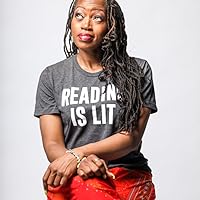
Honorée Fanonne Jeffers was born in 1967 and grew up in Durham, North Carolina, and Atlanta, Georgia. Her work examines culture, religion, race, and family. Her first book, The Gospel of Barbecue (2000), won the Stan and Tom Wick poetry prize and was a 2001 Paterson Poetry prize finalist.
Jeffers’s poetry has appeared in the American Poetry Review, Callaloo, the Iowa Review, Ploughshares, and Prairie Schooner. Her work has been anthologized in numerous volumes, including Roll Call: A Generational Anthology of Social and Political Black Literature and Art (2002) and These Hands I Know: Writing About the African American Family (2002). Jeffers has also published fiction in the Indiana Review, the Kenyon Review, the New England Review, and Story Quarterly.
The recipient of honors from the Rona Jaffe Foundation, the MacDowell Colony, and the Barbara Deming Memorial Fund for Women, Jeffers teaches creative writing at the University of Oklahoma where she is an associate professor of English.
Jeffers begins this work with Phillis being captured in Gambia and her voyage to America on a slave ship. What is even more powerful about this part of the book is that Jeffers doesn't stop with Phillis' journey she also makes connections between the squalid conditions on the ship she was on and the squalid conditions that other children faced in immigrant detention centers in 2019.
Jeffers does a great job also comparing the challenges of being a Black woman in the 1770s and how they still exist in the 21st Century, especially how Black women have to behave in front of white people.
Make sure you read the final essay "Looking for Miss Phillis", it is also powerful. In it Jeffers calls out the factual inaccuracies and speculations in the previous literature on Phillis. It is also a great piece about Jeffers relationship with the archives.
This collection is so good. I believe it could be adapted to a play and maybe even a musical ala Hamilton. It took Jeffers 15 years to write this book and it shows. The research and the craft is amazing.
"Phillis Wheatley Peters... proved something to white people about us: that we could read and think and write- and damn it, we could feel, no matter what the racists believed." -Honorée Fanonne Jeffers, page 185
This beautiful and inspiring volume is brilliantly crafted, meticulously researched, and clearly a labor of love. Readers will be educated and elevated by each poem. I know Ms. Phillis is proud of how her life is illuminated by the words of Ms. Jeffers. This is a masterpiece of historical poetry.
My sleep is haunted by chains and catalogs, and I don’t give one damn
if you grow tired of hearing about slavery.
Don’t you know that drowned folks will rise to croon signs to me? And anyway, I didn’t tell
this story to please you. I built this alter for them.
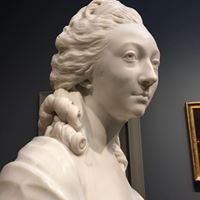
In 1773, an enslaved woman published a book of poems (Poems on Various Subjects, Religious and Moral) and thus became a cultural flashpoint in 18th century America. We don’t know the name her parents gave her. Her slave name, Phillis Wheatley, was assigned to her by her owners. They obscenely named her after the slave ship that kidnapped her from family and freedom, and assigned her their own family name. This “Phillis Wheatley” became a cultural sensation in late colonial America. George Washington admired her work. Thomas Jefferson scoffed at it. The very idea of a slave writing poetry challenged the basic assumptions of a slave holding society, and to the present day her poems still stir up controversy over whether they should be read as an example of Uncle Tom Syndrome, or seen as subtly attacking and undermining American slavery.
Poet and author Honorée Fanonne Jeffers spent fifteen years researching Phillis Wheatley and her times. The Age of Phillis, a book length collection of poems, is the fruit of that dedication. It serves not just as a poetic memoir of Phillis, but as a powerful critique of the world of chattel slavery in which she lived. Jeffers also includes poems of contemporary events which she compares to the atrocities of Wheatley’s age. This would be an ambitious project for a book of prose, but is an even greater challenge when communicated through poetry.
I wanted to like this book more than I did. The idea of it is brilliant. Some of the poetry, particularly those poems that illuminate the atrocities of the infamous middle passage, are powerful and moving. Her exceptional research is obvious in her work. Unfortunately, much of her poetry just didn’t reach me, failed to capture my imagination the way her information captured my intellect. As a rule, I found the poems about Phillis’ times more moving than those specifically about her. Perhaps this was because the actual information on Wheatley’s life is scant, while her times are well documented. I love Jeffers’ idea. I loved her passion. I admire her viewpoint. I just didn’t love most of her poems.
I genuinely cannot imagine a more scholarly, celebratory, epic (in the poetic sense) way of engaging with not just Phillis Wheatley Peters' presence-absence in the historical record and silent giant stature as a definitive American poet, but also the constant ejection of black people (and especially women) from the historical record unless they fit an easy stereotype. Jeffers concluding essay, "Looking For Miss Phillis," says it all. In a fittingly American fashion, the primary source on the life of a famous black woman poet is an obscure white woman named Margaretta Matilda Odell whose Memoirs not only contain verifiable falsehoods, but whose relationship to Peters' former enslavers (and so the validity of her memoir itself) is purely her say-so. She may not even be real - she may be the nom de plume of a man named Benjamin Bussey Thatcher.
Needless to say it's a gross, absurd, and darkly comic history. In its way it feels like a summation of US history. But Jeffers is a great storyteller, both in poetry and prose, and The Age of Phillis both defends Peters' legacy as a definitive American poet against this white sandblasting and signifies Jeffers as a fantastic contemporary one. Vincent Carretta's biography, Phillis Wheatley: Biography of a Genius In Bondage, gave me a similar energy. It has this same grandiose texture, although it is a fair bit drier, not trying to be anything more than a historian's university-published monograph. Really, I'm just excited to read more about Wheatley at this point.
When we talk about history in my humanities classes, we usually get to an idea about the problem of representing it. I have to admit: it’s a boring discussion. How do we go about saying something happened? We have to imagine it. Isn’t the answer obvious? This is what Jefferson, here, seems to be arguing, in order for the past and its effects to be real.
Let’s be real: it’s mostly white students in my classes. This is the first time we’re asked to question history’s construction. The conversation often tends towards silence.
Constructedness is usually approached as a problem. Here, it is Jeffer’s strength. Her fictionalized account allows her to not just access the past, but to have a space to comment on it, like in her imagining “lost” (or fictional) letters where she can end the signature with a comment like “Your Good For Nothing Servant / Sam Occom.” Isn’t that powerful?
I have read 9 of the 10 NBA 2020 longlisted books for poetry now--one I have been unable to get my hands on despite having 3 library cards. This is the book that should have won.
This book is amazing. It is poetry, but it is also history and psychology and so many other things. Jeffers spent years and years researching the woman known as Phillis Wheatley Peters. She has read secondary work, she has read primary work, she has searched for extant letters, done census research, researched the earliest publications about her. So. Much. Work. This volume consists of Jeffers' own poems on topics in PWP's life--her capture and enslavement, childhood and religion, trips and freedom, marriage and friendships. Her writing, its publication, the people she met and knew well. She also includes poems on other African-Americans living in 18th-century New England. They were most definitely there, and I recognized many (but not all) of their names, and I went down the Wikipedia rabbit hole. Jeffers explains her research and thought processes in prose the last section, Looking for Miss Phillis.
This book did not even make the NBA shortlist, and frankly I don't get it. Perhaps they considered it too fact-based, too historical. As a historian, I loved it..
"I waited for somebody to love Phillis as I loved her," writes Jeffers. "For somebody to see her African parents as more than a few brief moments that would be forgotten by their little girl. For somebody to understand that Phillis needed Obour, because black women need other black women in their lives [...] And then, I stopped waiting. I decided it was past time. I wrote this book."
A compelling, beautifully written, and highly researched book of poetry honouring, revising, and revisiting the life of America's first (known) published Black woman poet. This book will continue to take up space in my mind long after I've set it down.
I got a little misty-eyed in parts though the language of the time has never been my favorite. It wasn't until the story of the poet's struggle to find documentation of a love match, that hopeful ending to the story of that search, that I teared up. I felt assured by the poet saying hearsay, even from that time period, was most definitely not considered to be "receipts." Taking Phillis back from a biographer who was not who they claimed to be and who misled many researchers on certain aspects of her life and the poet calling Phillis by the name she took on in marriage (hopefully one based on love), Phillis Peters, a name that wasn't given by slavery, also felt necessary. I hope to hear more in a future book or essay.
This book of poetry that ties the life of Phillis Wheatley to today's happenings. I checked the book out of the library and had it for fourteen days. I must buy my own hard copy because there is way I can absorb this beautiful work in that amount of time. Beautifully researched and thoughtfully penned. If you enjoy books written in verse and historical, you've got to buy this work.
Wow. I read the first five pages of this book, stopped, bought it, and then finished reading it in its entirety. This book should be studied in schools. Gorgeous poetry of devastating history. Read. Discuss. Share. Repeat.
a beautiful reclamation of history, focusing on a controversial Black woman who has historically been judged off of a retelling of her life written by a white woman related to her master
I waited many years for somebody to see Phillis and John the way I saw them. For somebody to see her African parents as more than a few brief moments that would be forgotten by their little girl. For somebody to understand that Phillis needed Obour, because black women need other black women in their lives. I waited for somebody to love Phillis as I loved her. And then, I stopped waiting. I decided it was past time. I wrote this book. - Honorée Fanonne Jeffers
The closing paragraph to the included essay “Looking for Miss Phillis” encapsulates the sheer beauty and intent of this stunning book of poetry dedicated to the groundbreaking Phillis Wheatley and her life and times, as well as the tragic flaw in the endeavor.
NAACP image award winning “The Age of Phillis” uses poetry as biography, giving this book the humanity and immediacy not typically found in historical writing. Rather than focusing on just the poet herself, Jeffers attempts to paint a fuller picture of the woman using both intimate personal moments combined with at-large experiences of slaves of her era. All the while dispelling myth and conjecture about the life of Wheatley herself. It’s a tall task, and sadly is nearly done in by a lack of source material.
Some of the poetry is downright devastating. No matter how much one has read or learned about the slave trade, Jeffers manages to unwrap the wound in a fresh and personal way. The use of poetry takes every moment out of the dry academia of most biographies and infuses it with a human element. It also is brilliantly used to subvert any preconceptions a reader may have.
The best example of this for me was Mothering #2, which tells the story of Susanna Wheatley purchasing a young girl, fresh off the slave ship, and names her Phillis. It’s tolls from the mothers perspective, and sets up the “Benevolent Mistress” aka white savior. She then blows that concept to smithereens with the next poem, Fathering #2, which reminds readers that no matter the motivation, the Wheatleys were still purchasing human beings.
The only issue is that unfortunately, Phillis herself gets lost in the broader scope of the book, and the dearth of primary sources makes this more of historical fiction than biography. Try as she may, Jeffers can only write beautiful poems about someone as she imagines her, not as she definitively was.
As a commentary on the usual white-centered historical focus of the birth of the United States, and by leveling up the ripping of a child from her parents and home in Africa to something more than anecdote, Jeffers soars. But as an imagining of Wheatley herself, it falls sadly short. Even so, I might just bump this up to 5 stars anyway for the poetry and subversion of common narratives.
Today I read an editorial in the NY Times positing that poetry is dead. The writer of that editorial clearly hasn't read this book, an extended poetic imagining of the life of the 18th-century poet Phillis Wheatley Peters. Wheatley Peters, described by Jeffers as "the first of the firsts, a beacon for black children," "an important symbol for black humanity," and one of her own inspirations, was enslaved and sent to the American colonies when she was seven or eight years old. The Wheatley family bought her to serve as a maid to its matriarch, Susannah Wheatley, who recognized the girl's intelligence and taught her to read. She became famous as a poet, corresponding with George Washington and traveling to London to meet other luminaries. Freed by the Wheatleys when Susannah died, Phillis married John Peters, a free black man, but died at 31, possibly from asthma-related complications.
In an essay at the end of the book, which I learned about after its mention in Remica Bingham-Risher's Soul Culture, Jeffers talks about her years-long fascination with Phillis and how as she researched her idol's story, it became clear that it needed a new telling. Jeffers' language, which often incorporates Phillis' and others' actual words from letters and other sources with Jeffers' lovely imagining of their inner voices, is lyrical and damning. Especially awful and truthful are the passages channeling what could have been her thoughts while on that first voyage after being ripped from her parents in Africa and those she had when pondering freedom, including the freedom to marry whom she chose:
"...And what was the age
of Phillis when she stopped turning East, thinking of water in faithful bowls, of her parents,
of love only ending in death? There is no such age. There never will be, though a sister's mouth might tell you lies."
In addition to describing the genesis of this remarkable book, the concluding essay also outlines the problems with the traditional source of Phillis' biography. Learning about Jeffers' research process was fascinating on its own. After reading this book, I'm excited to read more about Phillis Wheatley Peters and also more from Jeffers, including her novel "The Love Songs of W.E.B. DuBois." Poetry is certainly not dead. And we need new points of view on important historical figures whose tales may not have been correctly told under old world views.
The Age of Phillis is a collection of poems about the life and times of Phillis Wheatley Peters. The poems are based on 15 years of research into Peters’s life, with some added speculation by the author, Honorée Fanonne Jeffers, into how certain events occurred. These speculations are often shown through bracketed text, which makes the reader consider the possibilities of the moment.
These poems were truthful, powerful, and important. Jeffers draws attention to the realities of slavery and also draws parallels between the slave trade and immigrants being taken captive: displaying how both are taken from their homes, treated horribly, not given needed resources, and their humanity disregarded and ignored.
At the end of the collection of poems is an essay on Jeffers’s journey in researching Phillis Wheatley Peters and discovering inaccuracies in Margaret Odell’s writing about her life. She also reframes Phillis’s story by discussing how Peters would have been writing for white audiences: showing that her poetry may not fully represent her and her values. Also, she discusses how many talk about her as if she “had it good” being taken in by the Wheatley’s, but it should not be forgotten that she was still a slave. Just because she was writing does not mean she had the life that she deserved. She was not free, and every interaction was tainted by this unjust truth. And even after being granted her freedom, she did not have equality. “Further, this narrative about a ‘privileged’ Wheatley is grossly illogical, for no matter the so-called kindness of white masters or white benefactors, black slavery or black freedom in the Americas never could equal the privilege of eighteenth-century whiteness.”
This book is so good. It's not like anything I've read before. It's a collection of poems that imagines the life of Phillis Wheatley, the first published black poet in America. The poems imagine her inner world, her correspondence with friends, mentors, suitors and future presidents. They explore what her context, current events and do really interesting things with what might have been the difference between her inner world and her written words. They imagine her, not as the patronized and naive character history sometimes portrays her as (I was not familiar with this history before reading the afterword), but as a complex person with a rich inner life who remembered life in Africa and her forced export as a material good on a slave ship.
These poems are imaginative (the fill in gaps in the research on Phillis Wheatley), but deeply rooted in research (a lot of it!) and care and gratitude fore Wheatley. Taken as a whole, this book is a sweeping work of affection and care for someone often relegated to a single poem in a high school lit text book.
Wowza, that was an incredible way to tell Phillis Wheatley's story! This came on my radar after reading Jeffers' essay in The Fire This Time, and it was excellent to revisit that essay about her research, but dang. The way she used poetry to tell Wheatley's story and the context of the slave trade in the 18th and 19th centuries just floored me. And after reading all the footnotes and acknowledgments, I need to read all the poems/poets that inspired Jeffers.
I appreciate the effort put into the research for this book, but I think it would have been better suited as a biography or even a historical fiction than a collection of poems.
The poems in this book are incredibly gripping, but the afterword ratchets the whole project up to incredible research heights! 👏 I'll definitely return to this one again.
some of the best and most interesting poetry i’ve read. effortlessly wove together historical documents/the historical record, modern news, reclaimed ideas, and more
This book impacted me more than I expected. I felt like I needed to be a smarter reader to follow at times, but by the end (and especially with the author's notes/epilogue) I was invested and curious, frustrated and saddened by lost histories, grateful for rigorous researchers. Phillis deserves this book, and more. I'm grateful.
A very creative reimagining in poetry of the life of America's first important Black poet, Phillis Wheatley who lived during the Revolutionary War period. The author has done a great amount of research and has a twenty page discussion about what she learned at the book's end. The poems include little known facts such as she married a free Black and gave birth to three children who died in infancy. I teach history and really learned a lot and got a greater appreciation of this great American.
This was a journey like none other. Initially I didn't know who's voice was speaking but as the historical references were broken down into prose I was astonished. The amount of time and history that went into this book is evidence in the details of the poetry. I was fascinated by the Zong. To hear the author read the full poem choked me up entirely. This book is an alter to the ancestors that endured and that did not make it. How dare we ever think that we have discussed the stories of slavery enough. We do not even know all the details of the rebellious let alone names of survivors. There are tales of courage, strength and death that have yet to cross lips and enter our hearts. This collection created reverence in me for the history of my people while also stirring up gratitude and appreciation to the authors and historians you complete the task that hits their heart. If you are a lover of history and poetry, you need to have this collection on your shelf. And you will need to read it twice...at your own pace....so you can get all the marrow from the bones of this masterpiece.
Honorée's narrative sounded so much unlike Phillis' poetic voice. The greatest dichotomy was Honorée's Allah references for Christian Phillis. The African allusions were fascinating to unpack.
Despite having engaging moments, especially contemporary parallels, it was an awkward meshing. It read more like a literary device than an exploration of the words that Phillis couldn't utter. It was more of an opinion piece than an actual uncovering of truths that dared not be admitted.
I appreciate Honorée's extensive research. I really do. I just wish that she had stuck closer to her subject, and her source material. Phillis' voice is ironically lost in the references that Honorée editorialized.
Jeffers' thorough research into the little we know of Wheatley's life informs this lyric tribute to Wheatley's talent and impact. A remarkable achievement, blending historical research and poetry to great effect.