Woven from poems, prose, photographs, and drawings, Don Mee Choi's DMZ Colony is a tour de force of personal and political reckoning set over eight acts. Evincing the power of translation as a poetic device to navigate historical and linguistic borders, it explores Edward Said's notion of "the intertwined and overlapping histories" in regards to South Korea and the United States through innovative deployments of voice, story, and poetics. Like its sister book, Hardly War, it holds history accountable, its very presence a resistance to empire and a hope in humankind.
Born in Seoul, South Korea, Don Mee Choi is the author of DMZ Colony (Wave Books, 2020), Hardly War (Wave Books, 2016), The Morning News Is Exciting (Action Books, 2010), and several chapbooks and pamphlets of poems and essays. She has received a Whiting Award, Lannan Literary Fellowship, Lucien Stryk Translation Prize, and DAAD Artists-in-Berlin Fellowship. She has translated several collections of Kim Hyesoon's poetry, including Autobiography of Death (New Directions, 2018), which received the 2019 International Griffin Poetry Prize.
I have always wondered about the divisions that must exist within my own grandmother who fled the north to the south during the Korean War. I have always wondered what this division must have done to her memory, her history, her anatomy, her entire sense of self. It’s been difficult to understand and will always be somewhat impossible to understand And yet this book has helped me come towards an understanding…
There is also a division between me and my grandparents. Every second that passes that division widens. There are memories they do not speak of. This book spans the horrors and atrocities of Japanese colonisation, American military occupation, civilian massacre, the Korean War. My grandparents lived through every single one of these events.
It’s often said that Korea is a country with a short memory. I sometimes see this in the popular culture now taking over the globe. I definitely see this in the economic global marketing of the current (and past) government. But I mostly see it whenever I ask my grandparents about the past. There is a burying, and I have found that intergenerational trauma works when my own coping mechanism is modelled after my family: first there is simply compartmentalising and hoping that layers and layers of searching for a hopeful future will engulf everything else. That filling every grain of time with mundane trivial concerns will disintegrate all traces of desperation. It’s a cauterisation of a wound. But cauterising doesn’t mean regeneration. Secondly, (as the book begins), it’s the urge to keep running — to flee.
Perhaps then this is also what the traumatised nation does: you bury your shameful past, you sink atrocities in glittering rhetoric of progress/innovation/economic growth, you believe in teleology (always forwards, upwards), you keep looking elsewhere for salvation, you militarise more more more.
But this book shows us, no matter the efforts of erasure, traces persist; traces survive. This book shows us that trauma is physical and embodied and uttered. These deep memories simply solidify- to become harder, more material, more real.
The most banal things resurface my grandmas deep memories: seeing the reeds sway in the park in Incheon, eating naengmyeon by the street, a certain refraction of sunlight off the man made river in Songdo. I am wrong to say that they are “resurfaced” thoughts: These are ghosts and these are hauntings.
I think for many this book will be about translating culture, cultural history and politics.
For me it’s also about translating generations, translating time, translating deep memory and wounds.
Winner of the National Book Award for Poetry, Korean translator Don Mee Choi's DMZ Colony didn't cohere for me. The Orphan Series is a devastating account of the Sancheong–Hamyang massacre and Ahn Hak-Sop's testimony from his home in the Civilian Control Zone on the South Korean side of the DMZ is nothing short of harrowing. But then the poetic tricks of Mirror Words and whatever is happening in The Apparatus is just lost to me. The literary journals I seek out to decipher the words on the page only frustrate me more, drenched in oblique language, literary folderol and referencing an artistic tradition I'm unfamiliar with. It's like I'm missing the key that brings it all into focus, the rosetta stone that brings the language into clear focus. I don't doubt it's art - but it flew well past me.
I definitely wouldn’t call most of this poetry, but I’m not sure how I would classify this book. Parts were almost journalistic, others were essay, others were poetry. I will say, however, that it was all a very affective and important look at the separation of Korea into Northern and Southern regions and the part played by the US military during and after the Korean War.
from Wings of Return 15 ‘Memory’s memory. Memory’s child. My memory lives inside my father’s camera, the site where my memory was born, where my retina and my father’s overlap.’ 18 ‘I returned in the guise of a translator, which is to say, I returned as a foreigner [...] Nevertheless, I went on searching for more wings, my language of return.’
from Planetary Translation 43 ‘Being the compulsive translator that I am, I traced and traced the planet’s orbitary routes, its rotations of capture, torture, and massacre [...] The language of capture, torture, and massacre is difficult to decipher. It’s practically a foreign language. What a nightmare! But as a foreigner myself, I am able to detect the slightest flicker of palpitations and pain. Difficult syntax! It may show up as faint dots and lines, but they’re often blood, snow, and even dandruff. How do I know? Foreigners know. Ahn-Kim calmly narrated as she continued to circle and circle Planet Nine with her pen. Her circles were extraordinary.’
from The Orphans 49 ‘My decision to translate the girls’ stories wasn’t entirely mine alone. It can take billions of years for light to reach us through the galaxies, which is to say, History is arriving.’
from Mirror Words 123 ‘Our vowels are incomprehensible. Only the consonants pass from hand to hand, colony to colony. We cheer, we weep. We are e. We are o|. We are eternally motherless. We are your orphans. We are your angels. We are your mirror words. What’s written on paper is obvious—See you at DMZ!’
---
Stunningly powerful and harrowing book. Don Mee Choi has written a radical, complex collection of poetry that defiantly shouts out like an archive, like an interactive exhibition of witness. The hybrid book curates an innovative assemblage of forms and mediums: drawings, photographs, interviews, testimony, collage, black pages, prose-poems, diaries etc. Together these sections vitally map out "unspeakable orbits of torture and atrocities" in relationship to Korea's modern history of Japanese and American occupation, political violence and uprising, civilian massacre, genocide and the Korean War. By exploring (anti)translation, the docupoetic language of this book aims to resists militarisation and colonisation: it provides a searching space to view translation as an anti-neocolonial mode, as a way of fighting borders, compelling disobedience. The book is wide in its scope and influences, by way of Choi's memories of migration as a commentary on contemporary America, or by way of Franz Kafka and Ingmar Bergman, in order to hold a bristling mirror onto ways of translating historical trauma, of "everything written upon the bodies."
I sincerely hope that the following attempt to write about this book is not offensive.
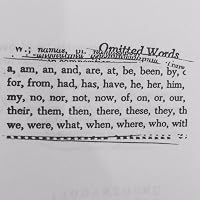
"Noun: A Word That Refers to Entities( or )Actions" "(Webster)"
Reader : one who reads Reading : an interpretation Honker : a goose†
Journalist : one who engages in journalism Journalism : a direct presentation of facts Orphan : one deprived of some advantage Journalist : a person who keeps a journal Journal : a personal account (of experiences, ideas, reflections) Orphan : one deprived by death of parents
Reviewer : one who reviews Review : an evaluation Oblong : a unidimensionally elongated deviation
Artist : one who creates art (painting, music, writing) Art : a work of conscious skill and creative imagination Angel : a spiritual being superior to humans Writer : one who writes Writing : a writer's creation Angel : a wingèd but otherwise humanoid figure Poet : one who writes poetry Poetry : a poet's creation
Critic : one given to captiousness Criticism : an act of criticizing unfavorably Obelus : a symbol to mark questionable passages
Translator : one who translates Translation : a change to a different substance or form Angel : an attendant spirit or guardian Historian : a student or writer of histories History : a branch of knowledge of significant events (affecting a nation) Angel : a harbinger
No es ninguna casualidad que abra con una cita de Zurita, este libro híbrido guarda una relación directa con la obra del poeta chileno. Uno de los mejores libros que he leído este año.
truly one of the most unique reading experiences i've ever had. don mee choi's mix of essay, poetry & photography in documenting a snippet of the dmz's history has embedded itself in my mind. 11/10.
it’s an odd one! More than poetry or an essay, DMZ Colony is an experimental documentary chronicling the afterimage of us imperialism and the division of north and south korea, using translation, documentation, and interviews as the primary mediums. While any formal conclusion to the issue is tenuous, DMZ Colony succeeds as a hybrid work, and is beautiful to look at. I wish that it were a bit more cohesive as a whole, but that probably would have defeated its intent - that tragedy cannot be meaningfully reconciled or organized
I’m not sure how to rate this. It’s a book I think needs to be studied, rather than devoured as I usually take my poetry. DMZ Colony is a complex collage of history and theory and poetry and art. I’d take a class with this on the syllabus.
Interesting and beautiful. My favorite parts felt like codes, whether written in the snow geese or written across deconstructed/handwritten Korean or English. Codes as in military and translation. Translation as smth that necessarily makes u foreign, an outsider or even accomplice to both research and colonialism, but also a way for her to go back to Korea
Some formal features felt less grounded, like the parentheses and the mirror words, and i echo feeling from hardly war where i found I rly like her prose and kinda dislike her childlike poetry - or find it effectively unsettling but not beautiful. The fictional handwritten accounts by orphans were very unsettling, the Marfa stuff kinda random. Still the childlike poetry wasn’t as central as in hardly war, and all the different sections here came together for a rich and textured book
More convinced than I have been elsewhere that poetry is an effective medium for arranging history and theory - sometimes I’m like, I would rather just engage w the content more directly in prose! But there’s smth in here critiquing ideology, I looked up Althusser on wiki and learned that he killed his wife
I feel like I need to re-read this all over again, and then again after that. There is so much heart in this, and it’s a meticulously constructed piece of art. Something Don Mee Choi says in her acknowledgment at the end sums up this collection so well for me: “I believe poetry is more effective as a language of resistance. Poetry can defy erasure”. Powerful stuff.
Truly brilliant. Don Mee Choi’s verses live up to her project of recontextualizing post-partition South Korea. Sometimes heartbreaking, sometimes confounding, DMZ Colony is definitely worth digging into.
Beautiful, horrifying, and heartbreaking. I literally had no idea about any of this and the way Don Mee Choi translates such truly terrifying recent history into the page is genuinely just…there are no words it’s so good
Un híbrid formal de poesia, fotografia i dibuix, per parlar de la guerra, la memòria, la llengua, la traducció, la colonització. I dono gràcies a la generositat de l'autora, que amb les notes al final del llibre ens permet gaudir-lo molt més. Brillant.
I wanted to understand the atrocities of the Korean War that the author was trying to get me to experience through her words, and I wanted to give this sober reflection, but the writing style was way too unapproachable.
this book was actually just fucking stunning - literarily, physically, visually, structurally, etc. i’m so glad i found a physical copy of this because the way the prose (?) was structured along with the photography and scans were just so so striking. i’ll admit some of the content went a bit over my head but i feel like part of that may have been the point! translation is hard! narratives of war are messy! thoughts are not coherent!!!! anyways this was such an incredible read but also very heavy - i had to put it down and take a break at some points because some of the descriptions were so graphic. the notes at the end were definitely very helpful and needed. gonna stare at the wall for a bit now… yea
"Colonia" ha tenido partes que no han sido sencillas para mí, tanto en forma como en contenido. Con respecto a la historia, pincela varios momentos especialmente crueles de la guerra, la dictadura y la ocupación estadounidense. El libro en general es muy artístico y estético.
“In December 2016, I returned to South Korea. I returned in the guise of a translator, which is to say, I returned as a foreigner… Nevertheless, I went on searching for more wins, my language of return.”
Als Dokufiktion/Collagending mit Gedichtspassagen und essayartigen Dingen interessant und spannend zu lesen und auch viel interessantes über Südkorea, aber es scheitert für mich an dem ziemlich unnötigen und banalen theoretischen Gelaber über Althussers Ideologische Staatsapparate und einem ganz diffusen Begriff von Neokolonie. Die bisschen holprige Übersetzung macht ironischerweise auch die gewollte Walter Benjamin Übersetzungsreferenz ziemlich kaputt. Nachhaltige Bauchschmerzen hab ich aber bei den den fiktionalen Erlebnisberichten von Kindern, die ein Massaker überlebt haben als authentisch, inklusive Kinderhandschrift. Die Bildcollagen sind aber spannend und anregend, also wirklich gemischte Gefühle
I read this collection over a month ago and have been pondering just what to say about it. I think it accomplishes some very important work of bringing to light the country and culture of Korea, which has been horrifically oppressed and abused as tragically as others countries which are at the top of the collective consciousness of Americans. The book itself is beautifully presented from the cover design to the layout which, in addition to the text, includes photos, doodles, drawings, and notes in both English and Korean. There are also reference to and photos of Choi and her family. In essence, it seems to be a work of autofiction.
The first section focuses on her interviews with a Korean man who had been tortured for much of his life for being a kind of conscientious objector. These accounts and Choi's presentation is stark, chilling, and heartbreaking. The next section "Orphans" presents what appear to be translated accounts by adults who, as children, saw their homes burned and families slaughtered.
These stories are so vividly and naturally phrased, and each one so unique, I was certain these were even more examples of actual accounts by real survivors. I only learned when I read the notes at the end of the book that these were "imagined" accounts based on "true" stories relayed by another individual Choi interviewed. Being the most powerful part of this collection, I was more than a little disillusioned to realize that these testimonies were fictionalized. Still, it says a lot about the skill of Choi to create such a raw, authentic quality out of stories passed on to her. We can be assured that these stories enlighten us to the true horror of what Koreans have gone through since World War II, unlike the mild, glossiness of stories like the very popular period novel Pachinko.
The final section is actually the one truly poetic section. While it includes a good bit of history and actual photographs of the events being described, there are snatches of narrative, dreamlike musings, and poems that act as a kind of reflection of the prior sections in the book.
This is unmistakably a powerful work and it is very poetic in its non-linear abstractness of creating an impression more than a linear line of story or thought. But the question I'm left with is: should we call this work poetry? It seems to belong to a category that embodies multi-media and the personal essay, and when the visuals of the book are taken into account - modern visual art. There is another NBA finalist that has similar qualities, so this may be a movement, a trend. This is not a criticism but an observation and (my) need for clarification of the definition of poetry. I suppose right now I long for new poetry made up only of black words against white, words so precise and evocative that I'm am transported to another country and/or another unknown/forgotten part of myself.
This book gave me the very specific feeling of not understanding a thing but also being torn up by the thing. (Same feeling I get in contemporary art exhibits. I miss art, and was glad to feel it.) I don’t know a lot about the colonial history of South Korea. Choi’s book is an opening.
Words have trouble falling from fingers as I type this review, but I believe I did an adequate job of summarizing my experience with the book within the throes of reading (that is, my own deleuzian reading):
"DMZ is the ultimate poetic epic that gives Foucaultian notions of biopower and biopolitics a narrative. It gives us a feasible story that tracks the deleuzio-guattarian notion of deterritorialization and the desiring machine that is the state. To re-word Foucault, DMZ is the introduction to the non-neo-colonial life. Speaking of, DMZ is what Deleuze would be proud of; it takes notion of language and deterritorializes it and abstracts it beyond any notion of political or ideological power. Don Mee Choi practices schizoanalysis. DMZ is the exodus that tracks any victim of colonization and is a true magnum-opus of anti-state thinking. DMZ banishes any eroticism and security we find within the borders of our states. If everyone read this, there would be no borders. Every state apparatus would crumble."
To the reader that isn't familiar with my jargon, I will provide you with a summary: DMZ Colony is an awakening experience that explores the implications and impacts of neo-colonialism through Don Mee Choi's exploration of the Korean war and the US-Backed martial law that subsequently followed. It utilizes language without a home, that is, language that is free of the grasp of neo-colonialism, to explore the migratory narrative of the neo-colonized.
DMZ is a haunting, beautiful exploration of what it means to be a migrant, and abstracts the notion of a bordered state into a frightening vision of terror.
I have been to the DMZ. I wanted to understand more about the Korean (and/or, i suppose, the Korean/American) experience—of the war, of the DMZ, of being cleaved in two and then being expected just to live like that, to go on.
It felt like this book was written in a language I can sound out, but not comprehend, like Portuguese or something. It meant very little to me, although I really wanted to connect with it.
That's okay. I'm a white American girl. Sometimes, I'm not the audience. This book clearly resonates with a LOT of people, and that is objectively a good thing.
Except also this is a review for my Goodreads account, which is was created for the sole purpose of recording the books I have read and how I felt about them, so I'm rating it accordingly. I didn't get this book. I thought it was ambitious and I can tell there's a message here. But it was not for me.
A solid 3/5, because less stars seem punitive and more stars feel dishonest.
This reminds me a lot of "Citizen" by Claudia Rankine, in that it's a hybrid work of both essay and poetry, and all the more ephemeral and elliptical for it. It's not for everyone, but it is for me.
"DMZ Colony," by Don Mee Choi, is a powerful mix of prose and verse, highlighting the cruelties of war especially with regards to collateral damage, i.e., civilians caught in the crosshairs of the Korean War (long remembered in American imagination as "the one that MASH was set in, though the show and film were actually both about Vietnam"). Documenting two separate massacres as well as the testimony of a suspected Communist sympathizer who was brutally tortured by the South Koreans, Choi highlights the long shadows of the conflict and its effects on the people left behind to build up again from the rubble. It will unsettle you, unnerve you, and linger in your memory long after the last page is turned.
It is hard to find the words to describe this book, and even harder to do so succinctly. I think I will need to return to it more than once more before I can do a just review, but I just finished it and am blown away again by Don Mee Choi's vision, ambition, and craft.
Nothing about this book is easy or simple, but Choi skillfully pieces together words, images, texts, and memories with a preternatural skill for pacing, repetition, and juxtaposition that delivers maximum impact with grace and exactness. Each word, letter, or image feels perfectly placed, and every aspect contributes to the whole. It builds and reflects and refrains, and compels reading and rereading. The themes and philosophies, of Korea, of the USA, of History, of Translation, of Ideology, of Colonialism and Neocolonialism, all flow with precise and seamless confidence, but with the detached (yet powerful) humility of the poet and translator as intermediary between the forces at hand.
Don Mee Choi has her fingers on the pulse of so much and encapsulates it all so well in this one of a kind and wholly 21st century book. Do yourself a favor and read it.