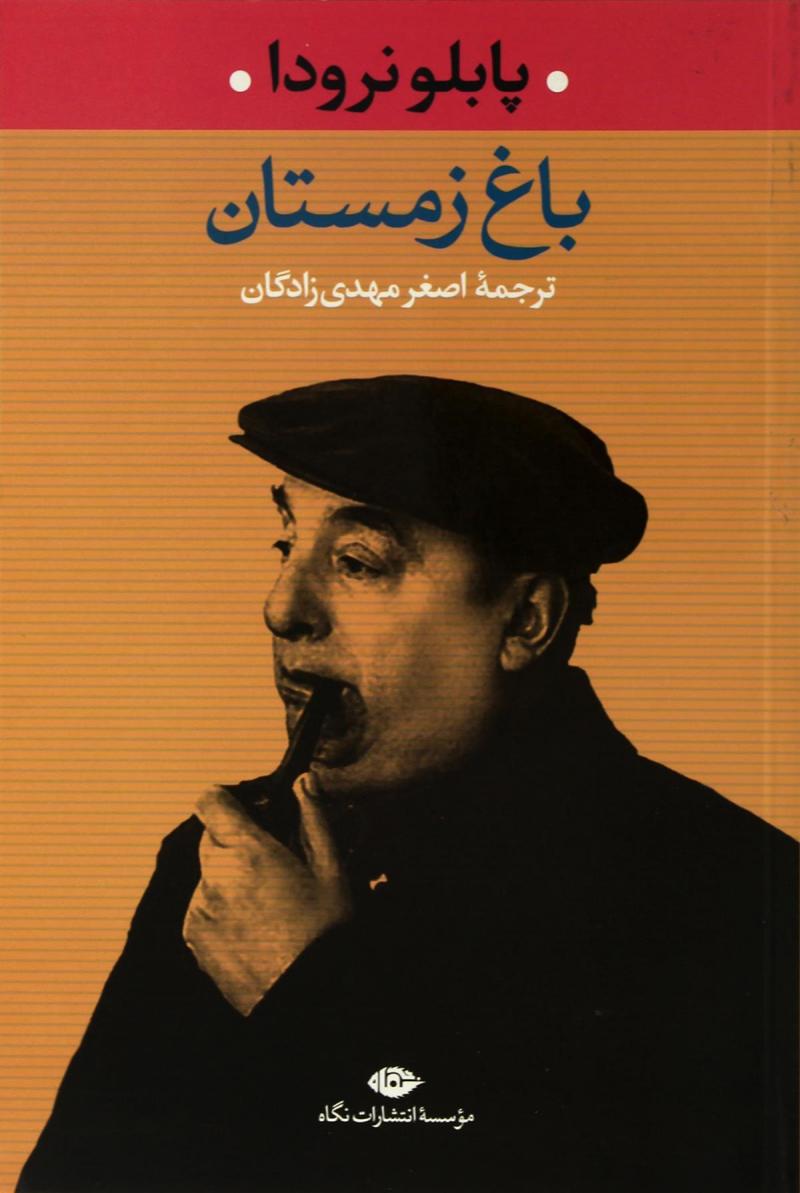
آوازه مردمی پابلو نرودا که در سال ۱۹۷۱ جایزه ادبی نوبل را برد به گستره جهانی است. او نه تنها شاعر محبوب آمریکای لاتین بل تمام مردم جهان است، که سراسر عمر خویش را وقف مبارزه برای آزادی مردم شیلی کرد و آگاهانه زندگی دردآور تبعید و بازداشت را به جان خرید. جاودانگی او مرهون اشعار درخشان و گرایشات انسانی و مردمی اوست. چاپ اوا ۱۳۸۰
Pablo Neruda, born Ricardo Eliécer Neftalí Reyes Basoalto in 1904 in Parral, Chile, was a poet, diplomat, and politician, widely considered one of the most influential literary figures of the 20th century. From an early age, he showed a deep passion for poetry, publishing his first works as a teenager. He adopted the pen name Pablo Neruda to avoid disapproval from his father, who discouraged his literary ambitions. His breakthrough came with Veinte poemas de amor y una canción desesperada (Twenty Love Poems and a Song of Despair, 1924), a collection of deeply emotional and sensual poetry that gained international recognition and remains one of his most celebrated works. Neruda’s career took him beyond literature into diplomacy, a path that allowed him to travel extensively and engage with political movements around the world. Beginning in 1927, he served in various consular posts in Asia and later in Spain, where he witnessed the Spanish Civil War and became an outspoken advocate for the Republican cause. His experiences led him to embrace communism, a commitment that would shape much of his later poetry and political activism. His collection España en el corazón (Spain in Our Hearts, 1937) reflected his deep sorrow over the war and marked a shift toward politically engaged writing. Returning to Chile, he was elected to the Senate in 1945 as a member of the Communist Party. However, his vocal opposition to the repressive policies of President Gabriel Gonzalez Videla led to his exile. During this period, he traveled through various countries, including Argentina, Mexico, and the Soviet Union, further cementing his status as a global literary and political figure. It was during these years that he wrote Canto General (1950), an epic work chronicling Latin American history and the struggles of its people. Neruda’s return to Chile in 1952 marked a new phase in his life, balancing political activity with a prolific literary output. He remained a staunch supporter of socialist ideals and later developed a close relationship with Salvador Allende, who appointed him as Chile’s ambassador to France in 1970. The following year, he was awarded the Nobel Prize in Literature, recognized for the scope and impact of his poetry. His later years were marked by illness, and he died in 1973, just days after the military coup that overthrew Allende. His legacy endures, not only in his vast body of work but also in his influence on literature, political thought, and the cultural identity of Latin America.
What can I do if the star chose me to flash with lightning, and if the thorn guided me to the pain of so many others. What can I do if every moment of my hand brought me closer to the rose? Should I beg forgiveness for this winter, the most distant, the most unattainable for that man who used to seek out the chill without anyone suffering because of his happiness?
- - - -
I want to say how between two seas my whole being hangs like a disheartened flag. And for my blind beloved I am ready to die though my death will be blamed on my deficient organism or on the unnecessary sadness deposited in clothes closets. The truth is, time escapes and with a widow's voice calls me from the forgotten woods.
- - - -
Well, I never went back, I no longer suffer from not going back, the sand willed it and as part wave part channel, syllable of salt, leech of water, I, sovereign, slave of the coast surrendered, chained to my rock. There is no freedom anymore for us who are fragments of the mystery, there is no way out for returning to oneself, to the stone of oneself, no other stars remain except the sea.
دوستانِ گرانقدر، این کتاب از 213 صفحه و 40 شعر تشکیل شده است... تنها نکته این بود که ترجمۀ این کتاب خیلی بد بود ابیاتی از این کتاب را به انتخاب برایِ شما بزرگواران در زیر مینویسم ------------------------------------------------------------------------------ اکنون، اکنون نیز، عزیزکم، برایم پیچک می آوری و حتی پستان هایت بویِ آن را می دهند زمانی که باد غمناک می رود برایِ کشتنِ پروانه ها دوستت دارم، و سعادتم گاز میزند آلویِ دهانت را ------------------------------------------------------------------------------ چرا هلیکوپتر را نمی آموزند از نورِ خورشید، عسل بمکند؟ ماهِ کامل کجا رها کرد؟ گونیِ آردش را امشب ------------------------------------------------------------------------------ آیا حقیقت است که کروکودیل هایِ شهوانی فقط در استرالیا می زیند؟ آیا حقیقت است که کرکسِ سیاه شبانه بر فرازِ وطنم پرواز می کند؟ ------------------------------------------------------------------------------ ،پرندۀ قشنگ، پاهایِ ترکه ای ،دمِ حلقوی می آید نزدیکِ من، ببیند چه حیوانی ام ------------------------------------------------------------------------------ زنبورها رسیدند و از میانِ آفرینش و تکثیرِ انسان بهار در بازار، بینِ کبوتران و نانوایی ها آواره شد ------------------------------------------------------------------------------ امیدوارم این انتخاب ها خوب بوده باشه پیروز باشید و ایرانی
متاسفانه ترجمهی ضعیف این کتاب، به مخاطب اجازه نمیدهد از شاهکارهای پابلو نرودا، این شاعری که با جادوی عشق واژگان را درهم آمیخت و در میدان مبارزهی افکار جنگید، لذت ببرد. "میخواهم با تو آن کنم که بهار میکند با درختان گیلاس...!"
كودكي ام كجاست؟ آيا هنوز در من است يا رفته؟ آيا ميداند هرگز دوستش نداشتم و او هم مرا دوست نداشت؟ چرا چنين وقت صرف كرديم كه فقط بزرگ شويم و جدا شويم؟ چرا هر دو نمرديم وقتي كودكي ام مرد؟ وچرا اسكلتم دنبالم ميكند وقتي روحم سقوط كرده؟
A brief suite of poems from the incomparable Neruda - perhaps the greatest Spanish language poet of the twentieth century - sharing a theme of the regenerative powers of nature upon the burdens of the soul. Spectral loves and the ghosts of pain and loss that haunt us lurk in the misty visions conjured forth from the Chilean's lyrical pen: I am keeping the name of a woman I barely knew locked up; it's in a box, and now and then I pick out the syllables that are rusted and creak like rickety pianos: soon those trees come out, and then the rain, the jasmine, the long victorious braids of a woman now without a body, lost, drowned in time as in a slow lake: there her eyes went out like coals.
Nevertheless, there is in dissolution the sweet scent of death, buried arteries, or simply a life among other lives.
It smells good to turn our face only in the direction of purity: to feel the pulse of the raining sky of our diminished youth: to twirl a ring in the emptiness, to cry out to heaven.
I regret not having time for my lives, even for the slightest thing, the souvenir left in a compartment of a train, in a bedroom or at the brewery, like an umbrella left there in the rain: perhaps these are the imperceptible lips that speak like the cadence of the sudden sea, in a careless moment on the road.
For that reason, Irene or Rose, Mary or Leonore, empty boxes, dry flowers pressed in a book, they call out from their lonely corners and we need to open them, to hear the one without a voice, to see those things that do not exist.
I read every verse in this book loudly, every single syllable speaks something, every metaphor devours you, devours the concept of poetry and sits in the verse majestically.
A tiny little offering placed at the foot of an unsuspecting reader. I found this book like one finds a charming and unique stone along the beach.
I have only ever encountered Neruda in anthologies (and have generally enjoyed my brief encounters) so, upon stumbling upon this book on a dim winter evening I lifted it open to the first poem. It was both immediate and ephemerally ghostly. I have a penchant for poetry about nature as it tends to skew in the direction of “show” rather than “tell” so I was inclined to give this specific book a try (considering that this work centered around “what nourished him,” his winter garden.) Explorations and images of the silent openness and macabre reality of winter (“macabre” without out the malevolent connotations) abound. in its necessary role and reality Stark, haunting, full of longing and remembrance.
“Nobody is missing from the garden. Nobody is here: only the green and black winter, the day waking from sleep like a ghost, a white phantom in cold garments climbing the steps of the castle. It's an hour when no one should arrive. Just a few drops of chilly dew keep falling from the bare branches of winter”
Sadly, the rest of the book (mostly) doesn’t live up to the the wonderment of the first poem. Still, the book has its moments.
“Winter arrives. Shining dictation the wet leaves give me, dressed in silence and yellow.
I am a book of snow, a spacious hand, an open meadow, a circle that waits, I belong to the earth and its winter.”
The Winter Garden is at its best when it holds fast to its exploration of the title subject and the things of nature and earth that nourished Neruda late in his life. It had lain on his desk, unpublished, at the time of his death... waiting like that peculiar and alluring little oceanside stone.
The book contains 20 poems which felt like an easy and adequate introduction to Neruda for someone like me on the nebulous margins of poetry —mostly outside, moving and looking curiously in.
«باغ زمستان» گزيده ايست از اشعار پابلو نرودا، شاعر انقلابى شيليايى. ماهيت شعر همواره به زبان و فرهنگ يك جامعه گره خورده است. حتّى اگر مشكل زبان را حل كنيم تا وقتى از فرهنگ يك جامعه آگاهى نداشته باشيم، هرگز نمى توانيم اشعار ملل ديگر را كه با شرايط فرهنگى خودشان نوشته شده است را درك كنيم. نمادها، استعاره ها، تلميحات و ساير آرايه ها و نمادهاى ادبى مخصوص هر زبان را به تمام دشوارى ها براى فهميدن شعر اضافه كنيد. اين مشكلى ست كه همواره در ترجمه ى اشعار وجود دارد و در اين كتاب هم به شدت عميق بود. به نظرم علاوه بر ضعف هايى كه در ترجمه وجود داشت، با توجه به اين كه اين اشعار عمدتاً انقلابى و وابسته به دانستن تاريخ هستند، عدم آگاهى از تاريخ شيلى عدم فهم اشعار رو تشديد مى كرد.
«مى پرسم آيا روزى گلوله اى از دشمن تو را لك خواهد كرد با خونم بعد با من خواهى مرد يا شايد آن ممكنِ اين قدر هيجان انگيز نباشد اما ساده باشد، و شما به تدريج بيمار خواهى شد لباس، با من، با تن ام، و با هم وارد مى شويم در خاك.»
-بخشى از چكامه اى براى لباس-
شعرهاى قابل فهم هم داره، هر چند تعدادشون نسبت به اونايى كه نمى شه فهميدشون كم تره. ولى براى آشنايى با ادبيات و تفكر ساير كشورها خوندن ش خالى از لطف نيست. با بعضى اشعارش مى شود گريست و مى شود همزادپندارى كرد با تمام چيزهايى كه بر ملت ما گذشته است.
A pensive collection as Neruda faces the Winter Garden of his dying. These elegiac poems sing with the imagery of nature and the lyrical voice of one of the 20th Century's greatest poets as he faces the termination of his light. He addresses his literal last homecoming from France where he serves his native Chile, and a figurative homecoming as his "single journal" of life returns to the silence from which it came:
I am a man of so many homecomings that form a cluster of betrayals, and again, I leave on a frightening voyage in which I travel and never arrive anywhere: my single journey is a homecoming.
I am no stranger to reading poems [1], and this is the second book of the poet's that I have read. This particular book was posthumously published from a written manuscript of the poet's after he died of cancer as his nation's leftist government was soon to be overthrown. Given that the poet was Chile's ambassador to France at the time, and was in exile from his beloved Isla Negra, this book is taken as a book that expresses a feeling of exile and silence and an awareness of his approaching death. It is therefore an instructive case of what a poet thinks about and reflects about as the time of his end rapidly approaches. Most writers can be expected to show their natures in the face of death, and this book has a feeling of late autumn and approaching winter that shows the author bravely facing his death and demise, if without as much hope as one would expect. There is a genuine sense of beauty and melancholy with these works, and that makes this a decent book of poetry to read, despite the gulf that separates the worldview of the author and I on a great many subjects.
This particular book is a short one written as a diglot with the poet's native Chilean Spanish on the left and the English translation on the right. Overall there are twenty poems that take up about 70 pages or so. As might be expected for a poet who felt most at home on a quiet and somewhat remote island, a great deal of this poem reflects on nature--the ocean, birch trees, a beloved but dead dog that is dealt with strikingly unsentimentally, as well as images of forests and the titular winter garden. Even when the author talks about something as joyful as homecoming he strikes a mournful tone: "I am a man of so many homecomings / that form a cluster of betrayals / and again, I leave on a frightening voyage / in which I travel and never arrive anywhere: / my single journey is a homecoming (41)." These are not happy poems, and the author appears to write them without any sort of hope in an afterlife or a better life afterwards. He even seems to anticipate that his death will be a time of eating because of the various organisms that will feed off of his decaying body. It is an altogether gloomy and dark collection of works.
Of course, Pablo Neruda being who he is, he could not resist a few political comments that detract from the quality of this work because they remind the reader that the poet has an uncongenial political worldview, as when he speaks about Nixon and shows his spleen. One wonders whether the poet, and those who publish and market his works, are aware that not everyone is friendly to the leftist viewpoint of the author and who find the poet's stridency off-putting. Perhaps people are used to being in an echo chamber where they do not have to face the withering criticism of those who have different views of the world and for whom a poet like this can be enjoyed and appreciated only with a sense of caution and wariness because of the awareness that the poetical and the political are never too far apart when it comes to many writers, myself included. As this writer is one whose political viewpoint is unworthy of a great deal of respect or praise, and as he appears to have no faith in resurrection or a better world to come, this book is a gloomy example of the poetry of those who write without hope.
Uno de los poemarios póstumos de Neruda, "Jardín de invierno" combina la sátira, la solemnidad bucólica, la melancolía y el tono irónico del Neruda de la última etapa. Un libro que sin llegar al centenar de páginas es imperdible.
¿Mi poema favorito de este libro? "Un perro ha muerto".
Exceptionally well translated and mostly poems that, if not personally applicable, discuss poignantly some aspect of the human experience and/or draw thought provoking connections to nature, which I am a giant sucker for
I am not a big fan of poetry. My book club challenge was to read a poem. I did enjoy it, just not my style of reading. I thought it was interesting that the longest poem was about his dead dog.
This collection of poetry was one of the eight unpublished manuscripts found in Pablo Neruda’s home after he passed away in 1973. I have mixed feelings about manuscripts published posthumously. Were we (the public) ever suppose to see these writings? Were these writings so private Neruda never planned to share them? These are questions we will never have the answers to but we do have wide access to these manuscripts. I read this collection of poetry almost exactly two years ago when I still lived in Seattle, WA. Now living near Boston, MA, I picked up this collection of poetry, both in English and in Spanish (side by side) to experience the intimate words of Neruda, as he talks about love, solitude, nature, politics, passions, and home. As with any translation, I am skeptical that the true feeling and meaning made it through the translation process – in particular poetry. Despite what might have been lost, Winter Garden is a beautiful collection, full of deep and meaningful poems. I found it challenging to write about the entire collection and I have finally landed on talking briefly about the poems that stood out to me.
The collection opens with The Egoist. As one of the longer poems in the collection, Neruda talks about (in my interpretation) isolation in terms of a garden and of winter. He asks powerful questions like, “What can I do if…the thorn guided me to the pain of so many others?” and “Should I beg forgiveness for this winter?” For me, this framed where Neruda was coming from when writing these poems and invites the reader in the share in his experiences and to struggle with the same questions.
Guatama Christ This poem was the next in the collection that I found powerful. In this poem, Neruda talks of religion and atrocities. To me, it seems like Neruda was writing about how the names of the saviors have been used and overused and leaned upon and not fully understood. Yet, those names are still revered and still lifted up.
The Ocean Calls The ocean was a common theme in Neruda’s work. In this poem, he uses the ocean as a metaphor for liberation and talks about his current state about being a shut in and not being able to visit the ocean in his motherland. When reading this poem, it seems to me he was far away from home without a means to come back (most likely in France). Neruda even talks about the sea where he is as the “unknown sea,” but it is not the same for him. I think the metaphor is a powerful one, exploring the depths of liberation and home.
Bird This poem made me laugh. An elegant bird in Normandy discovers Neruda and is enamored, scared, nervous, and questioning about what this gigantic creature is. The bird is determined to figure out this mystery which is Neruda, until the bird sees a grain or worm and hops away, abandoning the mystery of this human. This poem had a different feel and stood out to me, not just as an observation of a bird, but as a statement about abandoning the questioning of mysteries.
A Dog Has Died This poem on the surface is about Neruda’s dog who passed away. Neruda writes from a place of reflection about his dog’s life and also from the inevitability of death. The poem is not about grief but about a celebration of life for a companion that served Neruda unconditionally. Neruda ends the poem with a direct statement of finality: “He has gone and I buried him, and that was all.”
Finally the collection closes with The Star. In my opinion, this was the perfect short poem to provide closure. Powerful, layered with meaning, using the ocean and coast as powerful metaphors. After I finished The Star, I felt a sense of loss but also peace. Overall, I thought Pablo Neruda’s writing was abstracted, relying on nature to convey his feelings and experiences. There were many poems I did not talk about in this review; However, I enjoyed the experience of my second reading of this collection and I definitely have my favorite poems I keep coming back to.
Pablo Neruda has some pretty big achievements: Chile's ambassador to France, a Nobel Prize for Literature, and this particular title receiving Bloomsbury's Book of the Year. His life could never be described as dull...he's certainly not your stereotypical poet, pale and anguished, hidden away and perfecting his verse. Neruda was out and active in life. A Chilean Senator, various worldwide diplomatic assignments, plus a commentator on the activities in Chilean politics....he was never still.
This beautiful collection, translated by William O'Daly, was written shortly before his death. In fact, several manuscripts were found on his desk after he died of cancer in 1973. The translator notes in the introduction that Chile was always his beloved home, one that he thought of in any other location he found himself. This fits with what Neruda says in "Many Thanks": "Why do I live exiled from the shine of the oranges?"
He knew he was dying but never does he descend into self-pity or maudlin reveries. He acknowledges the big life he led, and in his final days he wants to simply meditate, focus on the simpler things (like a bird that approaches him as he sits outside alone), and retrieve the fondest of his memories.
In "Modestly", he uses a play on the words 'see' and 'sea': Without doubt I praise the wild excellence, the old-fashioned reverence, the natural see, the economy of sublime truths that cling to rock upon rock in succeeding generations, like certain mollusks who conquered the sea.
He shows some humor in "For All to Know", when he acknowledges that he's sometimes asked why he didn't write about some significant events. His response: "I didn't have enough time or ink for everyone....I didn't decipher it, I couldn't grasp each and every meaning: I ask forgiveness from anyone not here."
The most poignant poem of all is "In Memory of Manuel and Benjamin", two close friends of his, who unimaginably die on the same day by accidents. Neruda is genuinely perplexed at the loss: both were friends but they couldn't have been more different and while words were his voice, he finds it difficult to compose anything to make sense of it:
I loved my two contrary friends who, with their silence, left me speechless without knowing what to think or say. So much searching under the skin and so much walking among souls and roots hour by hour so much pecking at paper.
Even if they didn't have the time to grow tired, now quiet and finally solemn, they enter, pressed together, the vast silence that will slowly grind down their frames.
Tears were never invented for those men.
Given his impending death, late in life, it's easy to see how pained Neruda was. This collection features many personal thoughts, among them his eager wish not to be praised or to receive accolades in his late days. He wants to watch water through windows and see the sunrise. He's gracious and brave.
This book is part of a series by Copper Canyon Press of Neruda's works, translated by O'Daly from the Spanish (which is still featured in the left facing pages).
Pablo Neruda never misses. What an awe-inspiring wordsmith.
-------------
"Oh dueña del amor, en tu descanso fundé mi sueño, mi actitud callada.
Con tu cuerpo de número tímido, extendido de pronto hasta cantidades que definen la tierra, detrás de la pelea de los días blancos de espacio y fríos de muertes lentas y estímulos marchitos, siento arder tu regazo y transitar tus besos haciendo golondrinas frescas en mi sueño." - Alianza (sonata)
"Esta es la hora de las hojas caidas, trituradas sobre la tierra, cuando de ser y de no ser vuelven al fondo despojandose de oro y de verdura hasta que son raices otra vez y otra vez, demoliendose y naciendo, suben a conocer la primavera." - El Egoísta
"Como la piel del abedul eres plateada y olorosa: tengo que contar con tus ojos al describir la primavera.
Y aunque no se como te llamas no hay primer tomo sin ujer: los libros se escriben con besos (y yo les ruego que se callen para que se acerque la lluvia)." - La Piel del Abedul
"y me acostumbre a caminar consumido por mis pasiones." - La Piel del Abedul
"Porque la luz del abedul es la piel de la primavera." - La Piel del Abedul
"No, mi perro me miraba dandome la atencion que necesito, la atencion necesaria para hacer comprender a un vanidoso que siendo perro el, con esos ojos, mas puros que los mios, perdia el tiempo, pero me miraba con la mirada que me reservo toda su dulce, su peluda vida, su silenciosa vida, cerca de mi, sin molestarme nunca, y sin pedirme nada." - Un Perro Ha Muerto
Pablo Neruda is one of my favorite poets of all time, and there were many lines in 'Winter Garden' that imprinted onto my memory:
From the titular poem, 'Winter Garden:'
"Winter arrives ... I am a book of snow, a spacious hand, an open meadow, a circle that waits, I belong to the earth and its winter ... I knew the rose would fall and the pit of the passing peach would sleep and germinate once more, and I got drunk on the air until the whole sea became the night and the red sky turned to ash ... Now the earth lives numbing its oldest questions, the skin of its silence stretched out. Once more I am the silent one who came out of the distance wrapped in cold rain and bells: I owe to earth's pure death the will to sprout."
There's one that is beyond perfect for any time you need to offer a sincere apology: "Many Thanks," which ends with, 'With these excuses for my absence I beg forgiveness for my ways."
And there's one that would be beautiful to read at the small funeral service of a beloved pet dog: "A Dog Has Died," which ends with, 'He has gone and I buried him, and that was all."
There's a perfect poet's plea for forgiveness, as he tries to capture all the human sentiment but of course, inevitably, fails while simultaneously succeeding: "For All To Know"
And of course there are myriad others that would be perfect to read while sitting by the sea, or camping, or hiking, or traveling to beautiful places in the world just to be in nature.
I struggled with this book, despite the translator's note that this was his most direct and personal book of the Copper Canyon Neruda series. This collection of eight books were done in his last years when he was dying of cancer, made diplomat to France, returned to La Isla Negra and then Pinochet Coup d'etat occurred. To date I have read four books in the series and have loved the other three but this one was tough. Perhaps because it was more personal that I couldn't relate to some of the poems and yet the quality, the imagery and the language is still powerful stuff.
The longest poem is simply called "A dog has died" and begins simply, "Mi perro ha muerto" ( My dog has died) and he goes on to say that he was a good dog and "there were no lies" between us and ends rather abruptly with "he has gone, I buried him and that was all". Seems rather terse but this is a man lamenting his end. Other poems call out thanks for his life, lament the cold ocean waves and time passing. There is a real sadness in this volume and that is what makes the words sound so resolute. If I were to do this again, I would read the book last or perhaps first, knowing the otehrs are mo upbeat. But then death has that gravitas that resounds in a poet's final words.
Before Winter Garden, I had never read any of Neruda's poetry. This small collection represents some of his last poems that were left unpublished until a couple of decades after his death. As a result, I found the poems to be quite haunting, but mesmorizing all in the same breath. The language is beautiful and his subjects intriguing. Just with this brief taste, I find myself wanting more so I can dig in and explore his earlier works and to be moved in similar ways. As I understand it, Neruda was quite the love poet. I would recommend this brief glimpse for those that have not read him before. If you are anything like me, it will suck you in and have you placing orders for more books, or, at the least, heading to the library to see if they have some of his works. Highly recommended.
I liked this collection far better than the previous one I read. There was an earnestness to it that came through the pages. Most of the poems speak of reaching out and returning to a place you are unable to. Is Neruda speaking of his time as an exile or is he speaking of death and the changes brought on as we approach it?
Perhaps that is where this earnest voice comes through. He knows the end is approaching and seeing it, strives to make his voice heard yet again.
The poems brush against sentimentality, but never become overly sentimental. The longing is anchored by the reality of a life lived and choices made. All we can do is press on.
Neruda is a master, and I truly feel as though I'm slighting him by reviewing a translated work of Spanish poetry. I love Neruda's sensorial language, and the depth of image and lushness of language that he uses throughout each of his works. The language HAS to be read aloud to hear the song that his words create, but I'm sadly only 70-75% proficient in Spanish, so I have to accompany it with my English translation. He is still a master, and this work - written in a time of winter (literally and figuratively) is brooding, painful, and full of beauty. Not my favorite Neruda, but definitely not a bad read.