Two classic cases featuring Detective-Inspector Littlejohn.
In the winter of 1940, the Home Guard unearths a skeleton on the moor above the busy town of Hatterworth. Twenty-three years earlier, the body of a young textile worker was found in the same spot, and the prime suspect was never found - but the second body is now identified as his. Inspector Littlejohn is in the area for Christmas and takes on the investigation of the newly reopened case. Soon it becomes clear that the murderer is still at large...
* * *
Nathaniel Wall, the local quack doctor, is found hanging in his consulting room in the Norfolk village of Stalden - but this was not a suicide. Wall may not have been a qualified doctor, but his skill as a bonesetter and his commitment to village life were highly valued. Scotland Yard is drafted in to assist. Quickly settling into his accommodation at the village pub, Littlejohn begins to examine the evidence...Against the backdrop of a close-knit village, an intriguing story of ambition, blackmail, fraud, false alibis and botanical trickery unravels.
AKA Hilary Landon George Bellairs is the nom de plume of Harold Blundell, a crime writer and bank manager born in Heywood, near Rochdale, Lancashire, who settled in the Isle of Man on retirement. He wrote more than 50 books, most featuring the series' detective Inspector Littlejohn. He also wrote four novels under the alternative pseudonym Hilary Landon.
I enjoyed both stories here. I'm a fan of Bellairs' Detective Inspector Littlejohn which prompted me to pick this one up. Happily, I wasn't disappointed.
In The Dead Shall Be Raised, Littlejohn spends the Christmas holidays in Hatterworth in the moorlands as Mrs. Littlejohn is recovering from injuries sustained when the Germans bomb their block. While he's there, he assists in a local case that has literally been raised from a corpse that is unearthed and throws an investigation from two decades earlier into the spotlight. I enjoyed the setting and the characters. The mystery was good and I sussed part of it out and enjoyed the reveal of the part I didn't see. Bellairs did a great job with the characters' personalities and descriptions (though some were headscratchers to me; I've still not figured out why so many people had red faces). and some funny moments. This had a great small community feel. The ending was very well done and you know Littlejohn is well-liked when one of those involved in the murderous deeds bequeaths Littlejohn artwork.
I came across the word parkin and recognized it thanks to fellow friend reader/reviewer Bob (Thanks, Bob!). It's also known as tar-cake according to this story. Another new to me word was dentifrice which is toothpaste. So a few more for the crosswords and word puzzles!
In Death of A Quack, an elderly osteopath is strangled and strung up in his office and Littlejohn has to determine who did it and why. This was another where I worked out part of it and enjoyed the reveal of the part I didn't see. Like the first story, the characters were well rendered and there were funny moments also.
Both stories had two-part solutions and fit well together in this volume. There's one instance of Littlejohn using that bizarre slur "There's a n-word in the woodpile" (that Agatha Christie introduced me to in And Then There Were None). Gross but glad it was included because I'd rather see it and be reminded of what some in those times saw as perfectly fine. Still, very neat stories. People and the world are complex.
I will, of course, continue reading the British Library Crime Classics reissues. Recommended.
A Double Dose of Littlejohn A review of the Poisoned Pen Press (US) eBook (October 3, 2017) of the British Library (UK) paperback (December 10, 2016) of the two original hardcovers The Dead Shall Be Raised (1942) and The Murder of a Quack (1943).
The trumpet shall sound, and the dead shall be raised incorruptible, and we shall be changed. - from Corinthians 15:52-53.
Two short (c. 200 page) novels make up this twofer in the British Library Crime Classics series. They are early books in the Scotland Yard DCI Littlejohn series and set in countryside villages during World War II, although the war itself is hardly mentioned. Both are very police procedural oriented with standard interviews of witnesses and suspects. The culprits in both cases are rather easily signaled to the reader by their uncooperative attitudes.
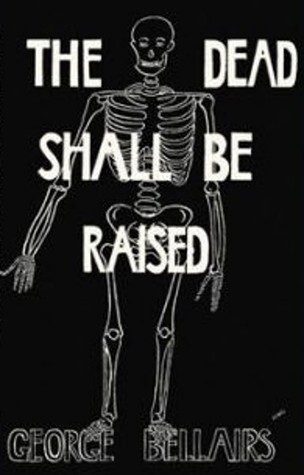
Although it is not obvious in the title or the cover image of the first novel The Dead Shall be Raised, the book actually takes place during the Christmas season and its title is taken from a line in Handel's "Messiah" as taken from the Bible's Book of Corinthians. A performance of "Messiah" takes place on Christmas Eve. Meanwhile, a body from a 20+ year old cold case is unearthed and Detective Littlejohn just happens to be in the vicinity on a Christmas vacation.
The second novel The Murder of a Quack involves the death of a homeopath / so-called "bonesetter" whose cures seem to have outdone those of the conventional medical profession causing bitterness and rivalry. Littlejohn is called in from London to assist local authorities.
The front cover of the 1942 original hardcover of "The Dead Shall be Raised." Image sourced from Goodreads.
These were both very straightforward procedurals without any forced brilliant deductions or twists. The atmosphere and settings were well done though and these were on the cozy side of crime fiction.
Trivia and Links George Bellairs was the pseudonym used by author Harold Blundell (1902–1982) for his mystery novels featuring Chief Inspector Littlejohn. The Littlejohn series contained a prolific 57 novels written and published between 1941 and 1982 and they are listed here. Several other books were written using the pseudonym Hilary Landon.
The British Library Crime Classic series are reprints of forgotten titles from the 1860's through to the 1950's. You can see a list at the British Library Crime Classics Shop (for North America they are reprinted by the publisher Poisoned Pen Press). There is also a Goodreads Listopia for the series which you can see here.
The Dead Shall Be Raised: 12/2021: reread with Reading the Detectives group; again enjoyed the first couple chapters, Bellairs really conjures up the cold, wartime (black out conditions) Christmas Eve journey for Littlejohn, and the warm welcome he receives. The descriptions of the Christmas service and festivities were beautifully done and evocative, especially as it was wartime, people remembering years gone by, loved ones lost.
Interesting mystery, as well - a cold case involving remains dug up on the moor by the Home Guard. It had been believed that two friends, quarreling over a girl 20 years earlier, fought, one killed the other and escaped. The suspected killer disappeared, assumed went off to fight in WWI and died. Now his remains are found, turns out he never left - who killed both young men? Quite a puzzle, and Bellairs writes interesting and believable characters, whether bit players or main suspects. I really like his style, want to read more of Littlejohn’s mysteries.
12/2019: This British Library Crime Classics reissue contains both The Dead Shall Be Raised, the fourth book in the Inspector Littlejohn series, and Murder of a Quack, the fifth book.
The introduction explains that the first book, also known as Murder Will Speak, was set at Christmas time in 1940, and published in 1942; the other book appeared the following year, 1943, and was set in a Norfolk village in summer. I’ve had this on my TBR list after enjoying another Insp. Littlejohn reissue, and needed a book set during winter for a Book For All Seasons group reading challenge, so this is a review of the first book only.
I really like Inspector Littlejohn as a character, and Bellairs’ writing style - he really sets the Christmas mood, despite wartime deprivations.
The mystery opens with a cold, dark (wartime blackout conditions) Christmas Eve train trip north as Littlejohn is visiting his convalescing wife while on leave from Scotland Yard. The couple’s London flat was hit by a German bomb, and his wife injured; Littlejohn convinces her to visit an old school friend up north to get out of the hardships of wartime London and enjoy the fresh winter air of the Pennines.
Bellairs sets the dark, dreary, cold scene well. He also gives readers a lovely, evocative look at a rural, wartime Christmas, and an interesting cold case. The Home Guard unearths a skeleton near the village, and Littlejohn is asked to investigate; over 20 years earlier, a body was found in the same spot, and it was thought the killer escaped. Now it looks like there is still a killer on the loose.
9/24/21: Read “Murder of A Quack” with the Reading the Detectives group, and I liked it very much, four stars also.
Littlejohn is one of my favorite GA detectives, low-key, professional, diligent, and it’s pleasant to see little personal details, like his regular correspondence with his wife when he’s on a case. He shares as much as he can with her, and she gives him input- and he values her opinion.
In this case, a respected local healer in a rural village (“quack”, as in not officially licensed, but much respected and patronized for his expertise) is found hung by his own stretching apparatus in his surgery. His family have been in practice for a couple generations, are much revered, no obvious enemies, so local police willingly turn it over to Scotland Yard.
Inspector Littlejohn is sent to investigate, and settles in at the local inn, amiable to his local counterparts (very likable), and respectful, interested and open-minded with the locals, best way to get a feel for the victim and what motive may have been.
My favorite GA detectives are like that, not flashy or hogging the spotlight, but diligent, respectful of local beliefs and customs, tough if needed. This allows the author to give readers an interesting look at local life at the time.
Littlejohn’s diligence pays off, as he interviews and digs and finally gets a glimmer of the motive and murderer - taking the reader along as we meet some entertaining and humorous locals! The local constable was a great character, and I was so glad he got to save the day, a couple of ways, at the climax! Very enjoyable, I will look forward to more visits with Littlejohn as these books are reissued, and look forward to the Reading the Detectives group read of “The Dead Shall Be Raised” in December. A reread for me, but I fondly recall the lovely Christmas scenes!
In The Dead Shall Be Raised (1942) by George Bellairs, Inspector Thomas Littlejohn and his wife are set to spend a quiet Christmas holiday in the small town of Hatterworth. The story begins cozily enough--with a warm welcome from the local police superintendent and a visit from the village carolers. But the Christmas night performance of Handel's Messiah (with Superintendent Haworth in a starring role) is interrupted by the announcement that members of the Home Guard have dug up a skeleton while practicing maneuvers and fortifications on the moor.
Materials found with the skeleton soon allow it to be identified as Enoch Sykes, a man thought to have murdered a former friend and run off after a falling out over a young woman over 20 years ago. Apparently someone else had it in for both Jeremy Trickett and Sykes and thought burying Sykes's body would allow their crime to go undetected...they've been right (and lucky) up till now. Haworth asks the Scotland Yard man if he'd like to take a busman's holiday and lend a hand in digging up the past. It's going to be a difficult job--half of the participants are dead, hrough old age, illness, or having perished in the current war. It isn't long before Littlejohn and Haworth discover that there were those who knew more than they told at the time and they had their reasons for holding their tongues. One of those in the know think it better to try their hand at blackmail than to take their knowledge to the police...and, of course, they meet the end destined for many blackmailers in detective fiction.
The Yard man and the local policemen work hard to track down clues on a very cold case. And they come down to being a hairsbreadth away from laying their villain by his/her heels. It will take the wiles of the 80-year-old retired Inspector Entwhistle to give them the evidence that allows the final confrontation.
This is delightful Golden Age mystery that I am so very glad the British Library Crime Classics decided to reissue. Bellairs writes about the English countryside during wartime with a sure hand yet gives the reader a pleasant, homey description of the village. Inspector Entwhistle is (to borrow a GAD phrase) a caution and I only wish that he had been allowed to participate more fully in the investigation. The characters are introduced with warmth and descriptions that make them seem like remembrances of real people rather than just characters in a novel.
Sometimes these Golden Age writers who produced mysteries during the war years appear to have been trying to forget that there even was a war going on. Perhaps they wanted to provide their readers an escape from the horrors. In fact, some of the novels could have been written just about any time, given how little current events make their way into the story. Bellairs brings references to the war into his narrative so easily that it places the book firmly in that era without making the story itself seem dated. Mrs. Littlejohn and Mrs. Haworth sit at home and knit scarves and other warm necessities for the soldiers. Ration books and identity cards are a necessary addition to life on the war-era home front. He also allows us to look back at a time when tramps were a common sight and farm laborers, game keepers and poachers were part of the country landscape.
The one draw-back as a mystery is the fact that there are fewer suspects than might be desirable to keep the reader mystified. There is, however, a portion of the solution that allows for a bit of a surprise which almost makes up for the lack of suspects and red herrings. Overall, a good entry in the Littlejohn chronicles and I definitely look forward to moving on to Murder of a Quack--the second novel in the British Library Crime Classics reprint edition. ★★★ and 3/4.
First posted on my blog My Reader's Block. Please request permission before reposting. Thanks.
The Murder of a Quack [finished 1/14/19] The Murder of a Quack (1943) by George Bellairs once again finds Scotland Yard's Inspector Littlejohn investigating murder in a small English village. This time Nathaniel Wall, a beloved local "quack" bonesetter is found hanging from one of the contraptions he uses in his cures. At first it looks like the only people who had any dislike at all for the man were certified doctors. Wall comes from a family of bonesetters (those who can manipulate bones and joints, but who have no formal training) and the people of Stalden have come to rely on his skill. In fact, they prefer him over the new doctor who has bought the practice of a doctor who long had respect for the bonesetter. Circumstances (the doctor's alcoholic ways and a certain incident of a missed broken collarbone) had caused the villagers to seek out Wall's help even more. But would a doctor really resort to murder to get rid of the competition?
Littlejohn soon discovers that there are others with a possible motive--from the young woman who had considered him an uncle...until "uncle" decided to poke his nose into her romantic affairs to the young man she wishes to marry (and who has a decided row with the doctor) to the mysterious man who once sought the doctor's help with a deformity. When newspaper clippings are found which feature a bank robbery and a well-known forgery, Littlejohn begins to wonder what the connections are. Once he figures that out, he'll be well on his way to solving the mystery. But not before another body is found at the bottom of a well....
This is another pleasant mystery in the Littlejohn line-up. The Inspector is a good man who investigates at a steady pace and with little "flair" or excitement, but provides a nice comfortable story to follow. As with the previous novel, the major complaint is that there are too few suspects. There isn't much doubt after about half-way in who the main culprit is, but Bellairs provides a little bonus that makes it well worthwhile. These stories are perfect for when you don't want a complicated mystery--just a little puzzle and nice visit to Britain of the 1940s. There is also a thread of wry humor that runs throughout and makes things interesting. ★★★ and 1/2.
This book includes two of George Bellairs' delightful mysteries. In the first one - The Dead Shall be Raised - Inspector Littlejohn is bombed out of his London flat and travels to the north to spend Christmas with his wife in a rented cottage on the moors. Almost as soon as he arrives the Home Guard dig up a skeleton on the moors and Littlejohn is immediately plunged into a police investigation - and a very cold case as the man disappeared twenty years ago. As Littlejohn plods around asking pertinent questions and uncovering things which those involved would have preferred to have kept hidden.
The Murder of a Quack is an intriguing mystery in which a very popular 'quack' - someone who would today be called an alternative practitioner - is found murdered in his own consulting room. The only clues are his comprehensive casebooks and an interesting collection of press cuttings. The conventional doctor is a drunkard and very bitter at the way people prefer to see his unqualified rival but could he really have committed the crime?
These mysteries are written in the author's trademark low key style with plenty of touches of humour. I really like Inspector Littlejohn. He is hugely knowledgeable about human nature and crime and very observant. He doesn't work in conventional ways and many of the things he does in these two books wouldn't be accepted in the twenty first century but he gets results but if you forget twenty first century policing methods and read these books in the context of the time in which they are written then they are entertaining stories.
Brilliant double helping from one of my favourite authors. Good on The British Library for digging up and reprinting these hard to find old murder mysteries.
The Dead Shall Be Raised, (aka Murder Will Speak), opens with two chapters which show all that is good about George Bellairs’ writing, especially in the earlier novels from the 40’s and 50’s. The first describes Inspector Littlejohn’s rail journey from London to Lancashire on Christmas Eve 1940; the second features a performance of The Messiah, (from which the book title is taken), during which news comes of the discovery, on the moors, of a long-buried skeleton
During his investigations into three inter-related murders, Littlejohn finds many skeletons in the closets of the factory owners of the area.
The character sketches are wonderful.The coroners, the widowed Mrs Sykes, the retired policemen, the local notabilities, Mary and Peg, two women involved in the case , and servants , are all vividly brought to life with subtle wit and humour.
The Inspector is as meticulous as always in pursuing leads and questioning witnesses, regardless of social status, and the guilty are identified.
For those who are interested in such things, the book is dedicated to the author’s wife, Gwladys.
Martin Edwards’ Introduction provides plot summaries, brief biographical information and a short assessment of Bellairs’ work which, I think, he under-rates.
Death of a Quack is set in Norfolk and deals with the strangulation and hanging of Nathaniel Wall who was what we would now describe as an osteopath and homeopath.
The opening chapter has a marvellous picture of PC William Arthur Mellalieu, contented in his new police house, having a break from his pushy wife. Later there are memorable pen-portraits of the midwife and the cobbler as well as a delicious dig at Bloomsbury intellectuals.
Littlejohn is called in quickly and through interviews and painstaking research, soon unmasks the perpetrators. Sergeant Cromwell assists from afar, and we are treated to an account of him meeting his future wife.
Inspector Littlejohn is not a flashy “character” in the manner of many Golden Age detectives, but he does have personality and wit. He has great insight into the foibles of human nature and great determination; above all, he is likeable and humane.
Thank you to NetGalley and Poisoned Pen Press for the ARC of this most enjoyable “double dose” of these George Bellairs novels from 1942 and 1943.
Bellairs wrote cozy crime novels from the 40s to the 70s featuring the genial Inspector Littlejohn. I like to encounter the word potwalloper and here it was: “An expectant silence fell over the potwallopers lounging outside.” [ - the most impoverished grade of voter in Britain; after 1832, a vulgarian.] The Dead Shall Be Raised was published in 1942 so I wasn't surprised to find a "nigger in the woodpile" (p. 131) and a "Chinaman."
He likes to give good physical descriptions, especially of face and hair. "...he gave a sharp intake of breath and a sweep of his nether lip, whereat his moustache leapt into his mouth as into some strange vacuum cleaner." A character in The Murder of a Quack has a "Wellingtonian" nose. A woman has "a figure like an old-fashioned cottage loaf" and her "grey hair was divided in the middle and elevated by two invisible pads into an edifice resembling two large blunt horns and she wore a massive comb to keep the lot together." Littlejohn imagines one character as "a feeble, posing noodle of an emasculated Bloomsbury type, beard, corduroy trousers, half washed". A bar fight between an 85-year-old and a 94-year-old is described thus: "They tottered at each other as if about to execute some senile polka."
For some reason, the British Library has given us a double helping in this volume, with two full-size novels both starring Inspector Littlejohn.
The Dead Shall Be Raised 4 stars
This is set during WW2 and tells the story of a murder that happened twenty years earlier, during WW1. Inspector Littlejohn has travelled to Yorkshire to spend Christmas with his wife, who is living there to get away from the bombing of London. But no sooner has he arrived than a corpse is dug up, and is soon identified as Enoch Sykes, a young man who disappeared twenty years ago at the same time as his one-time friend Jerry Trickett was found shot dead. The assumption was that Enoch had killed Jerry in a fight over a girl and then fled. But now it appears the case is more complicated and Inspector Littlejohn is happy to work alongside the local police to investigate. Soon it becomes clear that more than one of the locals had reason to resent Enoch and Littlejohn will have to use all his skills to find the murderer.
The book starts off with Littlejohn travelling to Yorkshire by train, immediately giving a great feeling for the restrictions and difficulties of getting around during the war. Once in the village of Hatterworth, the descriptive writing is equally good and we are taken into village life straight away as the Littlejohns attend the parish carol service. When the investigation gets underway we are introduced to the other characters, and Bellairs makes each of them believable, from the old innkeeper who saw the two victims on the night of the crime, to the retired policeman who carried out the original investigation, to old Mrs Sykes, Enoch’s mother, and at the other end of the social scale, Mrs Myles, once their employer. It is deep midwinter, and Bellairs makes us feel the snow and bitter cold as the detectives trudge around talking to witnesses and suspects.
I did enjoy this, but somehow it didn’t completely catch fire for me. It’s very well written and although the pool of suspects is small, the solution is more complex than it first appears that it might be. I think it was maybe that Littlejohn, though likeable enough and certainly good at his job, is a bit bland. I didn’t get much of a feel for what he was thinking or feeling, or of what kind of man he was. That felt a bit strange since all the secondary characters were so well drawn, so it may be that Bellairs was assuming his readers would already know all about Littlejohn from previous books – this, I believe, was the 4th in the series. A 4-star read, then, but it certainly left me keen enough to want to read the other book...
The Murder of a Quack 4 stars
Since I’m never keen about reading books in the same series immediately after each other, I left a gap of a few months before reading this second one, and found I fell back into the author’s world very happily and was pleased to meet up with Inspector Littlejohn again, so clearly he’d left a better long-term impression than I initially thought he would.
Nathaniel Wall, an elderly, well-regarded bonesetter, is found murdered in his surgery. He has been strangled, then hanged in an attempt to make it look like suicide. The local police promptly call in Inspector Littlejohn of the Yard. This gets off to a great start again, as Bellairs describes the local policeman enjoying a rare moment of peace and then being called out to investigate when Wall’s housekeeper returns from an overnight visit to her sister to find the surgery door locked. Bellairs is really good at creating an atmosphere from the beginning, which immediately leaves the reader wanting to know what happened.
The idea of the bonesetter intrigued me too – something I haven’t come across before. This is again set during WW2 (though the war has no relevance to the plot), before the creation of the National Health Service and before medicine became so strictly regulated. Today we’d think of Wall as an osteopath primarily, though he also dips into other fields of medicine including the more “alternative” one of homeopathy. His family have been bonesetters for generations, though his nephew has succumbed to modernity by qualifying as a doctor. While this nephew is a dedicated professional, the local qualified doctor is a drunken incompetent, who strongly resents that so many locals prefer to visit the “quack” Walls rather than him. It’s an interesting comparison of the skilled but unqualified practitioner and the feckless professional, with all the sympathy going to the former.
The plotting and characterisation are both done well again, as in the first book, but it’s definitely the setting and atmosphere of both that appeals to me, and in this one, I felt I got to know Inspector Littlejohn a little more fully. Well written, above-average police procedurals, and I’ll happily look out for more from Bellairs.
NB This book was provided for review by the publisher, Poisoned Pen Press.
I would like to thank Netgalley and Poisoned Pen Press for an advance copy of these two police procedurals from the 1940s.
The Dead Shall Be Raised
It is 1940 and Inspector Littlejohn has 10 days Christmas leave to spend with his wife in the Pennine town of Hatterworth where she is recuperating from a bomb blast which hit their home in London. Unfortunately for Mrs Littlejohn his arrival coincides with the discovery of Luke Sykes's bones and the establishment of a murder enquiry because Luke Sykes had been the prime suspect in the murder of his friend, Jerry Trickett when he disappeared in 1917.
I thoroughly enjoyed this quite short read. It is very pleasant to step back into the past and read a straightforward detective novel where the reader knows as much as the investigator and lives the investigation with him. I don't think in this case that the perpetrator is much of a mystery to a modern reader but the why and how they get him more than make up for this. It has more than a few surprises.
Inspector Littlejohn, as befits the period, is a bit of a cypher. His role is to manage and propel the investigation forward so the reader doesn't get much insight into his personality other than he is clever and personable. Contrarily the author does a tremendous job of describing the other characters Littlejohn comes into contact with and I felt that I could picture them and understand their personalities. My gold star, however, is reserved for the opening chapter which describes Littlejohn stumbling around in the blackout dark. I don't think I've read a better description of the (im)practicalities of the blackout.
Death of a Quack
When the body of bone setter Nathaniel Wall is found hoisted on his own machinery, obviously murdered in the Cambridgeshire village of Stalden Inspector Littlejohn is called in to investigate. What follows is a straightforward, old fashioned police procedural involving Scotland Yard experts, some smart thinking and lots of interviews.
I thoroughly enjoyed this novel. The reader knows no more than the detective but the puzzle is fiendish in its solution and while I had a vague idea of the perpetrator I had no idea of the why or wherefore. It's great stuff.
Death of a Quack has a wartime setting but apart from the odd mention of wartime conditions you would never know as it does not impinge on the rural idyll of Stalden.
Once again Inspector Littlejohn remains a fairly unknown character used mainly as a plot device with Mr Bellairs concentrating his descriptive powers on the other characters whom can all be pictures and recognised.
These two novels provide a strong contrast, winter, war and cold in the first, summer, no obvious war and warmth in the second. To be written so closely together (1942 & 1943) shows the variety and skill in Mr Bellairs' work.
I have no hesitation in recommending this anthology as a good read.
I thoroughly enjoyed Death of a Busybody by George Bellairs. While it was my first Bellairs book, it was the third in a series spanning four decades featuring Scotland Yard detective Thomas Littlejohn. Now, thanks to Netgalley and Poison Pen Press, I have the chance to savor No. 2 and No. 6 in the series, reissued together in one volume.
In The Dead Shall Be Raised, Littleton is in Hatterworth, a small Pennine town in northern England for the Christmas holiday, reunited with his beloved wife Letty, who had fled the London blitz. While there, a decades-old body is disinterred, which reopens an old cold case dating to 1917 and the Great War. Littlejohn and the local copper, Superintendent Haworth, make a great team in running the villain to ground. Bellairs (née Harold Blundell) lays out the novel with plenty of twists and surprises. I never saw the end coming.
The Murder of a Quack was even better! Indeed, my favorite of the three Bellairs novels I’ve read so far. In 1943, when The Murder of a Quack was first released, anyone could set up a shingle and practice “medicine” as long as they didn’t prescribe or operate. So the village of Stalden has Nathaniel Wall, a septuagenarian who’s the third generation of his family set up as a “bonesetter.” Local folks were as apt to flock to him as a qualified doctor! The beloved Mr. Wall’s fame in curing not just broken bones, but twisted limbs, broken noses and lots more was so great that football heroes, bishops and even celebrities found their way to his door — and the accounts made their way into the press. So when he turns up dead, who would have killed such a kindly healer?
About halfway through, I’d guessed who the villain was, but the motive was much different than I’d thought and watching Littlejohn working with the local policemen was a treat. Here’s to hoping that there will be more reissues soon.
In the spirit of full disclosure, I received this book free from NetGalley, Poison Pen Press, and British Library Publishing in return for an honest review.
A pair of old-fashioned English mysteries from the 40s. Very entertaining. Reminiscent of "Midsomer Murders" with a focus on small English towns, quirky local characters and mysteries solved through the help of busy-bodies and gossip. I've read several of the installations from the "British Library Crime Classics" collection, which consists mostly of authors I've never heard of, and I've been very impressed so far. I'll continue to seek them out as they are a refreshing change of pace from the often graphic and bloody mysteries of today.
I'm glad Bellairs' stories are being republished, they've languished too long in the reserve collection of public libraries under threat of extinction. Nicely-paced, humane and closely observed these two stories are excellent rainy day reading.
I was looking for an old fashioned British village mystery, the kind where the murders are bloodless and rarely involve hand guns. Characters usually include the vicar and his wife, the retired military man and the local gentry at the manse, plus various village idiots and busybodies.
The two Chief Inspector Littlejohn novels that I chose were not quite as interesting others I have read. (Think Major Pettigrew and some Agatha Christie novels). Each is set in 1940 as the war is starting but before it is the only thing, and each in a village which experiences a rare murder. Local police call in Chief Inspector Littlejohn from Scotland Yard, who makes fast friends with the local chief and directs the inquiry, most of which takes place in his head as he sends the locals out to find the clues and then ruminates about how they fit into a coherent story of mayhem. He is usually one step ahead, but is generous with his thoughts so that village law enforcement is at least partially clued in along the way. The first story takes place at Christmas, and contains lots of information about quaint customs and community sing-alongs. The second illustrates the conflict between bonesetters and registered physicians who serve the county's population, man and beast, and compete for customers.
These stories were a little too tame for my taste, a little ponderous, and sometimes written in dialect, which I didn't like wading through. I won't be reading any more of the Chief Inspector, and I don't think I'll be recommending them to anyone looking for a clever puzzle, either.
The first story is quite odd, in that after every character gives their important bit of information, they drop dead. It's hard enough to solve a 20-year-old cold case, but its even harder when your living witnesses kick the bucket by various means during the current investigation. A bit disappointing that the culprit himself died before being brought to justice, but not surprising.
Imagine my disappointment when I learn that the quack doctor of the second story is not, in fact, a conman, but a beloved, elderly "bonesetter," someone who was not a medically licensed physician, but instead a cross between a homeopath and a chiropractor. He basically only had one enemy, and that was, indeed, whodunit. At least the murderer was punished in this novel.
These are very gentle, simple stories, bordering on dull for me. THe author's day job was as a banker, and it's quite obvious in the style of writing. This was basically a sideline for him - which, hey, good for him for making money from his hobby! The books are pleasant and quiet, without the usual twists and pacing of a mystery, and there's definitely a time and place for such stories. They just aren't my favorite.
Two mysteries written and set in the 1940s by George Bellairs, the pseudonym of a bank manager who was a steady "middle list" British mystery writer of the time. These were my first experience of his work, featuring his rather plodding Superintendent Littlejohn Scotland Yard - who is actually more my idea of a bank manager of the day than a policeman.
I preferred the first book, which is set in a north country moorland village around Christmas, 1940, and has a wonderful sense of place and time, with the local Superintendent singing the Messiah in the local church on Christmas Eve. I found in both cases there's an obvious distinction between bad guys and good guys, although the solution of the first book was not what I expected.
Both stories a nice cosy read for any fans of Golden Age British mysteries, but I'd give 4 stars to 'The Dead Shall Be Raised' and only 3 stars to 'The Murder of a Quack,' which I found less engaging and more predictable.
"The Dead Shall be Raised and Murder of a Quack" is a collection of two novellas written by Bellairs published in the early 1940s that are recently re-issued by Poisoned Pen Press. The collection is my second attempt at getting acquainted to the author's neglected works and the compilation proves to be another winner.
Bellairs' writing is often quite slow to get into. His elaborate descriptions on scenery, characters and even trivial tidbits prohibits immediate dives into the plots. Once the investigations start going, though, nothing could hold back the joy of the riding the rides with Inspector Littlejohn from the Yard, the recurring sleuth created by the writer, until the cases are solved.
Overall a highly enjoyable read with few minor frustration here and there. Bellairs writes neither ingenious or mediocre mystery works but palatable leisure detective novels. Plots indeed are not composed spectacularly but there are always unexpected surprises ready for his readers. Another wonderful title re-issued by Poisoned Pen Press.
So the two stories have a bit in common. Both are in smaller villages than London. They both deal with events that happened in the past which now effect the present. And for me, it was fairly easy to spot who the “bad guy” was in general, but the how to prove it was the meat of the stories.
In The Dead Shall Be Raised, a body is found 20 years after it’s murder, and it is supposed that maybe a solution could be made, but no one is sure if the murderer is still alive! Littlejohn goes to meet his wife on Christmas Eve in a small village and is there when the discovery is made. Between him and the current and past police in the area threads are found and followed. Until all the players hands have been exposed.
In Murder of a Quack, the murder is connected to a closer past, of a man who while he isn’t an official doctor- seems to have a better sense of doctoring than the other one in town who has gone to school. Sadly it is the quack who is killed. But in this case, Littlejohn really has to do most of the fitting of information together, both in the town, and in London, and via various records. This story has a bit more humor and quirky characters involved. The end of this one has a bit more satisfactory ending (for me.)
Both stories are quick reads, and Bellairs has a nice descriptive story style. Worth a read. I also read a mystery of Bellairs (with same inspector) that took place on New Year’s Eve- which I liked a great deal as well.
The first title would be a good Christmas season mystery if you're looking for seasonal reading. (Handel's Messiah is mentioned extensively in one chapter). I didn't find Inspector Littlejohn to be memorable, but these are servicable, entertaining mysteries for the classic age of mystery writing. In other words, once you've read all the greats (Christie, Sayers, Marsh, Allingham, Tey) and you're looking for something to scratch the itch, then the British Library Crime Classics is designed for you.
One thing I noticed in these is the copious use of exclamation points. ! Styles and times have certainly changed. (P.S. Beware some of its time casual racism and viewpoints as well.)
Discounted | Review of The Dead Shall be Raised only | I read Murder of a Quack earlier in the year and reviewed it under its own listing, so I wouldn't accidentally buy it later thinking I hadn't read it. But I like to read Christmas mysteries at Christmas, so I held off on reading the first book in this omnibus. I liked The Dead Shall be Raised, some aspects were very obvious from the start but others did remain a surprise, which doesn't often happen. More to the point for me is that I still like Littlejohn and I love a Christmas mystery, so it was a good read. This volume when I bought it was significantly cheaper than either of the books individually, it's a good publisher, I recommend it if the price remains good.
I'm a huge fan of the British Library Classics, and have a collection of 15 books with one to read. Normally I am happy to re-read, but won't with this one. I found both stories dull, predictable and slow paced with two dimensional charactisation (especially of the women!). Unpickupable rather than unputdownable.
Two short novels, set during WWII, are brought together in this volume. Both feature Inspector Littlejohn of Scotland Yard, but both take him away from his London base. In the first, Christmas in Yorkshire is interrupted by the discovery of a body on Christmas Day; the body of a man who disappeared after a murder years before. The second finds the Inspector brought in to help the local police in an East Anglian village after a local unqualified doctor is murdered.
This is the first British Library Crime Classic I have read and I hope it doesn't represent the quality of the series. It is definitely of its time and very much reflects the social structure of the time. Locals' strange accents are depicted and there is a deference to those of higher class. Woe betide anybody who dares to think above their station. It is therefore easy to spot the murderer in the first book from their very first appearance. There isn't very much detective work required by Little John; he works his way through those around at the time of the first murder and they tell him what happened. The second is a little less straightforward perhaps, but again, anyone who isn't conventional has to be suspect. But of course the proper social order is restored at the end and those who get above themselves are either dead or on their way to the gallows. And quite right too. We don't want the lower orders to think for themselves.
Classic British mysteries from the 40s by a prolific writer I’d not heard of. In a small Yorkshire town, a bomb has landed in a peat field. When the Home Guard goes to deal with it, they find the body of a man who disappeared in 1917 – and had been suspected of murdering another man. A good solid mystery. Plus I like how every time I look at the title, I get “The trumpet shall sound” from Messiah in my head. Messiah is one of my favorite pieces and a performance is a diversion in the story. In the second book, a chiropractor is found, hanged by his own equipment. He comes from a medical family and there are secrets that point to blackmail. He's also close to a young woman who has recently become engaged to a man he doesn't approve of. Inspector Littlejohn chats and gossips with various townspeople as he sorts this cast of suspects. Another pleasant mystery.
I'd have enjoyed these a lot more if it hadn't been for Bellairs' bizarre and tedious attitude towards women. He seems to feel that there is a very narrow definition of what makes a Good Woman, and the vast majority of his women characters do not fit it. Although, equally bizarrely, a woman who thinks it's ok to beat her maid across the face with a stick actually does fit it. I don't think he has the best judgement on this subject!
Plotwise these stories are fairly enjoyable though the conclusions are pretty obvious, even to me, who is hopeless at whodunnits. To be honest, though, I didn't care enough about any of the characters to really be bothered by who did it at all. All in all, these stories are fine but I shan't bother with any more of this author's works.
I have read several of the Chief Inspector Littlejohn book and enjoyed them all. In The Dead Shall be Raised a body is discovered by the Home Guard and Littlejohn has to solve a murder that occurred years before. Murder of a Quack finds Littlejohn investigating the murder of an unqualified doctor. I probably preferred The Dead Shall be Raised. Bellairs did a good job of writing atmospherically about Littlejohn's train journey at Christmas, the characters in the village, production of the Messiah in the village church. In neither of the stories is the solution difficult to guess or particularly surprising but I don't read these books to be stumped by the mystery. I read them to sink back into the writing of another time and that is exactly what this book accomplished.
Bellairsis a taste worth acquiring. His plots are not labyrinthine but neither are they simple abdomen Littlejohn, his hero, is an old fashioned sleuth who gets to his denouement with aplomb, and a slice of luck but without stretching the reader's credulity. Bellair's forays into character description can occasionally be tiresome, but more frequently they are insightful and often amusing, with some delightful turns of phrase. Overall a pleasure to read and great value.
George Bellairs is often forgotten, but his career as a mystery writer was long and moderately successful. Like his lead, Detective Inspector Littlejohn, Bellairs was a man content with his craft with a skill founded on observation of human nature. Detective Inspector Littlejohn does not have the Herculean intellect of Poirot or the deductive capacity of Holmes. Rather, he is moderately intelligent, but amiable and persistent - qualities that serve him well in his investigations. Bellairs has quite a way with words. His descriptions of the various characters and their foibles are charming and often humorous. The characters are often colorful, but are entirely believable.
The Dead Shall Be Raised and The Murder of a Quack are included in this edition by Poisoned Pen Press. The Dead Shall Be Raised concerns the discovery of a skeleton that revives a murder case from two decades previous. Initially the murderer was thought to have fled. Now it appears that the main suspect was dead all along. Detective Inspector Littlejohn, who is visiting the area, volunteers his assistance. When a potential witness is murdered after announcing his good fortune, it becomes clear that the murderer is still very much alive and determined to preserve his secret. The second novel The Murder of a Quack is a charming village mystery. Littlejohn is called in by the local constabulary to discover who murdered Nathaniel Wall, the local bonesetter. The man was well liked, known for his skill in treating ailments, but despite his lack of enemies, someone was angry enough to strangle him. Littlejohn quickly finds himself on the trail of a skilled chemist and forger.
It’s easy to guess the malefactor in both novels, but that didn't interfere with my enjoyment of the novels. Both The Dead Shall be Raised and The Murder of a Quack are solid, well written procedurals from the 1940s. Both have aged well and make for a pleasant escape from the everyday.
4 / 5
I received a copy of The Dead Shall be Raised and The Murder of a Quack from the publisher and Netgalley.com in exchange for an honest review.
Two classic cases featuring Detective-Inspector Littlejohn.
The Dead Shall be Raised In the winter of 1940, the Home Guard unearths a skeleton on the moor above the busy town of Hatterworth. Twenty-three years earlier, the body of a young textile worker was found in the same spot, and the prime suspect was never found but the second body is now identified as his. Inspector Littlejohn is in the area for Christmas and takes on the investigation of the newly reopened case. Soon it becomes clear that the murderer is still at large However, Inspector Littlejohn is quite keen to get involved in this twenty odd year old double murder. The culprit and the motive is quite apparent from an early stage so the story is more focused on the process of gathering witness evidence in the absence of forensic evidence, that Inspector Littlejohn so skilled at doing. The characters are well developed & the plot is very well paced. Another enjoyable Littlejohn read
Murder of a Quack Nathaniel Wall, the local quack doctor, is found hanging in his consulting room in the Norfolk village of Stalden - but this was not a suicide. Wall may not have been a qualified doctor, but his skill as a bonesetter and his commitment to village life were highly valued. Scotland Yard is drafted in to assist. Quickly settling into his accommodation at the village pub, Littlejohn begins to examine the evidence. I found this book had some similarities to Death of a Busybody which I’d read just prior to reading this book. Apart from the characters & the plot there’s the added bonus because as during the course of investigation Cromwell meets MrsCromwell.
Both books are well written & take you back to life in the UK seventy years ago. I hope more of the series are re released
My honest review is for a special copy I voluntarily read
This compilation of two detective stories has the definite feel of a classic read. The information unfolds in a methodical pace that isn't deathly slow, but isn't going to overlook anything by hurrying along either.
The first book takes place over the central character Detective Littlejohn's Christmas holiday, taking leave and visiting his wife in wartime Yorkshire. During this time a skeleton is unearthed, and the local authority asks for Littlejohn's assistance in unraveling the town's twenty-year old mystery.
The second tale centers around the murder of a "quack" (an old-time chiropractor and practitioner of old methods of healing) that Littlejohn is called on to solve. The process turns up more than a few skeletons including secretive treatments, another murder, and a forgery ring.
Littlejohn is a master of unraveling people's characters from their dress and surroundings (not quite as masterful as other famous Brit detectives), but goes through the process in methodical steps which allows the reader to be privy to as well.
Overall, I enjoyed the stories. The main downfall of the pair was the both subtle and outright use of racist and sexist remarks by the main character. Littlejohn may be written as an honorable gentleman of 1940s London, but modern-day readers like myself will have a hard time reconciling the use of an n-word in a flippant remark to a colleague, or the introspective thoughts that a woman is feeble minded or shrewish when there has been very little interaction to indicate either.
If it weren't for the aforementioned, I would have thoroughly enjoyed the stories--especially the second--but as it is, I can't justify giving it a five-star rating. Book 1 is a 3-star read, and book 2 is 4-stars, averaging 3.5 stars together.