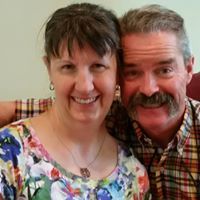
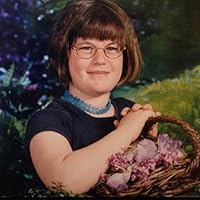
As children, Shirley Ann Higuchi and her brothers knew Heart Mountain only as the place their parents met, imagining it as a great Stardust Ballroom in rural Wyoming. As they grew older, they would come to recognize the name as a source of great sadness and shame for their older family members, part of the generation of Japanese Americans forced into the hastily built concentration camp in the aftermath of Executive Order 9066. Only after a serious cancer diagnosis did Shirley's mother, Setsuko, share her vision for a museum at the site of the former camp, where she had been donating funds and volunteering in secret for many years. After Setsuko's death, Shirley skeptically accepted an invitation to visit the site, a journey that would forever change her life and introduce her to a part of her mother she never knew. Navigating the complicated terrain of the Japanese American experience, Shirley patched together Setsuko's story and came to understand the forces and generational trauma that shaped her own life. Moving seamlessly between family and communal history, Setsuko's Secret offers a clear window into the "camp life" that was rarely revealed to the children of the incarcerated. This volume powerfully insists that we reckon with the pain in our collective American past.
A poignant encyclopedic narrative of the mass incarceration of the Japanese Americans during World War II. A personal moving story of family, pain, loss and resilience.
The Author captured the essence of the Nisei generations' reluctance to share the trauma and tragedy with their children. A powerful story that needed to be told.
This book opened my eyes to more than just the Heart Mountain Internment camp in Wyoming. It explained how we as a nation got to the point of thinking that the Japanese Americans needed to be interred, what the camp was really like, and what has been done since the camp was shut down. Don't think that this couldn't happen again, because it surely can. What a powerful read!
I was given this book as pre-work for an NEH program I am going to in Cody, Wyoming to learn more about the internment camp at Heart Mountain.
Not only was I never taught about the Japanese internment camps, but it has not often come up in conversations as an adult. Higuchi did an exceptional job documenting the pre, during, and post experiences of so many people who went to the internment camps (including her parents) and how their experiences in the camps affected their lives (both seen and unseen).
I was fascinated and inspired by the gentleman who courageously fought against the draft, while also simultaneously being fascinated and inspired by the courageous men who served during the war. I was heartbroken to learn that many men didn’t get their due honors until after their death. I learned so much about the resilience of the Japanese Americans and I think this is crucial and critical reading for everyone because although we’d hope this would never happen again, history has a tendency to repeat itself and we should do everything to prevent that from happening.
Something that was also interesting was the relationships between the democrats and republicans after the internment and the fight for justice. It just showed than humanity can come together to make change.
I’m very much looking forward to learning more about the resilient and powerful people of Heart Mountain and cannot wait to teach others about it as well.
We knew the story but we didn't. Nor did author Shirley Ann Higuchi, until after her mother's death. It was worse than we knew, and unspeakably worse for Higuchi's parents. Reactions and opinions differed widely even within the Japanese American community. While victims and their allies agreed at the tine that the internment (a euphemism Higuchi avoids) was an egregious breach of civil and human rights, they disagreed about the best course to follow — including whether to resist the draft or to serve while the rest of their family members were confined to a concentration camp. There were heroes on both sides and poignant and inspiring stories of survivors, such as Senator Daniel Inouye. A number of survivors or their offspring have published their own stories. But Setsuko's Secret stands out for its thorough exploration of the many viewpoints and complex situations from all sides. It is also a strong reminder of what can happen where racism and xenophobia continue to simmer and periodically boil over. It must not be allowed to happen again.
This is an extremely moving and rich portrayal of the Japanese American incarceration during World War II by the daughter of parents who met in the Heart Mountain, Wyo., camp. Shirley Ann Higuchi follows the stories of Japanese Americans from the time their ancestors arrived in the United States, through the incarceration to the present. It isn't always an easy book to read, because the racism and bigotry faced by Japanese Americans is depressing. But you'll be glad you read it when you're done.
Moving history of the incarceration of the author’s mother and other family members at Wyoming’s Heart Mountain internment camp during WWII. I have visited the interpretation center there which made my appreciation of the situation even more vivid.
A much needed book about the Japanese Americans incarcerated at a concentration camp in the middle of nowhere Wyoming during World War II. The author’s parents were children when they were both sent there during the war.
My only complaint was the difficulty keeping everyone straight. Lots of names back and forth was tough at times.
This book tells such an important story and contained a lot of information about the incarceration of Japanese-Americans during WWII. However, I found the writing a bit dry at times and would have preferred a tighter narrative.
I was really drawn into Shirley Ann Higuchi's journey of self-discovery as she uncovers her mother's secret about her incarceration during WWII is deeply compelling. What's interesting is that she learns about her mother through research and interviews with other Japanese American Nisei who were also incarcerated at Heart Mountain incarceration site in Cody, Wyoming. There is a community of people behind Setsuko's secret and who are the inspiration for Higuchi who went from knowing virtually nothing about her mother's history to realizing her mother's dream by leading the Foundation and building the museum that is there in between Cody and Powell, Wyoming today. I still think about this story today as we face the biggest economic and social upheaval in decades. I also think about my own family history as a third and fourth generation Japanese American. Definitely a keeper!
In the insightful, authoritative, and beautifully written “Setsuko’s Secret,” author Shirley Ann Higuchi does three invaluable things. First, she provides a detailed look at what daily life was really like in a U.S. concentration camp during World War II. She describes the everyday activities and the complex dynamics, including information on those who resisted serving in the U.S. military while their families were incarcerated for no other reason than their ethnic background.
Second, Higuchi covers the various factors leading up to Executive Order 9066, which paved the path for 120,000 people of Japanese ancestry (most of them U.S. citizens) to be rounded up and sent to concentration camps in remote areas of the United States. In particular, she discusses the virulent anti-Asian racism that had pervaded the West Coast years (actually, decades) before Japan attacked Pearl Harbor. This is crucial context that we must understand if we ever hope to prevent a repeat of such a horrific injustice again.
And third, Higuchi discusses the subtle, pernicious effects that have afflicted many children of the Japanese Americans who had been incarcerated in WWII. Here, she has coined the term “Sansei Effect,” which she defines as “the condition in which my generation of Japanese Americans strives to achieve perfection while knowing it is not possible.” I, myself, am a member of that generation and the things that Higuchi has described resonated deeply with me. Japanese Americans who were incarcerated during WWII for no other reason than their ethnic heritage suffered in ways that they rarely talked about, but the scars remained with them their entire lives, and they often inadvertently passed onto their children some of that damage (psychologists use the term “intergenerational trauma” to describe this syndrome).
“Setsuko’s Secret” is deeply personal, with Higuchi writing about the incarceration’s effects on her own family, but she’s also able to achieve a wide breadth by including the stories of several other families that had also been swept up in Executive Order 9066. And it’s her ability to go seamlessly between macro events and intimate family stories helps provide a searing, informative account of an ugly chapter in U.S. history.
Shirley Ann Higuchi, who wrote this book, is a well respected lawyer. A woman of means. She is the daughter of well respected parents. People who worked hard and did good. People our nation interned in concentration camps because of fear, racism, and selfishness.
Higuchi's parents, including the Setsuko of the book's title, did not talk about their time in the camps, or the fact they and their community lost everything they could not carry. Instead, they set out to prove their worth to the nation that had betrayed them for specious reasons.
But trauma is passed down in more ways than language. The cuts are deep.
This book is an interesting blend of fairly neutral recitations of awful things that happened to other people around internment and searing personal experience. Higuchi's mother channeled much of her pain into making her children seem to win at Americana. But with that is a great cost. Higuchi's brother died in awful circumstances that were almost certainly informed if not directly caused by those traumas. People died in abject poverty, shunned and alone, because of Executive Order 9066.
We learned some things. George W. Bush did not allow concentration camps after 9/11. He cited what happened to Norm Mineta - a man interned as a child who became a cabinet secretary, among so many other things -- as the reason. The nation apologized and paid inadequate reparations. This book catalogs some of the work that got there. Good people built some monuments. Korematsu was formally overruled, though perhaps not in a way that would prevent this from happening again.
I can't say I enjoyed reading this book. Much of it is presented in a dry and distant way. The parts that aren't are wrenching.
But I'm glad I read this book. Japanese internment is an important part of the rich, wonderful, and heartbreaking tapestry of America.
“To forget such things is to make it possible for them to happen again.” —-then San Francisco mayor Dianne Feinstein.
Setsuko of the title is the author’s mother and as a young teen she was interned with her family at Heart Mountain located in Wyoming. Her dying wish was that a museum would be established to tell the story of the Japanese Americans who had been removed from their homes and relocated to camps, like Heart Mountain, in various states. In 2011 the Heart Mountain Interpretive Center was opened. Alongside people like Norman Mineta, Daniel Inouye, Tom Brokaw, and Alan Simpson, the author Shirley Ann Higuchi set out to understand the experience of her mother and father and the residual pain that had impacted the lives of so many, even her own.
THe author is telling this history mostly from the perspective of her own family and others like them. This is not a story of victims but of a country that acted out of fear, turning on its own citizens, and stripping away their accomplishments, their possessions, their dignity, and their livelihoods. “The entire point of the relocation had been perverted into a system of prison camps for people who had committed no crime.”
I’ve read a few books on this topic but I still learned many new facts from this one. The author researched extensively through government documents, news articles, and military reports giving this book a different perspective from others. It is beautifully written and is a wonderful testament of a daughter’s love for her mother. One whom she discovered she never fully knew.
Uniquely informative, wholly engaging, non-fiction as compelling as story.
In SETSUKO’S SECRET, author Shirley Ann Higuchi, JD, considers the life of her elegant, accomplished mother, Setsuko Saito Higuchi, and confirms that early incarceration—“being imprisoned as a child”—shaped an urgent need to create the illusion of perfection, while hiding her sorrow at having been made a pawn to military power. “Setsuko’s account of her life,” Ms. Higuchi writes, “resembled one of the intricate lacquer boxes the Japanese create to hold keepsakes.”
Ms. Higuchi, a lawyer and advocate for the American Psychological Association, past president of the District of Columbia Bar, and chair of the Heart Mountain Wyoming Foundation, skillfully moves the lens of her inquiry from WWII governmental and military spin to carefully researched human experience, against a background of historical documents and public records.
Of interest: In constructing context, this highly qualified author provides analysis of the conflicting perspectives of the Japanese American Citizens’ League and the Fair Play Committee, and remarks on their consequence in the larger community.
Of particular value: The book includes an extensive glossary, a detailed “Cast of Characters,” thirty-four pages of source notes, a bibliography, and an index.
A thorough history of the incarceration of west coast Japanese Americans during WWII. The ridiculous paranoid lies that allowed this to happen to them, the failure to protect their property, and the decades of effort to get the apologies and redress they deserved. Higuchi mixes history with personal reflection as she learns the stories her parents didn't share during her youth. She brings in details from others to provide a complete history. Some sections are a bit repetitive, as if parts were written at different times then brought together without working to make them flow more easily. Or maybe it is just the style of a trained attorney. The volume also includes a glossary and a "cast of characters" with descriptions of the people discussed. There is also an index, making this an excellent reference work. It is a bit difficult to read, both because the unfairness and cruelty of how this group of Americans was treated demand empathy and because the detail can be overwhelming. But, it is a story that must be shared and remembered.
Ah, the land of the free . . . and the home of the brave. Except when we become scared or threatened or goaded by tinhorn bigots and racists and old white men. We didn't kill them outright, like we did Native Americans and Blacks, but we disrupted the lives of thousands of Americans of Japanese descent. And for no sustainable or legitimate reason. This is a compelling story about the incarceration of innocent people behind barbed wire, people called internees and colonists and detainees, all innocent of any crimes, but who were imprisoned behind barbed wire. It's a particularly vivid tale, because the author's parents met as children while imprisoned at the Heart Mountain internment facility in Wyoming. The flyleaf says, "Moving seamlessly between family and communal history..." but I found that not to be true. Higuchi lacked the ability to make the moves "seamless," and so the book seemed a bit off, a bit disjointed. Still, it's worth reading. And worth contemplating what could happen if Trump ever returns to office. Heaven help us.
This was a difficult and enlightening read. Growning up Sansei meant that I experienced much of what the author describes. But being a west coast JA is also a very different experience from one growing up in Utah or DC. I did get some insight into why my parents chose not to associate with the larger JA community in the Gilroy/Morgan Hill area. My dad was a "No-No boy" and probably experience the ostracization that Higuchi describes. When I was old enough to understand what being a No-no boy meant I was a teenager growing up south of SF on the outskirts of the hippie and summer of love blossoming. I was extremely proud of Dad having been a no-no boy and had no clue that he suffered long lasting consequences from that decision. This was a pretty easy read. I think it is history that can impact our present and future. I am saddened to think that the incarceration of a race, ethnic group or religious group can so easily happen again today.
I tried to imagine as I read this well-documented history what it must have been like for Shirley growing up in Ann Arbor, MI not knowing what she shares in this story. It sort of boggles my mind... yet I also have a deep appreciation for the families in this story... those who remained silent for so many years.
But I am so glad that Shirley has taken special care to gather the ugly history of Japanese American incarceration during WWII and share it for all to read. It is vital reading for every American... it is history that must be told so it never happens again.
Heart Mountain is now on my list of places I must visit! I highly recommend!
Shirley Ann Higuchi explores her family's experience of incarceration at Heart Mountain during World War II. As a child, growing up she had learned little about her mother and father's experience. As she was to discover that trauma which she did not realize they had experienced, had shaped the people her parents were and how they had raised their children. Setsuko, her mother had been giving money privately to the Heart Mountain Foundation to build a permanent museum to tell the story of what had happened there. This is a story of loss, shame, resilience and triumph.
This was a very well done memoir about the author's parents' experience at Heart Mountain Internment camp during WWII. She talked about some of the families in great detail beginning with what their lives were like before the war, during the war and after. It gave a good view of the scope of the consequences of that time. Many think of it as just the internment, but it really changed things for the families for generations after that period. She really demonstrated that well in this book.
Higuchi's book is unique for honestly telling her family story about the effects of multi-generational trauma that affect many of us Japanese Americans from the WWII incarceration. First hand accounts of conflicting narratives fit into a historical context like puzzle pieces.
I thought this was a very interesting, well-written approach to a difficult historical topic, the Japanese and Japanese American internment during World War II. I am fairly familiar with the history and know many people affected directly or through their families. I would definitely recommend this an excellent book for someone new to the topic, but also useful and fascinating for those who already know the basic outlines of the internment experience. Shirley Ann Higuchi uses her own family's story effectively, and includes other diverse family stories to provide an even richer tapestry. I particularly appreciated how the author followed through on the stories of the individuals and families; I've read a lot about being sent to camp, arriving in camp, and living in camp. Setsuko's Secret gave more insights into how individuals and families left the camps and moved on with their lives. I particularly appreciated the intergenerational aspects of Shirley Ann Higuchi's telling--how the story was (or wasn't) communicated by parents to their children, and what that meant for families in the decades after the initial trauma of incarceration ended. I greatly admire the way the author built on her mother's "secret" to unearth, preserve, and share this important history of Heart Mountain. This book deserves as many readers as possible!