Was hat eine Grille mit einem Streichinstrument gemeinsam? Gibt es tatsächlich Käfer, die ihre Leuchtorgane dimmen können? Und wie kann es sein, dass man Heuschrecken einer bestimmten Spezies mal mit roten, mal mit grünen Beinen findet? Nur eine Laune der Natur, oder hat die Evolution hier eine neue Art hervorgebracht? Kakerlaken, Ameisen, Wespen, Quallen und Würmer – oft sind es die unscheinbaren, die stechenden, die vermeintlich ekligen Tierchen, die uns mit ihren faszinierenden Geschichten besonders überraschen. Frank Nischk, passionierter Zoologe und Insektenliebhaber, lässt uns staunen über die verborgene Schönheit, die unglaubliche Formenvielfalt und die komplexen Verhaltensweisen der Insekten, sei es im heimischen Baggersee oder im tropischen Regenwald. Verblüffende Einblicke in die unbekannten Lebenswelten unterschätzter Tierarten!
Frank Nischk, geboren 1967, studierte Biologie in Köln. Grundlage seiner Doktorarbeit sind mehrere Expeditionen in die Regenwälder Ecuadors. Dort erforschte der Zoologe das überwältigende Konzert der Tierstimmen in den artenreichen tropischen Urwäldern. Seit 2000 arbeitet er als Kultur- und Wissenschaftsjournalist, Regisseur und Autor von TV-Dokumentationen (arte, WDR, ARD) – darunter teils preisgekrönte Natur- und Tierfilme über die Unterwasserwelt am Rhein, die Nebelwälder Ecuadors und den Colorado River.
This is a cute nature/memoir combo about an entomologist's doctoral research on cockroaches (and then later, crickets), that takes us as far as Ecuador. He's hardly held back by the two bugs in the title, though, since he touches on a number of different critters as he talks about his travels, discoveries, and mishaps. It did, however, devolve into a long-winded conversation about conservation - so much so that I kind of forgot I was reading a book on bugs (hence the three-star rating).
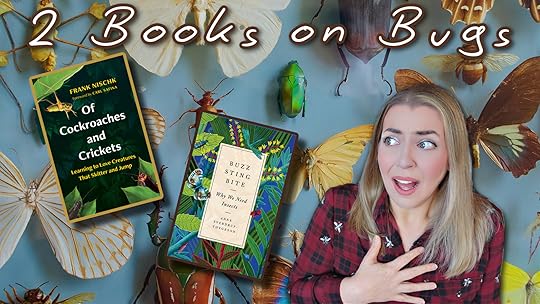
Click here to hear more of my thoughts on this book (and one other book on bugs) over on my Booktube channel, abookolive!
The cover of this little book so captured the motion of the jumping grasshopper . It immediately reminded me of walking thru a pasture as the grasshoppers sailed away from me as i passed thru the long grasses. A happy memory. I wanted to know why anyone likes cockroaches so I picked up this book. Frank Nischk 's enthusiasm and joy in the study of creepy crawlers leads on the the enjoyment of remote patches of wild environments. He writes with wit, conviction and hope to improve our world for all creatures. I learned so many tidbits about things I didn't know I wanted to know!
Listen. Don't ask me why I listened to this. I don't know! I don't do bugs, especially roaches, spiders, and grasshoppers. For some reason, this seemed like an interesting listen, so I did. Surprisingly I was engaged the entire time and actually enjoyed learning more about the creepy crawly. I don't think I am less scared or grossed out by bugs but I do have a new respect to see them differently. The narrator was top notch.
Frank Nischk hat schon früh seine Liebe für Tiere entdeckt. Jedoch war es nicht der gewöhnliche Hund oder die gemeine Hauskatze, die seine Faszination auf sich zogen, sondern eher die kleinen Krabbeltiere, die unbeachtet oder gar verachtet ihr Dasein in Bäumen, Sträuchern und Gräsern fristen.
Für seine Diplomarbeit studierte Frank Nischk dafür in Südamerika gerade diese Art von Insekten und beschreibt nun in seinem Buch auf faszinierende Art und Weise seine Entdeckungen.
Wir begleiten Frank Nischk von seinen Anfängen als Assistent, wo er ein Jahr lang das Verhalten von Babykakerlaken studierte, reisen mit ihm mehrmals nach Südamerika bis hin zu seinem Appell an die Menschheit, die Insekten als das zu sehen, was sie sind: wichtig, nützlich und teilweise kurz vor dem Aussterben.
Mit viel sachlichem Wissen, welches aber so verpackt ist, dass wirklich jeder es versteht, erzählt der Autor von den verschiedenen Insekten, die er im Laufe der Jahre studiert hat. Seine Faszination hat nicht abgenommen, im Gegenteil, sie ist gewachsen und hat sich ausgebreitet.
Ich hatte sehr viel Spaß beim Lesen und hätte gerne noch so viel mehr von seinen Exkursionen in den Regenwald oder an rheinischen Baggersee gehört. Gerade die Leidenschaft, die der Autor an en Tag legt, hat mich sehr berührt.
Der Schreibstil hat ein weiteres dazu beigetragen. Mit viel Liebe zum Detail, einer flüssigen Art und einer gesunden Portion Witz und Humor verfolgt man das Leben des Autors und reist mit ihm zu entlegenen Orten voller fieser Tiere.
Ich fand es toll, wie viel Wissen der Autor in sein Buch gepackt hat und dieses an seine Leser so erklärlich weitergibt, dass der Respekt für Insekten noch etwas mehr gestiegen ist. Ich habe nichts gegen Insekten (außer sie fallen in die Spezies der Arachnoiden), doch muss ich auch sagen, dass ich keine sehr große Liebe für sie empfinde. Aber so sehe ich nun einiges mit anderen Augen, vor allem da klar wird, dass Schaben auch gute Mütter sein können, die "nervige Nachtmusik" der Grillen das Werben um Weibchen in einem neuen Licht erstrahlen lässt und den Ameisen, die ihren Weg in die Küche finden, zumindest etwas Verständnis entgegen gebracht werden kann (wenn auch keine Erlaubnis).
Meggies Fussnote: Ein Einblick in das Leben der Krabbler auf eine besondere Art und Weise.
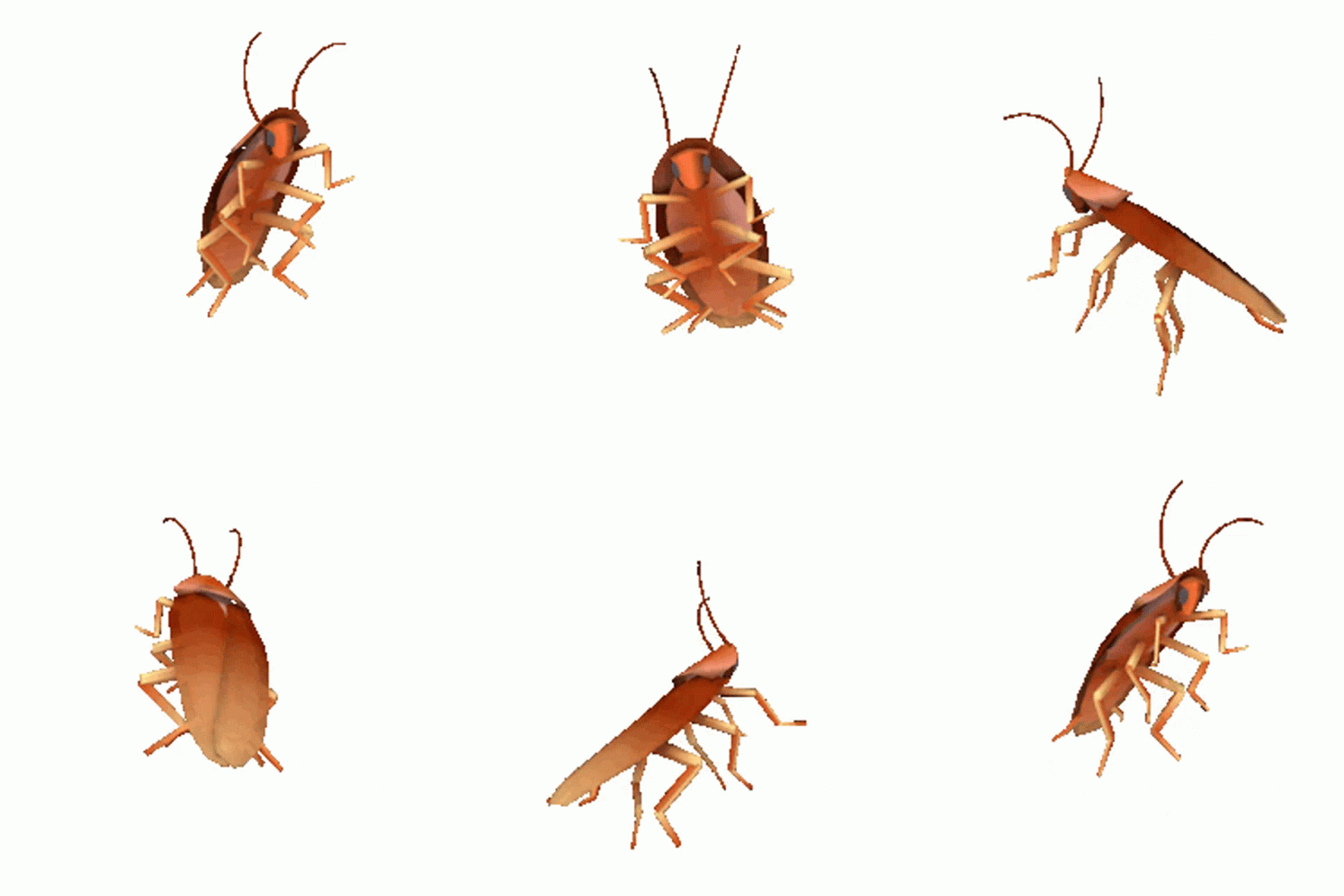
I thought it really humanized some pests - for example cockroaches.
It really detailed a lot of interesting aspects of cockroaches and I found them pretty fascinating.
All that being said, there were some downright gross bits in this book too. Whenever I hear about paralizing a prey bug, laying eggs in its chest cavaties and letting the brood hatch while it is still alive and consume the prey from the inside out - I get lightheaded.
After reading this, I still would not have any cockroaches as a pet but I thought that their life cycle and survival mechanisms are quite impressive.
It also detailed a lot about crickets, and even touched a bit on jellyfish which I also thought were very interesting.
This book did go on quite long, but it was quite an interesting read that I think will be especially fun for younger audiences or those interested in entomology.
Interesting anecdotes from Nischk's time doing research for his doctorate in Germany and South America (mostly Ecuador). His descriptions of the land and the people where he lives and visits are endearing and his insect tales don't fall far behind. I read a lot of "natural history," if you will, and still came across lots of little tidbits that were interesting and new.
I think this is a great book for folks who don't really think they "like" insects (as reviews have proven) because there seems to be a very intentional decision to make sure the writing does not make the reader itchy and paranoid about insects around or on us. (The army ants might be an exception but I think I live far enough away to not worry about them. Plus, I'm a large mammal.) Instead there are lots of interesting facts, some myth-busting, and a lot of appreciation for the worlds creepy-crawlies create.
I honestly loved this book- I’m a huge cockroach fan as bugs go, and I loved getting to read more about them.
The thing that really cinched this book for me other than all the entomological facts though was how I felt actually inspired after reading it? It’s depressing to be a naturalist sometimes, knowing about all these beautiful species but watching the world bore down and crush them- but the ending talking about conservation and how other biologists did their part, no matter how seemingly small, really gave me a sense of hope.
Kept from having five stars because of the focus on the ‘uninterrupted wilderness’ thing, since indigenous peoples have always been just as much a part of the places they live in as the animals there, and to ignore their contributions to how the land is shaped misses a huge piece of the puzzle!
This author is amazing. You follow his various research projects, and learn so many fascinating things about the insect world. The writing is hilarious, witty, and educational. What’s not to love?
Some fun facts….
-Cockroaches have a special bacteria in their gut so they can get nutrients from things like glue, soap, floor cleaner, etc.
-There are 4,600 species of cockroaches and only 30-ish live in homes. There is so much variety, and some rock vibrant and metallic colors like blues, greens, and reds!
-Crickets chirp at different frequencies as to not ‘interfere’ with other species (similar to radio frequencies)
That’s just a nugget of what you’ll find inside. Honestly, one of the best entomology books I’ve ever read!
There is a whole important world of which I am (blissfully) unaware. Fascinating facts and stories about the tiny insects that make our world go round. There is so much to learn from insects (as creepy crawly as they may be LOL)
I can appreciate learning about insects from a safe distance, and Of Cockroaches and Crickets is an excellent choice for that.
While I personally found the charm of this journalistic style book to be slightly oversold, I cannot overvalue its contents. It is full of interesting facts about a variety of creatures (not limited to bugs), interspersed with recollections of the author's time studying and learning about his topic of choice. As with many modern books about animals and the earth, the importance of conservation is earnestly argued and utterly convincing.
Thank you to NetGalley and Tantor Audio for an audio ARC in exchange for an honest review. 2.5 stars
Despite its title, this book is not only about cockroaches and crickets, but all kinds of insects, arachnids, even birds and mammals. There is so much fascinating information here, that I kept “rewinding” the Audiobook trying to retain as much as possible. With a foreword by Carl Safina, an author I love, these are the experiences of Frank Nischk in the lab, the classroom and, more interestingly, natural environments that most of us can only dream of. The last part is a call to action, specifying what we can all do to help reverse the irreversible loss of so many animal species. Mike Chamberlain is a great choice for a narrator because he sounds so approachable and friendly, while he tells you mind blowing facts. I picked up this read because I’m irrationally afraid of cockroaches. If I had to jump over one to escape a hissing cobra I’d choose death. I’m not sure if knowing what I learned about how they are such good parents will ever help me get over it, but it was nice to learn so much about such a neglected species. I chose to listen to this audiobook and all opinions in this review are my own and completely unbiased. Thank you, #NetGalley/# Tantor Audio!
Instead of studying butterflies in the Amazon, Nischk got stuck with studying cockroach poop. While this would probably be a hard no for me, Nischk found his niche (sorry for the pun). He goes on to have a successful career studying insects, not just cockroaches and crickets, both in his homeland in Germany but also returning to the jungles.
Nischk's enthusiasm for his work is infectious and kept me engaged throughout his adventures. I learned so much about the critters such as the purpose of a cricket's song which unintentionally created an international conflict. Who knew that I would want to understand more about cockroaches and even felt slightly bad that the goal was to find a way to remove them from homes. I also really appreciated Nischk reminder that insects play an important role in nature and links to climate change. If you are interested in often overlooked creatures in nature, this is a good one.
3.5/5* This was a fun and easy read. The content was engaging and I enjoyed all of the anecdotes and different insect facts. However, it did jump around too much for my personal preference. One part discussed cockroaches, the next discussed jellyfish and the concept of hierarchies, then it went back to cockroaches, etc. I misunderstood the book description - I thought it would be mainly about ‘unloved’ insects (e.g. cockroaches and crickets) with the author being an enthusiastic researcher sharing facts and experiences to get people to reconsider their views of such ‘pests’. Less than half of the book actually discusses these two creatures and the rest discusses other subjects (more personal stories, ants, bears, conservation efforts). Don’t get me wrong, I did enjoy it, but it wasn’t what I was expecting. It’s mostly comprised of personal experiences in the field with some facts sprinkled in, but because the book is so short there’s not much detail into anything.
Many reviews of this book start by saying that they don't "do" bugs or that they hate them. The biologist author doesn't want to live with them in his house either but they are fascinating and important to our ecosystem. The book is the author's journey as a student of biology and I found his anecdotes about Ecuador to be interesting. The last few chapters are about habitat conservation with an account of various efforts going on now big and small. He truly cares about nature, understands the value of untamed landscapes, and conveys the importance of it well. Only the first 1/3 of the book is about roaches and crickets but there is fascinating information about them and funny stories of mishaps in the lab.
The first half of the book was an interesting discussion of those critters we love to hate, namely the cricket, and especially the cockroach. This section of the book read quickly, was entertaining, and a joy to read.
However, the last half of the book became a shill for climate change and the theory of evolution. Rather than being created by an intelligent God, the author posits that all creatures, great and small, evolved from some one cell organism in the ocean. It is obvious the author appreciates the beauty of nature and that alone should be sufficient proof, in and of itself, that these magnificent creatures, with their unusual feeding, mating and preservation habits, must have been created by an intelligent being, and not just occurred by happenstance.
Nischk details his long-term study of creatures that skitter after a failed attempt to study hummingbirds because of a turf issue in Columbia which then became about the feces of cockroaches and went from there.
It's a mix of ecological study, humor, science, environmental conservation, goofy and scary stories from being stung by things to how animals take over others' bodies, and his own life's work and purpose. The right balance makes it entertaining and informative to listen to and allows us to get over the "ick" factor of the skittering creatures and understand them for who/what they are.
This wasn't quite what I expected to read when I picked it up, but I enjoyed it nonetheless. About two-thirds of the book reads like a memoir of the authors scientific endeavors with insects. The rest of the book is more of a call to action to save nature. I had hoped for more science writing, a deeper dive into the lives of cockroaches, in particular. But I also didn't read any descriptions of the book, instead just dove right in so that's on me! This was a quick and fun read, I'd definitely recommend it to my not-so-insect-friendly friends.
Really enjoyed the first two sections getting a first had description of what it actually looks like to study insects
The final section whilst incredibly important felt a bit generic like an obligatory inclusion, you get these kinds of chapter in every book on insects so it starts to feel a bit repetitive
Nonetheless great read! Great book to start with if you're interested in reading about entomology... if you start here my one grumble wouldn't even be relevant!
"NetGalley and the publisher provided a copy of the audidobook.
Nischk gives us a part memoir, part science book that really comes in strong. As Nischk details his academic journey from one failed research area to another, he also gives the reader all sorts of facts, pieces of information, and great stories.
If the idea of an entomologist's memoir interests you, I don't think you'll be disappointed with this one. "
This book was incredible. The stories were enthralling, the author's writing style kept me entertained, and the book gave me hope. IMO, the future is F*ed beyond help but after reading the final chapters I have a spark of hope and a reason to try fixing some of the many things that humans have destroyed.
3.5 stars really. I still don't like bugs or insects after reading this book. I was entertained though and learned a lot. I like how he provides easy solutions that anyone can do. This year I plan to plant some pollinator bushes.
Cockroaches a pest? This is an entertaining memoir of one entomologist's early research career, balanced with plenty of fascinating asides. Read my full review at https://inquisitivebiologist.com/2024...
Nischk has a great narrative, it was impressive to be surrounded in all the scenarios and feeling those moments of amazement. It started with roaches and crickets, but it ends with the promise of dreams, places and organisms to protect and discover. I'm very happy to give this book a chance.
Loved reading this book and ends on a positive note that makes you excited about conservation. I also just love Ecuador and want to visit every place mentioned in this book now!