

What do you think?

La regina delle greggi
Agli inizi del secolo scorso, ai piedi delle Montagne Rocciose, lo scorrere delle stagioni e una natura non ancora addomesticata determinavano implacabilmente la vita dell’uomo. Qui, dove lo stesso Savage era nato e cresciuto, si svolge la turbolenta epopea degli Sweringen. Nell’arco di un secolo si intrecciano i destini di quattro generazioni: il bisnonno cercatore d’oro; la bisnonna, Regina delle greggi, simbolo del coraggio, della forza e delle fragilità femminili; i cinque figli di lei, fra i quali Elisabeth, madre di Thomas: una donna così generosa e dolce che è impossibile immaginarla mentre abbandona una figlia neonata. Eppure una figlia abbandonata c’è e si è messa sulle tracce della propria famiglia. Riflessione sulla ricerca della propria identità, inno alla famiglia, La regina delle greggi merita – secondo la critica internazionale – un posto fra i classici della narrativa statunitense.
221 pages, Kindle Edition
First published October 3, 1977
About the author
Thomas Savage
47 books249 followersThomas Savage was an American author of novels published between 1944 and 1988. He is best known for his Western novels, which drew on early experiences in the American West.
Ratings & Reviews
Friends & Following
Create a free account to discover what your friends think of this book!
Community Reviews
Displaying 1 - 30 of 133 reviews

November 5, 2020
NON È VERO CHE GLI UOMINI ADULTI NON PIANGONO
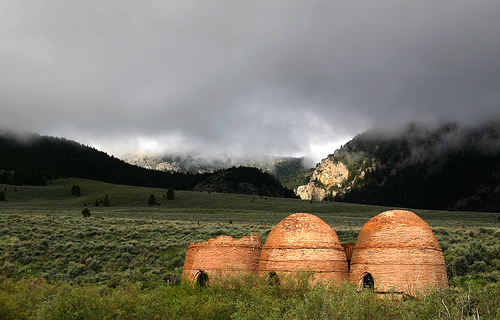
Fornaci per il carbone nella Lemhi Valley.
Non è vero che gli uomini adulti non piangono sono le ultime parole di questo sorprendente romanzo dall’architettura ardita, la lingua piana, la trama spaziosa popolata da una galleria di personaggi raccontati e ritratti come se fossero tutti protagonisti.
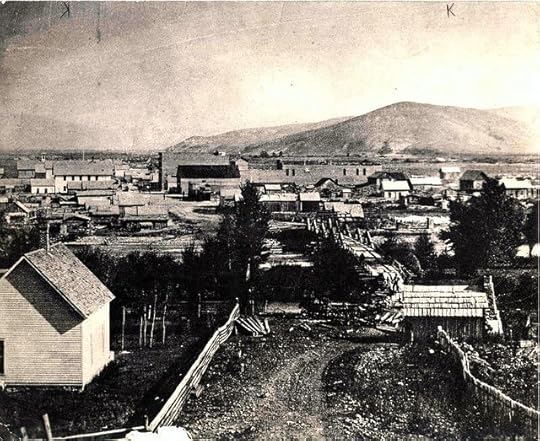
La città di Salmon, in Idaho, nel 1887.
Nel prologo l’io narrante si presenta: è uno scrittore, vive nel Maine, ma è originario del West, la sua famiglia viene dall’Idaho e dal Montana.
Subito il testimone passa a una giovane che vediamo nascere, crescere, divenire.
E questa volta siamo nell’estremo ovest, a Seattle: la bambina figlia di una giovane bellissima viene data in adozione appena nata.
Non conoscerà mai la madre e il padre naturali: crescerà in una famiglia con due genitori già quarantenni che hanno da poco perso il loro unico figlio. Sarà amata e protetta. Resterà orfana ormai da grande. Si sposerà, ma non durerà, divorzierà e porrà fine a un matrimonio senza figli e senza infamia ma neppure lode.
Tuttavia, la curiosità, che forse è necessità, bisogno, la curiosità di scoprire la sua origine la attiva, e le fa iniziare ricerche.

Seattle con Mount Rainier sullo sfondo.
Dall’inizio del secolo, per la precisione gli anni subito prima della Grande Guerra, si arriva agli anni Sessanta del Novecento.
E quando le ricerche della figlia abbandonata iniziano, il testimone si sposta un pochino più a est, ma sempre nel West: in Idaho.
Da qui una teoria di personaggi, maschili e femminili, tutti ben delineati, magnificamente raccontati, con empatia che non cessa neppure di fronte a quelli biechi. Uno stuolo d’umanità che potrebbe confondere: se Savage non avesse sempre chiaro dove vuole arrivare, se la sua architettura avesse crepe o cedimenti.
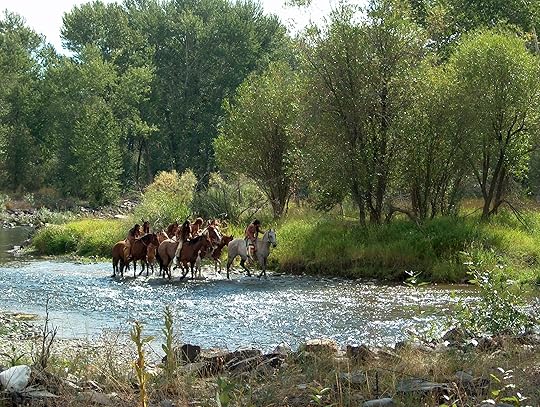
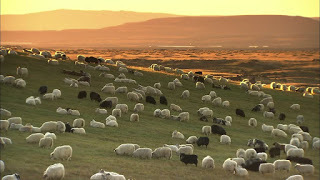
Il Lemhi River nella valle omonima, dove pascolavano le diecimila pecore della regina delle Greggi.
Un'epopea in miniatura, al centro della quale riluce colei che dà il titolo al romanzo (titolo cambiato nelle riedizioni, quello originale era molto ma molto più bello: Ho sentito mia sorella dire il mio nome): la Regina delle pecore, personaggio di fascino estremo.
Accanto a lei: la splendida figlia primogenita che l’ha delusa; l’unico figlio maschio che scompare troppo presto; il nipote che sembra prendere il suo posto, cresce adorando la madre e la nonna, e si rivela io narrante; e la nipote sconosciuta, persa e abbandonata, andata in adozione, che ha trascorso quasi metà della sua vita a ritrovare la via del ritorno alla sua famiglia d’origine.
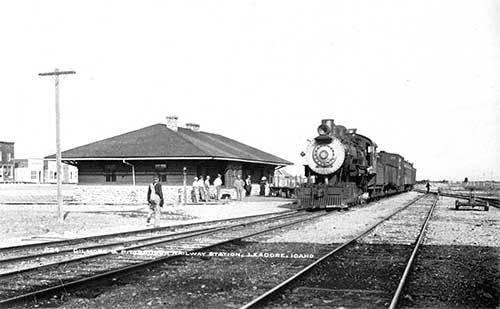
Un treno della ferrovia Gilmore & Pittsburgh fermo al deposito di Leadore, Idaho, agosto 1912.
Il potere del cane, il precedente romanzo di Thomas Savage che ho letto, è molto bello. E non vedo l’ora di vedere il film che Jane Campion ne ha tratto.
Questo mi è piaciuto ancora di più: letto in poco più di un giorno, l’ho trovato portentoso proprio per il come Savage racconta la sua storia, per la struttura che sostiene la sua narrazione.
Fornaci per il carbone nella Lemhi Valley.
Non è vero che gli uomini adulti non piangono sono le ultime parole di questo sorprendente romanzo dall’architettura ardita, la lingua piana, la trama spaziosa popolata da una galleria di personaggi raccontati e ritratti come se fossero tutti protagonisti.
La città di Salmon, in Idaho, nel 1887.
Nel prologo l’io narrante si presenta: è uno scrittore, vive nel Maine, ma è originario del West, la sua famiglia viene dall’Idaho e dal Montana.
Subito il testimone passa a una giovane che vediamo nascere, crescere, divenire.
E questa volta siamo nell’estremo ovest, a Seattle: la bambina figlia di una giovane bellissima viene data in adozione appena nata.
Non conoscerà mai la madre e il padre naturali: crescerà in una famiglia con due genitori già quarantenni che hanno da poco perso il loro unico figlio. Sarà amata e protetta. Resterà orfana ormai da grande. Si sposerà, ma non durerà, divorzierà e porrà fine a un matrimonio senza figli e senza infamia ma neppure lode.
Tuttavia, la curiosità, che forse è necessità, bisogno, la curiosità di scoprire la sua origine la attiva, e le fa iniziare ricerche.
Seattle con Mount Rainier sullo sfondo.
Dall’inizio del secolo, per la precisione gli anni subito prima della Grande Guerra, si arriva agli anni Sessanta del Novecento.
E quando le ricerche della figlia abbandonata iniziano, il testimone si sposta un pochino più a est, ma sempre nel West: in Idaho.
Da qui una teoria di personaggi, maschili e femminili, tutti ben delineati, magnificamente raccontati, con empatia che non cessa neppure di fronte a quelli biechi. Uno stuolo d’umanità che potrebbe confondere: se Savage non avesse sempre chiaro dove vuole arrivare, se la sua architettura avesse crepe o cedimenti.
Il Lemhi River nella valle omonima, dove pascolavano le diecimila pecore della regina delle Greggi.
Un'epopea in miniatura, al centro della quale riluce colei che dà il titolo al romanzo (titolo cambiato nelle riedizioni, quello originale era molto ma molto più bello: Ho sentito mia sorella dire il mio nome): la Regina delle pecore, personaggio di fascino estremo.
Accanto a lei: la splendida figlia primogenita che l’ha delusa; l’unico figlio maschio che scompare troppo presto; il nipote che sembra prendere il suo posto, cresce adorando la madre e la nonna, e si rivela io narrante; e la nipote sconosciuta, persa e abbandonata, andata in adozione, che ha trascorso quasi metà della sua vita a ritrovare la via del ritorno alla sua famiglia d’origine.
Un treno della ferrovia Gilmore & Pittsburgh fermo al deposito di Leadore, Idaho, agosto 1912.
Il potere del cane, il precedente romanzo di Thomas Savage che ho letto, è molto bello. E non vedo l’ora di vedere il film che Jane Campion ne ha tratto.
Questo mi è piaciuto ancora di più: letto in poco più di un giorno, l’ho trovato portentoso proprio per il come Savage racconta la sua storia, per la struttura che sostiene la sua narrazione.

January 21, 2020
I'm of two minds about this one. On one hand, it was a great story with some very good characters, and the writing was superb. Savage knows how to write sentences that make you stop and think. On the other hand, the book was not about the Sheep Queen as a main character, but an ensemble of her family and various threads building into a family saga. There were also a lot of inconsistencies throughout, and unfortunately, I'm one of those people who notice that type of thing. As a semi-autobiographical tale it was mostly successful for me, as I kept reading to get answers to my questions. Then again, the ending left me with even more questions.
So a strong 3.5 stars, which I'm rounding up to 4. Maybe I expected more because I loved The Power of the Dog so much.
So a strong 3.5 stars, which I'm rounding up to 4. Maybe I expected more because I loved The Power of the Dog so much.
April 9, 2023
Part 1 is a story of emotional numbness set around the time of WW1. Narrative technique stays on the surface. What interests me, in addition to the story — a girl is adopted by a couple after their boy dies — is the deft handling of what John Gardner called psychic distance. The protagonist, Amy, the babe given up for adoption, is raised in early 20th century Pacific Northwest by her foster parents to be a proper young woman. It makes sense then that the prose should be a little diffident and standoffish.
"FRIENDS EXCHANGE GLANCES when one has been unlike oneself.
"'You're more like yourself, now,' her friends said.
"Although her parents were living when she was handed over to the McKinneys, Amy was as vulnerable as a true orphan to the uncertainties, vicissitudes and humiliations. Like a true orphan, she learned early to show gratitude in order to survive. Gratitude is the price you pay. From the moment Miss Lovelace in modified French heels had suggested she was lucky not to have landed in an orphans' home, Amy was grateful to the McKinneys for having spared her that dismal fate — the long halls, the iron cots, the sour smell of mops. The fear of orphans' homes is congenital, the stuff of nightmares in which no father or mother exists to explain away the shadows. Even children with proper parents have such dreams. . . ." (p. 54)
Part 2 is about Amy's mother's family, which she has yet to discover. (Only recently have state laws, which formerly protected birth parents, begun to change.) The sheep queen refers to Amy's grandmother, a stern frontier woman who produces wool in early twentieth century Idaho. This second part introduces the distant Beth, Amy's mother, whose presence is vague, standoffish presence. We also learn of Beth's liaison with the beautiful salesman, Ben Burton. I like the sere northwestern landscape, but the family story strikes me as dull. The sheep queen is a willful, thrusting woman who is unlikable, not that she has to be likeable, but she should at least be interesting in her unlikeability.
Part 3 turns to a first-person narration by Amy's brother, Tom Burton, whom she has yet to meet. Tom is a novelist living in post-WW2 Maine. It's interesting to read the story from this point for his reaction to the truth. For Tom's initial reaction is shame and denial. His mother could not have abandoned a child. It's hard to generalize about society, but just as the term illegitimate has been called into question recently, there seems less social resistance to such family surprises. They are, in fact, standard fodder for the news media.
"And I wrote the woman that so explosive a secret could not have been kept for fifty years, that in fifty years such a secret would have surfaced, that someone who knew would have spoken out in anger, in drunkenness, in spite or in despair. I wrote that my mother was now dead and could no longer be damaged by any disclosure, and therefore if such a secret existed, it would now certainly come out. My mother was dead and out of reach of blackmail.
"As I wrote the word 'blackmail' it occurred to me that that's what the woman was up to — blackmail. If this woman Amy Nofzinger was innocent, it was a terrible accusation, but I let the word stand. I signed myself Very Sincerely, that coldest of closings, and sealed the envelope with my own spittle. And that was that.
"'Maybe the woman's crazy,' my wife remarked. 'Desperate. Anyone who tries to find parents who have abandoned her must know how dangerous it is.'" (p. 152)
It's interesting how much of the imagery here also appears in the author's The Power of the Dog (which Jane Campion made into a movie.) The alcoholic mother, the western setting, horse riding, the big log house, old-fashioned cars (Pierce-Arrows etc.), animal husbandry, train depots and lots of machismo. It is in some ways like an echo of that earlier book, though without the homosexuality.
The central theme here is the binding idea of family. It's what the sheep queen and her daughters, Tom's aunts, have and what Amy desperately seeks. If the book has a weakness it's that it sentimentalizes family, grows cloying at times.
I believe Cormac McCarthy was an avid reader of Thomas Savage's books. They both mention Arbuckle's Coffee, a reference I have never come across before either in life or in books.
"FRIENDS EXCHANGE GLANCES when one has been unlike oneself.
"'You're more like yourself, now,' her friends said.
"Although her parents were living when she was handed over to the McKinneys, Amy was as vulnerable as a true orphan to the uncertainties, vicissitudes and humiliations. Like a true orphan, she learned early to show gratitude in order to survive. Gratitude is the price you pay. From the moment Miss Lovelace in modified French heels had suggested she was lucky not to have landed in an orphans' home, Amy was grateful to the McKinneys for having spared her that dismal fate — the long halls, the iron cots, the sour smell of mops. The fear of orphans' homes is congenital, the stuff of nightmares in which no father or mother exists to explain away the shadows. Even children with proper parents have such dreams. . . ." (p. 54)
Part 2 is about Amy's mother's family, which she has yet to discover. (Only recently have state laws, which formerly protected birth parents, begun to change.) The sheep queen refers to Amy's grandmother, a stern frontier woman who produces wool in early twentieth century Idaho. This second part introduces the distant Beth, Amy's mother, whose presence is vague, standoffish presence. We also learn of Beth's liaison with the beautiful salesman, Ben Burton. I like the sere northwestern landscape, but the family story strikes me as dull. The sheep queen is a willful, thrusting woman who is unlikable, not that she has to be likeable, but she should at least be interesting in her unlikeability.
Part 3 turns to a first-person narration by Amy's brother, Tom Burton, whom she has yet to meet. Tom is a novelist living in post-WW2 Maine. It's interesting to read the story from this point for his reaction to the truth. For Tom's initial reaction is shame and denial. His mother could not have abandoned a child. It's hard to generalize about society, but just as the term illegitimate has been called into question recently, there seems less social resistance to such family surprises. They are, in fact, standard fodder for the news media.
"And I wrote the woman that so explosive a secret could not have been kept for fifty years, that in fifty years such a secret would have surfaced, that someone who knew would have spoken out in anger, in drunkenness, in spite or in despair. I wrote that my mother was now dead and could no longer be damaged by any disclosure, and therefore if such a secret existed, it would now certainly come out. My mother was dead and out of reach of blackmail.
"As I wrote the word 'blackmail' it occurred to me that that's what the woman was up to — blackmail. If this woman Amy Nofzinger was innocent, it was a terrible accusation, but I let the word stand. I signed myself Very Sincerely, that coldest of closings, and sealed the envelope with my own spittle. And that was that.
"'Maybe the woman's crazy,' my wife remarked. 'Desperate. Anyone who tries to find parents who have abandoned her must know how dangerous it is.'" (p. 152)
It's interesting how much of the imagery here also appears in the author's The Power of the Dog (which Jane Campion made into a movie.) The alcoholic mother, the western setting, horse riding, the big log house, old-fashioned cars (Pierce-Arrows etc.), animal husbandry, train depots and lots of machismo. It is in some ways like an echo of that earlier book, though without the homosexuality.
The central theme here is the binding idea of family. It's what the sheep queen and her daughters, Tom's aunts, have and what Amy desperately seeks. If the book has a weakness it's that it sentimentalizes family, grows cloying at times.
I believe Cormac McCarthy was an avid reader of Thomas Savage's books. They both mention Arbuckle's Coffee, a reference I have never come across before either in life or in books.

January 29, 2023
An adopted child traces her birth mother and finds that she is related to the Sheep Queen of Idaho. I was expecting something more like “The Power of the Dog”, but this family saga was grit-free and lacked the tension present in the other book, so I found it disappointing. Strangely, however, late in the book a character is inserted into the book who is an exact replica of the antagonist in “The Power of the Dog”. Even the relationship of that character to the other characters was identical. It was like the author had a chapter left over from the earlier book and decided to use it in this book. It was a little jarring. And frankly, the resolution of the adoption mystery made no sense to me and seemed to defy both logic and maternal behavior. The book wasn’t awful and I liked the character sketches, but it wasn’t really what I was looking for. 3.5 stars

January 22, 2020
First, this book was not on the same level for me as Thomas Savage’s stellar 1967 novel ‘The Power Of The Dog.’ Please read that book, folks - you will not forget it. Second, the Goodreads blurb for ‘The Sheep Queen’ is terribly misleading. Yes, there is a Sheep Queen, Emma Russell Sweringen, and she deserves many accolades for her accomplishments in running a ranch with thousands of acres and thousands of sheep in Idaho in the early 1900’s, but she is not the star of this show. In fact, she causes irrevocable harm to two innocents due to her absolute intractability. Her grandson did not “adore” her as the blurb implies - no one did. This was a woman to be respected, feared, obeyed - not adored: “But Emma’s will and Emma’s influence and Emma’s way of being right - why, Emma was like a brushfire. When you checked her in one place, she flared up over there.” (~ Emma’s husband, Thomas Sweringen) The granddaughter given up for adoption did not “spend half her life finding her way back to her family” - she did not even know who her “real” family was until almost age 50. So far this review is mostly what the book is not. What is it then? you might ask.
It is a detailed family saga with a touch of mystery, the semi-autobiographical history of author Thomas Savage published under a different title in 1977, ten years after ‘The Power Of The Dog.’ The story meanders through multiple timelines and places from the late 1800’s through the mid 1970’s, through Maine, Washington, Montana, Idaho, Utah, and California. It introduces countless characters - Sweringens, Russells, Owens, McKinneys, Brewers, Burtons. At one point, I had to bring out my trusty notepad to organize a character tree. There is the heartbreaking abandonment of one child and the death of another, the dramatic crossing of a longstanding line in the sand, the painful realization that some people are never to be relied upon, and the graceful acceptance of a situation completely beyond imagining. Savage died in 2003 but I would love to ask him just how much of this riveting story is true. I also want to know which version of where Tom Burton spent his mother’s trip to Fraser River is correct - Tom’s or Aunt Roberta’s? Or was this a serious editing faux pas?
No, this book is not ‘The Power Of The Dog,’ but it is a fine novel nonetheless with superior sentences and skillfully nuanced characters. I now need to hunt down more work by this talented and overlooked author. Here are a few samples of his brilliant writing in hopes you’ll give him a try sometime, if you haven’t already:
“You do not so much expect people with silk underwear to get into trouble. Because they do not need to.”
“Hope was more powerful medicine than booze, and left a wicked hangover.”
“I doubt if I would have spoken to her even had I seen her pour whiskey from a bottle, for I knew enough of alcoholics to know they simply deny what your eyes have seen - and then what do you say? Do you say they are not only drunks but liars? You do not. You grieve.”
“Seated people are easier to manage; they have relinquished a dangerous mobility.”
“He told us with his posture that all things pass, that endurance is everything, that we must never forget who we are, that each of us must support the other.” Well said, Mr. Savage, well said.
It is a detailed family saga with a touch of mystery, the semi-autobiographical history of author Thomas Savage published under a different title in 1977, ten years after ‘The Power Of The Dog.’ The story meanders through multiple timelines and places from the late 1800’s through the mid 1970’s, through Maine, Washington, Montana, Idaho, Utah, and California. It introduces countless characters - Sweringens, Russells, Owens, McKinneys, Brewers, Burtons. At one point, I had to bring out my trusty notepad to organize a character tree. There is the heartbreaking abandonment of one child and the death of another, the dramatic crossing of a longstanding line in the sand, the painful realization that some people are never to be relied upon, and the graceful acceptance of a situation completely beyond imagining. Savage died in 2003 but I would love to ask him just how much of this riveting story is true. I also want to know which version of where Tom Burton spent his mother’s trip to Fraser River is correct - Tom’s or Aunt Roberta’s? Or was this a serious editing faux pas?
No, this book is not ‘The Power Of The Dog,’ but it is a fine novel nonetheless with superior sentences and skillfully nuanced characters. I now need to hunt down more work by this talented and overlooked author. Here are a few samples of his brilliant writing in hopes you’ll give him a try sometime, if you haven’t already:
“You do not so much expect people with silk underwear to get into trouble. Because they do not need to.”
“Hope was more powerful medicine than booze, and left a wicked hangover.”
“I doubt if I would have spoken to her even had I seen her pour whiskey from a bottle, for I knew enough of alcoholics to know they simply deny what your eyes have seen - and then what do you say? Do you say they are not only drunks but liars? You do not. You grieve.”
“Seated people are easier to manage; they have relinquished a dangerous mobility.”
“He told us with his posture that all things pass, that endurance is everything, that we must never forget who we are, that each of us must support the other.” Well said, Mr. Savage, well said.

April 12, 2018
I Heard My Sister Speak My Name
«Quasi nulla è andato come previsto.
Ma che vuol dire previsto?
C'è soltanto ciò che accade, imprevedibile.»*
Penso che potrei piangere per il resto della giornata ripensando al finale di questo libro.
Queste non sono cinque stelle letterarie**, ma cinque stelle alla vita, che mescola le carte e ti dà sempre quelle più imprevedibili, ma che ti ricorda, quando pensi di aver perso la partita, che non c'è niente di più vero della famiglia, di quelle radici che continuano a crescere dentro di noi e dopo di noi e che ci permettono di continuare a esserci.
Il potere del cane è il suo capolavoro, ma questa, incredibile come solo certe storie del West sanno esserlo, è la storia della sua famiglia, quella che ha reso possibile a Thomas Savage di trasfigurare la sua vita e renderla immortale.
I campi di artemisia, la corsa all'oro, le greggi, i treni a vapore, persino una casa nel Maine che guarda il mare, sono tutte legate in maniera indissolubile l'una all'altra come le parole sulle pagine di un libro, come pulviscolo nell'aria, che forse, a guardarlo bene, non è solo terra, ma polvere d'oro.
«Chi ha una famiglia ha la forza di essere un esempio di distacco o di coraggio anche quando sta per morire, perché se lascia una famiglia dietro di sé non muore veramente. Nelle conversazioni a tavola si continua a fare il vostro nome, che viene offerto come una prova. Siete presenti alle scampagnate, perché nei cestini e nei thermos ci sono gli stessi cibi che avete mangiato voi e le stesse bevande che avete bevuto voi.»

In 1982, the Savages built a home on Whidbey Island in Puget Sound, on property given to him by a sister he met only in adulthood. (cit. Wikipedia)
*da Con molta cura di Severino Cesari
** Non vorrei trarre in inganno qualcuno con questa affermazione, questo libro merita senz'altro la lettura, quattro stelle le merita tutte.
«Quasi nulla è andato come previsto.
Ma che vuol dire previsto?
C'è soltanto ciò che accade, imprevedibile.»*
Penso che potrei piangere per il resto della giornata ripensando al finale di questo libro.
Queste non sono cinque stelle letterarie**, ma cinque stelle alla vita, che mescola le carte e ti dà sempre quelle più imprevedibili, ma che ti ricorda, quando pensi di aver perso la partita, che non c'è niente di più vero della famiglia, di quelle radici che continuano a crescere dentro di noi e dopo di noi e che ci permettono di continuare a esserci.
Il potere del cane è il suo capolavoro, ma questa, incredibile come solo certe storie del West sanno esserlo, è la storia della sua famiglia, quella che ha reso possibile a Thomas Savage di trasfigurare la sua vita e renderla immortale.
I campi di artemisia, la corsa all'oro, le greggi, i treni a vapore, persino una casa nel Maine che guarda il mare, sono tutte legate in maniera indissolubile l'una all'altra come le parole sulle pagine di un libro, come pulviscolo nell'aria, che forse, a guardarlo bene, non è solo terra, ma polvere d'oro.
«Chi ha una famiglia ha la forza di essere un esempio di distacco o di coraggio anche quando sta per morire, perché se lascia una famiglia dietro di sé non muore veramente. Nelle conversazioni a tavola si continua a fare il vostro nome, che viene offerto come una prova. Siete presenti alle scampagnate, perché nei cestini e nei thermos ci sono gli stessi cibi che avete mangiato voi e le stesse bevande che avete bevuto voi.»
In 1982, the Savages built a home on Whidbey Island in Puget Sound, on property given to him by a sister he met only in adulthood. (cit. Wikipedia)
*da Con molta cura di Severino Cesari
** Non vorrei trarre in inganno qualcuno con questa affermazione, questo libro merita senz'altro la lettura, quattro stelle le merita tutte.

January 27, 2020
My first encounter with Savage was his masterpiece, The Power of the Dog. This one could easily be called The Power of the Family. If you are new to this guy, start with Power of the Dog first. This one is great but not near as enthralling. But one thing savage knows is family, both functioning and dysfunctional and the power each member has on each other and those they come in contact with. Savage draws you to the land and the way of life found in the place he sets you down. There is great strength of character in this account and quite a bit of heartache but all goes back to that family unit.
“....appeal to readers of cormac McCarthy, Kent Haruf, Annie proulx, and Larry McMurtry.” NYT Book review
That pretty much sums up the why you should read or not to read.
HOOPLA has as audio.
“....appeal to readers of cormac McCarthy, Kent Haruf, Annie proulx, and Larry McMurtry.” NYT Book review
That pretty much sums up the why you should read or not to read.
HOOPLA has as audio.

April 14, 2022
3.75 rounded up.
As a lover of The Power of the Dog, I had expectations going into this one. Those expectations were met in part, but I found it a less compelling read and enjoyed it less.
I do like how Savage writes, but the "flow" of his writing, as well as the narrative, challenged my concentration at times. There are few simple or straightforward sentences in this book. Instead, it's a style that feels formal, almost stilted at times, and definitely more cerebral. One does not skip lightly through his prose. Additionally, this is a story of multiple generations of a family which offers changes in character focus and points of view. As a result, there are many characters along the way which require careful tracking. I found this extended list of characters kept me at more of an emotional distance from the story, something I didn't experience with the other novel.
That said, Savage pulls all the parts together over time, resulting in a completed puzzle by the end of the story, not unlike what he achieved in Power of the Dog. There was satisfaction in seeing where things landed, just not the same intensity felt with the other novel.
As a lover of The Power of the Dog, I had expectations going into this one. Those expectations were met in part, but I found it a less compelling read and enjoyed it less.
I do like how Savage writes, but the "flow" of his writing, as well as the narrative, challenged my concentration at times. There are few simple or straightforward sentences in this book. Instead, it's a style that feels formal, almost stilted at times, and definitely more cerebral. One does not skip lightly through his prose. Additionally, this is a story of multiple generations of a family which offers changes in character focus and points of view. As a result, there are many characters along the way which require careful tracking. I found this extended list of characters kept me at more of an emotional distance from the story, something I didn't experience with the other novel.
That said, Savage pulls all the parts together over time, resulting in a completed puzzle by the end of the story, not unlike what he achieved in Power of the Dog. There was satisfaction in seeing where things landed, just not the same intensity felt with the other novel.

February 24, 2022
This was mostly Historical Fiction about discovering family history. After the death of her dad, the MC (Amy) finds an envelope left by her dad that says if she wanted to know who her biological parents were, then open it up. So we get to hear her story, the story of her biological brother, the story of her biological parents, and the story of her biological grandmother.
Now this moves around a lot...and by that I mean A LOT!!!! Different POVs as well as different time lines. But the story was intriguing and the writing was intriguing as well. I enjoyed his descriptions when it came to the intricacies within strained familial relationships. The author nailed that part. It was all so believable. I love when that happens.
I liked the overall story, but it wasn't as gripping as I wanted it to be. Instead it unfolded slowly but spectacularly. The narration was also great. It was done by George Guidall who is always a favorite.
So 3.5 stars.
Now this moves around a lot...and by that I mean A LOT!!!! Different POVs as well as different time lines. But the story was intriguing and the writing was intriguing as well. I enjoyed his descriptions when it came to the intricacies within strained familial relationships. The author nailed that part. It was all so believable. I love when that happens.
I liked the overall story, but it wasn't as gripping as I wanted it to be. Instead it unfolded slowly but spectacularly. The narration was also great. It was done by George Guidall who is always a favorite.
So 3.5 stars.

June 21, 2021
"Non è vero che gli uomini adulti non piangono."
Vale anche per le donne. E infatti chiudo l'ultima pagina in lacrime.
Una storia familiare con personaggi molto ben delineati, trame di affetti e risentimenti, sogni e aspettative, ambizioni e delusioni, tutte ottimamente descritte ma senza stare lì tanto ad allungare il brodo: in due frasi il lettore ha capito, ha collocato il personaggio al suo posto nella famiglia Sweringen e saprà ripescarlo senza fatica più avanti se e quando quel personaggio riapparirà.
Una famiglia numerosa, che ben conosce le proprie radici e i propri valori, la bellezza di essere famiglia e l'impegno che serve per non perdersi.
Un romanzo che in sole 250 pagine riesce ad avere la forza delle grandi saghe.
Forse è un 4,5 stelle ma arrotondo a 5 perché merita davvero di essere letto.
Vale anche per le donne. E infatti chiudo l'ultima pagina in lacrime.
Una storia familiare con personaggi molto ben delineati, trame di affetti e risentimenti, sogni e aspettative, ambizioni e delusioni, tutte ottimamente descritte ma senza stare lì tanto ad allungare il brodo: in due frasi il lettore ha capito, ha collocato il personaggio al suo posto nella famiglia Sweringen e saprà ripescarlo senza fatica più avanti se e quando quel personaggio riapparirà.
Una famiglia numerosa, che ben conosce le proprie radici e i propri valori, la bellezza di essere famiglia e l'impegno che serve per non perdersi.
Un romanzo che in sole 250 pagine riesce ad avere la forza delle grandi saghe.
Forse è un 4,5 stelle ma arrotondo a 5 perché merita davvero di essere letto.

September 25, 2023
There is a certain "type" of novel that really moves me as a reader and stays with me for a long time after i read it.
I'm talking about deep, well written stories that deal intensely with the human condition, the nature of families, the struggles of life and those sorts of weighty subjects.
When i find a writer who can produce books like these i usually end up devoted to him/her and read everything they've ever written over time.
Well it seems i have to now add Thomas Savage to that list and begin working my way through his body of work.
This is a superb family saga that touches on all the important topics of life, death, love, family and legacy. Would heartily recommend and i am looking forward to reading more of this author's work.
I'm talking about deep, well written stories that deal intensely with the human condition, the nature of families, the struggles of life and those sorts of weighty subjects.
When i find a writer who can produce books like these i usually end up devoted to him/her and read everything they've ever written over time.
Well it seems i have to now add Thomas Savage to that list and begin working my way through his body of work.
This is a superb family saga that touches on all the important topics of life, death, love, family and legacy. Would heartily recommend and i am looking forward to reading more of this author's work.

February 3, 2020
For the Audible narrator - 5 stars. He was perfect. I can’t remember his name.
For the story - 3 stars. You’ll find out why below. Summing up the total, and after much thought about it, 3.5 stars overall for my first Thomas Savage novel.
The truth is The Sheep Queen is neither a great story or a bad one. I’m quite sure that Savage was a talented writer and there truly are some golden moments in The Sheep Queen to prove it. Enough of them that I will definitely look for more of Savage’s works to read, if I can find them still in print. SadIy, I understand that most of Thomas Savage’s works are not.
The downside to The Sheep Queen is that the story rambles all over the place and there are a couple of parts that I’m not sure belonged in the book at all. There were also a couple of inconsistencies I blame on the editor, who should have caught them if he or she were worth the money they got paid for the job. Especially as the 1977 version, which was called I Heard My Sister Speak My Name, got released again by the same publisher, Little Brown, in the early 2000’s as The Sheep Queen. Neither title works for me. I would have called it How I Came to Be Tom Burton: A Twisted Family Tree. But who asked me?
At any rate, I believe this novel is very much autobiographical from the snippets of information found on the web about Savage’s life. For that reason, I think the best parts of this book are probably the true parts that I found touching. Also, sometimes humorous as there are some good one liners . Prepare yourself as the characters are diverse and many. I should have created a spreadsheet to keep up with them all.
So, that’s all folks. I’m glad I read The Sheep Queen. Thanks to Diane for introducing me to an author I knew nothing about and that has sparked my interest for future reads.
For the story - 3 stars. You’ll find out why below. Summing up the total, and after much thought about it, 3.5 stars overall for my first Thomas Savage novel.
The truth is The Sheep Queen is neither a great story or a bad one. I’m quite sure that Savage was a talented writer and there truly are some golden moments in The Sheep Queen to prove it. Enough of them that I will definitely look for more of Savage’s works to read, if I can find them still in print. SadIy, I understand that most of Thomas Savage’s works are not.
The downside to The Sheep Queen is that the story rambles all over the place and there are a couple of parts that I’m not sure belonged in the book at all. There were also a couple of inconsistencies I blame on the editor, who should have caught them if he or she were worth the money they got paid for the job. Especially as the 1977 version, which was called I Heard My Sister Speak My Name, got released again by the same publisher, Little Brown, in the early 2000’s as The Sheep Queen. Neither title works for me. I would have called it How I Came to Be Tom Burton: A Twisted Family Tree. But who asked me?
At any rate, I believe this novel is very much autobiographical from the snippets of information found on the web about Savage’s life. For that reason, I think the best parts of this book are probably the true parts that I found touching. Also, sometimes humorous as there are some good one liners . Prepare yourself as the characters are diverse and many. I should have created a spreadsheet to keep up with them all.
So, that’s all folks. I’m glad I read The Sheep Queen. Thanks to Diane for introducing me to an author I knew nothing about and that has sparked my interest for future reads.

December 16, 2025
Dare I say this was my favorite book of the year. I love a book about family lineage, about the desolate west, about powerful women (who aren’t kind, but are human). Savage writes in a circular way, teasing with ideas, with secrets, coming back to the original point with a smirk as you are left reeling, trying to fit these new pieces into the unfolding puzzle of his family’s story. It is so deeply personal and thoughtful and real - I will be thinking about this story for a long time.
August 30, 2012
There is so much I love about Thomas Savages The Sheep Queen, the dispassionate voice, the truly unique characters, the vistas of the Idaho sheep country and the basic plot. It does however at times lag and there are some elements of the story that I don’t swallow.
We meet young Amy McKinney, born in 1912 and adopted at birth:
“The ewe tells her own lamb by its smell and rejects the stranger. When you want the ewe whose lamb has died to take an orphan lamb, you dress it in the warm skin of her own dead lamb. Except for the death of their little boy, the McKinneys would not have taken Amy. She was lucky. And it had been easy to be grateful to the McKinneys to be kind to them as they grew old and forgot things, repeated themselves. She had vowed she would make them proud of her, and she had. They were good, gentle people. But hadn’t they, in fact, dressed her in the memory of their own little boy? Hadn’t she “grown into” the tricycle and the dinghy?”
And like the writer, the reader hovers over the character in dispassionate interest, never judging or feeling, just intently observing the characters. Each one interesting in their own way Emma Russell, the Missouri school teacher who emigrated to Idaho when her father married a woman so soon after her death, Thomas Sweringen, the dreamy young man who would marry her, who loved to wander the land he owned and their beautiful daughter Emily who was caught between their ways.
As the book drifts on the reader wanders how it will wrap up in a neat bow, and it doesn’t. The pieces of the puzzle given do not truly fit but are jammed together to make a fit. This beautiful picture which I was presented with will forever remain off kilter.
Perhaps other reader will see it differently.
We meet young Amy McKinney, born in 1912 and adopted at birth:
“The ewe tells her own lamb by its smell and rejects the stranger. When you want the ewe whose lamb has died to take an orphan lamb, you dress it in the warm skin of her own dead lamb. Except for the death of their little boy, the McKinneys would not have taken Amy. She was lucky. And it had been easy to be grateful to the McKinneys to be kind to them as they grew old and forgot things, repeated themselves. She had vowed she would make them proud of her, and she had. They were good, gentle people. But hadn’t they, in fact, dressed her in the memory of their own little boy? Hadn’t she “grown into” the tricycle and the dinghy?”
And like the writer, the reader hovers over the character in dispassionate interest, never judging or feeling, just intently observing the characters. Each one interesting in their own way Emma Russell, the Missouri school teacher who emigrated to Idaho when her father married a woman so soon after her death, Thomas Sweringen, the dreamy young man who would marry her, who loved to wander the land he owned and their beautiful daughter Emily who was caught between their ways.
As the book drifts on the reader wanders how it will wrap up in a neat bow, and it doesn’t. The pieces of the puzzle given do not truly fit but are jammed together to make a fit. This beautiful picture which I was presented with will forever remain off kilter.
Perhaps other reader will see it differently.

April 3, 2023
Ratings:
Writing 5
Story line 4
Characters 5
Impact 4
Overall rating 4.5
Writing 5
Story line 4
Characters 5
Impact 4
Overall rating 4.5
June 30, 2026
“Non è vero che gli uomini adulti non piangono.”

July 27, 2015
Very Wallace Stenger-esque. I truly enjoy wild west stories of people just trying to make do in the harsh & sometimes uniquely new wilderness. Successful family dramas don't have to contain large events or catastrophes, but simple changes in the steady belief that you actually know who your family members are and how they would behave.
February 25, 2023
Un roman familial à la construction intéressante. Des passages émouvants, mais les personnages, quoique bien écrits, manquent parfois de profondeur. En bref, une lecture agréable mais pas inoubliable.

August 21, 2022
Probably others would not grant this a 5 star. It is a SLOWLY told story. It is a bit disjointed. There is a lot of drivel between the important bits.
BUT THE IMPORTANT BITS ARE SO IMPORTANT:
“Mama was never pretty, but they meant it as a compliment: she didn’t have to depend on looks.”
“…And at last she laughed and gave up and their life was pleasant together. They did a lot of quiet laughing. They liked to get their hands on the children and grandchildren. They got their hands on the great-grandchildren.”
“she knew sooner or later something happens to husbands and that a woman prepares herself unconsciously for a husbands passing. By what means he passes is of no great significance.”
“We say and we say again that we do not love one child more than another, for to say so would make another child suffer and advertise that our capacity to love is so wanting it can embrace but one. We say it, and we lie, for we love most the child who needs us most or who needs us least…”
“One who has a family has the strength to be an example of detachment or courage even in dying; if you leave a family, you do not really die. You crop up in conversations at the breakfast table. Your name is offered as proof.”
“Now that I have achieved self-confidence, having learned that simplest and most difficult trick - to be myself…”
“I understood why the Chinese revere the old. The old are the repositories of the complete human experience.”
THE END.
BUT THE IMPORTANT BITS ARE SO IMPORTANT:
“Mama was never pretty, but they meant it as a compliment: she didn’t have to depend on looks.”
“…And at last she laughed and gave up and their life was pleasant together. They did a lot of quiet laughing. They liked to get their hands on the children and grandchildren. They got their hands on the great-grandchildren.”
“she knew sooner or later something happens to husbands and that a woman prepares herself unconsciously for a husbands passing. By what means he passes is of no great significance.”
“We say and we say again that we do not love one child more than another, for to say so would make another child suffer and advertise that our capacity to love is so wanting it can embrace but one. We say it, and we lie, for we love most the child who needs us most or who needs us least…”
“One who has a family has the strength to be an example of detachment or courage even in dying; if you leave a family, you do not really die. You crop up in conversations at the breakfast table. Your name is offered as proof.”
“Now that I have achieved self-confidence, having learned that simplest and most difficult trick - to be myself…”
“I understood why the Chinese revere the old. The old are the repositories of the complete human experience.”
THE END.

October 2, 2023
Sono stata contenta di questo libro. Savage mi ha confermato la sua abilità di scrittore con uno stile molto nelle mie corde, se non quasi fra i miei preferiti.
Anche questa è una storia di famiglia, però molto più vasta; i narratori più presenti sono Amy e Thomas (nipote), che però, per assurdo, ho trovato molto meno caratterizzati di tutti gli altri. Li ho un po' visto come aedi, testimoni della storia.
Perché la protagonista del racconto è Emma, la matriarca, la quale dirà quattro battute ma è una donna larger than life come dicono gli americani. Del suo personaggio ho apprezzato che trasparissero sentimenti come l'amore verso Thomas (e se ne rende conto la madre di lui Lizzie), l'orgoglio verso i figli, principalmente Beth e in ultima, ovviamente, la devastazione della perdita.
Una parte di me è curiosa di capire se nella vita di Savage ci sia stata una donna alcolizzata e seviziata da un parente acquisito, perché è già il secondo romanzo in cui questo tema compare e mi sembra alquanto singolare.
Anche questa è una storia di famiglia, però molto più vasta; i narratori più presenti sono Amy e Thomas (nipote), che però, per assurdo, ho trovato molto meno caratterizzati di tutti gli altri. Li ho un po' visto come aedi, testimoni della storia.
Perché la protagonista del racconto è Emma, la matriarca, la quale dirà quattro battute ma è una donna larger than life come dicono gli americani. Del suo personaggio ho apprezzato che trasparissero sentimenti come l'amore verso Thomas (e se ne rende conto la madre di lui Lizzie), l'orgoglio verso i figli, principalmente Beth e in ultima, ovviamente, la devastazione della perdita.
Una parte di me è curiosa di capire se nella vita di Savage ci sia stata una donna alcolizzata e seviziata da un parente acquisito, perché è già il secondo romanzo in cui questo tema compare e mi sembra alquanto singolare.

January 3, 2021
A solid book though desperately in need of an editor to bring it into focus. There’s numerous strips of fabric here that never quite cohere into a single tapestry. As always though, amazing observations about the west, a growing nation and economy, a peoples settling a land.
(Also as always, too easily elides over the darkness of genocide and settlers... but what’s new?) No one can describe the founding of a farm or development of a railroad as Savage can. The Sheep Queen’s visit to her banker in Salt Lake City is emblematic of such gems. Sadly zero queer/gay content. But nevertheless, even if the book fell flat, I did enjoy spending time in Savage’s Mountain West in the beginning of the 20th century. One final (not so?) minor quibble: this book’s title should never have been changed. I get that it’s sexier and more marketable but THE SHEEP QUEEN doesn’t match what’s actually on the pages. This book is very clearly I HEARD MY SISTER SPEAK MY NAME.
(Also as always, too easily elides over the darkness of genocide and settlers... but what’s new?) No one can describe the founding of a farm or development of a railroad as Savage can. The Sheep Queen’s visit to her banker in Salt Lake City is emblematic of such gems. Sadly zero queer/gay content. But nevertheless, even if the book fell flat, I did enjoy spending time in Savage’s Mountain West in the beginning of the 20th century. One final (not so?) minor quibble: this book’s title should never have been changed. I get that it’s sexier and more marketable but THE SHEEP QUEEN doesn’t match what’s actually on the pages. This book is very clearly I HEARD MY SISTER SPEAK MY NAME.

September 27, 2019
Ik wilde eigenlijk The Power Of The Dog lezen van deze schrijver, maar in de bieb hadden ze alleen De Koningin Van Idaho. Mede door de aanbeveling van Annie Proulx op de cover en de blurb op de achterkant ben ik dit boek gaan lezen.
De schrijver Thomas Burton ontvangt op zijn vijftigste een brief waarin wordt beweerd dat hij een zus heeft, van wie hij nog nooit heeft gehoord.
Helaas viel het verhaal mij niet mee. Het plot is nogal gezocht. Ik heb de laatste 30 pagina’s zelfs opnieuw gelezen omdat ik het niet helemaal begreep!
En nu twijfel ik dus of ik The Power of The Dog nog wel moet gaan lezen….
De schrijver Thomas Burton ontvangt op zijn vijftigste een brief waarin wordt beweerd dat hij een zus heeft, van wie hij nog nooit heeft gehoord.
Helaas viel het verhaal mij niet mee. Het plot is nogal gezocht. Ik heb de laatste 30 pagina’s zelfs opnieuw gelezen omdat ik het niet helemaal begreep!
En nu twijfel ik dus of ik The Power of The Dog nog wel moet gaan lezen….

November 26, 2020
"Non è vero che gli uomini adulti non piangono".
Si chiude così questo bel romanzo, questa saga di famiglia che vede al suo apice la regina delle greggi. Una donna coriacea, volitiva, severa e capace di amare, di essere generosa e comprensiva.
La forza della famiglia, come estremo e sicuro riparo contro 'le intemperie' della vita, un messaggio quanto mai attuale in un periodo, come quello attuale, in cui molti valori, tra cui la famiglia, l'ascolto, la generosità,la solidarietà, già debilitati da altri fattori, rischiano la definitiva atomizzazione per effetto del Covid.
Buona lettura
Si chiude così questo bel romanzo, questa saga di famiglia che vede al suo apice la regina delle greggi. Una donna coriacea, volitiva, severa e capace di amare, di essere generosa e comprensiva.
La forza della famiglia, come estremo e sicuro riparo contro 'le intemperie' della vita, un messaggio quanto mai attuale in un periodo, come quello attuale, in cui molti valori, tra cui la famiglia, l'ascolto, la generosità,la solidarietà, già debilitati da altri fattori, rischiano la definitiva atomizzazione per effetto del Covid.
Buona lettura

October 21, 2022
The Sheep Queen is a family saga in four parts. Each section delivers a unique style, tone, and voice of the narrator from the distanced observer of Amy to emotionally charged narrative of Tom. The prose is mesmerizing with a plethora of image statements that resonant. So much going for the book except continuity of plot. The skipping and hopping between characters and time periods creates more of a collection of short stories than a sweeping family epic as one reviewer stated.
For those smitten with Wallace Stegner view style of the West.
For those smitten with Wallace Stegner view style of the West.

March 29, 2024
The Power of the Dog is a truly great book that came out of a lived life. You get a preview of it at the end of this book almost like a rough draft of his later story.
The story goes in sections. First in Maine with the grandson of The Sheep Queen after the ranch is sold and he is a grandfather himself. Then in Seattle with the story of a girl who is adopted. Then back to Idaho and then the present (in the book ) again.
Things are repeated. It could feel disjointed (I wouldn't begrudge someone that opinion) but I loved it. The story is told in a meandering way much like the letters of one of the narrator's Aunt --hiding the punches in between mundane daily detail.
Earlier I had read a book also set out in The West (Nevada) and the writitng was good but the stories were just depressing and I ended up not liking the book despite it being well crafted.. Many sad things happen in The Sheep Queen but for whatever reason the depressing parts just seemed like things that happen in a life..sometimes more dramatic but never ever the point of the story itself.
I will happily read every Thomas Savage story I can get my hands on.
The story goes in sections. First in Maine with the grandson of The Sheep Queen after the ranch is sold and he is a grandfather himself. Then in Seattle with the story of a girl who is adopted. Then back to Idaho and then the present (in the book ) again.
Things are repeated. It could feel disjointed (I wouldn't begrudge someone that opinion) but I loved it. The story is told in a meandering way much like the letters of one of the narrator's Aunt --hiding the punches in between mundane daily detail.
Earlier I had read a book also set out in The West (Nevada) and the writitng was good but the stories were just depressing and I ended up not liking the book despite it being well crafted.. Many sad things happen in The Sheep Queen but for whatever reason the depressing parts just seemed like things that happen in a life..sometimes more dramatic but never ever the point of the story itself.
I will happily read every Thomas Savage story I can get my hands on.

March 11, 2022
Although it isn't quite as good as "The Power of the Dog", it is still a worthwhile novel from Thomas Savage. I think perhaps it puts too much emphasis on blood-ties, as people have since the beginning of time, and not enough consideration of what "chosen family" family is, and can be. I would be interested to hear what people who were raised by adoptive parents think of it in the 21st Century. Are they really so lacking in identity? Somehow I think it is overstated here. But it is all very thought-provoking and the characterizations are superb.
No idea why the publisher changed the book's title from the 1977 original, and far superior, "I Heard My Sister Speak My Name" to the rather mundane name for the 2001 reissue, "The Sheep Queen". The description given to the reissue makes it sound like this is the Matriarch's story. But at its core, it is a story about siblings - even the ones you didn't grow up with. I hereby lobby to change it back for the next printing.
No idea why the publisher changed the book's title from the 1977 original, and far superior, "I Heard My Sister Speak My Name" to the rather mundane name for the 2001 reissue, "The Sheep Queen". The description given to the reissue makes it sound like this is the Matriarch's story. But at its core, it is a story about siblings - even the ones you didn't grow up with. I hereby lobby to change it back for the next printing.
July 12, 2022
I wanted to read another Thomas Savage novel since I loved the Power of The Dog. so much. I liked this novel very much, but as I read it certain themes from the power of the dog kept arising. Demanding and brilliant brother, anthrax, woman with alcoholic tendencies, misogony in the treatment of women. The narrator in this book closely resembles the writer, Thomas Savage in his background and profession. I read a little about Thomas Savage and discovered this. I enjoyed The Power of The Dog more though.

February 16, 2023
Another beautifully created story woven by a novelist born to put pen to paper. Not as compelling as Power of the Dog. Nonetheless, it is another obviously lovingly created story from the heart of a writer who draws inspiration from his own early life. I was totally immersed in the lives of those who lived within the pages of The Sheep Queen.
July 10, 2022
A 4.5. More finessed writing than in the much touted The Power of the Dog, but Savage had ten more years experience than when he penned TPOTD. Like McMurtry and McCarthy, whose mid life works were much better than their earlier books, Savage seemed to have more skill and depth by the time he wrote The Sheep Queen. I find myself wanting to read more by this author, but I am finding little out there. Anybody read anything by him other than the two I have?

June 3, 2022
Umanità che si intreccia nel tempo che scorre senza rivelare tutto di sé. Bellissimo libro. Ogni frase merita di essere soppesata con attenzione. Potrebbe parlare di te.
Displaying 1 - 30 of 133 reviews