

What do you think?

The Imp of The Perverse
Suspense, fear and the supernatural provide the center for this tale by the master prose writer.
9 pages, ebook
First published August 12, 1845
About the author
Edgar Allan Poe
10.7k books29.6k followersThe name Poe brings to mind images of murderers and madmen, premature burials, and mysterious women who return from the dead. His works have been in print since 1827 and include such literary classics as The Tell-Tale Heart, The Raven, and The Fall of the House of Usher. This versatile writer’s oeuvre includes short stories, poetry, a novel, a textbook, a book of scientific theory, and hundreds of essays and book reviews. He is widely acknowledged as the inventor of the modern detective story and an innovator in the science fiction genre, but he made his living as America’s first great literary critic and theoretician. Poe’s reputation today rests primarily on his tales of terror as well as on his haunting lyric poetry.
Just as the bizarre characters in Poe’s stories have captured the public imagination so too has Poe himself. He is seen as a morbid, mysterious figure lurking in the shadows of moonlit cemeteries or crumbling castles. This is the Poe of legend. But much of what we know about Poe is wrong, the product of a biography written by one of his enemies in an attempt to defame the author’s name.
The real Poe was born to traveling actors in Boston on January 19, 1809. Edgar was the second of three children. His other brother William Henry Leonard Poe would also become a poet before his early death, and Poe’s sister Rosalie Poe would grow up to teach penmanship at a Richmond girls’ school. Within three years of Poe’s birth both of his parents had died, and he was taken in by the wealthy tobacco merchant John Allan and his wife Frances Valentine Allan in Richmond, Virginia while Poe’s siblings went to live with other families. Mr. Allan would rear Poe to be a businessman and a Virginia gentleman, but Poe had dreams of being a writer in emulation of his childhood hero the British poet Lord Byron. Early poetic verses found written in a young Poe’s handwriting on the backs of Allan’s ledger sheets reveal how little interest Poe had in the tobacco business.
For more information, please see http://en.wikipedia.org/wiki/Edgar_al...
Just as the bizarre characters in Poe’s stories have captured the public imagination so too has Poe himself. He is seen as a morbid, mysterious figure lurking in the shadows of moonlit cemeteries or crumbling castles. This is the Poe of legend. But much of what we know about Poe is wrong, the product of a biography written by one of his enemies in an attempt to defame the author’s name.
The real Poe was born to traveling actors in Boston on January 19, 1809. Edgar was the second of three children. His other brother William Henry Leonard Poe would also become a poet before his early death, and Poe’s sister Rosalie Poe would grow up to teach penmanship at a Richmond girls’ school. Within three years of Poe’s birth both of his parents had died, and he was taken in by the wealthy tobacco merchant John Allan and his wife Frances Valentine Allan in Richmond, Virginia while Poe’s siblings went to live with other families. Mr. Allan would rear Poe to be a businessman and a Virginia gentleman, but Poe had dreams of being a writer in emulation of his childhood hero the British poet Lord Byron. Early poetic verses found written in a young Poe’s handwriting on the backs of Allan’s ledger sheets reveal how little interest Poe had in the tobacco business.
For more information, please see http://en.wikipedia.org/wiki/Edgar_al...
Ratings & Reviews
Friends & Following
Create a free account to discover what your friends think of this book!
Community Reviews
Displaying 1 - 30 of 313 reviews

June 30, 2017
This is one of the more structurally unusual of Poe's tales. And that's saying a lot! It begins as an essay in which Poe describes the impulse to do wrong precisely because we know it's wrong. But wait, you might say. That's crazy! People are rational! They'd never do that! This is what Poe called "the pure arrogance of the reason"--the arrogance to assume that people are always reasonable, that if you only explained what's right and what's wrong to them, they'd choose to do what's right. Poe had the keen insight into human nature to say that's foolishly naive.
As Poe writes: "Nor will this overwhelming tendency to do wrong for the wrong's sake, admit of analysis, or resolution into ulterior elements. It is a radical, a primitive impulse--elementary." He uses as a famous example a person standing "upon the brink of a precipice" who is somehow drawn to the edge, desiring to fall precisely because "it involves that one most ghastly and loathsome of all the most ghastly and loathsome images of death and suffering which have ever presented themselves to our imagination."
As an aside, we might also see this same impulse on a national level, as when Orwell writes about the appeal of fascism, in which a leader promises struggle, danger, and death, "and as a result a whole nation flings itself at his feet." But that's a discussion for another day.
In this tale, Poe's narrator turns from his essay to his personal story, in which he claims to himself be a victim of this "Imp of the Perverse"--this primitive desire to do wrong. Of course this might simply be the narrator's way of disavowing any personal responsibility for his crime, which consisted of killing someone by means of a poisoned candle in order to inherit their estate. But if you think about it, this crime itself really isn't an example of the Imp of the Perverse at work, because the narrator did have an ulterior motive, namely to get the estate. No, the true irony of this tale is that the Imp of the Perverse only comes into play afterwards, when the narrator can't contain his impulse to shout out his confession in a crowd. In other words, what's really "perverse" in the narrator's mind isn't killing someone, but confessing. Which is itself perverse! Oh, my mind boggles. I tip my hat to Poe, and to his narrator, for another fantastic tale.
As Poe writes: "Nor will this overwhelming tendency to do wrong for the wrong's sake, admit of analysis, or resolution into ulterior elements. It is a radical, a primitive impulse--elementary." He uses as a famous example a person standing "upon the brink of a precipice" who is somehow drawn to the edge, desiring to fall precisely because "it involves that one most ghastly and loathsome of all the most ghastly and loathsome images of death and suffering which have ever presented themselves to our imagination."
As an aside, we might also see this same impulse on a national level, as when Orwell writes about the appeal of fascism, in which a leader promises struggle, danger, and death, "and as a result a whole nation flings itself at his feet." But that's a discussion for another day.
In this tale, Poe's narrator turns from his essay to his personal story, in which he claims to himself be a victim of this "Imp of the Perverse"--this primitive desire to do wrong. Of course this might simply be the narrator's way of disavowing any personal responsibility for his crime, which consisted of killing someone by means of a poisoned candle in order to inherit their estate. But if you think about it, this crime itself really isn't an example of the Imp of the Perverse at work, because the narrator did have an ulterior motive, namely to get the estate. No, the true irony of this tale is that the Imp of the Perverse only comes into play afterwards, when the narrator can't contain his impulse to shout out his confession in a crowd. In other words, what's really "perverse" in the narrator's mind isn't killing someone, but confessing. Which is itself perverse! Oh, my mind boggles. I tip my hat to Poe, and to his narrator, for another fantastic tale.

August 17, 2022
CALIFICACIÓN REAL: 2.5 estrellas
Alguien cometió un asesinato de manera exitosa. El procedimiento fue llevado a cabo con minucioso cuidado e ingenio, para que el victimario sea quien reciba toda la herencia del difunto, con la intención de salir totalmente impune y libre de miradas. Y realmente lo logra, logra que ninguna sospecha recaiga sobre él; pero una misteriosa fuerza incontrolable lo empuja a autodelatarse, truncando así su crimen que alguna vez fue perfecto.
Esta obra comienza con una introducción bastante ensayística, la cual es la primera parte de esta historia. En la segunda, el mismo narrador hace cierto hincapié a no agobiarnos con más descripciones o algo similar —según lo que recuerdo—, y vaya que tenía razón.
Aquel comienzo introductorio trata sobre una especie de fuerza maligna que todos tenemos en nuestro interior, y que es la que nos empuja a cometer cosas las cuales sabemos que están mal hacerlas. Y no solo se enfoca en esto último, también me da la impresión de que engloba a la procrastinación o a la fuerza de voluntad, ya que se hace énfasis de cuando queremos hacer algo y lo postergamos en el tiempo, para nunca más volver a intentar algo con dicha empresa. Todo esto sería causado por ‘’el demonio de la perversidad’’, un supuesto demonio que todos tenemos dentro.
Y, si les soy sincero, me perdí un poco en la primera parte. Siento que el autor usó demasiadas líneas de texto de forma innecesaria, pretendiendo explicar algo tan básico. Se nota que quiso darle una profundidad al tema —que perfectamente podría tenerla—, pero que para que tal resultado o conclusión sean tan simples o evidentes, no era necesario que la mitad de todo el relato sea un ensayo al respecto.
La segunda parte es la más entretenida, por lejos, debido a que su trama se basa en el concepto del crimen que aparentemente, transcurre hace varios siglos, antecesores a la época del mismo autor, por la religiosidad que se nos presenta: se cree que la víctima del asesinato muere por .
Asimismo, cuando el narrador indica que se encuentra ‘’encadenado’’, ese podría ser un detalle delatador que perfectamente podría coincidir con la naturaleza de aquellos tiempos remotos, cuando esos desgraciados que se encontraban condenados por algún delito de naturaleza impía eran torturados inhumanamente.
Por otra parte, entendiendo bien qué significa ese inevitable anhelo e impulso de querer confesar cosas o cometer actos a sabiendas que nos perjudicarán de un modo u otro, y que justamente a eso se le identifique como ‘’el demonio de la perversidad’’, no pude evitar pensar en El gato negro o en El corazón delator; pues aquella célebre e infame entidad tiene una evidente participación en esos relatos y en sus protagonistas, por obvias razones. Esto es algo que me hare esperar posteriores lecturas de Poe, para ver manifestarse a este demonio en otras historias, que es bastante obvio que sucederá.
¿Podrá ser que la presente obra en general sea una especie de desahogo o escapatoria del autor por querer confesar o hacer algo que dañe su reputación o vida personal de forma irremediable? Quién sabe. Puede que haya escrito todo esto por algo así.
Por último, puedo decir que el concepto del relato es bien interesante, pero como lectura es aburrida, por culpa de su introducción con tintes de ensayo. Obviamente me gusta más esta historia por innumerables razones que Eleonora, que es romántica y cursi; aunque, probablemente esta última esté sobre la presente para el top 28 que está en proceso.
La calificación que le doy a éste título es de 2.5 estrellas, porque la primera parte le pesa, y harto, ya que no es una lectura motivante. De igual forma, y a modo personal, creo que a la trama le faltó bastante fuerza y/o potencia. Además, siento que deja poco o nada para el lector y, asimismo, la percibo como muy olvidable e irrelevante. Esto que menciono perfectamente se puede contradecir con que también considero que su contenido y concepto son interesantes, y de que evocan una profundidad que no fue bien llevaba a cabo, debido a que la gran mayoría del texto es pura palabrería sobre palabrería, con mucha decoración; pero estuvo la intención de llevar el tema un paso más allá, eso es innegable.
Con respecto a quienes vengan en busca de un clásico relato del autor, en especial, motivados por el título tan atrayente que esta obra ostenta, sé que la gran mayoría se llevará una decepción, ya que la primera parte opaca totalmente a la segunda, llevándose todo el protagonismo. Y para colmo, tengo la creencia de que pocas personas se acercarán a El demonio de la perversidad interesados por su parte ensayística.
Ahora, si tu propio ‘’demonio de la perversidad’’ te impulsa a adentrarte en esta experimental obra: adelante, hazle caso y sucumbe ante él.
Para no perder el hilo con las demás reseñas que he hecho sobre las obras de Edgar Allan Poe:
1) El gato negro, cuya reseña está bugueada en el feed de Goodreads: https://www.goodreads.com/review/show...
2) El cuervo, el único poema que he reseñado de este autor: https://www.goodreads.com/review/show...
3) Narraciones extraordinarias, recopilatorio en donde reúno a los 28 relatos que he leído de Poe, además de incluir un top personal al respecto; junto con dar mi opinión en profundidad sobre él como autor: https://www.goodreads.com/review/show...
Alguien cometió un asesinato de manera exitosa. El procedimiento fue llevado a cabo con minucioso cuidado e ingenio, para que el victimario sea quien reciba toda la herencia del difunto, con la intención de salir totalmente impune y libre de miradas. Y realmente lo logra, logra que ninguna sospecha recaiga sobre él; pero una misteriosa fuerza incontrolable lo empuja a autodelatarse, truncando así su crimen que alguna vez fue perfecto.
Esta obra comienza con una introducción bastante ensayística, la cual es la primera parte de esta historia. En la segunda, el mismo narrador hace cierto hincapié a no agobiarnos con más descripciones o algo similar —según lo que recuerdo—, y vaya que tenía razón.
Aquel comienzo introductorio trata sobre una especie de fuerza maligna que todos tenemos en nuestro interior, y que es la que nos empuja a cometer cosas las cuales sabemos que están mal hacerlas. Y no solo se enfoca en esto último, también me da la impresión de que engloba a la procrastinación o a la fuerza de voluntad, ya que se hace énfasis de cuando queremos hacer algo y lo postergamos en el tiempo, para nunca más volver a intentar algo con dicha empresa. Todo esto sería causado por ‘’el demonio de la perversidad’’, un supuesto demonio que todos tenemos dentro.
Y, si les soy sincero, me perdí un poco en la primera parte. Siento que el autor usó demasiadas líneas de texto de forma innecesaria, pretendiendo explicar algo tan básico. Se nota que quiso darle una profundidad al tema —que perfectamente podría tenerla—, pero que para que tal resultado o conclusión sean tan simples o evidentes, no era necesario que la mitad de todo el relato sea un ensayo al respecto.
La segunda parte es la más entretenida, por lejos, debido a que su trama se basa en el concepto del crimen que aparentemente, transcurre hace varios siglos, antecesores a la época del mismo autor, por la religiosidad que se nos presenta: se cree que la víctima del asesinato muere por .
Asimismo, cuando el narrador indica que se encuentra ‘’encadenado’’, ese podría ser un detalle delatador que perfectamente podría coincidir con la naturaleza de aquellos tiempos remotos, cuando esos desgraciados que se encontraban condenados por algún delito de naturaleza impía eran torturados inhumanamente.
Por otra parte, entendiendo bien qué significa ese inevitable anhelo e impulso de querer confesar cosas o cometer actos a sabiendas que nos perjudicarán de un modo u otro, y que justamente a eso se le identifique como ‘’el demonio de la perversidad’’, no pude evitar pensar en El gato negro o en El corazón delator; pues aquella célebre e infame entidad tiene una evidente participación en esos relatos y en sus protagonistas, por obvias razones. Esto es algo que me hare esperar posteriores lecturas de Poe, para ver manifestarse a este demonio en otras historias, que es bastante obvio que sucederá.
¿Podrá ser que la presente obra en general sea una especie de desahogo o escapatoria del autor por querer confesar o hacer algo que dañe su reputación o vida personal de forma irremediable? Quién sabe. Puede que haya escrito todo esto por algo así.
Por último, puedo decir que el concepto del relato es bien interesante, pero como lectura es aburrida, por culpa de su introducción con tintes de ensayo. Obviamente me gusta más esta historia por innumerables razones que Eleonora, que es romántica y cursi; aunque, probablemente esta última esté sobre la presente para el top 28 que está en proceso.
La calificación que le doy a éste título es de 2.5 estrellas, porque la primera parte le pesa, y harto, ya que no es una lectura motivante. De igual forma, y a modo personal, creo que a la trama le faltó bastante fuerza y/o potencia. Además, siento que deja poco o nada para el lector y, asimismo, la percibo como muy olvidable e irrelevante. Esto que menciono perfectamente se puede contradecir con que también considero que su contenido y concepto son interesantes, y de que evocan una profundidad que no fue bien llevaba a cabo, debido a que la gran mayoría del texto es pura palabrería sobre palabrería, con mucha decoración; pero estuvo la intención de llevar el tema un paso más allá, eso es innegable.
Con respecto a quienes vengan en busca de un clásico relato del autor, en especial, motivados por el título tan atrayente que esta obra ostenta, sé que la gran mayoría se llevará una decepción, ya que la primera parte opaca totalmente a la segunda, llevándose todo el protagonismo. Y para colmo, tengo la creencia de que pocas personas se acercarán a El demonio de la perversidad interesados por su parte ensayística.
Ahora, si tu propio ‘’demonio de la perversidad’’ te impulsa a adentrarte en esta experimental obra: adelante, hazle caso y sucumbe ante él.
Para no perder el hilo con las demás reseñas que he hecho sobre las obras de Edgar Allan Poe:
1) El gato negro, cuya reseña está bugueada en el feed de Goodreads: https://www.goodreads.com/review/show...
2) El cuervo, el único poema que he reseñado de este autor: https://www.goodreads.com/review/show...
3) Narraciones extraordinarias, recopilatorio en donde reúno a los 28 relatos que he leído de Poe, además de incluir un top personal al respecto; junto con dar mi opinión en profundidad sobre él como autor: https://www.goodreads.com/review/show...

June 25, 2021
Relato que se adentra en la mismísima psique humana. Empieza como si fuera un estudio filosófico de la conducta humana y acaba revelándonos el sentido final de esa reflexión.
A story that goes deep into the human psyche itself. It begins as if it were a philosophical study of human behavior and ends up revealing the final meaning of that reflection.
A story that goes deep into the human psyche itself. It begins as if it were a philosophical study of human behavior and ends up revealing the final meaning of that reflection.

May 20, 2017
من منا لا يعرف حكاية القلب الواشي التي كتبها إدجار آلان بو في يناير 1843، أو قصة القط الاسود والتي كتبها في صيف نفس العام

في كلتا القصتين قاتل بظروف ودوافع مختلفة قام بالقتل، وفي كلا القصتين أنهار وكشف جريمته أيضا بطرق وظروف مختلفة
لكن هناك رابط واحد ، يحكيه هنا في
عفريت الإنحراف
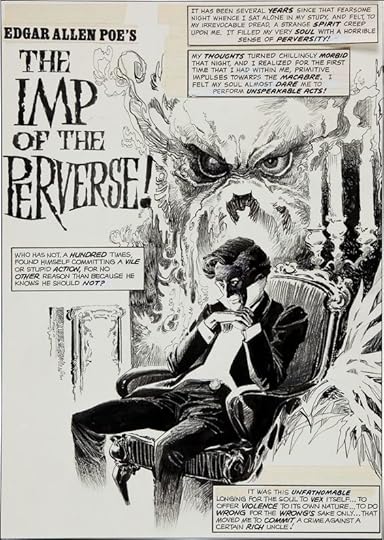
دي أغرب حكاية ممكن تسمعها من بو ، أولا كقصة الجريمة فيها عبقرية وكاملة أكثر بكثير من القصتين السابق ذكرهما
لكن الاغرب ، أن حكاية الجريمة لا تشغل سوي 15% من مساحة سرد القصة ... اللي هي تقريبا مش قصة
هي فعلا لكتب مصطفي محمود أقرب ، او كأنها مقال -كما حدث من قبل في قصص قصيرة اخري لبو ، كالبالون واكتشاف فون كمبلين
مقال عن وسوسة الشيطان، شيطان النفس، عفريت الانحراف الكامن بداخلنا

●●● المقالة ●●●
الحكاية تبدا فعلا بمقال ، يرويه لنا رجلا يبدو انه متزن ، يحكي عن عفريت الانحراف ذلك المصطلح الذي ابتكره بو هنا عن عزازيل...شيطان النفس
العفريت الكامن بنا يدعونا دوما لارتكاب الخطأ لمجرد أنه خطأ
يدفعنا أن نقوم بشئ ضد طبيعتنا البشرية ، ضد فطرة القلب
قد تكون لتدمير النفس .. كمثلا الانتحار
كأن تقف علي حافة منحدر كبير خائفا ولكن بداخلك شيئ يدفعك للسقوط
ستشعر وانت تقرأ ان عفريت الانحراف هو ما قد يدفع مؤلفا واسع الخيال كبو لأن يشرب ويشرب وينغمس في الكحوليات
وقد يكون عفريت الانحراف هو ما دفع الراوي في قصصنا السابق ذكرها للجريمة
ولكن إدجار آلان بو يركز هنا أن عفريت الانحراف هو ايضا مايجعلك تفشي بفعلتك الشنعاء
هو صوت القلب الذي جعل راوي القلب الواشي يفشي جريمته ليدمر حياته بعدها
وهو ايضا ذلك الاضطراب الذي انتاب راوي القط الاسود والذي جعله يثير القط ليطلق مواء يفشي جريمته أمام الضباط
عفريت الانحراف هنا هو كالعقل الباطن ، اللاوعي المكبوت الذي يحاول الخروج في شكل صدمة نفسية واضطراب قد يدمر حياة الانسان
ثم يعترف لنا الراوي بأخر الربع الاخير من المقالة بحكايته..... فعفريت أنحرافه جعله يعترف لنا بجريمته في النهاية
ليدمر حياته
●●● الحكاية ●●●
يحكي لنا الراوي -كاتب المقال- كيف نفذ جريمته، باستخدام شمعة مسمومة جعلت استحالة تعقب اي اثر للجريمة
الخطة عبقرية ، ولكن "عفريت أنحرافه" جعله يشي بنفسه بكل شئ بينما هو يسير في الشارع في احد الايام...يشي ويحكي دون اي ضغط
سوي ضغط عفريت الانحراف
العبقرية هنا ان كل مايكتبه هنا السيد بو هو سابق لسيجموند فرويد عن اللاوعي واللاشعور والكبت النفسي الذي يصاحب القاتل او مرتكب الجريمة والذي يسبب له انهيار نفسي او عصبي
كتب بو القصة في يوليو 1845، بعد القط الاسود والقلب الواشي بعامين... وكما قلت ، القصة السرد فيها جاف جدا ، حتي المقالة نفسها تحتاج منك تركيز حتي لو قرأتها بالعربية مترجمة
لكن الفكرة نفسها هي مااستحقت التقييم... وايضا طريقة جريمة القتل العجيبة تلك -الشمعة المسمومة- التي لكانت تصير لغزا ممتازا إذا تم فردها في رواية او قصة لدوبين اول محقق سري ابتكره بو
~~~~~~~~~~~
ولكن كيف قدم بو بعدها قصة مماثلة للثلاث قصص تلك...ولكن بنهاية مختلفة تماما؟
هذا ماسنعرفه ولكن بمراجعة قادمة
محمد العربي
في 25 ابريل 2017
في كلتا القصتين قاتل بظروف ودوافع مختلفة قام بالقتل، وفي كلا القصتين أنهار وكشف جريمته أيضا بطرق وظروف مختلفة
لكن هناك رابط واحد ، يحكيه هنا في
عفريت الإنحراف
دي أغرب حكاية ممكن تسمعها من بو ، أولا كقصة الجريمة فيها عبقرية وكاملة أكثر بكثير من القصتين السابق ذكرهما
لكن الاغرب ، أن حكاية الجريمة لا تشغل سوي 15% من مساحة سرد القصة ... اللي هي تقريبا مش قصة
هي فعلا لكتب مصطفي محمود أقرب ، او كأنها مقال -كما حدث من قبل في قصص قصيرة اخري لبو ، كالبالون واكتشاف فون كمبلين
مقال عن وسوسة الشيطان، شيطان النفس، عفريت الانحراف الكامن بداخلنا
●●● المقالة ●●●
الحكاية تبدا فعلا بمقال ، يرويه لنا رجلا يبدو انه متزن ، يحكي عن عفريت الانحراف ذلك المصطلح الذي ابتكره بو هنا عن عزازيل...شيطان النفس
العفريت الكامن بنا يدعونا دوما لارتكاب الخطأ لمجرد أنه خطأ
يدفعنا أن نقوم بشئ ضد طبيعتنا البشرية ، ضد فطرة القلب
قد تكون لتدمير النفس .. كمثلا الانتحار
كأن تقف علي حافة منحدر كبير خائفا ولكن بداخلك شيئ يدفعك للسقوط
ستشعر وانت تقرأ ان عفريت الانحراف هو ما قد يدفع مؤلفا واسع الخيال كبو لأن يشرب ويشرب وينغمس في الكحوليات
وقد يكون عفريت الانحراف هو ما دفع الراوي في قصصنا السابق ذكرها للجريمة
ولكن إدجار آلان بو يركز هنا أن عفريت الانحراف هو ايضا مايجعلك تفشي بفعلتك الشنعاء
هو صوت القلب الذي جعل راوي القلب الواشي يفشي جريمته ليدمر حياته بعدها
وهو ايضا ذلك الاضطراب الذي انتاب راوي القط الاسود والذي جعله يثير القط ليطلق مواء يفشي جريمته أمام الضباط
عفريت الانحراف هنا هو كالعقل الباطن ، اللاوعي المكبوت الذي يحاول الخروج في شكل صدمة نفسية واضطراب قد يدمر حياة الانسان
ثم يعترف لنا الراوي بأخر الربع الاخير من المقالة بحكايته..... فعفريت أنحرافه جعله يعترف لنا بجريمته في النهاية
ليدمر حياته
●●● الحكاية ●●●
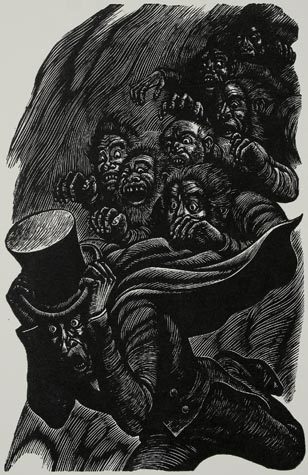
يحكي لنا الراوي -كاتب المقال- كيف نفذ جريمته، باستخدام شمعة مسمومة جعلت استحالة تعقب اي اثر للجريمة
الخطة عبقرية ، ولكن "عفريت أنحرافه" جعله يشي بنفسه بكل شئ بينما هو يسير في الشارع في احد الايام...يشي ويحكي دون اي ضغط
سوي ضغط عفريت الانحراف
العبقرية هنا ان كل مايكتبه هنا السيد بو هو سابق لسيجموند فرويد عن اللاوعي واللاشعور والكبت النفسي الذي يصاحب القاتل او مرتكب الجريمة والذي يسبب له انهيار نفسي او عصبي
كتب بو القصة في يوليو 1845، بعد القط الاسود والقلب الواشي بعامين... وكما قلت ، القصة السرد فيها جاف جدا ، حتي المقالة نفسها تحتاج منك تركيز حتي لو قرأتها بالعربية مترجمة
لكن الفكرة نفسها هي مااستحقت التقييم... وايضا طريقة جريمة القتل العجيبة تلك -الشمعة المسمومة- التي لكانت تصير لغزا ممتازا إذا تم فردها في رواية او قصة لدوبين اول محقق سري ابتكره بو
~~~~~~~~~~~
ولكن كيف قدم بو بعدها قصة مماثلة للثلاث قصص تلك...ولكن بنهاية مختلفة تماما؟
هذا ماسنعرفه ولكن بمراجعة قادمة
محمد العربي
في 25 ابريل 2017

July 29, 2018
Unique perspective on that which leads us astray - Poe has the unique gift of making the logical seem confused; we become lost in his reasoning and must follow him as guide out of the darkest regions of our soul. But once we accept him as a guide we also have to look deeper into who we are; and sometimes that can be very unsettling.

November 10, 2019
Another brilliant and extraordinary short story by Edgar Allan Poe! This is about the remorseful killer's confession. Audiobook in Portuguese.

September 13, 2023
I will just come out and say it. I have a crush on Edgar Allan Poe.
Can one blame me?
The mind of this man was amazing. I had never read this short story of his even though I read a lot of Poe as a kid .
I am reading now a book with just about almost every story he’s ever written in it, and I’m attempting to find ones that I have not read, and I came upon this one.
Basically, this is about keeping secrets. It is vintage Poe in that it’s dark and edgy and creepy and unpredictable. It is narrated by a man with a secret. Does that surprise anybody?
I love how he talks about procrastination although I don’t believe he calls it that . And purposely putting off today what you could’ve done tomorrow.
I found this as good as almost all that I’ve read from him from him, so I really don’t understand why this one has gotten either little attention or for some reason I just never heard of it.
My favorite Poe will always be The telltale heart, which has a special place in my own heart. I recommend This for any Poe fan who hasn’t read it.
Can one blame me?
The mind of this man was amazing. I had never read this short story of his even though I read a lot of Poe as a kid .
I am reading now a book with just about almost every story he’s ever written in it, and I’m attempting to find ones that I have not read, and I came upon this one.
Basically, this is about keeping secrets. It is vintage Poe in that it’s dark and edgy and creepy and unpredictable. It is narrated by a man with a secret. Does that surprise anybody?
I love how he talks about procrastination although I don’t believe he calls it that . And purposely putting off today what you could’ve done tomorrow.
I found this as good as almost all that I’ve read from him from him, so I really don’t understand why this one has gotten either little attention or for some reason I just never heard of it.
My favorite Poe will always be The telltale heart, which has a special place in my own heart. I recommend This for any Poe fan who hasn’t read it.

November 22, 2021
A short little tale about a being that finds ways to punish sinners. Good concept, but came across a bit rambling. I had no idea what was going on until the end.

June 9, 2019
- قصة تبدأ بعرض على شكل مقالة في مفهوم الإنحراف، وتنتقل الى قصة قتل بحرفية عالية، من اجل ورثة ما، ثم يستفيق الضمير ويبدأ بقرع الأجراس فتستيقظ النفس اللوامة، فإعتراف فسجن ثم موت محقق لاحقاً...

August 16, 2017
'We stand upon the brink of a precipice. We peer into the abyss – we grow sick and dizzy. Our first impulse is to shrink from the danger. Unaccountably we remain. By slow degrees our sickness, and dizziness, and horror, become merged in a cloud of unnameable feeling. By gradations, still more imperceptible, this cloud assumes shape, as did the vapor from the bottle out of which arose the genius in the Arabian Nights. But out of this our cloud upon the precipice's edge, there grows into palpability, a shape, far more terrible than any genius, or any demon of a tale, and yet it is but a thought, although a fearful one, and one which chills the very marrow of our bones with the fierceness of the delight of its horror. It is merely the idea of what would be our sensations during the sweeping precipitancy of a fall from such a height. And this fall – this rushing annihilation – for the very reason that it involves that one most ghastly and loathsome of all the most ghastly and loathsome images of death and suffering which have ever presented themselves to our imagination – for this very cause do we now the most vividly desire it. And because our reason violently deters us from the brink, therefore, do we the more impetuously approach it. There is no passion in nature so demoniacally impatient, as that of him, who shuddering upon the edge of a precipice, thus meditates a plunge. To indulge for a moment, in any attempt at thought, is to be inevitably lost; for reflection but urges us to forbear, and therefore it is, I say, that we cannot. If there be no friendly arm to check us, or if we fail in a sudden effort to prostrate ourselves backward from the abyss, we plunge, and are destroyed.'

July 21, 2017
I can't do this story justice. What Edgar manages to explore about human nature and our intended purpose. Michael's review, would do it far greater justice than I ever could.
Enjoy.
Enjoy.

December 19, 2020
"It is quite a common thing to be thus annoyed with the ringing in our ears, or rather in our memories, of the burthen of some ordinary song, or some unimpressive snatches from an opera. Nor will we be the less tormented if the song itself be good, or the opera air meritorious."

July 16, 2017
I presently work in a call center and as the end of my shift neared I had this overwhelming urge to stand up and sing the Muppet Babies song over the cubicles.
Thus, the Imp of the Perverse....
Thus, the Imp of the Perverse....

June 23, 2019
Be careful of what you say in public. Who knows what will happen.

November 15, 2022
Brilliant. It seems like a load of waffle to start with but then where it goes is so well done. Loved this one.

August 20, 2023
Angeregt durch die Tatsache, dass dieses Poe-Werk wiederholt in Oates Pik-Bube genannt wird, habe ich einen Blick in die von Wollschläger und Schmidt übersetzte Gesamtausgabe geworfen. Die Geschichte (übersetzt mit der Alb der Perversheit)umfasst gerade mal 10 Seiten und anfangs dachte ich, sie hätte sich versehentlich in die Abteilung der Erzählungen verirrt. Denn die ersten 6,5 Seiten lesen sich eher wie ein Essay über den Reiz des Verbotenen, erst dann erfahren wir, dass wir uns in einem Plädoyer eines Mörders befinden, den es nicht nur gedrängt hatte, einen Mord zu begehen, sondern nun auch diesen zu gestehen.
Das ist in typischer Poe-Manier geschrieben, der Erzähler ist von ähnlicher Verrücktheit und scheinbar gleichzeitiger Klarheit wie der in Das verräterische Herz, doch war mir die Hinführung zum eigentlichen Fall doch etwas lang. Als Nebenlektüre zu Pik-Bube, wo über den Inhalt nichts verraten wurde, aber durchaus interessant.
Das ist in typischer Poe-Manier geschrieben, der Erzähler ist von ähnlicher Verrücktheit und scheinbar gleichzeitiger Klarheit wie der in Das verräterische Herz, doch war mir die Hinführung zum eigentlichen Fall doch etwas lang. Als Nebenlektüre zu Pik-Bube, wo über den Inhalt nichts verraten wurde, aber durchaus interessant.

March 25, 2026
2 stars. Cool concept about self-sabotage but Edgar Allan Poe drags it way too much and over-explains the point.
Got the idea early, the rest just felt repetitive and lowkey exhausting to get through.
Got the idea early, the rest just felt repetitive and lowkey exhausting to get through.

October 2, 2015
"Estamos al borde de un precipicio.Miramos el abismo, sentimos malestar y vértigo. Nuestro primer impulso es retroceder ante el peligro. Inexplicablemente nos quedamos. En lenta graduación, nuestro malestar y nuestro vértigo se confunden en una nube de sentimientos inefables..."
Definitivamente cada que leo al maestro Poe quedo con la sensación de que puedo morir en paz.
Es indescriptible el sentimiento que genera sumergirse en las letras de su obra y tratar de interpretarlas.
Me sentí bastante identificada con este cuento y lo leí cerca de diez veces.
Definitivamente cada que leo al maestro Poe quedo con la sensación de que puedo morir en paz.
Es indescriptible el sentimiento que genera sumergirse en las letras de su obra y tratar de interpretarlas.
Me sentí bastante identificada con este cuento y lo leí cerca de diez veces.
February 14, 2021
3 Stars. Complex but good. Poe can be exasperating. A genius but his written thoughts are often hard to follow - like this one. It's not difficult to imagine that some in his time thought him to be mad. He surely must have been exhausting in person. As all that fades, his stories and poems remain, and we are collectively amazed at his virtuosity and creativity, his astounding suppleness with words, his breadth of knowledge, and his understanding of evil. Here we watch as a man's psyche destroys him as he contemplates a dreadful action he took decades earlier. Before the details, where to catch the story? It's in 'The Penguin Complete Tales and Poems of Edgar Allan Poe' of 1982. Only five pages. 'Graham's Magazine' carried it in 1845. The action taken by the narrator? Murder for an inheritance which set him up for life. But then his conscience began to fixate on that earlier action. He's left muttering 'I am safe' repeatedly. The ridiculous and discredited pseudo-science of phrenology pops up; that's the study of the size and shape of the human head as an indicator of whatever. You'll just have to wade through that stupidity to get to the good stuff! (Fe2021/Jul2024)

September 17, 2013
You have a big exam tomorrow, you know it's vital to study but you're struck by the urge to do something else, anything else, but study. Or when waiting for a train and you have that little voice saying, "what if you jumped in front of it?" There's a term for that self-destructive behavior, for doing something wrong merely because it's possible, and it was coined by Edgar Allan Poe as the title for this story.
I don't want to give too much away, but the main character of this story comes into ill-gotten gains with no one the wiser. He won't have to face up to his crime as long as he can keep from succumbing to The Imp of the Perverse.
I don't want to give too much away, but the main character of this story comes into ill-gotten gains with no one the wiser. He won't have to face up to his crime as long as he can keep from succumbing to The Imp of the Perverse.

November 1, 2015
La prosa de Poe es música para mis oídos...

No importa cuántas veces lea sus relatos, siempre lograrán hacerme sentir todo lo que sentí la primera vez al leerlos; paz, armonía, admiración...
Uno de los mejores escritores de short stories, sin duda. Es inexplicable lo disfrutable que son sus relatos a pesar de ser tan cortos.
No importa cuántas veces lea sus relatos, siempre lograrán hacerme sentir todo lo que sentí la primera vez al leerlos; paz, armonía, admiración...
Uno de los mejores escritores de short stories, sin duda. Es inexplicable lo disfrutable que son sus relatos a pesar de ser tan cortos.

August 15, 2015
You know the feeling you get when standing in a high place, the sudden urge to jump .... well, that is imp of the perverse for you. If Poe was still alive, I would have been worried about mental well being. Me, I'm more of a throw -other-person-off-the-cliff-for-fun-of-it kind of person.

October 3, 2025
Meh.
It was ok, but not worth reviewing.
For the moment at least.
It’s public domain. You can find it HERE.
-----------------------------------------------
PERSONAL NOTE :
[1845] [24p] [Horror] [Not Recommendable]
-----------------------------------------------
Meh.
Estuvo ok, pero no vale la pena reseñarlo.
Al menos por ahora.
Es dominio público, lo pueden encontrar ACA.
-----------------------------------------------
NOTA PERSONAL :
[1845] [24p] [Horror] [No Recomendable]
-----------------------------------------------
It was ok, but not worth reviewing.
For the moment at least.
It’s public domain. You can find it HERE.
-----------------------------------------------
PERSONAL NOTE :
[1845] [24p] [Horror] [Not Recommendable]
-----------------------------------------------
Meh.
Estuvo ok, pero no vale la pena reseñarlo.
Al menos por ahora.
Es dominio público, lo pueden encontrar ACA.
-----------------------------------------------
NOTA PERSONAL :
[1845] [24p] [Horror] [No Recomendable]
-----------------------------------------------

October 5, 2015
Short, psicological, meaningful, strange... Poe is just magnific.

Read
January 2, 2017Oh, that ending. This is why I love Edgar Allen Poe. How he portrays horror and madness is amazing.

July 30, 2021
Relato corto que en su inicio nos presenta brevemente el interés del hombre por el comportamiento del mismo bajo la perspectiva psicológica a través de la frenología. Lo interesante de ello es como termina la historia, pues el protagonista cae en este juego mental, haciendo reflexión sobre su actuar y sus propios demonios.

December 3, 2015
This short story begins as an essay on the nature of humanity, what drives us is the question that is posed. Is it intelligence, the rational and logical? Is it emotional, the dramatic and sometimes flawed? Poe assesses these quandaries of his era with a bit of hyperbole, examining the science of the day. What the reader considers a philosophical ramble turns to something much more. A man's narrative of a heinous act that he performs. He examines the logical and the emotional, but ponders the unexplainable actions as imps of perversion. An interesting story, definitely very Poe in writing, but a different style of storytelling for him that I quite enjoyed.

July 9, 2012
Skilled story working entirely upon the psychological for its horror. The horror is not the murder itself but one's own nature, and indeed it is the main character's own nature which gets him hanged. And yet it is an impulse we can all identify with, the feeling when at the top of tall buildings to throw oneself off, when waiting for the train to hurl oneself onto the tracks, all the stronger for the greater we fear its consequences, we fear that we will do what we fear the most. Chilling as ever.

March 16, 2017
Have you ever experienced "fits of perversity"... a moment where you feel you should do the wrong thing simply because it is wrong?
I have long loved Poe's idea that there is a Imp of the Perverse behind these impulses. Was great to finally read the actual story and hear it in his tongue.
Poe has a beautiful way of putting things.
I have long loved Poe's idea that there is a Imp of the Perverse behind these impulses. Was great to finally read the actual story and hear it in his tongue.
Poe has a beautiful way of putting things.

November 9, 2018
Buena reflexión sobre el miedo a traicionarnos a nosotros mismos, miedo tan grande que nos traicionamos a nosotros mismos.
Displaying 1 - 30 of 313 reviews