

What do you think?
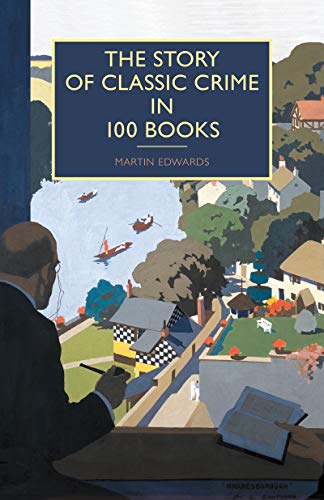
The Story of Classic Crime in 100 Books
2018 Macavity Award winner for Best Nonfiction
2018 Anthony Award nominee for Best Critical/Nonfiction Book
This book tells the story of crime fiction published during the first half of the twentieth century. The diversity of this much-loved genre is breathtaking, and so much greater than many critics have suggested. To illustrate this, the leading expert on classic crime discusses one hundred books ranging from The Hound of the Baskervilles to Strangers on a Train which highlight the entertaining plots, the literary achievements, and the social significance of vintage crime fiction. This book serves as a companion to the acclaimed British Library Crime Classics series but it tells a very diverse story. It presents the development of crime fiction—from Sherlock Holmes to the end of the golden age—in an accessible, informative and engaging style.
Readers who enjoy classic crime will make fascinating discoveries and learn about forgotten gems as well as bestselling authors. Even the most widely read connoisseurs will find books (and trivia) with which they are unfamiliar—as well as unexpected choices to debate. Classic crime is a richly varied and deeply pleasurable genre that is enjoying a world-wide renaissance as dozens of neglected novels and stories are resurrected for modern readers to enjoy. The overriding aim of this book is to provide a launch point that enables readers to embark on their own voyages of discovery.
368 pages, Kindle Edition
First published August 1, 2017
About the author
Martin Edwards
379 books881 followersMartin Edwards has been described by Richard Osman as ‘a true master of British crime writing.’ He has published twenty-three novels, which include the eight Lake District Mysteries, one of which was shortlisted for the Theakston’s Prize for best crime novel of the year and four books featuring Rachel Savernake, including the Dagger-nominated Gallows Court and Blackstone Fell, while Gallows Court and Sepulchre Street were shortlisted for the eDunnit award for best crime novel of the year. He is also the author of two multi-award-winning histories of crime fiction, The Life of Crime and The Golden Age of Murder. He has received three Daggers from the Crime Writers’ Association and two Edgars from the Mystery Writers of America and has also been nominated three times for Gold Daggers. In addition to the CWA Diamond Dagger (the highest honour in UK crime writing) he has received four other lifetime achievement awards: for his fiction, short fiction, non-fiction, and scholarship. He is consultant to the British Library’s Crime Classics, a former Chair of the CWA, and since 2015 has been President of the Detection Club.
Ratings & Reviews
Friends & Following
Create a free account to discover what your friends think of this book!
Community Reviews
Displaying 1 - 30 of 93 reviews

July 6, 2017
Having loved, “The Golden Age of Murder,” by Martin Edwards, I was keen to read his latest discussion of Golden Age crime – “The Story of Classic Crime in 100 Books.” Edwards looks at the period 1901 – 1950 and he does not only list one hundred books, but throws in lots of other titles and themes, which he explores as he explains the development of the genre. I have always enjoyed Golden Age crime novels and so I was fascinated to read this and it has added an awful lot of titles and authors to those I would like to read!
The book begins with “The Hound of the Baskervilles,” before moving on to the birth of the Golden Age, the importance of the First World War, and the formation of the Detection Club. One of the reasons why British Golden Age crime fiction developed in such a different way from that in the United States (where ‘hard boiled’ crime thrillers became popular) was the public appetite for puzzles, entertainment and escapism. There was little desire for violent realism after the war – a body laid decorously on a hearth rug, with clues to solve, was much more to the public taste at the time. Indeed, there was an emphasis on fair play and on mysteries readers could work out for themselves. This even included novellas where the pages were deliberately printed in the wrong order as a challenge, which proved so difficult it was discontinued.
This book covers the ‘Great Detectives,’ that emerged post WWI. Poirot, Wimsey and their authors – Agatha Christie, Dorothy L. Sayers; plus Margery Allingham, Gladys Mitchell and many others. There are locked door mysteries, novels set in villages, country houses, London and on the Continent. Others set around workplaces, holidays, or in schools and universities. Police detectives and amateur sleuths, courtroom drama, the author equivalent of the ‘One Hit Wonder,’ and much more.
If you enjoy Golden Age crime then this will give you lots to enjoy and to explore. I love reading about books, and authors, and this has just given me lots of ‘new’ authors that I want to try. With more and more classic crime novels being re-printed, many of these books – which were previously so hard to find – have now re-appeared on kindle at reasonable prices. It is a great time to be a fan of the genre and, if you are just beginning to read these kind of crime novels, this will help guide you to find the types of books, and authors, you might like. I received a copy of this book from the publisher, via NetGalley, for review.
The book begins with “The Hound of the Baskervilles,” before moving on to the birth of the Golden Age, the importance of the First World War, and the formation of the Detection Club. One of the reasons why British Golden Age crime fiction developed in such a different way from that in the United States (where ‘hard boiled’ crime thrillers became popular) was the public appetite for puzzles, entertainment and escapism. There was little desire for violent realism after the war – a body laid decorously on a hearth rug, with clues to solve, was much more to the public taste at the time. Indeed, there was an emphasis on fair play and on mysteries readers could work out for themselves. This even included novellas where the pages were deliberately printed in the wrong order as a challenge, which proved so difficult it was discontinued.
This book covers the ‘Great Detectives,’ that emerged post WWI. Poirot, Wimsey and their authors – Agatha Christie, Dorothy L. Sayers; plus Margery Allingham, Gladys Mitchell and many others. There are locked door mysteries, novels set in villages, country houses, London and on the Continent. Others set around workplaces, holidays, or in schools and universities. Police detectives and amateur sleuths, courtroom drama, the author equivalent of the ‘One Hit Wonder,’ and much more.
If you enjoy Golden Age crime then this will give you lots to enjoy and to explore. I love reading about books, and authors, and this has just given me lots of ‘new’ authors that I want to try. With more and more classic crime novels being re-printed, many of these books – which were previously so hard to find – have now re-appeared on kindle at reasonable prices. It is a great time to be a fan of the genre and, if you are just beginning to read these kind of crime novels, this will help guide you to find the types of books, and authors, you might like. I received a copy of this book from the publisher, via NetGalley, for review.

July 26, 2023
Those of us who are avid readers of what is called the "Golden Age" of mystery can count on Martin Edwards to grab our attention one more time. Edwards, an award winning author, has written several reference books/articles on mysteries published during the first half of the 20th century which is usually identified as the Golden Age.
His approach is a little different than most books on this subject ..........these are not necessarily his favorite books and some of his choices are idiosyncratic......by unknown or forgotten authors and in some cases, rightfully so. But he is showing how the genre progressed from books at which people scoffed to the modern popularity they have attained.
He divides the book into thematic chapters, such as the great detectives, miraculous murders, murder at the manor, scientific inquiries, etc. He describes the plot of each story (with no spoilers) and a short history of each author, some of which are extremely interesting.
I was surprised to find quite a few with which I was unfamiliar and might be hard to find but of course, he also touches on the giants of mystery fiction, the majority of which are British. And I was not surprised to note that the first story he addresses is The Hound of the Baskervilles, a classic of the Sherlock Homes collection.
I was totally engrossed in this book and would highly recommend it to those who love the Golden Age of Mystery.
His approach is a little different than most books on this subject ..........these are not necessarily his favorite books and some of his choices are idiosyncratic......by unknown or forgotten authors and in some cases, rightfully so. But he is showing how the genre progressed from books at which people scoffed to the modern popularity they have attained.
He divides the book into thematic chapters, such as the great detectives, miraculous murders, murder at the manor, scientific inquiries, etc. He describes the plot of each story (with no spoilers) and a short history of each author, some of which are extremely interesting.
I was surprised to find quite a few with which I was unfamiliar and might be hard to find but of course, he also touches on the giants of mystery fiction, the majority of which are British. And I was not surprised to note that the first story he addresses is The Hound of the Baskervilles, a classic of the Sherlock Homes collection.
I was totally engrossed in this book and would highly recommend it to those who love the Golden Age of Mystery.

October 12, 2017
This is a very interesting and seemingly complete story of the history of the classic crime in novel form, primarily as seen in the so-called Golden Age works and other mysteries of the first half of the 20th century. This collection also presents some forerunners from the 19th century as well as followers from later in the 20th century, that led into then away from that tradition. I have taken away many ideas for future reading if I am able to find the pieces cited. Some are apparently quite rare though many are easily available.
Just as he does in the various short story collections he has edited for Poisoned Pen Press, Martin Edwards demonstrates wide knowledge of the world of classic crime. Here, however, he moves beyond collecting to sort the novels into various genres within the overall class of crime/mystery. As many readers know, The Golden Age was so named as a direct response to the Great War. Those who fought and those at home wanted diversion after the war and one of the answers was crime novels with puzzles inside or clever guides for readers to use to help find the guilty party. In some cases there were literal maps of the "Manor House" or other bloody site of a crime or guide to the possible suspects.
Eventually these books gave way to others that began to show signs of the forensics that were coming into use in real policing. Another topic is the crime of justice which was a subject during the 1930s, during the rise of Hitler and Mussolini. Are some murders justified? Another form was the "inverted" or "back-to-front" novel, where the reader knows the facts of the murder or other crime in the beginning but then reads about the solution. (So this was not invented by TV for Columbo or other late 20th century sleuths.) There are certainly many more categories included but I do want to mention that Edwards does include sections on American and Continental authors. He also acknowledges that there are many writers who have not yet been translated into English and are only available to their native peoples.
I believe this collection will be of interest to anyone who enjoys reading crime or mystery fiction. At the very least, you will learn more about the type of reading you already like. In addition, it is most likely you will discover new authors, new books, or both to search for in local libraries or online. (I do miss haunting local used book stores that are mostly gone now.) And the book is graced with a bibliography, references, and full list of the authors and works listed within the collection.
A strong 4*
A copy of this book was provided by the publisher through NetGalley in return for an honest review.
Just as he does in the various short story collections he has edited for Poisoned Pen Press, Martin Edwards demonstrates wide knowledge of the world of classic crime. Here, however, he moves beyond collecting to sort the novels into various genres within the overall class of crime/mystery. As many readers know, The Golden Age was so named as a direct response to the Great War. Those who fought and those at home wanted diversion after the war and one of the answers was crime novels with puzzles inside or clever guides for readers to use to help find the guilty party. In some cases there were literal maps of the "Manor House" or other bloody site of a crime or guide to the possible suspects.
Eventually these books gave way to others that began to show signs of the forensics that were coming into use in real policing. Another topic is the crime of justice which was a subject during the 1930s, during the rise of Hitler and Mussolini. Are some murders justified? Another form was the "inverted" or "back-to-front" novel, where the reader knows the facts of the murder or other crime in the beginning but then reads about the solution. (So this was not invented by TV for Columbo or other late 20th century sleuths.) There are certainly many more categories included but I do want to mention that Edwards does include sections on American and Continental authors. He also acknowledges that there are many writers who have not yet been translated into English and are only available to their native peoples.
I believe this collection will be of interest to anyone who enjoys reading crime or mystery fiction. At the very least, you will learn more about the type of reading you already like. In addition, it is most likely you will discover new authors, new books, or both to search for in local libraries or online. (I do miss haunting local used book stores that are mostly gone now.) And the book is graced with a bibliography, references, and full list of the authors and works listed within the collection.
A strong 4*
A copy of this book was provided by the publisher through NetGalley in return for an honest review.
August 18, 2017
Arc received by the Publisher via Netgalley in exchange for an honest review.
The main aim of detective stories is to entertain, but the best cast a light on human behaviour, and display both literary ambition and accomplishment. And there is a reason why millions of readers continue to appreciate classic crime fiction. Even unpretentious detective stories, written for unashamedly commercial reasons, can give us clues to the past, and give us insight into a long-vanished world that, for all its imperfections, continues to fascinate."
Informative, engaging and entertaining without being too dry or incomprehensibly highbrow. It offers interesting facts, insights and trivia to a wide variety of crime fiction books in the first half of the 20th century from widely read to forgotten and unknown gems.
Martin Edwards, while certainly piquing our curiosity, kindly refrains from revealing the solution to the mysteries. It is like holding a precious map that will accompany you on a delightful exploration into the genre. You will meet your well-known and loved author-figures, while chancing upon "intriguing strangers" and familiar authors you did not even know wrote crime fiction.
Highly recommended.
The main aim of detective stories is to entertain, but the best cast a light on human behaviour, and display both literary ambition and accomplishment. And there is a reason why millions of readers continue to appreciate classic crime fiction. Even unpretentious detective stories, written for unashamedly commercial reasons, can give us clues to the past, and give us insight into a long-vanished world that, for all its imperfections, continues to fascinate."
Informative, engaging and entertaining without being too dry or incomprehensibly highbrow. It offers interesting facts, insights and trivia to a wide variety of crime fiction books in the first half of the 20th century from widely read to forgotten and unknown gems.
Martin Edwards, while certainly piquing our curiosity, kindly refrains from revealing the solution to the mysteries. It is like holding a precious map that will accompany you on a delightful exploration into the genre. You will meet your well-known and loved author-figures, while chancing upon "intriguing strangers" and familiar authors you did not even know wrote crime fiction.
Highly recommended.

August 27, 2017
Books, books, glorious books...
Having fallen deeply in love with the whole British Library Crime Classics thing, this book was bound to be right up my alley – a dark alley, full of sinister shadows and red herrings, of course! Martin Edwards has done a lot of the introductions for the novels in the BL collection and is the editor of all the great themed short story anthologies, so he knows his stuff. Here he looks at the rise of the crime novel and its development throughout the first half of the last century.
The book is split into themed sections, and is arranged roughly chronologically, although with some crossover in dates between the different groups. It starts with A New Era Dawns, which takes us back to look at some of the authors and books that pre-dated the Golden Age but influenced it: for example, Holmes in The Hound of the Baskervilles and Edgar Wallace's The Four Just Men. The next chapter looks at The Birth of the Golden Age, then on to The Great Detectives, and so on; through to The Psychology of Crime, as straight mystery novels began to give way a little to the more character driven books, like those of Patricia Highsmith, which formed a kind of bridge to the more psychological crime novels of today. Some of the chapters look at particular sub-genres with chapter titles that often mirror the themed short story collections – Capital Crimes (London based), Continental Crimes, Miraculous Mysteries (locked room mysteries), etc. And, although the vast majority of the books listed are British, Edwards takes a brief look at what was happening Across the Atlantic and also a few from Europe and elsewhere around the world.
Edwards writes knowledgeably but conversationally, so that it never feels as if one is being lectured by an expert – rather it's like having a chat with a well-read friend. He starts each chapter with a discussion around its theme, in which, I feel I have to warn you, he routinely mentions umpteen books which aren't part of the hundred but all sound like must-reads! He shows how the genre and various sub-genres developed, and gives a clear impression of how back then crime writers were as much of a community as they are now, feeding off each other and often referencing each other's work. Several of the authors were also critics and reviewers, and Edwards draws on their work to show how particular books and authors were thought of at the time. He discusses how the books reflect and were influenced by contemporary society and events, putting into context the “snobbishness” of some Golden Age writers that can sometimes be off-putting for the modern reader.
Following these interesting introductions, he lists the books he has selected for each section. He makes it clear he doesn't necessarily think they're all brilliant – rather, he feels they're either an important link in the development of the crime novel, or a good representative example of the sub-genre under discussion. There are some well known classics here – The Lodger, The Mysterious Affair at Styles, The Franchise Affair, The Dain Curse, etc. But there are also zillions that I had never heard of. Talking of zillions, I should mention that the 100 Books are actually 102 Books – a baffling mystery in itself! Edwards gives a brief spoiler-free preview of the plot of each book and then discusses why he's included it. He also includes some biographical details of the author, mainly more literary than personal, but often including interesting anecdotes about them. Edwards is the current President of the Detection Club amongst other things, and he tells us quite a lot about the history and membership of that organisation as he goes along too.
So you can tell the book is positively stuffed full of info, which left me with a much greater understanding of the development of the genre and an uncontrollable desire to pop off and search for all 102 books. And the good thing is that, following the BL's lead, lots of publishers are bringing these old books back into print, or at least into e-books, so of the sample of 20 or so that I checked, the vast majority are available at prices that won't require me to defraud a bank or poison a rich relative. Though I'm pretty sure that I'm knowledgeable enough now to do either and get away with it...
Highly recommended to anyone who'd like to know more about the history of the crime novel, or who'd like to read some of the classic books but doesn't know quite where to begin. But I'd say this book would also be great for people who already know quite a bit about the genre – it's so packed with goodies I can't imagine many people wouldn't learn something from it as well as being entertained by some of the stories about the authors. Personally, I feel a new challenge coming on...
NB This book was provided for review by the publisher, Poisoned Pen Press (who publish the Kindle versions of the British Library Crime Classics series).
www.fictionfanblog.wordpress.com
Having fallen deeply in love with the whole British Library Crime Classics thing, this book was bound to be right up my alley – a dark alley, full of sinister shadows and red herrings, of course! Martin Edwards has done a lot of the introductions for the novels in the BL collection and is the editor of all the great themed short story anthologies, so he knows his stuff. Here he looks at the rise of the crime novel and its development throughout the first half of the last century.
The book is split into themed sections, and is arranged roughly chronologically, although with some crossover in dates between the different groups. It starts with A New Era Dawns, which takes us back to look at some of the authors and books that pre-dated the Golden Age but influenced it: for example, Holmes in The Hound of the Baskervilles and Edgar Wallace's The Four Just Men. The next chapter looks at The Birth of the Golden Age, then on to The Great Detectives, and so on; through to The Psychology of Crime, as straight mystery novels began to give way a little to the more character driven books, like those of Patricia Highsmith, which formed a kind of bridge to the more psychological crime novels of today. Some of the chapters look at particular sub-genres with chapter titles that often mirror the themed short story collections – Capital Crimes (London based), Continental Crimes, Miraculous Mysteries (locked room mysteries), etc. And, although the vast majority of the books listed are British, Edwards takes a brief look at what was happening Across the Atlantic and also a few from Europe and elsewhere around the world.
The main aim of detective stories is to entertain, but the best cast a light on human behaviour, and display both literary ambition and accomplishment. And there is another reason why millions of modern readers continue to appreciate classic crime fiction. Even unpretentious detective stories, written for unashamedly commercial reasons, can give us clues to the past, and give us insight into a long-vanished world that, for all its imperfections, continues to fascinate.
Edwards writes knowledgeably but conversationally, so that it never feels as if one is being lectured by an expert – rather it's like having a chat with a well-read friend. He starts each chapter with a discussion around its theme, in which, I feel I have to warn you, he routinely mentions umpteen books which aren't part of the hundred but all sound like must-reads! He shows how the genre and various sub-genres developed, and gives a clear impression of how back then crime writers were as much of a community as they are now, feeding off each other and often referencing each other's work. Several of the authors were also critics and reviewers, and Edwards draws on their work to show how particular books and authors were thought of at the time. He discusses how the books reflect and were influenced by contemporary society and events, putting into context the “snobbishness” of some Golden Age writers that can sometimes be off-putting for the modern reader.
With relatively few exceptions, they [Golden Age crime writers] came from well-to-do families, and were educated at public school; many went to Oxford or Cambridge. . . .
Theirs was, in many ways, a small and elitist world, and this helps to explain why classic crime novels often include phonetic renditions of the dialogue of working-class people which make modern readers cringe. Some of the attitudes evident and implicit in the books of highly educated authors, for instance as regards Jewish and gay people, would be unacceptable in fiction written in the twenty-first century. It is worth remembering that theirs was not only a tiny world, but also a very different one from ours, and one of the pleasures of reading classic crime is that it affords an insight into the Britain of the past, a country in some respects scarcely recognisable today.
Following these interesting introductions, he lists the books he has selected for each section. He makes it clear he doesn't necessarily think they're all brilliant – rather, he feels they're either an important link in the development of the crime novel, or a good representative example of the sub-genre under discussion. There are some well known classics here – The Lodger, The Mysterious Affair at Styles, The Franchise Affair, The Dain Curse, etc. But there are also zillions that I had never heard of. Talking of zillions, I should mention that the 100 Books are actually 102 Books – a baffling mystery in itself! Edwards gives a brief spoiler-free preview of the plot of each book and then discusses why he's included it. He also includes some biographical details of the author, mainly more literary than personal, but often including interesting anecdotes about them. Edwards is the current President of the Detection Club amongst other things, and he tells us quite a lot about the history and membership of that organisation as he goes along too.
So you can tell the book is positively stuffed full of info, which left me with a much greater understanding of the development of the genre and an uncontrollable desire to pop off and search for all 102 books. And the good thing is that, following the BL's lead, lots of publishers are bringing these old books back into print, or at least into e-books, so of the sample of 20 or so that I checked, the vast majority are available at prices that won't require me to defraud a bank or poison a rich relative. Though I'm pretty sure that I'm knowledgeable enough now to do either and get away with it...
Highly recommended to anyone who'd like to know more about the history of the crime novel, or who'd like to read some of the classic books but doesn't know quite where to begin. But I'd say this book would also be great for people who already know quite a bit about the genre – it's so packed with goodies I can't imagine many people wouldn't learn something from it as well as being entertained by some of the stories about the authors. Personally, I feel a new challenge coming on...
NB This book was provided for review by the publisher, Poisoned Pen Press (who publish the Kindle versions of the British Library Crime Classics series).
www.fictionfanblog.wordpress.com

October 4, 2021
3.5 stars - This was an effective approach to telling the history of the Golden Age of mystery novels, where the author selected a theme in these books (for instance, a country house setting) and then selected several books that illustrated the theme.

March 17, 2017
I received an ARC of this book for review. I’m going to go ahead and review it early, because it is available for pre-order, and if you’re anything like me, you’ll want to get a copy ASAP.
I love book lists, especially well thought-out published lists like this one from experts in the field. It’s like having your own personal guru in a genre give you recommendations. And God knows, in this age when all the online sites are rife with very opinionated, inexpert reviews, we need an educated guide now more than ever.
I love classic mysteries and thrillers and have read my share. But I enjoy finding those hidden gems that weren’t written by the top 3-4 authors in the genre (long may they reign). I have examined the “Top 100 mystery books” lists from the Crime Writer’s Association and the Mystery Writer’s of America. Though I have not read all the books, I am familiar with the titles. What I like about this new book is that there are a number of titles on it that I’ve never heard of, and they look quite intriguing.
The author takes an interesting approach of talking about the development of mystery novels over time and using specific recommended volumes as examples. This offers a context and backstory to the books that make them much more interesting. For example, “The Four Just Men” by Edgar Wallace, published in 1905, was written with a marketing gimmick–that the public be invited to help solve the crime. Wallace published the story himself and offered a cash reward of 500 pounds to readers who could deduce the solution. Unfortunately, the book sold like hot cakes, and so many people guessed the solution that the author nearly ruined himself paying them off! But this idea of “challenging the reader” to guess the solution was a popular theme of the mystery novels that immediately followed–minus the cash prize, of course.
This is the sort of background I love to read about, and it helps me understand and appreciate the mystery genre even more. Beyond the value of these tidbits of history, the books Edwards discusses are new to me and quite interesting. I’ve already placed a half dozen of them on my “must be read soon” list.
For example, “Tracks in the Snow” by Godfrey R. Benson (1906), is a cozy British village mystery in which someone is accused of murder based on misleading footprints in the snow. I love village mysteries, where the few handful of local characters everyone has known all their lives are suddenly suspect because one of them is a killer. Edwards also gives a brief bio of the authors, which helps establish his or her bone fides. In this case, Benson was a philosophy professor at Balliol who later became an MP, Mayor, and peer. To me, it makes the book much more interesting knowing what sort of person wrote it and wondering about his view of life. Now I’m really curious to read it.
This analysis runs through 100 titles from “Hounds of the Baskervilles” (1902) to “The 31st of February” by Julian Symons (1950). Some of the books were familar to me such as “Strangers on a Train” by Patricia Highsmith and “The Murder at the Vicarage” by Agatha Christie. But by far the majority of these titles are new to me. There’s something about vintage mystery that makes me feel all cozy and happy and that feeling can’t be matched by recent titles. I’m thrilled to have a whole new stash to dig into thanks to Martin Edwards.
This book is a wonderful treasure map. If you love the mystery genre like i do, or even if you just dabble in it occasionally, you will want to take advantage of Mr. Edward’s thoughtful insight and directions. Highly recommended.
As a bonus, the book introduced me to the British Library of Classic Crime published by Poisoned Pen (here’s a link). These are new editions of some of these older gems that have long been out of print, all with gorgeous themed covers. I’m so glad they are bringing back these books, in ebook form especially since I’m addicted to my ipad. Thank you Poisoned Pen!
I love book lists, especially well thought-out published lists like this one from experts in the field. It’s like having your own personal guru in a genre give you recommendations. And God knows, in this age when all the online sites are rife with very opinionated, inexpert reviews, we need an educated guide now more than ever.
I love classic mysteries and thrillers and have read my share. But I enjoy finding those hidden gems that weren’t written by the top 3-4 authors in the genre (long may they reign). I have examined the “Top 100 mystery books” lists from the Crime Writer’s Association and the Mystery Writer’s of America. Though I have not read all the books, I am familiar with the titles. What I like about this new book is that there are a number of titles on it that I’ve never heard of, and they look quite intriguing.
The author takes an interesting approach of talking about the development of mystery novels over time and using specific recommended volumes as examples. This offers a context and backstory to the books that make them much more interesting. For example, “The Four Just Men” by Edgar Wallace, published in 1905, was written with a marketing gimmick–that the public be invited to help solve the crime. Wallace published the story himself and offered a cash reward of 500 pounds to readers who could deduce the solution. Unfortunately, the book sold like hot cakes, and so many people guessed the solution that the author nearly ruined himself paying them off! But this idea of “challenging the reader” to guess the solution was a popular theme of the mystery novels that immediately followed–minus the cash prize, of course.
This is the sort of background I love to read about, and it helps me understand and appreciate the mystery genre even more. Beyond the value of these tidbits of history, the books Edwards discusses are new to me and quite interesting. I’ve already placed a half dozen of them on my “must be read soon” list.
For example, “Tracks in the Snow” by Godfrey R. Benson (1906), is a cozy British village mystery in which someone is accused of murder based on misleading footprints in the snow. I love village mysteries, where the few handful of local characters everyone has known all their lives are suddenly suspect because one of them is a killer. Edwards also gives a brief bio of the authors, which helps establish his or her bone fides. In this case, Benson was a philosophy professor at Balliol who later became an MP, Mayor, and peer. To me, it makes the book much more interesting knowing what sort of person wrote it and wondering about his view of life. Now I’m really curious to read it.
This analysis runs through 100 titles from “Hounds of the Baskervilles” (1902) to “The 31st of February” by Julian Symons (1950). Some of the books were familar to me such as “Strangers on a Train” by Patricia Highsmith and “The Murder at the Vicarage” by Agatha Christie. But by far the majority of these titles are new to me. There’s something about vintage mystery that makes me feel all cozy and happy and that feeling can’t be matched by recent titles. I’m thrilled to have a whole new stash to dig into thanks to Martin Edwards.
This book is a wonderful treasure map. If you love the mystery genre like i do, or even if you just dabble in it occasionally, you will want to take advantage of Mr. Edward’s thoughtful insight and directions. Highly recommended.
As a bonus, the book introduced me to the British Library of Classic Crime published by Poisoned Pen (here’s a link). These are new editions of some of these older gems that have long been out of print, all with gorgeous themed covers. I’m so glad they are bringing back these books, in ebook form especially since I’m addicted to my ipad. Thank you Poisoned Pen!

August 23, 2017
This is a brilliant book but with a catch. First of all a little back ground. The British Library as well as being well a library is also as publisher too, and for a while now they have been reprinting classic crime novels and short stories.
Now they their aim is to bring back in to the light many lost classics - primarily from the period between the two world wars where British crime really had its heyday. Many of the titles have long since fallen out of print let along out the public eye however they are classics for a reason. So some are for the story others for their technical merits and some others still for their legacy. After all many of these books though you may not realise have shaped crime fiction to today.
So what has it got to do with this book - well this book also published from the British Library represents a catalogue of the top 100 books from the era and although the book does not talk about the plot line it does give an overview with the ideas of showing why it was selected and what its lasting legacy is.
So if you are it to lists, reviews and classic crime (which even by the reviewers own admission can be painfully dated) then this book is for you. Yes the 100 or so entries and the supporting notes from luminaries and scholars alike can be a little daunting if not dry - you could not read this book is a single session - do got to show that there are many amazing books out there which need to find their way back in to print (think of the SF gateway for science fiction).
Yes this book is a companion to the stories but not all will be printed that are listed in this book for several reasons that cannot be however this is a brilliant spring board in to classic British crime and I look forward to reading many more from the series - as it appears to not be slowing down its publishing schedule any time soon
Now they their aim is to bring back in to the light many lost classics - primarily from the period between the two world wars where British crime really had its heyday. Many of the titles have long since fallen out of print let along out the public eye however they are classics for a reason. So some are for the story others for their technical merits and some others still for their legacy. After all many of these books though you may not realise have shaped crime fiction to today.
So what has it got to do with this book - well this book also published from the British Library represents a catalogue of the top 100 books from the era and although the book does not talk about the plot line it does give an overview with the ideas of showing why it was selected and what its lasting legacy is.
So if you are it to lists, reviews and classic crime (which even by the reviewers own admission can be painfully dated) then this book is for you. Yes the 100 or so entries and the supporting notes from luminaries and scholars alike can be a little daunting if not dry - you could not read this book is a single session - do got to show that there are many amazing books out there which need to find their way back in to print (think of the SF gateway for science fiction).
Yes this book is a companion to the stories but not all will be printed that are listed in this book for several reasons that cannot be however this is a brilliant spring board in to classic British crime and I look forward to reading many more from the series - as it appears to not be slowing down its publishing schedule any time soon

January 23, 2018
I currently have a love/hate relationship with Martin Edwards. I absolutely love him for all his work on Golden Age detective classics--from his work with the British Library series introducing classic detective novels to new generations to his The Golden Age of Murder which gives all kinds of information about the Detection Club to this newest gem, The Story of Classic Crime in 100 Books, which highlights the rise and duration of the Golden Age novels, gives synopses and background for 100 of them, and name-drops scads of others. I naturally love any resource that will tell me more about my favorite genre and period--especially if it tells me about books I didn't know existed. BUT that leads to the hate part of this relationship. I hate him for bringing to my attention all sorts of tantalizing novels that he then tells us have sadly disappeared from print. Some the British Library doesn't even have a copy of. Which means that I probably will never be able to read those oh-so-interesting-sounding little mysteries. Curses! Of course, that didn't prevent me from promptly adding every single tantalizing title to my "TBF" (To Be Found) list in the forlorn hope that might get my greedy little bibliophile hands on them one of these days....
Martin Edwards has forgotten more than I will ever know about vintage crime classics. And he presents his knowledge in a most accessible way. A whole book full of novel synopses could easily have been dry-as-dust, but Edwards, as the title indicates, weaves his synopses into a story about the development of the classic crime novel from the turn-of-the century to 1950. I thoroughly enjoyed discovering new authors and new novels, as well as being delighted to see some of my favorites make the list.
First posted on my blog My Reader's Block. Please request permission before reposting. Thanks.
Martin Edwards has forgotten more than I will ever know about vintage crime classics. And he presents his knowledge in a most accessible way. A whole book full of novel synopses could easily have been dry-as-dust, but Edwards, as the title indicates, weaves his synopses into a story about the development of the classic crime novel from the turn-of-the century to 1950. I thoroughly enjoyed discovering new authors and new novels, as well as being delighted to see some of my favorites make the list.
First posted on my blog My Reader's Block. Please request permission before reposting. Thanks.

February 9, 2020
Martin Edwards writes those excellent introductions to the British Library Crime Classics and here he even excels himself with a most fascinating, informative and entertaining look at the crime genre. As well as the overall history, he breaks the genre down into specific categories, such as Miraculous Murders, Murder at the Manor, Making Fun of Murder and many more and he highlights his categories by selecting a number of books from each category that finally form his 100 books. But do not think that he only discusses those 100 books - these are discussed in plenty of detail - but in doing so he refers to other relevant books in the text and in his introduction to each chapter and it all goes to make a truly memorable work with plenty to learn about all the way through.
The author recognises that the generally held view of the Golden Age of Crime Fiction is between the two world wars but he acknowledges that he chooses to begin his survey in the late 19th century and run it to just after World War II. He also lets the reader know that he has not chosen the selected 100 books because they are considered the best books of the period nor because they are his personal favourites - he adds that if the latter were the case there would certainly be more Agatha Christie titles! - but they are chosen because they tell a story about the development of crime fiction over the years.
He tells us that the book is not an encyclopedia as he says, 'One would need much more space to explore every aspect of this fascinating branch of fiction throughout the course of one of the most turbulent half-centuries in the history of the world,' adding, 'but I hope that my references to scores of other books in the chapter introductions will encourage further investigations on the part of readers.' One would be a brave person, after reading this excellent study not to be impelled to do further investigation. It is so fascinating and so many obscure and lesser known writers, and titles, come to light.
There were plenty of new discoveries even for the hardened crime fiction reader, and I found it particularly interesting, and, for me anyway, mildly amusing, to read 'People who enjoy classic crime fiction love making new discoveries, and one of my priorities has been to help them to indulge in some happy hunting.' Having been a secondhand and antiquarian bookseller for some 30 years, and having always had a good selection of crime fiction on hand, and having since retirement from the business collected crime fiction avidly, I would feel that I had done some very, very happy hunting if I found some of the titles that Martin Edwards brings to our attention. But I must say I absolutely loved having them brought to my attention … and I will look out for them - without much success I feel sure!
As for the chosen books themselves, he begins with the classic 'The Hound of the Baskervilles' from 1902 [I once sold a first edition of this title for £125 and wish I hadn't been reminded - it was very many years ago!], which is quite understandable for the great consulting detective still enjoys worldwide popularity to this day. And the final book of the 100 is Julian Symons' 'The 31st of February' by the author who also wrote 'Bloody Murder', another study of crime fiction that Martin Edwards states 'has overshadowed Symons' achievements as a novelist'.
It really is a fabulous book and I would thoroughly recommend it to all collectors and readers of crime fiction - although just a word of encouragement if one is looking for some of the (scarcer) titles … Best of Luck!
The author recognises that the generally held view of the Golden Age of Crime Fiction is between the two world wars but he acknowledges that he chooses to begin his survey in the late 19th century and run it to just after World War II. He also lets the reader know that he has not chosen the selected 100 books because they are considered the best books of the period nor because they are his personal favourites - he adds that if the latter were the case there would certainly be more Agatha Christie titles! - but they are chosen because they tell a story about the development of crime fiction over the years.
He tells us that the book is not an encyclopedia as he says, 'One would need much more space to explore every aspect of this fascinating branch of fiction throughout the course of one of the most turbulent half-centuries in the history of the world,' adding, 'but I hope that my references to scores of other books in the chapter introductions will encourage further investigations on the part of readers.' One would be a brave person, after reading this excellent study not to be impelled to do further investigation. It is so fascinating and so many obscure and lesser known writers, and titles, come to light.
There were plenty of new discoveries even for the hardened crime fiction reader, and I found it particularly interesting, and, for me anyway, mildly amusing, to read 'People who enjoy classic crime fiction love making new discoveries, and one of my priorities has been to help them to indulge in some happy hunting.' Having been a secondhand and antiquarian bookseller for some 30 years, and having always had a good selection of crime fiction on hand, and having since retirement from the business collected crime fiction avidly, I would feel that I had done some very, very happy hunting if I found some of the titles that Martin Edwards brings to our attention. But I must say I absolutely loved having them brought to my attention … and I will look out for them - without much success I feel sure!
As for the chosen books themselves, he begins with the classic 'The Hound of the Baskervilles' from 1902 [I once sold a first edition of this title for £125 and wish I hadn't been reminded - it was very many years ago!], which is quite understandable for the great consulting detective still enjoys worldwide popularity to this day. And the final book of the 100 is Julian Symons' 'The 31st of February' by the author who also wrote 'Bloody Murder', another study of crime fiction that Martin Edwards states 'has overshadowed Symons' achievements as a novelist'.
It really is a fabulous book and I would thoroughly recommend it to all collectors and readers of crime fiction - although just a word of encouragement if one is looking for some of the (scarcer) titles … Best of Luck!

September 17, 2017
This book was very bad for my tbr.
Martin Edwards has forgotten more about golden age mysteries than I ever knew.
Martin Edwards has forgotten more about golden age mysteries than I ever knew.

May 31, 2017
I received a free copy of this book from NetGalley.
One of my favourite genres is crime fiction and in general I prefer classic crime to modern crime novels so I was pleased to read this. Martin Edwards explores the sub-genre through a selection of one hundred books published between 1901 and 1950. If you think that the books written in the so-called Golden Age of crime fiction were all set in country houses and featured a body in the library this book might make you think again. The more books I read in the sub-genre the more I am surprised by the variety of plots and backgrounds.
The author doesn't confine himself to just one hundred books and many others are referred to or described in more detail. He is very careful not to give away the plots so if you don't like to know what happens in a book you are about to read you can safely read this book without fearing you will come across any spoilers.
The well known names are all here - Agatha Christie, Ngaio Marsh, Dorothy L Sayers - but there are plenty of authors' whose names are not so well know these days such as George Bellairs, Michael Gilbert, Anthony Gilbert as well as Francis Iles and Roy Horniman. There is an index of titles of books mentioned in the text as well as a separate index of authors and a conventional index of the text. There is also a useful bibliography if you want to explore the subject in further depth.
This book is a must have for anyone who enjoys crime fiction and it makes a useful companion to the British Museum series of classic crime novels which has been such an unexpected success with the reading public. Be aware that you will find yourself adding many books to your wish list and I found myself constantly stopping while I was reading to see if a book mentioned is available as an e-book. There are increasing numbers of classic crime novels available again showing that many people do still enjoy this type of crime novel.
One of my favourite genres is crime fiction and in general I prefer classic crime to modern crime novels so I was pleased to read this. Martin Edwards explores the sub-genre through a selection of one hundred books published between 1901 and 1950. If you think that the books written in the so-called Golden Age of crime fiction were all set in country houses and featured a body in the library this book might make you think again. The more books I read in the sub-genre the more I am surprised by the variety of plots and backgrounds.
The author doesn't confine himself to just one hundred books and many others are referred to or described in more detail. He is very careful not to give away the plots so if you don't like to know what happens in a book you are about to read you can safely read this book without fearing you will come across any spoilers.
The well known names are all here - Agatha Christie, Ngaio Marsh, Dorothy L Sayers - but there are plenty of authors' whose names are not so well know these days such as George Bellairs, Michael Gilbert, Anthony Gilbert as well as Francis Iles and Roy Horniman. There is an index of titles of books mentioned in the text as well as a separate index of authors and a conventional index of the text. There is also a useful bibliography if you want to explore the subject in further depth.
This book is a must have for anyone who enjoys crime fiction and it makes a useful companion to the British Museum series of classic crime novels which has been such an unexpected success with the reading public. Be aware that you will find yourself adding many books to your wish list and I found myself constantly stopping while I was reading to see if a book mentioned is available as an e-book. There are increasing numbers of classic crime novels available again showing that many people do still enjoy this type of crime novel.
July 2, 2017
I received an e-ARC of this book through NetGalley and Poisoned Pen Press. Thank you.
The crime stories written during the Golden Age of crime have proven their ability to remain entertaining and even addictive among modern readers of crime fiction. These books are different in many ways from the modern novels but if you look closely you will recognize an aspect in the modern book which mirrors a theme or technique which was once considered brand new. Martin Edwards has once again given me a method for studying the classic crime novel and the authors who paved the way for all the changes which have taken place within the genre. This book confines itself to the first half of the last century, between 1901 and 1950, and is a companion to the series of the British Library's series of crime classics. If you've enjoyed reading any of those reprints, this work will go far toward filling out your knowledge of the authors, titles, and themes which moved the classic crime fiction stories forward as they continued to change and evolve.
There is simply too much information in this book to give anything like a list of authors or even a list of book titles. I can tell you that there are twenty-four chapters, each dealing with a different aspect of the novels from miraculous murders (also called impossible murders) to the lure of the countryside, the English manor house, the amateur detective, the educated sleuth, the backlash against politicians and on and on. In each chapter Edwards explains the theme, gives a brief synopsis of the examples of the novels he has chosen to illustrate the theme and a brief biography of the author. Each chapter discusses four or five novels. The book as a whole moves in a more or less chronological order, at least in the easiest way for the format to do that.
The book also contains an Introduction, Select Bibliography, Index of Titles, and an Index of Authors which all provide a tremendous amount of detail on the subject. This is a book to savor, a book to keep as a reference guide, a book to help you find authors you aren't familiar with but want to try to track down. Even the most well known authors may have a novel mentioned in this collection which you have missed. I was equally surprised at how many of the authors and stories I was familiar with as well as how many authors I knew nothing about. Even though I initially read this book in digital format I already know I will have to get the print edition so it can go on my shelf of Classic Age crime fiction reference books. How could I resist?
The crime stories written during the Golden Age of crime have proven their ability to remain entertaining and even addictive among modern readers of crime fiction. These books are different in many ways from the modern novels but if you look closely you will recognize an aspect in the modern book which mirrors a theme or technique which was once considered brand new. Martin Edwards has once again given me a method for studying the classic crime novel and the authors who paved the way for all the changes which have taken place within the genre. This book confines itself to the first half of the last century, between 1901 and 1950, and is a companion to the series of the British Library's series of crime classics. If you've enjoyed reading any of those reprints, this work will go far toward filling out your knowledge of the authors, titles, and themes which moved the classic crime fiction stories forward as they continued to change and evolve.
There is simply too much information in this book to give anything like a list of authors or even a list of book titles. I can tell you that there are twenty-four chapters, each dealing with a different aspect of the novels from miraculous murders (also called impossible murders) to the lure of the countryside, the English manor house, the amateur detective, the educated sleuth, the backlash against politicians and on and on. In each chapter Edwards explains the theme, gives a brief synopsis of the examples of the novels he has chosen to illustrate the theme and a brief biography of the author. Each chapter discusses four or five novels. The book as a whole moves in a more or less chronological order, at least in the easiest way for the format to do that.
The book also contains an Introduction, Select Bibliography, Index of Titles, and an Index of Authors which all provide a tremendous amount of detail on the subject. This is a book to savor, a book to keep as a reference guide, a book to help you find authors you aren't familiar with but want to try to track down. Even the most well known authors may have a novel mentioned in this collection which you have missed. I was equally surprised at how many of the authors and stories I was familiar with as well as how many authors I knew nothing about. Even though I initially read this book in digital format I already know I will have to get the print edition so it can go on my shelf of Classic Age crime fiction reference books. How could I resist?

June 20, 2019
When we read crime fiction we often have expectations about the rules we expect it to follow and also hope for some novelty – an unexpected twist or plot device. Many of these rules were devised by the crime writers of the “Golden Age” - lasting roughly from the end of WWI to 1950. And many of the tropes that now might seem overused were breakthroughs invented by them. A number of contemporary mystery authors still write in this classic style with country house murders, great detectives, locked rooms, and clues for the reader to solve the crime. And ripples of the ideas of these authors can also be seen in the most up-to-date forensic fiction. For many readers, this well-written book will take them back to meet old friends again with a more discerning eye.

January 2, 2026
A wonderfully rich review of probably 200 or 300 titles, far more than the 100 that receives special treatment. Edwards’ focus is on GAD novels. And while many of his selections are peculiar and obscure, they provide one with a wealth of ideas that is far more useful than a simple list. The book is also an enjoyable read, even if you have not read the majority of these books. There are no spoilers, and plenty of background.

May 6, 2023
This took me a long time to read because I originally tried to read it straight through and burned out. That said, this is a really interesting book of books from the Golden Age of mystery. My tbr list has grown so much. Edwards, of course, knows very much of what he speaks and this is incredibly comprehensive. Highly recommended, just dip in and out more than I initially did.

February 26, 2022
This book sat by my bed for two years and every night I would read a page or so. It’s the perfect book for fans of golden age mysteries to expand their to read list beyond what they will ever be able to actually read. Highly recommend.
June 19, 2017
‘The Story of Classic Crime in 100 Books’ by Martin Edwards (himself an award-winning crime writer) serves as a companion to the British Library’s series of Crime Classics but spreads its net wider to include some books which originated outside Britain, such as Ellery Queen’s ‘Calamity Town’ and George Simenon’s ‘Pietr the Latvian’.
Edwards defines a ‘classic’ crime book as “a novel or story collection published between 1901 and 1950 which … remain of particular interest … to present-day lovers of detective fiction” because of their “plot, character, setting, humour, social or historic significance” or some combination of these factors. It is not a list of ‘best’ or ‘favourite’ titles but seeks to showcase, within a broadly chronological and thematic approach, the diversity of the genre. Thus although many well-known books by authors of literary merit such as Sir Arthur Conan Doyle, G. K. Chesterton and Dorothy Leigh Sayers are included, room is also made for more pedestrian authors and more obscure volumes.
Edwards claims that as “far as possible, I have avoided including ‘spoilers’ revealing solutions to mysteries”. Sometimes he could have tried harder, for example, in relation to G. K. Chesterton’s ‘The Invisible Man’, although to be fair the title of that short story itself comes pretty close to acting as a spoiler in itself. Somewhat oddly, Edwards refers to the recent Mark Williams incarnation of Father Brown but not that of Kenneth More or Alec Guinness, the latter being all the more surprising given that the film ‘Father Brown – Detective’ is loosely based on the short story ‘The Blue Cross’, which he specifically mentions in his piece on ‘The Innocence of Father Brown’.
Nevertheless, the overriding impression is that Edwards really knows his stuff and relishes in sharing his knowledge. His book is probably best dipped into, although reading the introduction to each chapter provides an enjoyable potted history of crime fiction over the period covered. Thus, like all good books, this one is likely to stimulate further reading.
Edwards defines a ‘classic’ crime book as “a novel or story collection published between 1901 and 1950 which … remain of particular interest … to present-day lovers of detective fiction” because of their “plot, character, setting, humour, social or historic significance” or some combination of these factors. It is not a list of ‘best’ or ‘favourite’ titles but seeks to showcase, within a broadly chronological and thematic approach, the diversity of the genre. Thus although many well-known books by authors of literary merit such as Sir Arthur Conan Doyle, G. K. Chesterton and Dorothy Leigh Sayers are included, room is also made for more pedestrian authors and more obscure volumes.
Edwards claims that as “far as possible, I have avoided including ‘spoilers’ revealing solutions to mysteries”. Sometimes he could have tried harder, for example, in relation to G. K. Chesterton’s ‘The Invisible Man’, although to be fair the title of that short story itself comes pretty close to acting as a spoiler in itself. Somewhat oddly, Edwards refers to the recent Mark Williams incarnation of Father Brown but not that of Kenneth More or Alec Guinness, the latter being all the more surprising given that the film ‘Father Brown – Detective’ is loosely based on the short story ‘The Blue Cross’, which he specifically mentions in his piece on ‘The Innocence of Father Brown’.
Nevertheless, the overriding impression is that Edwards really knows his stuff and relishes in sharing his knowledge. His book is probably best dipped into, although reading the introduction to each chapter provides an enjoyable potted history of crime fiction over the period covered. Thus, like all good books, this one is likely to stimulate further reading.

February 18, 2018
There are many of us that are lovers of crime fiction and I’m sure quite a few of us cut our teeth on Sherlock Holmes and Agatha Christie but did the genre of crime fiction suddenly jump from these writers to the modern proliferation of serial killers and psychological novels which will ensure none of us trust any type of girl, EVER.
This comprehensive look through the first half of the twentieth century of crime fiction gives us insight into the authors who gave our ancestors what my grandmother would call the ‘willies’ which I can absolutely assure you she didn’t mean what those of you sniggering at the back are thinking.
Not only has Martin Edwards ably and coherently filled in the gaps, he has arranged the book under a number of headings making it the ideal book for using as a reference guide. We have the obvious chapters covering the birth of crime fiction, with A New Era Dawns followed by The Birth of the Golden Age followed by some that deal with humour in crime fiction; Making Fun of Murder, those that deal with Justice, The Justice Game and my favourite; Fiction from Fact. This means that although the book runs in rough chronological order the books that appear under one heading may have a cross-over date wise with previous chapters. Be warned there are 102 books listed as actual titles with a synopsis and where they fit into the headings but many more books are referred to in passing so it really is like going down the rabbit hole and filling up your reading lists for years to come!
The books that are described more fully are those that Martin Edwards feels are the ones that on the whole have been forgotten gems. Many of the titles I’d never heard of as was the case with author’s names. Some of the authors included have large lists of titles but there is a special slot for those who only published one book too. Martin Edwards is the master of whetting the reader’s appetite without spoiling the story, if you are looking for a book that tells you what the solution to a puzzle is, you are in the wrong place.
Fortunately, many, although not all, of the books can be bought from the British Library Crime Classic Series which is a bonus as these attractively packaged books will make one very smart collection on any crime fiction lover’s bookshelf and of course these books also include a foreword by Martin Edwards too. But as much as I am almost as big a fan of book lists as I am books, this isn’t just a book list. This is a book that informs us of the history of the genre, it is a book that talks about the authors who contributed and one that reveals the changes in taste as the country went through the turbulence of both World Wars and the needs of the population at that time to escape into a puzzle, one that had an answer to provide certainty when everything around seemed very uncertain indeed.
This is an absolute gem of a book that I can easily see will be referred to time and again, not only when I read a piece of classic crime fiction but to remind myself of the roots of the genre. It has already informed me of some books that I included on The Classic Club listing under this sub-genre and when they are done, I know where to look for some more!
I bought my copy of The Story of Classic Crime in 100 Books in June 2017 making it eligible for one of my TBR 2018 reads.
This comprehensive look through the first half of the twentieth century of crime fiction gives us insight into the authors who gave our ancestors what my grandmother would call the ‘willies’ which I can absolutely assure you she didn’t mean what those of you sniggering at the back are thinking.
Not only has Martin Edwards ably and coherently filled in the gaps, he has arranged the book under a number of headings making it the ideal book for using as a reference guide. We have the obvious chapters covering the birth of crime fiction, with A New Era Dawns followed by The Birth of the Golden Age followed by some that deal with humour in crime fiction; Making Fun of Murder, those that deal with Justice, The Justice Game and my favourite; Fiction from Fact. This means that although the book runs in rough chronological order the books that appear under one heading may have a cross-over date wise with previous chapters. Be warned there are 102 books listed as actual titles with a synopsis and where they fit into the headings but many more books are referred to in passing so it really is like going down the rabbit hole and filling up your reading lists for years to come!
The books that are described more fully are those that Martin Edwards feels are the ones that on the whole have been forgotten gems. Many of the titles I’d never heard of as was the case with author’s names. Some of the authors included have large lists of titles but there is a special slot for those who only published one book too. Martin Edwards is the master of whetting the reader’s appetite without spoiling the story, if you are looking for a book that tells you what the solution to a puzzle is, you are in the wrong place.
Fortunately, many, although not all, of the books can be bought from the British Library Crime Classic Series which is a bonus as these attractively packaged books will make one very smart collection on any crime fiction lover’s bookshelf and of course these books also include a foreword by Martin Edwards too. But as much as I am almost as big a fan of book lists as I am books, this isn’t just a book list. This is a book that informs us of the history of the genre, it is a book that talks about the authors who contributed and one that reveals the changes in taste as the country went through the turbulence of both World Wars and the needs of the population at that time to escape into a puzzle, one that had an answer to provide certainty when everything around seemed very uncertain indeed.
This is an absolute gem of a book that I can easily see will be referred to time and again, not only when I read a piece of classic crime fiction but to remind myself of the roots of the genre. It has already informed me of some books that I included on The Classic Club listing under this sub-genre and when they are done, I know where to look for some more!
I bought my copy of The Story of Classic Crime in 100 Books in June 2017 making it eligible for one of my TBR 2018 reads.

May 25, 2022
This was such a great overview of golden age mysteries!
I had been aware of the British Library Crime Classics series for about the past year, but I had no idea that there were 100 books in the series. While I'm not sure if this book includes all of them - or if it is limited to them - it covers a lot of ground. Books are discussed in groups of four or five, grouped by theme or topic. Each section has an introduction which talks about how those titles fit into the grander scheme of things. Then he delves into the books and in many cases the author. I never knew that so many mystery authors had pseudonyms! I suppose that is because the writing of mystery was seen as less literary than "real" novels. It doesn't apply to everyone but I was amazed at the amount of pen names.
The book is split into several sections, and starts out by talking about the precursors to modern mystery writing. It also goes into the whole philosophy of fair play. I had an idea that there was something authors were aiming for like that, but I didn't know that it was something that was explicitly spelled out and that if an author didn't stick to it, readers (and other writers) called foul. It seems this was a defining characteristic of golden age mystery.
The sections cover everything from Great Detectives to Scientific Enquiries, from Multiple Murders to Cosmopolitan Cases. This book gave me background and information on authors I had never heard of, and more information on a few that I have only begun to read. From Dorothy Sayers, and of course Agatha Christie, from Margery Allingham to Frances Iles, from Anthony Berkeley to Bruce Hamilton, it covers a wide array of writers. Most of them are British but there is one section on those across the pond, mainly discussing Dashiell Hammet and his influence.
I have read almost all of Agatha Christie and one Margery Allingham and one Dorothy Sayers, and now I am ready to branch out! This is a great guide if you are wondering what to read after Agatha, or if you are interested in the BLCC project, or just interested in the history of the mystery genre. Loved it!
And now I need my own copy, because talk about a reading list! And I need to get my hands on Bloody Murder by Julian Symons, another compendium like this. And I think I'll start with Malice Aforethought by Frances Iles, which is mentioned several times here.
I had been aware of the British Library Crime Classics series for about the past year, but I had no idea that there were 100 books in the series. While I'm not sure if this book includes all of them - or if it is limited to them - it covers a lot of ground. Books are discussed in groups of four or five, grouped by theme or topic. Each section has an introduction which talks about how those titles fit into the grander scheme of things. Then he delves into the books and in many cases the author. I never knew that so many mystery authors had pseudonyms! I suppose that is because the writing of mystery was seen as less literary than "real" novels. It doesn't apply to everyone but I was amazed at the amount of pen names.
The book is split into several sections, and starts out by talking about the precursors to modern mystery writing. It also goes into the whole philosophy of fair play. I had an idea that there was something authors were aiming for like that, but I didn't know that it was something that was explicitly spelled out and that if an author didn't stick to it, readers (and other writers) called foul. It seems this was a defining characteristic of golden age mystery.
The sections cover everything from Great Detectives to Scientific Enquiries, from Multiple Murders to Cosmopolitan Cases. This book gave me background and information on authors I had never heard of, and more information on a few that I have only begun to read. From Dorothy Sayers, and of course Agatha Christie, from Margery Allingham to Frances Iles, from Anthony Berkeley to Bruce Hamilton, it covers a wide array of writers. Most of them are British but there is one section on those across the pond, mainly discussing Dashiell Hammet and his influence.
I have read almost all of Agatha Christie and one Margery Allingham and one Dorothy Sayers, and now I am ready to branch out! This is a great guide if you are wondering what to read after Agatha, or if you are interested in the BLCC project, or just interested in the history of the mystery genre. Loved it!
And now I need my own copy, because talk about a reading list! And I need to get my hands on Bloody Murder by Julian Symons, another compendium like this. And I think I'll start with Malice Aforethought by Frances Iles, which is mentioned several times here.

December 3, 2017
As a work of literature review, Martin Edwards has spared no effort and produced an excellent volume of work, and I look forward to consulting the book in future to read up on some of the works mentioned. Some of them.
Overall tho, it is not a book that lends itself to reading to reading cover to cover: Edwards' descriptions do include spoilers of different books, which put me off reading certain entries, and some entries I felt could have done with a bit more depth to the discussion of themes and characters or to the comparison of titles.
But then, it is an extended literature review...
Overall tho, it is not a book that lends itself to reading to reading cover to cover: Edwards' descriptions do include spoilers of different books, which put me off reading certain entries, and some entries I felt could have done with a bit more depth to the discussion of themes and characters or to the comparison of titles.
But then, it is an extended literature review...

January 11, 2018
Wonderful to read about my old friends, but I also found many new authors and titles to pursue.

July 21, 2023
Lots of books to add to my to-read list; the British Library better continue publishing their Crime Classics line.

May 21, 2017
Probably 3.5 stars.
Martin Edwards’ Introduction sets out the limitations of this book. It is a “story” and not a “history”. It serves as a companion to the British Library’s Crime Classics series, covering only the first half of the twentieth century.It does not try to define the best books nor is it a selection of his own favourites, being highly selective and not an encyclopaedia. It is “unashamedly idiosyncratic” and simply a launch point for the readers’ voyage of discovery through the waters of classic crime fiction.
The book has 24 themed chapters for example “Making Fun of Murder” and “Scientific Enquiries”and runs from “The Hound of the Baskervilles”(1902) to “The 31st of February” and “Strangers on a Train”(1950), although references are made to earlier and later publications.There are also a Select Bibliography and Index of Authors, the latter without page references.
Each chapter follows a pattern. First, there is a general survey of the chapter theme, then a summary of the plots (without spoilers) of at least three and up to eleven of the relevant books, each summary ending with a brief biography of the author.
Chapter Six ,“Serpents in Eden”, for example, surveys books set in rural Britain from Wilkie Collins’ “The Moonstone” (1868) to Ann Cleeves’ Shetland series taking in authors well- and lesser-known such as Agatha Christie and John Ferguson (1871/3-1952).Summarised are “The Secret of High Eldersham” (my least favourite Miles Burton),”Death under Sail” ‘(an early C P Snow), John Bude’s “The Sussex Downs Murder”,(a good methodical detective yarn) and “Sinister Crag” by Newton Gayle (the pen name of Muna Lee and Maurice Guiness ), which I had not encountered before. So a nice mixture of familiar and unfamiliar, the often- read and the to-be-explored.
There will be something here for all but the most expert of classic crime buffs. Endless debate will had on which books and authors should/should not have been included.My own particular favourites, E R Punshon and George Bellairs, are mentioned, but only briefly.
I did not much enjoy this book, finding the format rather repetitive. It may be that it is better used as a dip-into rather than a read from cover-to-cover.It will certainly appeal to list-addicts and to fans of the British Library series who will find some of the chapter headings familiar.In a lot of ways it read to me rather like a cobbling together of the sort of information found in the introductions to books and stories from the B.L. Crime Classics.
Thank you to NetGalley and Poisoned Pen Press for the ARC
Martin Edwards’ Introduction sets out the limitations of this book. It is a “story” and not a “history”. It serves as a companion to the British Library’s Crime Classics series, covering only the first half of the twentieth century.It does not try to define the best books nor is it a selection of his own favourites, being highly selective and not an encyclopaedia. It is “unashamedly idiosyncratic” and simply a launch point for the readers’ voyage of discovery through the waters of classic crime fiction.
The book has 24 themed chapters for example “Making Fun of Murder” and “Scientific Enquiries”and runs from “The Hound of the Baskervilles”(1902) to “The 31st of February” and “Strangers on a Train”(1950), although references are made to earlier and later publications.There are also a Select Bibliography and Index of Authors, the latter without page references.
Each chapter follows a pattern. First, there is a general survey of the chapter theme, then a summary of the plots (without spoilers) of at least three and up to eleven of the relevant books, each summary ending with a brief biography of the author.
Chapter Six ,“Serpents in Eden”, for example, surveys books set in rural Britain from Wilkie Collins’ “The Moonstone” (1868) to Ann Cleeves’ Shetland series taking in authors well- and lesser-known such as Agatha Christie and John Ferguson (1871/3-1952).Summarised are “The Secret of High Eldersham” (my least favourite Miles Burton),”Death under Sail” ‘(an early C P Snow), John Bude’s “The Sussex Downs Murder”,(a good methodical detective yarn) and “Sinister Crag” by Newton Gayle (the pen name of Muna Lee and Maurice Guiness ), which I had not encountered before. So a nice mixture of familiar and unfamiliar, the often- read and the to-be-explored.
There will be something here for all but the most expert of classic crime buffs. Endless debate will had on which books and authors should/should not have been included.My own particular favourites, E R Punshon and George Bellairs, are mentioned, but only briefly.
I did not much enjoy this book, finding the format rather repetitive. It may be that it is better used as a dip-into rather than a read from cover-to-cover.It will certainly appeal to list-addicts and to fans of the British Library series who will find some of the chapter headings familiar.In a lot of ways it read to me rather like a cobbling together of the sort of information found in the introductions to books and stories from the B.L. Crime Classics.
Thank you to NetGalley and Poisoned Pen Press for the ARC

October 16, 2018
This is one of those books that will make you wish you had time to read a pile of older books that unless you are a real specialist in murder mysteries, you probably won't have time to track down. Still, as a librarian, I'm very glad for having taken the journey, and fascinated by learning more about how the mystery genre has unspooled over time. This title is more about the books and themes, while Edwards' The Golden Age of Mysteries is more about the authors and their interactions. Together, the two give a pretty complete story of the development of the classic English murder mystery.
I appreciate very much that Edwards manages to write all of this, avoid spoiling the dozens of novels that he describes, and still gives enough context that his narrative isn't complete mush. That wasn't easy to do, I'm sure. In a world that seems ever more focused on rushing to the next great thing, I love finding resources that help us to enjoy all of the great books, movies, and albums that are slowly sinking into the historical mire.
I appreciate very much that Edwards manages to write all of this, avoid spoiling the dozens of novels that he describes, and still gives enough context that his narrative isn't complete mush. That wasn't easy to do, I'm sure. In a world that seems ever more focused on rushing to the next great thing, I love finding resources that help us to enjoy all of the great books, movies, and albums that are slowly sinking into the historical mire.

November 1, 2024
As a massive fan of this particular genre and the British Library Crime Classics series, I was eager to read this book from the superb Martin Edwards.
This is a treasure trove detailing some of the classic authors and titles from the golden age of detective fiction along with some others that were less familiar to me.
This book has given me some great ideas for future books to read and is wonderfully researched and described by Martin Edwards.
This is a treasure trove detailing some of the classic authors and titles from the golden age of detective fiction along with some others that were less familiar to me.
This book has given me some great ideas for future books to read and is wonderfully researched and described by Martin Edwards.

November 13, 2017
Good resource for the obsessed. Photocopy that table of contents.

April 27, 2021
This is an excellent rundown of the genre. Just top notch. I'm only not rating it five stars because only books that give me a damn-near religious experience get those.
July 7, 2018
The book’s focus is to show the development of British Detective Fiction genre from 1901 – 1950. It does this excellently through 24 themes (chapters) and by using 100 crime fiction books (listed below) that represent these themes (e.g. Crime Scenes – Country Houses). The books help to describe how the genre expanded to incorporate hitherto unused settings & investigation techniques as well as keeping up with political and administrative changes (e.g. Police Force & new laws) within the UK. Although the book focuses on UK authors, it does have two chapters that cover briefly the US and Continental European scene during that period. As Edwards states: his choice is subjective and that the books that he has chosen are not necessarily the best of the period or his favourites. In my opinion this book will be a great asset for all keen readers and collectors of classical crime fiction books published between 1901 – 1950 (note that 17 out of 100 books mentioned are very difficult/costly to obtain – this book however may lead to them being re-issued). Edwards has really made the genre popular again and has contributed heavily towards researching authors and themes within the genre which greatly add to our understanding. He has also been very influential in getting many of the rarer unobtainable novels re-issued for our enjoyment. My criticisms of the book would be that the chapter headings could reflect the themes being discussed in a more precise manner. Also, the two chapters on none UK Crime Fiction don’t belong in the book and I would have rather have seen two other aspects such as: historical crime fiction and the double identity theme covered. It may have been more logical to have 25 chapters with each chapter covering just 4 books and a final chapter that brings together the findings in regard to the development of the Crime Novel. Some of the books used to show the story of classic crime could have been chosen with more care - as there are quite a few that are rather boring to read. Overall this is an excellent study of the genre (although sometimes discursive) - I would give the book 7.5 out of 10.
Chapter 1 – A New Era Dawns
Crime writers exploring new possibilities such as political unrest, philosophy on human nature, scientific enquiry and social class.
The Hound of the Baskervilles (1902) – Arthur Conan Doyle
The Four Just Men (1905) – Edgar Wallace
The Case of Miss Elliott (1905) – Baroness Orczy (SHORT STORIES)
Tracks in the Snow (1906) – Godfrey R. Benson
Israel Rank (1907) – Roy Horniman
The Blotting Book (1908) – E.F. Benson
The Innocence of Father Brown (1911) – G.K. Chesterton (SHORT STORIES)
The Villa Rose (1910) – A.E.W. Mason
The Eye of Osiris (1911) – R. Austin Freeman
The Lodger (1913) – Marie Belloc Lowndes
Max Carrados (1914) – Ernest Bramah (SHORT STORIES)
Chapter 2 – The Birth of the Golden Age
Cleverness of the plot and stories with a lightness of touch which were used for escapism (War World 1) and entertainment (puzzles).
Trent’s Last Case (1913) – E. C. Bentley
In the Night (1917) – Lord Gorell
The Middle Temple Murders (1919) – J.S. Fletcher
Skeleton Key (1919) – Bernard Capes
The Cask (1920) – Freeman Wills Crofts
The Red House Mystery (1922) – A.A.Milne
Chapter 3 – The Great Detectives
Decade after WW1 saw the emergence of a new generation of crime authors that wanted to write lively mysteries that tested people’s wits through creating great and memorable Detectives.
The Mysterious Affair at Styles (1920) – Agatha Christie
Clouds of Witness (1926) – Dorothy L. Sayers
The Rasp (1924) – Philip MacDonald
Mr. Fortune, Please (1927) – H.C. Bailey (SHORT STORIES)
The Poisoned Chocolate Case (1929) – Anthony Berkeley
Mystery of a Butchers Shop (1929) – Gladys Mitchell
The Murder at the Vicarage (1930) – Agatha Christie
The Case of the Late Pig (1937) – Margery Allingham
Send for Paul Temple (1938) – Francis Durbridge & John Thewes
Chapter 4 Play Up! Play Up! And Play the Game.
Rules for authors to follow so that readers have a fair chance of solving the crime puzzle.
The Floating Admiral (1931) – The Detection Club
The Body in the Silo (1933) – Ronald Knox
She had to have Gas (1939) – Rupert Penny
Chapter 5 - Miraculous Murders
Locked room & impossible crimes.
The Medbury Fort Murder (1929) – George Limnelius
Murder of a Lady (1931) – Anthony Wynne
The Hollow Man (1935) – John Dickson Carr
Chapter 6 – Serpents in Eden
Using rural locations as the backdrop of the crime scene.
The Secret of High Eldersham (1930) – Miles Burton
Death under Sail (1932) – C.P. Snow
The Sussex Downs Murder (1936) – John Bude
Sinister Crag (1938) – Newton Gayle
Chapter 7 – Murder at the Manor
Country House setting for the crime scene.
The Crime at Diana’s Pool (1927) – Victor L. Whitechurch
Some Must Watch (1933) – Ethel Lina White
Death by Request (1935) – Romilly & Katherine John
Birthday Party (1938) – C.H.B. Kitchin
Chapter 8 – Capital Crimes
London as the setting for the crime scene.
Death at Broadcasting House (1934) – Val Gielgud & Holt Marvell
Bats in the Belfrey (1937) – E.C.R. Lorac
What Beckoning Ghost? (1947) – Douglas G. Browne
Chapter 9 – Resorting to Murder
Using holiday destinations as the crime scene.
The Red Redmaynes (1922) – Eden Phillpots
Mystery at Lynden Sands (1929) – J.J. Connington
Murder in Black and White (1931) – Evelyn Elder
Chapter 10 – Making Fun of Murder
Satirising investigators, investigation and murder - in a comical way
Quick Curtain (1934) – Alan Melville
Case for Three Detectives (1936) – Leo Bruce
The Moving Toyshop (1946) – Edmund Crispin
Chapter 11 – Education, Education, Education
Educational settings for crimes.
Murder at School (1931) – Glen Trevor (James Hilton)
Murder at Cambridge (1933) – Q. Patrick
Death at the President’s Lodge (1936) – Michael Innes
Chapter 12 – Playing Politics
Using political characters & murder scenes.
Vantage Striker (1931) – Helen Simpson
Silence of a Purple Shirt (1934) – R.C. Woodthorpe
The Nursing Home Murder (1935) – Ngaio Marsh & Henry Jellett
Chapter 13 – Scientific Enquires
Using scientific methods of investigation to solve the crime.
The Documents in the Case (1930) – Dorothy L. Sayers & Robert Eustace
The Young Vanish (1932) – Francis Everton
Death of an Airman (1934) – Christopher St. John Sprigg
A.B.C. Solves Five (1937) – C.E. Bechhofer Roberts (SHORT STORIES)
Chapter 14 – The Long Arm of the Law
The move away from Amateur Detectives to Police procedural stories
The Grell Mystery (1913) – Frank Froest
The Duke of York’s Steps (1929) – Henry Wade
Hendon’s First Case (1935) – John Rhode
Green for Danger (1944) – Christianna Brand
Chapter 15 – The Justice Game
Legal processes, Juries and justice, meted out by courts and individuals.
Trail & Error (1937) – Anthony Berkeley
Verdict of Twelve (1940) – Raymond Postgate
Tragedy at Law (1942) – Cyril Hare
Smallbone Deceased (1950) – Michael Gilbert
Chapter 16 Multiplying Murders
Serial killers - identifying their behavioural patterns.
The Perfect Murder Case (1929) – Christopher Bush
Death walks in Eastrepps (1931) – Francis Beeding
X v. Rex (1933) – Martin Porlock
The Z Murders (1932) – J. Jefferson Farjeon
The ABC Murders (1936) – Agatha Christie
Chapter 17 – The Psychology of Crime
Novels that focus on the behaviour and psychology of the criminal.
The House by the River (1920) – A. P. Herbert
Payment Deferred (1926) – C.S. Forester
No Walls of Jasper (1930) – Joanna Cannan
Nightmare (1932) – Lynn Brock
Chapter 18 Inverted Mysteries
Crime novels where the reader learns how the crime was committed and by whom – and later reads how the crime was investigated and solved.
End of an Ancient Mariner (1933) – G.D.H. & M. Cole
Portrait of a Murderer (1933) – Anne Meredith
The Department of Dead Ends (1949) – Roy Vickers (SHORT STORIES)
Chapter 19 – The Ironists
Irony and cynicism within crime fiction e.g. insufficient evidence to convict perpetrator of a crime but is convict for another crime that he/she didn’t commit.
Malice Aforethought (1931) – Francis Illes
Family Matters (1933) – Anthony Rolls
Middle Class Murder (1936) – Bruce Hamilton
My Own Murderer (1940) – Richard Hull
Chapter 20 – Fiction from Fact
Crime fiction inspired by real-life cases.
Death to the Rescue (1931) – Milward Kennedy
A Pin to See the Peepshow (1934) – F. Tennyson Jesse
Earth to Ashes (1939) – Alan Brock
The Franchise Affair (1948) – Josephine Tey
Chapter 21 – Singletons
Authors who have written a one off memorable crime novel – but have not continued to write any more novels in the genre.
Darkness at Pemberley (1932) – T.H. White
The Division Bell Mystery (1936) – Ellen Wilkinson
Death on the Down Beat (1941) – Sebastian Farr
Chapter 22 – Across the Atlantic
American authors of classic crime.
The Dain Curse (1929) – Dashiell Hammett
The Curious Mr. Tarrant (1935) – C. Daly King (SHORT STORIES)
Calamity Town (1942) – Ellery Queen
The Red Right Hand (1945) – Joel Townsley Rogers
Strangers on a Train (1950) – Patricia Highsmith
Chapter 23 – Cosmopolitan Crimes
Classical crime novels translated into English.
Six Dead Men (1932) – Stanislas- Andre Steeman
Pietr the Latvian (1930) – Georges Simenon
Six Problems for Don Isidro Parodi (1942) – H. Bustos Domecq (SHORT STORIES)
Chapter 24 – The Way Ahead
The move towards psychological crime fiction.
The Beast Must Die (1938) – Nicholas Blake
Background for Murder (1942) – Shelley Smith
The Killer and the Slain (1942) – Hugh Walpole
The 31st of February (1950) – Julian Symons
Chapter 1 – A New Era Dawns
Crime writers exploring new possibilities such as political unrest, philosophy on human nature, scientific enquiry and social class.
The Hound of the Baskervilles (1902) – Arthur Conan Doyle
The Four Just Men (1905) – Edgar Wallace
The Case of Miss Elliott (1905) – Baroness Orczy (SHORT STORIES)
Tracks in the Snow (1906) – Godfrey R. Benson
Israel Rank (1907) – Roy Horniman
The Blotting Book (1908) – E.F. Benson
The Innocence of Father Brown (1911) – G.K. Chesterton (SHORT STORIES)
The Villa Rose (1910) – A.E.W. Mason
The Eye of Osiris (1911) – R. Austin Freeman
The Lodger (1913) – Marie Belloc Lowndes
Max Carrados (1914) – Ernest Bramah (SHORT STORIES)
Chapter 2 – The Birth of the Golden Age
Cleverness of the plot and stories with a lightness of touch which were used for escapism (War World 1) and entertainment (puzzles).
Trent’s Last Case (1913) – E. C. Bentley
In the Night (1917) – Lord Gorell
The Middle Temple Murders (1919) – J.S. Fletcher
Skeleton Key (1919) – Bernard Capes
The Cask (1920) – Freeman Wills Crofts
The Red House Mystery (1922) – A.A.Milne
Chapter 3 – The Great Detectives
Decade after WW1 saw the emergence of a new generation of crime authors that wanted to write lively mysteries that tested people’s wits through creating great and memorable Detectives.
The Mysterious Affair at Styles (1920) – Agatha Christie
Clouds of Witness (1926) – Dorothy L. Sayers
The Rasp (1924) – Philip MacDonald
Mr. Fortune, Please (1927) – H.C. Bailey (SHORT STORIES)
The Poisoned Chocolate Case (1929) – Anthony Berkeley
Mystery of a Butchers Shop (1929) – Gladys Mitchell
The Murder at the Vicarage (1930) – Agatha Christie
The Case of the Late Pig (1937) – Margery Allingham
Send for Paul Temple (1938) – Francis Durbridge & John Thewes
Chapter 4 Play Up! Play Up! And Play the Game.
Rules for authors to follow so that readers have a fair chance of solving the crime puzzle.
The Floating Admiral (1931) – The Detection Club
The Body in the Silo (1933) – Ronald Knox
She had to have Gas (1939) – Rupert Penny
Chapter 5 - Miraculous Murders
Locked room & impossible crimes.
The Medbury Fort Murder (1929) – George Limnelius
Murder of a Lady (1931) – Anthony Wynne
The Hollow Man (1935) – John Dickson Carr
Chapter 6 – Serpents in Eden
Using rural locations as the backdrop of the crime scene.
The Secret of High Eldersham (1930) – Miles Burton
Death under Sail (1932) – C.P. Snow
The Sussex Downs Murder (1936) – John Bude
Sinister Crag (1938) – Newton Gayle
Chapter 7 – Murder at the Manor
Country House setting for the crime scene.
The Crime at Diana’s Pool (1927) – Victor L. Whitechurch
Some Must Watch (1933) – Ethel Lina White
Death by Request (1935) – Romilly & Katherine John
Birthday Party (1938) – C.H.B. Kitchin
Chapter 8 – Capital Crimes
London as the setting for the crime scene.
Death at Broadcasting House (1934) – Val Gielgud & Holt Marvell
Bats in the Belfrey (1937) – E.C.R. Lorac
What Beckoning Ghost? (1947) – Douglas G. Browne
Chapter 9 – Resorting to Murder
Using holiday destinations as the crime scene.
The Red Redmaynes (1922) – Eden Phillpots
Mystery at Lynden Sands (1929) – J.J. Connington
Murder in Black and White (1931) – Evelyn Elder
Chapter 10 – Making Fun of Murder
Satirising investigators, investigation and murder - in a comical way
Quick Curtain (1934) – Alan Melville
Case for Three Detectives (1936) – Leo Bruce
The Moving Toyshop (1946) – Edmund Crispin
Chapter 11 – Education, Education, Education
Educational settings for crimes.
Murder at School (1931) – Glen Trevor (James Hilton)
Murder at Cambridge (1933) – Q. Patrick
Death at the President’s Lodge (1936) – Michael Innes
Chapter 12 – Playing Politics
Using political characters & murder scenes.
Vantage Striker (1931) – Helen Simpson
Silence of a Purple Shirt (1934) – R.C. Woodthorpe
The Nursing Home Murder (1935) – Ngaio Marsh & Henry Jellett
Chapter 13 – Scientific Enquires
Using scientific methods of investigation to solve the crime.
The Documents in the Case (1930) – Dorothy L. Sayers & Robert Eustace
The Young Vanish (1932) – Francis Everton
Death of an Airman (1934) – Christopher St. John Sprigg
A.B.C. Solves Five (1937) – C.E. Bechhofer Roberts (SHORT STORIES)
Chapter 14 – The Long Arm of the Law
The move away from Amateur Detectives to Police procedural stories
The Grell Mystery (1913) – Frank Froest
The Duke of York’s Steps (1929) – Henry Wade
Hendon’s First Case (1935) – John Rhode
Green for Danger (1944) – Christianna Brand
Chapter 15 – The Justice Game
Legal processes, Juries and justice, meted out by courts and individuals.
Trail & Error (1937) – Anthony Berkeley
Verdict of Twelve (1940) – Raymond Postgate
Tragedy at Law (1942) – Cyril Hare
Smallbone Deceased (1950) – Michael Gilbert
Chapter 16 Multiplying Murders
Serial killers - identifying their behavioural patterns.
The Perfect Murder Case (1929) – Christopher Bush
Death walks in Eastrepps (1931) – Francis Beeding
X v. Rex (1933) – Martin Porlock
The Z Murders (1932) – J. Jefferson Farjeon
The ABC Murders (1936) – Agatha Christie
Chapter 17 – The Psychology of Crime
Novels that focus on the behaviour and psychology of the criminal.
The House by the River (1920) – A. P. Herbert
Payment Deferred (1926) – C.S. Forester
No Walls of Jasper (1930) – Joanna Cannan
Nightmare (1932) – Lynn Brock
Chapter 18 Inverted Mysteries
Crime novels where the reader learns how the crime was committed and by whom – and later reads how the crime was investigated and solved.
End of an Ancient Mariner (1933) – G.D.H. & M. Cole
Portrait of a Murderer (1933) – Anne Meredith
The Department of Dead Ends (1949) – Roy Vickers (SHORT STORIES)
Chapter 19 – The Ironists
Irony and cynicism within crime fiction e.g. insufficient evidence to convict perpetrator of a crime but is convict for another crime that he/she didn’t commit.
Malice Aforethought (1931) – Francis Illes
Family Matters (1933) – Anthony Rolls
Middle Class Murder (1936) – Bruce Hamilton
My Own Murderer (1940) – Richard Hull
Chapter 20 – Fiction from Fact
Crime fiction inspired by real-life cases.
Death to the Rescue (1931) – Milward Kennedy
A Pin to See the Peepshow (1934) – F. Tennyson Jesse
Earth to Ashes (1939) – Alan Brock
The Franchise Affair (1948) – Josephine Tey
Chapter 21 – Singletons
Authors who have written a one off memorable crime novel – but have not continued to write any more novels in the genre.
Darkness at Pemberley (1932) – T.H. White
The Division Bell Mystery (1936) – Ellen Wilkinson
Death on the Down Beat (1941) – Sebastian Farr
Chapter 22 – Across the Atlantic
American authors of classic crime.
The Dain Curse (1929) – Dashiell Hammett
The Curious Mr. Tarrant (1935) – C. Daly King (SHORT STORIES)
Calamity Town (1942) – Ellery Queen
The Red Right Hand (1945) – Joel Townsley Rogers
Strangers on a Train (1950) – Patricia Highsmith
Chapter 23 – Cosmopolitan Crimes
Classical crime novels translated into English.
Six Dead Men (1932) – Stanislas- Andre Steeman
Pietr the Latvian (1930) – Georges Simenon
Six Problems for Don Isidro Parodi (1942) – H. Bustos Domecq (SHORT STORIES)
Chapter 24 – The Way Ahead
The move towards psychological crime fiction.
The Beast Must Die (1938) – Nicholas Blake
Background for Murder (1942) – Shelley Smith
The Killer and the Slain (1942) – Hugh Walpole
The 31st of February (1950) – Julian Symons

July 22, 2019
I’ve had to read this book very slowly, because every time I read it, I end up buying more books!
A fascinating study into golden age - with more than a few titles you’ll never have heard of but which are definitely worth reading!
A fascinating study into golden age - with more than a few titles you’ll never have heard of but which are definitely worth reading!
Displaying 1 - 30 of 93 reviews