With Habitat Threshold, Craig Santos Perez has crafted a timely collection of eco-poetry that explores his ancestry as a native Pacific Islander, the ecological plight of his homeland, and his fears for the future. The book begins with the birth of the author’s daughter, capturing her growth and childlike awe at the wonders of nature. As it progresses, Perez confronts the impacts of environmental injustice, the ravages of global capitalism, toxic waste, animal extinction, water rights, human violence, mass migration, and climate change. Throughout, he mourns lost habitats and species, and confronts his fears for the future world his daughter will inherit. Amid meditations on calamity, this work does not stop at the threshold of elegy. Instead, the poet envisions a sustainable future in which our ethics are shaped by the indigenous belief that the earth is sacred and all beings are interconnected—a future in which we cultivate love and “carry each other towards the horizon of care.”
Through experimental forms, free verse, prose, haiku, sonnets, satire, and a method he calls “recycling,” Perez has created a diverse collection filled with passion. Habitat Threshold invites us to reflect on the damage done to our world and to look forward, with urgency and imagination, to the possibility of a better future.
-urgent, hymnal - parallels between birthing and the apocalypse really added to the bitterness - that to be happy about a birth is to immediately begin mourning its eventual loss - has one of my favorite love poems of all time: Love in the Time of Climate Change - other favorite poems: Halloween in the Anthropocene, Last Safe Habitat, Praise Song for Oceania
Thank you, Craig Santos Perez. Thank you for showing us the power of your own words. Thank you for showing us the importance of recycling others’ work to create a constant, intergenerational, always-present conversation about climate change.
Had fun teaching a bunch of poems from this book. Perez plays with a lot of different forms and writes with deep conviction about how and why we must save our planet.
i wanted so much more from this collection than it gave! i like perez's lit crit far more than i like his poetry, which mostly falls flat for me as poetry — there's a lot of obviousness and a lot of overdone writing about climate change through the figure of his infant daughter and a lot of "pollution is bad" without much more to say. disappointing!
This book has graphs in it. Actual graphs: “Global Carbon Emissions from Fossil Fuels,” rising water levels, “Global Mean Surface Temperature (Land & Ocean)” over time. Charts make facts more legible. That’s one reason we use them to document data, and Craig Santos Perez understands the necessity of making data more legible. Yet his charts are not straight forward. He adds unexpected data points along the x- and y-axis. He removes vowels so that you have to look more closely to understand what the charts describe. He recycles commonly received information and makes it new. He replaces words with pictures, and he puts his family into places objective science might suggest they do not belong. In Habitat Threshold (Omnidawn), Perez requires readers to look and then look again. He includes useful epigraphs from famous and clarifying sources (Rachel Carson; Thom Van Dooren, the author of Flight Ways: Life and Loss at the Edge of Extinction; Alison Hawthorn Deming; The International Union for Conservation of Nature), but he puts these clarifying quotations at the end of his poems. For the duration of his poems, you have to wade through the words (the world’s) worries without assistance, just like all of us do. But, also, there is beauty and delight on these pages. The comic relief of the poet’s witty mind, the peace of his babies’ breath on his skin and his page, the insistence on centering his native and current homes in Micronesia (Guam and Hawaii), the intergenerational love and will toward survival at work in his family. In his final poem, “Praise Song for Oceania,” he writes, “praise your capacity for hope…//praise your activist kayaks and traditional canoes…//praise our common heritage// praise our pathway and promise to each other// praise our most powerful metaphor . . .” and the list goes on, because, Perez reminds us, there is as much to praise as to fear about where we live now, on this habitat threshold, at this moment when the balance of life on this planet will be determined by whether or not we all look at how we are living, and then look more deeply, more carefully, again and again and again.
Habitat Threshold is an immediate favorite for me. Accessible, poignant, urgent, unrelenting ecopoetry with a focus on climate change, colonialism, displacement, endangerment, and fatherhood. This collection is by Dr. Craig Santos Perez, an indigenous Chamoru (Chamorro) from the Pacific Island of Guåhan (Guam). He juxtaposes the harms of police violence, capitalism, militarism, and racism with his tender love for his family, the everyday activities of nursery rhymes & cooking & birthday parties. It’s fiery and harrowing, escalating as the book continues.
Though I’m not a poet, I also really loved his piece in The Georgia Review called “Teaching Ecopoetry in a Time of Climate Change,” which gave insight into his own research and writing process, the impacts of ecopoetry on his students and their audiences, and how wide ranging the class is, even evolving to include community & public engagement components. As a student in his class put it, “Ecopoetry inspires us to act.” I felt similarly after finishing this collection.
— Some excerpts:
A Sonnet at the Edge of the Reef
“At home, we read a children’s / book, The Great Barrier Reef, to our daughter / snuggling between us in bed. We don’t mention / corals bleaching, reared in labs, or frozen. / And isn’t our silence, too, a kind of shelter?”
—
Good Fossil Fuels: recycling Maggie Smith
“Earth is ruined, though I deny this to my children. / Earth is ruined, and I’ve ruined it / in a thousand carbon-intensive ways.” (...) “Any decent capitalist, / profiting from a climate disaster, squeals on about / good fossil fuels: This growth could be sustainable, / right? We could make this growth sustainable.”
—
Disaster Haiku: after cyclone winston after typhoon youtube after hurricane marta after...
“the world briefly sees us only after the eye of a storm sees us”
Among starving polar bears, the only moving thing was the edge of a glacier.
XII
We are of one ecology like a planet in which there were once 200,000 glaciers.
XI
The glacier absorbs greenhouse gas. We are a large part of the biosphere.
X
Humans and animals are kin. Humans and animals and glaciers are kin.
IX
We do not know which to fear more, the terror of change or the terror of uncertainty, the glacier calving or just after.
VIII
Icebergs fill the vast ocean with titanic wrecks. The mass of the glacier disappears, to and fro. The threat hidden in the crevasse an irreversible clause.
VII
O vulnerable humans, why do you engineer sea walls? Do you not see how the glacier already floods the streets of the cities around you?
VI
I know king tides, and lurid, unprecedented storms; but I know, too, that the glacier is involved in what I know.
V
When the glacial terminus broke, it marked the beginning of one of many waves.
IV
At the rumble of a glacier losing its equilibrium, every tourist in the new Arctic chased ice quickly.
III
Shell explored the poles for offshore drilling. Once, we blocked then, in that we understood the risk of an oil spill to a glacier.
II
The sea is rising. The glacier must be retreating.
I
It was summer all winter. It was melting and it was going to melt. The last glacier fits in our warm hands. (18-20)
from Praise Song for Oceania praise your capacity to endure the violation of those who map you aqua nullius who claim dominion over you who pillage and divide your body into latitudes and longtitudes who scar your middle passages [...] praise our common heritage praise our pathway and promise to each other praise our most powerful metaphor [...] praise our endless saga praise your blue planet one world ocean
praise our trans-oceanic past present future flowing through our blood
This collection's shine lies in the poems where the speaker admits their shortcomings and explores how plastic and other wasteful materials have become ubiquitous in human society. There are a handful of poems here that weave in uncomfortable truths in a way that's reflexive and urges us to see how our daily lives are in many ways in close proximity to the climate crisis.
It was summer all winter. It was melting and it was going to melt. The last glacier fits in our warm hands.
Moreover, Perez's variance in forms and recyclings reminds us that we're part of a collective--in the arts and in our legacy of care.
Will drowning be the last lullaby
of the sea? Or will we carry
each other towards the horizon
of care?
I hesitate to rate this collection because I'm not 100% onboard with the poet's ecopoetic approach. While the climate crisis is an urgent matter, I find some poems to be too on the nose with statistics and hot button jargon. I want to see a line like "I can't stand my climate anxiety" unpacked--because I too am fumbling with climate anxiety. The statistics are important but there's a reason why those statistics don't stick with the average person. It's hard to picture for many. It's seemingly beyond them. While poems like "Age of Plastic" and "Chanting the Water" ask us to reckon with how we take the natural world for granted. Unfortunately, some poems carry an air of judgment and pretention.
Craig Santos Pérez opens his eco-poetry collection, HABITAT THRESHOLD, with a simple but startling graph: a sharp exponential curve depicting global carbon emissions from fossil fuels. Throughout the rest of his book, these graphs taunt the reader's eye, sometimes relabeled like one from the IPCC on rising water levels retitled "We are not drowning..."
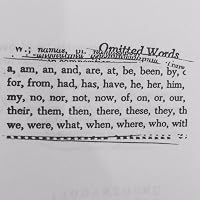
Parenthood, activism, and desolation around our climate crisis wash together like water from the ocean Pérez so deeply loves. Everything from Dr. Seuss to well-known lullabies are recycled into reprimands on human greed, our "endless mouth" that consumes and consumes and consumes. Pérez connects environmental justice with all social justice movements of the world. Stark commentary appears in "Halloween in the Anthropocene" about the ways we dress up in our Indian and ninja costumes while we ignore the suffering of those we appropriate around the world. "Disaster Haiku" startles with its simplicity: "the world / briefly sees us / only after / the eye / of a storm / sees us." Letters are removed from words, a visual demonstration of extinction, making them intentionally difficult to read.
Decent poetry, but to me it lacked some of the finesse of other poetry books in a similar vein to this one.
That being said; I really appreciate the passion and educational aspect of this book; the poetry is to-the-point, and covers many ecocentric social issues. It would be perfect for a younger audience, to help them feel and understand environmental issues and how they intersect with race, sexuality, politics, etc.
I also particularly appreciated the personification in some of these poems, and how this is done through a tie back to Perez’s daughter. It’s a nice touch that really added depth and connection to the poetry. It recognizes our need to relate abstract concepts and social issues to human perspectives in order to make sense of them, which is a disconnect pertaining to the Anthropocene that needs to be bridged.
A collection of ecopoems about climate change, extinction, family, and survival.
from Rings of Fire: "Still, I crave an unfiltered cigarette, / even though I quit years ago, and my breath // no longer smells like my grandpa's overflowing ashtray— / his parched cough still punctures the black lungs // of cancer and denial."
from Teething Borders: "On the news, / a makeshift boat filled with refugees / capsized in the Mediterranean. / Those with life jackets float / like bright yellow teeth. The others: / swallowed by the sea's territorial mouth."
from Care: "Am I brave enough to bear her // across the razor wires of foreign countries / and racial hatred? Could I plead: "please, // help us, please, just let us pass, please, / we aren't suicide bombs."
I recently spoke with a friend about effort and creativity in arts and poetic works. How often we find meaning in writings to be primarily motivated by creativity, and in multimedia arts they are dually motivated through effort and creativity.
In Pérez' work here, I find the meaning to be primarily motivated through effort and thought. Creativity, of course, at work, but the poems seem to work so very hard to say and think. I'm not entirely sure how much personally I value this affect over other styles; however, the effort is undeniable and I'm certain will find impact with anyone who reads.
Habitat Threshold is a brilliant tour de force in eco-poetics, at once poetically lyrical and real-world horrifying. Craig Santos Perez couples love for his family, identity as a native Pacific Islander, and the ecological plight of natural habitats to write poems that feel lived in and relevant. This book is structurally innovative and moving at the same time. If you'd like to hear the author read from this book and talk craft, have a listen to the Hot Redhead Media podcast featuring this author and this book. It's epic. Listen here: https://www.hotredheadmedia.com/bookt...
Santos Pérez' book of poetry provides searing satire about the many ways some humans have abused the planet and our fellow earthlings. He reveals how we are not only a part of the web of life, but trapped in a web of abuse and injustice. His sharp commentary mixed with his wicked wit makes the the critique a little easier to swallow, like the Buttleball Turkey he references in Thanksgiving in the Plantationocene.
The poems also reveal a tenderness, a reverence for life, an embrace of the sacred even as he mourns the many ways humans are bound together in mutual desecration of the natural world.
With "Habitat Threshold," Craig Santos Pérez extends ideas from his earlier collection "from incorporated territory [guma']," among others. Whereas those collections concentrated on military occupation of native land (Guam), here the focus is on family and the legacies of environmental destruction imposed on future generations. There's a force to the poems whether adapting Allen Ginsberg or Wallace Stevens, and this collection finds Pérez at his strongest in closing his poems with verve and finality.
Can't remember when or how this book of eco-poetry found its way onto my shelves, but I'm glad it did and that I took the time to read it. Santo Perez writes trenchant, urgent poems not only about climate change and extinction but also about indigenous struggle, racism, capitalism, and all the things inextricably tied up with climate change too. I like poetry the most when there's experimentation with form, new word and idea associations, and of course beautiful phrasing, and there's much of that in this collection.
This was my 10th book for the 2024 Sealey Challenge. Prior, I had only read one poem from this book in a journal, and I loved that poem so much I bought this book. I am so glad I did!
It is a remarkable and sobering look at climate change and its damage, particularly as it affects poorer countries and people of color. There are facts and charts and quotations as well as the poet, a father, considering this bleak future for his daughter.
What a book to start off my Goodreads and Read Harder challenges. This is searing, prophetic poetry but also it's funny and modern and accessible in a way that you may not think of when you hear "searing, prophetic poetry about environmentalism, climate change, and pollution and its disproportionate effects on Indigenous populations".
“I have indigenous visions and anarchist vibrations.” Devastating and essential. Santos Perez is a Chamorro eco-poet and father currently living in Hawaii, and this book examines those identities in the context of our dying world.
Honestly, everyone should read this. Back-to-back with Billy Ray Belcourt’s “A History of My Brief Body” and I’m at a loss for words.
My first introduction into the genre of eco-poetry and it did not disappoint.
Pérez cultivated a powerful and expressive collection of poems that had a singular voice within them. Exploring the intersectional nature of environmental issues, global capitalism, human violence, and animal extinction; Pérez also captured the personal impacts of these large scale crises.
This is a really powerful book of poetry about living and raising a child during this era of rising fascism and ecological and climate breakdown, and all the cognitive dissonance that entails.
The poems are beautiful and creative - Santos Perez plays with a variety of forms, including many poems modeled on other famous poems.
the last book we read in my poetry class and also my personal favorite. incredible. both self-critiquing and society critiquing and no holds barred. made me think about the irony and joy and pain of being alive in a time of ecological meltdown
A powerful, informative collection that intertwined the environmental and the political that left me contemplating our current world, it’s consequences, and what’s left for the generations after us.
I heard most of these poems at a reading by Perez earlier this year. I’m happy to have finally gotten to the collection to read the whole thing. Fiery eco-activism, with major themes of family, indigeneity, late-capitalism, and religiosity.
I haven’t encountered poetry that broke me and built me up like this since the first time I encountered Mary Oliver. If I could recommend one single work of art centered on environmental change, THIS ONE IS IT. Essential essential essential.
1/5 this book said jackshit. If you read one poem youve basically read them all. Surface level problems are tested and there is basically no offering of anything other than complaints covered in the guise of "poetry". I didnt learn anything from this