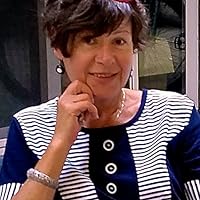
The story of Stella Goldschlag, whom Wyden knew as a child, and who later became notorious as a "catcher" in wartime Berlin, hunting down hundreds of hidden Jews for the Nazis. A harrowing chronicle of Stella's agonizing choice, her three murder trials, her reclusive existence, and the trauma inherited by her illegitimate daughter in Israel.
Peter H. Wyden, born Peter Weidenreich, in Berlin to a Jewish family, was an American journalist and writer.
He left Nazi Germany and went to the United States in 1937. After studying at City University of New York, he served with the U.S. Army's Psychological Warfare Division in Europe during World War II. After the war, he began a career in journalism, during which he worked as a reporter for The Wichita Eagle, a feature writer for The St. Louis Post-Dispatch, Washington correspondent for Newsweek magazine, a contributing editor for The Saturday Evening Post in Chicago and San Francisco, articles editor for McCall's, and executive editor for Ladies' Home Journal. He authored or coauthored nine books, and numerous articles that appeared in major magazines. In 1970, he became a book publisher in New York City and Ridgefield, Connecticut.
Stella Goldschlag, Jüdin, lebt zu Zeiten des Nationalsozialismus in Berlin. Um sich und ihre Eltern vor der Deportation ins KZ zu retten, kollaboriert sie mit den Nazis und verrät untergetauchte Juden, sogenannte "U-Boote" an die Gestapo. Peter Wyden, der mit Stella zur Schule ging, konnte mit seiner Familie 1937 in die USA fliehen. Nach dem Krieg recherchierte er und versuchte Stellas Verrat zu verstehen, weder verurteilt noch entschuldigt er sie. Fast 50 Jahre später spricht er selbst mit Stella, und bekam von ihr kein Wort der Reue oder Schuld zu hören. Eine wahre Geschichte.
Very difficult to put down this biography of Stella, a beautiful girl from a Jewish family during the rise & rule of Hitler, turned "catcher" by the Berlin Gestapo.
Basically, the book brings up issues of survival and self-actualization, and the extent to which humans are willing to go to achieve either or both. Stella was able to survive as a catcher, manipulating the trust of other Jews who dared to try to survive and wait out the war within the confines of Hitler's Berlin. Brutal circumstances can serve as a crucible to either shatter or refine character. While the worst was brought out in Stella, the issue of culpability is less clear. Whether or not she was a sociopath or simply savvy under the circumstances is hotly contested.
In one sense, Stella played the hand that she was dealt. In the fullness of time, people can accept fiction as truth when the truth is too painful to bear. After a prolonged period of time, eventually the truth "loses its contours", and they come to believe their own lies as the truth. This phenomenon is given extensive literary treatment in this account. Another phenomenon the account dealt with is the psychological one of "identifying with the aggressor".
Lest you start lionizing this woman or feeling unduly sorry for her, Wyden (who knew her when he was a classmate of hers in a special Jewish school right as sh*t was getting really bad in Berlin) painstakingly details accounts of all her victims, people who may have been alive or successfully eluded the Gestapo, had it not been for her machinations.
Wyden's interviews with an aging Stella in the early 1990s are also particularly elucidating.
Interestingly, Stella's only daughter, Yvonne, became a fierce Zionist who moved to Israel, and long refused to even acknowledge Stella as her mother.
I nearly gave up on this book after the first twenty pages or so. There is a lot of unnecessary detail at the beginning of the book relating to the early days of Jewish persecution under the Nazis, plus other aspects of the perils Berlin life during WW2, such as sections covering the allied bombings. I feel many of the readers who would seek out this out of print book, would have a working knowledge of this part of German history. Obviously it is important to setup a backdrop for what in the end turned out to be a fascinating story. Nevertheless, some of the early detail did tend to go off at a tangent. There were also other parts of the book I found myself skipping through due to unnecessary detail. But please don’t let this put you off. The author, Peter Wyden went to the same Jewish school as Stella. He immigrated as a child to America with his family in 1937 so escaped the holocaust. Eight years later he was in occupied Berlin as an American serviceman when he heard about the arrest and trial of Stella for war crimes. The writing of this book became a passion for the author, and he does a fine job of meticulously piecing together the details of Stella’s life using statements and the histories from those who knew her. This included ex-lovers, Jewish resistance, Gestapo, other ‘Jew catchers’ (as they were known) and interviews with Stella herself in 1991. She was a lonely insomniac by this time. The book was published in 1992 so gives no details of her suicide in 1994 by throwing herself out of the window of her flat. There is also a really interesting section on the relationship with her daughter who disowned her at an early age. Despite my criticism of this book, it is probably the most detailed book about a Berlin Jew who collaborated with the Gestapo and sent possibly hundreds to their death to save themselves.
I was in Berlin a few years ago looking at an exhibition on Prince Albrecht Strasse former Gestapo headquarters next to a preserved section of the Berlin wall. The exhibition detailed the rise of Nazism and included the Holocaust.
What stood out on this wall of misery was this picture of a glamorous, impeccably dressed young lady Stella Kubler posing with her boyfriend. Reading the narrative it turned out that Stella a Jew was a 'catcher' for the Gestapo. She sought out and betrayed former Jewish acquaintances hiding in Berlin.
This was something I had never come across before so so bought Peter Wyden's book. He had been to school with her.
Initially the resons for her betrayal were to save her parents from the death camps but after they were eventually sent away she continued her betrayal.
Not only does the book detail her actions but asks questions about the human instinct for survival and Wyden gives a very balanced opinion. It's easy to judge but no-one knows how they would react under similar circumstances.
I gave this 5 stars as the subject matter is so tragic and Wyden describes a hitherto unknown chapter to me of WW2.
It seems luck, fate played such a crucial role in many of the lives of these people. Primo Levi talks about something as insignificant as the switching of the points on a railway track the difference between life and death.
Considering that I have read dozens if not a hundred or so books on the Holocaust, it shocks me that this is the first time I have heard of the concept described in this book.
We’ve all heard of the term Kapo, but did you know that there were Jewish Griefers (catchers) responsible for the capture and death of thousands of German Jews?
This book is a page turner and therefore perfect for long Shabbos afternoons, for those of us who otherwise get our literary fixes via audible books.
Ich hörte den Namen Stella Goldberg Anfang 2019 das erste Mal. Es war bei einer Besichtigung des Museums Blindenwerkstatt Otto Weidt. Hier beschäftigte der Kleinfabrikant Otto Weidt während des Zweiten Weltkrieges hauptsächlich blinde und gehörlose Juden, sie stellten Besen und Bürsten her. Er versuchte, sie vor Verfolgung und Deportation zu schützen, unter anderem auch in versteckten Räumen der Manufaktur. Dort nun zu erfahren, dass diese zerquälten Menschen durch jüdische Spitzel, namentlich der Gestapo Kollaborateurin Stella Goldschlag, verraten wurden, hat mich zutiefst getroffen.
Mit Erscheinen des Romans „Stella“ von Takis Würger schien ihr Name - durch medienintensive Diskussion - dann zum Schlagwort des Frühjahrs zu avancieren. Interessanter für mich ist jedoch „Stella Goldschlag“ , ein Buch des deutsch-amerikanischen Journalisten Peter Weyden; bereits 1992 veröffentlicht, wurde es jetzt vom Göttinger Steidl Verlag neu aufgelegt.
Peter Weyden – ihr Mitschüler an der jüdischen Goldschmidtschule Berlin – beschreibt die Entwicklung des Mädchens Stella zu einer der gefürchtetsten Greiferinnen des Naziregimes. Hunderte wurden von ihr verraten, nur wenige überlebten. Doch wie konnte es dazu kommen? Weyden schreibt beklemmend detailliert, doch kein Wort ist hier zu viel. Sein Bericht ist sehr gut geschrieben und exzellent recherchiert - mit großem Anhang zu Personen, Interviews, Fotos - das regt zum weiteren Nachforschen und Nachlesen an.
Besonders hervorzuheben ist Weydens Reflektion über Schuld und Unschuld der Kollaborateure, es gab ja nicht nur die Greifer, sondern noch viele andere jüdische Funktionshelfer*innen wie zum Beispiel Krankenschwestern bei Lagerärzten oder die berüchtigten Kapos als Mitarbeiter der Lagerleitung. Wie also verhalten sich Menschen, die vor der letzten Entscheidung stehen: Sterben oder mit den Teufeln gemeinsame Sache machen? Und musste man wirklich kollaborieren, um zu überleben? Welche Entscheidungsmöglichkeiten hatte man? Und wie hätten wir, du und ich, uns verhalten?
Empfehlungen Filme / Streamingdienste: Die Unsichtbaren / Ein blinder Held – Otto Weidt
Stella was some kind of monster. Always ashamed of her Jewish background, she used her looks and wiles to survive WWII by being a "catcher" - trolling Berlin to find the Jews she grew up with, gain their trust, betray them to the SS, and send them to their deaths.
The parts about Stella and Berlin were quite interesting, but there is a lot of filler here which is somewhat boilerplate copy about WWII, the Jews, and other stuff an educated reader will already know about. Better than this: The Last Jews In Berlin.
Nichts für schwache Nerven. Hier wird hautnah die Lebensgeschichte von Stella erzählt. Nicht von irgendeinem Biographen, sondern von einem Mitschüler aus Ihrer Klasse, der sie von früh an kannte und auch bis ins hohe Alter noch traf und interviewte. Um den Holocaust zu überleben arbeitete Stella als Nazi-Helferin (Greiferin) und verriet ihre eigene Leute. Viele tragische und traurige Geschichten, die in vielen Treffen mit Überlebenden bezeugt wurden. Stella überlebte den Krieg, wurde aber zu 10 Jahren Lagerhaft verurteilt und starb erst 1992 in Freiburg unter anderem Namen. Ein sehr nahe gehendes Buch, das noch lange nachwirkt...
The Holocaust is recent history that is imbedded in the brain of most humans today. The systematic annihilation of Jews by Nazi Germany from 1941 to 1945 has been documented in every conceivable way, yet what do we really know? Constant new revelations come forward to shock and repulse us, generating new feelings that add to our personal perspective of an evil time.
Enter Stella Kübler-Isaacksohn nee Goldschlag, a German Jewish woman of startling beauty and ambition, with a dogged sense of survival for self and family, who engaged in the heinous activity of exposing Berlin’s underground Jews and revealing them to Gestapo authorities, leading to the imprisonment and deaths of untold numbers of people desperately seeking safety.
“Stella” is Peter Wyden’s 1992 biography of his childhood fantasy girl, a German Jew with luminous blonde hair, sparkling white teeth, and a winning, flirtatious personality. Her shapely bare legs in gym shorts fueled his adolescent dreams. She was his schoolmate and choir mate, always near but as distant as the farthest star. Stella Goldschlag created a lasting imprint on his brain.
Wyden and his parents, through good fortune, escaped the early Hitler years. Stella was trapped in Berlin when the cleansing began and, inexplicably, became a Nazi collaborator, giving up her fellow Jews to the Gestapo leading to some being imprisoned and exterminated in the concentration camps. When Wyden returned to Germany after the War as part of the United States occupying force, he discovered the horrendous story of his glamorous classmate’s life as a “catcher” of Jews and resolved to uncover her story. It took forty-six years to generate this book.
The Holocaust is a complicated and emotional time in our history. Countless accounts of all its hideous aspects have been written. Wyden has done his research and his accounting is factually accurate, at least as accurate as can be determined by the veracity of emotional recollections. I learned some new facts about the conduct of the purge that made the book worth reading.
I struggled, however, with the author’s narration when it came to the actions of Stella. There was too much ambiguity and too many gaps in her story. In the end, I found I didn’t really know Stella very well. I’m not sure Wyden ever did either. The book was published in 1992 and didn’t contain the information that in 1994 Stella committed suicide by jumping out of the window of her apartment. One could sense, by Wyden’s final conversations with her that she was emotionally unstable and the ending was not far off. It appears, however, that Wyden didn’t see it coming.
This is a dark read with many flashbacks and characterizations. It’s interesting, however, and well worth the read to get a fascinating look at a different aspect of the Holocaust.
If your looking for an individuals account of life as a Jewish Jew-catcher in nazi Germany, this book is not for you. I heard about this woman through reading and watching true accounts of WWII, and I thought this book would focus on her. But as much as it has ‘the read thread’ that links everything together it is so much more then JUST about this one woman. I think I’m fairly well read and well educated (as much as someone can be who has purely second or third hand information)about the reality and stories of Jews during WWII. This book has a chronologically ordered story, you’re exposed to so much information about the lead up to Hilter becoming truly powerful and how Germans reacted,the life or u-boats, survivors, children or survivors, the stories of those that didn’t survive. But more then anything for me this book made me really think about ethics, my ethics, the ethics of others and what the idea of ‘Ethics’ means in your own actions, your interpretation of others actions, and your judgement of other people. It really threw my head for a spin, highly educational, moving, difficult to read at points due to it honesty, and a book I haven’t been able to stop thinking about ebven though it’s not what I thought it would be. Ambiguous.
Unbelievably powerful true story of a young jewish girl in Germany during the war who is captured by the Gestapo, tortured, and turned into a hunter of other Jews. The story is well documented with interviews from survivors who were caught or who had relatives who were caught by her. The story hits at the moral dimemma of what would you do to save your family? How would you react if you were a just out of your teens and thrust in this horrible situation. Clearly many were executed and sent to concentration camps At the end the author interviews many who want her dead and wish he had killed her when he intrviewed her. Yes , she was still alive and living in Germany after two trials and a ten year prison sentence from the Russians. You will not forget this book.
This is an odd book, and my rating of it changed as I worked my way through it.
The basics is that the author grew up in prewar Berlin, before his Jewish family was able to flee a couple of years before WWII broke out, but before he left, he had a massive crush on a classmate named Stella. He was quite taken aback a few years later when, as an American soldier on occupation duty in Germany, he discovered the girl he'd worshiped from afar had become the Nazis' most notorious Greifer (a Jew who specialized in catching other German Jews in hiding). Stella was feared by Uboats (Jews in hiding) in Berlin. They called her "blonde poison"--the very sight of her enough to make people bolt and run for their lives--and it is estimated that she betrayed hundreds, if not thousands, of fellow Jews to the Nazis during the war years. Many of the people she betrayed ended up dying in Nazi death camps.
I often felt like there were two books here. Both equally interesting and with merit but bogged down by the author's tendency to ramble and repeat himself. His own personal life story is an interesting one that provides a lot of context for Stella's story, but I often found myself wishing someone with more emotional distance from Stella was the one writing her story. I actually almost stopped reading the book a couple of times out of exasperation with him. (It's very reminiscent of Farewell in this respect, actually.)
Ultimately, the author works his way toward making some good points and the story itself (when divorced from his excessive editorializing) is a compelling one. I was particularly interested in his catalogue of what made someone an effective Uboat (apparently the more flamboyant you were about inserting yourself into Nazi spaces, the better you were at concealing yourself), and I do think he makes some thought-provoking arguments concerning ethics and morality.
Despite the childhood pedestal that the author places Stella on, she comes across as an unpleasant person throughout the book--a spoiled pathological liar long before she became infamous as a traitor who then goes onto torment her estranged daughter for decades. Wyden admits to feeling unable to judge Stella because he was never in her position (a position shared by many but certainly not all of their former classmates), and I can certainly understand that.
The book was released a couple of years before Stella committed suicide, and I did find myself wondering if the additional notoriety from the book--despite the author's relative compassion for her--was a factor in her decision.
Ultimately, I never could sympathize with her, despite understanding the desperation to save herself and her parents that drove her decision to collaborate, mainly because of how annoying she sounded as a teenager (what the author found charming sounded pretty insufferable to me), the self-serving lies she told about her war years that obfuscated and minimized her actions, and the extraordinarily cruel and selfish way she treated her child. But I did agree with the one psychologist he consulted who was familiar with the case, who concluded Stella likely had a personality disorder but was not particularly noteworthy psychologically beyond that. In his words, "Under ordinary circumstances, we'd call her a bitch." Under extraordinary circumstances, though, she became a lot worse than just a garden-variety bitch.
Peter Wyden und Stella Goldschlag teilten das gleiche Schicksal. Als jüdische Jugendliche in Berlin vor und während des zweiten Weltkriegs war die einzige Schule, auf die sie noch gehen konnten, ein Institut. Aber auch das war nur eine kurzfristige Lösung. Auch diese Schule wurde geschlossen und das Leben in Deutschland wurde immer unsicherer. Während Peter und seine Familie in die USA auswanderten, blieb Stell mit ihrer Familie in Deutschland. Um zu überleben, wählte sie den scheinbar leichtesten Weg. Sie wurde eine Fängerin und verriet Juden an die Nazis.
Auch wenn das Buch den Titel Stella trägt, erzählt Peter Wyden hauptsächlich seine eigene Geschichte. Sicherlich ist Stella ein Teil davon, aber weil ihr gemeinsamer Weg schon früh zu Ende ging, ist das Meiste was er erzählt wissen aus zweiter Hand. Vielleicht ist das der Grund, warum Stellas Charakter auf mich flach gewirkt hat. Ihr fehlten die nötigen Facetten, um sie für mich lebendig zu machen.
Dadurch habe ich auch nichts über ihre Motive erfahren. Die Menschen, die dem Autor von Stella erzählten, hatten allen Grund um sie zu hassen. Deshalb waren ihre Schilderungen durchgehend negativ. Ohne Stellas Taten beschönigen zu wollen, kann ich mir nicht vorstellen, dass sie ihren Weg leichtfertig eingeschlagen hat. Deshalb hätten mich ihre Gründe und ihre Gedanken interessiert.
Größtenteils hat Stellas Geschichte vor sich hingeplätschert, alleine der Teil ihrer Tochter hat mich berührt. Sie ist diejenige, die unter den Taten ihrer Mutter immer noch leidet, während Stella sich bis zum Schluss als ein Opfer der Umstände gesehen hat.
Ich habe in diesem Jahr den Roman von Takis Würger über Stella gelesen und hatte gehofft, dass Peter Wydens Biografie eine Ergänzung dazu werden würde. Das war leider nicht so.
The unusual subject of the story - a Jewish woman collaborating with Nazis and hunting other Jews in a wartime Berlin - combined with clumsy but earnest writing (the author is bursting with a desire to tell this story, so it might appear unpolished) made for a gripping read. It is a very serious subject, documented with a real-life characters and places - on top of this, there is quite a lot of soul-searching as Wyden constantly goes back to his idealised school crush Stella who has in the meantime became a symbol of evil. Or survival? Wyden is aware that nothing is black-and-white and often asks himself what would HE do if he was in the same situation. And there is a very the thin line between being simply a opportunist (like a nurse Elly who had a relationship with Nazi Dobberke, but had not hurt anyone) and a full-blown collaborator (like Stella who had actually hunting people and sending them to Auschwitz).
Wyden twists himself in a pretzel trying to understand how can someone like Stella send people to their deaths and still continue to live, apparently satisfied with herself - there is this monumental discussion of guilt and survival - but here I must put my own five cents in: I went trough a war myself. And with all the darkness and fear around me, I have never ever lost the sight of my moral compass and never hurt anybody, in fact I was always perfectly polite to civilians because this is who I am and forever will be. I understand there will always be some who will protect their own skin, but this is how the world turns, I am not one of them and refuse to accept something that is morally wrong and offensive. There were others, also arrested and tortured like Stella, who refused to collaborate with Gestapo and rather went to Auschwitz - so she is more of a crooked exception than a example.
Both biography (of Stella) and memoir of the author as he hears about his school classmate Stella, working with the Gestapo to capture Jews in Berlin during the war. He sets out to find out the truth of these rumors and discovers the rumors were true. His book explores the history around the persecution of the Jews and Stella's story.
How much of her conduct can be excused? The Gestapo held her parents in captivity to ensure she cooperated with them. But, after they were sent to a concentration camp, her cooperation could no longer protect them. Is self preservation a strong enough argument to support her eager cooperation that resulted in Jews being discovered, captured, and sent to concentration camps where they were killed?
Stella survived the war, was put on trial, was incarcerated for her cooperation, but also left incarceration, remarried, and lived a long life after the war as a free woman. An interesting part of history (her story could form the basis for an interesting dramatic TV show or historical documentary).
"Evil is a distorting phenomenon, it has too many faces" This is an incredible look into a side of WW2 I was unfamiliar with. The story centers around Stella, a stunning, blonde haired, blue eyed Jew of the highest social classes in Germany who becomes a "Jew Catcher" for the Gestapo. The author grew up with Stella before himself emigrating to the US and ultimately fighting on the allied side, and the complicated thread is taken from his own recollections, interviews with survivors, trial transcripts, and Stella's own retellings. At times the narrative meanders, but the story is so incredulous, complicated, and also well researched that it works. I learned a lot of history that I was completely in the dark on. Truly evidence that we never know what we are capable of, and what we will do to survive.
An interesting and thought provoking book providing a picture of what can happen to people's psyche under stress. A bare majority of the book is about "Stella" an Aryan looking Jewess whose family were nominal Jews. When others were leaving Germany before WW II her patriarchal father for a long time refused to try to emigrate. When he did it was too late. When Stella could have gone to England he refused to let her go wanting to keep the family together. They went into hiding but were caught and Stella was given a Hobson's choice either become catcher of Jews in hiding or see her parents and herself transported to a death camp. The book raises the question of what would one do to survive and see to one's family's survival.
The first three quarters of the book was interesting. It describes a lot of things about German and Jewish history that I didn't know about or forgot about. The only thing about the last quarter of the book that was interesting was the chapter about Stella's daughter and how horribly she treated this daughter. The rest of this quarter talks about Stella's ten year detention in a Russian labor camp after the War. It also talks about a trial that she had to go through in a "Jewish court" - the Jews in Germany had their own courts just after the War where they were allowed to try their own people for crimes committed against Jews. It seems to me that there's a lot of name dropping going on in the last quarter of the book.
2.5 stars :: Meh. Roughly 2/3 of the book is about the author and his Jewish experiences in Berlin or about what was happening to other Jews in Europe during that terrifying time. The other 1/3 is about Stella, the Jewish “Greifer” (a catcher) who sentenced other Jews to a cruel fate.
Although an interesting piece of specific history, and well written, I do wish more given about the titles namesake which is why I’m giving it 2.5 stars. I feel as he was capitalizing off of his flimsy friendship with Stella (went to school with her, barely spoke to her, before emigrating to USA in 1937); all information concerning her was heresy or news/ trial manuscripts.
I found this book extremely informative and detailed. Yet at times the detailed, names and the stories, however short seem unnecessary and brake rage storyline, making it a bit too difficult to follow what author intends to convey. As a fellow Jew and descendant of survivors and fighters against nazi Germany, I was touched deeply and brought to tears many a time. I share author perspective that law should prevail, however seems unjust, and killing murderers will only bring us down the same line as it did nazis themselves. And, untested, no one ever know what they’d do in similar circumstances.
So much historical information that will both boggle your mind and disgust you at the same time. We've learned these things, and this adds yet another dimension to the vile acts of the Nazis and other Germans, out of anti-Semitism and ignorance, and Jews out of desperation and, as this story points out, motives we can never understand. To Stella's daughter, Yvonne, my heart goes out to you and your courage of Tikun Olam for your biomother's misdeeds in the world.
Another sad non fiction of this terrible time in history. The author does a fantastic job of making you empathize with and simultaneously hate the character, Stella. Great book!
Hin und her gerissen nach der Lektüre. Wie weit würdest du gehen um dich oder/und deine Eltern zu retten. Ich habe das Buch des Öfteren bei Lesen zur Seite gelegt. Nachgedacht und nachgedacht . Und ich weiss es immer noch nicht. Absolut lesenswert
Reading this book was like talking to one of my college literature professors. Everything he had to say was interesting, but the circumlocution he used to get there was somewhat frustrating.
I been horrified again what and how Germany during 30th and 40th keeled so many Jews people. Stella was unhappy and angry, but this shouldn't be the reason to keel.
Fascinating true story of the compromises one Jewish woman made to survive in Hitler’s Berlin - and the tragic horrifying path on which her choices put her.