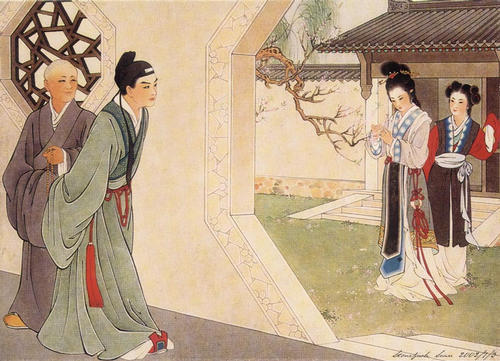
China's most important love comedy, Wang Shifu's Xixiangji, or The Story of the Western Wing, is a rollicking play that chronicles the adventures of the star-crossed lovers Oriole and Student Zhang. Since its appearance in the thirteenth century, it has enjoyed unparalleled popularity. The play has given rise to innumerable sequels, parodies, and rewritings; it has influenced countless later plays, short stories, and novels and has played a crucial role in the development of drama criticism. This translation of the full and complete text of the earliest extant version is available in paperback for the first time. The editors' introduction will inform students of Chinese cultural and literary traditions.
Wang Shifu, (born c. 1250, Dadu [now Beijing], China—died 1337?, China), leading dramatist of the Yuan dynasty (1206–1368), which saw the flowering of Chinese drama.
Of 14 plays attributed to Wang, only three survive, of which Xixiangji (The Story of the Western Wing, also published as The Romance of the Western Chamber) is widely regarded as the best northern play of the period. The work is an amplified zaju (a then-popular theatrical form) containing several of Wang’s innovations—such as giving singing parts to all, instead of only one, of the important characters. Despite the rigid conventions of the stock actor, Wang also succeeded in creating a convincing character in the maid, Hongniang; the dialogue is also excellent. With five acts, the Xixiangji is several times the length of a regular zaju, foreshadowing the chuanqi, the dominant dramatic form of the Ming (1368–1644) and Qing (1664–1911/12) dynasties.
بعد وفاة الوزير الأول، ذهبت زوجته مع ابنتها و خادمتين لهما إلى المعبد. كان والد الفتاة ينغ ينغ حين كان لا يزال على قيد الحياة قد وعدها بخطبتها للأبن البكر للسكرتير الإمبراطوري و هو أيضاً ابن أخ السيدة كوي (والدة الفتاة ينغ ينغ). و كان في المعبد فتى وسيم يدعى تشانغ شينغ أُعجب بينغ ينغ، و بادلته الفتاة الإعجاب. حين سمع زعيم عصابة بجمال ينغ ينغ، اقتحم المعبد ليختطفها، و حينها أعلنت ينغ ينغ أن من يخلصهم من شر الزعيم ستقوم بالزواج به، و لقد رسم الشاب الوسيم تشانع شينغ حيلة ليتخلص من زعيم العصابة ماذا يعني أن يغرم فتى الفقير بفتاة غنيه.. و أن نعطي وعود كاذبه، أو نكسرها.... فمثلاً إعلان ينغ ينغ أن من يخلصهم من الشر فستقوم بالزواج منه، ماذا عن وعد والدها؟ و حين ترفض الوالدة من ابنتها بالزواج إلى من يخلصهم من شر زعيم العصابة، أكان ذلك وعد كاذب بالنسبة للوالدة؟ و صادق بالنسبة للفتاة..؟
*** لم تكن تريد الوالدة لإبنتها الزواج من هذا الفقير ثم إن وعد الوالد المتوفي لا يزال قائم بنظرها، حينها انصدم الشاب بذلك الأمر و أصابه المرض. و عندما علمت الفتاة بأمره طلبت من الخادمة إرسال رسالة و كانت الرسالة تحتوي على قصيدة، و لقد فهم الشاب من القصيدة أنها تطلب اللقاء به في وقت الليل و حين حل الظلام، التقى بمعشوقته، لم تكن كما هي بل أخذت تهزئه و تهينه. و بسبب هذا أشتد عليه المرض، حينها قامت ينغ ينغ بإرسال وصفة طبية و في الحقيقة إن الوصفات الطبية الصينية التقليدية لها أسماء قد تستخدم أيضاً للإشارة إلى أشخاص و أشياء في الحياة اليومية فمثلاً، تشير زهرة الأوسمانثوس إلى فصل الخريف، حين يشير الخل إلي تشانغ شينغ (معشوقها) و لقد فهم الشاب تشانغ شينغ من الوصفة أنها تطلب لقاءه مجدداً
بعد هذا الموقف، أدركت أمراً و هو أن للعشاق لغة تخصهما لا يفهمها أحد..
This entire review has been hidden because of spoilers.
A fascinating look at what kinds of things can shock a culture. To my western eyes it's mildly racy at best (and even then only at points) but apparently to Chinese luminaries over the centuries it's a book that's evil to its core.
It's difficult to get the full impact of this play without being steeped in Chinese lore. For example, in the preface it is opined that to fully appreciate Romance of the Western Bower you need to have read the 6th-century BC anthology Book of Poetry because of some parallels (and significant changes) between the two works. (Needless to say I have not read the anthology in question so these correlations and parallels are flying way over my head.)
That being said, however, the story itself is gripping. It is often compared to Romeo and Juliet but … that comparison is lacking, at least to my eyes. First, this work is a comedy (in the proper sense of the term in dramatic presentation) where Shakespeare's is a tragedy. Second, this work has a far vaster scope and feels, at points, like an "action movie" version of Romeo and Juliet. (Dare I call it a saga?) Finally, and here I'll probably have real literary critics howling for my blood, I find the characters in this work to be far more believable than the whiny, proto-goth teens of Shakespeare's tragedy. I have never found the lead characters of Romeo and Juliet particularly sympathetic. I did find the characters in this work so.
One of the four great dramas of classical China, this is more crude than I would have expected. Still, the talent of Wang Shifu is priceless and the characters have a wonderful depth to them, especially Crimson the maid to Oriole. When compared to European plays of the same period, it holds its own and shows an unplumbed depth of a history beyond that of the West.
مسرحية كلاسيكية وموسيقية من الأدب الصيني كتبت في فترة حكم أسرة يوان، أي في الفترة بين القرن الثالث عشر والرابع عشر.
هذه النسخة هي من ترجمة دار النشر باللغات الأجنبية (الصين)، وقد قام بترجمة المسرحية للعربية الأستاذة فريدة وانغ فو.
لغة الترجمة بسيطة وسهلة ورغم بعض الأخطاء النحوية القليلة، إلا أن المعنى وصل للقارئ بشكل مثالي.
ومن المثير للاهتمام كذلك هو نشر المسرحية بالصينية والعربية في ذات النسخة، أي أن القارئ يقرأ فعليا نصف عدد صفحات الكتاب، إلا إن كان يقرأ الحروف الصينية. لا أخفي أنني أعجبت بهذا كثيرا.
بالنسبة للمسرحية ومحتواها، فهي عبارة عن قصة حب بين فتاة نبيلة وطالب علم فقير (ترجمت كلمة "طالب علم" في الكتاب إلى "المثقف"...والمعنى بالإنجليزية "scholar”...)، والحمد لله أنني متعمقة بشدة في التاريخ الكوري (وبالتالي الكثير من التاريخ الصيني) لأن ذلك ساعدني بشدة على فهم الأحداث والدوافع، وحتى طريقة الملبس في الرواية.
ولكن ما أعجبني بحق هو وصف الكاتب للطبيعة: كلمات قليلة جدا ولكنها تخاطب الحواس...
"التلال الخضراء تقف بيننا، الغابات لا تساعدنا، الدخان المتصاعد والضباب الرقيق يحجبان عيوننا، لا يسمع صوت إنسان على الطريق القديم تحت أشعة الشمس الغاربة، يرتفع صهيل الحصان مع ريح الخريف وبين المزروعات، أنا مترددة في دخول العربة، أتيت متلهفة، فلماذا أعود مستعجلة..."
وكذا وصف الكاتب للمشاعر فيه من الرقة الكثير:
"تتطاير الأوراق الذابلة مع الرياح الغربية، تتهاوى الأعشاب الجافة في الهواء الضبابي البارد، أراه يجلس بجانب الطاولة ورأسه مائل، حواجبه مقطبة حزينا، كأنه شبه ميت.
لا يجرؤ على إسقاط الدموع التي تتلألأ في عينيه، خوفا أن يعرفها الناس. أراه يطأطئ رأسه فجأة، ويطلق تنهيدات طويلة، متظاهرا بأنه يعدل ثوبه الحريري الأبيض."
وهذه المقاطع، التي أجزم أنها أكثر بلاغة باللغة الصينية، هي المقاطع التي يغنيها ممثلو المسرحية بألحان مختلفة يسميها الكاتب باسمها قبل كل فقرة.
ورغم أن كل القصة متماسكة مترابطة، إلا أن هذا الجزء في آخر فصل أضحكني 😂😂😂 ولكن هذه المبالغة متوقعة في الأعمال المسرحية عادة:
"الأفضل أن أموت بصدم هذه الشجرة بدلا من أن أعيش في العار...
تنتهي كل المشاكل عندما أموت. ( هو يسقط على الأرض ميتا) [يعني خبط نفسه في الشجرة ومات ازاي بس 🤦🏻♀️]
السيدة تسوي تقول: على الرغم من أنني لم أجبره على الموت، لكنه مسكين فقد والديه مبكرا وسأتولى دفنه."
وفي السطر التالي يتحدث الكاتب عن إقامة وليمة الزفاف، وبالرفاء والبنين 😁
عمل جميل رغم السلبيات القليلة وسأبحث عن عرض مسرحي بالڤيديو ليكون بوسعي التخيل أكثر 👍🏻
This highly popular late thirteenth century work is a zaju, or a comedy consisting of a cycle of five plays. (Though the short plays could be thought of as acts of a single play.)
Like The Lute (see my review here: https://www.goodreads.com/review/show...) or the plays of Guan Hanquing (see my review here: https://www.goodreads.com/review/show...), the Western Wing features prose, songs and poetry. The editors aptly call it a “ballad opera.” This format creates a beautiful, leisurely paced work that reveals the passions and motives of the characters. But it does make for a very slow, deliberate read.
The Western Wing takes place in a Buddhist monastery called the Monastery of Universal Salvation. There, Student Zhang, aka Zhang Gong, aka Zhang Junrui, aka Male Lead, on his way to take the all-important civil servant test glimpses Oriole, aka Cui Yingyung, aka Female Lead, and is immediately smitten. He decides to move into the monastery where Oriole is temporarily staying with her mother. The plays follow the ups and downs of their courtship with a wry yet sympathetic tone.
This edition (University of California Press) is extremely thorough and scholarly. It provides a very good context for the work and the intricacies of the genre, including the underlying sources and the allusions. Oddly, the dialogue is not written in the traditional western fashion, with the character name on one line and the speech below it. It is all one big paragraph. It’s not terrible to read that way, but it is somewhat clumsy.
The editors point out that this is an immensely popular and influential work in Chinese literature and drama. It is entertaining, with a wealth of beautiful love poetry. It is, however, very slow moving -- one might call its pace glacial. But if you read the book at a leisurely rate, the poetry is quite moving.
For those who enjoy drama history and Chinese literature, this is a must read. Otherwise, I would not highly recommend it for the average reader.
This 13th century Chinese opera is a classic comedy of Chinese literature. The story is a comedy of errors, in which a scholar traveling to become a civil servant stops for a room at a temple and becomes infatuated with a young woman who is there to perform funeral rites for her father. Her mother has promised her in marriage to another, and of course it is a better financial match for her. However, the man is entirely romantic, and lures her with his beautiful poetry. A great example is the following (I prefer the translation of Henry Wells, included below): Chang: Every step she takes moves my affections; All the motions of her body please; She has a thousand wiles and subtl charms, Like willows swaying in an evening breeze.
She treads on fallen petals with noiseless step; Their rose-sweet, aromatic scents diffuse Heaven’s own perfume, while the dust itself Is rich from the light pressure of her shoes.
Even without the glances of her eyes Her gait reveals the secrets of her heart. Slowly she walks, reaches her door at last And, smiling, seems reluctant to depart. She turns to look at me and with her eyes Confers on me a glimpse of Paradise.
Now she is gone, the door behind her shut, Her silence richer to me than all words, I only see the willows blurred by mist And hear the muted chirping of the birds. Ultimately, the comedy and romantic comedy come down to the woman’s choice of partner. Will she give in to maternal demands and family commitments, or will she give in to passion?
For the Romance of the Western Chamber, perhaps the most impressive thing is the characters in the drama. The main characters Zhang Sheng and Cui Yingying have distinct personalities, which set off and reflect each other. Cui Yingying this character personality, there is a lot of thought-provoking places. Born in a famous family in the Cui Yingying, with youth melancholy play. In feudal society, women were often moralized "Do not look at what is contrary to propriety; do not listen to what is contrary to propriety; do not speak what is contrary to propriety; Do not do what is contrary to propriety. "and" The three obediences and the four virtues." Cui Yingying was born under this background. But when she met the dissolute and handsome Zhang sheng, they became a magnet for each other. At this time, Yingying's behavior has left the rules of feudal ethics behind. In this subtle action, it is not difficult to imagine the direction of Ying Ying's personality development. At this age, she seems to be still with a little rebellious heart of adolescence, but she is after all the feudal etiquette of the family under the enlightenment. Her strong pursuit of love is admirable. It was funny to see her sometimes serious and sometimes awkward. The distinctive characters in The Romance of the Western Chamber still have much to admire and study. These characters are also the basis of an ancient classic love drama.
Dua bintang gara2 agak over-expectation membaca blurb-nya yang berapi-api. Ternyata hanya begitu saja. Curiganya sih ini edisi bridged, jadi banyak hal yang cuma diceritakan kembali (secara minim pula) yang yg katanya komedi dan romantik, gak dapet semua.
Dialek yang dipakai kayak novel2 cersil dahulu kala, agak aneh juga karena sekarang lebih sering baca/nonton dengan bahasa mandarin. :)
I have read Yuan Dynasty plays before, but I found this rather long work to be tedious. Endless song lyrics fill pages of very little action. The ending I found to be very dissatisfying, but that might just be me. Sorry.
This Yuan Dynasty play about frustrated lovers was fairly typical of its genre, but is regarded as one of the best by experts. The cheeky maid Rose was a central character, rather than the lovers themselves. Unsatisfying ending as far as i was concerned, but i'm no expert.
هذه مسرحية كلاسيكية عاطفية تؤشكل تحجرات السلف و توجسات الخلف ، الصداقة الأثيرة و الإسعاف المنوط بكلمة كي يكون طارئاً بل و كافياً ، الحب العذري لا العذرية ، توخي العائلية لا العائلة ، الخدمة لا الخدم و بالتأكيد القصدية من القصيدة هذا الصنف السردي صالح للأطفال اللائي يوشكون على المراهقة لا المراهقين الفعليين لأن إركاز المفاهيم ضمني مكشوف : الخير و الشر بالنهاية المستحقة لكليهما ، الطاعة رغم اللاقناعة و الحب الذي يتموضع حياءً بالفؤاد دون إسفاف البلوغ أو شهوة البالغين لو كنت أيفع بكثير من قراءتي لها الآن لكنت منحتها ذات العلامة لا أعلى منها .
An excellent translation of one of the great classic Chinese operas, dating from the 13th Century: a tale of duplicity and unrequited love. It starts out like so many opera stories: a young scholar, on his way to take the civil service exams, begs a room at a temple, where he encounters the most lovely, delicate young woman in all of China, there with her mother to perform funeral rites for her father, a renowned official. A dangerous situation ensues, in which the mother promises her daughter in marriage to the man who can rescue them. Of course, when our scholar-hero lives up to the task, the mother reneges on her promise, and the young woman, torn between maternal loyalty and the powerful effect of the young man's poetry, turns into an unwitting femme fatale.
This 1978 reprint of a 1936 translation includes a preface providing an overview of traditional Chinese drama: its history, conventions, the functions of actors, and so on. The translator starts by lamenting the lack of interest from the Chinese themselves in their own traditional drama, and the dearth of foreign literature on the subject.
There are more literary English translations of other Chinese opera libretti, but this one is highly readable and poetic, generously footnoted without being overwhelming.
Actually I didn’t read the English version of this book, I've just finished reading the Chinese version of it. And I don’t know if the English version can still be such a feast to the mind. Old Chinese classics can be notoriously difficult to translate because of the incorporation of colloquial and literary language and classic poetry like the wildly accepted greatest literature work in China “ the dreams of the old chamber”. This book is actually an officially banned book in old China. And prejudice about this book still prevails today because of ignorance. Most people know this is an forbidden book and it was considered immoral, indecent and licentious. As I read it, I reckon that this play is quite a pleasing to the eye and mind, the language is amazingly beautiful. Absolutely worth reading.
The Romance of the Western Chamber (also known as The Story of the West Wing) is a play written by Wang Shifu in the late 13th or early 14th Century, which is based on Master Tung's narrative poem from the late 11th or early 12th Century, which is in turn based on a short story from the 8th or 9th Century. (I'm pretty sure the Goodreads "first published" date of 1200 for the play is too early by almost a century.) The Columbia University Press version I have is from 1971, but the translation dates back to 1935. The original story is located at the end of the book - it helped to read it first, if only to appreciate the major changes in the story that occurred over the next several hundred years.
The story is one of true love that is beset by obstacles at almost every turn. Lovesickness is the prevalent state of the main characters, who wax poetical at the thought of each other. Other characters include a villainous bandit, a wise old monk, a chatty maid, and the mother-in-law from hell. The out-of-wedlock assignations that form the heart of the book were considered scandalous at the time and remained so for centuries.
The form of the play (actually a series of five plays, the last of which is possibly a later addition by a different playwright) is a mix of prose, poetry and sung lyrics - making it more like an opera, singspiel or musical than a traditional Western drama. The conventions of the time assigned one character to be the main singer of each Act, which provides the dramatist with interesting choices: the singer for each act could be one of the protagonists, who will describe what he or she is doing, thinking and feeling, or it could be a subsidiary character, who can play the role of ironic observer and commentator on the actions of the hero, heroine and various villains.
A comment about the English translation: the translator's objective was a literal, almost word-for-word version of the Chinese text. This noble effort to remain faithful to the text has a downside, however, at least according to C.T. Hsia, the author of the Critical Introduction: much of the poetic subtlety of the original has been lost. (Hsia takes the word "critical" literally: he spends a fair amount of time explaining how bad this translation is.) Despite these apparent drawbacks (which are difficult to see as the reader has little to compare them to), this is a wonderful story, with drama, romance, comedy and an insight into the social conventions and mores of Medieval China (the play was written and first performed during the Yuan Dynasty, but the action takes place much earlier in the Tang Dynasty). You may need to adjust to some of the conventions of Medieval Chinese drama (like the odd way each character introduces him or herself to the audience, and describes the physical actions they are engaged in to us instead of using stage directions: "I lean on the balustrade and stare at the moon" "I pick up the lute and begin to run my fingers along the strings"), but I found this easy to do.