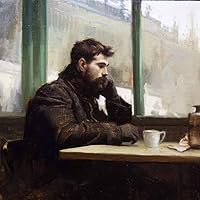
Celebrating the 25th anniversary of the series that changed the way we look at super heroes, the landmark MARVELS is back — with all-new commentary from comic book masters Kurt Busiek and Alex Ross! The stunning saga concludes as Phil Sheldon publishes a best-selling book on the Marvels! But the public grows ever more jaded toward heroes, and Phil decides to take a stand for heroism by clearing Spider-Man of police captain George Stacy’s death. During Phil’s investigation, he meets George’s daughter, Gwen Stacy, whose strength in the face of adversity gives Phil hope. But when Phil witnesses a terrible tragedy during a battle between Spider-Man and the Green Goblin, will he lose faith in the Marvels for good? Packed with extras and completely remastered, you don’t want to miss this unique look back at the MARVELS phenomenon! Collecting MARVELS #4.
Kurt Busiek is an American comic book writer notable for his work on the Marvels limited series, his own title Astro City, and his four-year run on Avengers.
Busiek did not read comics as a youngster, as his parents disapproved of them. He began to read them regularly around the age of 14, when he picked up a copy of Daredevil #120. This was the first part of a continuity-heavy four-part story arc; Busiek was drawn to the copious history and cross-connections with other series. Throughout high school and college, he and future writer Scott McCloud practiced making comics. During this time, Busiek also had many letters published in comic book letter columns, and originated the theory that the Phoenix was a separate being who had impersonated Jean Grey, and that therefore Grey had not died—a premise which made its way from freelancer to freelancer, and which was eventually used in the comics.
During the last semester of his senior year, Busiek submitted some sample scripts to editor Dick Giordano at DC Comics. None of them sold, but they did get him invitations to pitch other material to DC editors, which led to his first professional work, a back-up story in Green Lantern #162 (Mar. 1983).
Busiek has worked on a number of different titles in his career, including Arrowsmith, The Avengers, Icon, Iron Man, The Liberty Project, Ninjak, The Power Company, Red Tornado, Shockrockets, Superman: Secret Identity, Thunderbolts, Untold Tales of Spider-Man, JLA, and the award-winning Marvels and the Homage Comics title Kurt Busiek's Astro City.
In 1997, Busiek began a stint as writer of Avengers alongside artist George Pérez. Pérez departed from the series in 2000, but Busiek continued as writer for two more years, collaborating with artists Alan Davis, Kieron Dwyer and others. Busiek's tenure culminated with the "Kang Dynasty" storyline. In 2003, Busiek re-teamed with Perez to create the JLA/Avengers limited series.
In 2003, Busiek began a new Conan series for Dark Horse Comics, which he wrote for four years.
In December 2005 Busiek signed a two-year exclusive contract with DC Comics. During DC's Infinite Crisis event, he teamed with Geoff Johns on a "One Year Later" eight-part story arc (called Up, Up and Away) that encompassed both Superman titles. In addition, he began writing the DC title Aquaman: Sword of Atlantis from issues 40-49. Busiek was the writer of Superman for two years, before followed by James Robinson starting from Superman #677. Busiek wrote a 52-issue weekly DC miniseries called Trinity, starring Batman, Superman and Wonder Woman. Each issue (except for issue #1) featured a 12-page main story by Busiek, with art by Mark Bagley, and a ten-page backup story co-written by Busiek and Fabian Nicieza, with art from various artists, including Tom Derenick, Mike Norton and Scott McDaniel.
Busiek's work has won him numerous awards in the comics industry, including the Harvey Award for Best Writer in 1998 and the Eisner Award for Best Writer in 1999. In 1994, with Marvels, he won Best Finite Series/Limited Series Eisner Award and the Best Continuing or Limited Series Harvey Award; as well as the Harvey Award for Best Single Issue or Story (for Marvels #4) in 1995. In 1996, with Astro City, Busiek won both the Eisner and Harvey awards for Best New Series. He won the Best Single Issue/Single Story Eisner three years in a row from 1996–1998, as well as in 2004. Busiek won the Best Continuing Series Eisner Award in 1997–1998, as well as the Best Serialized Story award in 1998. In addition, Astro City was awarded the 1996 Best Single Issue or Story Harvey Award, and the 1998 Harvey Award for Best Continuing or Limited Series.
Busiek was given the 1998 and 1999 Comics Buyer's Guide Awards for Favorite Writer, with additional nominations in 1997 and every year from 2000 to 2004. He has also received numerous Squiddy Awards, having been selected as favorite writer four years in a row from 1995 to 1998,
Volume 4 of this series closes out with the early 1970's Marvel Universe and the two major stories of that period which were the Kree/ Skrull war taking place in The Avengers and the death of Captain Stacy and his daughter Gwen Stacy taking place in Amazing Spider-man. Our protagonist, Phil, is again doubting himself and takes on a junior partner to help him out. Ross again fills each panel and page with amazing painted artwork and some great cameos by such people as Badfinger, The Who, John Romita as a cab driver, and even Ross himself as a golden haired youth. I really liked the attention to the album cover art and detail Ross put into a family scene. And as always the annotations are spectacular in pointing all of this and every Marvel U connection as well. My only criticism would be that the story read a bit scattershot to me and looked like it was trying a bit too hard to fill in as many gaps as possible with an appearance by Luke Cage that didn't really go anywhere other than to feature Cage in a few panels. I was fortunate enough to get a variant copy of this one featuring Spider-man's face and the Green Goblin and Gwen Stacy pictured in his eye lens.
Το τέταρτο και τελευταίο μέρος της σειράς είναι σαφώς καλύτερο απ' το προηγούμενο, σεναριακά, αν και μου έδωσε την εντύπωση ότι προσπάθησαν να βάλουν πολλά γεγονότα σε λίγες σελίδες και βγήκε κάπως "πυκνό" το αποτέλεσμα. Κατά τα άλλα, όμως, ο τόμος είναι υπέροχος, με τα κλασικά υπέροχα σχέδια του Alex Ross και στο τέλος ένα κομμάτι αφιερωμένο στις εμπνεύσεις και τη διαδικασία που ακολούθησε ο Ross καθώς και πολύ πολύ σχολιασμό!