

What do you think?
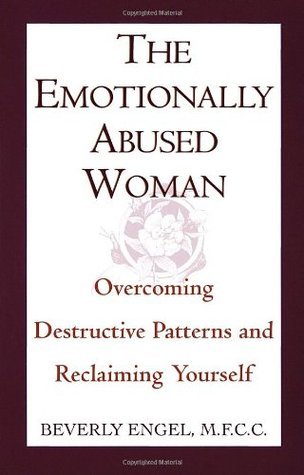
The Emotionally Abused Woman: Overcoming Destructive Patterns and Reclaiming Yourself
“A sensible book, full of insight and hope,”* that offers support and guidance in freeing emotionally abused women from the cycle of abuse and establishing new healthy patterns of relating to others.
* Booklist
• Does your husband or lover constantly criticize you and put his needs before yours?
• Do you sometimes wonder if your best friend is truly a friend?
• Does your boss try to control your every move?
• Does your fear of being left alone keep you in chronically hurtful relationships?
If any of these questions sound familiar, you could very well be suffering from emotional abuse—the most widespread but also the most hidden abuse that women experience. This type of abuse is just as damaging as physical or sexual abuse.
But there is help in this invaluable compassionate sourcebook. As a marriage, family, and child therapist who has grappled with these issues herself, Beverly Engel guides you through a step-by-step recover process, helping you shed the habits begun in childhood and take the first few steps toward healthy change.
Using numerous examples drawn from case history and her own therapeutic expertise, Engel will show you how to
• Recognize and understand the abusers in your life
• Identify the patterns that have kept you emotionally trapped
• Complete your unfinished business
• Decide whether to walk away from an abusive relationship or take a stand and stay
• Heal the damage of abuse by building self-esteem
• Break the cycle of abuse and open yourself to the promise of healthy relationships
* Booklist
• Does your husband or lover constantly criticize you and put his needs before yours?
• Do you sometimes wonder if your best friend is truly a friend?
• Does your boss try to control your every move?
• Does your fear of being left alone keep you in chronically hurtful relationships?
If any of these questions sound familiar, you could very well be suffering from emotional abuse—the most widespread but also the most hidden abuse that women experience. This type of abuse is just as damaging as physical or sexual abuse.
But there is help in this invaluable compassionate sourcebook. As a marriage, family, and child therapist who has grappled with these issues herself, Beverly Engel guides you through a step-by-step recover process, helping you shed the habits begun in childhood and take the first few steps toward healthy change.
Using numerous examples drawn from case history and her own therapeutic expertise, Engel will show you how to
• Recognize and understand the abusers in your life
• Identify the patterns that have kept you emotionally trapped
• Complete your unfinished business
• Decide whether to walk away from an abusive relationship or take a stand and stay
• Heal the damage of abuse by building self-esteem
• Break the cycle of abuse and open yourself to the promise of healthy relationships
244 pages, Paperback
First published October 1, 1990
About the author
Beverly Engel
46 books239 followersBeverly Engel has been a psychotherapist for thirty years, specializing in the areas of abuse recovery, relationships, women’s issues and sexuality. She is also the best-selling author of 20 self-help books, many of which have been featured on national television and radio programs (Oprah, CNN, Ricki Lake, Starting Over) as well as national print media (O Magazine, Cosmopolitan, Ladies Home Journal, Redbook, Psychology Today, The Washington Post, The LA Times, and The Chicago Tribune to name a few).
She is considered one of the world’s leading experts on the issue of emotional abuse, as well as a pioneer on the issue, having written one of the first recovery books on the subject (The Emotionally Abused Woman).
She is considered one of the world’s leading experts on the issue of emotional abuse, as well as a pioneer on the issue, having written one of the first recovery books on the subject (The Emotionally Abused Woman).
Ratings & Reviews
Friends & Following
Create a free account to discover what your friends think of this book!
Community Reviews
Displaying 1 - 30 of 40 reviews

December 26, 2007
It can take years, even a lifetime, to heal from emotional abuse. The author, Beverly Engel, lets us know within the first pages that she has endured a history of abuse, and from this background, she has made her career choices, mainly, to become a therapist helping others in similar circumstances.
The abused person is often taken by surprise, emotionally involved before the abuse fully takes hold. The abuser often has a two-sided personality, referred to as Jekyll and Hyde - one charming and intelligent and likeable, the other a cruel and perverse tormentor.
Engel writes: "It is often difficult for a woman to admit that she is indeed being emotionally abused, particularly if she is competent and successful in other respects... many women who are being emotionally abused do not even realize what is happening to them. Many suffer from the effects of emotional abuse - depression, lack of motivation, confusion, difficulty concentrating or making decisions, low self-esteem, feelings of failure, worthlessness, and hopelessness, self-blame, and self-destructiveness - but do not understand what is causing these symptoms."
The process seeps into the psyche like a slow poison, rearranging our ability to cope. "She has become so beaten down emotionally that she blames herself for the abuse. Her self-esteem is so low that she clings to her abuser."
Which is perhaps the hardest to understand, by the woman herself as well as family and friends who keep asking - "Why do you stay? Why do you put up with it?" - and never find a rational answer. There is none. Engel explains, "Emotional-abuse victims become so convinced they are worthless that they believe no one else could possibly want them. They stay in abusive situations because they believe they have nowhere else to go."
Engel takes us through the ways that emotional abuse expresses itself and how it works. "Emotionally abusive lovers and mates cause tremendous damage to a woman's ego. They have our trust, our vulnerability, our hearts, and our bodies. Using a variety of tactics, an abusive husband or lover can damage a woman's self-esteem, make her doubt her desirability and hate her body, and break her heart... When we love someone we tend to make excuses for his behavior; we always want to give him the benefit of the doubt. This is especially true when the other person is good to us in other ways." The abuser, Engel writes, makes his partner believe "she was so stupid, ugly, and unlovable that she was lucky to have him... told her she wasn't as pretty as the other girls he had dated, that she wasn't good in bed, and that his friends didn't think she was good enough for him."
And who is he? Often, Engel says, he is an addict of some kind, whether to alcohol or drugs or sex, and his own self-esteem is so low that he can keep a partner only by causing her self-esteem to be even lower than his own. He is frequently the product of abuse himself, often taking on the traits of his own abusers. He tends to be socially isolated, unable to maintain any healthy friendships or other relationships.
Once Engel has helped us understand the process and the damage done by it, she encourages and instructs on how to release years of pent-up rage in constructive manner, while rebuilding confidence. There are no shortcuts to healing. Finally, she helps us to understand how to stop repeating the cycle by finishing unfinished business, how to recognize the red flags of an abusive person when we first meet him. If we have not allowed the time to release our anger and heal the damage, we are doomed to repeat the pattern.
For this reason above all, this is an important book to read for anyone who has felt the lash of such abuse. Take the time to understand. Take the time to work through the damage. Take the time to heal. Take the time to nurture yourself back to health and rebuild your ability to love and to know real love when you meet it.
The abused person is often taken by surprise, emotionally involved before the abuse fully takes hold. The abuser often has a two-sided personality, referred to as Jekyll and Hyde - one charming and intelligent and likeable, the other a cruel and perverse tormentor.
Engel writes: "It is often difficult for a woman to admit that she is indeed being emotionally abused, particularly if she is competent and successful in other respects... many women who are being emotionally abused do not even realize what is happening to them. Many suffer from the effects of emotional abuse - depression, lack of motivation, confusion, difficulty concentrating or making decisions, low self-esteem, feelings of failure, worthlessness, and hopelessness, self-blame, and self-destructiveness - but do not understand what is causing these symptoms."
The process seeps into the psyche like a slow poison, rearranging our ability to cope. "She has become so beaten down emotionally that she blames herself for the abuse. Her self-esteem is so low that she clings to her abuser."
Which is perhaps the hardest to understand, by the woman herself as well as family and friends who keep asking - "Why do you stay? Why do you put up with it?" - and never find a rational answer. There is none. Engel explains, "Emotional-abuse victims become so convinced they are worthless that they believe no one else could possibly want them. They stay in abusive situations because they believe they have nowhere else to go."
Engel takes us through the ways that emotional abuse expresses itself and how it works. "Emotionally abusive lovers and mates cause tremendous damage to a woman's ego. They have our trust, our vulnerability, our hearts, and our bodies. Using a variety of tactics, an abusive husband or lover can damage a woman's self-esteem, make her doubt her desirability and hate her body, and break her heart... When we love someone we tend to make excuses for his behavior; we always want to give him the benefit of the doubt. This is especially true when the other person is good to us in other ways." The abuser, Engel writes, makes his partner believe "she was so stupid, ugly, and unlovable that she was lucky to have him... told her she wasn't as pretty as the other girls he had dated, that she wasn't good in bed, and that his friends didn't think she was good enough for him."
And who is he? Often, Engel says, he is an addict of some kind, whether to alcohol or drugs or sex, and his own self-esteem is so low that he can keep a partner only by causing her self-esteem to be even lower than his own. He is frequently the product of abuse himself, often taking on the traits of his own abusers. He tends to be socially isolated, unable to maintain any healthy friendships or other relationships.
Once Engel has helped us understand the process and the damage done by it, she encourages and instructs on how to release years of pent-up rage in constructive manner, while rebuilding confidence. There are no shortcuts to healing. Finally, she helps us to understand how to stop repeating the cycle by finishing unfinished business, how to recognize the red flags of an abusive person when we first meet him. If we have not allowed the time to release our anger and heal the damage, we are doomed to repeat the pattern.
For this reason above all, this is an important book to read for anyone who has felt the lash of such abuse. Take the time to understand. Take the time to work through the damage. Take the time to heal. Take the time to nurture yourself back to health and rebuild your ability to love and to know real love when you meet it.

June 7, 2013
Overall, the book was alright, but in most of her work, Beverly Engel is really into victim-blaming and focusing on how the person being abused "chose" to be in the situation, or how they attracted their abusers, which I think is kind of the worst thing to do when someone is freshly experiencing emotional abuse. I highly recommend reading "Why Does He Do That?: Inside the Minds of Angry and Controlling Men" by Lundy Bancroft instead.

January 21, 2008
Purchased this and the companion book of 'support' for emotionally abused women.
So far, and I'm about 1/2-way through, I'm finding this book quite helpful in a couple ways. First, to help recognize my own flaws when it comes choosing a date, boss, friend; second, why certain types of abusive people have always - and I mean always - found me. It's not hurtful to read as some self-help defining books can be. Rather, I'm finding it very helpful to put together certain things I can ultimately change.
And change like that is good!
UPDATE: 12 June 2008. I see a pattern: I read the in-depth helping books about 1/2 way through then stop. Because I'm 1/2 way through this one for a second time - though much farther than back in January. This time I want to keep going to the end. This time, I'm letting it help.
So far, and I'm about 1/2-way through, I'm finding this book quite helpful in a couple ways. First, to help recognize my own flaws when it comes choosing a date, boss, friend; second, why certain types of abusive people have always - and I mean always - found me. It's not hurtful to read as some self-help defining books can be. Rather, I'm finding it very helpful to put together certain things I can ultimately change.
And change like that is good!
UPDATE: 12 June 2008. I see a pattern: I read the in-depth helping books about 1/2 way through then stop. Because I'm 1/2 way through this one for a second time - though much farther than back in January. This time I want to keep going to the end. This time, I'm letting it help.

August 29, 2017
I debated on whether I would share that I was reading this book because I didn't want people to make assumptions about my marriage and yadda yadda yadda. However, I don't think there should be any stigma around being a victim of abuse or mental health. I have PTSD from childhood abuse and it is really hard to find really good, but simple resources. My therapist recommended this book because I have found myself in a lot of relational patterns that I simply couldn't figure out as an adult from work settings to basic friendships. This book divides abusers and those who are abused into different archetypes to help people identify their behaviors and then gives many different examples. I honestly cannot tell you how many people I have recommended this book to since I first picked it up; it has been very eye opening to see how many people have these very issues in their lives. I highly recommend this book if you have a loved one who has been abused (which I assure you, you know someone), if you have been abused, or if you're trying to figure out why your relationships feel out of whack.

March 23, 2009
This is the most comprehensive and thorough book of it's kind. I've read many books referenced in this little one but found that the information presented was so complete and well-rounded I recommend it to everyone! Men and women alike will benefit from reading this one.
From the most basic of identifications of abuse, the environment that fosters such atmospheres, to the well-balanced person who can overcome anything! We are not stuck with what has happened to us but can learn and grow from there to become more productive and happy individuals. This book gave incredible insight not only as to how we were molded by our past and those from generations before us but of what we can do to change the repetitive cycles of abuse and ways to protect future generations from falling into those cycles.
There is a process of recovery from abuse and knowledge that we can use to ensure others are not affeced by what may have happened to us when we were children. I'm currently reading this again and will do so many times over...it's a reference that I will return to often. The material presented here gave me hope and inspiration to make a difference.
As realities of my own abuse became evident my heart was wrenched yet there was light given that has already helped me press forward to greater heights.
Do yourself a favor and do your family a favor and read this one. You'll learn something and quite possibly be able to spare someone else from being abuse...WOW, these instances were presented in the female perspective but I found there were many issues that related to male as well. I haven't found anything the directly addresses what happens to males but found that the language of abuse is universally distructive to all and learned things in this book that not only will help my daughters as well as myself, but will help my sons and other men.
This doctor knows what she's talking about and the reading is such that anyone can learn from this and have more tools in hand to make the world a better place, inside and out!
From the most basic of identifications of abuse, the environment that fosters such atmospheres, to the well-balanced person who can overcome anything! We are not stuck with what has happened to us but can learn and grow from there to become more productive and happy individuals. This book gave incredible insight not only as to how we were molded by our past and those from generations before us but of what we can do to change the repetitive cycles of abuse and ways to protect future generations from falling into those cycles.
There is a process of recovery from abuse and knowledge that we can use to ensure others are not affeced by what may have happened to us when we were children. I'm currently reading this again and will do so many times over...it's a reference that I will return to often. The material presented here gave me hope and inspiration to make a difference.
As realities of my own abuse became evident my heart was wrenched yet there was light given that has already helped me press forward to greater heights.
Do yourself a favor and do your family a favor and read this one. You'll learn something and quite possibly be able to spare someone else from being abuse...WOW, these instances were presented in the female perspective but I found there were many issues that related to male as well. I haven't found anything the directly addresses what happens to males but found that the language of abuse is universally distructive to all and learned things in this book that not only will help my daughters as well as myself, but will help my sons and other men.
This doctor knows what she's talking about and the reading is such that anyone can learn from this and have more tools in hand to make the world a better place, inside and out!
June 9, 2009
This book will have you believing YOU are the abusive one. It's dangerous, stay away from it!
August 6, 2022
If you are reading this book and looking for healing from childhood abuse you have to take your time and not breeze through it. I have read many self-help books from this category over the past five years and this one is a great resource to have in your library. Beverly leaves no stone unturned and for such a short page count there are many gems. There have been many not so good reviews about victim blaming and her section on deciding to stay and I feel that she puts the responsibility on the reader to take charge of their own healing instead of trying to figure out why you were treated a certain way by certain people or waiting for someone to save you from being alone. I think this is valid coaching for someone on a healing journey who has survived this specific form of abuse. Sometimes we can get too caught up in the why instead of the what now? How do I want to start having my needs met? Also due to financial issues some women do decide to stay in situations that are unhealthy indefinitely and I don’t feel that she made it appealing to stay at all but was presenting truths of that reality that so many womxn face on a daily basis. Of course leaving and cutting ties is ultimately healthier but abuse also gets worse as one is leaving the situation too. This book seems to be targeted more for people who have come from dysfunctional early familial foundations focusing on how that affects one’s life as an adult and speaks of overt abuse rather than covert abuse. It took me a long time to complete the book because so many sections hit so deep. This book is helping me with a writing project of my own about maternal transgenerational trauma and I am so grateful it called to me. I wish that there was an updated edition that could speak about #MeToo movement and how that also impacts our society in terms of emotional abuse of womxn. Overall it was a good book and one should read in tandem with therapy and other supports.
April 20, 2023
I read this book years ago and wanted the digital version, because I suggest it to folks quite often. I appreciate the spot-on accuracy of the description of the patterns without reading like a textbook.
This was the first book I read, at that time, that named and illustrated the "Jekyll & Hyde" pattern, which had shown up in several relationships for me at that time. It was important for my healing. It's saved me from repeating that pattern yet again.
The style makes it easy to read. That's important, because the truths in it can be hard to accept.
I deeply appreciate Engel's sharing of her own story.
This was the first book I read, at that time, that named and illustrated the "Jekyll & Hyde" pattern, which had shown up in several relationships for me at that time. It was important for my healing. It's saved me from repeating that pattern yet again.
The style makes it easy to read. That's important, because the truths in it can be hard to accept.
I deeply appreciate Engel's sharing of her own story.
January 27, 2009
FOr a book this small, it sure has a load of information that is really helpful. I have read many books on this topic during my divorce and recovery, but what made this book so helpful is that it was easy to read, concise and to the point. If someone doesn't have the time to read alot of various books, or doesn't like to read, yet you suspect you (or someone you know) may be emotionally abused...this is the book to get.
December 2, 2010
VERY enlightening! I found myself on it's pages. Even MORE than her other encouragement book, this one really explains things. LIFE CHANGING FOR ME!

June 16, 2011
I read this book for an assignment in my Women's Studies class when I attended the University. I just randomly chose it off of a list. It was a very good read, informative, and insightful.
July 1, 2012
This book changed my life: helped me to see truth when it was scary. Anyone who is in a controlling relationship will see themselves in its pages and be moved to action.

October 10, 2016
I read this years ago and even though there have been many books written since this one, I think it's one of the best ones out there.
July 18, 2017
Not really helpful and mostly victim blaming. Made me feel worse tbh

July 23, 2017
Great and helpful book if you've ever felt what it's like to be the victim of emotional abuse at home, at work, around town, etc. Great background knowledge and strategies for forward movement.

May 21, 2019
A great book that got me through those hard times. A time of self discovery and a time to heal. Helped me out a great deal.

September 13, 2019
This is not a silver bullet solution to all of your traumas and issues. However, this book will be a great resource for you on your journey to personal growth and stabilization. The author lists countless methods to overcome countless traumas of the past. The main step is to confront your past while also being able to leave the past behind you. Know that you cannot fix the past by trying to relive it in your present. What has been done is done, recognize that there are no re-do's. Instead, become your own parent to the abandoned child inside of you. Love yourself, reveal yourself only to those who deserve it. You are magnificent, you are here for a reason. Become the loving parent you never had for yourself. This book has enlightened many darknesses in my mind. The hardest part is confronting those darknesses in the great attempt to allow my child within to rise while hushing the insecure, lonely and destructive ego my traumas built. Essentially, write all the crazy shi*& down and just be honest with yourself.
April 30, 2025
This book was worth reading. I'm sure it's a powerful tool for both clinicians treating patients, as well as for survivors of abuse. It's a must-read for anyone who falls into either of these categories. I found it to be a comprehensive manual for this topic, and as such, I didn't find the entire book to be applicable to me personally, although it was all interesting. I appreciate all of the resources that were offered throughout the book and in the back of the book for support groups as well as other sources of reading material to meet more specific needs of the reader. It's an A+ book that should be in every counselor, psychotherapist, and psychiatrist's personal library!
I was immediately impressed and engaged in reading this book when I read in the beginning that the author was a survivor of abuse.
I was immediately impressed and engaged in reading this book when I read in the beginning that the author was a survivor of abuse.
November 8, 2022
A must read for anyone who has gone through emotional abuse.
Some reviews have accused her of victim blaming. I do not think that is what she was doing.
She was merely pointing out that there are behaviors and thought processes that may lead people into accepting or missing emotional abusive red flags. This, she makes very clear, applies only to adults.
She makes it clear that if you experienced emotional abuse as a child you were in no way responsible or culpable for the abuse meted against you by the adults in your life.
I believe she is compassionate and straightforward in the advice she gives on this topic.
My only complaint is that it started dragging on at the end, some sections were redundant. Hence the 3.5
Overall, it is very helpful and I recommend it.
Some reviews have accused her of victim blaming. I do not think that is what she was doing.
She was merely pointing out that there are behaviors and thought processes that may lead people into accepting or missing emotional abusive red flags. This, she makes very clear, applies only to adults.
She makes it clear that if you experienced emotional abuse as a child you were in no way responsible or culpable for the abuse meted against you by the adults in your life.
I believe she is compassionate and straightforward in the advice she gives on this topic.
My only complaint is that it started dragging on at the end, some sections were redundant. Hence the 3.5
Overall, it is very helpful and I recommend it.
December 11, 2022
I read this years ago just after my divorce from a very abusive man. I had watched all the Oprah and Phil Donahue shows in those days but didn't see emotional abuse discussed like they did physical attacks. I thought he had to be physically abusive for it to "count" and he only said things, horrible things to me. This book helped me see that his words were as bad and maybe even worse than a baseball bat. It astounded me, page after page, when they described types of things an abuser could say and most of them were things he had said to me. It helped just to know that. I don't know what books are out now but I do know that back in the mid 90's this book helped me immensely.

January 31, 2024
I didn't enjoy this one. Some really weird takes e.g. lesbians feel worthless and empty so they're obsessed with their significant others? just what exactly in the "Psycho Lesbian" trope...? The author actually explicitly states she doesn't believe abuse is the victim's fault, but the whole book is written with victim-blaming language, suggesting either this isn't fully accurate, or it's not written as well/appropriately as it could have been.
January 15, 2018
I had this in my library for years and recently pulled it out for a quick reread. I assigned the reading to one of my clients, a woman, aged 52, in her sixth marriage, struggling with alcoholism. So far it has been very well received and found to be quite helpful.

February 19, 2021
It's a good book for those who have been emotionally abused in the childhood. But there are adult victims of emotional abuse who had happy and protected childhood. If you are one of the latter this book may not be useful.

May 20, 2022
Hard to read as it was quite depressing to me, as there are so many overlapping emotional abuse issues for me, and I fall into more than one category. I think writing notes to yourself is the most productive part of the book.
January 1, 2025
This book helped me confront an abusive marriage and find courage to leave it despite the religious trauma that accompanied narcissistic emotional and violent abuse. For anyone who tends to slap scriptures on as band-aids for people suffering, read this before you do that.
September 10, 2025
I read this for my work as an LPC. It was an interesting book with some good tips on helping people who have suffered abuse move forward with their lives. There are some things I, personally, don't agree with. But overall, a decent book.
April 27, 2019
Very practical book which can be of use to women who suffered from unsupportive parents to sexual abuse.
August 15, 2024
Great chapters about the emotionally abused woman. I can seriously relate to this book in so many aspects.

December 13, 2024
What an eye-opening book. life changing indeed.

August 28, 2025
I have never truly finished reading this book, it sits on my shelf for when I need to reground myself.
Displaying 1 - 30 of 40 reviews