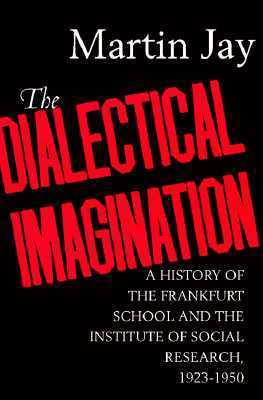
Herbert Marcuse, Erich Fromm, Max Horkheimer, Franz Neumann, Theodor Adorno, Leo Lowenthal―the impact of the Frankfurt School on the sociological, political, and cultural thought of the twentieth century has been profound. The Dialectical Imagination is a major history of this monumental cultural and intellectual enterprise during its early years in Germany and in the United States. Martin Jay has provided a substantial new preface for this edition, in which he reflects on the continuing relevance of the work of the Frankfurt School.
There are a few superficial similarities between Wang Wei and the Frankfurt School in the themes they developed in their works and lives.
1) Longing / Banishment 2) Friendship 3) Resignation 4) Detachment 5) High Art 6) Reconciliation with Nature 7) Patronage 8) Mad Chillin'
But they were also very different.
1) Wang liked chocolate chip cookies. Marcuse liked oatmeal raisin. 2) Wang Wei was beloved by hippies and beats. Adorno hated jazz. Even the word 'jazz' made him throw things, and this was before he had even heard it. He thought it promoted pseudo-individuality. Hippies and beats were pseudo-individuals. 3) Wang Wei wrote in literary Chinese. The Frankfurt School continued to write in German even in American exile because they were stubborn. 4) Wang Wei wrote in dense five- or seven-character lines. The Frankfurt School often wrote in dense aphoristic style because they distrusted narrative and/or scientific disquisition. 5) Wittfogel, author of Wer ist der Dummiste?, was the Frankfurt School's token Sinologist. He started out super Marxist but ended up swinging far to the right and testifying before the HUAC. Wang Wei didn't escape the capital in time and wrote a famous ode to the usurpers, but once the deposed were re-posed, they kept Wang on because they liked him so much. Meanwhile, the rest of the Frankfurt School tried to escape from Das Kapital. 6) Erich Fromm wrote Escape From Freedom. Wang wrote Escaping with the Hermit Zhang Yin. Both works were pilloried by Horkheimer, but lauded by the Hermit Zhang Yin.
In the early 1920s, a formidable array of intellectual talent coalesced into a group that called themselves the Institut fur Sozialforschung (the Institute for Social Research). They would later come to be known more simply as the Frankfurt School. Consisting mostly of assimilated German Jews, they had a truly impressive body of interests, running from sociology, sinology, philosophy, Marxism, musicology, psychology, and psychoanalysis. Max Horkheimer and Theodor Adorno are probably most affiliated with the first generation of the school, but it also included Herbert Marcuse, Erich Fromm, Leo Lowenthal, Paul Lazarsfeld, and Franz Neumann, many of whom are still read today.
But when one does hear the words “Frankfurt School” today, their influence on Marxism is perhaps what most immediately comes to mind. The members thought that the German Social Democratic Party was spineless and ineffective, but equally thought that the Communist party was too hard-lined and ideological. Because of this, their academic work paved a middle course between the bourgeois politics of the Social Democrats and the sclerotic, obsolescent, vulgar Marxism that they perceived in Germany, and which was soon to all but disappear.
Martin Jay uses this book as an opportunity to write a multi-person biography of many of the figures above, interlarded with the objective, measured perspective that I’ve come to know Jay for. (I’ve also read his “Songs of Experience: Modern American and European Variations on a Universal Theme,” which is a philosophical history of experience over the last four hundred years or so, and which I have also reviewed for this site.) He discusses the major work which they produced, including their analysis of Nazism, aesthetic theory and Adorno’s devastating critique of mass culture, and the later more empirical work that came out after World War II. In the last chapter, some of the contributions of Walter Benjamin, a figure more peripherally related to the school but still extraordinarily important in his own right, are more fully fleshed out. In school, I read Benjamin’s “Art in the Age of Mechanical Reproduction” (which I’m sure that every student in a philosophy of art course is made to read), and found that it completely changed some of my assumptions about aesthetic experience. I have several other volumes of Benjamin’s work, including one of media criticism, and Jay’s book has made me much more curious to pick those up.
If there is one complaint that I could level against the book, it would be that Jay pays almost equal attention to everyone, even those figures that few people really read these days. For whatever reason, I thought “history of the Frankfurt School” might mean “a detailed discussion of Horkheimer and Adorno,” with maybe a little Marcuse or Benjamin tossed in for good measure. But he really tells the entire history of the Institute itself, including how it was funded and the minor figures that no one really except for perhaps academic specialists read anymore (like Neumann and Lazarsfeld). If you’re looking for a book that gives a more straightforward account on the major ideas of critical theory and its continuing interdisciplinary influences, this isn’t really the book that you’re looking for – which is what this book seemed to be – this isn’t really the book for you. If this is what you’re more interested in I’ve heard, though I can’t confirm since I haven’t read them, that the Very Short Introduction’s book on the group by Stephen E. Bronner or Thomas Wheatland’s “The Frankfurt School in Exile” might be more appropriate.
An important early study of the pre-Habermas Frankfurt school focusing on the early period in German and the transition in the US mostly in the 1930s and 1940s. While it touches on the conflicts between Horkheimer and Grossman and the divergence between Marcuse and the Horkheimer/Adorno set, Jay does not deal with the relationship between Marcuse and the OSS, referring to his work at the state department (although it may not have been completely de-classified at the time of Jay's scholarly work). It also is before the development of the discourse theories of Habermas and Axel Honneth. Furthermore, the section on the Authoritarian personality is vital but feels removed from what the Frankfurt school is known for now.
Jay, however, does a good job of laying out the shift within critical theory away from classical Marxism as well as the conditions of the institute in the US. It can be used to dispel some of the conspiracy-mongering about the Institute as well as deal with its key ideas.
thorough history of the frankfurt school. contains intellectual bio vignettes on most of the persons associated with the FS, with decent summaries of the principal writings and concepts.
A good descriptive history of people, texts, and ideas. Note (i) how many of the ideas are “never fully spelled out” and (ii) the growing disconnect from praxis.
Horkheimer ve Adorno abim umarım benim özürümü kabul ederler. 10/10. Erich Fromm hariç tüm Frankfurt okulu hakkındaki ya ne denir ona Türkçesini unuttum prejudicelarım için özür dilerim. Erich Fromm'u kemerle dövdükleri bölümü bekledim ama eklememişler.
Fue un proceso largo leerme este libro porque me pilló entre viajes, otros intereses y varios resfríos del último mes y medio. Pero creo que quizás tenía que ser así.
Mi pasión por la teoría crítica y la escuela de Frankfurt lleva unos buenos años ya, así que es del todo natural que haya tenido ganas de leer este relato de la historia de los años 'clásicos' del instituto. Siendo más conocedor de sus años recientes que de los clásicos de Adorno y Horkheimer, fue muy interesante ver su trasfondo e historia. Pero rescato mucho que el libro también haya hecho un esfuerzo bastante grande por entregar una pincelada bastante solida de la evolución de la teoría social de estos tremendos genios que cruzaron las siempre itinerantes puertas de teoría crítica.
El primer capítulo que te hablan de la base filosófica, la relación con Hegel y el quiebre con la filosofía alemana de principios del siglo XX, es extremadamente árido, pero te deja curtido para el resto. Rescato mucho que gracias a este libro ahora se de autores un poco más tapados como Neumann, de quien Behemoth estoy a un impulso de comprarlo.
Quizás también te hace repensar a ciertas figuras. En particular nunca tuve una percepción tan positiva de Adorno, pero a ratos el libro me hizo pensar que quizás su genio también se condice con la mentalidad ultra cerrada que tuvo en ciertos temas. Con Horkheimer hacia el final eran más que nada la policía de la verdadera dialéctica. Pero ese fue su rol en la historia de la filosofía, y está bien.
En suma, muy buen libro, aunque largo y quizás más teórico de lo que algunos gustarían. Para mí estuvo preciso.
Ik las dit boek na het lezen van Susan Buck-Morss ‘The Origin of Negative Dialectics’ dat mij zeer inspireerde en waarbij regelmatig wordt verwezen naar Martin Jay’s The Dialectical Imagination (De Dialektische Verbeelding; ik las de NL vertaling).
De aandacht gaat hier naar de invloeden op en sporen naar het denken van de Frankfurter Schule: je krijgt een goed overzicht van de geschiedenis en de interne verscheidenheid van de Frankfurter Schule.
De hele samenhang kan je begrijpen vanuit hun houding en inzicht met betrekking tot Theorie en Praxis en wat dit betekent naar zgn. ‘Kritische Theorie’.
Het fundament van dit denkkader werd gelegd door Max Horkheimer maar ver daarvoor toch ook in de Joodse Kabbala mystiek waar Walter Benjamin en Adorno zich ook door hebben laten inspireren. Hoewel het diepe verband beter wordt uitgelegd bij Susan Buck-Morss wordt in dit boek meer de nadruk gelegd bij Horkheimer die toch de peetvader blijft van de FS met toch interessante citaten.
De Verhouding tussen Theorie en Praxis De rode draad in het vroege werk van het Instituut is het begrijpen van de relatie tussen theorie en praxis. Praxis wordt hierbij gezien als zelfscheppende actie (p. 19) zoals we ook terugvinden Georg Lukács.
De reden is dat er bij Theorie een gevaar voor starre abstractie en onderdrukkend eenheidsdenken (Reïficatie, Verdingelijking).
Hieruit ontstaat de Kritische Theorie: als een radicale weigering van gesloten filosofische systemen, verzet tegen deze Reïficatie.
==> Dus men blijft dicht bij de concrete ervaring.
"Evenmin bestaat er één zijn op zich, alleen een veelvoud van zijnden" p.66, citaat Horkheimer, Hegel Und die Metaphysik, p. 192, voetnoot op p.353 ).
Kritische Theorie weigert ook mee te gaan in de 'Lebensphilosophie' (Nietzsche, Dilthey) of de intuïtie- denkers als Bergson, die in de praktijk vaak leiden tot een berusting in de irrationaliteit van de heersende orde of een ideologie van passiviteit: aanvaarden van de ellende in naam van de vooruitgang, “onder de vlag van vals totaliteitsdenken” (p. 72) (zie p. 68 e.v.).
Kritische Theorie behoudt juist een tragische kijk (het lijden, wat onderdrukt wordt in de mythe van vooruitgang) en gaat nog steeds uit van de concrete ervaring maar zonder die te reïficieren/fetisjeren.
“Waarheid is een moment in de juiste praxis; wie haar toch direct met het goede gevolg gelijk stelt, springt over de geschiedenis heen en wordt pleitbezorger van de heersende werkelijkheid”. (p. 108, verwijzend Horkheimer ‘Zum Problem der Wahrheit’, p.345)
Regelmatig lees je over de diepe afkeer van elke vorm van gelijkschakeling, eenheidsdenken of reïficatie (verdingelijking). In het boek wordt regelmatig de link gelegd met de inspiratie vanuit de Joodse mystiek en de Kabbala de toch een rol speelde bij de (Joodse) oprichters van de Frankfurter Schule:
==> In een verdinglijkte wereld waarin het 'niet-identieke' (het unieke, dat wat anders is) met geweld wordt onderworpen aan algemene begrippen, bewaren oa. Adorno en Horkheimer deze kritiek op een meer geseculariseerde manier.
Ook samengevat in Adorno's stelling uit de Minima Moralia: "Het geheel is het onware" (p. 72) en
"De theorie zal de waarheid bewaren, zelfs als de revolutionaire praktijk afwijkt van het juiste pad. De praktijk volgt de waarheid, niet omgekeerd." (p.86, verwijzend naar Marcuse's Reason and Revolution, p. 322, voetnoot)
Het inzicht is steeds dat de ‘waarheid” zit in het lijden, wat onderdrukt is en wat geen stem heeft mogen krijgen. Deze verborgen of niet zichtbare waarheid kan niet via empirische wetenschap naar boven worden gebracht. Zie volgende.
Het Universele in het Bijzondere: De Methode In de huidige empirische wetenschap klinkt dit principe, dat de praktijk de theorie niet zomaar kan verifiëren of weerleggen, als vloeken in de kerk.
==> Toch bezit dit anti-reductionistische standpunt een enorme kracht. Het bepaalt hoe de Frankfurter Schule later in de Verenigde Staten omging met empirisch onderzoek. Ze wezen de Amerikaanse methoden niet af, maar gebruikten ze puur als verrijking en ondersteuning, nooit als ultieme verificatie, meer als voorstudie!
Hun benadering was wezenlijk anders dan de traditionele statistiek. Waar bij traditioneel onderzoek via kwantitatieve data zoekt men naar gemiddelden en dit maakt de consensus/uniforme massa zichtbaar. Dit komt tot uiting in sociaal wenselijke ‘Ja’- antwoorden: doel van het onderzoek was dan ook de maatschappelijke schijn te ontmaskeren.
Dit deden zij door te zoeken naar de barsten: versprekingen, logische tegenstrijdigheden en emotionele uitbarstingen tijdens diepte-interviews of onderzoek van radioprogramma's maar ook de cultuurindustrie (radio, televisie, theater, kranten…) of literatuur en biografieën.
Dit is de methode van de “sociale fysiognomie” en het bouwen van 'constellaties', waarbij verschillende details met extreme precisie rondom een fenomeen worden samengebracht om niet alleen het wat, maar het waarom te begrijpen. Men zoekt het universele in het particuliere dat een weergave is van de maatschappelijke structuur in het klein (de monade).
Deze inzichten zijn in detail uitgewerkt door Walter Benjamin en Adorno (Negatieve Dialectiek) maar hier lezen we dat ook Horkheimer dit al formuleerde:
"Inductie in sociale theorie zou daarentegen het universele in het bijzondere moeten zoeken, niet erboven of eronder... in plaats van naar de hoogte van de abstractie te bewegen, zou zij dieper in het bijzondere moeten graven om de universele wetten daarin te ontdekken." (p. 282, verwijzend naar Horkheimer, ‘Studies in Philosophy and Philosophical Science)
Noot: Het is dezelfde inductieve beweging die Sigmund Freud oorspronkelijk maakte: zijn universele psychoanalytische theorieën bouwde hij op uit de klinische diepteonderzoek van een zeer beperkt aantal individuele patiënten.
In de eerste hoofdstukken krijg je een beeld van de invloeden en leermeesters van Benjamin, Horkheimer, Adorno waarbij Hans Cornelius of een Gershom Scholem (Kabbalah mystiek) mogelijks meest invloed hebben gehad. Naast Marx en Hegel:
“… De Frankfurter Schule stond daarentegen qua visie veel dichter bij de links-hegelianen van de jaren veertig van de negentiende eeuw.” (p. 339)
Ook de wisselwerkingen met de andere denkers binnen FS komen natuurlijk uitgebreid aan bod (Marcuse, Fromm, Lowenthal, Pollock, Neumann, …)
De Autoritaire Persoonlijkheid (cf. hfst 7) Dit unieke samenspel tussen theorie en empirie vond zijn hoogtepunt in de Amerikaanse studies naar The Authoritarian Personality dat in het boek uitgebreid wordt besproken maar veel informatie tegelijkertijd wordt gegeven wat het moeilijker leebaar maakt wat ook zo is bij Susan Buck-Morss in de laatste hoofdstukken die het zelfde thema hebben. Het onderzoek is gewoon ingewikkeld.
Leerpunt: Door Amerikaanse invloeden en sponsoring werd een stap gezet naar empirisch onderzoek maar de interpretatie bleef typisch Adorno/Horkheimer/Frankfurter Schule.
Uit de antwoorden op de vragenlijsten werden de uitersten gefilterd.
==> Door deze uiterste casussen (extreme gevallen in de vragenlijsten) heel diep te onderzoeken, kwamen zij tot de conclusie dat de autoritaire persoonlijkheid geen biologische of psychologische 'afwijking' is van een individu, maar het logische, onvermijdelijke product van de moderne, kapitalistische samenleving zelf.
==> Dit wodt ambigue geformuleerd: enerzijds is er zoiets als een autoritaire persoonlijkheid die vatbaar is voor autoritaire of anti-semitische tendenzen. Anderzijds is dit dan ook weer een product/objectivering van de kapitalistische maatschappij die dergelijke persoonlijkheid creëert.
”uiterlijke maatschappelijke onderdrukking samengaat met innerlijke onderdrukking van impulsen …” (p.288, quote uit ‘the Authoritarian Personality, p. 759 e.v.)
Interessante link is dat Kapitalisme geëvolueerd is naar een staatskapitalisme dat steunt op machtsstructuren om de status-quo in stand te houden. Die bureaucratische machtsstructuren gebaseerd op de ‘autoriteit van de rede’ zorgen voor vervreemding en een push naar beneden toe. (zie p. 145 e.v. en ok bij Susan Buck-Morss, p. 171 +178 over Pollock) wat dan ook een link legt naar het Freudiaanse begrippenapparaat.
De kille, bureaucratische structuur van de maatschappij sijpelt door in het gezin en creëert een psychologische structuur (gekenmerkt door innerlijke leegheid, sado-masochisme en het verkeerd oplossen van het Oedipuscomplex, autoritaire syndroom,…p. 286, e.v. ) die vatbaar is voor fascisme.
Dit verband bloot leggen was de doelstelling van het onderzoek maar is hier te eenvoudig samengevat van deze veel info/complexe hoofdstukken.
In meer courante termen zou je kunnen vertalen naar: - Bureaucratie, onpersoonlijke machtstructuren creëren gevoel van machteloosheid - De woede, angst moet onderdrukt worden …dit gebeurt … - … door aanpassen, de machtige verheerlijken (submissie) of - … door projectie opgekropte woede naar zondebok, minderheden, buitenstaanders die buiten de regels vallen. - En wat in stand wordt gehouden door cultuurindustrie die mensen passief en kritiekloos maakt, gedrag voorschrijft en afwijkingen binnen de perken houdt.
De bespreking is heel uitgebreid en het oorspronkelijke werk is meer dan 1000 pagina’s …
Actuele Relevantie en Persoonlijke Reflectie Dit denkkader heeft in 2026 niets aan actualiteit ingeboet. Wanneer we kijken naar de huidige 'dictatuur van het algoritme' en de digitale echokamers waarin we leven, zien we de moderne variant van de fascistische radiopredikers die destijds in 'Prophets of Deceit' (Adorno) werden geanalyseerd. De mechanismen van manipulatie en de reductie van de mens tot een voorspelbare dataset zijn enkel geavanceerder geworden.
Natuurlijk is er methodologische kritiek mogelijk op hun benadering, maar de meerwaarde van de Frankfurter Schule ligt in hun oog voor “het bijzondere waarin het algemene zich uitdrukt.” Dit blijft een fascinerend inzicht.
In mijn eigen praktijkervaring met vraagstukken rondom change management zie ik dit principe voortdurend terugkomen: je kunt een organisatie of cultuurverandering niet begrijpen door enkel naar oppervlakkige statistieken en gemiddelden of personae te kijken. De werkelijke dynamiek, de onderliggende cultuur, de dieperliggende motieven komen tot uiting in fricties en uitvergrotingen van bijzonderheden in het grote geheel (het bijzondere in het universele). Die worden zichtbaar wanneer je verdiept in de verhalen, de overgangsmomenten, de weerstanden en de dynamiek van specifieke, individuele medewerkers, klanten of casussen (het bijzondere).
De Frankfurter Schule biedt hier voor mij de filosofische en sociologische gereedschapskist om die diepere laag van de werkelijkheid te kunnen begrijpen. In die zin verdiep ik mij verder in deze materie die soms wel een uitdaging is om te lezen.
"The Dialectical Imagination" is a book written by Martin Jay, a historian and philosopher, which was first published in 1973. The book examines the history of the Frankfurt School, a group of German philosophers and social theorists who were active in the 1920s and 1930s, and whose ideas had a significant impact on modern critical theory and cultural studies.
The book traces the intellectual and political trajectory of the Frankfurt School, beginning with its origins in Weimar Germany, through its exile in the United States during World War II, to its continued influence in the post-war period. Jay explores the key ideas of the Frankfurt School, including their critical theory of society, their critique of modernity and capitalism, and their analysis of the role of culture in shaping social and political life.
Jay argues that the Frankfurt School's dialectical approach to social analysis, which sought to uncover the contradictions and tensions within modern society, was a major influence on later critical theorists and cultural critics. The book is considered an important work in the field of critical theory, and is widely read by students and scholars of philosophy, sociology, and cultural studies.
There's a first edition of this book in the Tsinghua Humanities Library which I just finished going through during two weeks of lunch breaks. What an experience. This book makes me imagine the young Jay, a Harvard graduate student, interviewing these intimidating German professors. All of them, Jay included, are marvelous talents of organization, synthesis, and clarity of thought. For bringing all of the disparate 1930s and 40s activities of Horkheimer, Adorno, Fromm, Marcuse, Lowenthal and several others together in one, unified story (and doing so in his 20s!), Jay really sets the standard for intellectual history.
A fascinating and sometimes hard to understand look at the Frankfurt School and the Institute for Social Research. I found the theory pretty dense and abstract, but Jay does a pretty good job at breaking it down. Still searching for a more exacting definition--reading Holloway's Negative Dialectics that has helped. I really enjoyed the chronology and context of what the institute produced and when. It was also eye-opening to read about the various tensions and splits within the school. For such abstract thinking, Jay does a nice job of exploring not only the history of the school but the individuals and their ideas. Solid read.
I can't begin to comment on it other than to say it is WAY more than probably .10% of the human population (that ever has existed, exists now, or ever will exist) would EVER want to know about the Frankfurt School. VERY meticulously researched and coherent, especially given the inherent complexity of the subject matter. It was especially nice to explore the personalities of and relationships among the individuals whose theoretical work I've only admired from the classroom.
This book took me a long time to finish since it caught me in the middle of academic tasks and so. I got stuck with it by the middle and somewhat lost the thread of events, but overall the main issue here is the academic biography of the Frankfurt School along with their main ideas.
I came to this book after an interest in Adorno and music theory, which is not covered in this book as much as the social aspect of their neo marxism. Still, it’s probably one of the best books for people who wants to understand the Frankfurt school’s history.
Jay's history of the Frankfurt school was well written. However, I would not recommend this book to those who do not already have a background in Marxist theory, Adorno, Hegel, or the Frankfurt School in general. Jay does make thought-provoking points, and the end of the book was lovely (where he talks about poetry and the future), but it was a difficult, sometimes muddling read and I kept wishing I had held off and done more background research first.
Reread this recently. This is an exceptional history of the Frankfurt School from its founding through 1950's. You get a clear sense of the intellectual innovations of wedding Freud and Marx, a radical proposition at the time, uses of sociological theory to inform philosophical understanding and the movement toward a critical distance from communist party politics that leads to quietist pessimism of the culture industry. This is an exciting and accessible read.
A brilliant and fascinating book. The author's deference toward Horkheimer and Lowenthal over all other members of the Frankfurt School is evident but hardly detrimental. As mysterious and complex a thinker and individual as he was, cast in the light of his only intellectual companions -- from whom he still maintained a certain distance from -- Benjamin appears far more so than when taken simply on his own.
Very informative, loads of detail, summarizes a ton of ISR projects. Should be read with Susan Buck-Morss's "Origin of Negative Dialectics," which has more nuance and uses some archival material Jay didn't have access to, but only focuses on Adorno and Benjamin and their influence on each other, and not on Fromm, Lowenthal, Pollock, etc, and all their empirical work in the US, which Jay covers.
An outstanding intellectual history of the Frankfurt School. Scholarly and erudite, this is an excellent starting point to understand the legacy of Adorno and Horkheimer. I learned a lot from this book, particularly about Adorno's dislike for jazz. While not particularly deep in its philosophical engagement, it is a first class introduction and compares favourably to other books.
A great book on this incredibly complicated imbroglio of theoretical systems. (I had professor Jay this semester and I have to say that he is just a lovely man as well as being phenomenally knowledgeable about almost everything.)
A paragon of research, thoroughness, and organisation. Not badly written, but, more importantly an brilliantly comprehensive history of a unique constellation of like-minded scholars.
Martin Jay writes an intellectual history of the Institut fur Sozialforschung , more commonly known as the Frankfurt School, during its sojourn in America. The Institut was comprised of a group of exceptionally brilliant scholars; its most noteworthy members included Max Horkheimer, Theodor Adorno, Walter Benjamin, Leo Lowenthal, Erich Fromm, and Herbert Marcuse. The Institut was founded by a grant in 1929, and was only very loosely affiliated with the University of Frankfurt. Nazi ascension forced the Institut to relocate in New York, and eventually Los Angeles, only to return again to Frankfurt after the War.
Its nominal affiliation with the University allowed the School to pursue independent social research, originally directed towards understanding the revolutionary activity of the proletariat. This meant an exploration of the relationship between theory and practice, or, in Marxist terminology, praxis. Marxists defined praxis as self-creating action, as opposed to externally motivated behaviour outside of man's control. The main question they hoped to answer in their early years was whether the collapse of capitalism would come about through objective forces, or through subjective understanding, i.e., revolutionary praxis.
Once Horkheimer took over the directorship of the Institut, its members' understanding of Marxism become much more creative and dialectical. Horkheimer, et al rejected the economic determinism of what they deemed vulgar Marxism and instead stressed social psychology as a way to bridge the gap between the individual and society. Pure consciousness does not exist. Nor does an Absolute Idea. Yet that does not mean that humans are simply by-products of historical forces; they both make and are made by history. In other words, there is no Thought as such, only concrete men rooted in socioeconomic conditions. It might be added parenthetically that this meant that the Institut rejected Kant's identity theory.
The members thus developed what they called Critical Theory, which is quite difficult to define. At its core, Critical Theory was dialectical. That is to say, every force, concept, or trend in history is dynamic and interacts with other forces; nothing is closed or finished. Thus, neither idealism nor materialism works as a closed philosophical system. Metaphysical systematizing is off-limits, as is antinomian-style empiricism. Ideas are important, but they only reveal historically conditioned phenomenon. Materialism is important, but not to the point of ontological primacy of economic conditions. So, while there is a right and wrong, they too are historically conditioned; there is no transcendent moral code. Absolute certainty will only lead to manipulating and dominating attitude. The only constant in human affairs is what the members called anthropogenesis, or the ability of humans to always create themselves anew. This aversion to closed philosophical systems led to a series of critiques of other philosophical systems, or negation. In fact, “a program of negation” might be the best way to define Critical Theory: a refusal to define itself in any fixed way. What, then, is the goal of the social scientist? Although definitely a part of society, the researcher is at times capable of rising above it. Truth is the moment of correct praxis; he who identifies truth leaps over history and works to end exploitation and oppression.
One of the most interesting aspects of Critical Theory was its relationship to psychoanalysis. In short, CT tried to marry Freud and Marx. The task of an analytic social psychology is to understand consciously motivated behaviour in terms of the effect the socioeconomic structure has on basic psychic drives. These theoretical considerations informed an interesting and lengthy study in 1936 entitled Studien uber Autoritat und Familie, which originally intended to understand the failure of Marxism to fulfil its historical role. The Studien concluded that the family had lost its countersocial function, and now most individuals were more directly socialized by other institutions in society. The work also included empirical research, which included questionnaires, developed by Fromm, distributed to test the psychological status of workers and clerical employees in Germany.
I realise now that I’ve only summarized one-third of the book, and am likely to run out of space if I continue writing with such detail. Briefly: upon its move to America in 1936, the Frankfurt School shifted its focus away from understanding the failures of Marxism and the rise of fascism, to the understanding conformity and the relationship between man and nature. To this end, CT concluded that the subliminal message of almost all that passed for art and culture was conformity and resignation. In fact, both “art” and the culture industry in American enslaves and exploits humans in ways far more insidious and effective than the crude methods of domination practiced by totalitarian states. American consumerism, by claiming a false harmony between the individual’s needs and universal needs, is highly dangerous for its ability to lull victims into passive acceptance of the status quo. The worst effect of automaton conformity is the inability it produces in the masses to think conceptually, or critically, about anything at all.
Horkhemier and Adorno stretched this critique to include the main thrust of Western thought since the beginning of Baconian science and the enlightenment project, which they defined as a program of dominance. The Frankfurt School’s impact on American scholarship was mixed. This was due partially to the reluctance of Horkheimer and Adorno to publish in English, and to the School’s relative insulation from mainstream American University life and the American intellectual tradition. CT rejected the glorification of empiricism above philosophy, and especially the relativistic tendencies of the American social sciences. However, the School did collaborate on one important project during its several years in California, namely a lengthy empirical and theoretical study called The Authoritarian Personality, which sought to understand the tendency of American workers to accept implicit authority.
The Institut never aligned itself with a political party in America, or in Germany, deeming all political parties, even radical ones, affirmative and essentially under-girding props to the status quo. (although this is not quite true of Marcuse) Toward the end of their American sojourn, Horkhimer and Adorno became particularly pessimistic about the possibility of a fundamental shift in the forces of production. In fact, Horkheimer and Adorno rejected just about everything, aside from a vague and intentionally ill-defined notion of positive human freedom. They resigned themselves to embracing critical thrusts, and distrusted everything, especially the Liberal tradition.
All in all, Martin Jay does a tremendous job with this difficult material. While not the best writer, not many scholars could have effectively synthesized the profound and penetrating thought of this group of German philosophers and social scientists as the author does. Jay has almost a hundred pages of discursive footnotes, and his command and understanding of what amounts to a large body of very complex ideas is impressive. Dialectical Imagination is a remarkable achievement.
A very useful historical book of a maligned institute that also serves as a great introduction to critical theory as a discipline. Each prominent member of the Frankfurt School is given a great profile that clues the reader into important background influences within their specific philosophical approaches. There are internal disagreements, specifically about psychoanalysis, within the institute that I was surprised to learn about and will be interested to read more about. These tensions aren’t exactly new but are further additions to the on-going debate in meshing psychological analysis within empirical and theoretical studies. Another very enlightening portion of this book is the reaction the institute had in fighting against authoritarianism and specifically fascism. After being forced into exile, the Frankfurt School worked in overdrive to analyze authoritarian impulses present in Western society. Martin Jay effortlessly summarizes their conclusions into relevant theories, including the sado-machoistic impulses of fascists and domination over nature inherent in liberal capitalism. This controversial theoretical position that claims this technological ethos necessarily precedes a more irrational form present in fascist political theory. Since the Frankfurt School was interdisciplinary, there are many other theories that Martin Jay touches on, with some diversions that feel long-winded making it hard to keep focus on the main idea. However, the overarching sociological contribution of the Frankfurt school is clearly written and explained.
John David's review from December 3, 2012, still holds true that, “if there is one complaint that I could level against the book, it would be that Jay pays almost equal attention to everyone, even those figures that few people really read these days.” Nevertheless, Martin Jay offers an encyclopedic account of the critical works of Adorno, Horkheimer, and Marcuse, with occasional attention to Benjamin. The text serves as an invaluable compendium for tracing the development of Marxist thought during the rise of Stalinism and the struggle to recognize that the so-called “subject of history” may itself have been a myth all along.
I would recommend this book to anyone attempting to grapple with Dialectic of Enlightenment, Minima Moralia, or One Dimensional Man, since Jay details the major arguments within these texts and situates their authors’ formulations of immanent critique. Particularly significant are Chapter 2, “The Genesis of Critical Theory”; Chapter 6, “Aesthetic Theory and the Critique of Mass Culture”; and Chapter 8, “Towards a Philosophy of History & The Critique of the Enlightenment.” These sections bridge Hegelian Marxism and literary analysis, clarifying concepts that would otherwise remain obscured by the notoriously difficult prose of the original works.
Amerikalı Tarih Profesörü Martin Jay'in "Frankfurt Okulu Tarihi"ni anlattığı kitabı, bu alanda yazılmış en önemli ve en iyi kitaplardan biridir (Türkçe'ye Profesör Ünsal Oskay çevirmişti). Martin Jay, kitabında, "Frankfurt Okulu"nun Almanya'dan Amerika'ya (2. Dünya Savaşı öncesinde) geçmesinin nedenlerini ve koşullarını ayrıntıları ile anlatıyor, Adorno, Horkheimer, Fromm, Reich, Pollock, Löwenthal, Marcuse gibi "Frankfurt Okulu" filozoflarının ve yazarlarının biyografilerinden ve eserlerinden yararlanıyor. "Diyalektik İmgelem", Martin Jay'in "Frankfurt Okulu" ile ilgili ayrıntılı araştırmalarının neredeyse "mükemmel" bir yazımıdır.