Philby, the agent, double agent, traitor, enigma revealed all to Knightley just before his death. Few knew the real man behind the impenetrable facade that for years fooled British Intelligence, the CIA and the FBI. After he defected to Russia in 1963, he maintained a code of silence for 25 years - until a few weeks before his death. He invited journalist Phillip Knightley to his Moscow apartment and in six days of conversation he bared his soul as never before. he told of his childhood, the influence of his extraordinary father and the events that lead him inexorably to turn traitor. He tells the story before and after defection and gives his veiws on everything form loyalty and patriotism to pop music and Margaret Thatcher.
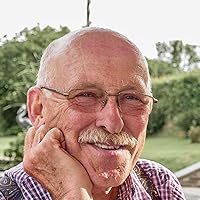
Phillip Knightley was a special correspondent for The Sunday Times for 20 years (1965-85) and one of the leaders of its Insight investigative team. He was twice named Journalist of the Year (1980 and 1988) in the British Press Awards. He and John Pilger are the only journalists ever to have won it twice.
He was also Granada Reporter of the Year (1980), Colour Magazine Writer of the Year (1982), holder of the Chef and Brewer Crime Writer’s award (1983), and the Overseas Press Club of America award for the best book on foreign affairs in 1975 (The First Casualty).
He has lectured on journalism, law, and war at the National Press Club, Canberra, ACT; the Senate, Canberra, ACT; City University, London; Manchester University, Queen Elizabeth College Oxford, Penn State, UCLA, Stanford University, California; the Inner Temple, the International Committee of the Red Cross, and at the Royal Military Academy, Sandhurst. He is a patron of the C.W. Bean Foundation, Canberra ACT.
His two main professional interests have been war reporting and propaganda and espionage. In more than 30 years of writing about espionage he has met most of the spy chiefs of most of the major intelligence services in the world. He dined with Sir Maurice Oldfireld, head of MI6. He lunched with Sir Dick White, head of MI5 and MI6. He corresponded with both. He lunched with Harry Rositzke, head of the CIA’s Soviet bloc division. He lunched with Lyman Kirkpatrick, the CIA’s Inspector-General. He dined with Leonid Shebarshin, head of the KGB. He lunched with Sergei Kondrashov, chief of KGB counter-intelligence. He had drinks with Markus Wolf, head of East German intelligence. He spent one week in Moscow interviewing the notorious British traitor, Kim Philby. He helped KGB general Oleg Kalugin write the outline for his book. He has met dozens of officers and agents from all sides and has written many articles on espionage. Few writers today have his depth of knowledge of the international intelligence community.
Phillip reviews non-fiction books for The Mail on Sunday, The Sunday Times, The Independent (London) and The Australian’s Review of Books and The Age (Australia). He was a judge for Canada’s Lionel Gelber Prize, the world’s biggest for the best book on international relations. He is European representative of the International Consortium of Investigative Journalists, Washington DC.
He is involved in the the Indian literary and publishing scene and has written columns for several leading Indian newspapers and magazines.
He presented the war reporting documentary to mark the 30th anniversary of This Week; a half-hour documentary on truth for schools’ television; has reviewed the papers for BBC Breakfast TV and many What the Papers Say. He has appeared in many documentaries in Britain, Canada and Australia. He is a judge for Canada’s Lionel Gelber Prize for the year’s best book on international relations ($50,000). He is on the management committee of The Society of Authors, London.
Phillip was born in Australia but has worked most of his life in Britain. He now divides his time between Britain, Australia and India. He is married with three grown-up children and relaxes by playing tennis most days.
Bought this at a second-hand bookshop in Brisbane, because Philby was one of the Cambridge Four, and I loved the TV Show Cambridge Spies. The real story of Philby as presented in this book is even more thrilling than the TV (although the "Four" were far less connected in real life, which spoils the story a little). And of course, the focus is on Philby, rather than split between them, although Burgess, MacLean and Blunt all get their moments (less Blunt than I would have liked, but that's just the influence of Sam West.)
It was a rapid read: bought on Saturday, finished by Sunday evening, despite the fact that most of Saturday afternoon and evening were taken up by a wedding and a reception. The writer - Phillip Knightley, who explains how he ended up working on the project and meeting with Philby - is perfectly happy to add the occasional editorial comment on Philby's actions, and on contradictions that he can see that Philby cannot. It's certainly not a haigiography, although Knightley has a great deal of respect for Philby.
This is a sympathetic biography of 'Kim' Philby, a KGB agent since the thirties and the most successful of the Cambridge spies who penetrated the British Foreign Office, MI5, MI6 and, through them, the American CIA and FBI through World War II and well into the Cold War. So successful were they in relaying secrets to the Soviets that it may have been better had the UK and USA not bothered withholding information from them during the war years.
In addition to portraying such a traitor as Philby with intelligent sympathy the author, through his representation of his subject, also manages to suggest how allegiance to the Soviets may have constituted a morally defensible choice.
As I transitioned into "adult" reading, one of the first authors that captured me was John Le Carre, and this has resulted in a small fascination with the Cold War. I have always meant to delve into the Philby, Burgess and McLean world and this is my first foray. There is quite a lot to recommend in terms of fact, but Truman Capote transformed the way non-fiction could be written in 1966 with In Cold Blood. Capote demonstrated that it could compelling, and there have been many great examples subsequently. Sadly, Knightley a journalist, didn't get the memo. The writing is incredibly dull, which is a shame as the facts certainly aren't. Who knew that the US (CIA) used Nazi collaborators as spies in the 1950's and then let them live in the US as US citizens, or that right up to 1953 the CIA provided weapons and food to the Ukraine resistance. Ironically, the best way to summarise this is when Knightley is describing Philby's prose as journalist in 1956, he says "His prose was literate rather than lively, bureaucratic rather than journalistic". For die hards only.
Probably the finest book on philby(believe me i've read them all) the way Knightley tells the story is amazing especially the chapter when philby was in spain is amazing Knightley also draws out his own conclusions on philby motivations and actions.
When I first read this umpteen years ago, it took me forever because it was so ~~~tedious~~~. I didn't find it tedious this time; it was kind of poignant. Philby seems to be a pretty true believer, if unbelievably full of himself and so harmful to his friends, even those who knew he was a spy. He had a way with women, much to their ultimate chagrin I am sure.
I read The First Casualty: From the Crimea to Vietnam, the War Correspondent as Hero, Propagandist and Myth-maker and really enjoyed it, so I was interested in reading more by Knightley. This seems like the subject of an action movie. Kim Philby spied for the Russians for 30 years without getting caught. Not just spied, but work for the intelligence services of England. Pretty amazing.
It was a bit of a difficult read. Knightly is a journalist for the Times newspaper in London. He was given this assignment by the Times and got permission from Russia to visit Philby for this book. He spent 6 days with Philby. Its odd he extracted this much data. With that said, some of the info in this book is found in other books, Philby's book, 'My Silent War', MacLean's book, 'A Divided Life' so there was a chapter at the beginning on St. John, Philby's father, that added some insight to Philby, the man. Of all of the books I have read about this collective, I think the line, 'The greatest jester, reaps the most praise' holds true. Far too much emphasis was always placed on Philby's life as a spy and how the Russian's allegedly benefitted, winning a paltry praise. I agree that he likely did this standing in his father's shoes. His father, too, was greatly over-rated for his alleged achievements and for all Philby said condemning his father for the way he treated his mother, Philby treated all of his wives as poorly. He may never have hit his wives but he neglected all of them and he distinctly and grossly abused her, denying her financial support and he certainly treated his children far worse than his father treated him, in gross neglect (essentially as they did not exist). He ended his career in his 40's and lived out his following 30 years in a little tiny apartment in Russia with his only 2 rewards, being driven in a car with the so called title of a 'general' and being buried 6 feet under in a hole where None of his family come to visit. If it were not for these books, written by journalists seeking their own personal fame from them, no one would even remember Philby. Philby used his career as a spy as an excuse to become an alcoholic, to have multiple affairs while having multiple wives and cheating on all of them, for foreign travel at the expense of the taxpayer and giving British and American taxpayers nothing in return for their investment. Basically, he was just a loud-mouthed, self-entered, sleezebag who thought far more of himself than everyone else did collectively, although it is the sleezebag who sells books. Both the UK & the USA would have benefitted without him.
Veteran foreign correspondent Richard Beeston has chosen to discuss Phillip Knightley's The Master Spy: The Story of Kim Philby on FiveBooks on his list of five books on Spies, Lies and Foreign correspondents, saying that:
"Knightley says he’s the only Western journalist to interview Philby in depth after his defection to the Soviet Union in 1963. The book describes Philby as ‘an establishment figure who betrayed the West, who decided to go against his class and his upbringing for what he believed to be the best and impeccable motives. And then spent most of his life cultivating two sides of his head.’ He had the most extraordinary double life."
With the renewed interest in Kim Philby triggered by the hugely successful "A Spy Among Friends", I thought it would be interesting to read this book, as it is often quoted in ASAF. It was written by a British journalist who not only corresponded with Philby, but actually got to meet him and interview him extensively in Moskow in the 1980s. This was also the period when many secret documents were first being released, and so the story was being gradually pieced together. Similarly, there were still enough contemporaries of Philby, Blunt, MacLean and Burgess around to share their memories. But it is really the direct quotes from Philby, unrepentant and rather pleased with himself, comfortable with his Russian wife, his Russian vodka and his rank in the KGB, that make this book worth reading.
I have heard it said that if you are a communist when you are a teenager, you are idealistic, but if you are still a communist as an adult, then you're stupid. Yet, so many seemingly intelligent people - and that number seem to be on the rise today - are committed to this way of thinking. Do they really know what communism is, and what it entails?
For me, Philby is a traitor. He did not deserve the notoriety for how clever he had been in deceiving his former MI5 colleagues. He said that the Soviet Union was his home, yet he had a somewhat different life than most Soviet citizen. He lived the comfortable life of perhaps the top 0.1% of the Soviet population.
So let Philby rest in peace in his communist heaven, and let's not give this self-centered, narcissistic, traitor any more attention than we already have.
A book based on a series of interviews with Philby in Moscow before his death. It didn't seem to say more than any number of similar books on the subject of spies who penetrated the British and Us security services from the 1930's through to the 1960's. My view is that these accounts seek to lionise the traitors and justify their actions. In Philby's case which sent many agents to their deaths. Unfortunately, it also says much about the lax vetting and recruitment practices.
This book is well presented in a journalistic style and is good readable style. Not much else to say.
I saw a TV program recently on his life and felt that I should read the book by Phillip Knightley. I found the book to be informative and exciting and at times stranger than fiction. To think that he could commit to communism at so such an early age (not without good reason) and continue to be faithful to the cause throughout his life despite the stories that were coming out of Russia is amazing. I have also bought a book on Donald Maclean a fellow spy from the same era and I look forward to reading it.
The amazing story of Kim Philby -- who was in charge of an important section of the British secret service, and who was also a spy for the Soviets. I didn't know anything about Kim Philby before reading some British cold war history recently, and I was amazed that I had never heard about him, either in popular culture or in school. (I grew up in the 1980's, when the Soviet Union was still around and people were still afraid of its influence in the world.)
A good, basic bio of the British diplomat who was also a Soviet spy. Philby continues to fascinate even 50 or so years since he defected to the USSR. This is a well researched and comprehensive walk through the incidents and facts of his life. For a much more psychologically probing and entertaining read I prefer Ben McIntire’s “The Spy and the Traitor.” But this a book provides a comprehensive overview.
Great read. Author does a good job telling the story of Philby's life, alternating back and forth from the story of Philby's early life and his final interview in Moscow years after he had defected to the USSR. This enables Knightley to not only tell the narrative story, but allows Philby to comment on his motivations at key moments in his own life story. Really enjoyed this read.
The books get's off to a slow start just like a tank but by the time you get rolling it's unstoppable. Such a remarkable real life story about a remarkable individual. I can't get enough recounts of this time period, so exciting in many ways. I thoroughly enjoyed the read.