Award-winning journalist and New York Times bestselling author Gerald Posner traces the heroes and villains of the trillion-dollar-a-year pharmaceutical industry and uncovers how those once entrusted with improving life have often betrayed that ideal to corruption and reckless profiteering—with deadly consequences.
Pharmaceutical breakthroughs such as antibiotics and vaccines rank among some of the greatest advancements in human history. Yet exorbitant prices for life-saving drugs, safety recalls affecting tens of millions of Americans, and soaring rates of addiction and overdose on prescription opioids have caused many to lose faith in drug companies. Now, Americans are demanding a national reckoning with a monolithic industry.
Pharma introduces brilliant scientists, in-corruptible government regulators, and brave whistleblowers facing off against company executives often blinded by greed. A business that profits from treating ills can create far deadlier problems than it cures. Addictive products are part of the industry’s DNA, from the days when corner drugstores sold morphine, heroin, and cocaine, to the past two decades of dangerously overprescribed opioids.
Pharma also uncovers the real story of the Sacklers, the family that became one of America’s wealthiest from the success of OxyContin, their blockbuster narcotic painkiller at the center of the opioid crisis. Relying on thousands of pages of government and corporate archives, dozens of hours of interviews with insiders, and previously classified FBI files, Posner exposes the secrets of the Sacklers’ rise to power—revelations that have long been buried under a byzantine web of interlocking companies with ever-changing names and hidden owners. The unexpected twists and turns of the Sackler family saga are told against the startling chronicle of a powerful industry that sits at the intersection of public health and profits. Pharma reveals how and why American drug companies have put earnings ahead of patients.
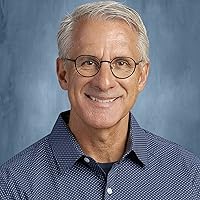
Gerald Posner is an award winning journalist, bestselling author and attorney. The Los Angeles Times dubs him "a classic-style investigative journalist." "His work is painstakingly honest journalism" concluded The Washington Post. The New York Times lauded his "exhaustive research techniques" and The Boston Globe talked of Posner's "thorough and hard-edge investigation." "A meticulous and serious researcher," said the New York Daily News.
Posner's first book, Mengele, a 1986 biography of the Nazi "Angel of Death” Josef Mengele, was the result of a pro-bono lawsuit Posner brought on behalf of surviving twins from Auschwitz. Since then he has written ten other books from the Pulitzer Prize-finalist Case Closed, to bestsellers on political assassinations, organized crime, national politics, and 9/11 and terrorism. His upcoming God’s Bankers has spanned nine years of research and received early critical praise.
ohn Martin of ABC News says "Gerald Posner is one of the most resourceful investigators I have encountered in thirty years of journalism." Garry Wills calls Posner "a superb investigative reporter. "Posner, a former Wall Street lawyer, demolishes myths through a meticulous re-examination of the facts," reported the Chicago Tribune. "Meticulous research," Newsday.
Anthony Lewis in The New York Times: "With 'Killing the Dream, he has written a superb book: a model of investigation, meticulous in its discovery and presentation of evidence, unbiased in its exploration of every claim. And it is a wonderfully readable book, as gripping as a first-class detective story."
"What we need is a work of painstakingly honest journalism, a la Case Closed, Gerald Posner's landmark re-examination of the assassination of John F. Kennedy," concluded Joe Sharkey in The New York Times.
Gene Lyons, in Entertainment Weekly: "As thorough and incisive a job of reporting and critical thinking as you will ever read, Case Closed does more than buttress the much beleaguered Warren Commission's conclusion ….More than that, Posner's book is written in a penetrating, lucid style that makes it a joy to read. Even the footnotes, often briskly debunking one or another fanciful or imaginary scenario put forth by the conspiracy theorists, rarely fail to enthrall...Case Closed is a work of genuine patriotism and a monument to the astringent power of reason. 'A'"
Jeffrey Toobin in the Chicago Tribune: "Unlike many of the 2,000 other books that have been written about the Kennedy assassination, Posner's Case Closed is a resolutely sane piece of work. More importantly, 'Case Closed' is utterly convincing in its thesis, which seems, in light of all that has transpired over the past 30 years, almost revolutionary....I started Case Closed as a skeptic - and slightly put off by the presumptuous title. To my mind historical truth is always a slippery thing. The chances of knowing for sure what happened in any event - much less one as murky as the Kennedy assassination - seem remote. But this fascinating and important book won me over. Case closed, indeed."
Based in the mixed realms of politics, history, and true crime, his articles - from The New York Times to The New Yorker to Newsweek, Time and The Daily Beast - have prompted Argentina to open its hidden Nazi files to researchers; raised disturbing questions about clues the FBI missed in the 1995 Oklahoma City bombing; sparked a reinvestigation of the Boston Strangler; and exposed Pete Rose's gambling addiction, which led to his ban from baseball.
Posner was one of the youngest attorneys (23) ever hired by Cravath, Swaine & Moore. A Political Science major, Posner was a Phi Beta Kappa and Summa Cum Laude graduate of the University of California at Berkeley (1975), where he was also a national debating champion, winner of the Meiklejohn Award. At Hastings Law School (1978), he was an Honors Graduate and served as the Associate Executive Editor for the Law Review. Of Counsel to Posner & Ferrar
I did not read the book cover to cover. I read selected chapters and skimmed others.
From the title I don’t know why I expected to find a glimmer of hope, clearly that was just stupid.
In 1950 George Merck gave an address to the graduating class of the Medical College of Virginia: “We try to remember that medicine is for the patient. We try never to forget that medicine is for the people. It is not for the profit…….” (Pg.60/61) Maybe he believed it in his heart but it never did translate into the operation of his pharmaceutical company.
Chapters dealing with pharmaceutical companies advertising their products to the public are stomach churning.
There are chapters that delve into pandemics (#32 & #51) both of special interest at this time.
In the end we are left with the horrifying fact that Big Pharma is not in the least bit interested in the patient…it’s all about the money. Profit is the end game at all cost – and not just nominal profit, Big Pharma is only concerned with Big Profits.
As horrifying and depressing as it is this book should be required reading for every single person on earth.
Trust me when I tell you no one is going to save us from the money-grabbing pharmaceutical companies, we are on our own! I am now in need of a tranquilizer.
I resoundingly endorse this historical account of the pharmaceutical industry. Posner is extremely factual and connects dots few have provided in the past exposes. Since he is a lawyer, he is careful to present only the facts being careful not overstate the issues or conflicts of interest - and woo hoo there are many conflicts of interest!
This is one of the most thorough accounts of the pharmaceutical industry history that I've heard or read. I have no doubt that I know more than most medical professionals in this area of concern. I am not bragging or trying to elevate my position! I say this to highlight my grave concern at how little consideration many medical personnel demonstrate, when I queried them about side effects, other drug interactions, effectiveness, etc. For example, when one drug caused me to lactate, my prescribing doctor didn't realize it was a side effect of my antidepressant. I did the research and immediately discontinued. Upon advising the doctor of what happened, he laughed. That was my last appointment with this careless "professional".
Additionally, I've done some significant research into this field including turning down a lucrative job as a pharma rep one year out of college (an usual event). After doing my senior paper on the industry with a focus on Pfizer, I got the highest grade provided by that professor for that term (he even told me he rarely assigned A's). This got my foot in the door with several different companies and when I fully understood that rewards for the doctors and myself for writing prescriptions, I turned the offer down because I knew my conscience could not operate in the realm of putting profits before people to benefit the doctors, pharmacy's and the manufacturer. In that vain, I always do due diligence on anything prescribed for myself or others and I urge you to do the same. I believe if I hadn't, I would have been seriously damaged by more than one drug and possibly dead (several among these were removed from sale and at least four had class action suits due to death).
Consider this, pharmaceutical companies are among the most profitable in the United States, they have many lobbyist on their payroll. The CEO's are some of the most well paid in the medical sector (which is one of the most successful across all industries). There are a large number of Congress people, who are very friendly toward these companies write and pass legislation that is highly favorable to their activities including the banning of competing of similar drugs for a specific illness. These Congress people are rewarding handsomely via free trips, "speaker fees" to attend pharma's conferences, dinners at resorts. It isn't just congress that benefits. Many people, who regulate the industry have previously been top executives from the pharm companies. There have been some notiable changes once they regulate the industry that they worked for, additionally other people are married to a pharma executive or otherwise related. Doctors are also involved in the act.
One doctor told me of his trip on a riverboat cruise along the Potomac River with free eats and drinks. His joy was resounding as he told me how he and his buddies were allowed to order as many drinks as they wanted and how a high ranking chef prepared exquisite food for them. This man with a PhD was telling me how nice his pharm rep was to do this, I sat thinking how much I pay for drugs (after my drug plan covers some of the cost) to the tune of $800. a month. All I could think of is while I live on noodles to pay for these meds, he was thinking the drug company paid for that "free" five day conference! Supposedly, pharma isn't allowed to provide lunch for the entire staff at a doctor's office or other gifts but I've personally observed that this legislation passed several years ago is being ignored as I've seen huge lunches being delivered after the law was passed. So, there truly is a "free lunch" for certain people. Oh and did you know that doctors get rewarded by some companies for writing that brand name prescription?
Certainly those covering respiratory know this first hand, as no Medicare drug plan unless it is an HMO or PPO, offers coverage for most respiratory inhalers. This has been the case since 2006 when Plan D went into effect. So, all those who desire to breathe and under the "straight" Medicare get to pay $300/mn just to breathe. Now I don't know about you but covering erectile dysfunction drugs while ignoring breathing medications seems very at odds to me.
Very recently I heard that less than 5% of all drug side effects are ever reported! That means doctors and pharmacies are dropping the ball 95% of the time! Still think that those profiting have your best interest at heart? "Drug makers typically file the vast majority of reports of a serious or fatal outcome to the FDA." In the same article, "The analysis found that in 2014, the FDA received 528,192 new reports of a serious or fatal side effect, of which 4.7 percent were filed with the agency directly by doctors and consumers." See the complete article here https://www.statnews.com/pharmalot/20...
Consider this, even some class action awards are paid to the states to allocate as the state desires, rather than the individuals harmed by these chemicals. Additionally, the number of years, that a patent for a new drug to have no competition from other companies has been extended to 20(twenty!) years here in the U.S. according to the FDA website, it used to be much lower. Compare that to the European Union at 5 years.
Frankly, anyone who requires drug intervention would do well to educate themselves to the operation of the drug industry and how their interests may override the safety of a pill or injection presented to the individual as positive benefit to what ails them.
In light of the current pandemic, I highly encourage people to use this information before they roll up their sleeve to "protect" themselves. As for me, I've done enough research and I will not be participate in being jabbed especially because of what I know and what I've seen, never has our military knocked on our front doors to our benefit since Bostonians were warned that "The British are coming", something to ponder.
A must read for anyone in medical-related profession.
This is a very extensive account on pharmaceutical business. Author in great detail reviews developed of particular medications and evolution of the entire industry, starting from the penicillin discovery in 1928, until Saklers empire bankruptcy in 2019. It took Posner 3 years to write this book and length of it can scare many potential readers, but please persevere. It's worth it. The depth of reporter's research, the ability to organize it and present difficult topics in "readable" way is worth admiration. The footnotes were very extensive and helpful. The story revolves around Saklers family's business but personally, I found the most interesting parts being related to history of certain drug discoveries and descriptions of legislative changes which occurred over the last century in the US.
However, there are few things which need to be mentioned.
1. Author has a tendency to wander from the main topic and some less pertinent to the story facts or persons could have been omitted.
2. Another tendency, which I found particularly annoying, were repetitive statements : "author discovered that..." etc. Posner is an experience writer and this is a beginner's non-fiction author mistake. I personally prefer writes absence in their own books.
3. Book contains lots medications' names and some technical descriptions related to their action. Some may find it boring. Hence, I recommend it particularly to medical /pharmaceutical /biotech professionals.
Overall, this is an excellent book. Well researched and well worth your time.
I enjoyed the first part of the book dealing with the history of drug-making and drug companies in the United States. But I lost interest as the book began focusing primarily on one drug company and one drug-making family. There are numerous problems with the drug industry in America (the reason I was interested in reading this book), and I was hoping - by the size of this book - that it would expose the myriad problems, rather than focus on one culprit.
This book is the definitive guide on the rise of big Pharma. It starts with snake oil salesmen, to the rise of the need of penicilian, it then goes decade by decade highlighting the major/important drug discoveries. The book highlights antibiotics, the pill, Valium, betadine, biologics, and Oxycodone. It focuses upon the Sackler family, specifically Arthur Sackler, not because of the Oxycodone business but because he had his hand in EVERYTHING related to the pharmaceutical business. The book read like a soap opera that left me turning the pages as quickly as I could read them. I was fascinated with the advertising that Sackler came up, the journals, the free pills, everything that Arthur Sackler did, he did it with as many companies and subterfuges as possible. The book ends with the lawsuits against Oxycodone and it leaves the reader pissed that the FDA, DEA, and the US government did not do more to stem the Oxycodone crisis and have not done anything about the rising costs of drug prices. It is well researched, well written, and provides a balanced accounting of the pharmaceutical industry. A great read.
You probably did not know that you could buy a dose of cocaine and a syringe from Sears Roebuck for the very reasonable price of $1.50 in the latter part of the 19th century. Or that heroin was invented in 1898 by Bayer, the company that was originally built on a foundation of aspirin, and that despite heroin being 10x more powerful than morphine, it was marketed as a cure for everything from schizophrenia to morphine addiction! Also, as "safe for children". Or that until World War 2, the pharma industry in the US was largely supported by the sale of narcotics. Then, antibiotics entered the scene, in the form of penicillin, invented in an Oxford University lab but manufactured and sold in gigantic quantities by the dozen or so US pharma companies authorized to do so by the US government as an emergency wartime measure. Those same companies still make up the bulk of the leading American pharma companies to this day.
These and other fascinating facts litter this 600+ page book. It is, for the most part, quite fascinating, though the book could certainly have stood with further editing to chop out 100 or so pages.
In particular, the author is quite obsessed with the infamous Sacklers of Purdue Pharma fame, who are revealed as the most successful narcotics traffickers in the country. They put the Columbian narcotraficantes to shame, and don't have to live with the constant fear of being killed by rival drug lords or the army either. The fact that the Sacklers had so little to fear from government regulation -- and to the contrary were major beneficiaries of the protection against competition afforded by government regulation -- explains much of their success. Credit must also go in large measure to Arthur Sackler, who built the company through his marketing genius in the early decades of the company before it began to devote itself almost wholly to peddling the opioid Oxycontin, and killing tens if not hundreds of thousands of Americans in the process over the past 20+ years.
The respectability that the Sackler family bought, with hundreds of millions of dollars in philanthropic donations, despite the plague they visited on the country with "hillbilly heroin", has worn very thin indeed. Yet no member of the family or of the management team has gone to jail, despite the death toll and despite the dangers of Oxycontin having been known since at least 2001. Through all of this, government regulators at the FDA remained almost entirely inert, abetted in part by the opportunity for these public servants to move into lucrative private sector jobs at Purdue and other pharma firms. The same bureaucrat at FDA who approved Oxycontin in 1997 was hired by Purdue a year later. Another significant factor in Oxycontin's rise was the relentless advocacy of lax regulation by well-compensated lobbyists such as Rudy Giuliani, former mayor of New York City and well-connected in Republican circles in particular. Giuliani, friend of Donald Trump, has been instrumental in helping to kill off the small town and rural voters who form the backbone of Trump's white working class support.
Today, Oxycontin remains the #1 best-selling drug in its category, despite the firm having filed for Chapter 11 bankruptcy protection in 2019.
A particularly good chapter is the one entitled "Happy Pills", which documents the rise of mood altering drugs such as Thorazine and its many successors such as Valium and Prozac. So successfully marketed were these drugs that Americans have become, far and away, the largest consumers of these drugs, downing many times more per capita on an annual basis than other countries' citizens. These drugs served as part of the rationale for the mass closing of psychiatric institutions in the 1960's, helping to lay the foundations of today's homelessness crisis, as these drug-based forms of treatment failed to deal with the problems of society's more troubled members.
One thing you will not read about in this tome is very much about the positive effects of the pharma industry. Throughout the period covered by this history of the US pharma industry, American life expectancy has risen by several decades (until reversing course in past few years due to the opioid crisis). The pharma industry deserves some credit for this, particularly for medications such as antibiotics, vaccines, statins and anti-cancer treatments. Life in this country and worldwide is much better for having had polio vaccines since the 1950's, a disease which used to cripple or kill millions of children.
That said, U.S. pharma remains an under-regulated and over-priced industry, one of the chief causes of the out-of-control cost of healthcare that yields such poor public health results for Americans as compared with every other developed country. We spend twice as much per person on healthcare as the average developed country, yet live lives that are five years shorter on average.
This is an industry that desperately needs to be fixed, and only government action is likely to do it.
If you try to keep up with the health care industry, you will soon want to throw your arms up in despair and scream - it is such a broad area, covering nearly a fifth of the economy, and incorporating a wide range of medical specialties, health care business operations, human resource management, scientific research and innovation, and much else - affecting everybody and becoming more important as more people get older and chronic conditions proliferate. Try to figure out the insurance and financing details, as well as the pricing. One area where US health care clearly leads the world in in pricing (high pricing).
But even if you make some progress in understanding health care, there is the matter of Pharma - a huge industry on its own, related to health care and immensely profitable. Pharma is also highly complex, filled with dozens of product types (each with its own science), wrapped up in government regulation, and critical to the public welfare. Successful drugs will gain notoriety but pharma products can also play starring roles in public health crises, most recently concerning the abuse of opioid pain medications, such as OxyContin, not to mention the illegal drug trade. The economics of pharma is itself interesting, both abstractly due to the role of development costs in launching new drugs versus the low marginal costs of new doses of approved drugs, and specifically due to the business arrangements that develop around the development, approval, manufacture, and distribution of new drugs. It is a difficult business to get ones arms around.
Gerald Posner is an investigative journalist who has written a new history of Pharma. I will add without any spoilers that given the title of the book, Mr. Posner has a pronounced critical view of the industry, which he does not try to hide. I personally did not find the book unbalanced, however, and Mr. Posner chronicles the industry’s accomplishments even while tracing out the less admirable parts of the business that have been present since its inception in selling patent medicines. Readers who have not read much of the early history of the drug business will find lots of cool trivia - for example that heroin was an early cough medicine that was only banned much later for its addictive properties.
This is not an academic book but rather a long combination of different stories and critical incidents that when tied together trace out the arc of the business. The story is very well referenced in case readers wish to follow up. The importance early antibiotics such as penicillin, and streptomycin, along with wonder drugs (aspirin) are early highlights. The growth of the industry after WW2 is looked at in terms of the companies that were part of the government pool to produce penicillin during the war - sort of like how war business helped the auto companies and the beer companies to take off postwar.
The development of the business into the modern era builds around new classes of drugs (tranquilizers, painkillers), the evolution of drug development and regulation processes, and the marketing of pharmaceuticals (to patients and doctors). The information and marketing side of the business leads to increased emphasis of the role of the Sackler family in an amazing range of Pharma ventures and publications.
As the history develops, topics such as HIV/AIDS and othe pandemics come up, along with the Opioid crisis, up through 2019. This book as a March 2020 publication date, so it does not touch upon the Covid-19 virus, but Posner’s story does get one thinking about the processes already under way for developing and distributing a vaccine for the virus (Operation Warp Speed).
After reading the book, one could easily be troubled by industry irregularity and pricing - but I was troubled by that before I read the book. Along with providing lots of detail on questionable sides of the business (at least to many today), Posner’s book also makes clear that the industry has also done much good. Think of the value of various heart medications for millions. The substitute product fo Tagamet was for some people ulcer surgery. Some antihistamines actually work.
Posner did not change my opinions on big Pharma, but he sure provide a better basis upon which to draw conclusions and tells his story well. The book is long, but I do not know what he could have left out and the story moves along quickly.
While several books cover the opioid crisis and the Sackler family, this book tells the shocking history of the pharma industry and Arthur Sackler’s early years.
Some of the fascinating details include:
• Several of today’s largest drug companies began by selling (then-legal) heroin, morphine, cannabis, and cocaine-based medicine for huge profits.
• Despite being raised in the 1940s as New York Socialist party members, the Sackler brothers would seek profits without constraint and go on to spend lavishly on mansions and art. Mortimer Sackler even left the US to lower his taxes.
• Arthur Sackler’s campaign to promote Valium in the 1960s made it the first $100 million drug. By the 1970s, it had accumulated more than a billion dollars in sales.
• When promoting OxyContin, Purdue Pharma spent an average of $40,000 for every top-tier, prescribing doctor.
• In 2002, when the DEA began looking into a spike in overdoses from OxyContin, Purdue Pharma hired Rudy Giuliani and former NYC police commissioner, Bernard Kerik, to escape meaningful regulation. Think of the number of overdose deaths since 2002.
Even though this is a long book, Posner breaks it up into short chapters, and it is easy to read. Some readers may feel Posner spends too much time covering the schemes of drug companies to evade safety regulations and inflate prices. But this is the MOST IMPORTANT part of the book that US citizens should know.
I knew that pharmaceutical companies were not very ethical in their pursuit of profit, but I never realized the extent. Very good journalistic work, non-judgmental description (with the exception of the title) and thorough research. A very good read.
Extremely well researched. The greed, and the collusion between some parts of the government and the big shots in this industry, is mind-blowing. I cannot say it was fun reading about this stuff. But it was certainly enlightening.
Pharma: Greed, Lies, and the Poisoning of America is a history of the pharmaceutical industry in the U.S. from its inception (as snake-oil salesmen peddled miracle cure tonics made with opiates), to today (as big pharma peddles miracle pain relief cures made with opiates). While some noteworthy developments occurred between these two events, the industry seems to have come full circle.
Posner clearly performed an immense amount of research for the book delving into both a detailed history of the pharmaceutical industry and the development of best-selling drugs, to the Sackler family and the rise and fall of Purdue Pharma. My main criticism of the book is that I think he tried to do too much. As a result Pharma felt like two, perhaps three separate books, sitting one atop the other.
First there’s the history of the pharmaceutical industry, the development of a regulatory framework under which drugs are controlled and the role of the Food and Drug Administration (FDA) in the drug trial and approval process. I thought this portion was reasonably interesting, though not exactly captivating (particularly after having already read The Poison Squad by Deborah Blum which recounts much of the same information).
Second, he pens a biography of Arthur M. Sackler, an American psychiatrist and marketer of pharmaceuticals whose fortune originated in medical advertising and trade publications. I found this portion intensely dull, with much of the detailed research striking me as entirely beside the point. I think Posner was trying to show the increasing importance of the role of direct to consumer advertising in a drugs success, but the round-about route taken to do so failed to capture my interest.
Finally, Posner describes the role Purdue Pharma played in the opioid crisis through the aggressive marketing and off-label promotion of its drug OxyContin. According to the Center for Disease Control (CDC) more than 232,000 Americans have died due to overdoses involving prescription opioids between 1999 and 2018. While Purdue Pharma may not have been the biggest seller of these drugs, their illegal marketing and sales tactics and suppression of data as to the addictiveness of their product have made them the most notorious. I found this portion to be the most interesting part of the book as Posner highlights the monetary incentives and institutional failures of the medical system and regulators that allowed opioid addiction in the U.S. to reach crisis proportions before meaningful action was taken.
If you have any misgivings about big pharma, this book will justify every single one of your concerns. The pharmaceutical industry is, after all, an ‘industry’ first and foremost, and like most industries places profitability ahead of many competing priorities (sometimes including safety and effectiveness). At the same time, medication has improved and extended the lives of millions suffering from illness and disease, thus ambivalence may be the only appropriate response to these two countervailing realities.
As to the book, portions were quite good, but I felt it was overly long and lacking in focus. In my opinion it would have been more effective had it simply concentrated on an exposé of Purdue Pharma and other makers of prescription opioids. Journalists, having done the painstaking work of research, are often loathe to leave any information they’ve uncovered out of their writing … even when by doing so it results in an improved finished work. I would characterize Pharma as a prime example of this deficiency in editorial oversight.
Lost me at chapter 8. This book is *incredibly* long which would’ve been fine if it was relevant or interesting, but the marriages of models, the expensive clothes they wore, and what country clubs they were a part of in New York and Palm Beach does not fall under that category in a book about the pharmaceutical industry.
Come for the history, stay for the structural considerations on the current pandemic (you’ll have to make these yourself but the foreshadowing is there). If you’re curious about the opioid crisis there are books with more details and more personal community stories; if you want the corporate and legislative big picture this is for you.
The wailing of a man who loves the way people would die of hunger and diseases and wants more. Reminds me of Stalinists wanting to bring Heaven on Earth through force.
It is unfortunate for the author of Pharma that Empire of Pain was released not long after the publication of his book, because around a third of Pharma focuses on the Sacklers so there is quite a bit of overlap. Both books are worth reading, despite their intimidating weights. Pharma is meticulously researched. It gives a history of the pharmaceutical industry in the US, and reveals that there are other bad guys in the industry (pharmacy benefit managers and companies who exploit orphan drug loppholes) besides the Sacklers.
A huge overview of pharmaceutical companies from the 19th century when Bayer and the Sackett family who made aspirin and other drugs. Many didn’t really cure people and are like dietary supplements are today. Three were increasing concerns with opioids and cocaine and demands to control addictive substances. Food quality was also a concern so the FDA was created. With penicillin after WWII in which the government needed help making the drug, the modern drug industry was born. A need for broader antibiotics and other drugs grew. Vaccines, birth control, cancer, Ebola AIDS and finally OxyContin are covered. A problem with the companies and government has always been a balance in the roles each should play has always been a concern. A current problem is promoting drugs and hiding problems. Another is the huge profits they’re making and the costs to government and consumers.
This massive book is really three separate books spliced into one-another. It starts out with a historical focus on the American pharmaceutical industry. Then it begins the story of Arthur Sackler. Later on, it discusses the opioid epidemic in the United States. Along the way, all three stories interrupt the three running narratives making daunting read even more difficult to follow.
The rise of big pharma is a little dull. Chemical companies selling narcotics after the Civil War slowly morphed into a cartel that fixed prices and engineered an illegal monopoly. Along the way, government regulation stepped in (against intense industry pressure) to impose modest oversight. It has always been an uphill battle.
Arthur Sackler was the little Jewish kid from Brooklyn who is the anti-hero of the story. Posner found multiple references to people who described him as shady and shifty, if not illegal. The founder of the Sackler Empire, he was an accomplished psychologist who shepherded his younger brothers through medical school. Every step of the way through the lives, Arthur was the dominant personality pushing them to do more and more. Arthur himself appears to have had boundless energy and a fascination with byzantine business arrangements. His genius was in creating a market for medical advertising.
Big advertising agencies did not think there was enough money in medical advertising. Drug makers were not allowed to market directly to consumers (patients). Sackler devoted his life to subverting that FDA requirement. In the 1940s he began creating companies, what future investigators would call shell companies. No one could unwrap the network of companies. He began with an small advertising agency. Next he developed a research service that paid doctors monthly for subscription data. That service allowed Sackler's advertising agency to market directly to high proscribers. Then, they began influencing or publishing their own scholarly journals hyping the drugs being sold by the advertising agency. They were soon involved in running clinical trials that corroborated their advertising. It was not long before they purchased small pharmaceutical companies. He did not live to see the FDA relax its rules on advertising directly to consumers in 1997.
One of their first forays was L-Glutavite. They made the substance, they marketed it, and verified it with their own studies published in their own journals. Among the advertising were testimonials from doctors. It took some determination to determine that 8 of the doctors were fictional. In another instance, the firm used real doctors, who wrote to the company demanding them not to use them in their advertising. In both cases, Sackler blamed over-eager young employees. It would be years before rigorous studies determined that L-Glutavite was harmful. Posner offers various examples of Arthur's playbook.
Sackler died in 1987 almost ten years before one of his companies unleashed Oxycontin. Posner offers evidence to argue both ways as to whether Arthur would have supported it. His own research from the 1960s stated that narcotics are addictive and should be used sparingly. Family members argue that he would not have endorsed the sale of opiates. However, his shady advertising practices (which were wildly successful) indicate a willingness to do many questionable things as long as they are legal. Posner also found among Sackler's papers an underlined notation in an report that read 'No drug is moral or immoral; that the exclusive monopoly of the consumer." His descendants certainly did everything possible to make money from opioids.
The opioid crisis had its genesis in seeking to allow terminally ill patients to die with dignity and not in pain. This led to the creation of pain management as a profession in the 1980s with Russell Portenoy publishing a dubious study in 1986 arguing that opioids, if taken according to prescription, are not addictive. Then in in 1989 some researchers coined the idea of pseudo-addiction - all the symptoms of addiction, but something else. Surprise! Some of the researchers who coined the term were funded by the drug companies, like Sackler's Purdue. It would not be until 2015 that rigorous analysis of the pseudo-addiction studies flagged major methodological problems proving that the entire concept was a sham.
One aspect of the opioid epidemic that is not clearly described in Pharma is the proportional role of larger pharmaceutical companies in the epidemic. Other opioids, like Vioxx, Fentayl, and the Atiq Lollipop were available. Posner wrote that Purdue only occupied 10% of the opioid market. Considerable space is devoted to the greed of the Sacklers. Busted in 2002 in Florida, Virginia in 2007, and 2018 by the feds, the Sacklers negotiated their way out; but they apparently did not adhere to the stipulations in their bargains; and even increased all of the activities that got them in trouble in the first place.
The Sackler companies were able to negotiate deals with their shell companies allowing other shells to continue their bad activities. Their aggressive sales force was seemingly much more aggressive than big pharma salesmen - amounting to thousands of dollars in simple one-on-one visits with prescribing physicians. They did not alert authorities to pill mills or drug diversions, even though the frequency increased. They hushed sales staff who flagged pill mills. All the while, the directors doubled down on rewarding sales staff for more and more sales. When the feds filed charges in 2018, they made an offer to settle with bankruptcy threatening a smaller settlement.
In-between the stories on opioids and Arthur Sackler, were gems of knowledge on how Pharma rigs the system. As far back as the 1950s, Congress observed that the US was the only advanced nation not regulating drug prices and drug patents. In 1968 the FDA determined that nearly half of all drugs sold in the United States before 1942 were ineffective or possibly ineffective. One industry insider testified that half of all drugs were useless. Along the way, Pharma learned that they can pay the FDA for accelerated approval or priority preview. Pharma encourages proscribing physicians to proscribe off-label (treating a symptom other than what the FDA approved the drug to treat). Lyrica, Rogaine, Viagra, and Botox all enjoyed phenomenal sales due to off-label sales. The Orphan Drug Act (1983) gives Pharma major advantages.
The law was intended to encourage Pharma to develop drugs to treat diseases with 200,000 patients or less, the law provides great incentives to orphan drugs (ignoring the off-label possibilities). The feds offer $500,000 / year for 4 years; there is a 50% tax credit for R&D. The remaining 50% can be written off as a business expense. The drugs can be fast-tracked their FDA approval. Posner summed it up by saying that the feds can pay 70% of the cost of bringing an orphan drug to market. Posner illustrated the case of Truvada. Developed in 2004 to slow the progression of AIDS, the manufacturer shared it with the CDC and academic researchers. After several years and $50 million from the feds, a new version / delivery was developed that reduced infections. It costs $6 to produce. Pharma sells it for $1,600 - $2,000 / month - that is a 25,000% markup. This pales in comparison to the outrage when Martin Shkreli, a hedge fund manager purchased the rights to Daraprim and raised the price 5,000%. He went to prison for fraud on unrelated charges. His company still charges the same price ($35,000/month, prior to Shkreli it sold for $608/month). Finally, there is a 7-year exclusive monopoly. Pharma quickly abused the system by fragmenting populations to under 200,000 and using the slightest variations. Each tweak resulted in an extended exclusive seven years. Purdue has had 13 patent extensions giving it exclusive sales until 2030.
Throughout the book, the FDA usually appears to be the good guys. Posner did find an example of a good Pharma - Merck donated the drug to developing countries to eradicate river blindness. Yes, the FDA struggled against overwhelming odds to control and regulate Pharma and the advertisers like Arthur Sackler. But they also are partly to blame. The constant patent extensions, the orphan drug status, the pay to accelerate reviews, the fragmented diseases eligible for orphan status all fall to the FDA. Posner did identify several agency employees who sold their services to Pharma. It is unwritten, how many other employees hope to follow suit. In 2001, the agency allowed Oxycontin to remove a warning label that said 'addiction is rare.' That subtle change radically boosted their sales.
Overall, this book is full of good information. The three stories are fascinating. The way they crisscross is distracting. The vast amount of jargon makes it difficult to follow, much less remember. Posner relies heavily on magazine stories. His 200+ pages of endnotes demonstrate a reliance on these sources, although his preface declares he uses interviews, secret correspondence, and government documents. I gathered a list of academic citations to consult for use in my classes to demonstrate topics like conflict of interest and weak methodologies. I fondly remember Arthur Sackler violently shaking rats to simulate riding on a subway, so he could claim subways are bad for humans. But, reader beware, the depths of this book will overwhelm you.
DISCLAIMER: I recently retired after 40 years of practicing pharmacy in both the hospital and the retail areas.
2.5 stars
No one who read the title should be expecting an unbiased look at the world of pharmacology, and Posner come through. Let me be clear--the industry deserves almost all of what's coming their way, and I shed no tears for them. But this book is another in a long line of hit jobs, because that's fashionable right now. "Pharma" is purportedly the history of pharmacy, and the best chapters in the book are exactly that. (Penicillin, the rise of the biotech industry, and a couple of others). Probably not coincidentally, these are the chapters in the book that don't mention the Sackler family. Anyone from outside the field reading this would assume the Sacklers were the Devil Incarnate, and were connected with or caused every single bad thing that ever happened in pharmacy. The Sacklers have--rightfully--earned a great deal of contempt because of the ways that they marketed and sold OxyContin. And there's no question that they've affected the ways drugs are sold and advertised. But almost half of this book concerns them and the various Purdue companies they own, which is ridiculous, not to mention that a lot of THAT involves the Sackler art collection, their wives, their wills, etc., which really has nothing to do with the history of pharmacy, and everything to do with making the Sacklers look bad (which is pretty easy to do). "Pharma" is a collection of chapters on various subjects, and a lot of important things get shorted because of the Sackler fixation. The growing antibiotic resistance problem gets 4 pages. HIV/AIDS and the blood supply get 10. Etc. Posner also has a habit of selectively presenting facts and opinions that support his case. One that jumped out at me was on page 416, concerning (surprise) the marketing of OxyContin. "This era introduced what old-timers disparaged as Pharma Ken and...Barbie, attractive young reps whose pharmaceutical know-how was not as important as their ability to sell." I laughed out loud when I read this. It's certainly true. What the "old-timers" are forgetting is that they were hired FOR EXACTLY THE SAME REASON (And going back a few more years, their ability to be good old boys who liked to back-slap and carouse). In Posner's case, it's more like willfully ignoring. If you wish to read a better book on the pharmaceutical industry or the Sacklers, there are some out there, although most of the ones on pharmacy suffer from the same flaws as this one. The pharmaceutical industry is a very easy punching bad, and again, I emphasize that I have little sympathy. But just once in my life, I'd like to read an unbiased and un-sensationalized book about it.
The core of the book was somewhat interesting if not particularly groundbreaking-- an industry skirts the law and makes lots of money doing so. Ultimately I feel like the author couldn't just fully commit on which book he wanted to write so he wrote one about the history of drug advertisement, one about commercial drug development, one about the Sackler family, one about the opioid epidemic, and then he jumbled them all together, tacked on a quickly written chapter on pandemics, and called it Pharma.
It was very difficult to keep the myriad Sacklers apart in his narrative, with backwards and forwards time jumps happening rather quickly. Rudy Giuliani makes a brief appearance. The "vaccines cause autism" scandal dips in but is not explored in any depth.
I originally rated this 3/5 but as I wrote this review I dropped another in remembering how haphazardly assembled it is. Why was there a big diversion into one of the original Sackler's Jewish faith? It had literally nothing to do with the Pharma business. I've seen ad copy for this book mentioning Sackler's "radical left wing politics" and I have to be honest-- the only evidence the author provides of that is that Sackler campaigned against segregated blood supplies in the US, and a brief mention of some McCarthyism/red scare stuff. That's radical? Several times in reading I stopped to look up Gerald Posner's history to see if he's considered a right wing author/journalist and it seems as though he's not considered to be.
Ultimately, there are portions of the book that show some aspects of the pharma industry to be just as self-serving and greedy as every other industry. There was a brief section about actual poisoning (per the title) that was interesting but ultimately it felt like an investigators raw notes were published without editing.
I was a little shocked to learn that “some of todays largest drug companies got their start selling then legal heroin, morphine, cannabis, and cocaine - based medications…”. I’ve heard of the famous Walter Reed hospital but never knew he was the one that found that mosquitos spread yellow fever, rather than just coming into contact with someone that had it. I never knew the person that created cocaine (named for the meaning coming from coca) also devolved mustard gas, that was World War I’s deadliest chemical warfare agent. It blows my mind how in 1902 Harvey Washington Wiley learned and shared that preservatives and artificial colors are harmful to human health, and yet in 2026 humans still ingest foods with both preservatives and artificial colors and we are even more unhealthy and obese today than we were in 1902. How did people and the government not only allow this to continue, but allow it to get so much worse? I’m not even surprised that advances in research occurred because the military wanted the benefits. I’m glad we have those outcomes from that research, but I wish governments cared about their people to do the right thing, rather than wanting to save money for the military. I had no idea they separated “black” blood and “white” blood, and that in Louisiana it was required until 1972. I find it interesting that the FBI looked into the Sackler’s but only cared about their communist party ties rather than the multiple businesses they owned with the same address. It’s crazy that other countries don’t do everything they can to make as much money as possible off of pharmaceuticals and that they don’t care about the patents because they think it’s “too important to public health”. Yet in America, they charge as much as possible with no care except lining their own pockets with as much money as possible while the public is hurting. It baffles me how useless the FDA used to be, especially when people on the board did favors. I can’t believe drugs/medicine used to be allowed to be sold with no proof that it does what it’s supposed to do (clear a stuffy nose or whatever). Thankfully they changed the law and the FDA now required proof that the drug/medicine was safe and effective, rather than approve another useless drug/medicine. Knowing how women have been treated throughout history, I wasn’t too surprised about the birth control pill issues and concerns and how so many doctors ignored their patients concerns. I was surprised that so many women were never told of the risks taking the medication. It truly makes me wonder what we still are not told about todays medications. It’s crazy to me, how in 1962 there 15,000 annual cases of polio and then the polio vaccine came out and within 20 years there wasn’t a single case of polio, minus one traveler in 1993 who came from outside the United States. Then in 1998, doctors forgot that correlation does not equal causation and sparked an anti-vaccine movement claiming vaccines cause autism. It’s more surprising that about four years later it was proven that vaccines do not cause autism, yet the damage was already done - so much so that here we are in 2026 still fighting these same issues. It’s even more upsetting knowing that the original doctors falsified their data and only chose results that supported their conclusion. I had no idea Charles Richard Drew, a black doctor and “the first African American to earn a medical doctorate at Columbia”, was the creator of the blood bank donation centers. It’s sad to know he couldn’t donate blood because of the segregated blood policy, but I will always remember him when I go to donate as a thanks for creating such a life saving process. I was disgusted to learn that the HIV drug Truvada (commonly known as PrEP), made by Gilead, costs $6 a month to make yet they are charging people a 25,000% markup by selling it for $1,600 to $2,000 a month. These companies truly could not care less about peoples actual health. And it gets worse when in less than 40 years more Americans have died from HIV than in combat in all of the wars combined. There is no way the pharmaceutical companies care about healthcare when those statistics are a fact, it’s truly disgusting on so many levels. I find it humorous that viagra got it’s start as a prescription for balding. I’m not even a little surprised to learn that in “the 1970s the drug industry spent twice as much on promotion and marketing as it did on research and development”. You would think research and development is more important, but in America the marketing means everything, even if it’s falsified information. Learning more about OxyContin and Oxycodone made me question everything about the pharmaceutical companies even more. I was on both, at different times following different surgeries, and I remember all the feelings surrounding both medications and am shocked and hurt that the company cares more about their profits than about actual human lives. It’s disgusting how they only care about making more and more money for themselves, while the little man goes without or struggles to pay for medication they need because the prices keep rising. The companies should be ashamed of themselves for how disgusting they are as individuals with their care of money over society as a whole. It’s also upsetting that America refuses to put a cap on how much companies can charge for medications, while the rest of the world has a cap in place. Overall there was so much information on the pharmaceutical companies, especially focusing on the Sackler family (Arthur, Mortimer, and Raymond). It was interesting to learn about the workings of the companies and how they get away with so much, it was also a little shocking one family (mostly Arthur) could control so much without anyone batting an eye. It’s also interesting, and ironic, how Posner discusses the possibility of the next pandemic and the same month this book was published the entire world shut down due to COVID-19. I enjoyed this book, though some parts were a little long, but overall enjoyed learning the mass amount of information Posner researched and made easy to understand. I didn’t think it was possible but I dislike big Pharma even more now and want to avoid certain companies more than ever before, although with their monopolies it might be more challenging than I currently think it will be.
Fascinating and disturbing account of the unquenchable need for greed among the pharmaceutical industry. The author does a superb job of covering only facts, which he lets speak for themselves. He chronicles the rise of the Sackler family and gives special emphasis to the genius of Arthur Sackler and his two brothers as they rise to create quite a Pharma empire. Estimated net worth at 14 billion as of 2014, this family tops Forbes richest families in America. Their heavy use of advertising pharmaceuticals through magazines, doctor visits, and commercials are their unique claim to fame. This book will leave you angry at the fact that the U.S. drug prices are on average x3 higher than most other countries in the world, mainly because Americans allow Pharma companies to set their own drug prices with no price caps or government controls. I was outraged years ago to find that the cost of an EpiPen in the U.S. rose astronomically overnight to a high of $608 in America (while costing only $100 in Europe). This is just one example of the shockingly rapid drug price increases to fatten up big Pharma’s already exorbitant profit margins. He explains the loopholes in the law and how they get away with it. I was most interested to read the history behind benzodiazepines, tranquilizers, antibiotics, and narcotics and how each of these were discovered and marketed to the public. The author spends a considerable amount of time at the end of the book chronicling OxyContin and it’s widespread abuse and subsequent high death rates. He also explains the rise of superbugs that are antibiotic resistant. His prediction of a coming pandemic is prescient and eerily accurate. He predicts that by 2050 more than 10 million people per year will die of antibiotic resistant superbugs, more than all cancer deaths combined- and this threat may throw us back into the stone ages. I gave 4 stars because the endless footnotes seemed a desperate attempt to squeeze in excessive details that could easily have been ommitted or woven into the story line. The book is written more like a peer reviewed medical journal than a non-fiction work, and at times loses the reader in a litany of facts and figures. Still highly recommend for the fascinating information contained within.
Much like “big tobacco” during its run up, so so many poor players here that the blame for over use of pills and opioid crisis especially rests with. This book is chalk full of information- credibly researched and cited by the author. The poor players list includes especially: Purdue Pharma, sales reps that push docs to over prescribe, docs that over prescribe and politicians that refuse to regulate and continue to allow abuses. There is a lot to get through in this almost text book like telling, but some revealing and informative matters that are worth sticking with. Shameful is word that comes to mind when time and time again big pharma overspends on sales and marketing and underspends on R&D- opting to take lives often rather than save lives. Such high MG doses of OxyContin are unexplainable and can’t be defended by a company like Purdue Pharma ( 160mg dose pill? My wife had knee surgery recently and received an RX for a 2mg dose pill that the MD discouraged her to take unless necessary. That is a good MD. A 160mg pill is a set up for OD and abuse. ). People should be jailed ( and not just the street dealers but white collar execs that continue to allow drugs to be overprescribed at the cost of lives). Lastly, to read Chapter 52 “The Coming Pandemic” ( written and published before COVID19 was discovered) is chilling and terrifying given the uncertainty we live in during the time I read this book.
The aim of this book is ambitious, to give a sweeping history of our current pharmaceutical industry and to explain how it came to function as it does now. there are heroes here as well as villains, and a few people who play both sides at different times. I think this understanding is important for those of us who live with chronic illness and who have more than a passing acquaintance with big pharma. I passionately believe that it will help us make better decisions about the medicines retake as well as which medicines we might do well to take a pass on. It might also help us understand how and why our doctors make the decisions they do, and it can help us speak with them knowledgeably about the treatments we received from thm.
This book will make you angry. We have a sneaking suspicion that something is deeply wrong with the pharma industry, and this book lays it all bare. Posner is an excellent investigative journalist and he has researched the topic thoroughly, and the truth is both worse than expect and somehow predictable at the same time.
The book is excellent, and important. It is a huge collection of facts, and he has managed to arrange them into narratives that flow. I give it 4 stars simply because the volume is so large that many will find it a challenge to finish. But if you want a firm grounding in where the pharma industry came from, and how it became what it is, you can not do better than this book.
I feel a new low for Rudy Giuliani after reading this book. I had no idea he was getting paid from both sides!!! The Sackler family will never ring the bells of dignity it once did and I’m glad Tufts made the honorable decision. The citizens must hold elected officials accountable and not stand by idle while the pharmaceutical lures regulators with lucrative job offers that are obvious quid pro quo arrangements. Let’s hold pharmaceutical companies accountable “prescription” drug peddlers.
The world of pharma and medicine will never cease to intrigue me. And while no book can ever possible capture this insane and devastating story, this one does a commendable job! Starting from ~the beginning~ (with more time spent on certain people, lifetimes or companies for sure, but every researcher is only human) it covers a very wide scope of the history of big pharma. I enjoyed this one.
Great deep dive into the history of the pharmaceutical industry. Essential to anyone trying to understand why the pharmaceutical industry has grown so massive in the last 150 years and why drugs/treatments are so expensive in the United States when compared to other countries.
I picked this up looking for another book that was checked out and couldn't put it down. In-depth look at the pharmaceutical industry from the beginning to modern day. Eye-opening and a lot of hard stuff but definitely helped change the way I think about medication, prescriptions, and the industry as a whole.