

What do you think?

Jumping from Helicopters: A Vietnam Memoir
In 1967, at age nineteen, John Stillman—refusing to wait for the draft—voluntarily enlisted in the Army to aid his fellow countrymen in one of the most opposed involvements in our nation’s the Vietnam War. Quickly falling in love with the rush of being a paratrooper with the 101st Airborne, he believed his service would honorably help the South Vietnamese protect their country from the ruthless communist North and their Southern allies. But once in the volatile jungles of Vietnam, the merciless hunting and killing of the enemy, constant threat of landmines and booby traps, ambushes that could easily backfire, and deaths of his comrades made Stillman question how any man—if he survived—could ever return to his life as he’d known it.Written with John’s daughter, Lori Stillman, Jumping from Helicopters is a vivid and moving memoir that unearths fifty years of repressed memories with stunning accuracy and raw details. Interwoven with the author’s own journal entries and including thirty-five photographs, it is a story that will open your eyes to what these brave young men witnessed and endured, and why they returned facing a lifetime of often unspoken unrest, persistent nightmares, and forced normalcy, haunting even the strongest of soldiers.
240 pages, Paperback
First published December 7, 2018
Ratings & Reviews
Friends & Following
Create a free account to discover what your friends think of this book!
Community Reviews
Displaying 1 - 30 of 91 reviews
November 1, 2023
Eye Opening Vietnam Memoir
With the help of his daughter, John Stillman recounts his tour in Vietnam with the 101st Airborne, where he repeatedly stated throughout the book that he hoped he was making life better for the children and so his brother never needed to fight there. Regardless of how bloody and frustrating the jungle fighting was, John was always under the opinion that the American and the South Vietnamese were winning the war against the North and the Viet Cong.
John Stillman went in country an idealistic young man, and went home with the war still raging in his head. It wasn’t until 50 years later when his daughter asked him if he wanted to tell his story in the form of a book that he truly unburdened himself of some of the war.
With his journal, his wife’s letters and Stillman’s remarkable memory, the realities of an Infantry Soldier’s life in Vietnam comes to life. This story isn’t for everyone as Stillman believed in what he was doing and it certainly isn’t for anyone who doesn’t really want to know what happens in war.
This story was told almost clinically until the acknowledgments when Lori Stillman admitted she had never seen her father cry until he spoke about the death of his buddies. He admits in the book that at the time of their deaths he had no tears for them, probably because he was trying to stay alive and because men didn’t cry in 1967. There are no more heart wrenching and vivid accounts of Vietnam from the average Soldier than this one. Five stars.
With the help of his daughter, John Stillman recounts his tour in Vietnam with the 101st Airborne, where he repeatedly stated throughout the book that he hoped he was making life better for the children and so his brother never needed to fight there. Regardless of how bloody and frustrating the jungle fighting was, John was always under the opinion that the American and the South Vietnamese were winning the war against the North and the Viet Cong.
John Stillman went in country an idealistic young man, and went home with the war still raging in his head. It wasn’t until 50 years later when his daughter asked him if he wanted to tell his story in the form of a book that he truly unburdened himself of some of the war.
With his journal, his wife’s letters and Stillman’s remarkable memory, the realities of an Infantry Soldier’s life in Vietnam comes to life. This story isn’t for everyone as Stillman believed in what he was doing and it certainly isn’t for anyone who doesn’t really want to know what happens in war.
This story was told almost clinically until the acknowledgments when Lori Stillman admitted she had never seen her father cry until he spoke about the death of his buddies. He admits in the book that at the time of their deaths he had no tears for them, probably because he was trying to stay alive and because men didn’t cry in 1967. There are no more heart wrenching and vivid accounts of Vietnam from the average Soldier than this one. Five stars.
May 3, 2022
One man’s story
How could I rate this story anything less than five stars? He is my high school classmate whose life took a different turn from mine, in large part because of the Vietnam war. The importance of his story is immeasurable. It is not “made for Hollywood.” It is just one man’s story. But it is inextricably linked to each one of our stories. Thank you, John.
How could I rate this story anything less than five stars? He is my high school classmate whose life took a different turn from mine, in large part because of the Vietnam war. The importance of his story is immeasurable. It is not “made for Hollywood.” It is just one man’s story. But it is inextricably linked to each one of our stories. Thank you, John.

August 16, 2019
Good read and I was able to meet the author tonight and ask some follow up questions I had where the book ended. 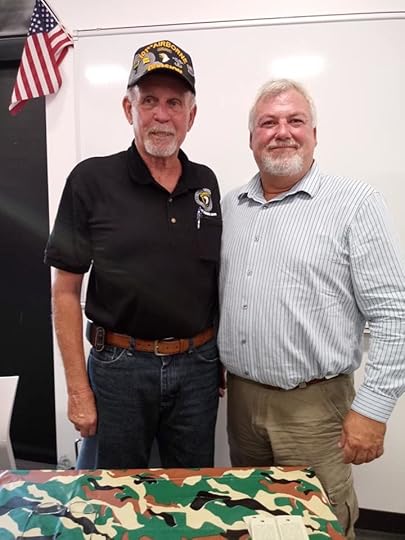
January 2, 2019
I could not put this book down as I was captivated by the story of John’s experience in Vietnam! I’m mind blown by all he went through! Great read!!

February 9, 2019
This is a book about Vietnam Nam it's about a unit in Vietnam Nam and while I read this a friend from here in Cherokee Ronnie Means was killed.,that was hard to read. My husband was over there came home and did not talk about it this book was written for that reason getting a story for helping to talk about it.

January 1, 2019
Growing up in the 60's I saw this war through the eyes of news reporters and have always had the interest to learn more about it from a person who had gone to war. I loved the book, it was a quick, easy read with not too much gore, but just enough for you to remember it's about a war.
January 16, 2019
Excellent book,knowing it was written by this man's daughter gave it a sense of emotion that tempered it. A most powerful read and I had read hundreds of books on this subject.
I would recommend this book highly to anyone trying to understand and come to terms with what young servicemen went through during this period of history. GREAT BOOK!
I would recommend this book highly to anyone trying to understand and come to terms with what young servicemen went through during this period of history. GREAT BOOK!
January 17, 2020
Jumping from Helicopters is a memoir about a Screaming Eagle, a member of the 101st Airborne Infantry during the Vietnam War. John Stillman served with the 1st of 502nd Battalion, B Company. John recounted his time there to his daughter, Lori, who wrote the book. John obviously suffered from PTSD and stuffed it all inside. His finally opening up to his daughter was helpful to him as he was able to get some of his story out in the open, thereby causing a release of some of his inner struggles.
The story mostly takes place in Vietnam although there are brief parts about his enlistment and training and then his eventual homecoming. At the end of the book are a number of pictures and what is titled, “A Conversation with John and Lori Stillman.” That part is worthy of reading and sheds some light on how the book was written and answers some questions about John’s thinking now about what went on while he was at war. It is revelatory. Be sure to read it after you finish the memoir itself.
John was proud to serve and still thinks what he did was right and helpful. His tour of duty was a mixture of guarding bridges or Rome plows, setting up ambushes, sweeping villages, and humping through the jungle attempting to find the enemy and hopefully stay alive. He had some down time also, brief rest periods of a day or two here and there along with one leave of R&R to Manila.
At the beginning of the book, there is a short statement about authenticity and the fact that the book tells it like it was, meaning some words might offend a few folks. I know that in our PC society today it is probably necessary for the publisher to include such information, but in a way it saddens me that it has to be mentioned at all. These guys were in the midst of it, tough, scared, brutalized, and proud. War is traumatizing. You don’t see friends killed or maimed, participate in killing others, and not develop attitudes to remain sane. The attitudes are reflected in speech and the treatment of others, friends and foes. There are mental scars also, and for many it takes a long time to heal if ever. We owe a great debt to those who have served.
John had two narrow escapes. One involved the jamming of an enemy’s rifle, and the second was with a booby trap. Either one could easily have killed him. John was a Roman Catholic, and it appears he was nominal in his belief. He mentions that he prayed a bunch and recounts going to mass once. Nonetheless, God obviously had His hand on John and saved his physical life. Rita, his girl friend and later wife, was a source of strong encouragement to him both while in Vietnam and after he came home. That illustrates the importance of having loving support, especially for those who undergo the rigors of war or any other traumatizing experience.
Personally, I did not go to Vietnam, but it was my era. I was called up for the draft but mercifully passed over for some reason. Friends went, and thankfully returned. Unfortunately, 58,000 plus did not. Read the book and gain some insight into the physical and mental conditions our troops underwent and may your appreciation for them grow as a result.
The story mostly takes place in Vietnam although there are brief parts about his enlistment and training and then his eventual homecoming. At the end of the book are a number of pictures and what is titled, “A Conversation with John and Lori Stillman.” That part is worthy of reading and sheds some light on how the book was written and answers some questions about John’s thinking now about what went on while he was at war. It is revelatory. Be sure to read it after you finish the memoir itself.
John was proud to serve and still thinks what he did was right and helpful. His tour of duty was a mixture of guarding bridges or Rome plows, setting up ambushes, sweeping villages, and humping through the jungle attempting to find the enemy and hopefully stay alive. He had some down time also, brief rest periods of a day or two here and there along with one leave of R&R to Manila.
At the beginning of the book, there is a short statement about authenticity and the fact that the book tells it like it was, meaning some words might offend a few folks. I know that in our PC society today it is probably necessary for the publisher to include such information, but in a way it saddens me that it has to be mentioned at all. These guys were in the midst of it, tough, scared, brutalized, and proud. War is traumatizing. You don’t see friends killed or maimed, participate in killing others, and not develop attitudes to remain sane. The attitudes are reflected in speech and the treatment of others, friends and foes. There are mental scars also, and for many it takes a long time to heal if ever. We owe a great debt to those who have served.
John had two narrow escapes. One involved the jamming of an enemy’s rifle, and the second was with a booby trap. Either one could easily have killed him. John was a Roman Catholic, and it appears he was nominal in his belief. He mentions that he prayed a bunch and recounts going to mass once. Nonetheless, God obviously had His hand on John and saved his physical life. Rita, his girl friend and later wife, was a source of strong encouragement to him both while in Vietnam and after he came home. That illustrates the importance of having loving support, especially for those who undergo the rigors of war or any other traumatizing experience.
Personally, I did not go to Vietnam, but it was my era. I was called up for the draft but mercifully passed over for some reason. Friends went, and thankfully returned. Unfortunately, 58,000 plus did not. Read the book and gain some insight into the physical and mental conditions our troops underwent and may your appreciation for them grow as a result.
July 11, 2019
Having served as a combat infantryman with the first Air Cavalry in 1969, I have my own experiences that tend to guide my thinking. This particular book, one of over 150 I have read over the last fifty years, confused me. I tend to be drawn to the detailed combat descriptions as supplied by Mark Bowden, Philip Caputo, and Philip Keith whose descriptive narations put you in the middle of the battle and help you understand the confusion, irony, and terror of it. Jumping from Helicopters seamed to float over and around the conflict but never address it's specifics. The blood, death, and consequences of war affect everyone differently, but facing the reality of it and accepting it as a needless tragedy over which you had no control, can help put the dark days behind you.

February 24, 2019
Good Father and Daughter book.
A new perspective written by the daughter. The 101st went as a unit and the results show. More cohesive till the insane drip feed replacement policy watered down their effectiveness. The Australians did whole unit replacements.
A new perspective written by the daughter. The 101st went as a unit and the results show. More cohesive till the insane drip feed replacement policy watered down their effectiveness. The Australians did whole unit replacements.
March 3, 2019
A Good Read
I'm writing this under my wife's Amazon membership - I was never in country (I spent my time in the late 60's working on Navy Attack Aircraft in the states). I've known a lot of guys who WERE in Nam and this explains a lot. God Bless you all.
I'm writing this under my wife's Amazon membership - I was never in country (I spent my time in the late 60's working on Navy Attack Aircraft in the states). I've known a lot of guys who WERE in Nam and this explains a lot. God Bless you all.
May 21, 2019
Worth the read for sure!
Daughter and Vietnam era dad have done a remarkable job telling the real story of life during - and after - war in one of the worst places and times to fight on the front lines of that war.
Daughter and Vietnam era dad have done a remarkable job telling the real story of life during - and after - war in one of the worst places and times to fight on the front lines of that war.
April 29, 2019
Good read
Enjoyed the book. Seems to be an honest memory of Vietnam.The debriefing after Vietnam was nonexistent. This was divistating to many.
Enjoyed the book. Seems to be an honest memory of Vietnam.The debriefing after Vietnam was nonexistent. This was divistating to many.
May 6, 2019
Excellent book
I seriously couldn’t stop reading this book . These guys were not appreciated by a lot of a-holes for the time they gave up fighting for what they felt was right.
I seriously couldn’t stop reading this book . These guys were not appreciated by a lot of a-holes for the time they gave up fighting for what they felt was right.
June 9, 2019
So this is your first book? You do your mother and father proud.

April 11, 2020
The Airborne tattoo – boot with wings, a parachute, his name
Missouri author John Stillman, a retired operating engineer, shares his experiences and impact of his service with the 101st Airborne during the Vietnam War through his conversations with his daughter Lori Stillman, a personal trainer who owns her own fitness business. The father/daughter combination results in this insightful and mesmerizing memoir of John’s recalling his combat days.
Though many of us who served in the military in Vietnam, especially during the infamous Tet Offensive in 1968 and its aftermath have found ways to contain that brutal experience in poetry, novels, diaries etc, few have been able to bring the totality of that attack and indeed all of the tenor and atmosphere and scars of Vietnam with the intensity and realistic presence John, and Lori, share in this impressive book.
Opening with Lori’s first encounter at age five with her father’s war tattoo that opens the floodgates for John to share his commitment – volunteering for active duty to the time in Vietnam to the aftermath and permutations –this collection of memoires and photographs that bring the Vietnam experience to life. The manner in which the book unfolds is at once literary on a fine scale, and very sensitively personal. From childhood preparation to volunteering as Private Stillman in the 101st Airborne Division (the Screaming Eagles) – or specifically, the 1st Battalion of the 502nd Infantry, Bravo Company – and deployment to Biên Hòa, Vietnam in December 1967 – this book shares all.
From his arrival in Vietnam and his first exposure to the culture (‘Being in the presence of those innocent souls, I understood why we were there: they needed a better country, and my job was to give it to them.’) through his extended encounters with his military functions (‘Today we got shot at by VC, but they didn’t hit any of us. We went into the village but didn’t find any VC. We went on an ambush on the river tonight and got two VC boats.’) to the documents included in the text (Friendly: 33 WIA 1 KIA, Enemy 0 WIA 25 KIA/100 KIA Captured 2 MG’s 2 AK-47’ etc) – all the facts are clearly stated, as well as the emotional responses, right up to his being transported back home.
Personal shared moments are deeply touching – ‘Each morning, I would greet my family and pretend none of this had happened. No one knew I was still fighting a war.’ ‘I was home a long time before I was actually home. Vietnam has never ceased to haunt me every day, to await me every night. I still sometimes wonder if I every truly came home.’ And the book ends with a tribute to fallen comrades and a fine photo album.
At last there is a very real memoir about the impact of Vietnam on one man – and in the eyes of all who served there, and those of their supportive families. This is a must read book for all. Very highly recommended.
Missouri author John Stillman, a retired operating engineer, shares his experiences and impact of his service with the 101st Airborne during the Vietnam War through his conversations with his daughter Lori Stillman, a personal trainer who owns her own fitness business. The father/daughter combination results in this insightful and mesmerizing memoir of John’s recalling his combat days.
Though many of us who served in the military in Vietnam, especially during the infamous Tet Offensive in 1968 and its aftermath have found ways to contain that brutal experience in poetry, novels, diaries etc, few have been able to bring the totality of that attack and indeed all of the tenor and atmosphere and scars of Vietnam with the intensity and realistic presence John, and Lori, share in this impressive book.
Opening with Lori’s first encounter at age five with her father’s war tattoo that opens the floodgates for John to share his commitment – volunteering for active duty to the time in Vietnam to the aftermath and permutations –this collection of memoires and photographs that bring the Vietnam experience to life. The manner in which the book unfolds is at once literary on a fine scale, and very sensitively personal. From childhood preparation to volunteering as Private Stillman in the 101st Airborne Division (the Screaming Eagles) – or specifically, the 1st Battalion of the 502nd Infantry, Bravo Company – and deployment to Biên Hòa, Vietnam in December 1967 – this book shares all.
From his arrival in Vietnam and his first exposure to the culture (‘Being in the presence of those innocent souls, I understood why we were there: they needed a better country, and my job was to give it to them.’) through his extended encounters with his military functions (‘Today we got shot at by VC, but they didn’t hit any of us. We went into the village but didn’t find any VC. We went on an ambush on the river tonight and got two VC boats.’) to the documents included in the text (Friendly: 33 WIA 1 KIA, Enemy 0 WIA 25 KIA/100 KIA Captured 2 MG’s 2 AK-47’ etc) – all the facts are clearly stated, as well as the emotional responses, right up to his being transported back home.
Personal shared moments are deeply touching – ‘Each morning, I would greet my family and pretend none of this had happened. No one knew I was still fighting a war.’ ‘I was home a long time before I was actually home. Vietnam has never ceased to haunt me every day, to await me every night. I still sometimes wonder if I every truly came home.’ And the book ends with a tribute to fallen comrades and a fine photo album.
At last there is a very real memoir about the impact of Vietnam on one man – and in the eyes of all who served there, and those of their supportive families. This is a must read book for all. Very highly recommended.

November 16, 2023
This book was unexpectedly personal for me. I chose it on a whim from Prime Reading because I still needed a 'J' nonfiction book for the year and this looked interesting.
I ended up getting so much out of this read. At first I thought starting this the evening of Veteran's Day with my eyes still sore from crying on and off throughout the day might be too much but it turned out to be just what I needed.
In a serendipitous coincidence the author of this book was in the exact same area in the same year as my dad (and they were both Army) so it brought me both comfort and sadness to read descriptions of things he may have also experienced.
My dad was seriously injured 9/11/68 in the Quang Tri area and he was affected physically and mentally for life. I knew the basics but we never really talked about it. I would go with him to the VFW and his service was important to him but we didn't talk specifics. We talked about visiting the Traveling Wall; when it was in our area he started to walk toward it before turning around because he couldn't do it. When I visited the Wall in D.C. with my husband and kids we did rubbings of those who died in the same battle he was injured in; he appreciated the sentiment and was glad we honored them but didn't want to see them. He died in 2019 (hence why I'd cried so much already - he's buried in our local Veteran's Cemetery) but I would've loved to share this book with him and think it's amazing the author and his daughter were able to process his experiences together.
Beyond my personal emotions and about the actual book...
The author was matter-of-fact about killing the enemy which can be startling but it wasn't disrespectful. There were subtle shifts as the book goes on - he didn't enter the Army with bloodthirst but also wanted the enemy to be eradicated so he could go home. He made good points about there being no adjustment period or debriefing to re-enter civilian life. And what an awful joke for his dad to play on him at his "Welcome Home" party!!!
I never knew they were called "Charlie" as a shortening of the military alphabet for VC (Victor Charlie).
Quote from the Book
"I was home a long time before I was actually home.
Vietnam has never ceased to haunt me every day, to await me every night.
I still sometimes wonder if I ever truly came home."
Find all my reviews at: https://readingatrandom.blogspot.com
I ended up getting so much out of this read. At first I thought starting this the evening of Veteran's Day with my eyes still sore from crying on and off throughout the day might be too much but it turned out to be just what I needed.
In a serendipitous coincidence the author of this book was in the exact same area in the same year as my dad (and they were both Army) so it brought me both comfort and sadness to read descriptions of things he may have also experienced.
My dad was seriously injured 9/11/68 in the Quang Tri area and he was affected physically and mentally for life. I knew the basics but we never really talked about it. I would go with him to the VFW and his service was important to him but we didn't talk specifics. We talked about visiting the Traveling Wall; when it was in our area he started to walk toward it before turning around because he couldn't do it. When I visited the Wall in D.C. with my husband and kids we did rubbings of those who died in the same battle he was injured in; he appreciated the sentiment and was glad we honored them but didn't want to see them. He died in 2019 (hence why I'd cried so much already - he's buried in our local Veteran's Cemetery) but I would've loved to share this book with him and think it's amazing the author and his daughter were able to process his experiences together.
Beyond my personal emotions and about the actual book...
The author was matter-of-fact about killing the enemy which can be startling but it wasn't disrespectful. There were subtle shifts as the book goes on - he didn't enter the Army with bloodthirst but also wanted the enemy to be eradicated so he could go home. He made good points about there being no adjustment period or debriefing to re-enter civilian life. And what an awful joke for his dad to play on him at his "Welcome Home" party!!!
I never knew they were called "Charlie" as a shortening of the military alphabet for VC (Victor Charlie).
Quote from the Book
"I was home a long time before I was actually home.
Vietnam has never ceased to haunt me every day, to await me every night.
I still sometimes wonder if I ever truly came home."
Find all my reviews at: https://readingatrandom.blogspot.com

June 29, 2021
The overwhelming feeling I had during—and after—reading this book was how it had genuinely changed my life. I’ve seen some war-related movies, but this book, with its powerful narrative voice and interspersed journal entries from John’s time in Vietnam, truly made me understand the second-to-second risk these men took in those jungles. Whether you believe we should have been involved in that country’s conflict or not, you can’t come away from John’s story without having deep respect for the men who put their lives in constant danger, under stifling conditions, to do what they thought was right at the time.
I’ll admit that war-related stories and any kind of gruesome violence isn’t my cup of tea. But although this book is raw in places, those details didn’t make me want to stop reading; in fact, I devoured it in one sitting, unable to tear myself away. The book wasn’t only captivating, but well-rounded too: we got to experience John’s backstory, as well as the aftermath of coming home. I felt so personally connected to him because of that. And to know his daughter was the one who wrote the book through extensive interviews with her dad made the book all the more powerful for me. It had to be incredibly emotional, not to mention time consuming, to draw out all of his recollections fifty years later. Huge kudos to both of them for finding their way through to bless people like me with his candid, compelling story.
One of many things that stayed with me was when John lost a close friend and felt he couldn’t show any emotion over it. It breaks my heart to think that men have been so conditioned out of expressing sadness or grief, particularly in the military. And then for him to come home with no one to talk to, no psychological support, nothing.
So many events from this story have enhanced my understanding of the Vietnam war experience, and of the mindset of the men who were involved. I will be forever grateful to John and Lori for opening that door for me. This is truly a book not to be missed.
I’ll admit that war-related stories and any kind of gruesome violence isn’t my cup of tea. But although this book is raw in places, those details didn’t make me want to stop reading; in fact, I devoured it in one sitting, unable to tear myself away. The book wasn’t only captivating, but well-rounded too: we got to experience John’s backstory, as well as the aftermath of coming home. I felt so personally connected to him because of that. And to know his daughter was the one who wrote the book through extensive interviews with her dad made the book all the more powerful for me. It had to be incredibly emotional, not to mention time consuming, to draw out all of his recollections fifty years later. Huge kudos to both of them for finding their way through to bless people like me with his candid, compelling story.
One of many things that stayed with me was when John lost a close friend and felt he couldn’t show any emotion over it. It breaks my heart to think that men have been so conditioned out of expressing sadness or grief, particularly in the military. And then for him to come home with no one to talk to, no psychological support, nothing.
So many events from this story have enhanced my understanding of the Vietnam war experience, and of the mindset of the men who were involved. I will be forever grateful to John and Lori for opening that door for me. This is truly a book not to be missed.

April 13, 2020
Vietnam War: A Family's Journey
Jumping from Helicopters: A Vietnam Memoir by John Stillman and Lori Stillman is a sobering and engaging read about the conflict in Vietnam and those who served.
It takes the reader on the journey of a young boy who, like most young boys, romanticizes about being a soldier and fighting in wars. However, as John Stillman does his patriotic duty, he is soon thrust into war. Soon, the realitiy of being a soldier is not about uniforms and being crisp in presentations. It is no more about the spit and polish of being a soldier, but the reality of fighting conditions, the horror of warfare, and the certainty of being transformed and changed forever.
Jumping from Helicopters is a real look about warfare and specifically the Vietnam War. It is about uncertainty, witnessing the death of fellow brothers in arms, dealing with the unforgivable climate, coping with reality, wet feet, dry feet, and no feet.
This unfolding story of a combat soldier's real-life experience also reveals the effects of war, as seen on the faces of those fighting. This assertion reflected in one passage in the book states, "But the truth was, those guys who looked like they had years on us in Vietnam often only had weeks."
The narrative is also about those who return home to confront another war.
Lori Stillman is the daughter of Vietnam Veteran John Stillman. This labor of love between the two who have authored this book, one can assume for both father and daughter, is a revealing, a horrifying and yet therapeutical narrative of discovery.
Jumping from Helicopters is a well written and compelling story that strips away the exterior trappings of war and reveals to the reader the full scope of warfare and its affects on not only the servicemember, but the family's they return home to.
Jumping from Helicopters: A Vietnam Memoir by John Stillman and Lori Stillman is a sobering and engaging read about the conflict in Vietnam and those who served.
It takes the reader on the journey of a young boy who, like most young boys, romanticizes about being a soldier and fighting in wars. However, as John Stillman does his patriotic duty, he is soon thrust into war. Soon, the realitiy of being a soldier is not about uniforms and being crisp in presentations. It is no more about the spit and polish of being a soldier, but the reality of fighting conditions, the horror of warfare, and the certainty of being transformed and changed forever.
Jumping from Helicopters is a real look about warfare and specifically the Vietnam War. It is about uncertainty, witnessing the death of fellow brothers in arms, dealing with the unforgivable climate, coping with reality, wet feet, dry feet, and no feet.
This unfolding story of a combat soldier's real-life experience also reveals the effects of war, as seen on the faces of those fighting. This assertion reflected in one passage in the book states, "But the truth was, those guys who looked like they had years on us in Vietnam often only had weeks."
The narrative is also about those who return home to confront another war.
Lori Stillman is the daughter of Vietnam Veteran John Stillman. This labor of love between the two who have authored this book, one can assume for both father and daughter, is a revealing, a horrifying and yet therapeutical narrative of discovery.
Jumping from Helicopters is a well written and compelling story that strips away the exterior trappings of war and reveals to the reader the full scope of warfare and its affects on not only the servicemember, but the family's they return home to.
April 26, 2020
This book continues the glorification of the US invasion of Vietnam. US Soldiers were lied to and didn't "serve their country" in the Vietnam War. Vietnam was a small distant country that was no threat to the US. The
Gulf of Tonkin was a false flag op by the US Government to allow Pres. Johnson to start the war, based upon the lie that a US Navy ship, the USS Maddox, had been attacked.
The National Security Agency (the NSA) is bigger than the CIA. The NSA's report on the Gulf of Tonkin Incident, declassified in 2005, concluded that the USS Maddox had "engaged the North Vietnamese Navy on August 2, 1964 by firing fired three
rounds to warn off the Communist boats. No other shots were fired by either side. This initial action was never reported by the Johnson administration, which insisted that the Vietnamese boats fired first.”
Regarding the all-important second attack on August 4 (two days later) – which effectively caused the Vietnam War – the NSA report concluded there were no North Vietnamese Naval vessels present during the entire incident: “It is not simply that
there is a different story as to what happened; it is that no attack happened that night.” https://nuclearrisk.wordpress.com/…/a...
The above website gives even more proof, if you need it. The book by Admiral Stockade, etc. The Gulf of Tonkin was one of America's false flag operations to justify an agressive war by claiming the US was attacked. 9/11 was another false flag op.
James Hannum
Vice-Chairman - Media
COMMITTEE FOR AMERICAN WAR TRUTH
Washington DC
Gulf of Tonkin was a false flag op by the US Government to allow Pres. Johnson to start the war, based upon the lie that a US Navy ship, the USS Maddox, had been attacked.
The National Security Agency (the NSA) is bigger than the CIA. The NSA's report on the Gulf of Tonkin Incident, declassified in 2005, concluded that the USS Maddox had "engaged the North Vietnamese Navy on August 2, 1964 by firing fired three
rounds to warn off the Communist boats. No other shots were fired by either side. This initial action was never reported by the Johnson administration, which insisted that the Vietnamese boats fired first.”
Regarding the all-important second attack on August 4 (two days later) – which effectively caused the Vietnam War – the NSA report concluded there were no North Vietnamese Naval vessels present during the entire incident: “It is not simply that
there is a different story as to what happened; it is that no attack happened that night.” https://nuclearrisk.wordpress.com/…/a...
The above website gives even more proof, if you need it. The book by Admiral Stockade, etc. The Gulf of Tonkin was one of America's false flag operations to justify an agressive war by claiming the US was attacked. 9/11 was another false flag op.
James Hannum
Vice-Chairman - Media
COMMITTEE FOR AMERICAN WAR TRUTH
Washington DC
September 27, 2023
It was an interesting read, though for the most part what you'd expect from a book like this. You have your stories about how it was in training. You have your stories about how war is hell and how lucky we are to not be on the front line. Again, interesting stories, but *most* of it didn't stand out.
Two things, however, did -- at least for me.
One was a story about how a overzealous sergeant ended up killing his own men, thinking they were the enemy, and how John and some others in the troop were seriously thinking about killing the guy, not for revenge, but to ensure their safety. Luckily the sergeant was pulled from the front line. I found that chilling partly because in that same situation I might have contemplated the same thing.
The other thing was about how he went and saw Platoon and how the movie brought him back to his time in Vietnam, and how he saw the faces of his friends in the actors' faces, and how he clapped when the enemy was killed on the screen. After the movie he asked his wife how they got the smell of gunpowder and blood into the theater.
He says multiple times in the book that "I was home along time before I was actually home." Indeed, I wish he had spent more of the book talking about how he transitioned from being physically home to being mentally home. If there was a book that spent maybe 10% stories about training, 50-60% stories about events on the front line, and 30-40% about the mental transitioning back, I think I'd find that interesting.
Two things, however, did -- at least for me.
One was a story about how a overzealous sergeant ended up killing his own men, thinking they were the enemy, and how John and some others in the troop were seriously thinking about killing the guy, not for revenge, but to ensure their safety. Luckily the sergeant was pulled from the front line. I found that chilling partly because in that same situation I might have contemplated the same thing.
The other thing was about how he went and saw Platoon and how the movie brought him back to his time in Vietnam, and how he saw the faces of his friends in the actors' faces, and how he clapped when the enemy was killed on the screen. After the movie he asked his wife how they got the smell of gunpowder and blood into the theater.
He says multiple times in the book that "I was home along time before I was actually home." Indeed, I wish he had spent more of the book talking about how he transitioned from being physically home to being mentally home. If there was a book that spent maybe 10% stories about training, 50-60% stories about events on the front line, and 30-40% about the mental transitioning back, I think I'd find that interesting.

April 12, 2024
I won the ebook version from a Goodreads giveaway.
This book is an eye opening look into a year of a soldier’s life while serving in Vietnam in 1968. This book is the first for the author, and she handled her father’s story with grace and love. The book is extremely well written, and I found myself feeling emotional as I read the interview at the end of the book.
Having known several Vietnam Veterans, I feel like I have a better understanding of the trauma they have suffered, and I am grateful for the work they put in to overcome all that they have experienced.
This book didn’t cut corners, and while the author’s note at the beginning makes it clear that the language used within the pages was accurate to the times and the feelings of the soldiers, it was still difficult to read the slurs and profanity that are written. I wouldn’t expect it to be any other way though…..this is the lived experience of our Veterans, and it is only fair to them to make it clear that they are heroes, and also human.
It is interesting that I am also listening to the audiobook: The Body Keeps the Score, as I am seeing many correlations between the trauma this author documented and what the psychiatric experts have documented from their observations of people dealing with trauma. It just happened this way, without planning, but it is bringing clarity to the audiobook as I am reading the true experiences of this man.
Thank you for sharing this story, I hope it continues to bring healing to your family and the many others who will pick it up.
This book is an eye opening look into a year of a soldier’s life while serving in Vietnam in 1968. This book is the first for the author, and she handled her father’s story with grace and love. The book is extremely well written, and I found myself feeling emotional as I read the interview at the end of the book.
Having known several Vietnam Veterans, I feel like I have a better understanding of the trauma they have suffered, and I am grateful for the work they put in to overcome all that they have experienced.
This book didn’t cut corners, and while the author’s note at the beginning makes it clear that the language used within the pages was accurate to the times and the feelings of the soldiers, it was still difficult to read the slurs and profanity that are written. I wouldn’t expect it to be any other way though…..this is the lived experience of our Veterans, and it is only fair to them to make it clear that they are heroes, and also human.
It is interesting that I am also listening to the audiobook: The Body Keeps the Score, as I am seeing many correlations between the trauma this author documented and what the psychiatric experts have documented from their observations of people dealing with trauma. It just happened this way, without planning, but it is bringing clarity to the audiobook as I am reading the true experiences of this man.
Thank you for sharing this story, I hope it continues to bring healing to your family and the many others who will pick it up.

May 15, 2020
What was it like for you to fight in the war? That simple question was the beginning of this story. That question and her father's unpredictable answer led Lori Stillman to write a book that recounted her father's experiences in the Vietnam War.
John Stillman at age 19 voluntarily decided to enlist in the military. He graduated from jump school. He was proud of it because he was one of the best warriors in the United States. On November 5, 1967, he received the order that his division in Vietnam was required, they were full of expectations and they felt at their best to help win this war.
It is a book to read attentive to the meticulous quality of the details that Jhon provides. His biography shows a reality from the point of view of the soldier who thought that war was a heroic act to represent his nation and discovered the miseries, and that Getting home alive was much more difficult than she could have imagined. Writing a journal and keeping in touch with his family was the only thing that could keep Jhon's sanity, but the worst came once the war ended. After having lived through the atrocities of war, he could never be the same again. Telling his daughter this story make John go through moments of horror that were silenced for 50 years.
It is a true and moving story. I certainly recommend reading this biography.
John Stillman at age 19 voluntarily decided to enlist in the military. He graduated from jump school. He was proud of it because he was one of the best warriors in the United States. On November 5, 1967, he received the order that his division in Vietnam was required, they were full of expectations and they felt at their best to help win this war.
It is a book to read attentive to the meticulous quality of the details that Jhon provides. His biography shows a reality from the point of view of the soldier who thought that war was a heroic act to represent his nation and discovered the miseries, and that Getting home alive was much more difficult than she could have imagined. Writing a journal and keeping in touch with his family was the only thing that could keep Jhon's sanity, but the worst came once the war ended. After having lived through the atrocities of war, he could never be the same again. Telling his daughter this story make John go through moments of horror that were silenced for 50 years.
It is a true and moving story. I certainly recommend reading this biography.

March 24, 2024
"All gave some, some gave all."
In this poignant memoir, the author narrates his experience of serving in Vietnam with the help of his daughter. He volunteered to fight for the freedom of the Vietnamese people, believing himself to be a young American in Asia willing to help. However, the reality of the situation was far from his expectations, and the book presents the uncomfortable truths of terrorism and the loss of personal friends in battle.
The memoir also highlights the plight of the soldiers returning home who received little preparation or support from the services and the V.A. This is an essential lesson for us to learn so that we can provide our soldiers with the necessary support when they return home after serving their country.
In conclusion, this memoir provides a well-crafted account of the author's experience in Vietnam, and it underscores the importance of supporting our soldiers, especially when they are returning home after serving their country. I can only hope that, in the future, when we ask our military to "jump from helicopters," we are fully prepared to provide the welcome and services they need to transition back into civilian life.
In this poignant memoir, the author narrates his experience of serving in Vietnam with the help of his daughter. He volunteered to fight for the freedom of the Vietnamese people, believing himself to be a young American in Asia willing to help. However, the reality of the situation was far from his expectations, and the book presents the uncomfortable truths of terrorism and the loss of personal friends in battle.
The memoir also highlights the plight of the soldiers returning home who received little preparation or support from the services and the V.A. This is an essential lesson for us to learn so that we can provide our soldiers with the necessary support when they return home after serving their country.
In conclusion, this memoir provides a well-crafted account of the author's experience in Vietnam, and it underscores the importance of supporting our soldiers, especially when they are returning home after serving their country. I can only hope that, in the future, when we ask our military to "jump from helicopters," we are fully prepared to provide the welcome and services they need to transition back into civilian life.

April 18, 2020
A sorrowful and resilience story.
I would say that the title of this book caught my attention from the very beginning. It goes without saying that it is a moved and breathtaking story to read. ”Jumping from Helicopters: A Vietnam Memoir” is a distressed war story. To my amaze, the protagonist is the writer´s own father, John Stillman. He was one of the many heroes who fought in this tremendous war and his daughter, Lori is the one who decided to narrate her father´s experiences in it.
With John’s narration together with some love letters, the reports and the journal it was possible to recreate the memoir. I dare say that it was a harsh and sorrowful experience to remember. After reading this book I felt empathy for those brave people who decided to fight for the country and for the people with that strong conviction for the common good.
It is so well-written and developed that the reader experiences a vividly adventure. Even though it is a gloomy topic, it is worth reading it. Lori has made from a memoir, a great story to read and to think. I believe that everyone should read it.
I would say that the title of this book caught my attention from the very beginning. It goes without saying that it is a moved and breathtaking story to read. ”Jumping from Helicopters: A Vietnam Memoir” is a distressed war story. To my amaze, the protagonist is the writer´s own father, John Stillman. He was one of the many heroes who fought in this tremendous war and his daughter, Lori is the one who decided to narrate her father´s experiences in it.
With John’s narration together with some love letters, the reports and the journal it was possible to recreate the memoir. I dare say that it was a harsh and sorrowful experience to remember. After reading this book I felt empathy for those brave people who decided to fight for the country and for the people with that strong conviction for the common good.
It is so well-written and developed that the reader experiences a vividly adventure. Even though it is a gloomy topic, it is worth reading it. Lori has made from a memoir, a great story to read and to think. I believe that everyone should read it.

March 3, 2021
This telling of a Vietnam War experience wasn't what I had expected. It didn't focus on the politics or on a great detail of the violence and fear. I was expecting it to get deep into the thoughts of John Stillman, to get his take on his war actions and to learn step-by-step how he got through it all. Instead, Jumping From Helicopters tells the transformation of an American man who sought to be a war hero to one who just wanted to survive his job. That slow transformation of living through unfathomable fears and killing for work and then returning home to live as a normal man comes alive, not in Hollywood-type details, but in his own acceptance of doing his job to the best of his abilities. He was a proud American fighting "the good fight", and politics had no play in his telling. That he didn't fully understand the difficulties he would have after returning home, gives a glimpse into Stillman's difficulties with not getting the debriefing or counseling to enter normal life that he and many others should have. Mostly on his own, he became a successful citizen, husband and father, even though parts of him never fully left the fear and violence of the war.

May 12, 2025
I've read quite a few of these reminiscences of a young man's time in Vietnam, and they are all different experiences, yet very similar too. This was no exception. Stillman had some very tough soldiering in his year in 'Nam. He freely admits to what today would be called atrocities but then were war. He was there, and we were not, so we can't judge him on actions taken on the spot. What really comes through, when one reads between the lines, is the American political (less so) and military (more so) leadership's failure to adequately strategize, plan and conduct the war. Good on the US military to send the 101st as a complete unit, soldiers who trained together and who knew and could rely on each other, but then after the Tet offensive the system seemed to break down with individual replacements and cross-postings being the norm. The result was poor morale, asinine leadership, drug use, needless casualties. Nonetheless, an easy read, one that will compliment any other readings of this type you've done. Again, this was hard soldiering and it wasn't pretty but Stillman and his daughter have managed a very good account of one man's war and his life thereafter.

April 17, 2020
My grandfather served in Vietnam, and I have had a fascination with the era ever since. The author, Lori Stillman has a similar fascination, I think, although the prompt for her is her father who is also the main character in this book. Following John Stillman after he volunteered to join the Army in 1967, the book captures the soaring highs and horrid lows of the Vietnam war from the perspective of a Paratrooper who gets sent into the midst of things. But the book doesn’t stop in Vietnam, the author also takes us though her fathers’ memories of uncertain and hard times after the soldiers return home to a country that is not grateful and at times even hostile to them.
Poignant and moving, this memoir is an eye-opening tale of grit, horror, violence, but also bravery, compassion and perseverance of the human spirit. I think this is a great portrayal of the times and captures the zeitgeist with aplomb. I’m grateful to the author and her father, as my grandfather never spoke of the time he was in Vietnam.
Poignant and moving, this memoir is an eye-opening tale of grit, horror, violence, but also bravery, compassion and perseverance of the human spirit. I think this is a great portrayal of the times and captures the zeitgeist with aplomb. I’m grateful to the author and her father, as my grandfather never spoke of the time he was in Vietnam.

June 17, 2022
Jumping from helicopters by John and Lori Stillman kept my interest throughout. However, I expected much more from this story. There was mention of ambushes, clearing villages, firefights, and men killed on both sides. However, there was no detail given for any of them. The story read like a diary with statements of fact taken from military after-action reports. I would surely have liked to find out how they died. What happened during ambushes? What actually took place during these security missions for the Rome Plows and bridge guarding? A few episodes included details and emotion. If you want to read an overall summary of what one soldier experienced during his year in Vietnam, but without emotion or details, then get this book.
I would have given this book Three stars since it did keep my interest throughout, and I added a fourth star to commend this veteran for telling his story. I imagine that if John wrote this alone, it would have been much more fleshed out.
I would have given this book Three stars since it did keep my interest throughout, and I added a fourth star to commend this veteran for telling his story. I imagine that if John wrote this alone, it would have been much more fleshed out.
November 13, 2024
Thank you for your service. This book was very enlightening and a credit to both John and his daughter. The painful memories are there along with the way he survived what can be described being in hell. My husband of 55 years served in 'nam. He was in thee 173rd and served from October 67 to November 68. He has rarely spoken of what it was like. This book gave me insight into how it was for you and him. I believe because so many did not welcome home the Vietnam vets they learned to stuff everything inside and keep it there if possible. When those memories escaped they and their loved ones had to learn to cope the best they could.
Your book helps us non-veterans to understand better what our loved one lived through.
It is well written and very helpful to me. Thanks for opening the door and with the help of your daughter writing a book that will be helpful as well as inlighting to civilians.
Your book helps us non-veterans to understand better what our loved one lived through.
It is well written and very helpful to me. Thanks for opening the door and with the help of your daughter writing a book that will be helpful as well as inlighting to civilians.
Displaying 1 - 30 of 91 reviews