WHOOP! WHOOP! The Insane Clown Posse calls itself "the most hated band in the world," but with 11 million albums sold, the horrorcore hip hop duo from Detroit is a widespread music phenomenon with a cult following. This book is the story of Craven Rock's journey to their annual festival, the Gathering of the Juggalos, where legions of fans in clown makeup come together every year to attend this family-reunion-like event and enjoy musical celebrities, feats of wrestling, debauchery, and most of all, a supportive, tight-knit community.Juggalos gained the political spotlight in 2017, when thousands of fans marched on Washington, DC to protest their classification by the FBI as a violent gang. Dwarfing the pro-Trump rally at the same time and place, Juggalos proved themselves to be a growing voice of dissent for some of the most neglected parts of the United States. Rock's reporting casts a light on many contradictions and perils of Juggalodom, sensitively handling questions of gender, health, religion, and what it means to be part of something. Part festival-goer's journal, part music history, part investigative report, part social commentary, Juggalo Country takes us into the heart of a much-derided and controversial movement and shows us the redemptive power of family and community.
Though the author has long been a friend of mine, I stayed away from his book for a variety of reasons: lack of interest in the subject, an avoidance of anything labeled "gonzo journalism" and fear that Craven's immersion in the Juggalo scene would be distasteful. Once he gave me this new edition, though, I had to read it and I shouldn't have worried: he was more of an anthropologist than gonzo journalist. Reading this felt like hanging out with Craven while getting DVD commentary straight from his brain and its varied thoughts.
I can't say I enjoyed the book, though. Before I was two thirds in, I was sick of hanging out with Juggalos at their annual gathering. I appreciated what Craven found fascinating and his attempts to parse the meaning of it all, but, damn, I was sick of it.
One of the most important issues Craven brings up is important, though, ICP may have created this cult-like community and leveraged it for as much wealth as they could, but it only works because of the people in the community believe in it. So, who is in charge? The leaders or the people? Who has the pwer and who could have the power if they seized it?
Ah yes. One of music’s biggest conundrums. To whoop or not to whoop. That truly is the question that I think Craven Rock’s trying to answer in this book. The Juggalo community has always been something of a mystery to me, not so much the concept behind it (while I don’t necessarily consider myself to be apart of any scene, I’ve certainly been around scenes that I find fascinating; Crust Punks, Hardcore Kids, Straight Edge, Metal, etc… but none leave me baffled quite like the clown makeup wearing Juggalos and lettes. I grew up in a small Midwestern town often dubbed the twin villages in Illinois. I feel like these are the towns that appeal to this kind of scene. The kids who are usually bullied, grow up poor, trying to find themselves amongst scenes that don’t really let them in, or all the above. It’s a recipe to become a wicked clown. I knew several kids when I was in High School that represented the Dark Carnival and donned the face paint. Legit Juggalos. I remember the first time listening to them and thinking, “what the hell is this shit?” and going about my way. But the culture grew and grew into something far bigger than most scenes I grew out of. I think what makes the Juggalo culture so interesting is that you have a tendency to disbelieve that it’s a thing. I guarantee there are still people who don’t believe this is a thing with legs.
What I loved about this book is that Craven seems to be like us. Genuinely interested in figuring out what all of this is about. I know conversations within my friend groups we’ve had about going to the Gathering ironically only afraid that we’re going to get our asses kicked for mocking their thing. At one point in my life, I gate-kept things and defended certain genres, so I get it when someone deemed as an outsider comes looking into my stuff with a level of pretentiousness. Fuck off poser. Or something like that. I think the best part of this book is realizing that humanity still exists, whether your huffing gasoline, taking ketamine and getting thrashed, taking a dive into Hepatitis Lake, exposing yourself for a hit of weed, but all while wearing clown makeup with your fellow ninjas, lo’s and lette’s. There is truly a kind of beauty in all of the chaos that we all want to be loved and go to great lengths to feel it. Even if it means watching some of your favorite wrestlers bash a chair over someone’s head while a bunch of fans chant “famuhlee” around you. I think that’s the real sweet spot of this book Craven nails. We all just want to be loved, and if your looking to be engulfed in that, maybe the gathering is where you need to be.
However the parts of the book I find a little lacking is that I find it to be odd for someone to be as progressive as the author states that he is Anti fascism, pro feminism, and all those other lovely buzz words, to not challenge the ideas not of the Juggalos but ICP themselves. The author at times was repulsed by the idea of showing your breasts for something, but other times found it funny. What I mean by this is it seems to me that Juggalos are completely separated from ICP. Call ICP what they are. A money making machine. They take money from poor, underdeveloped, uneducated people, clearly and Craven, which I’m not sure is his true stance but seems ok with that. At times he states that he’s against the blatant misogyny of Violent J and Shaggy 2 Dope, but he doesn’t really challenge them on it. He just kind of makes them to be funny which I passionately disagree with. These two dipshits should be held accountable with what happened to Tila Tequila, Method Man and Redman. Yes, I’m all for the celebrity culture to fuck off, but what happened to her during that show is simply unacceptable. That was a big part of the journalism I found a little… well, gross. While I appreciate the gonzo style journalism, I do agree that at times the books get somewhat repetitive with drinking and doing drugs. Not that I have a problem with that, but I would have liked to have read more interviews with others around.
Overall I think the book was entertaining and well done.
My stance is this. I don’t think ICP is a gang, or a cult, I think they have found a very niche market and know how to exploit their fans. I think Violent J and Shaggy 2 Dope are in the end, two kids who have a lot of soul searching to do. I don’t think they’re dumb guys, I just think they are like every other million dollar machine, how do we make a profit no matter what, how can we secretly exploit our fanbase but seem like the cool kids doing it. I got it. Create a culture based on selling love and family as a way to sucker you in. They take advantage of every poor, rich, straight, gay, trans, who ever listens to their music, and sell them a false idea of what they were really after. In the end Violent J and Shaggy 2 Dope just want your money and it’s sad that their fans are too blind with all the glitz and glam to see or they are just so unloved that they don’t care because in the end it’s all about love and Famuhlee. I implore them to seek therapy, because the Dark Carnival, gallons of Faygo, drugs, or Shangrila or whatever the hell it is called will not fix your broken heart. I think their music is a joke and absolutely terrible, and the whole scene in general is pretty fucking stupid but if it brings someone any amount of joy in their life, I can’t knock that, I just wish they wouldn't blindly follow two clowns in doing so. Figuratively and literately.
I guess this is what passes for journalism these days... Spend a few days drunk at a festival, talk for a few minutes about nothing with a few people, add some vapid SJW talking points and hey you got a book. I didnt know anything about juggalos before reading this and still don´t...
I misunderstood this book when I started it. I thought it was more recent based on its publication date and thought it was more about Juggalos than it is. In reality, it’s just one outsider guy’s perspective on The Gathering of Juggalos 2010. The introduction to this second edition teases much more interesting tidbits than actually exist in the book. It also feels a bit dated, since the Juggalo scene has changed quite a bit with the advent of TikTok and the rise of right wing extremism (not to mention Violent J’s daughter coming out as a furry and his support of her).
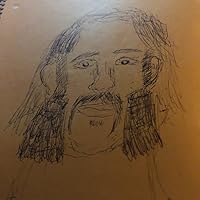
Once I was able to adjust my expectations of what the book actually is, it’s pretty interesting. It’s written less like a book and more like a blog, which is fine for what it is. The illustrations are great, and there are some great little tidbits in there.
Got this for a friend's 10 year old juggalette and decided to read it first. The story of a journalist who goes to The Gathering to see what being a juggalo is all about. He witnesses the dumb shit, but also the love juggalos have for each other. How when someone is passing out, fucked up, others who don't even know them will check on them and bring water. How everyone hustles, but not to make big profit, selling stuff or trading so that everyone gets what the need, regardless of how much money they have. He also points out the irony of ICP singing about killing richies, when they got rich off of their poor, poverty stricken fan base. He comes off as a fan of the juggalos but a negative image of the Insane Clown Posse.
The author went to the gathering of juggalos with his friend, the illustrator. They got drunk and did drugs and talked to juggalos. The author was conflicted, because the juggalos come from an oppressed demographic (poor people), and therefore must be saintly, but somehow they also seem to be misogynistic, anti intellectual, and cultish. How will the workers of the world unite and usher in the age of utopia, if they're a bunch of stupid assholes? Conclusions were not reached, but at least there were titties.
The book is not very good, but I did especially enjoy the last chapter, where the author -- while drunk, high, and soaking in Faygo -- briefly achieved Clown Love enlightenment.
This book was SO fun to read. Easy to read, an honest and compassionate look into an often mocked subculture, made me want to go to The Gathering and I am NOT a Juggalette. And more than just a story about going, the cultural assessments and comparison to other music subgroups was very interesting. Would recommend to anyone wanting to learn more about someone who is different from them.
Been a long time (since grad school, probably) since I've read a thorough ethnography of a subculture, and reading it made me miss that kind of work and the conversations it would provide. Definitely graphic though.
This book, like every book I’ve read that was published by Microcosm, is personal, engaging, and readable as all get out. Now I know more about Juggalos than I thought possible. As gonzo journalism, however, the structure and final effect fall short of great.
Having worked for Psychopathic Records on and off since 1992 (including the Gathering of the Juggalos featured in the book) , the author's quest to understand Juggalo culture is commendable. This is a great entrance point for anyone interested in the Dark Carnival!
A fun read but it is not a journalistic work by any means. In fact, this book could be used as a prime example of what journalism is not supposed to be.