

What do you think?

I Give It to You
A timeless story of family, war, art, and betrayal set around an ancient, ancestral home in the Tuscan countryside from bestselling novelist Valerie Martin.
When Jan, an American academic, rents an apartment in a Tuscan villa for the summer, she plans to spend her break writing a biography of Mussolini. Instead, she finds herself captivated by her hostess, the elegant, acerbic Beatrice. Beatrice's family ties to Villa Chiara and the land on which it stands extend back generations, although the family has fallen on hard times since WWII and the fate of the property is uncertain. But it is rich in stories, and Jan becomes intrigued by an account of Beatrice's uncle, who was mysteriously killed on the grounds at the conclusion of the war. Did he die at the hands of the invading Americans, or was he murdered by his countrymen for his political opinions?
Beatrice, a student of American literature, proves to be a beguiling storyteller and a sharp critic; she and Jan keep in touch after that summer, and a fierce friendship forms. As the years go on, Jan finds she can't help but write Beatrice's story, a decision that opens up questions of ownership and loyalty and leads to a major betrayal.
Thrumming with tension, informed by history, and exploring themes of duty, destiny, art, and friendship, I Give It to You is Valerie Martin at the top of her game.
When Jan, an American academic, rents an apartment in a Tuscan villa for the summer, she plans to spend her break writing a biography of Mussolini. Instead, she finds herself captivated by her hostess, the elegant, acerbic Beatrice. Beatrice's family ties to Villa Chiara and the land on which it stands extend back generations, although the family has fallen on hard times since WWII and the fate of the property is uncertain. But it is rich in stories, and Jan becomes intrigued by an account of Beatrice's uncle, who was mysteriously killed on the grounds at the conclusion of the war. Did he die at the hands of the invading Americans, or was he murdered by his countrymen for his political opinions?
Beatrice, a student of American literature, proves to be a beguiling storyteller and a sharp critic; she and Jan keep in touch after that summer, and a fierce friendship forms. As the years go on, Jan finds she can't help but write Beatrice's story, a decision that opens up questions of ownership and loyalty and leads to a major betrayal.
Thrumming with tension, informed by history, and exploring themes of duty, destiny, art, and friendship, I Give It to You is Valerie Martin at the top of her game.
320 pages, Hardcover
First published August 4, 2020
About the author
Valerie Martin
66 books260 followersValerie Martin is the author of nine novels, including Trespass, Mary Reilly, Italian Fever, and Property, three collections of short fiction, and a biography of St. Francis of Assisi, titled Salvation. She has been awarded a grant from the National Endowment for the Arts and a John Simon Guggenheim Fellowship, as well as the Kafka Prize (for Mary Reilly) and Britain’s Orange Prize (for Property). Martin’s last novel, The Confessions of Edward Day was a New York Times notable book for 2009.
A new novel The Ghost of the Mary Celeste is due from Nan Talese/Random House in January 2014, and a middle-grade book Anton and Cecil, Cats at Sea, co-written with Valerie’s niece Lisa Martin, will be out from Algonquin in October of 2013.
Valerie Martin has taught in writing programs at Mt. Holyoke College, Univ. of Massachusetts, and Sarah Lawrence College, among others. She resides in Dutchess County, New York and is currently Professor of English at Mt. Holyoke College.
Ratings & Reviews
Friends & Following
Create a free account to discover what your friends think of this book!
Community Reviews
Displaying 1 - 30 of 87 reviews

April 10, 2020
As Beatrice told me stories about her family, I found myself thinking of them as characters in a complex narrative.
I think this is one of those books where the blurb doesn't give a good sense of what we're getting: essentially, this is a multi-generational family saga following an Italian family through the twentieth century. The history is slightly displaced as it's partly told as inset narratives in the 3rd person, alternating with the 'present' 1st person where a novelist becomes fascinated with the family via her friendship with Beatrice, one of the women in the family, who recounts stories that Jan later turns into a novel.
The intriguing hook of the blurb, that this is about complicated questions of who owns stories and who has the right to retell them (look at the recent debates over American Dirt, or the way that academia has been re-evaluating history by changing the perspective to that of non-male, non-white, non-elite etc. for the last fifty or so years), only lightly rears its head and then becomes a plot point at 98% and isn't treated with any depth.
So this is certainly enjoyable and is especially good on the complexities of Italy's fascist past (think a lighter, swifter, more popular and compact version of the Ferrara novels of Giorgio Bassani) - just re-set your expectations to a superior family saga rather than anything more probing. 3.5 stars rounded up to 4 for sheer readability.
Thanks to Serpent's Tail for an ARC via NetGalley.

Read
February 6, 2025I was told this is a “true story,” which adds another layer to this metafictional work. I’m still debating over the personality of the first-person narrator (a novelist). Is she clueless or willfully blind about certain issues, or does she love living the life of the rich vicariously?
As always, Martin’s prose is eloquent. The story would be especially appealing for those who’d love reading of the hereditary ownership of a Tuscan villa. Those details are plentiful and sensory.
As always, Martin’s prose is eloquent. The story would be especially appealing for those who’d love reading of the hereditary ownership of a Tuscan villa. Those details are plentiful and sensory.

July 15, 2020
Have you ever dreamed about going to Italy and living in a majestic Tuscan villa? Perhaps real life travel is impossible right now, but if you’re looking for a great armchair escape then this book may just be the one for you – I was immediately smitten by its magnificent setting, and the dark family secrets it promised to uncover.
So, did it keep its promise? Partly, yes, partly, no. Let me elaborate. I GIVE IT TO YOU is the story of an American academic and writer, Jan Vidor, who spends a summer at her friend Beatrice’s family residence in Tuscany, the magnificent Villa Chiara. Over the centuries, the house has borne witness to many of the aristocratic Salviati family’s dramas, including the death of Beatrice’s gentle uncle Sandro in the driveway of his home. Over the course of Jan’s stay, Beatrice reveals much of her family’s troubled history, which is grounded in the privilege of the Italian upper classes. As Jan listens with fascination, Beatrice casually dismisses her family’s story with: “I give it to you.” But what does this really mean? Is Jan now the owner of the tale to do with as she wishes?
Over the course of the book, we meet many of Beatrice’s family members and find out about their often tragic fates. Beatrice herself has an interesting tale to tell. After a love-hate relationship with her mother, she emigrated to America and found herself in a doomed marriage to an alcoholic, which produced her (now adult) son David, the last of the family line. To be honest, whilst I felt for the young Beatrice who had set off to start a new life in a far away land, every adult in the story apart from the doomed Sandro was not exactly likeable. Jan seems to take it all in her stride, the family’s aristocratic arrogance, their internal family struggles, the coldness that exists between surviving family members. This lack of emotion on Jan’s part was probably the novel’s biggest downfall for me. I ever really got a good sense of who Jan really was, as we are not privy to her emotions and thoughts, merely the emotionless recounting of the family’s various stories. If Jan had any thoughts about them, she does not share them with the reader. I had the sense that the holiday in Tuscany was her getaway, her bubble in time and space. It existed so separate from her own life that it almost took part in another universe in which her own emotions and opinions never come to play – even though she reflects often about her regrets about her poor grasp of the Italian language that makes her feel self conscious and uncomfortable among the locals. Another puzzle for me was her friendship with Beatrice, which was somewhat remote and cool. If Beatrice really shared her family’s most intimate details, we don’t ever see the emotional connection there that would draw the two women together.
However, the beautiful setting of the rural Italian countryside and the charming Villa Chiara made up for the characters’ lack of emotional connection. I could vividly picture the grand house throughout the last 100 years of history, which saw the tragic demise of a few of Beatrice’s family members. Sandro, who was probably the only “nice” member of the family, touched my heart, and I found his story the saddest of all.
All in all, as a query into the ethics of who owns a story – the person who has lived it or the novelist who was gifted it – the book did not fully deliver for me, partly due to my emotional disconnection to Jan, the writer. However, I thoroughly enjoyed the armchair travel to Tuscany and found some aspects of the Salviati family’s history fascinating, including a young Beatrice’s quest to start a new life in America. Too bad that the only legacy that was left was the haughty and pompous David, who I could not root for, which left me somewhat cold as to the last part of the novel. If you are a reader who appreciates a good family saga spanning various major events in history, combined with delicious armchair travel, then this book may be just right for you. I really enjoyed the author’s gift for storytelling and will make sure to look up her other works!
Thank you to Netgalley and Serpent's Tail for the free electronic copy of this novel and for giving me the opportunity to provide an honest review.
*blog* *facebook* *instagram*
So, did it keep its promise? Partly, yes, partly, no. Let me elaborate. I GIVE IT TO YOU is the story of an American academic and writer, Jan Vidor, who spends a summer at her friend Beatrice’s family residence in Tuscany, the magnificent Villa Chiara. Over the centuries, the house has borne witness to many of the aristocratic Salviati family’s dramas, including the death of Beatrice’s gentle uncle Sandro in the driveway of his home. Over the course of Jan’s stay, Beatrice reveals much of her family’s troubled history, which is grounded in the privilege of the Italian upper classes. As Jan listens with fascination, Beatrice casually dismisses her family’s story with: “I give it to you.” But what does this really mean? Is Jan now the owner of the tale to do with as she wishes?
Over the course of the book, we meet many of Beatrice’s family members and find out about their often tragic fates. Beatrice herself has an interesting tale to tell. After a love-hate relationship with her mother, she emigrated to America and found herself in a doomed marriage to an alcoholic, which produced her (now adult) son David, the last of the family line. To be honest, whilst I felt for the young Beatrice who had set off to start a new life in a far away land, every adult in the story apart from the doomed Sandro was not exactly likeable. Jan seems to take it all in her stride, the family’s aristocratic arrogance, their internal family struggles, the coldness that exists between surviving family members. This lack of emotion on Jan’s part was probably the novel’s biggest downfall for me. I ever really got a good sense of who Jan really was, as we are not privy to her emotions and thoughts, merely the emotionless recounting of the family’s various stories. If Jan had any thoughts about them, she does not share them with the reader. I had the sense that the holiday in Tuscany was her getaway, her bubble in time and space. It existed so separate from her own life that it almost took part in another universe in which her own emotions and opinions never come to play – even though she reflects often about her regrets about her poor grasp of the Italian language that makes her feel self conscious and uncomfortable among the locals. Another puzzle for me was her friendship with Beatrice, which was somewhat remote and cool. If Beatrice really shared her family’s most intimate details, we don’t ever see the emotional connection there that would draw the two women together.
However, the beautiful setting of the rural Italian countryside and the charming Villa Chiara made up for the characters’ lack of emotional connection. I could vividly picture the grand house throughout the last 100 years of history, which saw the tragic demise of a few of Beatrice’s family members. Sandro, who was probably the only “nice” member of the family, touched my heart, and I found his story the saddest of all.
All in all, as a query into the ethics of who owns a story – the person who has lived it or the novelist who was gifted it – the book did not fully deliver for me, partly due to my emotional disconnection to Jan, the writer. However, I thoroughly enjoyed the armchair travel to Tuscany and found some aspects of the Salviati family’s history fascinating, including a young Beatrice’s quest to start a new life in America. Too bad that the only legacy that was left was the haughty and pompous David, who I could not root for, which left me somewhat cold as to the last part of the novel. If you are a reader who appreciates a good family saga spanning various major events in history, combined with delicious armchair travel, then this book may be just right for you. I really enjoyed the author’s gift for storytelling and will make sure to look up her other works!
Thank you to Netgalley and Serpent's Tail for the free electronic copy of this novel and for giving me the opportunity to provide an honest review.
*blog* *facebook* *instagram*

September 19, 2020
Absolutely breathtaking. Most highly recommended.

April 28, 2020
This is the story of an aristocratic Florentine family’s fortunes before and after WWII, during Mussolini’s time and in the aftermath of his fall. The Mussolini connection attracts the attention of a young American academic who begins to spend summers in the family’s Tuscan villa as paying guest of an Italian colleague, Beatrice, one of the few remaining members of the once-powerful Salviati family. Beatrice is a vibrant, independent, educated woman who has made her life in America but retains close ties to her Italian home. I enjoyed all the detail of Jan’s gradual discovery of Italian traditional ways of life over years of visits. From Beatrice and her cousin, she pieces together the family history, some sad examples of squabbling over inheritance and blighted lives along the way, and finds it fascinating, worthy of a work of fiction. Of course it is.
Jan, the narrator, is a non-character, just an observer really, and we don’t learn much of her personality or her life. I can see the point of that - she is relating others’ stories as they told them to her and she (or rather Valerie Martin) writes well in the different characters’ voices, but I found it frustrating, especially at the very end when all of a sudden she is trying to decide whether or not to publish a novel about the Salviati family. That aspect, the debate about ownership of a story, tacked on in the very last pages, perhaps to keep Jan part of the action to the end, is almost an irrelevance by this time. Strange that the publisher’s blurb should highlight it so strongly.
With thanks to Serpent’s Tail via NetGalley for the opportunity to read an ARC.
Jan, the narrator, is a non-character, just an observer really, and we don’t learn much of her personality or her life. I can see the point of that - she is relating others’ stories as they told them to her and she (or rather Valerie Martin) writes well in the different characters’ voices, but I found it frustrating, especially at the very end when all of a sudden she is trying to decide whether or not to publish a novel about the Salviati family. That aspect, the debate about ownership of a story, tacked on in the very last pages, perhaps to keep Jan part of the action to the end, is almost an irrelevance by this time. Strange that the publisher’s blurb should highlight it so strongly.
With thanks to Serpent’s Tail via NetGalley for the opportunity to read an ARC.

May 21, 2020
set in Italy. Through a friend, Jan rents a place at a Tuscan villa for a summer, which is owned by an Italian academic who teaches in upstate New York There, she becomes friends with Beatrice, and that friendship will last for decades. Beatrice answers Jan's questions and tells her stories of her family and the villa, especially during WWII. The stories are fascinating. "You like that story?" Beatrice asks. "I give it to you."
Valerie Martin is a very well established novelist and "I Give It to You" is the assured and masterful result of that experience. Yet the book is very fresh, and surprising, filled with delights, alarms, and revelations.
I love the way the end creeps up on you and leaves you (and Jan) in shock, But. then, you realize everything that has gone before, and you shouldn't be surprised.
An excellent novel. Thanks to Edelweiss and the publisher for access to this title.
~~Candace Siegle, Greedy Reader
Valerie Martin is a very well established novelist and "I Give It to You" is the assured and masterful result of that experience. Yet the book is very fresh, and surprising, filled with delights, alarms, and revelations.
I love the way the end creeps up on you and leaves you (and Jan) in shock, But. then, you realize everything that has gone before, and you shouldn't be surprised.
An excellent novel. Thanks to Edelweiss and the publisher for access to this title.
~~Candace Siegle, Greedy Reader

June 12, 2021
Im always wary of a writer writing about a writer, but this was a pleasure. Italian countryside, Mussolini, racism, family drama, secrets and an asylum for good measure. It’s a lot. But it’s assembled well and I fell into the storytelling and setting. It was kind of an Under the Tuscan Sun meets historic fiction - perfect summer reading for me.
April 8, 2020
Italian setting brought me here and my goodness, it was such an excellent decision.
One lovely summer an American academic named Jan gets to rent out a room in a Tuscan villa. There she is to work on her book about Moussolini but ends up taking a life-long liking to espresso while she listens to stories of war-time fascism and how the volantile political climate has long been affecting Italy and its nobility.
Jan’s summer escape tenancy turns into something of a quest for objective truth. Not in a way a crazed detective cracks a case based on their ‘wall of crazy’ but in a way a persistent observer will eventually notice patterns and may see things a non-bystander never would. As she also befriends the villa’s owner Beatrice (do pronounce her name in Italian, it’s just so much better this way) and their friendship continues for years, her visits to the villa do not let up either. Each visit produces new interesting facts or observations.
This book snuck up on me. I have never before heard of the author (who apparently has won Orange Prize in the past and that is no small feat), nor have I read any of her past books. I did want to read this and picked it out on NetGalley because the cover reminded me of Italian countryside and it looked like historical fiction to me. I was right on both fronts. Interest sparked, I dived into it one night and couldn’t put it down till I hit the 30% mark. And it was nearing 4am on a work day!
Full transparency, the only character I definitely liked was Beatrice. Jan was an excellent observer, a trait a good storyteller needs to possess; unfortunately for me, she also came across as incredibly aloof and withdrawn and I’m just not a fan of this personality trait. I kept thinking she was sad all the time. That perhaps wasn’t the author’s intention or there was no particular intent in making her this or that. Still, I was desperate to know any strap of information that would tell me a thing about her aside from her work as an academic. Beatrice was an academic and how bustling with life and energy she was! But as most of the story was written from Jan’s POV, it also served for an efficient and fault-proof way to tell a story that needed to be voiced in an objective way. I understand that it wasn’t Jan’s story insomuch as she was a tool the story got to be told through. (Hence me chunking off a star what would otherwise have been a 5 star read.)
„I Give It To You” is a book you read for the real-life slow burning drama of the villa and the family that owns it. It’s a delightful story written with omnipresent penmanship skill but it is a sad one. The resentment being the chief emotion wreaking havoc on the villa and its family and it shows and it burns as you read but you also can’t get enough so you keep flipping the Kindle pages. I loved to learn much of the inner workings of Italy post-war and to read about that time in general. I have not had much of that style of storytelling - of real historical events getting intertwined with stories of people you may not like much but you nonetheless want them to be okay and free of pain. You want them to succeed and thrive.
We can safely assume that we always, whether we want to or not, choose sides. We root for one character or another. I tried not to but I did, too. Luckily it didn’t diminish my enjoyment of this book and I will remember it with great fondness, even if with a healthy dash of melancholy as well. Sadness or not however, was there ever anything more glorious than a real Italian espresso drunk with a cornetto on a side? I don’t think so. Especially if we picture two inteligent women conversing about life or nothing at all important (and yet!) in a garden of peaches, one listening closely, the other smiling indulgently.
**massive thank you to the publishers and NetGalley for providing an arc in exchange for a fair and honest review**
One lovely summer an American academic named Jan gets to rent out a room in a Tuscan villa. There she is to work on her book about Moussolini but ends up taking a life-long liking to espresso while she listens to stories of war-time fascism and how the volantile political climate has long been affecting Italy and its nobility.
Jan’s summer escape tenancy turns into something of a quest for objective truth. Not in a way a crazed detective cracks a case based on their ‘wall of crazy’ but in a way a persistent observer will eventually notice patterns and may see things a non-bystander never would. As she also befriends the villa’s owner Beatrice (do pronounce her name in Italian, it’s just so much better this way) and their friendship continues for years, her visits to the villa do not let up either. Each visit produces new interesting facts or observations.
This book snuck up on me. I have never before heard of the author (who apparently has won Orange Prize in the past and that is no small feat), nor have I read any of her past books. I did want to read this and picked it out on NetGalley because the cover reminded me of Italian countryside and it looked like historical fiction to me. I was right on both fronts. Interest sparked, I dived into it one night and couldn’t put it down till I hit the 30% mark. And it was nearing 4am on a work day!
Full transparency, the only character I definitely liked was Beatrice. Jan was an excellent observer, a trait a good storyteller needs to possess; unfortunately for me, she also came across as incredibly aloof and withdrawn and I’m just not a fan of this personality trait. I kept thinking she was sad all the time. That perhaps wasn’t the author’s intention or there was no particular intent in making her this or that. Still, I was desperate to know any strap of information that would tell me a thing about her aside from her work as an academic. Beatrice was an academic and how bustling with life and energy she was! But as most of the story was written from Jan’s POV, it also served for an efficient and fault-proof way to tell a story that needed to be voiced in an objective way. I understand that it wasn’t Jan’s story insomuch as she was a tool the story got to be told through. (Hence me chunking off a star what would otherwise have been a 5 star read.)
„I Give It To You” is a book you read for the real-life slow burning drama of the villa and the family that owns it. It’s a delightful story written with omnipresent penmanship skill but it is a sad one. The resentment being the chief emotion wreaking havoc on the villa and its family and it shows and it burns as you read but you also can’t get enough so you keep flipping the Kindle pages. I loved to learn much of the inner workings of Italy post-war and to read about that time in general. I have not had much of that style of storytelling - of real historical events getting intertwined with stories of people you may not like much but you nonetheless want them to be okay and free of pain. You want them to succeed and thrive.
We can safely assume that we always, whether we want to or not, choose sides. We root for one character or another. I tried not to but I did, too. Luckily it didn’t diminish my enjoyment of this book and I will remember it with great fondness, even if with a healthy dash of melancholy as well. Sadness or not however, was there ever anything more glorious than a real Italian espresso drunk with a cornetto on a side? I don’t think so. Especially if we picture two inteligent women conversing about life or nothing at all important (and yet!) in a garden of peaches, one listening closely, the other smiling indulgently.
**massive thank you to the publishers and NetGalley for providing an arc in exchange for a fair and honest review**

December 24, 2025
An engrossing, tender and vividly told story which surprises readers with its unpredictable twists and in some cases complex characters.

June 2, 2020
3.5 rounded down
An accomplished novel of family and stories within stories, I Give It To You follows writer Jan as she travels to Italy to stay in a beautiful villa in Tuscany. Here Jan meets her host, Beatrice, a woman who she quickly befriends and who regales her with stories of the villa itself which then lead into tales of her family and its various members. Jan becomes fascinated with these stories - many of which are told in third person within the novel - and later weaves them into a book after Beatrice says to her "You like this story? I give it to you." This sentence comes of relevance towards the end of the novel where we as readers are forced to consider the consequences of Jan's (and Beatrice's) actions, and question who really "owns" a story.
While I enjoyed the novel overall I didn't quite believe in the friendship between Jan and Beatrice as much as I felt the author wanted me to. The setting was well depicted and the individual stories held my interest, but at times the book felt overly long whilst also not going into enough detail which was a shame. That said, I'm still interested to check out more of the author's work, and I'm glad I took a chance on this one.
Thank you Netgalley and Serpent's Tail / Profile Books for the advance copy, which was provided in exchange for an honest review.
An accomplished novel of family and stories within stories, I Give It To You follows writer Jan as she travels to Italy to stay in a beautiful villa in Tuscany. Here Jan meets her host, Beatrice, a woman who she quickly befriends and who regales her with stories of the villa itself which then lead into tales of her family and its various members. Jan becomes fascinated with these stories - many of which are told in third person within the novel - and later weaves them into a book after Beatrice says to her "You like this story? I give it to you." This sentence comes of relevance towards the end of the novel where we as readers are forced to consider the consequences of Jan's (and Beatrice's) actions, and question who really "owns" a story.
While I enjoyed the novel overall I didn't quite believe in the friendship between Jan and Beatrice as much as I felt the author wanted me to. The setting was well depicted and the individual stories held my interest, but at times the book felt overly long whilst also not going into enough detail which was a shame. That said, I'm still interested to check out more of the author's work, and I'm glad I took a chance on this one.
Thank you Netgalley and Serpent's Tail / Profile Books for the advance copy, which was provided in exchange for an honest review.

August 2, 2020
With one caveat, I loved this novel.
Jan is an American professor/writer; Beatrice an Italian, educated and working in America, who spends her summers at the family villa in Tuscany. Introduced by a mutual friend, Jan, is invited to visit the villa where Beatrice reveals the background history of her aristocratic family, spanning the war years until the present. Over the years, Beatrice shares these stories and says of each “do you like it?….I give it to you”.
This book is a combination travelogue, family saga, and conundrum…who owns the stories of one’s friends and are they fair game for an author? Or is writing about them a betrayal?
The family’s history and surrounding Italian politics is fascinating in and of itself and many of the pleasures of a trip to Tuscany are here…the enticing landscape, the golden sun, vin santo and biscotti, fresh cornettos, a glass of wine, the rich espresso that only a caffettiera can make. While it is a fast read, I tried to slow it down, luxuriating in living that life.
All that said, I was disappointed in the ending….While it raises an interesting question, I felt it was rushed and left things unresolved. I think I could have enjoyed this book just as a travelogue and family saga without the unsettling and unsettled endings
Jan is an American professor/writer; Beatrice an Italian, educated and working in America, who spends her summers at the family villa in Tuscany. Introduced by a mutual friend, Jan, is invited to visit the villa where Beatrice reveals the background history of her aristocratic family, spanning the war years until the present. Over the years, Beatrice shares these stories and says of each “do you like it?….I give it to you”.
This book is a combination travelogue, family saga, and conundrum…who owns the stories of one’s friends and are they fair game for an author? Or is writing about them a betrayal?
The family’s history and surrounding Italian politics is fascinating in and of itself and many of the pleasures of a trip to Tuscany are here…the enticing landscape, the golden sun, vin santo and biscotti, fresh cornettos, a glass of wine, the rich espresso that only a caffettiera can make. While it is a fast read, I tried to slow it down, luxuriating in living that life.
All that said, I was disappointed in the ending….While it raises an interesting question, I felt it was rushed and left things unresolved. I think I could have enjoyed this book just as a travelogue and family saga without the unsettling and unsettled endings

June 20, 2020
I Give It to You (August 2020)
By Valerie Martin
Penguin Random House, 304 pages.
★★★
Valerie Martin is among my favorite novelists, but I must give a mixed review to her upcoming I Give It to You. There is much to like about any novel set partly in Tuscany, and Martin has a gift for storytelling, though this time plot lines and plot holes too often overlap. Martin also leaves herself open to charges of class insensitivity.
The novel opens in 1983, when Jan Vidor, an English professor at a Pennsylvania college, books a vacation stay on the grounds of a Tuscan country house. Her plan is to work on a new novel, but that scheme veers in different directions when she arrives at Villa Chiara (“bright villa”). The grounds bespeak wealth, but of a faded variety that starkly contrast with Jan’s light and airy quarters in a converted out-building. Days pass before she meets her hostess, Beatrice Bartolo Doyle, whose family owns the villa. Beatrice (Bee-ah-traay-chee) is an Italian professor at a small college and lives part of the year in New York State, which she dislikes. (She doesn’t seem to like teaching much either.) Jan’s fascination for Tuscany dovetails with Beatrice’s devotion to her native soil and forms the basis for a long friendship.
I Give It to You is a multi-generational chronicle of the slow decline of the aristocratic Salviati/Bartolo family. Jan infers that the Mussolini years (1922-45) somehow diminished family fortunes, but surviving family members are silent or vague about what happened, which side they were on, and why Beatrice’s gentle uncle Sandro was killed during the waning days of World War II. This is odd, as Beatrice shares intimate details of being a graduate student in Boston and of her brief marriage to an Irish American man whose surname she and her son bear. Emily Dickinson famously wrote, “Tell the truth but tell it slant.” Tell it slant around a writer and she will try to straighten it, even if it takes years. Martin asks us to consider a writer’s craft. Should stories and biographies–told and untold–be used as raw material for one’s own yarn?
Jan is the book’s narrator, though mostly a passive and non-judgmental one. It is unclear whether she is also an unreliable one. That’s fine, as a major strength of I Give It to You is the ambiguous questions it poses. When someone answers a novelist’s query with a family story and says, “I give it to you,” does she merely mean she is recounting a tale, or is she giving permission for the novelist to do with it as she wishes? Does the dialogue we read–the chapters skip between real time and the past–represent Beatrice’s actual words and stories, or are they sections of the book Jan ultimately writes?
In my estimation Martin misses the boat by making Jan an underdeveloped character. We know little of who she is other than a curious observer. How can she not be appalled by the aristocratic haughtiness of Beatrice and her cousin Luca? This is especially evident in their expectations that those living on the estate should be forever deferential, and their expressed outrage when commoners show distressing signs of raising their own status. Along similar lines, how can Jan not make more of the fact that David, Beatrice’s adult son, is a pompous ass who has inherited his mother’s sense of privilege? Readers are free to choose whether Jan is clueless, starstruck by nobility, living vicariously through Beatrice, or as heartless as her erstwhile friend.
Novelists, like poets, are often introverts but they tend to reflect upon the human condition. If Martin would have us see Jan as both inquisitive and a relentless researcher, how can she be so obtuse? There is a logical disconnect in the small questions Jan asks in the name of uncovering the past, whilst ignoring big (and obvious) ones about the present. How can social class never come up in discussion? How is it that Jan never considers whether her friendship with Beatrice is deeper than the bottom of a wine glass? She doesn’t, thus the novel’s final lines ring hollow and false.
I Give It to You has been billed as a novel about “writing, friendship, family and betrayal.” Be forewarned that “writing” is the only uncloaked part of this equation, and even it raises more questions than it answers. One senses that Martin has too many devices in the fire, not the least of which is that Americans in Tuscany have gotten generous workouts in literature¬. Martin herself has previously trod upon Tuscan turf in Italian Fever (1999). Despite being a different kind of book, the latter also involves a villa with secrets, the intoxicating effects of Italy, and a buttoned-down American writer. There is also the matter of a trans-Atlantic novel–parts take place in Boston, Cape Cod, New York State, and Pennsylvania–that strain for vitality outside of Italy. Likewise, the relationship between Beatrice and Jan seems only to bloom under a Tuscan sun.
I Give It to You has fascinating diversions, especially for those lucky enough to have visited Tuscany. These are, however, exactly that: diversions. It’s not a bad novel–Martin is too talented to write rubbish–and it bears saying that it holds one’s attention. Nonetheless, I Give It to You is a case in which the whole is less than the sum of its parts.
Rob Weir
By Valerie Martin
Penguin Random House, 304 pages.
★★★
Valerie Martin is among my favorite novelists, but I must give a mixed review to her upcoming I Give It to You. There is much to like about any novel set partly in Tuscany, and Martin has a gift for storytelling, though this time plot lines and plot holes too often overlap. Martin also leaves herself open to charges of class insensitivity.
The novel opens in 1983, when Jan Vidor, an English professor at a Pennsylvania college, books a vacation stay on the grounds of a Tuscan country house. Her plan is to work on a new novel, but that scheme veers in different directions when she arrives at Villa Chiara (“bright villa”). The grounds bespeak wealth, but of a faded variety that starkly contrast with Jan’s light and airy quarters in a converted out-building. Days pass before she meets her hostess, Beatrice Bartolo Doyle, whose family owns the villa. Beatrice (Bee-ah-traay-chee) is an Italian professor at a small college and lives part of the year in New York State, which she dislikes. (She doesn’t seem to like teaching much either.) Jan’s fascination for Tuscany dovetails with Beatrice’s devotion to her native soil and forms the basis for a long friendship.
I Give It to You is a multi-generational chronicle of the slow decline of the aristocratic Salviati/Bartolo family. Jan infers that the Mussolini years (1922-45) somehow diminished family fortunes, but surviving family members are silent or vague about what happened, which side they were on, and why Beatrice’s gentle uncle Sandro was killed during the waning days of World War II. This is odd, as Beatrice shares intimate details of being a graduate student in Boston and of her brief marriage to an Irish American man whose surname she and her son bear. Emily Dickinson famously wrote, “Tell the truth but tell it slant.” Tell it slant around a writer and she will try to straighten it, even if it takes years. Martin asks us to consider a writer’s craft. Should stories and biographies–told and untold–be used as raw material for one’s own yarn?
Jan is the book’s narrator, though mostly a passive and non-judgmental one. It is unclear whether she is also an unreliable one. That’s fine, as a major strength of I Give It to You is the ambiguous questions it poses. When someone answers a novelist’s query with a family story and says, “I give it to you,” does she merely mean she is recounting a tale, or is she giving permission for the novelist to do with it as she wishes? Does the dialogue we read–the chapters skip between real time and the past–represent Beatrice’s actual words and stories, or are they sections of the book Jan ultimately writes?
In my estimation Martin misses the boat by making Jan an underdeveloped character. We know little of who she is other than a curious observer. How can she not be appalled by the aristocratic haughtiness of Beatrice and her cousin Luca? This is especially evident in their expectations that those living on the estate should be forever deferential, and their expressed outrage when commoners show distressing signs of raising their own status. Along similar lines, how can Jan not make more of the fact that David, Beatrice’s adult son, is a pompous ass who has inherited his mother’s sense of privilege? Readers are free to choose whether Jan is clueless, starstruck by nobility, living vicariously through Beatrice, or as heartless as her erstwhile friend.
Novelists, like poets, are often introverts but they tend to reflect upon the human condition. If Martin would have us see Jan as both inquisitive and a relentless researcher, how can she be so obtuse? There is a logical disconnect in the small questions Jan asks in the name of uncovering the past, whilst ignoring big (and obvious) ones about the present. How can social class never come up in discussion? How is it that Jan never considers whether her friendship with Beatrice is deeper than the bottom of a wine glass? She doesn’t, thus the novel’s final lines ring hollow and false.
I Give It to You has been billed as a novel about “writing, friendship, family and betrayal.” Be forewarned that “writing” is the only uncloaked part of this equation, and even it raises more questions than it answers. One senses that Martin has too many devices in the fire, not the least of which is that Americans in Tuscany have gotten generous workouts in literature¬. Martin herself has previously trod upon Tuscan turf in Italian Fever (1999). Despite being a different kind of book, the latter also involves a villa with secrets, the intoxicating effects of Italy, and a buttoned-down American writer. There is also the matter of a trans-Atlantic novel–parts take place in Boston, Cape Cod, New York State, and Pennsylvania–that strain for vitality outside of Italy. Likewise, the relationship between Beatrice and Jan seems only to bloom under a Tuscan sun.
I Give It to You has fascinating diversions, especially for those lucky enough to have visited Tuscany. These are, however, exactly that: diversions. It’s not a bad novel–Martin is too talented to write rubbish–and it bears saying that it holds one’s attention. Nonetheless, I Give It to You is a case in which the whole is less than the sum of its parts.
Rob Weir

October 14, 2020
This was my first Valerie Martin read and it did not disappoint. Whoa, if you want to escape with a story about a friendship in Tuscany over various decades - this novel is for you. It has sort of a memoir-travelogue realistic feel to it, which drew me in from the start, as if these two were real friends, who had met thru travel & continued to occasionally see one another through visits, travel, & correspondences.
The narrator Jan is an American professor in Pennsylvania who rents an out-building at a beautiful rural villa in Tuscany, Italy, during the summer of 1983. She hopes to research & write a book about WWII & Mussolini ... but instead becomes fascinated by the aristocratic family who owns the Villa where she's staying, notably her host Beatrice Salviati, also a professor at a U.S. university. Beatrice is a magnetic independent divorcee & mother of one son, who soon brings Jan into her confidences about the villa property, the war, & her family's history there, revealing details about her cousins & mother who still live there, and their staff, as well as two deceased uncles - one a Fascist supporter during WWII, and the other who was put in an insane asylum & later killed during the War in the family's driveway - all of which Jan begins to investigate & piece together.
Over various years & visits, Jan & Beatrice become good friends, with Beatrice revealing episodes of her upbringing in Italy, the war, her married life in Boston, which didn't work out, as well as about her grown son David in Germany and changes at the family's Villa which later cast doubt on what will happen to the place. The two friends' lives, jobs & travels go on & they correspond periodically through postcards ... with Jan eventually considering ... whether to use Beatrice's rich stories about her family to write a novel lightly based on them ... but this & more turns the tide of their friendship.
Oh I really liked Beatrice, she has some verve & wit to her and I really fell into all the episodes she reveals about her life & family. She has troubles with all her relatives really: her son, mother, cousins, uncles, and former husband -- still you don't blame her. She is an independent woman who gets things done for herself & the villa. Jan, whose personal details are not revealed, is more nondescript, just a person interested in her work, & her friend's life. The two form a fond interesting friendship over a few decades -- keeping in touch -- so for whatever reason I didn't see the ending coming and got sort of slammed. whoa.
ps. This novel makes me want to read a few past Valerie Martin books.
The narrator Jan is an American professor in Pennsylvania who rents an out-building at a beautiful rural villa in Tuscany, Italy, during the summer of 1983. She hopes to research & write a book about WWII & Mussolini ... but instead becomes fascinated by the aristocratic family who owns the Villa where she's staying, notably her host Beatrice Salviati, also a professor at a U.S. university. Beatrice is a magnetic independent divorcee & mother of one son, who soon brings Jan into her confidences about the villa property, the war, & her family's history there, revealing details about her cousins & mother who still live there, and their staff, as well as two deceased uncles - one a Fascist supporter during WWII, and the other who was put in an insane asylum & later killed during the War in the family's driveway - all of which Jan begins to investigate & piece together.
Over various years & visits, Jan & Beatrice become good friends, with Beatrice revealing episodes of her upbringing in Italy, the war, her married life in Boston, which didn't work out, as well as about her grown son David in Germany and changes at the family's Villa which later cast doubt on what will happen to the place. The two friends' lives, jobs & travels go on & they correspond periodically through postcards ... with Jan eventually considering ... whether to use Beatrice's rich stories about her family to write a novel lightly based on them ... but this & more turns the tide of their friendship.
Oh I really liked Beatrice, she has some verve & wit to her and I really fell into all the episodes she reveals about her life & family. She has troubles with all her relatives really: her son, mother, cousins, uncles, and former husband -- still you don't blame her. She is an independent woman who gets things done for herself & the villa. Jan, whose personal details are not revealed, is more nondescript, just a person interested in her work, & her friend's life. The two form a fond interesting friendship over a few decades -- keeping in touch -- so for whatever reason I didn't see the ending coming and got sort of slammed. whoa.
ps. This novel makes me want to read a few past Valerie Martin books.

September 26, 2020
The book was ok, I really did like parts of it. But the viewpoint character was uninteresting, and she was more like a shoehorned device to tell the story. Jan just didn't seem necessary. The idea of who owns a story, the the person/people it happened to or the person it was told to, is an interesting idea. But it was not developed well in this novel. The book came across as very defensive. Naming the book "I Give it to You" and listing times the protagonist tells Jan "I give it to you" about a family story, then at the end having the protagonist upset with how she and her family are portrayed really just seemed like the author was saying, "See?! It's mine! I can do what I want with it! She gave it to me! It's mine!" It was an immature way to present a rather interesting concept and a friction that I am sure does exist.

December 12, 2020
4.5 stars. In I Give it to You, author Valerie Martin places readers in the same position as the fictional novelist narrating the tale. We are listening in rapt attention as Beatrice doles out captivating nuggets of her family history. In the novel, this occurs over the course of years, and many visits to the Italian countryside. The settings were charming and well-drawn--delightful places to visit! And the voices of the two women at the heart of the novel, both born storytellers, were distinctive and authentic.
Descriptions of this novel make it sound like more of a mystery than it really is, though that is not a flaw. What's going on here is far more interesting than a conventional mystery. And in the transaction of the stories Beatrice tells, and what author Jan receives, there is interesting commentary on the work of writers. I enjoyed this more than I expected!
Descriptions of this novel make it sound like more of a mystery than it really is, though that is not a flaw. What's going on here is far more interesting than a conventional mystery. And in the transaction of the stories Beatrice tells, and what author Jan receives, there is interesting commentary on the work of writers. I enjoyed this more than I expected!

April 22, 2021
An excellent, quiet read. Martin rarely disappoints. And, her books always are different. You never know what you’ll get. I like that, a lot.

May 30, 2025
loved this book. Jan, an American academic, spends a Summer in part of a villa in Tuscany. Beatrice, an Italian academic, also in America, spends her Summers in this ancestral, aristocratic family villa she partly owns. The two get on well and keep in touch, and over time, Jan gets to know the family history, especially during the war, and this becomes fascinating to her and to us. We learn about all the complicated family relationships, past and present - the fate of the sensitive Uncle who didn't conform to family expectations and was possibly shot in a partisan shoot out is particularly enthralling. At present, the villa is shared by the remaining family who are pulling apart and struggling to keep the family home, as have most families of ancestral homes. We also see a little of Beatrice 's life in America, so there is plenty to grab and interest you. Beatrice soon realises that Jan is fascinated by her family history and happily feeds her little anecdotes, telling her she is gifting her these stories. But then comes the rub. Are these stories then Jan's to do as she likes with them, to write them down and publish them? Or were they just gifted in the telling. And what a telling it is, with food, colours and life in Tuscany particularly brought to wonderful life.
Beautifully written, I am already looking for other books by this author.
Beautifully written, I am already looking for other books by this author.

May 2, 2021
An exceptional book. Jan is an academic who leases an apartment in the Tuscan village during the summers. She plans to spend this vacation writing a biography of Mussolini. However, when Jan arrives in Italy, she meets her hostess, the elegant and beautiful Beatrice. The family of Beatrice has ties to Villa Chiara, a place with a fascinating history. The village played an essential role during the Second World War. I love this book as there were many descriptions of Jan and Beatrice's thoughts. Likewise, I like the conversations that Jan has with other people. They exchange different opinions about what happened in the past. It is the first book I read by this author, and I can say that it has been one of the best this year.

August 28, 2022
3.5 rounded up. Charming but at parts tedious. Sometimes whimsical. The author definitely has a shoe fetish 😃. A woman in high heels walking sounds like rapid machine gun, and another woman’s shoes are like little coffins 🤣🤣🤣. Tells you everything about the character in these little descriptions.

October 22, 2020
Interesting book. Just complex enough that I was glad for the small family tree on page 22. And a different sort of plot from the usual stuff. Full of smart and intriguing characters. And a heart breaking ending. Very well done.
July 6, 2020
Book 30 of 2020 - I Give It to You
"Wow," I said. "That's quite a story."
"Do you like it?" she said. "I give it to you."
This is a story about a story, which sounds tedious and this easily could have been - but it actually reads very well.
The main setting is 1980s Tuscany, just before the agricultural tourism boom that saw Tuscan villas be mass converted into holiday homes, and this aspect does seep into the novel like rolling fog. It’s not the main pinnacle, but it’s a very interesting sub-development that really emphasizes the fall in fortunes of grand Italian families such as the Salviatis, who feature here.
Villa Chiara, the gorgeous setting for our novel, is private property. American Jan Vidor is recommended to one of the last remaining Salviatis, Beatrice, as a guest by a mutual friend (all are academics in America) but she and Beatrice quickly become friends themselves. The little limonaia where Jan stays sits just across the drive from the villa, and from here she can see the family come and go, for still living at the property is not only Beatrice (in the summer), but her aging mother Maria, and her reproachful cousins Luca and Mimma, who live in a split half of the villa. This split is about more than just privacy, it symbolizes a split in family loyalties and the Salviati fortune.
The story that ignites Jan's curiosity is that of Sandro Salviati, the late brother of Maria and uncle of Beatrice and the cousins. Instead of assuming his rightful role as heir to the Salviati fortune, Sandro was exiled to an asylum at a young age where he remained until he is seemingly spontaneously retrieved one night at the end of WWII, by Beatrice's mother. Sandro was only home for a day or so until he was shot in the driveway of the villa, supposedly by partisans who thought he was his Mussolini-loyal brother. This is the official story, but there are so many nuances and gaps that Beatrice cannot fill, for she was only a young girl and away at school, and Jan cannot stop wondering about these gaping holes in the story. (This is revealed quite early on, and doesn't even begin to delve in to the complexities so, no spoilers.)
What may be controversial about the story, is the who, what and whys. None of the characters are transparent, if they have secrets or hidden agendas, it's only apparent at the cut-throat moment. All are spectacularly fleshed out. The story of the Salviati family fluctuates between time and place, from turn-of-the-century Florence or Fascist Italy to 1950s America. Jan's filling in of the gaps will not change history or dictate the present, it is only for her insatiable curiosity about the complexities of this aristocratic family. We witness the story first-hand, but the events are not actually what we are here to see.
The pivotal point is whether Jan has the right to record and publish this story, even if she fictionalizes the family beyond recognition, even if Beatrice says of the family history: "I give it to you."
The ending takes a meta-fictional turn, and leaves us wondering if the book we have just read is the version Jan eventually drafts. Jan says the thought never occurred to her until she unearthed her travel notes, almost ten years after her original visit, but during the actual events she is so enraptured by the Salviati history that she dreams Sandro Salviati is banging on the window of the limonaia, and when someone tells you a story about people they know, how many of us make notes about these people, and connect them?
Giacomo Salviati = Flavia ? Children: Sandro, Valeria, Celestia, Marco and Maria
Marco = ? Children: Luca and Mimma
Maria = ? - Beatrice
Perhaps the most telling line is: "As Beatrice told me stories about her family, I found myself thinking of them as characters in a complex narrative. "
I was pleasantly surprised by this read. It's not what you expect at any point, and what we think of as the traditional, exciting, and visually spectacular story - is just the back-light. Who owns a story, or even history? What is ours to interpret or retell? Just because a story is eventful, does it need telling? If someone bestows us with a story as a gift, what are you allowed to do with it?
Some interesting questions (for me, anyway) in an age where everything, even misery, is ripe for making in to a book, from misfortune and murder, to illness and ignorance.
Many thanks to the publisher, Serpent’s Tail, for allowing me to read an ARC via NetGalley in exchange for an honest review.
"Wow," I said. "That's quite a story."
"Do you like it?" she said. "I give it to you."
This is a story about a story, which sounds tedious and this easily could have been - but it actually reads very well.
The main setting is 1980s Tuscany, just before the agricultural tourism boom that saw Tuscan villas be mass converted into holiday homes, and this aspect does seep into the novel like rolling fog. It’s not the main pinnacle, but it’s a very interesting sub-development that really emphasizes the fall in fortunes of grand Italian families such as the Salviatis, who feature here.
Villa Chiara, the gorgeous setting for our novel, is private property. American Jan Vidor is recommended to one of the last remaining Salviatis, Beatrice, as a guest by a mutual friend (all are academics in America) but she and Beatrice quickly become friends themselves. The little limonaia where Jan stays sits just across the drive from the villa, and from here she can see the family come and go, for still living at the property is not only Beatrice (in the summer), but her aging mother Maria, and her reproachful cousins Luca and Mimma, who live in a split half of the villa. This split is about more than just privacy, it symbolizes a split in family loyalties and the Salviati fortune.
The story that ignites Jan's curiosity is that of Sandro Salviati, the late brother of Maria and uncle of Beatrice and the cousins. Instead of assuming his rightful role as heir to the Salviati fortune, Sandro was exiled to an asylum at a young age where he remained until he is seemingly spontaneously retrieved one night at the end of WWII, by Beatrice's mother. Sandro was only home for a day or so until he was shot in the driveway of the villa, supposedly by partisans who thought he was his Mussolini-loyal brother. This is the official story, but there are so many nuances and gaps that Beatrice cannot fill, for she was only a young girl and away at school, and Jan cannot stop wondering about these gaping holes in the story. (This is revealed quite early on, and doesn't even begin to delve in to the complexities so, no spoilers.)
What may be controversial about the story, is the who, what and whys. None of the characters are transparent, if they have secrets or hidden agendas, it's only apparent at the cut-throat moment. All are spectacularly fleshed out. The story of the Salviati family fluctuates between time and place, from turn-of-the-century Florence or Fascist Italy to 1950s America. Jan's filling in of the gaps will not change history or dictate the present, it is only for her insatiable curiosity about the complexities of this aristocratic family. We witness the story first-hand, but the events are not actually what we are here to see.
The pivotal point is whether Jan has the right to record and publish this story, even if she fictionalizes the family beyond recognition, even if Beatrice says of the family history: "I give it to you."
The ending takes a meta-fictional turn, and leaves us wondering if the book we have just read is the version Jan eventually drafts. Jan says the thought never occurred to her until she unearthed her travel notes, almost ten years after her original visit, but during the actual events she is so enraptured by the Salviati history that she dreams Sandro Salviati is banging on the window of the limonaia, and when someone tells you a story about people they know, how many of us make notes about these people, and connect them?
Giacomo Salviati = Flavia ? Children: Sandro, Valeria, Celestia, Marco and Maria
Marco = ? Children: Luca and Mimma
Maria = ? - Beatrice
Perhaps the most telling line is: "As Beatrice told me stories about her family, I found myself thinking of them as characters in a complex narrative. "
I was pleasantly surprised by this read. It's not what you expect at any point, and what we think of as the traditional, exciting, and visually spectacular story - is just the back-light. Who owns a story, or even history? What is ours to interpret or retell? Just because a story is eventful, does it need telling? If someone bestows us with a story as a gift, what are you allowed to do with it?
Some interesting questions (for me, anyway) in an age where everything, even misery, is ripe for making in to a book, from misfortune and murder, to illness and ignorance.
Many thanks to the publisher, Serpent’s Tail, for allowing me to read an ARC via NetGalley in exchange for an honest review.

June 5, 2020
Jan is an aspiring writer and through a friend rents an apartment in a Tuscan villa for the summer. The owner of the villa is Beatrice who also works as a professor in the states and comes home for the summer. Jan and Beatrice become friends and Beatrice tells Jan a bit of her family history. After telling her particularly outrageous things that had happened she would ask Jan if she liked it and "I give it to you." I didn't feel the close relationship between Jan and Beatrice. When she was not in the Villa she would receive occasional post cards from Beatrice and they would get together every few years. They discussed family issues but nothing seemed particularly personal and I felt like Jan thought more of the friendship than Beatrice did.
Beatrice was a fascinating woman. She went to Boston College against the wishes of her parents who felt she should stay in Firenze and make a good marriage. She subsequently marries a man from Cape Cod and has a son. After her divorce she raises her son while she teaches and travels the world. The story is essentially a family saga told sometimes in the third person and sometimes as Beatrice's recollection. It wasn't exactly written chronologically and that was a bit off putting.
Near the end of the book when Beatrice is now close to 80 Jan finds the notes she took in Italy and decides to write a book based on the stories Beatrice told her. The question is did she have the right to do that?
Going to Italy is something that is on my bucket list and the descriptions of the area around the Villa were wonderful. I could feel the warmth of the sun, the smell of the flowers and imagined myself sitting on the terrace with my espresso in the morning. The writing was wonderful and I would recommend this to others.
Thank you to Netgalley for the opportunity to read this story in exchange for a review.
Beatrice was a fascinating woman. She went to Boston College against the wishes of her parents who felt she should stay in Firenze and make a good marriage. She subsequently marries a man from Cape Cod and has a son. After her divorce she raises her son while she teaches and travels the world. The story is essentially a family saga told sometimes in the third person and sometimes as Beatrice's recollection. It wasn't exactly written chronologically and that was a bit off putting.
Near the end of the book when Beatrice is now close to 80 Jan finds the notes she took in Italy and decides to write a book based on the stories Beatrice told her. The question is did she have the right to do that?
Going to Italy is something that is on my bucket list and the descriptions of the area around the Villa were wonderful. I could feel the warmth of the sun, the smell of the flowers and imagined myself sitting on the terrace with my espresso in the morning. The writing was wonderful and I would recommend this to others.
Thank you to Netgalley for the opportunity to read this story in exchange for a review.
November 17, 2020
I know Italy very well, and indeed I know some of the locations mentioned in this novel (Passignano, Lake Trasimeno, Isola Maggiore, Florence). I also know quite a lot of Italian history from the Second World War, so reading that section was interesting. However, I had a lot of problems with the structure of this work - not the back and forth in time, which is very much a feature of contemporary literature, but the question of authorship of parts of the book. I understood Jan's input to the book, but wondered about the other chapters set in wartime Italy or 1950s Boston. Were these the stories recounted to Jan by Beatrice or were these Jan's musings on a few vague recollections? It wasn't until I got to the very end that I realised that the controversial authorship WAS the purpose of the novel.
In terms of writing, the story of Jan's visits to Tuscany, interspersed with Beatrice's tales of her past, was very mixed. I was hugely irritated by the level of detail of some of the scenes (was it a pre-screen-play?). One example is on p. 252 "I filled the caffettiera and set it on the burner, took out plates, cups, and saucers, little spoons, the sugar jar, and set them on a tray." For goodness sake, just say you made coffee.
Strangely, I was more engaged by the tales from Boston of Beatrice's early life in the USA. The story of uncle Sandro was dangled as a tit-bit, but in the end was disappointing. Nothing was added really by the more detailed recounting of the scene.
Why were nearly all the men depicted as being so domineering and objectionable? The only two who were bearable were Ruggiero, Beatrice's possible lover and Sandro, the ill-used uncle who was put into an asylum because he disagreed with his father's politics.
For me, this novel felt rushed and was not well edited. It was, however, a page-turner, but, I felt, fizzled out at the end.
In terms of writing, the story of Jan's visits to Tuscany, interspersed with Beatrice's tales of her past, was very mixed. I was hugely irritated by the level of detail of some of the scenes (was it a pre-screen-play?). One example is on p. 252 "I filled the caffettiera and set it on the burner, took out plates, cups, and saucers, little spoons, the sugar jar, and set them on a tray." For goodness sake, just say you made coffee.
Strangely, I was more engaged by the tales from Boston of Beatrice's early life in the USA. The story of uncle Sandro was dangled as a tit-bit, but in the end was disappointing. Nothing was added really by the more detailed recounting of the scene.
Why were nearly all the men depicted as being so domineering and objectionable? The only two who were bearable were Ruggiero, Beatrice's possible lover and Sandro, the ill-used uncle who was put into an asylum because he disagreed with his father's politics.
For me, this novel felt rushed and was not well edited. It was, however, a page-turner, but, I felt, fizzled out at the end.

February 15, 2021
I am always amazed when an author can write a book about WWII with a new, unique perspective. While Martin's book is not the first I've read from a Tuscan perspective (I read Iris Origo's War in Val D'Orcia: An Italian War Diary, 1943-1944), I found her main character's almost accidental decision to let her setting—the beautiful Villa Chiara and lands around it—drive her story to be compelling. This is, of course, much more than a wartime narrative, and we see the friendship between academic colleagues Beatrice and Jan grow and change, providing the story's emotional heft and most captivating moments.
March 25, 2023
I started to slog about 1/2 through the book because the characters were flat and uninspiring, but I continued on much to my extreme disappointment as the ending was calamitously disappointing. I wish I had done what I normally do at that point which is to read the last two pages. I would have ended the book there. Because I liked the setting of the Villa in Tuscany and the overall writing was good, I had higher expectations for a decent ending. It did not deliver.

September 10, 2022
Ugh, first ever one star rating for a novel with a bland and pointless narrator, a limp storyline, weak characters, disjointed plot. I’m surprised I finished it to be honest. If the novel had no narrator and was from Beatrice’s point of view it may have been more readable, but as it stands, it’s not.

January 9, 2024
I was really loving this book until the end, which seemed unreasonably abrupt. In the 1980's, Jan, a professor, travels to Italy to work on her historical fiction novel. She stays at the villa of a fellow professor, Beatrice, who she met through a mutual friend. Beatrice is about a decade older than Jan and over coffee in the morning, afternoon trips to museums and historical sites, and wine in the evenings, Beatrice unspools stories of her life and that of her family, especially during WWII. If Jan expressed interest in the story, Beatrice's common refrain to her, a known author of historical fiction, was "I give it to you," implying that Jan was free to use the story in her writing. The stories include that of the family's time during WWII, with Beatrice's uncle Marco as a fascist and her other uncle, recently released from a mental hospital, being shot to death in the villa's driveway, witnessed by a teenaged Beatrice. Her uncle was sent to the mental hospital when he wanted to marry a girl beneath his station and his father refused. Marco somehow survived the war and lived to an old age. Upon his death, his half of the villa went to his unmarried children, Mina and Luca, with the other half still inhabited by Beatrice and her mother, Maria. Beatrice's own story includes college in Boston, where she met her Irish, alcoholic husband, Patrick. They had a son named David but they divorced when he was just 5. Beatrice, wanting David to have a relationship with his father, continued her education so that she could teach in the states and take David with her to spend the summers in Italy at the villa. David has grown up to be a spoiled brat who treats his mother terribly, constantly deriding her decisions and complaining about how she spends her money. How much of that is his own thinking and how much is his wife's is unclear. David now lives in Munich and his family spends the summer with his father in Cape Cod, meaning that the outer building at the villa that Beatrice had converted for David's family's use is available for Jan to stay in. Jan and Beatrice stay in touch over the decades, Jan in her early 40's when they meet and Beatrice in her early 50's. They occasionally see each other when Jan is passing through NYC or when attending the same educational conferences, but Jan only spends two more summers at the villa after her first visit. Over the years, there is all sorts of drama in Beatrice's life over putting Maria in a nursing home, Beatrice's selling off of an old farmhouse to use the money for repairs to the villa, Luca's death from cancer and Mina's inheriting half of the villa, which leads to her being taken advantage of by the handyman who gets her to adopt him as her son so that when she dies, which is only a short time later, he can inherit her share of the villa. Around the time that Beatrice and David are fighting in court over the handyman's inheritance, Jan loses touch with Beatrice. Through their mutual friend, Jan learns that Beatrice, now in her early 70's, has been ill and is living in Munich with David. Jan's only ability to communicate with Beatrice is through David, who has only barely tolerated her friendship with his mother. Since the time that Jan met Beatrice, she has published more than one historical fiction novel, none have contained any of Beatrice's stories that she "gave" to Jan. Now, Jan decides that the stories should be preserved and memorialized in writing so she sends her unpublished novel to David for his and Beatrice's review and is shocked by their response. First, David emails that Jan has upset his mother terribly and that he will no longer share her messages with her so Jan should not try to contact them again. Just as Jan is questioning if Beatrice is the one upset or if it is really just David, she receives a letter from her old friend where Beatrice confirms that she is disappointed that Jan would steal her stories as her own and make a mockery of Beatrice's family. The book ends with Jan questioning if she should publish her novel or not, knowing that Beatrice and David cannot legally stop her. I wanted more of an ending, more of an examination of who "owns" the stories and who can use them as inspiration for fictional works. I wanted a conclusion to the question of will she or won't she publish and what the reaction will be. So I was disappointed because it really was a 5 star novel for me before the end.
This entire review has been hidden because of spoilers.

February 18, 2025
I’d never heard of Valerie Martin – but she’s written 12 novels and was winner of the Women’s Prize for Fiction for one of these books. I just randomly picked this book up at the library – a bit beguiled by the blurb which promised some time in Tuscany. I really enjoyed this novel.
Narrator Jan Vidor arrives at Villa Chiara near Siena in the summer of 1983 to research a new book she is planning, to be set in the era of Mussolini. She is quickly drawn into the history of the place; mainly through her contact with the owner of the villa. Beatrice. “From her terrace in the limonaia, with “access to scenes no one else saw”, Jan is both on the edge of things and screened from view: the ideal novelist’s vantage point. She cannot stop herself from making notes, not on Mussolini but on her setting: the meals, the landscape, “the sweet sound of doves cooing”, the great house she overlooks and most importantly the comings, goings and secretive doings of the Salviati family.” (https://www.theguardian.com/books/202...)
The novel spends a lot of time in the experience of Italians in World War 2. Beatrice’s uncle is a fascist, and another uncle committed to a mental hospital during that time. Italy is torn apart as the fascists are ousted, the Allies begin to take control and the partisans have a presence in the hills around Sienna. There is a sense that the villa has seen a lot of conflict. The villa itself is a kind of metaphor for changing times as the old families lack capacity to sustain what they once had, and other more opportunistic classes begin to leverage the charms of Tuscany through BandB’s for visiting American tourists. Here is a sample of the prose: “"Parallel to the gate, the charming limonaia stands with its back to the wall. Glass and verdigris copper doors glint beneath the shelter of the rafters, which extend over a small stone terrace. Artfully placed hip-high pots of rosemary and lemon trees create a cool and semiprivate sitting area."
Beatrice tells Jan a lot of stories about her family – in fact, this is where the title of the novel originates: “Do you like it?” says Beatrice, of her first anecdote. “I give it to you.” Which Jan perceives as generosity, but which has another implication: that the story is not hers to take. Jan soaks up these stories which become the essence of the novel. One reviewer says: “I Give it to You is a writer's novel that questions the boundary between author and subject. Is the story there to be plucked like a fruit or are there limits, especially when fictionalizing personal history?” (http://blog.sarahlaurence.com/2020/08/) Most of all the novel made me want to travel to Italy!
Narrator Jan Vidor arrives at Villa Chiara near Siena in the summer of 1983 to research a new book she is planning, to be set in the era of Mussolini. She is quickly drawn into the history of the place; mainly through her contact with the owner of the villa. Beatrice. “From her terrace in the limonaia, with “access to scenes no one else saw”, Jan is both on the edge of things and screened from view: the ideal novelist’s vantage point. She cannot stop herself from making notes, not on Mussolini but on her setting: the meals, the landscape, “the sweet sound of doves cooing”, the great house she overlooks and most importantly the comings, goings and secretive doings of the Salviati family.” (https://www.theguardian.com/books/202...)
The novel spends a lot of time in the experience of Italians in World War 2. Beatrice’s uncle is a fascist, and another uncle committed to a mental hospital during that time. Italy is torn apart as the fascists are ousted, the Allies begin to take control and the partisans have a presence in the hills around Sienna. There is a sense that the villa has seen a lot of conflict. The villa itself is a kind of metaphor for changing times as the old families lack capacity to sustain what they once had, and other more opportunistic classes begin to leverage the charms of Tuscany through BandB’s for visiting American tourists. Here is a sample of the prose: “"Parallel to the gate, the charming limonaia stands with its back to the wall. Glass and verdigris copper doors glint beneath the shelter of the rafters, which extend over a small stone terrace. Artfully placed hip-high pots of rosemary and lemon trees create a cool and semiprivate sitting area."
Beatrice tells Jan a lot of stories about her family – in fact, this is where the title of the novel originates: “Do you like it?” says Beatrice, of her first anecdote. “I give it to you.” Which Jan perceives as generosity, but which has another implication: that the story is not hers to take. Jan soaks up these stories which become the essence of the novel. One reviewer says: “I Give it to You is a writer's novel that questions the boundary between author and subject. Is the story there to be plucked like a fruit or are there limits, especially when fictionalizing personal history?” (http://blog.sarahlaurence.com/2020/08/) Most of all the novel made me want to travel to Italy!
October 26, 2020
Jan is an American academic and part-time writer. In 1983 she rents an apartment in Tuscany for the summer break in order to work on a biography of Mussellini. The apartment is actually part of a large rural villa, Villa Chiara, which has been the property of the aristocratic Salviati family for generations. Various members of this family are still resident in the main villa, but the family’s fortunes are now dwindling. Beatrice is the driving force behind the family’s efforts to maintain the estate and, although initially Jan’s hostess, they become close friends as the summer progresses. During their time together, Beatrice tells Jan many stories about the the Salviati family’s troubled history during the course of the 20th century. They keep in touch once Jan has left and this leads to repeated visits over the next few years, during which more of the family’s chequered history is revealed. Jan is fascinated by the stories she has been told and eventually, still struggling with Mussolini’s biography, sees a different book beginning to take shape.
Valerie Martin is a wonderful writer and this is an excellent story, very well told. The prose is evocative of both the time and the place conjuring up amazingly vivid scenes of life in rural Tuscany. Though essentially a slow-burner, it is never dull – in fact I was completely gripped throughout. This in itself is testament to the story-telling prowess of Valerie Martin.
My only criticism is that I was disappointed with the way in which the issue of “ownership” was tackled. The title of the book relates to this subject and I was full of anticipation that this was going to be the central theme of the book. I was looking forward to arguments for and against. The reality was that it reared its ugly head at the very end and was all over in a bit of a rush. That’s not to say that it wasn’t interesting, because it was. It’s also not a criticism of the main content of the book itself which was beautifully written and interesting in its own right. It was just a question of managing expectations. The more I thought about it afterwards (and I did think about it quite a lot afterwards – it was that kind of book), the more I realised that this may have been the only way of handling the whole question of ownership – tell the story first and then argue about “who owns it”. However, that doesn’t mitigate the frustration I felt at the somewhat sparse discussion surrounding this issue.
I have not come across Valerie Martin before but will certainly be looking out for more of her books. This was a really enjoyable read and I would particularly recommend it to readers who love Italy (and Tuscany in particular).
Valerie Martin is a wonderful writer and this is an excellent story, very well told. The prose is evocative of both the time and the place conjuring up amazingly vivid scenes of life in rural Tuscany. Though essentially a slow-burner, it is never dull – in fact I was completely gripped throughout. This in itself is testament to the story-telling prowess of Valerie Martin.
My only criticism is that I was disappointed with the way in which the issue of “ownership” was tackled. The title of the book relates to this subject and I was full of anticipation that this was going to be the central theme of the book. I was looking forward to arguments for and against. The reality was that it reared its ugly head at the very end and was all over in a bit of a rush. That’s not to say that it wasn’t interesting, because it was. It’s also not a criticism of the main content of the book itself which was beautifully written and interesting in its own right. It was just a question of managing expectations. The more I thought about it afterwards (and I did think about it quite a lot afterwards – it was that kind of book), the more I realised that this may have been the only way of handling the whole question of ownership – tell the story first and then argue about “who owns it”. However, that doesn’t mitigate the frustration I felt at the somewhat sparse discussion surrounding this issue.
I have not come across Valerie Martin before but will certainly be looking out for more of her books. This was a really enjoyable read and I would particularly recommend it to readers who love Italy (and Tuscany in particular).
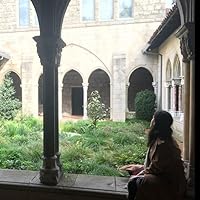
January 25, 2025
1.5 ⭐️
I had to force myself to finish this one. A slow, meandering novel without a point. The writing is terse and charmless: Martin overburdens her sentences with adjectives and clauses and wordy, laboured metaphors. An example: “I watched Luca’s face as this question activated the mechanism that dropped a portcullis across the portal to his high disdaining tower of self-regard.” Did no editors work on this novel?
Pages and pages are filled with boring, minute descriptions of items and places and actions that add nothing to the plot, pacing, atmosphere, or verisimilitude of the novel. And pages and pages are filled with random research factoids that deviate from the plot and add nothing. For example, the two pages of academic-level detail on Italian politics in the 90s in a discussion by two Italians that is simply overhead by the narrator, who then says “I actually didn’t know much or care about Italian politics”. THEN WHY DID I JUST HAVE TO READ TWO PAGES ON IT??
And while we’re taking about the plot: the “betrayal” story that is described on Goodreads and on the back of the book literally only occurs within the last 10 pages. I am not joking. It is an afterthought, perhaps a half-hearted attempt to tie together this uneven mass of writing. This novel drags pointlessly through several different generations and stories that were either anticlimactic, under-developed, or just a research dump of facts on fascist Italy and other miscellaneous topics. Given the onerous amount of detail throughout, it was an incredibly frustrating read as everything felt irrelevant. I couldn’t tell what the main plot was and what was side story because it ALL felt like side-story (I kept waiting for the plot proper to begin, or for all these side-stories to lead to something, but unfortunately they never do). Another example of the irrelevant meandering: there are several pages describing a ferry trip to, and subsequent lunch on, an Italian island. Why? There are some questions only God knows the answer to.
In terms of character, what to say? For starters, prepare for caricatures rather than characters (“EYE-talian”), and for zero character development. Then prepare for any hint at character subtext being spelt out explicitly by the author (because readers are dumb, it seems). Then prepare for an under-developed narrator, who is everywhere and nowhere and thoroughly uninteresting. Lastly, try to ignore the character inconsistencies and the sloppiness of a writer who has, for example, an aristocratic capo di familia who disdains art and the lower classes yet somehow loves the operas of Puccini.
Ultimately, everyone is unlikeable, and as a reader you’re not really rooting for or invested in anyone (this of course is also due to the way the novel jumps around between side-stories). This is one of those stories that just feels shitty to read because it paints the worst of humanity, and because both pathos and redemption are scarce to non-existent (even the attempt to sympathise with Mimma was flaccid, insincere, and overly-sentimental). There’s an undercurrent of meanness throughout. For me, Martin is the inverse of the great Anne Tyler, because she lacks the great charity and compassion that mark and make Tyler’s portraits of humanity.
Most unlikeable of all is Martin herself, with her repeated and lengthy tirades against psychological science and psychiatric medicine (which she calls “pseudo-sciences”), and her right-wing take on treatments such as medication. Medication and therapy saves lives (they certainly saved mine), and reading pages from some hardened boomer pontificating on the damage they do made my blood boil. And to be clear: we’re not talking about Martin condemning brutal, mid-century psychological treatment practices. It is the “present-day” narrator saying all of this, in a novel published in 2019.
One can see the line that Martin was trying to draw between micro and macro level inter-generational stories and trauma and how they echo and repeat through time, but she does it so badly that it doesn’t even remotely land. Overall, a very difficult and unpleasant read. I was relieved when I finished it, to finally to be out of the pit that is this novel and be able to breathe fresh air again. I’m also glad it’s done because it had been on my TBR for a while.
I had to force myself to finish this one. A slow, meandering novel without a point. The writing is terse and charmless: Martin overburdens her sentences with adjectives and clauses and wordy, laboured metaphors. An example: “I watched Luca’s face as this question activated the mechanism that dropped a portcullis across the portal to his high disdaining tower of self-regard.” Did no editors work on this novel?
Pages and pages are filled with boring, minute descriptions of items and places and actions that add nothing to the plot, pacing, atmosphere, or verisimilitude of the novel. And pages and pages are filled with random research factoids that deviate from the plot and add nothing. For example, the two pages of academic-level detail on Italian politics in the 90s in a discussion by two Italians that is simply overhead by the narrator, who then says “I actually didn’t know much or care about Italian politics”. THEN WHY DID I JUST HAVE TO READ TWO PAGES ON IT??
And while we’re taking about the plot: the “betrayal” story that is described on Goodreads and on the back of the book literally only occurs within the last 10 pages. I am not joking. It is an afterthought, perhaps a half-hearted attempt to tie together this uneven mass of writing. This novel drags pointlessly through several different generations and stories that were either anticlimactic, under-developed, or just a research dump of facts on fascist Italy and other miscellaneous topics. Given the onerous amount of detail throughout, it was an incredibly frustrating read as everything felt irrelevant. I couldn’t tell what the main plot was and what was side story because it ALL felt like side-story (I kept waiting for the plot proper to begin, or for all these side-stories to lead to something, but unfortunately they never do). Another example of the irrelevant meandering: there are several pages describing a ferry trip to, and subsequent lunch on, an Italian island. Why? There are some questions only God knows the answer to.
In terms of character, what to say? For starters, prepare for caricatures rather than characters (“EYE-talian”), and for zero character development. Then prepare for any hint at character subtext being spelt out explicitly by the author (because readers are dumb, it seems). Then prepare for an under-developed narrator, who is everywhere and nowhere and thoroughly uninteresting. Lastly, try to ignore the character inconsistencies and the sloppiness of a writer who has, for example, an aristocratic capo di familia who disdains art and the lower classes yet somehow loves the operas of Puccini.
Ultimately, everyone is unlikeable, and as a reader you’re not really rooting for or invested in anyone (this of course is also due to the way the novel jumps around between side-stories). This is one of those stories that just feels shitty to read because it paints the worst of humanity, and because both pathos and redemption are scarce to non-existent (even the attempt to sympathise with Mimma was flaccid, insincere, and overly-sentimental). There’s an undercurrent of meanness throughout. For me, Martin is the inverse of the great Anne Tyler, because she lacks the great charity and compassion that mark and make Tyler’s portraits of humanity.
Most unlikeable of all is Martin herself, with her repeated and lengthy tirades against psychological science and psychiatric medicine (which she calls “pseudo-sciences”), and her right-wing take on treatments such as medication. Medication and therapy saves lives (they certainly saved mine), and reading pages from some hardened boomer pontificating on the damage they do made my blood boil. And to be clear: we’re not talking about Martin condemning brutal, mid-century psychological treatment practices. It is the “present-day” narrator saying all of this, in a novel published in 2019.
One can see the line that Martin was trying to draw between micro and macro level inter-generational stories and trauma and how they echo and repeat through time, but she does it so badly that it doesn’t even remotely land. Overall, a very difficult and unpleasant read. I was relieved when I finished it, to finally to be out of the pit that is this novel and be able to breathe fresh air again. I’m also glad it’s done because it had been on my TBR for a while.
Displaying 1 - 30 of 87 reviews