

What do you think?

Hold On Edna!
THIS HEARTBREAKING, HEARTWARMING, TRUE STORY FOLLOWING THE HISTORY OF A FAMILY IN WALES IS ONE OF THE MOST IMPORTANT BOOKS EVER WRITTEN.'I am a proud supporter of our National Health Service which has shown yet again what an important and valued institution it is in the UK. As the first NHS baby through to her work today, Aneira's story shows her dedication and passion for protecting this phenomenal service for future generations.' KEIR STARMER'This book speaks from the heart about a passion to preserve our NHS - as powerful a symbol of goodness as we have. Nye's own experience and that of her family represents our deep need to fight for a society where all are equal in worth and value. And how the NHS stands fast as a symbol of equality, of fairness, and of compassion for all.' MICHAEL SHEEN'Aneira has written a memoir which is a deeply personal, richly researched and incredibly timely tribute to Britain's commitment to provide free and equal healthcare to all.' - DAILY MAIL Book of the Week, 22 May 2020'Moving tribute to the NHS.' - WI Life_____________________________________________________________'Edna,' says the doctor, coming to stand beside her bed. 'You need to wait. It's not long now. Don't push. Just hold on, Edna!'The birth of the National Health Service coincided with the birth of one little girl in South Aneira 'Nye' Thomas, the first baby delivered by the NHS.This is the touching story of Nye's family - their loves and losses - and the launch of a treasured public service that has touched the lives of every family in the nation.
193 pages, Kindle Edition
Published March 12, 2020
Ratings & Reviews
Friends & Following
Create a free account to discover what your friends think of this book!
Community Reviews
Displaying 1 - 29 of 29 reviews

December 27, 2021
On the fifth of July 1948, a baby girl called Aneira is born just after midnight at the Autman Valley Village Hospital in South Wales, and she’s the first baby to be delivered via the new National Health Service. Her mother, Edna May has had her previous six children at home, delivered by the local midwife and she and her husband Willie find it difficult to comprehend the new free system.
Hold on Edna is written by Aneira ‘Nye’ Thomas, the baby who made history, seventy years later in 2018, and she’s interviewed by the media to celebrate the NHS’s special birthday. Her biography is about the generations of her Welsh family, you follow their stories and daily struggles. From the workhouse, some own small farm holdings and her male relatives worked deep underground in the dangerous coal mines.
Over the years, women died in childbirth, from child-bed fever, and the mortality rate of infants was high. People didn’t have a decent quality of life, they put up with aliments because they were poor and they couldn’t afford to see a doctor. Welsh miners didn’t live long lives, they suffered from miners lung and its official name is Pneumoconiosis. They didn’t receive palliative care, dying at home and with no pain relief.
I received a copy of Hold on Edna from NetGalley and Mirror Books in exchange for an honest review, it was interesting reading about Nye’s family, how she was the first baby delivered by the National Health Service and it's a lasting testimony to her relatives. I live in Australia so I have very little knowledge about the NHS, I can certainly see how it changed healthcare in the United Kingdom, and it provided a much needed free service to everyone and three and a half stars from me.
https://karrenreadsbooks.blogspot.com/
https://www.facebook.com/KarrenReadsH...
Hold on Edna is written by Aneira ‘Nye’ Thomas, the baby who made history, seventy years later in 2018, and she’s interviewed by the media to celebrate the NHS’s special birthday. Her biography is about the generations of her Welsh family, you follow their stories and daily struggles. From the workhouse, some own small farm holdings and her male relatives worked deep underground in the dangerous coal mines.
Over the years, women died in childbirth, from child-bed fever, and the mortality rate of infants was high. People didn’t have a decent quality of life, they put up with aliments because they were poor and they couldn’t afford to see a doctor. Welsh miners didn’t live long lives, they suffered from miners lung and its official name is Pneumoconiosis. They didn’t receive palliative care, dying at home and with no pain relief.
I received a copy of Hold on Edna from NetGalley and Mirror Books in exchange for an honest review, it was interesting reading about Nye’s family, how she was the first baby delivered by the National Health Service and it's a lasting testimony to her relatives. I live in Australia so I have very little knowledge about the NHS, I can certainly see how it changed healthcare in the United Kingdom, and it provided a much needed free service to everyone and three and a half stars from me.
https://karrenreadsbooks.blogspot.com/
https://www.facebook.com/KarrenReadsH...

March 13, 2020
This is the true story of the first NHS baby. We are in South Wales on the night before, when patients still had to pay to be medically treated. Edna was in labour. In fact, Edna's baby was about to be born and it was fast approaching midnight. If Edna would "hold on" formanother minute she wouldn't need to pay and the Midwifes were encouraging her to do this. The story then goes on to tell us about four generations of Nye's family who had battled to survive before the NHS was launched.
I thoroughly enjoyed this book. It's interesting and informative. It sickens me to think that people could o ly be treated if they had money in their pocket to pay for it. We are lucky to have the NHS.
I would like to thank NetGalley Mirror Books and the author Aneira Thomas for my ARC in exchange for an honest review .
I thoroughly enjoyed this book. It's interesting and informative. It sickens me to think that people could o ly be treated if they had money in their pocket to pay for it. We are lucky to have the NHS.
I would like to thank NetGalley Mirror Books and the author Aneira Thomas for my ARC in exchange for an honest review .

February 3, 2024
'Congratulations...your mother truly did make history that night.'
'Well, I might well have been born just before midnight, but I expect the attending doctor would have pushed me back in - just to make sure a Welsh baby was born first!'
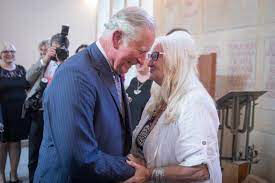
These words were exchanged with the then future king, Prince Charles of Wales, at a function honouring the NHS, and the author and first baby born under the scheme, Aneira (Nye) Thomas had me chuckling, not just the notion but the sheer forwardness of doing so with someone so public and from the Royal family. I may have thought it but I'm not sure I would have been so bold as to utter them.
This book is something different from my usual fare but its concept and history so fascinated me that I opted to do something I don't usually do - spend so much on a book by an author I've never read and therefore have no idea if I will like. But HOLD ON, EDNA! is not just a walk through time peppered in facts and history but it's also a story of one woman's family who, interestingly enough, has a long history in healthcare of the day with her own great-grandmother a midwife to the women of Glamorgan. Even her own parents were working as nurses when they met. And many of her sisters and aunts were also nurses. And yet it didn't end there. Aneira herself also became a nurse and her daughter a paramedic. Her entire life is thanks to the NHS - from her very first breath till no doubt her very last.
On 5th July 1948 at just one minute past midnight, baby Aneira is born in a village hospital in South Wales. The first NHS baby - born under the very scheme that was the brainchild of a Welshman himself (Aneurin "Nye" Bevan) - and Aneira was named in his honour. Her mother, having birthed all of her previous six children at home under the guiding hand of the local midwife, Edna and her husband Willie have some difficulty comprehending this new service being offered to them that will cost them nothing. "It's free!" But it's not charity. It's paid for by the taxpayer and is based on need not wealth. At last a healthcare that is for everyone and not just the rich.
Aneira, also called Nye, details her family's origins as far back as 1834 when her great great grandmother was but a 9 year old child in a Somerset workhouse. But she retells it in such a way, as told to her by her own mother Edna, that you could be reading a Catherine Cookson or Lindsey Hutchinson novel. She keeps it real and yet interesting throughout whilst peppering her own input along the way. One baby, so small and insignificant in the grand scheme of things, whose birth was also that of the UK's National Health Service that for over seventy years has serviced millions of people that 100 years ago in Edna's time would surely not have thrived or even survived. Her story about the generations of her family from the workshouse to the mines, we follow their daily struggles most of which we take for granted today.
Aneira reflects on how had the system been in place in her ancestors' times, the mortality rate would have been considerably lower. Fewer women would have died in childbirth. Fewer children would have succumbed to illnesses that are eaily treatable today. Had the tools available today been available then life may well have been a little easier. But as it were, healthcare wasn't readily available to those unless you could pay for it. So if you were poor, as most were, then had to muddle along as best you could until the inevitable. It wasn't ideal but it was all one could do.
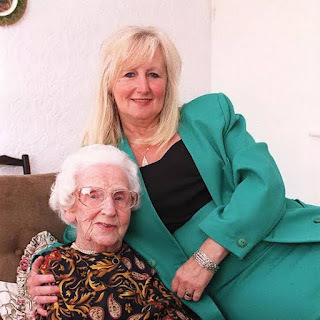
Aneira with her mum, Edna
HOLD ON, EDNA! isn't just Aneira's story. That comes later. This is about her family, their struggles, their lives. And she tells it beautifully drawing parallels with history alongside today, painting a picture that is sure to leave readers thankful that they are lucky to have such a system in place.
Healthcare based on need, not wealth. That is the basis of the NHS and why Nye Bevan fought tirelessly to pass the bill through parliament to ensure that no one need suffer needlessly because they cannot afford basic healthcare. Today we see it as a basic huamn right but it wasn't always. This book reminds us just how lucky we are to have our a public healthcare system in place, where ever we are in the world. It's also a sobering reminder that not every country in the world is lucky to have a health system like the NHS. In Australia, we have Medicare which has only been in place for 40 years (this year) and while it is flawed it is the best system we have and we are lucky to have it...because not everyone does.
I thoroughly enjoyed this book which is not long-winded or bogged down in factual text. It is a quick read that is kept interesting through Aneria's anecdotes as told to her by Edna and is a wonderful compelling read. I loved immersing myself into the era from 1834 through to the 1960s. Despite it being a biography, it doesn't have that droning and boring biographical feel. It is more like Lindsey Hutchinson cross Catherine Cookson peppered with Call the Midwife.
A truly wonderful read.
This review appears on my blog at https://stinathebookaholic.blogspot.com/.
'Well, I might well have been born just before midnight, but I expect the attending doctor would have pushed me back in - just to make sure a Welsh baby was born first!'
These words were exchanged with the then future king, Prince Charles of Wales, at a function honouring the NHS, and the author and first baby born under the scheme, Aneira (Nye) Thomas had me chuckling, not just the notion but the sheer forwardness of doing so with someone so public and from the Royal family. I may have thought it but I'm not sure I would have been so bold as to utter them.
This book is something different from my usual fare but its concept and history so fascinated me that I opted to do something I don't usually do - spend so much on a book by an author I've never read and therefore have no idea if I will like. But HOLD ON, EDNA! is not just a walk through time peppered in facts and history but it's also a story of one woman's family who, interestingly enough, has a long history in healthcare of the day with her own great-grandmother a midwife to the women of Glamorgan. Even her own parents were working as nurses when they met. And many of her sisters and aunts were also nurses. And yet it didn't end there. Aneira herself also became a nurse and her daughter a paramedic. Her entire life is thanks to the NHS - from her very first breath till no doubt her very last.
On 5th July 1948 at just one minute past midnight, baby Aneira is born in a village hospital in South Wales. The first NHS baby - born under the very scheme that was the brainchild of a Welshman himself (Aneurin "Nye" Bevan) - and Aneira was named in his honour. Her mother, having birthed all of her previous six children at home under the guiding hand of the local midwife, Edna and her husband Willie have some difficulty comprehending this new service being offered to them that will cost them nothing. "It's free!" But it's not charity. It's paid for by the taxpayer and is based on need not wealth. At last a healthcare that is for everyone and not just the rich.
Aneira, also called Nye, details her family's origins as far back as 1834 when her great great grandmother was but a 9 year old child in a Somerset workhouse. But she retells it in such a way, as told to her by her own mother Edna, that you could be reading a Catherine Cookson or Lindsey Hutchinson novel. She keeps it real and yet interesting throughout whilst peppering her own input along the way. One baby, so small and insignificant in the grand scheme of things, whose birth was also that of the UK's National Health Service that for over seventy years has serviced millions of people that 100 years ago in Edna's time would surely not have thrived or even survived. Her story about the generations of her family from the workshouse to the mines, we follow their daily struggles most of which we take for granted today.
Aneira reflects on how had the system been in place in her ancestors' times, the mortality rate would have been considerably lower. Fewer women would have died in childbirth. Fewer children would have succumbed to illnesses that are eaily treatable today. Had the tools available today been available then life may well have been a little easier. But as it were, healthcare wasn't readily available to those unless you could pay for it. So if you were poor, as most were, then had to muddle along as best you could until the inevitable. It wasn't ideal but it was all one could do.
Aneira with her mum, Edna
HOLD ON, EDNA! isn't just Aneira's story. That comes later. This is about her family, their struggles, their lives. And she tells it beautifully drawing parallels with history alongside today, painting a picture that is sure to leave readers thankful that they are lucky to have such a system in place.
Healthcare based on need, not wealth. That is the basis of the NHS and why Nye Bevan fought tirelessly to pass the bill through parliament to ensure that no one need suffer needlessly because they cannot afford basic healthcare. Today we see it as a basic huamn right but it wasn't always. This book reminds us just how lucky we are to have our a public healthcare system in place, where ever we are in the world. It's also a sobering reminder that not every country in the world is lucky to have a health system like the NHS. In Australia, we have Medicare which has only been in place for 40 years (this year) and while it is flawed it is the best system we have and we are lucky to have it...because not everyone does.
I thoroughly enjoyed this book which is not long-winded or bogged down in factual text. It is a quick read that is kept interesting through Aneria's anecdotes as told to her by Edna and is a wonderful compelling read. I loved immersing myself into the era from 1834 through to the 1960s. Despite it being a biography, it doesn't have that droning and boring biographical feel. It is more like Lindsey Hutchinson cross Catherine Cookson peppered with Call the Midwife.
A truly wonderful read.
This review appears on my blog at https://stinathebookaholic.blogspot.com/.

April 13, 2020
Wonderful.
The book starts with a birth. Contractions. No long meandering; straight in. It is 1948, and we are in post-war South Wales. Edna is having her 7th baby. So she's done it many times before. She is in hospital, not giving birth at home this time though. Author Aneira, Edna's daughter, is named after Nye Bevan, and was the first child to be born after the start of the NHS.
This isn't just Aneira's story though-it is about all her family. She then goes back to some of her ancestors, eg. her great-great grandmother Tory, who had lived in the workhouse. This is a wonderful piece of history. Interesting facts, family history findings, and from Edna's diaries. The author has also written this from her mother, Edna, telling her tales to her, from conversations. This was fascinating, and so well-researched.
Huddersfield Union Workhouse was mentioned-I am in Huddersfield-and my mum told me where it was, and it was just up the road from where my grandparents lived: to think something like that was so close, and really not that many years ago, the terrible conditions, and hardship.
This was a fantastic book, and there was much more to it than I thought there'd be. Not just about Edna, and Aneira, but about much more-of their ancestors too. I really liked how this was put together. It was not long-winded. Quick, interesting reading, which compels you to press on. Sort of tracing family history mixed with eg. Call the Midwife, and Catherine Cookson type saga-but true in this case.
I loved immersing myself in this era. Hard times, war, what life was like then, having babies at home etc, the midwife calling. Then medical advances, and knowledge about infection control.
Heartbreaking tales, and also some heart-warming stories and lovely memories. The book was simply wonderful.
The book starts with a birth. Contractions. No long meandering; straight in. It is 1948, and we are in post-war South Wales. Edna is having her 7th baby. So she's done it many times before. She is in hospital, not giving birth at home this time though. Author Aneira, Edna's daughter, is named after Nye Bevan, and was the first child to be born after the start of the NHS.
This isn't just Aneira's story though-it is about all her family. She then goes back to some of her ancestors, eg. her great-great grandmother Tory, who had lived in the workhouse. This is a wonderful piece of history. Interesting facts, family history findings, and from Edna's diaries. The author has also written this from her mother, Edna, telling her tales to her, from conversations. This was fascinating, and so well-researched.
Huddersfield Union Workhouse was mentioned-I am in Huddersfield-and my mum told me where it was, and it was just up the road from where my grandparents lived: to think something like that was so close, and really not that many years ago, the terrible conditions, and hardship.
This was a fantastic book, and there was much more to it than I thought there'd be. Not just about Edna, and Aneira, but about much more-of their ancestors too. I really liked how this was put together. It was not long-winded. Quick, interesting reading, which compels you to press on. Sort of tracing family history mixed with eg. Call the Midwife, and Catherine Cookson type saga-but true in this case.
I loved immersing myself in this era. Hard times, war, what life was like then, having babies at home etc, the midwife calling. Then medical advances, and knowledge about infection control.
Heartbreaking tales, and also some heart-warming stories and lovely memories. The book was simply wonderful.

July 26, 2020
This book truly made me realise how grateful we should all be for the NHS. Having grown up with the NHS always being there for whatever I should need from the moment I was born to now working within it it's hard to think of a life without it, especially now whilst mid-pandemic. I felt proud to be a pharmacist for the NHS but even more so after reading this book and seeing the difference its existence has made to just one family's tale. I struggled to comprehend what life must have been like the characters at the beginning of the book, in workhouses and mines, when I've only known a life of free healthcare but it's a perspective I needed to hear in order to appreciate what we have now. In less than 200 pages it has really made me reflect on how lucky we are and how much we must do what we can to protect our NHS to keep it free and available to everyone irrespective of age, gender, race or location.

April 3, 2020
When I saw the cover for this book it immediately put the Call the Midwife books written by Jennifer Worth and their covers. The cover depicts a woman standing in her doorway wearing her pinny with her children peeping round the doorway whilst leaning on a broom chatting to two other women. One of the women is leant on the wall near the doorway with her arms crossed wearing her pinny. One of which has a baby on her hip with her blanket round them. The cover of the book would certainly have made me pick the book up from a bookshelf, though, not necessarily for reading myself. When I worked at a large well known, bookstore years ago the cover would have initially made me think of this book being within the romance & saga section, which is a genre my mum usually loved. Having said that I have read romance & saga type book before myself. Anyhow when I took a closer look at this book, I saw it was a true story, biography, memoir so that held m interest. As the book was about the NHS it also piqued my interest as to what life could or would be like without the NHS to rely on.
The book begins with the author’s mother in quite late labour and both the Doctor and Nurse attending telling her to “Hold On Edna” which is perfect as the title for this book. The Doctor and Nurse are asking Edna to wait a minute or two so that when she gives birth it is after midnight, which she does manage to do. This means her daughter who she calls Aniera at the suggestion of the Doctor, after the man that brought about the NHS is the first baby born on the NHS as it becomes operational the 5th July 1948. The NHS a new way for women to safely give birth free of charge. In fact, it is revealed within the book that had Edna’s daughter been born before the stroke of midnight she would have had to pay. Which is why so many people avoided hospitals as much as possible! They basically did not earn enough. This book has some heart-breaking and touching tales from the mining communities of South Wales are the story of how our society changed to one no longer gripped by fear of death and disability. Nye puts it best when she says of universal healthcare: “We see it as a basic human right, but it wasn’t always the case. Sadly, we look at todays NHS and the pressure it is under during this corona virus outbreak. Even before this the politicians were slashing the money they give to the NHS and privatising different sections of it. It sometimes feels like we are going backwards and will have the old system of if you don’t have the money to pay for treatment then you will literally do without. The book goes on with Aneira looking back at her past, tracing her ancestors how they lived, what sort of financial status they had and their experiences of giving birth, losing babies as well as accidents and illnesses and how they were dealt with at that time when no NHS was in place.
One of Aneira’s ancestors we learn about is her great-great grandmother Tory whose father died when she was born, meaning her family end up in the workhouse. We join Tory Churchouse’s story when she is just 9yrs old, making her one of the older children at the workhouse. Tory is slight in build, dark haired and quite pale but is much healthier than some in the workhouse. Tory notices when she looks around that everyone in the workhouse looks ill. Whether it’s a limping leg, missing teeth, slurred speech, hunched backs, or arms inexpertly amputated at the elbow and sewed up again. The workhouse is truly gruesome, but it’s made her tough. At night, screams fill the air coming from the infirmary. Tory is used to hearing the hacking coughs and sneezes from her own ward but they are nothing compared to the shouts of pain that come from the workhouse hospital, where the invalids are kept, locked away. Tory’s sister is in the infirmary, and she longs to see her but it is not allowed. Aniera tells the history of her family from Tory right back down to her being born. It is an emotional story, with happy moments of families being together and births and good times. Though there is also the lack of work, working down dark, sometimes unsafe pits where acccidents are a regular occurrence. There are stories of one of her ancestors being a “midwife” or rather as she would have been called in her day a “handy woman”. In fact, there is a slightly amusing tale where the father of the young woman’s baby is not known, yet when Hannah (Aneira’s ancestor) safely delivers the baby it is totally clear that she has just delivered her own grandchild! The book also reveals that families were large and miscarriages and stillbirths were categorised as “one of those things” there were no tests to find out why the baby was lost. There was also no contraception so women tended to have baby after baby despite them living in poverty and not really having the money to feed them. There was no choosing how many children you wanted, it was a case of it happened when it happened. The book is quite matter of fact about the types of lives Aniera’s relatives had, and what hardships they had to live though.
The writing style of the book makes you feel like Aniera is there at the side of you telling the story. The descriptions are so good that it makes it very easy to visualise their surroundings and living conditions. From the oldest ancestor Tory, right the way to the present day Aneira you track how the family have lived and started off very poor and how they could die of by todays standard pretty minor injuries or illnesses as they didn’t have the money to pay for medication or medical help. Then you compare all that to the day the NHS began and Edna gives birth to Aniera. Edna’s first hospital birth, because it was free on the NHS.
My immediate thoughts upon finishing this book were that I had on the whole really enjoyed reading the history of the family of Aneira Thomas who was the first baby to be born on the NHS. The title fits the book so well. As you read about Aneira's ancestors you can visualise them and their surroundings along with hearing their voices too. Interesting from a historical point of view about NHS but also as a biography of Edna the woman who had the first baby born on the NHS.
To sum up, on the whole I found the book interesting, even though it wasn’t what I had initially thought it would be like. I had thought the book would be more about how the NHS was formed and Nye Bevin the person who was responsible for it, however, the book was more about Aneira and her family.
The book begins with the author’s mother in quite late labour and both the Doctor and Nurse attending telling her to “Hold On Edna” which is perfect as the title for this book. The Doctor and Nurse are asking Edna to wait a minute or two so that when she gives birth it is after midnight, which she does manage to do. This means her daughter who she calls Aniera at the suggestion of the Doctor, after the man that brought about the NHS is the first baby born on the NHS as it becomes operational the 5th July 1948. The NHS a new way for women to safely give birth free of charge. In fact, it is revealed within the book that had Edna’s daughter been born before the stroke of midnight she would have had to pay. Which is why so many people avoided hospitals as much as possible! They basically did not earn enough. This book has some heart-breaking and touching tales from the mining communities of South Wales are the story of how our society changed to one no longer gripped by fear of death and disability. Nye puts it best when she says of universal healthcare: “We see it as a basic human right, but it wasn’t always the case. Sadly, we look at todays NHS and the pressure it is under during this corona virus outbreak. Even before this the politicians were slashing the money they give to the NHS and privatising different sections of it. It sometimes feels like we are going backwards and will have the old system of if you don’t have the money to pay for treatment then you will literally do without. The book goes on with Aneira looking back at her past, tracing her ancestors how they lived, what sort of financial status they had and their experiences of giving birth, losing babies as well as accidents and illnesses and how they were dealt with at that time when no NHS was in place.
One of Aneira’s ancestors we learn about is her great-great grandmother Tory whose father died when she was born, meaning her family end up in the workhouse. We join Tory Churchouse’s story when she is just 9yrs old, making her one of the older children at the workhouse. Tory is slight in build, dark haired and quite pale but is much healthier than some in the workhouse. Tory notices when she looks around that everyone in the workhouse looks ill. Whether it’s a limping leg, missing teeth, slurred speech, hunched backs, or arms inexpertly amputated at the elbow and sewed up again. The workhouse is truly gruesome, but it’s made her tough. At night, screams fill the air coming from the infirmary. Tory is used to hearing the hacking coughs and sneezes from her own ward but they are nothing compared to the shouts of pain that come from the workhouse hospital, where the invalids are kept, locked away. Tory’s sister is in the infirmary, and she longs to see her but it is not allowed. Aniera tells the history of her family from Tory right back down to her being born. It is an emotional story, with happy moments of families being together and births and good times. Though there is also the lack of work, working down dark, sometimes unsafe pits where acccidents are a regular occurrence. There are stories of one of her ancestors being a “midwife” or rather as she would have been called in her day a “handy woman”. In fact, there is a slightly amusing tale where the father of the young woman’s baby is not known, yet when Hannah (Aneira’s ancestor) safely delivers the baby it is totally clear that she has just delivered her own grandchild! The book also reveals that families were large and miscarriages and stillbirths were categorised as “one of those things” there were no tests to find out why the baby was lost. There was also no contraception so women tended to have baby after baby despite them living in poverty and not really having the money to feed them. There was no choosing how many children you wanted, it was a case of it happened when it happened. The book is quite matter of fact about the types of lives Aniera’s relatives had, and what hardships they had to live though.
The writing style of the book makes you feel like Aniera is there at the side of you telling the story. The descriptions are so good that it makes it very easy to visualise their surroundings and living conditions. From the oldest ancestor Tory, right the way to the present day Aneira you track how the family have lived and started off very poor and how they could die of by todays standard pretty minor injuries or illnesses as they didn’t have the money to pay for medication or medical help. Then you compare all that to the day the NHS began and Edna gives birth to Aniera. Edna’s first hospital birth, because it was free on the NHS.
My immediate thoughts upon finishing this book were that I had on the whole really enjoyed reading the history of the family of Aneira Thomas who was the first baby to be born on the NHS. The title fits the book so well. As you read about Aneira's ancestors you can visualise them and their surroundings along with hearing their voices too. Interesting from a historical point of view about NHS but also as a biography of Edna the woman who had the first baby born on the NHS.
To sum up, on the whole I found the book interesting, even though it wasn’t what I had initially thought it would be like. I had thought the book would be more about how the NHS was formed and Nye Bevin the person who was responsible for it, however, the book was more about Aneira and her family.

July 7, 2022
I was hooked from page one of this book, brilliantly written by Aneira Thomas. She takes us back in time to the 1800s and describes in vivid detail how her ancestors suffered with little or no healthcare available to them. We learn of the early days of the NHS and how people's lives changed from then on for the better.
The modern day NHS is not fit for purpose; it is under-funded and over-stretched. People (when able to) are having to pay to go private due to unbelievably long waiting lists for treatment or assessments. The system is abused by some, to the detriment of others. Having said that, I do feel lucky to be alive in an era where we have the NHS, when it works that is!
The modern day NHS is not fit for purpose; it is under-funded and over-stretched. People (when able to) are having to pay to go private due to unbelievably long waiting lists for treatment or assessments. The system is abused by some, to the detriment of others. Having said that, I do feel lucky to be alive in an era where we have the NHS, when it works that is!
April 9, 2021
A very interesting family story and an explanation of how the NHS revolutionised health are and made it accessible to everyone that needed it without having to pay the costs for treatment. I thoroughly enjoyed this book.

October 17, 2020
Thank you for the publishers for providing me with a copy to read!
This could easily have fallen short or flat or felt too personal for the reader to connect to, but she makes these names familiar to us and in a way, we feel connected to them. Although this does fall prey to a few telltale signs of a debut author, such as over description or dramatisation in some parts, overall it reads very well. There's isn't any awkwardness to the writing, something I was surprised by. It's clear that a lot of time, effort and love went into telling her family's history.
The timing of this book is also impeccable. I'm sure Thomas wasn't expecting her book to be released amidst a pandemic but it adds another layer of appreciation to this already heartwarming true story. While we're reading about people suffering from injuries and illnesses that today would be a simple trip to the GP, it adds gravitas to the situation we're all in. Those of us lucky enough to access the NHS realise how much of it we may have taken for granted, knowing that if we break our ankle we have somewhere to go where we'll be treated, without it being a financial burden. I finished this book with a sense of ease, a welcome reminder that the NHS has always been there for me and will continue to do so. This was a brilliant debut novel and I'm grateful that I was given a chance to read it!
This could easily have fallen short or flat or felt too personal for the reader to connect to, but she makes these names familiar to us and in a way, we feel connected to them. Although this does fall prey to a few telltale signs of a debut author, such as over description or dramatisation in some parts, overall it reads very well. There's isn't any awkwardness to the writing, something I was surprised by. It's clear that a lot of time, effort and love went into telling her family's history.
The timing of this book is also impeccable. I'm sure Thomas wasn't expecting her book to be released amidst a pandemic but it adds another layer of appreciation to this already heartwarming true story. While we're reading about people suffering from injuries and illnesses that today would be a simple trip to the GP, it adds gravitas to the situation we're all in. Those of us lucky enough to access the NHS realise how much of it we may have taken for granted, knowing that if we break our ankle we have somewhere to go where we'll be treated, without it being a financial burden. I finished this book with a sense of ease, a welcome reminder that the NHS has always been there for me and will continue to do so. This was a brilliant debut novel and I'm grateful that I was given a chance to read it!

April 19, 2020
What an interesting, and very personal, look at the history of health care in England and Wales over four or five generations.
Aneira Thomas is uniquely suited to this consideration of what the birth of the NHS meant to ordinary working people as her own birth occurred at almost exactly the same time - she was the first person ever to be born into this new world where you did not have to worry about the cost of health care as it is provided as an inalienable right, paid for by National Insurance.
The pre-1948 chapters are oral family history expanded or explained through historic research to give a very personal basis for the relief felt in those early years of the NHS, and the way in which it has intertwined through Nye's own life.
It was lovely to read, at the end, that she had been a guest at the Great British Menu dinner in 2018 that celebrated 70 years since both Nye and the NHS were born.
.
Aneira Thomas is uniquely suited to this consideration of what the birth of the NHS meant to ordinary working people as her own birth occurred at almost exactly the same time - she was the first person ever to be born into this new world where you did not have to worry about the cost of health care as it is provided as an inalienable right, paid for by National Insurance.
The pre-1948 chapters are oral family history expanded or explained through historic research to give a very personal basis for the relief felt in those early years of the NHS, and the way in which it has intertwined through Nye's own life.
It was lovely to read, at the end, that she had been a guest at the Great British Menu dinner in 2018 that celebrated 70 years since both Nye and the NHS were born.
.
April 18, 2021
Excellent book, I initially thought it might be quiet dry, but found full of warmth, compassion and humour.
It was well written combining the then and now very well, and amplified just how much the idea of one man, built on ideas and observations dating from times gone by, benefitted a whole country’s health and future quality of life.
Some of the history I knew but add to that the personal family insights and the present situation of the pandemic, not matter how much we grumble and grouse about the waiting times , doctors etc we are the luckiest country in the world, what we as citizens chose to do with/ about the amazing opportunities our unique welfare system gives us, is up to each individual.....but we at least have that choice.
Excellent read
It was well written combining the then and now very well, and amplified just how much the idea of one man, built on ideas and observations dating from times gone by, benefitted a whole country’s health and future quality of life.
Some of the history I knew but add to that the personal family insights and the present situation of the pandemic, not matter how much we grumble and grouse about the waiting times , doctors etc we are the luckiest country in the world, what we as citizens chose to do with/ about the amazing opportunities our unique welfare system gives us, is up to each individual.....but we at least have that choice.
Excellent read
April 13, 2020
Interesting reflections on the need for the NHS
I will start by saying that I really enjoyed the story of the first baby born to the newly formed NHS in 1948. However, this is not in itself a story about the beginnings of the NHS but is more a personal history of the authors ancestors and the reasons why the NHS is so important. As a result I found the first four chapters hard going as it was based around characters which I couldn’t work out why and how they linked to the story of the NHS. I am so glad I persevered though as once I came to realise why we were following these early ancestors, the story became much more engaging and I really warmed to the family. As a result, I constantly reflected on how my ancestors must have coped without the support of our free and brilliant National Health Service.
I will start by saying that I really enjoyed the story of the first baby born to the newly formed NHS in 1948. However, this is not in itself a story about the beginnings of the NHS but is more a personal history of the authors ancestors and the reasons why the NHS is so important. As a result I found the first four chapters hard going as it was based around characters which I couldn’t work out why and how they linked to the story of the NHS. I am so glad I persevered though as once I came to realise why we were following these early ancestors, the story became much more engaging and I really warmed to the family. As a result, I constantly reflected on how my ancestors must have coped without the support of our free and brilliant National Health Service.

September 15, 2022
I really loved this book! It tells a great story of the struggles with childbirth and general lack of medical attention throughout history and you experience heartbreak along with the characters that are lost through mystery medical illnesses that are common to us in a modern world.
The only reason I didn’t give this book 5 stars is because it can get a little confusing at times with the sheer amount of names and people mentioned, so I had to flick back a lot of the time to remind myself of who was who… but overall, a great read! Very emotional
The only reason I didn’t give this book 5 stars is because it can get a little confusing at times with the sheer amount of names and people mentioned, so I had to flick back a lot of the time to remind myself of who was who… but overall, a great read! Very emotional

March 9, 2021
I think the title is deceptive and you may dismiss this as another ten a penny nostalgia trip. However it is a well written socially historical book referencing the authors own family history. She brings her ancestors to life in a very captivating way and the hardships of the past and the resulting circumstances that altered their well being and geography. I would highly recommend as it is highly relatable.

May 14, 2020
A thought-provoking insight into the effect health care (and the lack there off) has affected the life of one British family through the past 150 years, as told by the first baby born in the NHS.
At times the correlations between family history and health care felt a bit forced, like 2 books combined into 1, but for those who love history like myself it was an interesting and unique read.
*I received a free copy through Netgalley, but the review is my own opinion*
At times the correlations between family history and health care felt a bit forced, like 2 books combined into 1, but for those who love history like myself it was an interesting and unique read.
*I received a free copy through Netgalley, but the review is my own opinion*
September 1, 2020
Interesting and easy to read - gtipped by these families and their history
I really enjoyed this book. The stoties and histories of very real individuals brought back to life. Although my own family went through the same problems - my Grandmother died at 33 when her children were 5 and 2, with no help., I had never thought of the NHS in this way. Superb and very well written
I really enjoyed this book. The stoties and histories of very real individuals brought back to life. Although my own family went through the same problems - my Grandmother died at 33 when her children were 5 and 2, with no help., I had never thought of the NHS in this way. Superb and very well written
January 30, 2025
This non-fiction is written by the first person to be delivered under the NHS. A moving story of a family from South Wales mining community as they deal with ongoing working difficulties. It is amazing that the first ‘NHS baby’ has been able to write this account in such a vivid and interesting way.
May 2, 2020
Well written memoir of A family and NHS
I am an avid reader of memoirs this book wove her together beautifully her family history with the history of the NHS. I highly recommend this book. Especially now more than ever.
I am an avid reader of memoirs this book wove her together beautifully her family history with the history of the NHS. I highly recommend this book. Especially now more than ever.
October 11, 2020
NHS
Great story of how people survived before the NHS and how they lived with it. I've enjoyed learning new things and thanking the NHS for their continuing support. All the Drs and nurses, cleaner and all those behind the scenes I thank you xx
Great story of how people survived before the NHS and how they lived with it. I've enjoyed learning new things and thanking the NHS for their continuing support. All the Drs and nurses, cleaner and all those behind the scenes I thank you xx

January 27, 2025
Such an engrossing story and very well written. And it was written in imaginatively intriguing way. The author goes back more than a century re-telling the story of several ancestors who work into the way she came to be the first baby delivered during the era of the NHS in Great Britain.
May 13, 2020
Beautifully written
This story is lovely happy sad a really feel good story
You feel like one of the family. You feel there pain
This story is lovely happy sad a really feel good story
You feel like one of the family. You feel there pain

September 14, 2020
such an interesting read, not a line wasted. i didn’t know what to expect but i loved this book.
it was very honest and very well written !!
it was very honest and very well written !!

August 5, 2023
Hold on Edna
Loved reading this book story of midwives and there families also the start of the NHS and free treatment for all
Loved reading this book story of midwives and there families also the start of the NHS and free treatment for all

March 8, 2024
A must read ! Interesting and informative 😊👍
March 12, 2020
This is a brilliant piece of social history with real life stories woven into it, which makes for an enthralling read. Detailing life for the poorer generation in particular- think the workhouse- and the difference brought about by the introduction of the NHS. The title refers to the birth of the author and the birth of the NHS. Informative and a great read. Thank goodness for our NHS!

March 11, 2020
A very interesting and well written story that makes you thankful for what we've got today.
It's well researched and it keeps you hooked till the end.
An engrossing read, recommended.
Many thanks to the publisher and Netgalley for this ARC, all opinions are mine.
It's well researched and it keeps you hooked till the end.
An engrossing read, recommended.
Many thanks to the publisher and Netgalley for this ARC, all opinions are mine.

February 18, 2020
Interesting read
August 14, 2022
Absolute brilliant!
December 31, 2023
Everyone should read this book to appreciate the NHS a lot more. Beautifully told.
Displaying 1 - 29 of 29 reviews