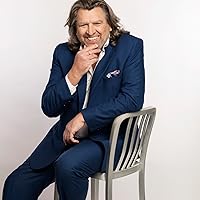
Christopher Pyne has been many things and called many things throughout his long career in politics. Member for Sturt. Minister for Defence. Manager of Opposition Business. Leader of the House. 'The Fixer'. Any Canberra story he doesn't know isn't worth telling.
Now, after 26 years, the ultimate insider is outside the House and ready to burst the Canberra bubble with his trademark sharp wit. His revelations of dealings, double dealings, friendships and feuds shine a light on the political processes of those in power: the egos, the sacrifices, the winners, the losers, the triumphs and the failures. From Howard to Rudd, Gillard, Abbott, Turnbull and Morrison, Christopher Pyne has seen and heard it all. THE INSIDER is one of the most brilliant, funny, engaging books by an Australian public figure you'll ever read.
Christopher Pyne is a generous and jolly chap who can tell a good story. From his memoir, it was interesting to learn his focus since very young was to always be in parliament. No outside 'real world' experience, just a healthy ego to move to parliament to achieve his goals through service.
What a wonderfully privileged life he has had for a quarter of a century, now in the 'real world' to test his skills, with a healthy lifetime pension to support his new career. I'm sure he will be trotted out again to talk politics at elections because he is a quality raconteur.
I read his book hoping for jaw-dropping insider knowledge. There was none.
Christopher talks about his many memorable political moments since 2007 he was involved, but only from a perspective from what we already knew. It's an easy quick read but it certainly doesn't meet the promise of the title. There really is nothing new and the 'insider' tag is a furphy.
He brushes over the four Coalition leadership challenges since 2007 and implies that although he was involved, he wasn't a central player in any of them. He can't have it both ways - you are either a moderate leader or you're not. He implies he is both which he can't be but doesn't say so. Maybe he is overstating his influence or understating his Machiavellian ways.
He paints a whitewash over the political dark arts and perhaps this is the expectation letdown from reading his book. Maybe he remains ambitious for a foreign posting and can't report too many provocative anecdotes, to keep in favour; but frankly, he joins other former politicians with their lightweight accounts of the drama that exists within the parliament.
Christopher matches his jolly personality with this memoir writing, and his healthy ego evident in every page; it's an easy read, but if you follow politics you won't put it down having learned anything new. If you don't you'll have a smile.
I think when politicians leave office and publish a memoir its more about trying to justify their own actions and decisions. To say, 'see I was a good person. I had your best interests.' Considering this book covers some of the most turbulent political leadership changes in recent Australian history, I think this is no different. I got the sense that while he didn't weld the knife, he certainly walked over the body to congratulate the victor. But then that's largely what politics is all about, even if it is somewhat disconcerting.
What I did find interesting was the behind the look at some of those political machinations. Don't think I will look at politics and the Liberal Party in quite the same way again.
Christopher Pyne is a true character and I was excited to pick this up. Subsequently let down. The title “The Insider” hints at stories and behind the scenes gossip that I was keen to hear about, but alas nothing.
. “One of the most brilliant, funny and engaging books by an Australian public figure you will ever read.” Booktopia’s blurb. Given that, I was really looking forward to reading Pyne’s inside account of Parliament over the last quarter century. He early on stated: “The Liberal Party is made for government. That is its construction.” Labor? Oh, that’s just for trade unionists. “Labor’s favourite pastime is playing politics.” That sets the tone for his honesty and arrogance. He liked Abbott – in fact he brown-nosed every leader from Howard through Turnbull to Morrison, never mind that two of them at least loathed each other, which seems to say something about his, er, flexibility? sycophancy? He refers to “the horror for the 43rd Parliament”, meaning Gillard’s, referring to Craig Thompson, Slipper, but doesn’t mention that her minority government in 3 years passed more progressive legislation than any other Parliament in recent history! (To use Pyne’s favourite punctuation mark). Abbott, Turnbull and Morrison on the other hand have passed little that was constructive, plenty that was destructive. He blames Gillard for that old lie about never putting a tax on carbon: she didn’t, as an ETS is not a tax, which Peta Credlin with a gotcha smirk later admitted. When Labor pulls a political trick it is “Taliban-like” in its ruthlessness, (that was over some Liberals mistaking that Parliament had not closed) while thoroughly endorsing Abbott’s “war on all fronts and at all times” as good politics not just ruthlessness. He is less than honest. Julia Banks went to the cross bench “in a fit of pique” when Turnbull was deposed, not because of the sexism of the House and of Morrison in particular. In fact he doesn’t mention sexism as such, although very gung ho on same sex marriage. He completely denies the suggestion that Morrison manipulated the numbers to get rid of Turnbull first, then Dutton second. Rather he saw himself as a brilliant ringmaster, scuttling between groups in order “to deliver the moderate”, Morrison! Moderate? Morrison? At which point he (rightly) thinks its time to go, and delivers a valedictory speech that even Bill Shorten praised: Pyne includes the speech for our delectation and admiration. Pyne prides himself on being liked by all sides for his humour, Turnbull says he is the most entertaining of dinner guests, but judging by this book, he comes across rather as self-righteous, self-obsessed, arrogant, dishonest. But funny? Not once did I even suppress a giggle.
If hell is an individualized experience, locked to eternity in your own personal torment, then being stuck in a cell with this book as the only entertainment available is the most unendurable anguish I could possibly think of.
This. Book. Is. Awful.
If you are after a book listing all the great friends this man has, all the dinners he attended, and smug recollections of lame jokes, then this is it.
Honest to god. I am trying to read more from people with differing ideas, but unlike Turnbull's book, this book does not offer one iota of insight other than a ode to ego. The lack of self awareness of this partisan is astonishing. His frequent references to the common folk (Bob and Nancy stringbag) come across as so contrived that you can tell this is a human who has never ventured from beyond his ivory tower or done any blue collar work once in his life. The word values is not mentioned once at all.
No insight unfortunately, no introspection on the role of democracy. No meditations on how Australia can change it's place in the world with the geopolitical challenges faced, the widening class gap, unattainable mortgages, the challenges or rural Australia, indigenous imprisonment or climate change impacts. No insight into why or how the liberal party offers more clever policy nause that can assist Australia face the global economy or entrenched social issues. But if you are in the mood for some "witty" remenicense on how Pyne once slept in the lodge or how where he ate a meal or had a ... drinks party (Who the hell calls a party a drinks party?!) then this is the book for you
So yeah. This book is 0/5 but Goodreads doesn't allow that. Avoid.
There have been many insightful, thoughtful and entertaining books written by retired politicians.
This is not one of them.
This is a book that make you wonder why exactly Pyne thought he wouldn't fit in with the Morrison government. It ticks all the same boxes: it's boastful, lacking in substance, overly triumphal, written at an approximately Year 10 level (seriously, the copy editor should lose their job for the lack of clarifying commas alone), believes itself to be smarter than it actually is, and is, above all else, an exercise in pretending to get a little egg on one's face in order to better cover one's arse.
It also reveals Pyne, a man who sat in the Federal Parliament for nearly three decades, to be shockingly naive (a politer term might be idealistic) about who votes for both the LNP and the ALP.
In short, even hardcore political junkies can safely skip this one, as it will add little to their understanding of events from 2007 to 2019. Still, it will probably be the definitive work, and indeed, political headstone, of the Lupine Wonse of Australian politics.
Summary: The Insider moves through Christopher Pyne's career in stages, but as the name suggests doesn't really provide any remarkable information not already available elsewhere. I suppose it provides his specific viewpoint of notable political events that he observed, but even this is a bit fuzzy as his values and beliefs aren't well defined throughout the book. I would have been more engaged had there been more reflection on this and on the rights and wrongs of political life, but The Insider provides a light, and thus rather unremarkable, summary of a career of someone with a front row seat to Australian politics. There are a number of instances where he compares circumstances to obscure historical events that just came across as strange and out of place. He talks about being a history buff so must have been keen to jam them in there, but they fell flat for me.
I would recommend this book to anyone specifically interested in Christopher Pyne's career, but other than that, I'm unlikely to recommend it.
The main message I took from this book is that politicians have dinner together a lot.
Some notable points: - The Liberal party is made for government, that's its construction. Labor is the party of the labour movement. The Liberal party is not well designed for being in opposition (many would questions its suitability for being in power too).
- There's nothing worse in life than a fair weather friend.
- A basic principle of liberal democracies that the majority should not bind the minority.
- One new migrant creates four new jobs. Shifting the entrenched Australians often hold that migrants take jobs from them is difficult, but aided through lived experience.
- There are Australian military personnel in every American state, either serving or embedded in one capacity or another.
Chris Pyne has a way of saying a lot without really saying anything. One can get the sense of how much fun it would be to get on the turps with Pyne but he's one of the last people I'd want representing my electorate and his Zionist views on Israel are pretty horrid.
Apart from the lies on Labor's military spending and some ahistorical retellings of campaigns, Pyne scores points here for at least being able to be self deprecating and for owning up to the spraying of room cleaner which he though was nasal spray into his sinuses.
He did get the anti Shorten sentiment right to some extent but failed to mention the astroturfing and dirty tricks of the LNP's 2019 campaign. If you're hoping to read a detailed, historical and factual account of one Australia's longest serving politicians then you'll be disappointed. If you're after a laugh and some shallow insight into the dog eat dog world of the LNP then you'll likely enjoy parts of this book.
Overall it's pretty hilarious to read this in 2022 after Scott Morrison's defeat, the submarine debacle, systemic corruption and the "Prayer Room" allegations as a lot of what Pyne yammers on about is now redundant and the only thing he got right was that kowtowing to the hard right of the party would destroy it.
Having said all that it would be easy to give this book only 1 star but I had to give an extra star for the fact that Pyne at least kept his story brief and gave more insight into Turnbull's demise than Turnbull did himself in his own bible sized self-flagellating book of ponce.
I don't usually read books about politicians, however I had resolved to read some different fare in 2023. Although by no means an expert on the achievements of Christopher Pyne, I nevertheless have a sneaking liking for the man, based on one television interview I saw. Interviewer: Why can't you tell us the details (of the funding). CP: I want it to be a surprise. A little humour is a break from the generally dreariness of political interviews. I would probably give this book a score of 3.7. We do learn something about insider politics, but sandwiched in between a lot of tedious factual details of dates and names. I have a feeling there is more "glossing over" going on than "great revelations". Some of the content would have been well and truly hashed over in the media. At about 300 pages this is a solid read, and I wished that there had been more of the author's humour showing through. For those with a mild interest in political history, this is not a bad choice. Experts may want to look elsewhere.
Like a politician's pre-election promise, the title of this book failed to deliver. Pyne was a Member of Parliament during a period which saw a revolving door of Prime Ministers from both major parties. He hasn't divulged any more information than can be gleaned from newspapers of the day. The only readers who could possibly learn something new from this book are the loyal Labor voters who still believe that The Greens blocked progress on climate action.
Pyne is a career politician who had no 'real life' experiences to bring to the table. He left parliament of his own free will, at a time when his party was expected to lose government, but didn't. Soon after, he walked into a highly paid consulting position in the defence industry, prompting a Senate investigation into a potential breach of Ministerial Standards. It is apparent from this lightweight offering that Christopher Pyne is looking out for Christopher Pyne's future career opportunities.
Christopher is a genuine political animal but clearly one with good intentions and with a lot of skill to bring to the job. He achieved much in his long successful political career and departed in good grace and young enough to have a life afterwards. I read the book to get another view of the events of the turbulent years which revolved around Abbott, Gillard, Rudd, Turnbull and Morrison. I was not disappointed and his input has broadened and tempered my views.
I've never as much agreed with his policies, but reading this memoir was an interesting view of the other side of the fence. I've often forgotten that politicians are actually people, and deserve the same amount of respect that You, or I, or the person next door deserves.
I would recommend this book to any person who is politically minded, regardless of which side of the room they vote.
uproariously funny and a great read on Australian politics, no matter your political inclinations. Too many political books these days are written and launched for the sake of a 'book tour'. This may well be that, but unlike the others, this one is readable.
A very easy and engaging read about the ‘Canberra Bubble’ during some turbulent times. Christopher Pyne is likeable, tells a good story, and provides an interesting perspective on some of the behind the scenes dealings of politicians. His love of the parliamentary process shines through.
Not many fresh "scoops" from Pyne in this one, but still an enjoyable time with one of the most iconic political raconteurs of the last 30 years. Well written in his wry humourous voice, although an unsurprising dissection of the turbulent years of the former Liberal government.
An excellent, insightful and entertaining inside look into politics in Australia. Despite not agreeing with the author on many things, it's difficult to deny that he is a genuine and impressive political figure
The audiobook is very good. You get used to the plummy South Australian accent and can then enjoy this genuine and honest take on recent political history.
Interesting account from an “Insiders” perspective. A large part of this book is devoted to the power plays and ousting of the elected Prime Ministers by ambitious party members than by the people.
Christopher Pyne's "The Insider: The Scoops, the Scandals, and the Serious Business within the Canberra Bubble" is a self-indulgent exercise in political navel-gazing that falls woefully short of providing any substantive insights into the workings of Australian politics. This paperback reads more like an extended gossip column than a serious exploration of the inner workings of the Canberra bubble, offering little more than a collection of anecdotes and trivialities.
Pyne's writing style is as superficial as the content it conveys. The prose lacks depth and intellectual rigor, making it a challenge to glean anything of value from the purported "insights" scattered throughout the book. Instead of delving into the intricacies of policy-making or offering a reflective analysis of his political career, Pyne seems content to regale readers with superficial tales of parliamentary antics and socializing.
The so-called scoops and scandals promised in the title turn out to be little more than mundane occurrences blown out of proportion. Pyne's attempts to paint himself as an insider with privileged knowledge fall flat, as the anecdotes presented fail to reveal anything of true substance. The book is more a glorified diary of Pyne's social engagements than an expose on the inner workings of Australian politics.
Furthermore, Pyne's penchant for self-aggrandizement is cringe-worthy. The constant name-dropping and thinly veiled attempts to portray himself as a political maestro reek of egotism. The lack of humility or self-awareness undermines any potential for genuine reflection, leaving readers with a narrative that is as insipid as it is self-serving.
The book's failure to grapple with the serious issues facing Australian politics is a glaring flaw. Pyne's glossing over of significant policy debates and his reluctance to engage with the substantive challenges of his political career make "The Insider" a missed opportunity for a meaningful contribution to the understanding of Australian governance.
In conclusion, "The Insider" is a lackluster and self-congratulatory memoir that offers little to readers seeking a substantive exploration of the Canberra bubble. Christopher Pyne's attempt at being an insightful political commentator falls short, leaving readers with little more than a glimpse into the trivialities of his social calendar rather than a genuine understanding of the serious business of Australian politics.