Jump to ratings and reviews
Rate this book

Savage Coast

Rate this book
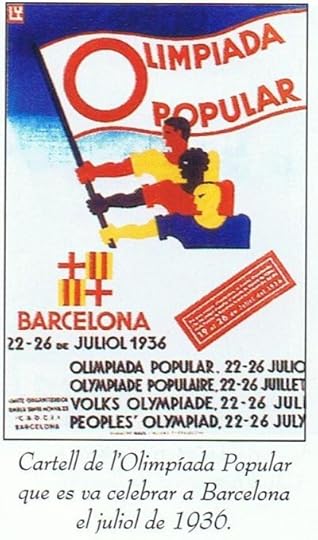
Muriel Rukeyser se encontraba de viaje en Barcelona para cubrir la Olimpiada Popular que debía celebrarse en la ciudad condal, pero que no llegó a hacerse porque tan solo unos días antes estalló la Guerra Civil. Desde una posición privilegiada, Rukeyser presenció y participó en la lucha del Frente Popular contra el golpe de estado, y escribió como resultado una novela autobiográfica que en aquel momento no llegó a publicarse. Recuperada ahora de su archivo, esta obra ofrece un testimonio narrativo excepcional sobre el inicio de la guerra, sobre el impacto en los periodistas y deportistas que se encontraron atrapados en Barcelona, sobre cómo muchos se alistaron a las Brigadas Internacionales y sobre cómo se enamoró de un exiliado alemán.

400 pages, Paperback

First published January 15, 2013

25 people are currently reading
475 people want to read

About the author

Muriel Rukeyser

84 books155 followers
Muriel Rukeyser was an American poet and political activist, best known for her poems about equality, feminism, social justice, and Judaism. Kenneth Rexroth said that she was the greatest poet of her "exact generation".

One of her most powerful pieces was a group of poems entitled The Book of the Dead (1938), documenting the details of the Hawk's Nest incident, an industrial disaster in which hundreds of miners died of silicosis.

Her poem "To be a Jew in the Twentieth Century" (1944), on the theme of Judaism as a gift, was adopted by the American Reform and Reconstructionist movements for their prayer books, something Rukeyser said "astonished" her, as she had remained distant from Judaism throughout her early life.

Ratings & Reviews

What do you think?
Rate this book

Friends & Following

Create a free account to discover what your friends think of this book!

Community Reviews

5 stars
31 (17%)
4 stars
68 (37%)
3 stars
56 (31%)
2 stars
22 (12%)
1 star
2 (1%)
Displaying 1 - 30 of 42 reviews
Profile Image for Steve.
441 reviews586 followers
Read
September 3, 2015


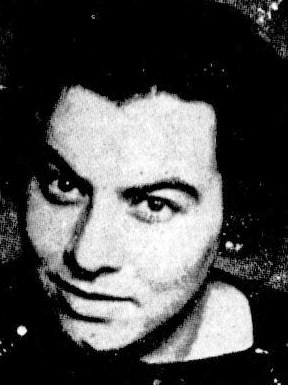
Muriel Rukeyser (1913-1980) in 1940

Another fine novel by a poet!

Everyone knows who won the war.
The train went flashing down France toward Spain, a stroke of glass and fine metal in the night.
Its force of speed held the power of a water-race, and dark, excited, heavy before morning: it was traveling, lapping in the country, in speed.

So opens the poet Muriel Rukeyser's Savage Coast, an autobiographical novel written immediately upon her return from Spain in the autumn of 1936. Panned by her editor as "BAD" and "a waste of time," with a protagonist who is "too abnormal for us to respect," the manuscript was buried in a drawer not to be dug out again until 2013 by the Feminist Press, for which I am grateful.

Opening with the joy of a 24 year old American woman traveling alone to the counter-Olympics held by leftists in Barcelona(*) and initially discounting vague rumors of an uprising in Morocco (which was the opening gambit in Franco's fascist revolution), Savage Coast commences daubed with excitement and the strong colors of high summer Catalonia. But Republican soldiers are stationed everywhere, including in the train bringing the mixed bag of characters to Barcelona, which comes to a stop in a small town north of Barcelona, held there by the general strike called when the fascists attacked the organs of the Second Spanish Republic in all the major cities. These attacks were largely beaten off, but only temporarily.

Rukeyser beautifully captures the confusion, fear and excitement of the opening days of the Spanish Civil War. Particularly poignant for me was the image of the truckload of boys, not one older than eighteen, proudly proclaiming that they were anarchists on the way to Barcelona, for I know that there they would be murdered not only by the fascists but also by the Stalinists. As usual, the United Front only lasted as long as it suited the purposes of the Stalinists.

Rukeyser's alter ego, Helen, makes it to Barcelona in a truck convoy with her new friends and lover, a runner on the German team, where snipers harry each other and the civilians, cars full of young men with weapons sticking out of every window are moving through the streets, and the Olympic teams scramble for room and board under most exceptional circumstances. Rukeyser is careful that her narrator knows no more than she herself must have done under the circumstances. Her dialogues go a long way towards mirroring the hesitations, the non sequiturs, the talking past one another, and, often enough, the emptiness of conversations, particularly in conversations of persons under stress.

I wonder what, exactly, Rukeyser's editor found to be "too abnormal for us to respect" about Helen? Was it that she was traveling alone in a foreign country, that she had leftist sympathies, that she took a lover outside of wedlock, that she was much more unsure and tentative than one first believed but grew to greater self-confidence in the course of the text? Thank goodness it no longer matters a damn what he thought, since Helen is no longer a rarity and Rukeyser's witness to the first week of the civil war is finally made available to us.


(*) The official Olympics were the infamous games held in Berlin as a publicity stunt by the Nazis.

Profile Image for Bill on GR Sabbatical.
289 reviews88 followers
March 19, 2020
Tourists in time of war. Late in the book, Helen, the protagonist, realizes that this phrase describes herself and the people she's with, traveling to, and arriving at, Barcelona, for the People's Olympiad scheduled to be held in protest of the 1936 Berlin Olympics, just as the Fascists launch their attack against the Republic, starting the Spanish Civil War.

The backstory of how 22-year-old poet Muriel Rukeyser came to be in Spain to cover the Olympiad, then turned her experiences into this, her only novel, are well covered in an excellent introduction by Rowena Kennedy-Epstein, the CUNY graduate student who discovered the never-published manuscript misfiled in the Rukeyser archives at the Library of Congress. Also collected in this edition is an article Rukeyser wrote for Esquire in 1974, which I would recommend reading before tackling the novel, and very helpful footnotes.

This is not typical historical fiction and it doesn't provide an overview of the causes, or beginning, of the Spanish Civil War. Instead, it is a very impressionistic account of Helen's experiences travelling by train from France into Spain, including a days-long delay in the village of Moncada during a general strike, and in Barcelona after she arrives.

Rukeyser's language is often exquisite:

The compartment was a thin crate of heat, tranced by the sun. The excitement of the Catalan women had kept it alive; now it became stale, filled with dense noon and silent.

His long face was like intellectual metal, yellow and refined sharp; and further lengthened by the high V of baldness which ate into the fair hair, baring the skull ridges.

She shook the water from her hand at arm's length, in the posture of an academic pianist preparing for finger exercises.

Recommended for readers who would enjoy knowing what it felt like to be there, not for those who want to understand what happened.
Profile Image for Anna.
2,125 reviews1,025 followers
August 10, 2025
I picked up Savage Coast at random in the library, never having heard of it before, and am very glad I did. It is a lightly fictionalised account of the author's first-hand experience observing the outbreak of the Spanish Civil War in 1936. Rukeyser was an American journalist, sent to cover the alternate antifascist Olympic Games organised in opposition to those run by the Nazis in Berlin. Her train to Barcelona was halted by the civil war's outbreak. The first half of the novel is set in and around this train. Rukeyser describes her fellow passengers and their varied reactions to the political upheaval with great verve and sensitivity. I found the immediacy and vividness of her writing distinctive and thrilling. She has an infectious enthusiasm and excitement about events, tempered with an eye for absurdity and a healthy fear of violence. Rukeyser's protagonist Helen and the people she befriends are all antifascists; she starts a love affair with a German man who fled to France when Hitler took power.

Savage Coast is a detailed and atmospheric account of a short and tumultuous period, narrated by an outsider who is deeply interested in and sympathetic to events. It is a narrative of encounters, with a great ear for dialogue. For example this exchange with a journalist for the Paris Herald-Tribune:

They all laughed with him. He told them how to find the American team, all the hotels are together down there, they're with the English, he said. Was there anything he could do for them?
"Yes," said Helen, "one thing. When you go out, and when we pass barricades, they point at their eyes and say, 'Watch for guns.' How can you, in a street?"
"Well, it's like this," said Spanner. "You can't. But there is a pretty sure sign. When everything's noisy and going on as usual, you're likely to be safe - but when the street quiets down quicklike, and you look around and everybody's gone, and the cars are out in front maneuvering for position, then you pick yourself a good deep doorway and stay there until the shooting's over."
She thanked him.
"No," he refused, "even that's not practical, and it can't be. No advice can be given. You'll move instinctively, and so will the people fighting. No rules of war - civilian warfare isn't like that. Your nerves go and your house may be shelled, and nobody can shoot any better than you could if you were given a gun. It isn't like going to war as part of an army, into trenches - not at all. Come and have a drink with me."
They got out of it.


Reading Savage Coast felt like discovering a lost classic that stands alongside Homage to Catalonia. Yet when I went back to the introduction (after reading the actual novel as usual), I was horrified to learn that it wasn't published during Rukeyser's lifetime after being brutally rejected by her editor with the phrases 'a waste of time' and 'BAD'. What a bastard. The introduction proposes, and I agree, that her editor just wasn't ready for an original, radical, feminist novel of this nature. Too bad, but in 2024 it's an excellent read even though Rukeyser never edited it for publication. There are some fragmentary elements, but these do not detract from the overall pleasure of experiencing revolutionary upheaval through Rukeyser's eyes.
Profile Image for Peggy.
Author 2 books41 followers
August 9, 2016
Savage Coast is a wonderfully romantic novel written by the poet Muriel Rukeyser. It's the fictionalization of a significant event in Rukeyser's life when she went to Spain in 1936 to report on an alternative to the Berlin Olympics by anti-fascist athletes. The novel begins on a train. The main character, Helen, is traveling alone, and is moving about the train, trying to find a comfortable place and compatible traveling companions. She meets another American woman traveling alone, but Mrs. Peapack is politically ignorant, with a sense of privilege Helen finds irritating. She ends up joining a group of Spanish women in the third class compartment, but feels a sense of obligation to Mrs. Peapack and she moves between the two carriages. Eventually, the train slows and finally stops before its destination. There is a general strike. The Fascists have attacked Catalonia. The civil war has started. The train is full of athletes and foreigners, who now must negotiate food, water, toilet facilities, and shelter, in a small Spanish town that is unprepared to meet the crush of guests. Helen meets a couple with political sensibilities very similar to her own. She also forms an immediate and intense connection with a German runner and has a stunning, unforgettable night with him. The fascists have snipers everywhere and there are many descriptions of young men of the town shouldering guns and going off to protect their homes and families. Planes fly overhead. A tennis team practices and an athlete is shot and killed. During this time, history reveals Helen's identity to herself and she falls deeply in love. Her lover's character is entirely plausible. At the end, he chooses to stay in Spain rather than return to Nazi Germany and he joins the Loyalist forces.

If this plot isn't already overwhelmingly beautiful, exciting, and poignant, the story of how it came to be published is even more romantic. The novel was rejected by its first readers in 1937 and Rukeyser was advised to develop her poetry instead. The manuscript eventually languished in a misfiled folder in the Library of Congress, until it was recently discovered and published by the Feminist Press.

The beginning of the novel, with its train setting, reminded me of Olivia Manning's The Balkan Trilogy, in which another intelligent woman sits on a train, hurtling into an unknown future on the eve of war. Helen is far more independent and politically engaged, which makes her a more interesting witness.

This book is highly recommended for anyone who, like me, is interested in 20th century European history, leftist movements, and literature written by women. I am grateful to Ms. Rukeyser for writing it and for the Library of Congress for preserving it, so that it could become discovered and read by people who will enjoy it as much as I did.
Profile Image for Troy.
300 reviews191 followers
November 27, 2013
Not much to say. It's a well written book about the Spanish Civil War, which is a war I can't stop reading about. Maybe it's because it's so close to us, and was such a radical attempt at a new way of living, and... even better, it worked for a very short time, and was crushed by such virulently evil forces. The forces that crushed the grand anarchist and communist experiments might as well have twirled their mustaches or worn something mengu inspired (like Darth Vader or Hannibal Lecter). I mean, fuck the fact that the comrades burned beautiful churches (hell, the Black Metal dudes did that) and that they shot anyone suspected of being a fascist (I mean, what else are you going to do with a fascist?). It's a time for all of us to dream of better worlds; more equitable; more just;
no exploitation
no gods
no bosses
no masters
And on top of that endless possibilities for life and love, and I do mean love and who doesn't want that, right? Right?
So that's what we have here. A bildungsroman. The story of a budding young woman; blossoming to political and sexual possibility at the same time. And unlike The Flamethrowers , the protagonist here is not some passive pretty face — she's a bad ass who, despite her bad hip, is willing to brave the bullets, brave death, brave war.
Profile Image for Elana.
3 reviews72 followers
November 18, 2013
Just finished Muriel Rukeyser's "Savage Coast," about the early days of the Spanish Civil War, the alternate Olympic games that were to be held in Barcelona (as a rebuke to the Olympics being staged in Germany in 1936). This is a great book, with a great intro detailing the intense sexism that kept it from being published in its time. Not an "easy" read – poetic, challenging, calling us back to witness. Rukeyser had a genius for telegraphing the fragmentary nature of experience, coupled with fresh, immediate observation, creating new wholes out of the tissues of night and sun-soaked gunfire. Thanks to The Feminist Press and Rowena Kennedy-Epstein for bringing this out. Advice to readers not familiar with the Spanish Civil War or Rukeyser's style: read the essay/memoir that starts on p 281, published in Esquire in 1974, for a window on the action of the novel.
Profile Image for Nathan "N.R." Gaddis.
1,342 reviews1,656 followers
i-want-money
July 21, 2015
Instead of reading what Corporate Americana tells you to read, including such as that Go Mockingbirdjay WhatKnot, maybe give this BURIED=in=the=ARCHIVE novel, which was only very recently unEARTH'd from the author's ARCHIVE by a dedicated reader and pub'd post=humously by The Feminist Press, about the Spanish Civil War, a read=through. [Thanks for the heads=up, Tuck!]
http://www.feministpress.org/books/mu...


"¡UPTHEREPUBLIC!" -Samuel Beckett's contribution to Voices Against Tyranny: Writing of the Spanish Civil War
Profile Image for Rachel Pollock.
Author 11 books80 followers
February 5, 2017
I find this book heartbreaking, because my ultimate feeling upon reading it is that I desperately wish her publisher had agreed to print it, and then hooked her up with an editor. It would have been an incredible novel that captured the zeitgeist of the Spanish Civil War, but instead, frankly, it really needs editorial input. Still a lot of beauty in it, and it's a cool artifact. But it could have been a brilliant classic of its time.
Profile Image for Ihes.
144 reviews56 followers
May 31, 2020
Lo que pudo ser pero no terminó siendo.

Savage Coast pasó demasiados años condenada al olvido. Obra rechazada en su día, no fue rescatada hasta 2013, y disponible en el mercado español desde el año pasado, gracias a la labor de la maravillosa editorial Rata.

Considero Savage Coast, traducción de la Costa Brava catalana, un libro que posee mayor relevancia histórica que literaria. La novela no está mal, pero tampoco dice a su favor que lo que más me haya entusiasmado haya sido la breve biografía de la autora escrita por Eulàlia Tusquets, quien también escribe una provechosa y agradable introducción, y el ensayo de Kennedy Epstein.

En la novela se cuentan los cinco primeros días de la Guerra Civil española. La voz narradora y protagonista de esta crónica es Helen, alter ego de la propia Rukeyser, pues como bien se nos indica antes de arrancar con la novela, ésta es de profundo carácter biográfico, no siendo ninguno de los personajes fruto de su imaginación, pese a las distorsiones y libertades que se permitió como autora.

Helen es una periodista que se dirigía a Barcelona aquel fatídico 18 de julio de 1936, con el cometido de cubrir los Juegos Populares, una especie de alternativa a los Juegos Olímpicos de Berlín, la cual tuvo una gran dosis propagandística del nazismo. En los cinco días narrados, seremos testigos del despertar sexual pero sobre todo político de la protagonista, que fueron, desgraciadamente, dos de los principales motivos del rechazo de publicación por parte de su editor.

Y es una lástima, porque eso es lo que se nota en esta novela, que no se apostó por ella. Es un libro interesante, con destellos de brillantez y un estilo poético de una voz en desarrollo. En mi opinión es excesivamente descriptiva y hubiese ganado mucho si su número de páginas se hubiera reducido considerablemente, transformándola en una especie de nouvelle. Los cinco días están forzosamente dilatados, convirtiendo la lectura en una especie de constante espera de los aciertos, que sin duda los tiene.

Hay osadía en el observar de Rukeyser, se siente un querer ir más allá de los convencionalismos y sabe convertir la experiencia en material literario de interés. En Savage Coas no se pretende que el lector entienda qué sucedió, sino llegar a sentir lo que era estar allí entonces.

Respecto a la edición de Rata no tengo nada más que palabras positivas y de agradecimiento, al ser, como ya he indicado previamente, la introducción, el ensayo y la biografía lo que más he disfrutado en todo el libro; ya que sin desmerecer la novela, he de reconocer que durante su lectura nunca me abandonó del todo el triste lamento de pensar en lo que pudo ser pero no terminó siendo. En cualquier caso, siempre es de agradecer que se nos de a conocer una figura tan comprometida en cuestiones políticas y sociales y a una de las mayores referentes del nuevo feminismo de los 70; siendo para Sexton “la madre de cada una de nosotras”.
Profile Image for Yuks Flanders.
87 reviews14 followers
January 8, 2022
Prosa y poesía que se entremezclan a la orilla del mediterráneo caluroso de 1936, exudando revolución. Leeré mas Rukeyser
Profile Image for Tuck.
2,264 reviews253 followers
December 19, 2013
young naive woman goes to spain for the alt olympic games, but turns out it also the start of the civil war. she meets a german man who also is going to compete in the games, obvious he is antifascist, she learns a lot in a very short time, about direct action, true democracy, horror of war. an interesting histoy too behind this novel, it was soundly rejected by publishers, they wanted rukeyser to do something more "womanly" less calling out the 1%ers and nazis. it didn't get published till 2013, and she never really did get to "finish" it. super novel of spanish civil war and good companion to others like hislop The Return and sansom Winter in Madrid
Profile Image for Pep Bonet.
923 reviews31 followers
February 14, 2020
This Savage Coast, which is the translation into English of Costa Brava, is a documet of historical value. Rukeyser was in Catalonia on 18 July 1936, when the failed coup took place which led to a bloody Civil War. She was traveling to Barcelona to cover the Popular Games, alternative to the Olympic Games that were to take place in Berlin.

The book is interesting as it witnesses real events, it being of rather autobiographical nature. The style is rather poetical, which makes it less than easy to follow. Moreover in some instances, it is incomplete. It has mainly a historic interest.
Profile Image for Callum .
32 reviews
July 23, 2020
“Hemingway doesn’t know beans about Spain.”
– Muriel Rukeyser

A little-known, semi-autobiographical novel by the poet Muriel Rukeyser. This centres on journalist Helen who’s travelling through Spain in the 1930s. When Helen’s train abruptly stops, she finds herself stranded, along with the other passengers, in an obscure, small town. Rukeyser’s story follows this disparate band of travellers as they struggle to work out what’s happening around them – actually the beginning of the Civil War – and find ways to pass the time in their sleepy, remote surroundings. Convincing characterisation combined with Rukeyser’s impressive prose style make this a compelling piece, at least for the first two-thirds of the book. As Rukeyser’s narrative slowly unfolds so does the atmosphere of panic and the sense of nail-biting tension, all conveyed in tight, lyrical prose; it’s a shame that the story falters in its final pages. But even so, I thought this was a powerful, evocative piece, the writing’s exquisite, and the depiction of Civil War Spain is fascinating. Rukeyser was an equally interesting person, a political activist, journalist and author. Her character Helen’s experiences are based on Rukeyser’s own journey to report on a Spanish anti-fascist alternative to the Berlin Olympics. Unpublished in her lifetime, supposedly its modernist style, its unconventional and frank content were considered unsuitable by her publisher, the manuscript was uncovered and finally published in 2013 by the Feminist Press.
Profile Image for jq.
304 reviews149 followers
August 11, 2025
recommended by lucas :)

4.5

"Helen's leg buckled under her. She stopped again in the wild fear of physical impediment—she could not run, she knew in that moment that the one thing she was there for, the one thing she had ever been alive for, was to push through this to its center, to the place where she would be named—as an individual, and an anonymous member, as a job assigned. That was all there was in the world: the great struggle around her whose outlines were springing clearly out against a fantastic voyage, her need to push to a conclusion, the leg's refusal, the clenched fists. Hans." (153-4)

"Peter and Olive were crushed against them. Helen was glad to feel their weight. They are very good friends to have, she thought." (155)
Profile Image for Agnes.
710 reviews2 followers
December 30, 2023
Maybe I'm too dumb for this
"A memory broke through, splitting tempest, echoing oracular, vague and august and arbitrary, words of any meaning arriving with one meaning, a ship like a bird reaching, splitting the agony with bombs of sense:
LET EACH STAND IN HIS PLACE".
um, what?

I've like Rukeyser's poetry and she led a fascinating life but I just wasn't connecting and got bored.
There was too much walking, talking and laughing.

I think this would have been better as a memoir than a novel.
12 reviews1 follower
February 20, 2025
Book's great!

The description here is incorrect, she travelled to Barcelona as a journalist to cover the Workers Olympiad, not "to witness the first days of the Spanish Civil War".

As someone who read about the history of the Worker Sport movement, I enjoyed the backdrop of the Olympiad and details about it's cancellation, if anyone's interest was piqued by that part of the narrative I highly recommend The Story of Worker Sport which is a detailed history of worker's sport in various countries.
Profile Image for Isabel.
169 reviews
November 19, 2025
3.75/5 stars.

A very expanded upon and fictionalized account of Rukeyser’s experience at the start of the Spanish Civil War. It’s very personalized and with that this holds a lot of Rukeyser’s poetic language and often poems as well. The story quality is solid which is reflected in the stars but I found this a bit hard to get into at the start and hard to want to pick up again. Couple that with a travel-filled, stressful last month and a half and it explains my lack of motivation to finish a book that should have been read in maybe two weeks at most. Oh well.
Profile Image for John Hills.
196 reviews1 follower
November 1, 2022
I have to say I would have preferred this as a straight memoir rather than a novel. I thought the essay at the end of the book was the best part. A very unique and traumatic time in Europe's recent history is the backdrop, based on the authors real experience in Spain in 1936. I just found the characters pretentious and irritating, and at times the writing just too abstract and poetic. If it was written like the essay after it would have been ten times better
Profile Image for Regina G. Frixach.
46 reviews
October 6, 2025
Savage Coast narra un episodi desconegut per a mi. Un tren aturat a l'estació de Montcada per vaga general. Viatgers de totes les nacionalitats. Les Olimpíades Populars del 36. Els flaires de Revolució. Muriel Rukeyser descobreix, a Catalunya, que no hi ha vida sense compromís i que "Allò personal, és polític".
Profile Image for Leo.
17 reviews1 follower
November 8, 2019
Part memoir, part exploration & rejection of the conventions literary modernism from a young womans developing voice ... & a rad perspective on the brief triumph of popular anarchism during the Spanish revolution. Made me want to visit Catalonia!
Profile Image for Alyssa Morganti.
1 review
November 22, 2020
Beautiful tale

A text interwoven between documentary style writing and the aesthetics and beauty of literature. The reality of being a foreigner during the Spanish Civil War but taking a stand against fascism for a place one would fall in love with—Spain.
Profile Image for Teri.
227 reviews5 followers
December 2, 2020
Well I knew not much about the Spanish civil war so there’s that. I like that it was based on true facts. I appreciate the attempts at impressionistic writing. But I had trouble following where we were and what was happening. So awkward for me.
518 reviews2 followers
March 11, 2019
A wonderful bookend to For Whom the Bells Toll: a woman's perspective, the beginning rather than the end, and an equally vivid view into Civil War Spain.
22 reviews
February 24, 2022
Did not really enjoy this. Found the writing and the story somewhat complicated. Moments of beautiful description but lost within the chaos of the sentence structure.
Profile Image for Claire.
105 reviews
Read
March 20, 2024
I am beholden to Muriel Rukeyser for life
Profile Image for Whitney.
150 reviews3 followers
March 20, 2017
Dated in style but a fascinating look into the start of the Spanish Civil War.
Displaying 1 - 30 of 42 reviews

Can't find what you're looking for?

Get help and learn more about the design.