

What do you think?
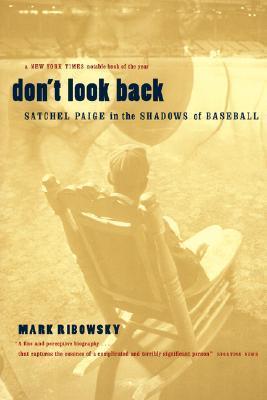
Don't Look Back: Satchel Paige in the Shadows of Baseball
Some say Satchel Paige was the greatest pitcher ever—and and certainly his dazzling record of perhaps as many as 2,000 wins, first in the Negro Leagues and then in the integrated major leagues, ranks as one of the most remarkable athletic feats of the century. He also became famous for the advice he freely offered others, including the now legendary "Don't look back, something might be gaining on you." Mark Ribowsky gives the best picture yet of life in the Negro Leagues as he brings to life a man whose act as a lovable eccentric with a golden arm masked a decidedly darker side as womanizer, hard drinker, and contract jumper always on the lookout for number one.
368 pages, Paperback
First published March 1, 1994
About the author
Mark Ribowsky
44 books61 followersMark Ribowsky is the author of seven books, including the New York Times Notable Book Don't Look Back: Satchel Paige in the Shadows of Baseball. He lives in Plainview, New York.
Ratings & Reviews
Friends & Following
Create a free account to discover what your friends think of this book!
Community Reviews
Displaying 1 - 9 of 9 reviews

August 27, 2017
I was surprised to realize that I've read very little about baseball's Negro Leagues. Most of what I've read was about the late days of the era, in biographies of players like Jackie Robinson, Willie Mays, and Henry Aaron, who got their starts in the Negro Leagues but quickly moved on to the majors.
And as for Satchel Paige, I of course knew his legend, and thought of him as the black counterpart to Dizzy Dean, but very little about his actual life. So this biography by Mark Ribowsky was enlightening on two fronts.
While the writing was surprisingly informal at times, this is a serious and well-researched biography. Since Paige's career spanned much of the period of the Negro Leagues' most successful years, the book serves as both a biography of a man and, secondarily, as the history of an institution. There were actually many Negro Leagues, and due to various circumstances, none of them had the staying power of the two major leagues. It was interesting to note that the lack of a reserve clause in the Negro Leagues seemed to heavily contribute to the instability of the institution as a whole. This may very well have served as an object lesson to the big leagues. With essentially unlimited free agency, the fortunes of particular teams and leagues could rise and fall very quickly. And Satchel Paige, as the most elite and well-known player, took full advantage of that free agency. Although it's certainly one of the great injustices in baseball history that Satchel Paige was denied the chance to pitch in the major leagues during his prime, I have to think that he was probably quite happy to have avoided being bound to a single team through the reserve clause.
It was also interesting to discover that prejudice was not the only reason (although I'm sure it was the primary reason) that the major leagues stayed segregated as long as they did. Another factor was that big league owners made a significant amount of money leasing their ballparks for Negro League games while the big league team was on the road. When Negro League baseball ended, a revenue stream dried up for the white owners.
It was good to get the details of Paige's life. I had no idea, for example, that he was from Mobile, Alabama, the city which also gave us Hank Aaron. (And Cleon Jones and Tommie Agee!) The book's subtitle about "the shadows of baseball" is apt; Ribowsky demonstrates how black players were largely unknown to the general public. Even big stars like Josh Gibson and Cool Papa Bell were niche celebrities. But Satchel Paige, with his larger-than-life personality and his incredible talent, managed to emerge from the relative obscurity and became, to many, the one well-known black player, profiled in general circulation magazines like Life. There was even buzz that Satchel would be accepted into the majors, not so much to right a wrong, as was a big part of Branch Rickey's motivation with Jackie Robinson, but simply because he was so good and because people wanted to see him. Had that come to pass, I have to wonder if that would have opened the door to other black players, as Robinson did, or if Paige would simply have been regarded as the exception to the rule?
This was an interesting book. I'm glad I read it.
June 21, 2022
Overwhelming arguments can be made that LeRoy (Satchel) Paige was the greatest pitcher ever. It is certain that he pitched more professional innings than anyone else and the stories about his speed and control are too numerous to doubt. Hall of Fame players such as Bob Feller, Ted Williams and Lou Boudreau attested to his amazing abilities on the mound.
The best statement I ever heard about Paige was from a fellow Negro league player. It was, “The Good Lord didn’t give Satchel a right arm, he gave him a whip.” It was also very durable, even when the rest of Satchel’s body was failing him, he could still get quality batters out.
His story is one of triumph and sadness, the sports world is a better place for his having been a part of it. Yet, it is hard to accurately project how many records he would have held if he had been allowed to play in the major leagues when he was 20. Given his skills and durability, regularly running up 30 wins a season is very possible. As it was, he was still pitching at a quality level in his mid-forties.
This is a great book about a great player that was forced to play outside of the best circles. Some argue that the reason it took so long for major league baseball to integrate is because the white players knew that they would be outclassed by the blacks from the Negro leagues, especially Satchel. Another major point made is that some of the owners opposed integration on financial grounds. They made a lot of money leasing their stadiums to the Negro leagues and they understood that integration would dry up that particular cash cow.
While Satch was no angel, his right arm was the closest to heavenly as human flesh can get.
The best statement I ever heard about Paige was from a fellow Negro league player. It was, “The Good Lord didn’t give Satchel a right arm, he gave him a whip.” It was also very durable, even when the rest of Satchel’s body was failing him, he could still get quality batters out.
His story is one of triumph and sadness, the sports world is a better place for his having been a part of it. Yet, it is hard to accurately project how many records he would have held if he had been allowed to play in the major leagues when he was 20. Given his skills and durability, regularly running up 30 wins a season is very possible. As it was, he was still pitching at a quality level in his mid-forties.
This is a great book about a great player that was forced to play outside of the best circles. Some argue that the reason it took so long for major league baseball to integrate is because the white players knew that they would be outclassed by the blacks from the Negro leagues, especially Satchel. Another major point made is that some of the owners opposed integration on financial grounds. They made a lot of money leasing their stadiums to the Negro leagues and they understood that integration would dry up that particular cash cow.
While Satch was no angel, his right arm was the closest to heavenly as human flesh can get.

April 9, 2026
A well-researched well-written account of Satchel's life and times. Not much that is very personal, because he did not engage with m/any people personally--including his own children. A lot about Negro baseball. While it gets called the "Negro Leagues", that makes it sound a lot more organized than it was. Mostly it was a series of teams that came and went, with a lot more games than schedules. Probably the best account there is of the rocky process of integration of baseball without getting bogged down. For me, who grew up in Cleveland, it is somewhat satisfying that Satchel's eventual entry into major league baseball was with Cleveland in 1948, when we won the World Series.

February 20, 2020
A terrific baseball book. Presents a three-dimensional view of the mythic Satch. It is the authoritative biography but also provides great historical background about the various "Negro" Leagues. At the astounding age of 59, Paige pitched a successful complete inning of baseball in relief against the Boston Red Sox. A truly amazing athlete, with a vivid, mercurial personality.
June 8, 2020
Having just finished a book about the negro leagues I found the beginning of this book a bit repetitive. When the story began to focus more on Satchel and his time in the Dominican Republic (now that’s a book I want to read) and then in the majors it was pretty fascinating.
“He once said that all he had to do to get his arm in shape was to shake hands with the catcher.” - p. 16
“He once said that all he had to do to get his arm in shape was to shake hands with the catcher.” - p. 16
This entire review has been hidden because of spoilers.
Want to Read
June 17, 2019While Reading Chicago Cubs: Story of a Curse, became interested in finding other good baseball reads. This book was listed in an Esquire.com article, "20 Best Baseball Books Ever", August 2013. Supposed to be one of best biographies about Satchel Paige.

October 30, 2009
I didn't enjoy this one quite as much as Ribowsky's Power and the Darkness - The Life of Josh Gibson in the Shadows of the Game - this one was written a couple of years earlier and seems a little rough around the edges. Occasional descriptions of situations used - ah, crude metaphors - that brought town the overall tone of his writing.
Still, it's 5-star worthy. The guy had a fascinating life, and I couldn't put the book down. Ribowsky is a good writer - I'm just picking nits in the first paragraph. If you're a baseball fan, learning about Satchel Paige's life pays some small deserved tribute to the man.
Still, it's 5-star worthy. The guy had a fascinating life, and I couldn't put the book down. Ribowsky is a good writer - I'm just picking nits in the first paragraph. If you're a baseball fan, learning about Satchel Paige's life pays some small deserved tribute to the man.

October 24, 2016
Yesterday's NYT article reminded me that I read this Satchel Paige biography somewhere around 1994-1995.
http://www.nytimes.com/2016/10/24/spo...
http://www.nytimes.com/2016/10/24/spo...

December 16, 2007
Loved it.
Displaying 1 - 9 of 9 reviews