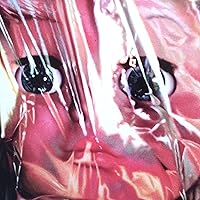
Victoria Freeman was only four when her parents followed medical advice and sent her sister away to a distant, overcrowded institution. Martha was not yet two, but in 1960s Ontario there was little community acceptance or support for raising children with intellectual disabilities at home. In this frank and moving memoir, Victoria describes growing up in a world that excluded and dehumanized her sister, and how society’s insistence that only a “normal” life was worth living affected her sister, her family, and herself, until changing attitudes to disability and difference offered both sisters new possibilities for healing and self-discovery.
For a family made up by people with victim complexes, what else can one expect but a book that so callously scorns the possibility of disability? In other words, this book is by and meant for ableist folks who want nothing more than to be acknowledged for having “suffered” the realities of living in a world where disabled people dare to exist.
Sure by the end there was some kind of healing for the author, but at what cost? Searching fruitlessly for proof of a sister’s existence that had very plainly existed before her.... it’s an odd and harrowing look into the mind of someone who is searching for absolution in a group of people who have been so violently harmed by that exact brand of complacency.
And to Martha, I’m sorry you weren’t given the kind of love you so clearly deserved from those who truly owed it to you.
This book was profoundly moving for me. It was difficult to read at times, and certainly when the author was recounting the early years and the prevailing attitudes of the day, I had to put it down and come back to it later. Her deep love and respect for her parents despite the impact of their decisions was evident, and I appreciated her unflinching look at her own prejudices. This is a compelling story of what can happen to a family when society decides one of them doesn't fit the mold, the choices they are willing to make to correct that, and the consequences of those decisions. Shout out to my colleagues at UBC Press for publishing this important book.
This was, understandably, a hard read. As the mother of a child with a disability, I found it especially hard hitting. It made my blood run cold to think of what her life might have been like 50 years ago. The author is clear, emotional, and raw in her telling of her experience as a sister to a girl with Down Syndrome in the 60's and onward, in Ontario. (being Canadian, I appreciated the fact it was a Canadian source, also.). It helps to shed light on the prevailing attitudes at the time towards the disabled, which now seem absolutely appalling. Reading of her mother's pain and indecision over whether or not to institutionalize Martha , and the aftermath, can help the reader to gain a new perspective on these situations. We (especially parents) are often quick to judge people like Martha's mother, and that is wrong. We have to remember that at this time, all the experts said institutionalization was best, and there was little to no support to keep your child in the family home.The whole atmosphere around disability back then was appalling, and we have to look at her mother's choices in this context. I felt that the author could have included more about what disabled people endure today. She briefly touches on it, once I think, but it is never explored. It's important to know that people with a disability still struggle with the prevailing ableist attitudes in society. I found the passages where she discusses her breakdown and "spirit communication" with Martha to be very odd and somewhat off putting. It's good she is normalizing mental illness (another stigmatizing condition), but the whole story about how Martha's spirit was occupying the left side of her body and she'd "talk" to her through automatic writing I found disturbing. I'm not a psychologist, but I think that the author is dealing with more than the trauma of her sister being taken from the family. Even towards the end, she seems to be grappling with a serious mental illness. I hope she gets help. The narratives about her work with Indigenous residential school survivors also had some cringey moments. While, refreshingly, she admits her privilege as a white, upper middle class, educated woman in society, there are still echoes of the "white saviour complex" (and come to think of it, a complex of being a disability saviour too. The part where she talks about needing to be around people with Down syndrome and volunteering due to that sounded off-putting, it was like the disabled people were props to help her feel better. This probably was not her intention, but it came across that way at first.) in her narrative. Comparing herself to the families of residential school survivors also made me raise an eyebrow; yes, there would be similarities, but they weren't the same. She cannot and will not deal with the multi-layered effects of colonialism that Indigenous people do, and I felt that this wasn't adequately acknowledged. All in all, a pretty good book. She seemed to ramble in parts and I found the literary references kind of tiresome (it's not a thesis!) as there were many, but other than that and my above critique, I think it was a great and important book.
This entire review has been hidden because of spoilers.
I have never read a more self indulgent memoir! I thought I was going to hear about Martha's life, but there is little about Martha because the author, Martha's older sister, didn't want to know her while she was living. I would rather read a memoir about Martha written by Martha's other sister Kate who it seems actually bothered to spend time with Martha when she could and actually knew her. There is a dedication to Jean Vanier, but very little about Jean Vanier's L'Arche movement because the author herself couldn't stand to be around developmentally disabled people. I was appalled by this book. I would have liked to have known Martha.
What a disappointment. I was hoping to learn about the history of the Rideau Hospital School, the residents that lived there and about why their families sent them there. Instead I learned of a woman who blamed all her emotional and relationship issues on her sister being placed there. It was a wow is me memoir. The only reason I finished it was I hoping she would talk about the Rideau Hospital School and other residents. Spoiler she did not. Don’t read if you want to learn about institutions and the life’s of the residences as there is maybe 5 pages about it.
This entire review has been hidden because of spoilers.
A good read. Very moving and heart wrenching regarding Down Syndrome. I learned a lot. Author was very forthright, about her relationship with her sister. I appreciated her honesty.