

What do you think?

For the Ride
A major new book-length visionary poem from a writer "whose poems are among the major astonishments of contemporary poetry" (Robert Polito, The Poetry Foundation)
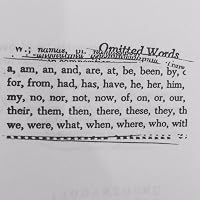
Alice Notley has become one of the most highly regarded figures in American poetry, a master of the visionary mode acclaimed for genre-bending, book-length poems of great ambition and adventurousness. Her newest book, For the Ride, is another such work. The protagonist, "One," is suddenly within The Glyph, whose walls projects scenes One can enter, and One does so. Other beings begin to materialize, and it seems like they (and One) are all survivors of a global disaster. They board a ship to flee to another dimension; they decide what they must save on this Ark are words, and they gather together as many as are deemed fit to save. They "sail" and meanwhile begin to change the language they are speaking, before disembarking at an abandoned future city.
Alice Notley has become one of the most highly regarded figures in American poetry, a master of the visionary mode acclaimed for genre-bending, book-length poems of great ambition and adventurousness. Her newest book, For the Ride, is another such work. The protagonist, "One," is suddenly within The Glyph, whose walls projects scenes One can enter, and One does so. Other beings begin to materialize, and it seems like they (and One) are all survivors of a global disaster. They board a ship to flee to another dimension; they decide what they must save on this Ark are words, and they gather together as many as are deemed fit to save. They "sail" and meanwhile begin to change the language they are speaking, before disembarking at an abandoned future city.
- GenresPoetry21st Century
160 pages, Paperback
First published March 3, 2020
About the author
Alice Notley
85 books231 followersAlice Notley was an American poet. Notley came to prominence as a member of the second generation of the New York School of poetry—although she always denied being involved with the New York School or any specific movement in general. Notley's early work laid both formal and theoretical groundwork for several generations of poets; she was considered a pioneering voice on topics like motherhood and domestic life.
Notley's experimentation with poetic form, seen in her books 165 Meeting House Lane, When I Was Alive, The Descent of Alette, and Culture of One, ranges from a blurred line between genres, to a quotation-mark-driven interpretation of the variable foot, to a full reinvention of the purpose and potential of strict rhythm and meter. She also experimented with channeling spirits of deceased loved ones, primarily men gone from her life like her father and her husband, poet Ted Berrigan, and used these conversations as topics and form in her poetry. Her poems have also been compared to those of Gertrude Stein as well as her contemporary Bernadette Mayer. Mayer and Notley both used their experience as mothers and wives in their work.
In addition to poetry, Notley wrote a book of criticism (Coming After, University of Michigan, 2005), a play ("Anne's White Glove"—performed at the Eye & Ear Theater in 1985), a biography (Tell Me Again, Am Here, 1982), and she edited three publications, Chicago, Scarlet, and Gare du Nord, the latter two co-edited with Douglas Oliver. Notley's collage art appeared in Rudy Burckhardt's film "Wayward Glimpses" and her illustrations have appeared on the cover of numerous books, including a few of her own. As is often written in her biographical notes, "She has never tried to be anything other than a poet," and with over forty books and chapbooks and several major awards, she was one of the most prolific and lauded American poets. She was a recipient of the Ruth Lilly Poetry Prize.
Notley's experimentation with poetic form, seen in her books 165 Meeting House Lane, When I Was Alive, The Descent of Alette, and Culture of One, ranges from a blurred line between genres, to a quotation-mark-driven interpretation of the variable foot, to a full reinvention of the purpose and potential of strict rhythm and meter. She also experimented with channeling spirits of deceased loved ones, primarily men gone from her life like her father and her husband, poet Ted Berrigan, and used these conversations as topics and form in her poetry. Her poems have also been compared to those of Gertrude Stein as well as her contemporary Bernadette Mayer. Mayer and Notley both used their experience as mothers and wives in their work.
In addition to poetry, Notley wrote a book of criticism (Coming After, University of Michigan, 2005), a play ("Anne's White Glove"—performed at the Eye & Ear Theater in 1985), a biography (Tell Me Again, Am Here, 1982), and she edited three publications, Chicago, Scarlet, and Gare du Nord, the latter two co-edited with Douglas Oliver. Notley's collage art appeared in Rudy Burckhardt's film "Wayward Glimpses" and her illustrations have appeared on the cover of numerous books, including a few of her own. As is often written in her biographical notes, "She has never tried to be anything other than a poet," and with over forty books and chapbooks and several major awards, she was one of the most prolific and lauded American poets. She was a recipient of the Ruth Lilly Poetry Prize.
Ratings & Reviews
Friends & Following
Create a free account to discover what your friends think of this book!
Community Reviews
Displaying 1 - 17 of 17 reviews

June 19, 2022
‘I see myself, past baby, as some thou pretending to function.
I ain’t robotic, chum, fatal to be typecast as girl of dreams
or anything they have in stock. You’ve chalk legs and a hymen, say.
’Member something lovely. That isn’t my imagination, just yours.’
Don’t think I’m an ‘intelligent’/experienced enough reader for most of Notley’s poems (this particular collection anyway), but the ones that I am able to ‘get’ (if not the entirety of it then the gist of it anyway), I definitely enjoyed and helplessly admired its experimental brilliance. Anyway, I picked this up because I thought the cover was really cool, and also, it’s probably time I read something by Notley (since she’s so highly acclaimed?); and I’m glad I read it but am very uncertain about whether or not this is a good one to start with for anyone who is unfamiliar with Notley’s work/style. Anyway, it’s a 3.5 for me; and not more because I’m simply lacking whatever these poems need from me.
‘Strong feeling destroyed me pastly and can, One says to the pale bird . . .
Doesn’t matter if One’s a word or not. Who the fuck cares? One asks.
The names, everyone wants to know the names—kill this one or that one—
will real blood run again? Blood of the poet strangles one’s cut throat,
just words—don’t say that ones aren’t distraught, living because alive—
because there is no death—no, words were saved, from a death, in the ark—
no that’s just word logic. But, says a bword, we’re more than you can say,
No you aren’t, but you’re everything in this blasted cosmos—
and animals knew that, sending their thoughts to each other when they—
A jaguar from the wall growls, closes eyes, It’s a private matter . . .
One’s ravished by beauty; does one want to live and having no choice?
Is it really fore’er? Sure, cheeps a bird, You gotta get used to
time of it. Only way’s to get the langue right. We’re the ones in charge,
charge of the universe, charge of the births, charge of chaotic truth.’
This article from The New Yorker : Alice Notley and the Art of Not Giving a Damn will introduce her/her poems in this collection better than I can ever, so I’ll just leave that here.
‘Someday I will remember this very future I am in, image in space.
I will at least see her, I say to myself, she will be someone
else than one ever thought and her eyes will be blue words on white.
Consciousness travels from Neptune the planet to Neptune the god of the sea.
I travel to your irony and perambulation, your decibels and vehement
budget: I perceive you for you. You don’t have time. I
have time, I am the goddess of the smooth doorway. Let me in,
so I can abolish your description.’

March 5, 2020
Deserted images, rough pathways among mosaic fragments spread on the canvas of a delicate heart. Within the borders of poetry, an interesting new style built with dispersed particles of grace, sensitivity, gentleness.
“One remembers too much: love has killed One. What tense is that? Past love,
that’s a tense. When one enters into a rock one can’t regulate,
it’s too hard. Death exists to make it harder. They’re just words, though, here.
The words-to-be crowd round. Not separate! That’s the first thing to know.”
“One remembers too much: love has killed One. What tense is that? Past love,
that’s a tense. When one enters into a rock one can’t regulate,
it’s too hard. Death exists to make it harder. They’re just words, though, here.
The words-to-be crowd round. Not separate! That’s the first thing to know.”

March 30, 2020
Lots and lots of pyrotechnics using and about language. Reminds me a lot of the modernist formal language experiments of Gertrude Stein or T.S Eliot or Samuel Beckett. But just like those works, while this one was intellectually interesting, it mostly left me cold. I can see how Notley was putting passion into some of her arguments around language and words and their importance, but the word to suss them out put me so into my head, that the emotional impact just washed right over me. I'm left impressed but mostly unmoved.
**Thanks to NetGalley and the publisher for the advanced reader copy in exchange for an honest review.
**Thanks to NetGalley and the publisher for the advanced reader copy in exchange for an honest review.

July 12, 2020
I can see the technical skill that went into this book-length poem, and admire the craft of it, but I’m not quite sure I can really say I enjoyed reading it. It’s a demanding book, for sure, but I’m not convinced the payoff was worth the effort.
August 15, 2021
'If one tells a tale, unending no-night, under those the new stars,
what tense will it take? Wideset's speaking. Something like memories come.
One walks down a river saying Bye Bye to a one who will die.
Is that a story? asks restless kid. Another kid joins ones, grave,
France's teenage one. Stories are futile, create new sense of time—
who wants time? says One. One walks down a river—
Wideset says—that's all. This time's contained within nondescript walking—'
(from 'V. Return to Chaos', p29)
what tense will it take? Wideset's speaking. Something like memories come.
One walks down a river saying Bye Bye to a one who will die.
Is that a story? asks restless kid. Another kid joins ones, grave,
France's teenage one. Stories are futile, create new sense of time—
who wants time? says One. One walks down a river—
Wideset says—that's all. This time's contained within nondescript walking—'
(from 'V. Return to Chaos', p29)
Read
January 10, 2026I hate to sound generic but only Notley could successfully get at the death and attempted rebirth of language through damn language. Mad confusing at times, making for a madly rewarding read. Had no idea there was so much French in this either, which was a lovely surprise.

March 18, 2026
miserable and boring. not sure there was anything gained besides strength of character
July 8, 2024
Coma dreams seem cool.
How come I've never had any?
How come I've never had any?

May 25, 2020
While listening to an interview with Grammy-award winning music producer John Congleton, I was struck by his admission that he assumes something is amiss with his own listening whenever he hears music he "doesn't like." He continues to listen until he discovers a means for appreciating the music he hears, thereby solving the problem he discovered within himself. That way he doesn't resort to describing the music as bad, but rather simply as music he wasn't ready to hear upon first listen. I was reminded of this approach while reading Alice Notley's new book, For the Ride.
This book is not for me, but I don't intend that criticism to be interpreted in such a way that the inference is, "this is a bad book." Rather, I haven't learned yet to appreciate what the author has created here. Perhaps I'm too unfamiliar with this style of verse; maybe I read this volume in the wrong frame of mind; or it could be that I need a greater appreciation for Ms. Notley and her particular craft.
My hope is that I can be forgiven for having no prior familiarity with Alice Notley before reading this book, but this was my first introduction to her work. About halfway through, I recognized the challenge I was having grasping this material satisfactorily, and I recall thinking that there was a good possibility this had been written by an extremely talented poet whose skills transcended my comprehension and appreciation level. The author bio at the end of the book revealed to me that suspicion was well-founded.
I discovered that the vocabulary, syntax, and subject matter all eluded me somehow, and I am willing to take the blame for it. If this book was indeed written with a target demographic in mind, my own residence is located many miles off that map.
As an example of a passage that left me scratching my head at its incomprehension, I share this:
“Can the ones call each other
poet as
pronoun? “Poet are fair, are real”
poet says The ones ‘re to poet, ial whatreflected ‘poet love ever
it can upon by
poet.’ Or, po- be called. no light but et are a jerk, Time’s un-
of words in poet am bad. glued, it this grey
this is a isn’t that city. Poets
f o s that One (Poet) by
h o r a glitters within n s n o t a r m k en morçeaux e i e r h n ‘ e
ou cum spiri- c t ‘ m e
d f s tu auditionis— e y. s
hearing but s i e what vibrates? o f n s s e n tNot air as the ones
have ever defined it, or
space—What are poets, Why
are ones alive?
foot- of the
loose dead?
in the street Help Ones, Ether One’s not different from source
of the words cast upon one like light.”
Reading the above, I found myself hoping my electronic advance reader copy was faulty, somehow. While this is one of the more difficult passages for me, I found myself nearly as lost on all the other pages as well. Occasionally though, I would be pleasantly surprised with brief passages or lines that I liked:
“But I was never born. I have always been. Exactly at the right time.”
If Ms. Notley wrote this book with you in mind, you're probably going to love it. If you're a fan of her writing or familiar with her other work (unlike myself), you may find plenty here to enjoy and appreciate. Unfortunately, I haven't yet spent enough time with this to learn how to enjoy it properly.
Thank you to Penguin Books and Netgalley.com for the electronic advance reader copy provided for this review.
This book is not for me, but I don't intend that criticism to be interpreted in such a way that the inference is, "this is a bad book." Rather, I haven't learned yet to appreciate what the author has created here. Perhaps I'm too unfamiliar with this style of verse; maybe I read this volume in the wrong frame of mind; or it could be that I need a greater appreciation for Ms. Notley and her particular craft.
My hope is that I can be forgiven for having no prior familiarity with Alice Notley before reading this book, but this was my first introduction to her work. About halfway through, I recognized the challenge I was having grasping this material satisfactorily, and I recall thinking that there was a good possibility this had been written by an extremely talented poet whose skills transcended my comprehension and appreciation level. The author bio at the end of the book revealed to me that suspicion was well-founded.
I discovered that the vocabulary, syntax, and subject matter all eluded me somehow, and I am willing to take the blame for it. If this book was indeed written with a target demographic in mind, my own residence is located many miles off that map.
As an example of a passage that left me scratching my head at its incomprehension, I share this:
“Can the ones call each other
poet as
pronoun? “Poet are fair, are real”
poet says The ones ‘re to poet, ial whatreflected ‘poet love ever
it can upon by
poet.’ Or, po- be called. no light but et are a jerk, Time’s un-
of words in poet am bad. glued, it this grey
this is a isn’t that city. Poets
f o s that One (Poet) by
h o r a glitters within n s n o t a r m k en morçeaux e i e r h n ‘ e
ou cum spiri- c t ‘ m e
d f s tu auditionis— e y. s
hearing but s i e what vibrates? o f n s s e n tNot air as the ones
have ever defined it, or
space—What are poets, Why
are ones alive?
foot- of the
loose dead?
in the street Help Ones, Ether One’s not different from source
of the words cast upon one like light.”
Reading the above, I found myself hoping my electronic advance reader copy was faulty, somehow. While this is one of the more difficult passages for me, I found myself nearly as lost on all the other pages as well. Occasionally though, I would be pleasantly surprised with brief passages or lines that I liked:
“But I was never born. I have always been. Exactly at the right time.”
If Ms. Notley wrote this book with you in mind, you're probably going to love it. If you're a fan of her writing or familiar with her other work (unlike myself), you may find plenty here to enjoy and appreciate. Unfortunately, I haven't yet spent enough time with this to learn how to enjoy it properly.
Thank you to Penguin Books and Netgalley.com for the electronic advance reader copy provided for this review.

Read
March 25, 2020Easily one of the more difficult things I've read lately, but Notley has always had a way of making that difficult really feel worth it. Not because she reaches grand epiphanies and imparts wisdom, but because while you work through the text and when that work is done, you are able to think yourself in new and different ways. Even if this is not my favorite of her works, it is work well done.

October 10, 2023
Nice in small doses, but it becomes a bit overwhelming. Too many loose ends, and repetition alone won't make something hold together. Still, I went through it all, and there are certainly moments of brilliance here.
June 6, 2020
I DID NOT understand quite a bit of this, but I did not understand quite a bit of Blake's Jerusalem, The Emanation of the Giant Albion either, and I suspect they are kindred poems, both compelling even when, maybe especially when mysterious.
For the Ride could be taken for, and may well be, an addition to the post-apocalyptic fantasy tradition, in that we have a character, One, who is sole survivor of some unexplained catastrophe. One is surrounded by a screen or ring of screens, the Glyph, which contains events other characters with which and with whom One interacts.
What the Glyph presents is shifting and unstable, so we have references to One contending with chaos--and that was a big trigger for me. I immediately (and, yes, perhaps mistakenly) associated these with Satan's journey through Chaos in Book II of Paradise Lost. This fit, I thought--the post-apocalyptic genre, being about re-creation, is necessarily also about creation, pure and simple, every re-creation being its own creation, in a way. And Paradise Lost is about creation, of course, both God's and Satan's rivaling of it, which is exactly what Blake was picking up on in Milton and then on larger scale in Four Zoas and Jerusalem, with his own mythology of creation, fall, and renewal.
Notley's writing a lot of the book in a sixteen-syllable line also put me in mind of Blake and his good English fourteener, and the shaped poems that occur in most of the poem's eighteen "books," if I may call them that, seem analogous to Blake's illuminations, the images that accompany the poems.
(There's also the slightly antique feel Notley imparts by such elisions as "fore'er," or "suff'ring," or indicating that some past tense forms need to have their endings pronounced, as in "scarèd".)
I was even ready to see Notley's Shaker as Blake's Urizen, Notley's One as Blake's Albion, as all the poem's other characters may be his emanations ("phantom amoebic splits off one"). The Many are the One, the One is the Many...that sort of idea.
And Blake's mythology also being psychology, a theory of being--that too may be blowing through the transoms here, with a carom off of Ronald Johnson's Ark...for I have persuaded myself that the ark Notley repeatedly refers to is not Noah's (familiar though it is) but Johnson's poem, his own analysis of the sensorium of the human and the grounds of being. Johnson of course has his own rich history with Milton (Radi Os).
What brings it all home is Notley's contemplation of language, language as author of our being--can we become authors of our own language and so authors of our own being? (Milton's Satan again, refusing to be cast as a creation.) Something important, I suspect, happens in Book XIV, "Absorbs Them," leading to the whirling linguistic dismantling of Book XV, "I Have Been Let Out of Prison."
For, as she says near the beginning of the poem:
Build an ark of words.
One's supposed to be inventing new language, definitely
tearing down the old of gender, tensal submission, whatall,
pomposities to enslave one...Tear it down as ones save ones--
Ark of salvation and destruction of the old at same time.
Wake up! Tear it down! and save one. One is the species, words are.
And then near the end:
I'm tryin to change the langue
so no social struct
Just hummin tween the chaons
Yep. Just hummin tween the chaons.
For the Ride could be taken for, and may well be, an addition to the post-apocalyptic fantasy tradition, in that we have a character, One, who is sole survivor of some unexplained catastrophe. One is surrounded by a screen or ring of screens, the Glyph, which contains events other characters with which and with whom One interacts.
What the Glyph presents is shifting and unstable, so we have references to One contending with chaos--and that was a big trigger for me. I immediately (and, yes, perhaps mistakenly) associated these with Satan's journey through Chaos in Book II of Paradise Lost. This fit, I thought--the post-apocalyptic genre, being about re-creation, is necessarily also about creation, pure and simple, every re-creation being its own creation, in a way. And Paradise Lost is about creation, of course, both God's and Satan's rivaling of it, which is exactly what Blake was picking up on in Milton and then on larger scale in Four Zoas and Jerusalem, with his own mythology of creation, fall, and renewal.
Notley's writing a lot of the book in a sixteen-syllable line also put me in mind of Blake and his good English fourteener, and the shaped poems that occur in most of the poem's eighteen "books," if I may call them that, seem analogous to Blake's illuminations, the images that accompany the poems.
(There's also the slightly antique feel Notley imparts by such elisions as "fore'er," or "suff'ring," or indicating that some past tense forms need to have their endings pronounced, as in "scarèd".)
I was even ready to see Notley's Shaker as Blake's Urizen, Notley's One as Blake's Albion, as all the poem's other characters may be his emanations ("phantom amoebic splits off one"). The Many are the One, the One is the Many...that sort of idea.
And Blake's mythology also being psychology, a theory of being--that too may be blowing through the transoms here, with a carom off of Ronald Johnson's Ark...for I have persuaded myself that the ark Notley repeatedly refers to is not Noah's (familiar though it is) but Johnson's poem, his own analysis of the sensorium of the human and the grounds of being. Johnson of course has his own rich history with Milton (Radi Os).
What brings it all home is Notley's contemplation of language, language as author of our being--can we become authors of our own language and so authors of our own being? (Milton's Satan again, refusing to be cast as a creation.) Something important, I suspect, happens in Book XIV, "Absorbs Them," leading to the whirling linguistic dismantling of Book XV, "I Have Been Let Out of Prison."
For, as she says near the beginning of the poem:
Build an ark of words.
One's supposed to be inventing new language, definitely
tearing down the old of gender, tensal submission, whatall,
pomposities to enslave one...Tear it down as ones save ones--
Ark of salvation and destruction of the old at same time.
Wake up! Tear it down! and save one. One is the species, words are.
And then near the end:
I'm tryin to change the langue
so no social struct
Just hummin tween the chaons
Yep. Just hummin tween the chaons.
July 18, 2021
Poetry sci-fi of the apocalyptic kind, dystopia or utopia, or neither? A (very!) applied course in semantics? Whatever it is or isn't, I went for the ride and found it equally exhilarating and exasperating. Each time I came off of it the ground kept shaking. Confronting "regular" texts afterwards, apart from making them feel lacking somehow, was like having to readjust one's lenses. What Notley does with the English language here reaches for the very foundations of what we (English speakers) take for granted (e.g. self, identity, individualism, time and the expression of these linguistially), a herculean achievement I find. And every so often the text arrives at an incredible expression or line/s, and with such perfect timing. FTR FTW.

May 25, 2021
What holds together a self?
What holds together a poem, or a collection of them?
I don't know if I have the answer now, but I enjoyed the ride
& the threat that at any point, the wheels might come off.
All hail the Winged Coyote! Arrrroooorrrrrr
rrr.
What holds together a poem, or a collection of them?
I don't know if I have the answer now, but I enjoyed the ride
& the threat that at any point, the wheels might come off.
All hail the Winged Coyote! Arrrroooorrrrrr
rrr.
June 24, 2020
REVIEW FORTHCOMING IN The Adroit Journal
August 7, 2025
Exquisite and enthralling, 10 stars

March 11, 2022
The first thing that comes to mind as a reference point is McElroy’s Plus in verse form, and by the end I think I’m hearing some Finnegans Wake influence especially the section Wall of Words. It’s highly experimental, in a class of contemporary works I’ve best seen described as performance literature as the text is used to transcend its standard form and to feel more interactive. An apt title, and I recommend going…
Displaying 1 - 17 of 17 reviews