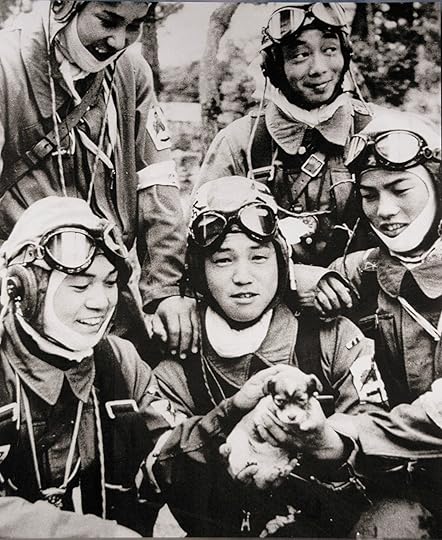
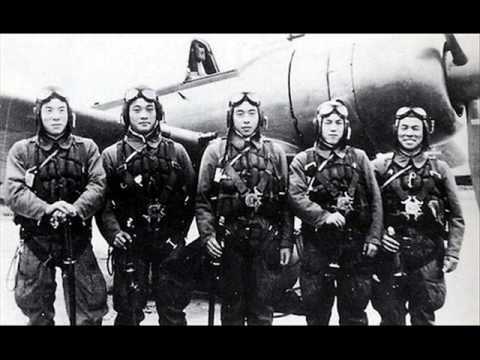
Antrojo pasaulinio karo metais Japonijoje užgimusi kamikadzių taktika dažnai vertinama kaip neturinti precedento karybos istorijoje. Šimtai jaunų pilotų stodavo į suburtus specialiųjų atakų padalinius, išeidavo trumpą parengties kursą ir skrisdavo vykdyti užduoties, iš kurios nebūdavo įmanoma grįžti. Jie taranuodavo amerikiečių lėktuvnešius, kreiserius ir minininkus, buvo įsitikinę, kad šlovingai žūva už savo Imperatorių ir Amžinąją Rytų imperiją. Kokios priežastys sąlygojo kamikadzių fenomeno atsiradimą?
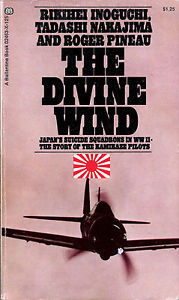
Apie tai knygoje „Dieviškasis vėjas" pasakoja Japonijos jūrų laivyno aviacijos karininkai Rikihei Inogučis ir Tadašis Nakadžima. Autoriai dalinasi prisiminimais apie pirmųjų savanorių mirtininkų verbavimą, jų nuotaiką, tikėjimą ir gyvenimo sąlygas. Skaitydami sužinosite apie kamikadzių veiksmų rezultatus ir padarytą žalą priešo laivynui. Knygos puslapiuose nutapytas išraiškingas kamikadzių tėvu vadinamo viceadmirolo T. Onišio portretas, pateikiami paskutiniai mirtininkų laiškai artimiesiems. Be japonų autorių R. Inogučio ir T. Nakadžimos, prie knygos rengimo prisidėjo JAV karinių jūrų pajėgų kapitonas Rogeris Pineau. Jis parengė tekstus leidybai ir parašė daugelį komentarų.
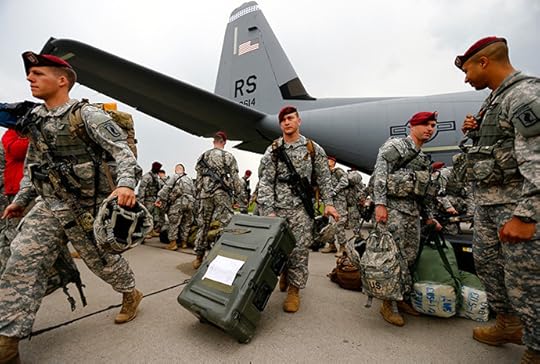
(US soldiers arrive in Lithuania to ‘reassure’ NATO allies amid Ukrainian crisis.American soldiers stand on the tarmac after arriving at the air force base near Siauliai Zuokniai, Lithuania, on April 26, 2014. (AFP Photo/Petras Malukas)
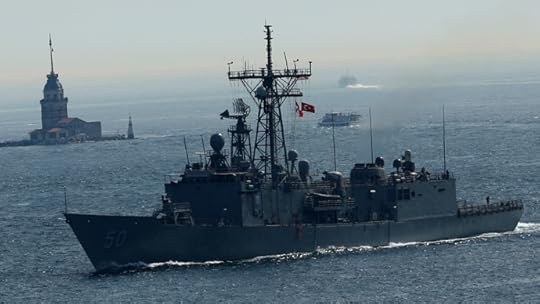
(U.S. Navy frigate USS Taylor sets sail in the Bosphorus, on its way to the Black Sea in Istanbul April 22, 2014 (Reuters / Murad Sezer)
(Soldiers from the first company-sized contingent of about 150 U.S. paratroopers from the U.S. Army's 173rd Infantry Brigade Combat Team based in Italy walk after unpacking as they arrive to participate in training exercises with the Polish army in Swidwin, northern west Poland April 23, 2014 (Reuters / Kacper Pempel)
Now that there's been so much commotion,"information war"(USA versus Russia),troops being deployed,deals broken,"spies" arrested,annexations fulfilled or in the process,water supply cuts,threats on gas supply ...near Ukraine,...in its neighboring nations, or seas-around...I CAN HEAR rumbles of war...,... now, I was saying, this is a good pick, a WWII book.
30th April 2014
UPDATES
(Ukraine's President Petro Poroshenko (L) and NATO Secretary General Anders Fogh Rasmussen talk during the NATO-Ukraine meeting at the NATO Summit at the Celtic Manor Resort in Newport, Wales, September 4, 2014 (Reuters / Facundo Arrizabalaga)
"NATO to give Ukraine 15mn euros, lethal and non-lethal military supplies from members"
September 04, 2014;from RT.
“Actually I think we are entering an era which could be compared to the Cold War — a new Cold War,” Rasmussen said. “Russia of today is more dangerous than the Soviet Union,” because it is less predictable and more nimble.
in The Financialist. March 23rd 2015
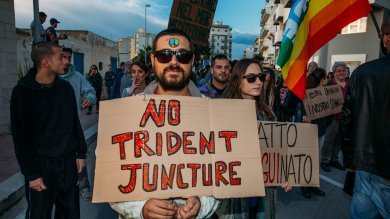
"Trident Juncture: NATO’s Largest Military Exercise since Cold War. The “Fictitious Target” is Russia" "; October 31, 2015*
--- Now about The Divine Wind: Japan's Kamikaze Force in World War II.
This is a historical piece of art; fully documented with photos and letters and charts, it's a worth-read for those interested in WWII and, specifically, the role of the Japanese suicide pilots.
Why art? -the Japanese poems inserted are beautiful....enough to counter such a grim period and theme. Just one ahead:
Today fully blooming/ tomorrow scattered on the ground/ life is like a delicate flower. How can you expect her fragrance to last forever?
This 1958 book by former Japanese naval officers associated with the formation and deployment of the Special Attack groups known as Kamikazes provides fascinating insights into the program, the leaders and aviators involved. Is it crazy to choose a suicidal mission or is it courageous? Rational or irrational? It was often a matter of perspective and circumstance.
For the first Kamikazes stationed in the Philippines, the authors paint a picture of naval aviators readily volunteering for the crash bombing assignments and doing so for logical reasons. At this stage of the war, the Japanese were overmatched in every way: the Americans had more pilots, more aircraft and better performing aircraft than the Japanese. The problem of the moment was to suppress American carrier aviation to allow for the possibility of success for Operation Sho-Go, which resulted in what we now call the Battle of Leyte Gulf.
The choice was between conventional attacks that were likely suicidal and rarely successful or crash bombing attacks that were definitely suicidal, but much more likely to be successful. The veteran pilots lined up to be given the opportunity to take a shot at one of the American carriers and thus potentially save the lives of their countrymen in the upcoming naval engagement.
The tactics were carefully developed using constant feedback from spotter aircraft assigned to missions. This involved fighter escorts, radar evasion, several approach tactics, optimal angle of attack, etc. The training for selected pilots was rigorous and peak physical condition was assured: good diet, no alcohol prior to missions, etc. The results were much more successful than traditional attacks during this period.
In contrast to these early efforts that may have had an outside chance of success by some measurements, the continuation of the program by Japan’s military elite is much more difficult to justify, other than to say that it wasn’t much worse than other fight-to-the-death tactics employed. The pilots involved at this stage were also not veteran flyers making the best of a nearly hopeless situation, but rather brainwashed lambs led to a futile slaughter.
Though Japanese claims exaggerated the number of ships sunk when compared to post-war analysis, they actually under reported the total number of ships damaged. The final tally of the Kamikaze campaign:
Japan: 1228 pilots and aircraft destroyed (including escorts)
Allies: 34 ships sunk and 288 ships damaged (Japanese claim of 81 sunk and 195 damaged)
The early phases of the book are very compelling and involve first-hand accounts of the authors’ involvement with operations in the Philippines and Formosa. I would call this the 5 star part of the book.
The remainder of the book qualifies for 3 stars. It includes a brief overview of the Kamikaze actions throughout the rest of the war with a majority occurring during the Okinawa campaign, the final demise of Kamikaze proponents Admirals Onishi and Ugaki, a summary of academic opinions critical to the Kamikaze program, and finally a collection of the last letters of Kamikaze pilot to their families. These final sections seem shallow and superficial in comparison to the rich content presented in the first half of book.
An exceptionally well-balanced and scholarly work of a still controversial strategy. Any tendency to label a "suicidal" mode of modern warfare as, for example, a mere "tactic" or the handiwork of misrepresents the terror inflicted upon the men (and, yes, women) who were caught up in its cross hairs, not to mention the pervasive sense of honor and sacrifice on the part of the suicide pilots. Intriguingly, while almost all Kamikazes performed their duty without complaint, many were none too happy about their circumstances.
A major element of this book's gravitas is the fact that it was originally published by a pair of Imperial Japanese Naval Academy graduates who served in senior positions with the WW II Air Groups that initiated Kamikaze operations. To assist in providing a cultural as well as literal Japanese to English translation, Capt. Roger Pineau, USNR, served as a prominent naval historian and author, co-author or contributing editor on ten books about the Pacific naval war of 1941-1945.
Until our most recent wars in Afghanistan and Iraq, the United States military had rarely encountered adversaries that were willing to, according to our culture, commit suicide. The most notable encounter prior to the era of Middle Eastern IED/suicide bombers was the Japanese Kamikaze or Divine Wind attacks against the U.S. Navy during the last year of World War II in the Pacific. This chapter of our military history has receded from view. The World War II generation is nearly gone and our contemporary suicide adversaries now overshadow the remnants of the Japanese Divine Wind. Nevertheless, it is useful to try to understand the root causes of this type of unusual warfare.
The Divine Wind was first published in 1958, when the memories of the American’s who fought the Japanese were fresh. Equally important, especially for this book, is that the memories of the surviving Japanese who were part of the Divine Wind effort were similarly untainted by the passage of time.
Unlike most American published histories of World War II, this book is from the point of view of the enemy. Both authors were senior officers in the Imperial Japanese Naval Air Force. They served in high-level staff positions during the formative days of the Divine Wind strategy, and later as the effort was implemented, helped train the personnel and pilots who executed the strategy as well as participating in planning operational Kamikaze strikes. We are thus given their point of view about why such a strategy was developed and by all accounts, successfully executed with minimal material resources and with primarily insufficiently trained pilots.
To the Japanese, the Divine Wind made sense. After the Battle of the Philippine Sea in June 1944, the Imperial Japanese Navy, particularly its offensive aircraft carrier arm, was essentially destroyed. Most of the best pilots had been killed. The carrier force was decimated and the naval and military power of the United States was rapidly bearing down on the Japanese home islands. The Divine Wind was a last ditch effort to make the American advance so costly that a peace favorable to Japan might possibly be secured.
The Japanese knew they were going to experience severe losses and felt that the damage inflicted on the Americans in taking those losses should be maximized. The Japanese warrior culture supported such a move, as did loyalty to the Emperor. Particularly early on, an abundance of volunteers provided more than enough Divine Wind pilots. As the possibility of having the attacks affect the outcome of the war diminished, it became harder to recruit pilots, most of whom by this time were very inexperienced. Nevertheless, up until the end of the war, sufficient pilots and planes existed to maintain a steady number of attacks.
Regardless, the Divine Wind failed in its mission. Many brave young men died on both sides, but the outcome of the war was never in doubt. The Divine Wind was driven more by warrior pride than common sense. Off Okinawa, the U.S. Navy suffered its greatest losses ever, but it still brushed aside the Japanese, Divine Wind and all.
The Japanese sacrificed their young men at a time when there was no hope of victory. These men might have played a beneficial role in helping rebuild Japan after the war. Thus, The Divine Wind reinforces the idea that the Kamikaze attacks were and likely are to remain interpreted quite differently by the United States and Japan. For the former, they remain a form of senseless killing. For the latter, they represent the highest form of warrior pride in defense of a divine Emperor and a nation that had not suffered defeat in a thousand years.
A fascinating book about the kamikaze forces in WWII written by two Japanese officers who were intimately involved in the recruiting and implementation of the admittedly desperation tactic to delay the advance of Allied forces in the Pacific. The tale is well told alternately by the two officers. It is a very human perspective and told at ground level as the events unfold at the airfields where the kamikaze forces are recruited, trained and sent to their certain death. It is a tale of a short term strategy to achieve a specific purpose evolving into a desperate and deluded effort to delay the inevitable. The book is interesting and oddly uplifting to a point and then it becomes depressing and the momentum for kamikaze strikes takes on a life of its own. To the books credit, the penultimate chapter goes to a higher level and reveals dissent in the highest ranks of the military about the effectiveness and morality of the kamikaze strikes. It also reflects on Japanese culture compared with Occidental culture in considering the justification and acceptance of suicide missions as part of military strategy. The final chapter consists of final letters to home from some pilots, further humanizing those who chose to sacrifice themselves for their country and even includes some who clearly had reservations although they had "volunteered." A map of the Pacific would be helpful to have on hand as the story of the kamikaze unfolds to see how the Japanese were watching their empire crumble while making these futile and paltry efforts to stave off the Allies.
It's sometimes interesting to re-read some of the books as you catch these small details that you may have missed or understood them differently when reading for the first time.
My second time reading this book (translated from English to Lithuanian), I think, depending on how it is translated, it can set the tone that otherwise wasn't meant to sound the way it did.
When I first took an interest in kamikaze, this was one of the first materials that I could get my hands on, and I thought it was "cool" for a "history buff", but now reading it again, this is basically propaganda. The authors seem to justify the war crimes that were committed and the brutality against their subordinates (which aren't mentioned in the book).
Then again, this does send the full experience of what it was like on the home front for the Japanese teenagers back then. I doubt everyone really wanted to die for their country and "world peace" that was spouted at the end of the book. Simply, it was just brainwashing that the higher-ups stoutly tried to deny.
Truth be told, I don't know what I was expecting. I guess I'm just trying to say that my view changed from when I first started to pick up the topic 'kamikaze', and then going through the same materials, to be quite appalled.
Pick this book up if you're interested in general history, more precisely, the Pacific Theatre. Just don't let it be your only knowledge about the topic, as it's basically propaganda, but I'm just a foreigner (to the Japanese) so what do I know?
My copy of a Bantam edition has artwork on the cover that depicts a carrier, numbered 21, under a kamikaze attack. The USS Boxer was an Essex-class fleet carrier that bore that number. It was not launched until December 1944 and saw no action in WWII. There is a statement in the Foreward section that says kamikazes inflicted more casualties in the US fleets than the Japanese army did to the invading US troops in the nearly three months battle ashore. This is absolute nonsense. Total US casualties at Okinawa exceeded 80,ooo. US Navy casualties were slightly less than 10,ooo. What is true is more sailors (4,907) were killed than Army soldiers (4,675). If you add US Marine Corps deaths (2,938), the invasion force suffered more deaths than the Navy.
At first, I expected this to be a second or third hand review of the role of this unusual warfare. I was pleased to find an oral history of two of the Japanese principals. The fact that it was edited and commented on by a US Navy Captain who fought in the Pacific against the kamakazi's made the book both more interesting and more poignant. After reading, I passed it on to a lecturer at the World War Two Museum in New Orleans and am sure it will be useful for a fuller view of the last year of the war.
Good review of the establishment, organization and tactics of the Japanese Special Attack forces at the end of WW II. It is interesting to see how desperation drove these tactics and helped to justify their use. Because the story is told from the Japanese point of view, it does lack the balance of describing the Allied reaction to these tactics. Well worth your time.
Provides an invaluable look at the kamikaze squadrons from the Japanese perspective, from two officers that were there from the inception through the end. Truly interesting to get a glimpse into the psyches of these pilots. Their last letters home were also moving, and reveal a fascinating psychology.
Escrito por quem participou e viveu aquela entrega dos aviadores japoneses na vã tentativa de dar a vitória ao seu amado Imperador. Ainda hoje difícil compreender o que iria na alma daqueles jovens. Um bom livro, algo tendencioso claro, que nos mostra a evolução desse "corpo especial" que apenas "beliscou" a vitória dos aliados.
One of the best books I’ve read in a while. This book is written really well and detailed. It’s easy to imagine the events within the pages as you’re reading through it. You really see what it was like for the Kamikaze pilots, their enthusiasm and willingness to take the final plunge. You also see the critics of the Special Attack Corps as well.
The word Kamikaze translates literally as “Divine Wind”. Though the phrase is now associated primarily with the deadly suicide pilots of the Second World War, its origin is much older. In fact, the concept of the Divine Wind comes from a 13th Century typhoon that wrecked a Mongolian fleet, saving Japan from an imminent invasion. It was seen at the time as the work of the gods, who had heard and answered the prayers of the Japanese Emperor.
A poignant treatment of Japan's struggle between recognition of the kamikaze's futility and pride in having made the attempt. Told by senior officials in the wartime kamikaze effort, this book stands out among English-language translations of Japanese accounts of the Pacific war.
At the outset of the Second World War, Japanese pilots could often receive up to 500 hours of training. On top of this, many of the men already flying by the time war broke out were older and more experienced, with many years in the air already behind them. The Kamikaze pilots, on the other hand, were usually much younger, since older men were needed to train the new recruits. In fact, most of those flying suicide missions were under the age of 24 and, on average, received only 40 to 50 hours of training. Though they were usually escorted to their targets by more experienced pilots, it still seems an incredibly small amount of preparation before such a momentous task. These interesting facts only scrape the surface of the Kamikaze tradition and tactics. Dying with honour has long been a strong cultural narrative in Japan, and the suicide attacks of the Second World War can be seen as a continuation of that. Even though they often missed their targets and failed to turn the tide in Japan’s favour, the Kamikaze pilots remain a dark and fascinating topic.
This book reiterated much of what I read in Shatterd Sword about the Jaanese culture and their fatalistic mindset. It was written by two men who were part of the kamikaze force. They stress their belief that there was no compulsion to become a kamikaze pilot: every pilot volunteered and many were heartbroken when they were not chosen to fly. The book helped me understand that the Japanese culture created such men. Do your duty, even if you die...and even when it won't make any difference. Seems nutty to me...but I am impressed with their courage.
This book gives an incredible insight into the young men who flew Kamikaze missions in World War Two. Far from being scared, they were often in high spirits, convinced that they were earning themselves status in the afterlife. It's interesting to learn that there was no shortage of willing volunteers and that the pilots joked with their superior offciers that they would be the ones in charge in the next life. A good, well written, informative read.
An excellently researched and written account, actually accounts, of the Japanese Special Attack Units, better known as the Kamikaze, during the closing year or so of WWII in the Pacific Theater of Operations. The book is presented from the perspective of several of the Japanese military men who were directly involved in these operations. A significantly important contribution to the history of WWII and the Kamikaze in particular. Among the many books I own on this subject, this is my go-to.
Just read the book, I think kamikaze's pilots are brave men and it was the right act according to the spirit of bushido. but still I also think it was useless act. They probably could sunk several or dozens of US warships but it would be replaced quickly by new ships and the number they got is too small compared to the number of the whole fleet which was I think about 1.000 ships.
Very interesting account by Japanese officers who were actually there, Inoguchi being the more philosophical of the two. Published in the 1950s, with some immediacy to the events described.