Jump to ratings and reviews
Rate this book

Posleen War: Sidestories #1

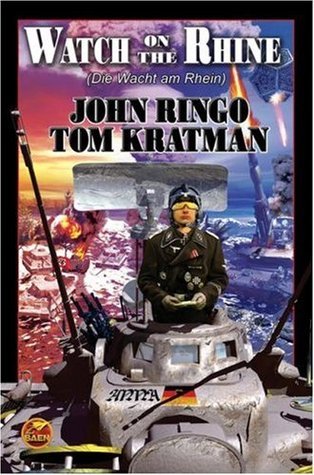
Watch on the Rhine

Rate this book
The invaders are coming: the Posleen, a seemingly unstoppable horde who have conquered one star system after another, literally feeding on their conquests. Earth's dubious allies, the Darhel, have given the humans a number of highly-advanced technological devices, including a process for rejuvenating the aged, which has returned to service trained and proven soldiers who otherwise would be too old to fight.

In the dark days after the initial Posleen attack, but before the primary invasion, the Chancellor of Germany faces a critical decision. Over the years, with military cutbacks, the store of experienced German military personnel had simply dwindled. After the destruction of Northern Virginia, he realized that it was necessary to tap the one group he had sworn never, ever, to recall: the few remaining survivors of the Waffen SS.

Has he made a bargain with the devil, or is this a chance for the reviled SS at last to fight the good fight, and, perhaps, gain redemption?

"Watch On the Rhine", is a new chapter, and a "side-story", in the best-selling Posleen War saga.

485 pages, Paperback

First published January 1, 2005

56 people are currently reading
512 people want to read

About the author

John Ringo

101 books1,831 followers
John Ringo is a prolific author who has written in a wide variety of genres. His early life included a great deal of travel. He visited 23 foreign countries, and attended fourteen different schools. After graduation Ringo enlisted in the US military for four years, after which he studied marine biology.

In 1999 he wrote and published his first novel "A Hymn Before Battle", which proved successful. Since 2000 Ringo has been a full time author.

He has written science fiction, military fiction, and fantasy.


Librarian Note: There is more than one author in the GoodReads database with this name. See this thread for more information.

Ratings & Reviews

What do you think?
Rate this book

Friends & Following

Create a free account to discover what your friends think of this book!

Community Reviews

5 stars
1,026 (37%)
4 stars
900 (32%)
3 stars
611 (22%)
2 stars
160 (5%)
1 star
68 (2%)
Displaying 1 - 30 of 80 reviews
Author 1 book1 follower
January 16, 2015
Let's open this review in proper Goodreads' tradition and open with a Gif:


What's both unfortunate and insane about Watch On The Rhine is that that single question above asks more more about the Waffen SS than the entire novel manages to do.

There's a small scene in Watch On The Rhine that I found summed up the novel's problems in unintentional fashion: A minor character asks his German friend why the Germans killed Jews during World War Two. The answer? 'We don't know'. It's emblematic of Watch On The Rhine that it seems to think this is true, despite over sixty years of scholarship asking that very question. To be honest, if either author had actually dared to ask that question themselves and look for the answer, this book wouldn't have existed.

One reason for the Holocaust is what's known as the 'stabbed in the back myth'. In short, many Germans, especially their soldiers, were shocked when their country abruptly surrendered in 1918. Isolated from the realities of the conflict by distance and propaganda, they were unaware that their military was on the verge of collapse and that they were almost out of supplies. Instead the meme sprang up that it was due to the betrayal of the military by the civilians on the home front. This then quickly mutated into blaming specific subsections of Germany, a grouping that included Jews and communists (along with many other 'enemies').

Both were murdered in the concentration camps after the Nazis took power.

Watch On The Rhine tells a side story to John Ringo's Legacy of the Aldenata series, which covers the invasion of Earth by the alien Posleen. Facing the knowledge that the German military is incapable of stopping the coming horde, the German Chancellor permits the reactivation of the Waffen SS. Using technology from their nominal alien allies to rejuvenate the surviving members, this reborn Waffen SS rebuilds its strength to face not only the Posleen hordes, but also those members of the German government who oppose the war effort and the return of the SS.

The core problem with Watch On The Rhine is that it's about excusing the Waffen SS, not actually about the real Waffen SS. The novel plays a constant game of false equivalency, never mentioning a Waffen crime without claiming the Allies did something similar. While this is intrinsically disappointing (the only thing I liked about Kratman's A Desert Called Peace was his no-quarters take on war crimes) it's also inaccurate. There's no real Allied equivalent I'm aware of to the brutal repression of partisans by elements of the Waffen SS (in particular, the actions of Oskar Dirlewanger and the 'men' under his command simply can't be excused) or the fact that multiple units of the Waffen SS were originally recruited from concentration camp guards. That neither of these issues is brought up by the novel unfortunately says a lot about the authors' priorities. Further still, the sheer idea that two wrongs don't make a right seems to have escaped them.

What makes this worse is that Watch On The Rhine doesn't really manage to be convincing that it knows that much about the Waffen SS. Oh, it came name it's units and insignia, it can point to Michael Wittman as one of their heroes, but it never manages to get inside the Waffen and asks what made them so 'competent' (no, I'm not going to call them 'good'). All it can do is insist that they have their uniforms and their names, not say why they're necessary to their ability. There's nothing really noticeably different between the training they receive and the training in any other military novel I've ever read (it's the same basic 'you all suck and I'm going to torture you' training as in Starship Troopers or Full Metal Jacket. Those stories just do it better). In short, we're never really told why Waffen SS is better than everyone else.

Exemplifying these problems is the character of Krueger. One of the novel's three Old Waffen characters, Kreuger's the novel's official Bad Nazi (as opposed to the commander, Muhlenkampf, who's the novel's Good Soldier Nazi, and Hans, the novel's overblown Good Nazi). In tune with the subtlety of the rest of the book, Krueger's an unrepentant, proud Nazi, who treated the concentration camp he worked in as a free rape buffet. There's nothing intrinsically wrong with writing a character like this (much as there's nothing wrong with writing about the Waffen SS), but the problem with Krueger is that he's never punished for this. Every time the novel goes 'hey, here's the Waffen being heroes' it inevitably reminds you that the cost of this heroism is Krueger's freedom. Every time the novel condemns another character for their moral cowardice or treasonous behaviour, it reminds you that Kreuger's been forgiven for crimes that are equal or worse. Even Kreuger's death illustrates this problem. He's not killed for the rapes or murders he's admitted to, but rather for raping the woman who would go onto be his executor's wife. In effect, the novel kills him for harming one of his fellow Waffen, making that seem more important than his crimes against the innocent.

Leaving the Waffen SS aside for the moment, there's something infinitely distressing about the way the opposition to them is handled. There's no moral opposition to them, no one who stands up and says that the Waffen are simply unacceptable, no matter what the cost. Instead the opposition is solely at the behest of alien puppetmasters. Those who do despise the Waffen are thus reduced to the enemy, their opinions irrelevant lies due to their corruption. One of the worst decisions of the novel is to have the main voice of opposition to the Waffen (Gunter, leader of the German Greens) also be the novel's chief villain, whose reasons for this are so monumentally stupid as to be hard to believe. This refusal to allow any actual criticism of the Waffen SS is the sort of cowardice the authors themselves decry and it makes the novel a grotesque thing to read (one moment of the novel has the authors explicitly compare Gunter and Kreuger, because of course they're the same).

This cripples the novel's already ham-handed critique of the left. Frankly, it's seven shades of absurd that a novel about rehabilitating the Waffen SS has the chutzpah to turn round and go 'these people, now these are eternally evil', yet that's what Watch On The Rhine does. The Waffen are a mix of people, some good, some bad, but the liberals? The Reds? The Greens? (as the novel goes along, it has greater and greater difficulty telling the difference between these two)They're all to blame. Every time there's a problem, it's the left's fault. Not enough tanks? Lefty sabotage. Cowardly troops? Political Correctness. Not enough nukes? Green protests. Everything's a conspiracy, nothing's ever bad luck or natural stupidity. Grotesquely highlighting this, one moment has the Waffen as a whole comparing their old masters and the new government and finding modern Germany wanting.

The issue here is that the Left is basically charged with nothing more than spectacularly stupid myopia. Watch On The Rhine is set after the first attack on Earth (detailed in Ringo's Gust Front), an attack that devastated the US, with the attacking Posleen destroying and devouring whole swathes of the US. Indeed, the first scene in the novel is the German Chancellor and his aide (the aforementioned Gunter) touring an American battlefield. With those events in mind, it's hard to believe that an entire half of the political spectrum can be so intensely blind that they'll sabotage the troops trying to protect them. Later, they continue this, in apparent monolithic fashion, despite the massive losses in civilian lives they cause. It's a level of ridiculous stupidity that sabotages the entire book, yet it also makes the novel's criticism of Left policies incredibly hollow. If they're clearly stupid, it basically says, then I don't actually need to critique what they're trying to do, as they're manifestly incapable of getting it done.

This idiocy leads back to the 'stabbed in the back myth' I mentioned earlier. It's hard not to see the parallels between this sordid piece of history and Watch On The Rhine's treatment of the German Left. Germany, the book says on several occasions, is strong enough to fight the enemy, but it's own people, it's alien-boot-licking treasonous politicians, have betrayed and crippled them. Thus, to survive, to win, the traitors, the wrong, must be purged, so that the true Germany, the strong Germany, can emerge triumphant over its enemies.

I'll leave you to draw the parallel there.

What furthers this problem is that it's hard not to get the feeling that the authors know their history so poorly that they're accidentally drawing parallels they don't want to. The German leader (a man who spends most of the novel enabling the Waffen SS without ever standing in their way) is constantly referred to as Kanzler, the German for Chancellor, without ever being given a name. This is the same way Ringo's other novels deal with the US President, yet here it's slightly creepy, as Chancellor's the role Hitler held before he crowned himself Fuhrer. Simply naming the Chancellor alone would have avoided this comparison without it even vaguely being a problem. A similar event occurs near the centre of the novel, when the traitorous politicians are rounded up. There's no reason for the Waffen SS to be involved in this mass arrest, but they are, instantly bringing to mind the events of the Reichstag Fire. Watching members of the Waffen SS repeating the actions of their predecessors is disturbing and there's little reason for it beyond a desperate desire to insert the Waffen SS into every part of the narrative.

The novel's creeping authoritarianism is, however, less easy to hide. There's a constant erosion of due process, evidence or any other form of true justice, justified simply because the 'heroes' know who the 'villains' are. One scene that sticks sideways in my throat is when the Waffen SS decide to launch a campaign of terror against their enemies among the political class. Rather than exposing the roaches to the light with whatever evidence they've gathered, they instead hunt them down and 'disappear' them. This is the tactic of dictatorial regimes the world over and one the novel embraces because it 'knows' the 'bad guys' deserve it. I was less convinced.

Driving the final nail into the novel's astonishingly horrible story is it's horrendous epilogue. Set many years after the main, it details the beginning of the punitive invasion of one of the Darhel homeworlds, punishment for their behaviour in the Posleen war. It's a prime moment for the novel to justify itself, to show the good its horrors have created. Instead, it befouls itself. The invaders, a mix of Waffen SS and Japanese troops (due to an aborted sequel about the Japanese front, which I can't help but imagine might actually have been worse) are not preparing to shatter the Darhel defences and tear down their government. They're preparing to exterminate them. And this is celebrated!

Yet again, this is one of those moments where this novel could have shined, rather than smearing itself in its own filth. It's hard not to imagine an alternate, better version of this novel, where the Waffen SS leader simply said “No. We did this once, killed those who had committed no sin more than be the same as those who we thought were our enemies. We bear that sin and nothing we do can expunge it, but I will die before I be a part of it again.” It's hard not to imagine a final image of the Waffen SS standing before the vengeful armies of humanity, bulwarking the Darhel defences, not because they prefer them to humanity, but because they refuse to allow humanity to become like they were.

Instead, Watch On The Rhine ends with it's 'heroes' setting off to commit genocide.

Anyway, what further earns Watch On The Rhine it's exceedingly generous one star is it's poor writing. Kratman employs an irritating narrator-like voice, where his opinion, which is of course always 'right', constantly interferes with the novel. He can't help but chime in, mocking and denigrating the Left at every chance, even when it makes little or no sense. Many of the novel's worst moments are due to this incessant need to flog his dead hobby horse. Characterization is also flat and unappealing. Kreuger appears to have come out of a cryogenic freeze that he started in 1945, as he appears to have had no experiences post-WW2. His fellow not-Nazis are similar, with Muhlenkampf appearing to have learnt nothing of the world after the fall of Hitler (one early scene has him unable to tell the difference between a Green and a Soviet, which is only moderately absurd). Hans is the winner of some sort of 'most sympathetic back story' award, having apparently spent his time after WW2 living in Israel, with little acknowledgement of how likely this was to get him dead. A handful of subplots simply waste pages throughout this, appearing and disappearing with little or no relevance to the plot. Particularly memorable is the experimental super-tank. This warmachine rampages through the latter half of the novel, but never really has anything to do with the totality of the plot.

Worse though is the novel's use of German. Unsurprisingly for a novel set in Germany, there's quite a lot of it, but the novel can't decide how to handle it. Dialogue might be entirely in English, but every now and then it drops a phrase in German in and then translates it. That's annoying, constantly shoving aside the suspension of disbelief in the name of clarity, but what makes it worse is its inconsistency in execution. Insanely, Watch On The Rhine actually uses three different approaches to this with what seems to be no organising system. It will either a) give you a footnote for the glossary at the end, b) an immediate translation (sometimes in brackets as though this makes it discrete) or c) simply no translation. Particularly frustrating is the phrase 'Lieber Gott in Himmel' (Dear God in Heaven) which drops twice in the novel. The first time it's footnoted, the second translated! It's hard to shake that the feeling that the two authors used differing systems and nobody bothered to synchronise between the two.

I'd be remiss if I didn't point out just how badly this novel fits with Ringo's original series. It's hard not to get the feeling that someone slipped the Waffen SS a few copies of Ringo's series as many of their decisions are designed entirely to avoid the pitfalls of the original series (in short, the supposedly allied Darhel are actually using the Posleen and Humans to destroy each other in an effort to ensure their continued rule). It's notable that none of the characters trust the Darhel, despite having no reason to do so (even Gunter, before he throws in with them. I assume there's some mandatory lobotomy in the swearing in process as that particular character trait gets dropped by the end of chapter 1). They refuse all offers of Galactic tech, which is a nice way of getting around the Darhel's tendency to suffer 'supply problems', but that doesn't make sense when confronted by approaching annihilation.

Yet beyond this, it's worth pointing out that it makes the original series' characters look like gullible idiots. The Darhel are clearly revealed to be the enemy by halfway through the book yet this information apparently doesn't make it to the American high command, as they're spectacularly blindsided by a Darhel betrayal several years later into the timeline. The novel's insistence on tanks seems more driven by the desire to ape the Waffen SS' Panzer divisions than any allegiance to the original series, where tanks were little more than target practice for the Posleen and the ships the Waffen destroy by the dozen are rare and infrequently used. Beyond all that though, it's worth pointing out that the Americans in the original series do a better job of holding out against the Posleen, despite not engaging in any of the ideological auto-cannibalism that this novel sees as necessary.

The book's also tonally off. The original Legacy of the Aldenata novels were great books because they told the story of the Posleen invasion with verve and imagination. Yes, they were dark (a scene of a trapped couple sitting down to read a book with their toddler as they wait for the Posleen to kill them sticks in my memory), but they were also spectacular and inventive. A Hymn Before Battle, Gust Front, When The Devil Dances and Hell's Faire all positively throbbed with big ideas and incredible scenes. Watch On The Rhine simply doesn't. If the Legacy of the Aldenata is a thunderstorm, at once awe-inspiring and terrifying, Watch On The Rhine is a grey drizzle, depressing and endless.

Exemplifying this bad writing is the novel's ending. With the Posleen near victory, the only way to stop them is prevent them crossing the Rhine. Unfortunately, when they use human shields to push across one of its bridges, the troops in charge of blowing the bridge are unable to do so, allowing the Posleen to cross. This is blamed on the weakness of the troops in question and used to justify the novel's philosophy, but it's hard not to point out that it seems more accurate to blame it on their command. It's unbelievable that supposedly competent commanders like we're told they are (by this time the Waffen SS are portrayed as being in charge of everything) would leave such a vital vulnerability guarded by conscripts with less than a week's training, rather than say, the supposedly more competent Waffen SS.

Finally, like any good Tom Kratman novel, this has an afterword, just to make sure you get the message the novel's supposed to have given you (frankly, this is a statement on his confidence in the novel's ability to deliver it's message, but I digress). Kratman's message is simple: the War On Terror is identical to the Posleen invasion and needs to be fought with equal measure. To be blunt, this is grotesque. To compare the War on Terror to the Posleen invasion is not merely the most incoherent comparison I've seen since chalk and cheese, but also one with instant ideological horrors. Who, may we ask, are the enemy? If we are to seek out and mercilessly destroy the enemy no matter where they are, where does that end? If our own ideological differences are in reality dealing with the enemy, who do we arrest and execute first? It's hard to shake the feeling that if Tom Kratman and John Ringo were to be in charge of the 'War On Terror' as they see it, the first people to be arrested wouldn't be those that claim to be Muslim nor that I wouldn't be within their number.

In the end, Watch On The Rhine is a mess. Subplots appear and disappear with barely a ripple, it's relationship with the universe it's supposed to expand is tenuous at best and its characters are as flat as a pancake. The novel's theme is an intellectually vacuous argument for authoritarianism that doesn't understand that the certainty it offers is a lie cast against the unwitting backdrop of Nazi atrocities. Beyond all that, it simply isn't very interesting. The whole super-tanks versus alien ships lacks the punch of Ringo's original series and the endless blame the 'liberals' is unpleasant and vicious. Watch On The Rhine is driven by a blindness to the dangers of what it espouses and, as a result, it's hard not consider the book's motto to be inaccurate. Rather than 'survival overrides programming' it's more accurate to claim 'fear overrides morality'.
Profile Image for Marijan Šiško.
Author 1 book74 followers
December 7, 2021
I was disgusted by this book in more than one way. It's not that much the overload of graphic physical violence, the butchering (literally!) of supoorting characters. it's not even rehabilitating wiews on Waffen SS. What disgusted me the most was thet author used the novel as a vessel for his right-wing-anti enviromentalist-pro liberal capitalist political wiews. Oh my, if we ban dirty technologies, if we don't allow our youth to be humiliated by various military sadists, we will be unable to resist alien invasion! Disgusting.
276 reviews
March 27, 2011
The SS are brought out of retirement to be the good guys. A woman is so entranced by an SS recruit that she totally forgets her fiancé and goes for the recruit (subtext: women cannot resist the raw power!) and dies gruesomely in the next chapter (subtext: she's still a worthless slut!) Oh, and those damn liberals who cut the defense budget should have known that we need a strong army for the invading hordes of aliens.
Profile Image for Michele.
118 reviews3 followers
August 6, 2016
I really liked this one, which surprised me. I expected the Nazi related story to be, well, a huge negative. It wasn't. It was really well done, and showed the tension between the various former Nazi soldiers based on each individual.
Profile Image for Jorge Garcia.
17 reviews
August 10, 2016
The fundamental outlines of this story are as follows: hostile aliens invade the Earth. The action is centered on Germany, who calls SS troopers into new bodies to help defend themselves. As such, it's a "hold the line" story where people do what is needed to survive against a hostile alien threat, in the vein Independence Day, War of the Worlds, etc.

However, all of this is ruined by two things:
1) The author's political views are very much on board here. Liberals, greens, pacifists, etc are depicted in the most strawman way possible, gleefully being traitors to their country and to the entire human race in the most illogical way possible. They happily watch their fellow humans get slaughtered and are then surprised when the space locusts turn their appetite to them two seconds later. Surviving pacifists don't learn from this. The way they act jogs directly past suspension of disbelief and runs way past it.

2) The above makes you realize that the entire nature of the threat (the Posleen) is constructed specifically to prove this point. Their war on earth basically makes zero economic or political sense, they are just supposed to be a race of locust like aliens to whom the only proper response is death, no negotiation or anything else is possible. This makes it so that the SS officers capacity to "put aside softness" and "do what must be done" to "win the war" can be heroic instead of at the very least morally questionable or in any way interesting. By making it the *only* legitimate choice, it robs the choice of any power or meaning.

In short, this is a universe where humans have to be jerks to survive. And the thing is, it's not even the most interesting such universe! Saberhagen's Berserker series took the same fundamental premise and took it in more interesting directions by having at least a smidgen of empathy and understanding for why people might turn traitor under some circumstances, and by having the death dealing foes be more interesting. And those were robots with no emotions or culture!

This book fails in all ways possible.
Profile Image for Mallory.
496 reviews48 followers
December 3, 2010
This was the first collaboration between Ringo and Kratman, and, unfortunately, not the last. In general bookish terms, it's not that bad, since Ringo is still a pretty good writer. The problem I had was the central conceit that the whole thing was built around.

It turns out that when the Posleen attacked northern Virginia in Gust Front, the chancellor of Germany realized that without more troops, his country would be royally boned. But he was scraping the bottom of the barrel for the regular forces, so he decided to deepen the barrel by pressing aged Waffen-SS veterans into service (after giving them deagening treatments, of course).

We get a long spiel about how, really, the Waffen-SS (Heinrich Himmler's private army, lest we forget) is just a bunch of misunderstood people. Why, they were all just soldiers, doing their duty for the Fatherland. They didn't all commit atrocities, you know! Plus, any of them who did probably feel really sorry about it by now. And those who don't are sure to be horribly offensive, and killed very soon.

John Ringo hadn't previously shown tendencies to praise Nazis before, so I've always chalked it up to Tom Kratman's malign influence. Looking at Kratman's other books, it's clear enough where he stands on Certain Issues, like Texas (loves it), Massachusetts (hates it), Teh Peepul of Teh United States (loves a highly distorted version of them), and Muslims (hates a highly distorted version of them).

I really feel that Kratman's introduction into the series made it less enjoyable, and more conservative. Before Kratman, Ringo may have had some RW themes in the series, but they were easy to ignore, if they were present. In Watch on the Rhine, on the other hand, we have the French wanting to surrender, environmentalists turning out to be either deluded or corrupt, and the aforementioned praising of Nazis. Blech.

Not to mention one French character, described as "socialist", who converts to Teh Side of Goodness and Light (i.e. the Nazis, in this world). If you've read my review of Ringo's book Ghost, you'll know that I fucking hate that. That's one sure way to make me dislike a book.

Overall, I would not recommend this book, unless you're very conservative or you don't care about the real world (but I repeat myself). Read Ringo's earlier Posleenverse books. They're pretty darn good. Skip this one and the other collaborations with Kratman.
This entire review has been hidden because of spoilers.
Profile Image for Nachman Kataczinsky.
Author 2 books9 followers
July 31, 2014
The book would have been very good but for the rehabilitation (or attempt to rehabilitate) the SS. The authors seem to believe that the SS were extremely brave fighters and generally good men. Historically both assumptions are wrong. The Waffen SS fought not any better than regular Wehrmacht units, though they were, generally much better equipped. They were also not "generally good men" as the book depicts them. These were people indoctrinated in Nazi race theories who mostly believed that they we superior to everybody else. They also willingly participated in mass murder of prisoners of war Jews, Gypsies and other "sub-humans". Describing them as "good men" and universally brave fighters, leaders and instructors is an insult to the rest of us.
Profile Image for Andy.
55 reviews8 followers
November 25, 2008
Very interesting alternative history/sci fi. Starts with an admittedly sensitive subject, and handles it very well, in the context of a truly brutal war. His handling of factions among the humans and aliens is fascinating. It does close with some very satisfying conclusions - and I'll avoid spoilers by leaving it at that.
Closed minded folks will not be able to tolerate his views on several subjects, tho.
Profile Image for Xan.
Author 3 books95 followers
July 21, 2015
Aunque en primer lugar figura como autor John Ringo el autor de este libro es Tom Kratman, escrito como una historia complementaria a la desarrollada en Estados Unidos. Parte de una idea realmente preocupante: si pudiésemos rejuvenecer a la gente y necesitásemos soldados para enfrentarnos a una invasión alienígena dispuesta a comernos, ¿a quién llamarías? Y en Alemania ¿recuperarías a los SS?

La historia a partir de ahí es previsible porque se tiene que adaptar a la cronología que le impone la serie original, con guiños a la mitología alemana y a diversos conflictos del siglo XX. Una de las ideas en las que se basa el argumento es la de las tres clases de alemanes durante la IIGM: los que no sabían de los campos (aunque lo sospechasen), los que disfrutaban con lo que hacían en los campos y los que lo sabían, no participaron, pero no se opusieron. Esta historia va de los que pertenecieron al tercer grupo, porque siempre habrá quién busque una especie de redención para las faltas que no pudo impedir.

En su epílogo el libro cierra la Saga de Aldenata al revelar el final de la guerra.
Profile Image for Neil.
1,329 reviews15 followers
August 27, 2017
Overall, I still enjoy (most of) this book. It tends to follow the "format" of Ringo's original series [bouncing around a lot between places]. Based on the dates and times listed throughout the book, it takes place between Gust Front and When the Devil Dances and focuses on the Posleen invasion of Germany (primarily) and France (somewhat) ("all" of Europe, to an extremely lesser extent). It also follows Ringo's "habit" of using either the same or similar words/phrases/sentences to end one section and starting the next (but in opposition to each other). I thought it was fairly well-written, was fairly entertaining (other than some of the stomach-churning portions of the narrative), and had some pretty decent character development. At the same time, I feel the book shows some of the "weaknesses" of Ringo's original four books in the serious (which is bound to happen, when you start adding more stories that occur before or during the original storyline; the original storyline is going to be changed or even retconned).

As much as I loved the ACS suits used by Fleetstrike, I was surprised that I would enjoy this take on the Posleen invasion.

For me, I felt the "best best part" of the book involved Brünnhilde.

On an off-the-wall sidenote, I found myself wondering if Ringo's "trope"/style of using similar words/phrased as a "final sentence" for one section and the "first sentence" of the next section to be a method of trying to tie the book together. He might have a French character in the Maginot Line making a comment that ends "that piece" of the narrative, and then have a German or God King making a comment in Germany that starts out using the words or phrases used by the Frenchman (for example). I am not sure how much I noticed it "before" during the previous times I have read this series, but it has really stood out to me once I noticed it in Gust Front.

I did like most of the character development in the book. Many of the "heroes" were definitely flawed. One of the "heroes" is especially despicable, making it "easy" to hate him and hope that he gets his just reward by the time the book ends (so I guess that means the authors did a great job in creating this character hahahah).

The book is not without its weaknesses, though. Despite these weaknesses, I did still enjoy re-reading the book, and enjoyed most of it.

This book does start giving more depth to the Posleen race, and Yellow Eyes builds upon it. I have always found the "interactions" between the God Kings and their AIDs to be interesting and humorous, and the authors did a good job at keeping "this tradition" alive in this book.

I enjoyed Hans' "backstory" told over the course of the novel as I felt it added to his character, giving him more depth than he might have had otherwise. I thought the authors did well in most of the battle sequences. The book covers most of a four year period (from November 2004 until March 2008 or so) and is broken into four or five "parts" (acts?) that portray how Germany prepared for the coming invasion. According to the "timeline" in When the Devil Dances, that puts it just before the first wave through to just before the fifth (and final) invasion wave. The Germans did a pretty good job of surviving and aiding in the survival of other European nations during the various invasion waves.

Overall, I did enjoy the book. I would probably rank it somewhere between 3.6 and 3.8 stars; not quite four but will round it up to four stars (despite some of the material in it). It was fun to revisit this book after not having read it for so long.
Profile Image for Paulo "paper books only".
1,473 reviews77 followers
February 15, 2015
This is the seventh book of a ongoing saga. I only have bought this one since the stories are unconnected. A book with few interesting points but the book is very poor. If one hand you've got the revival of old SS's that they are seen as deamons but at the same time as heroes and admired for their bravery.
Persons like myself that love the militar history of the Second world War knows that the SS were in their majority Waffe-SS, fighters as the Werhmacht. Only a small part controled the Prisons and executions.
I like one phrase that one SS says that young boys noawadays believe in nothing, not even symbols and banners. They only believe in TV and futile things. Truly True....
I like the evolution of the story however the plot in it was very weak. In the end Germany it's conquer. One thing is for sure... I will not buy anymore books.
Kratman and Ringo rang some surprising changes on the theme, with enough skill and daring to make you really think over what the Waffen SS really was, and if they were tarred with the Nazi brush somewhat mistakenly...and then they hit you in the face because even good people can fight for evil causes. When asked, one of the characters replies, "Oh, yes, there is one real Nazi here, and we all hate him, but he is a really good tank driver." Sometimes needs must, when the devil drives.
In WOTR, the German Chancellor views the aftermath of the bloody battles in Northern Virginia described in Gust Front. Realizing the brutal nature of the impending invasion, he decides with the reluctant support of his government to use alien rejuvenation technology used to recreate an SS combat unit. In this war no negotiation is possible and every tool available must be used. The story centers on a super-tank crew of 2 rejuvenated WW2 veterans and several young recruits. The tank commander names the Tiger III after his long dead Jewish wife. Several flashbacks occur throughout the book detailing his past history of WW2 combat, survival, love shared with a Jewish woman, and witnessing deathcamp horror. The story progresses through their training, friction with civilians violently opposed to a reinstated SS unit, and brutal combat with the aliens. This isn't a Walt Disney portrayal of good vs evil. This is more of a "use one evil to fight another evil". There are no magic pills or roads to military victory: their battlefield successes are the result of harsh, realistic training, close comradeship, cunning tactics, and careful weapon design influenced by early combat experience against the aliens. Unlike Disneyish entertainment, the SS veterans relish combat. They pass on their unique trade skills to their new recruits like parent wolves training their cubs. Similarly, they have no patience or compassion for soldiers or civilians who flee their duty or get in their way. Their ruthlessness will become necessary against the alien Posleen invaders who reveal a shocking new battlefield tactic. The research into both WW2 history and German language and culture is impressive. You can easily visualize the scarred veterans leading their recruits in verboten Third Reich marching songs and flaunting their black uniforms. At the same time the authors communicate well the pride of these soldiers in themselves and their brothers-in-arms.
284 reviews9 followers
March 2, 2014
From Publishers Weekly

Starred Review. An axiom of military science is that an army reflects the society it protects, but what happens when that society is confronted with a crisis its dominant ideology can't solve? In this provocative addition to the Posleen War series, a galactic civilization genetically predisposed toward pacifism offers humanity advanced technology so that we can defend ourselves (and them) from the only other sentient species capable of violence—think "Mongol horde in space." After the first enemy landings in 2004, the German chancellor decides, despite fierce opposition, to rejuvenate survivors of the Waffen SS. Eager to redeem their tarnished honor, these veterans display the same steadfastness and fortitude that they did in Russia and Normandy. Ringo (_Hell's Faire_) and Kratman (_A State of Disobedience_) pull no punches in this audacious and deliberately shocking effort, contrasting the ruthlessness of the (mostly) former Nazis with the contemporary politicians' disastrous insistence on forcing reality into a politically correct mold. Readers who can overcome their ideological gag reflex will be rewarded with an exciting view from "the other side of the hill." (Aug.)
Copyright © Reed Business Information, a division of Reed Elsevier Inc. All rights reserved.

Product Description

The invaders are coming?the Posleen, a seemingly unstoppable horde who have conquered one star system after another, literally feeding on their conquests. Earth?s dubious allies, the Darhel, have given the humans a number of highly-advanced technological devices, including a process for rejuvenating the aged, including trained and proven soldiers who otherwise would be too old to fight. Rejuvenation may give a critical edge, since to survive, the Earth must use every resource at hand. Every resource . . .

In the dark days after the initial Posleen attack, but before the primary invasion, the Chancellor of Germany faces a critical decision. Over the years, with military cutbacks, the store of experienced German military personnel had simply dwindled. After the destruction of Northern Virginia, he realized that it was necessary to tap the one group he had sworn never, ever, to recall: the few remaining survivors of the Waffen SS. Has he made a devil?s bargain, or is this a chance for the reviled SS at last to fight the good fight? And, perhaps, gain redemption. . . ?

Watch On the Rhine, a new chapter in the New York Times best-selling Posleen War saga, is perhaps the most unbiased, and brutal, look at the inner workings of the Waffen SS in history. Meticulously researched, it explores all that was good, and evil, about the most infamous military force in history using the backdrop of the Posleen invasion as a canvas.


Profile Image for Moe Sasseville.
2 reviews
June 9, 2023
I was a huge fan of the "Posleen War" books, and acknowledging that the premise was controversial, I was actually somewhat eager to read what would be done with it. Frankly it was bad...the only reason why there's two stars is that the action is excellent.

Firstly, I can't believe that one of Kratman or Ringo haven't been to Germany through their respective deployments...I'm also sure that neither of them stepped off the base beyond looking to get drunk and/or laid. Their views of Germany, German people and frankly the German military is insultingly stunted and biased. Basically Germans are a right wing caricature of what a social democracy is believed to be, indolent and unprepared...relying on others for protection while they focus on social and environmental issues (which the author makes clear are wastes of time and money and weakening their country). There's also the belief that every person that's green, liberal, or left leaning is intrinsically corrupt or stupid...generally both. These views just ooze out of every description of the country to a point that just breaks reality unless you've never stepped out of your country, and did so as the worst type of tourist...those who see other countries as theme parks rather than places where people live.

Because of the author's views the entire European continent may as well be a parallel universe where Germany emerged from WWII as a cowed state reliant on US military for anything more than token resistance. The Cold war didn't happen, East Germany was never heavily militarized, and Germans didn't live in fear of being at the front lines of an impending Russian attack for 40 years. There's somehow not generations of Germans who served in the Armed forces, especially during the cold war where both sides of the country was heavily militarized. Basically the troops that got sent off-world and mostly got wiped out were not just their best military units, but the bulk of their experienced soldiers from the last 50 years. There's just nobody left to train recruits in Germany even with rejuvenation treatments so much so that less than a hundred former war criminals need to be drafted. I guess that the fact that Germany had been limiting military spending at the time and was unwilling to follow US into every ill-conceived imperialistic wars meant that they were a bunch of incompetents without any military history to speak of. Don't cap your military spending at 2% of GDP folks...it'll lead you down a dark path!

Moving on...the plot of the novel relies on the fact that Germany is so desperate for competent soldiers that know which end of the rifle the bullet comes out of that they go out and recruit a cadre of former SS officers to train young people to be soldiers. The authors clearly know a lot about how the SS trained and organized units...or at least their propaganda because there's a lot of detail. Even though it's far more propagandistic than the actual reality. While the SS did recruit among some of the best out of other units, there were units that were generally just as effective, if not more in regular formations. There were also outright bad SS units as well, but rather than taking a nuanced approach to the material, and provide nuance, the book takes a particularly long time to explain how SS were not all ideological Nazis...as a matter of fact there's only ONE surviving SS who is an actual Nazi. All the "good" is represented by the overwhelming majority of the unit...as if those who survived to old age were the best of the elite of the SS, and one survived to represent all that was bad about Nazis...and the book implies that being a Nazi wasn't counter to actually being SS. The book tells us that the SS were just "good Germans" who just wanted to be in the best fighting formations in WWII. Much of what the book says about the soldiers of the SS is frankly a-historical...frankly this book carries a lot of water for the SS, absolutely buying into the propaganda and dismissing any of the concerns about their ideology, their actions; and the motivations of individual soldiers. Even the "bad Nazi" is specifically stated to not truly be a Waffen SS, he were transferred to the unit as punishment, he was Eizatgruppen...so never truly a Waffen SS to begin with.

The majority of the book is about how the SS troops are basically the best trained and most competent troops for Germany and if it wasn't for them, Germany would have been quickly defeated...just like the incompetent French who basically get rolled very quickly with the exception of those who survive in the refurbished Maginot lines.

Eventually Europe falls, with Germany being one of the last few powers to hold out...thanks to the SS' superiority. (This was telegraphed in the other novels) The SS through sheer bravery and sacrifice save a small population of civilians, and when the US pushes back the Posleen and start to retake Europe, the German Military is effectively all SS who March to retake their homeland once more...marching all the way across space to get revenge on the true bad guys...the race of lawyers and politicians...who are embodied by the Darhel. Kill all the lawyers must be the mantra Ringo mutters to himself before going to bed at night. Yep justice is bad people!

Frankly it's the type of apologetic fiction that turns my stomach, especially when it makes everyone else look like complete incompetents. It could have been an interesting story...I could even buy the whole "We'll give the SS back their honor" BS...and let them have their own unit. What it does need though is nuance, and a reckoning with the actions and ideology...but no...that never happens.
Writing a book where the SS are the type of hyper-competent fearless warriors that would have made Leni Riefenstahl beam with pride is not what I consider the type of nuance that provides legitimacy to the subject matter.

This book was propaganda pure and simple, was the last Ringo book I read...and while I suspect that this was primarily Krattman's works...my interest in his work was already declining steadily, and this was the last straw. I don't expect to have the desire to pick up anything else from either author. I'm done.
Profile Image for Andreas.
Author 1 book31 followers
October 3, 2011
This book is part of Ringo‘s Legacy of the Aldenata universe. It deals with the defense of Germany during the Posleen War. In what initially seems like a Faustian bargain, the Germans rejuvenate a whole bunch of old SS soldiers to form the cadre for their elite defense forces. They even resurrect the SS unit names and eventually the infamous double flash insignia. Much thoughtprovoking discussion ensues. The authors treat the subject matter in an adult manner. It’s a tricky subject, but they pull it off.

The action contained is great. The combat scenes are, as expected, intense and well written. The characters, major and minor, are all well fleshed out. The flashbacks into the past of various SS officers, especially Brasche, are excellent and used well throughout as a backdrop to the main action.

If you like the other books in the series, you will like this one. But it stands well on its own. No doubt many will loathe this book for the hated symbols it portrays and the notion of reawakening a buried evil. But as discussed in the text, symbols are not absolute. I urge readers to approach the text with open minds.

http://www.books.rosboch.net/?p=1192
3 reviews
September 8, 2020
The premise of this book is similar to the previous Posleen books authored solely by John Ringo; the ravenous Posleen are about to invade and humanity needs to prepare for the invasion. When the aliens do arrive, there are huge battles fought with an array of destructive weapons of both human and alien design. Only the toughest soldiers survive, fighting against the odds, outgunned and outnumbered. The previous novels dealt with the USA, this one deals with Germany. A Hymn Before Battle and Gust Front are enjoyable pulp scifi, the following two books aren't up to the same standard, but are decent enough. Watch on the Rhine is awful.

The core of the novel is that Germany needs to rejuvenate members of the Waffen-SS to defend Germany. It's an interesting premise, with a touch of sensitivity and historical context, it could of made for an interesting story. Unfortunately, the Waffen-SS in this novel are an ahistorical band of elite super soldiers, unconnected to Nazi war crimes, apolitical and multicultural. This is repeatedly emphasized in the novel. It's essentially boilerplate HIAG historical revisionism / war crimes denialism. The SS characters in this book are portrayed as super soldiers who are no longer antisemitic (or perhaps they were never truly antisemetic and just proud warriors?) and were always had the best interests of the German people at heart. I really need to emphasize how revolting this is- the Waffen-SS were in reality a mostly volunteer force who were considered elite by virtue of their racial characteristics. They were responsible for carrying out a significant part of the Holocaust, particularly within the occupied USSR. Ringo and Kratman promulgate the myth that the Holocaust took place solely within death camps such as Auschwitz by whitewashing the German armed forces in the field. In reality, millions of Jews, Roma and others were killed by the Waffen-SS, Einsatzgruppen and Wehrmacht through mass shootings, starvation and other methods without being transported west. The murder of millions of civilians was hardly a secret to the German high command, and the fanatical, race-based Waffen-SS were undeniably the vanguard of the Holocaust. Wartime propaganda described much of what the Waffen-SS did as "anti-partisan" or "anti-bandit" fighting- these terms were usually euphemisms for the extermination of local Jews and Roma, as well as the killing of POWs and civilians, behind the frontlines. That same Waffen-SS is whitewashed and idolized in this novel.

Members of the Waffen-SS, and younger Germans who sign up for the neo-SS are the heroes of this story. The antagonists, on the other hand, are not the marauding aliens from outer space- despite the awkward interludes, they are treated more like a natural disaster. Rather, they are are the The SS defend Germany not only against foreign enemies, but usurpers within the country: at one point the SS begin rounding up and executing Green and Social Democrat members of the parliament. Around the same time, they are permitted to wear their WW2 era uniforms, including the Schutzstaffel symbol, for the sake of pride.

The authors make pains to emphasize how the Waffen-SS was comprised of good men. One main character is a WW2 Waffen-SS member who married a Jewish concentration camp survivor after the war. During the story, Germany accepts Jewish refugees from Israel, who then readily form their own Jewish SS unit. Woman swoon for SS men. Young German men are encouraged to join the SS by their grandfathers. The heroic exploits of the military branch of the Nazi party undo 60 years of denazification in a couple of months. Meanwhile, the opponents of the SS are scheming cowards who want to see Germans die for their ulterior motives (wealth, power or ideology). Bizarrely, Muslims and Arabs also come up as an enemy- France refuses to accept Jewish refugees so not to upset it's Muslim minority. An SS man saves a Jewish woman from being raped by Arabs.

The politics of the book make it hard enough to enjoy the story, which is itself far weaker than any other in the Posleen series. Partially this is because the timeline is spread out over several years. It is also to a large extent due to the authors obsession with detailing things irrelevant to the main story. We get an anemic paragraph on the massive space battle which accompanies the arrival of the invasion fleet. We get several long paragraphs detailing how the SS men execute cowardly soldiers; tightening the rope to ensure extra suffering. Similarly, a substantial amount of time is given to the politics of a socialist Frenchwoman who believes the alien invasion is an American conspiracy while major battles are skipped through. The ending itself is also utterly revolting:

Ultimately I found this novel to be awful for many reasons, however the main one being that it comes close to promulgating myths about the Holocaust. It's also left a sour taste in my mouth about the entire Posleen series itself. The first few books are pretty good fun, and I've re-read them a couple of times. Now that that I know the series ends with the Waffen-SS carrying out a genocide against a race of pacifist aliens, I think I'm done with it.
Profile Image for Katy.
1,293 reviews308 followers
September 9, 2012
Please note: This review originally posted 2/13/2007. Please do not judge by my current review standards.

I was originally reluctant to read this book, as it sounded like it would be a bit darker than I tend to like in sci-fi - even military sci-fi. However, I was delighted to find that this was not only well-written, but a truly terrific story. How far would a people go to make sure they would and could survive against a superior force with little time to prepare? Would they resurrect the Waffen SS?

Another reviewer has mentioned that this book was a bit too right-leaning . . . I challenge anyone who reads military sci-fi to tell me about a single book that is NOT right-leaning. The left (until you reach extremities) tends to be pacifistic, so you are much more likely to find left-leaning sci-fi to be of the shiny-happy people type where the aliens are benign. *shrug* something to think about.

I hope to see more books from these collaborators - they seem to complement one another nicely.
Profile Image for Oddmix.
21 reviews
August 13, 2007
As described by another reviewer, this book is disturbing. No doubt.

It was supposed to be disturbing. The point was to shake the view that all members of the Waffen SS were identical monsters. The point was - in the same way that The Killer Angels made the point - that on both sides of any conflict are human beings that under other circumstances could be brothers in arms.

It was also about redemption and forgiveness. How people who have shown weakness, complicity, or selective blindness in the face of evil can turn from their course and choose the side of good.

Nazi Germany as an organism was hideous and evil - no doubt at all. But not all who were a part of that monster were inherently evil, themselves.
Profile Image for Nancy Agnew.
16 reviews1 follower
April 28, 2010
Thought provoking alt history / sci fi. Raises the question to what lengths would you go through to save humanity. In particular if you could make anyone young again would you put limits on which solders you would "rejuv"
Profile Image for Will Williams.
4 reviews1 follower
June 1, 2014
hands down my favorite book he's ever written. and that's saying a lot cause I love all his books. but the blending of a modern day alien invasion with the rejuvenation of the vile ss.. just perfect!
1 review
May 29, 2023
Ringo and Kratman wrote this book deliberately to shock and antagonize the International Left. To say that it succeeds in this is monumental understatement.

The International Left is fundamentally evil and deserves to be derided for its failures and stupidities. However, the National Socialist German Workers' Party, AKA the Nazi Party, was a nationalist form of socialism and therefore itself an evil Left Wing organization, although one despised by the Marxist International Left. The Nazis copied much of their doctrine from Mussolini’s Fascist Italy and layered it with traditional Germanic antisemitism, Germanic mythology, and synthetic ‘Aryan’ nonsense.

The Schutzstaffel, abbreviated as SS, was the armed component of the Nazi Party, not part of the German Army, and was primarily responsible for perpetrating its genocidal extermination policies against Jews, Slavs, Gypsies, and others. It should NOT be remembered, rehabilitated, or fantasized as being anything other than the murderous criminal gang that it was.

If Ringo and Kratman had simply wanted to use a special group of especially tough German soldiers from WW2 as the basis for their book, they should have chosen the Fallschirmjäger, the German Airborne, the progenitor of all modern airborne units.
88 reviews
October 30, 2021
I found this book really hard to read. I have read a lot of John Ringo and have enjoyed most due to the comic book style characters, the heroes being Americans(of course) endlessly self sacrificing, brave, highly intelligent etc etc etc, whilst really any other nationality was cowardly, stupid self serving especially communists and greens. Civilians are treated like children except if they are young beautiful large breasted girls.The good military characters are universally heterosexual.
This book i tried to read and did get to half way but the characterization of the Waffen SS characters were really hard to cope with. I have studied the rise of the Third Reich, the Second World War and the aftermath. A group who celebrated killing of anyone but themselves, who kept sex slaves to populate Germany with Blonde Blue eyed Aryans being led by a Hitler, ((dark, short, vegetarian, hypochondriac, Himmler (disabled, short dark) Goering (obese, greedy) who seen in this book as people to be admired was actually quite sickening.
Profile Image for Jeff J..
2,928 reviews19 followers
September 29, 2019
Interesting read. The first four books in the Posleen War series cover the war itself, focusing on the battle for Northern Virginia. The rest of the books are more standalone, focusing on what was going on elsewhere in the world, or on the aftermath. This book falls into the former camp, the war in Germany. How do you defend the Deutschland when you lack a disciplined army? You use alien rejuvenation technology to revive former Nazi stormtroopers, and relaunch the Waffen SS! The problem? Not all of them are repentant about their past history.
28 reviews2 followers
August 19, 2018
A fast-paced book made to shock.

This was a book made to shock. It does ask the tough questions though, where is the line when you truly believe your civilization maybe wiped out? How far do you go before the choices you make change you or your society?It is definitely told from a conservative point of view view. And unfortunately, almost all the liberals are shown to be either knaves or fools. Still the book moves along at a very fast pace and keeps you turning the pages.
70 reviews
July 14, 2017
Interesting notion: when the enemy is so overwhelming, it may be necessary to revive an old very maligned force to hold them back. The alien Posleen invadersare wiping out humanity. The surviving Waffen SS veterans are rejuvenated to hold the line before Europe is completely lost to the ravening hordes.
48 reviews
December 5, 2020
A complete study about what the hell happen if somebody had a great idea, but lack either the time, or knowledge to put it to a good novel.
As an European, it is fun to read, and learn what the Americans think about our common history (WWII), and how the complete ignorance or utter disregard - or simply information hiatus ruin the author's good intentions.
194 reviews2 followers
February 4, 2021
Two of my favorite authors, John Ringo and Tom Kratman, enter the Posleen War universe to play what if Germany... What if, to counter the approaching Posleen landings, Germany decided it could not ignore some of its old soldiers, even if they were Waffen SS?
Do they return to their Nazi ways, or do they seek redemption? This was a great book!
Profile Image for Bill.
2,442 reviews18 followers
April 2, 2021
An interesting side story to John Ringo's Posleen War series that I skipped earlier, choosing at the time to stick to the main story line.
Hans Brasche, former SS officer, is rejuvenated to help defend Germany from the expected Posleen invasion of Europe. He remembers all the bad and good of his earlier life and begins again a rocky path of redemption.
174 reviews1 follower
September 1, 2017
A good illustration of Ringo's military background. Smaller scale, good story.
Profile Image for Olaf.
6 reviews2 followers
December 8, 2017
Best of the series. Controversial, raw, human. (NO it is NOT an elegy to NAZIS)
Displaying 1 - 30 of 80 reviews

Can't find what you're looking for?

Get help and learn more about the design.