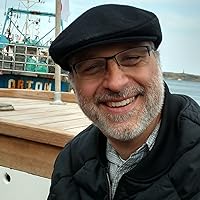
There is a legend of a Welsh Prince Madoc whose ship became stuck in Chesapeake Bay. After trying unsuccessfully to escape, he had his men row out with the anchor, drop it as far into the sea as they could, and then the ship winched its way forward. The image of the church as a boat and tradition as an anchor is prevalent in Christian art. If we examine the biblical view of an anchor, we find, like Prince Madoc, we are to cast our anchor into the future and pull the church forward. Postmodern pilgrims must strive to keep the past and the future in perpetual conversation so every generation will find a fresh expression of the Gospel that is anchored solidly to “the faith that was once for all delivered.”
Leonard I. Sweet is an author, preacher, scholar, and ordained United Methodist clergyman currently serving as the E. Stanley Jones Professor of Evangelism at Drew Theological School, in Madison, New Jersey; and a Visiting Distinguished Professor at George Fox University in Portland, Oregon.
AN ARGUMENT THAT CHRISTIANS MUST DEAL WITH THE ‘POSTMODERN’
Leonard Sweet is an ordained Methodist minister, and is Professor Emeritus at Drew Theological School. He has also taught at various other institutions.
He wrote in the Foreword to this 2000 book, “Between 1947 and 1949, a conservative Christian philosopher and theologian [Monsignor Romano Guardini] delivered a set of lectures … Entitled ‘The End of the Modern World’… [which observed that] The ‘historical epoch’ that now lies before us is so new… that Christians cannot either ‘go back’ or ‘go forward.’ We can only make a fresh start, a new beginning… This book you are holding joins Guardini in a ‘reach out’ strategy that responds creatively to the new world. But this book departs from Guardini over how Christians are to ‘reach out’ and enter this new world… [This book] ‘reaches out’ for a back-to-the-future methodology of movement that is simultaneously backward and forward…” (Pg. xiii-xvi)
He continues, “A cross Christianity, a faith that is both ancient and future, both historical and contemporary, is what is outlined in this book… [It] argues that the Bible outlines a double procession of rejection and affirmation in terms of culture: a movement away from the world to God is followed by a movement back to the world as we love what God loves and do what Jesus did… In fact, [the book] argues that ministry in the 21st century has more in common with the 1st century than with the modern world that is collapsing all around us. [It] aims to demonstrate the Christian consciousness and reshape its way of life according to a more biblical vision of life that is dawning with the coming of the postmodern era. Hence the subtitle: ‘First Century Passion for the 21st Century World.’” (Pg. xvi-xvii)’
He goes on, “[This book] introduces [a] model of doing church that is biblically absolute but culturally relative: Experiential, Participatory, Image-driven, Connected. Like the church of the first century, the 21st century church must learn to measure success not by its budgets and buildings but by its creativity and imagination… In the midst of a consumer culture that is built on earnings, yearnings, and bottom lines, the church must be a conceiving culture that is built on God’s grace. There the ‘top things’ … in life are given freely, tended and tilled conservatively, and distributed literally. If conception doesn’t replace consumption as the primary GNP in the church first, it never will in the wider culture.” (Pg. xxi)
He explains, “For the church to incarnate the gospel in this post-modern world, it must become more medieval than modern, most apostolic than patristic. I call postmodernity an EPIC culture: Experiential, Participatory, Image-driven, Connected. In the midst of one of the greatest transitions in history---from modern to postmodern---Christian churches are owned lock, stock and barrel by modernity. They have clung to modern modes of thought and action, their ways of embodying and enacting the Christian tradition frozen in patterns of high modernity.” (Pg. 28) He adds, “Unless churches can transition their cultures into more EPIC directions… they stand the real risk of becoming museum churches, nostalgic testimonies to a culture that is no more.” (Pg. 30)
He clarifies, “I have dedicated my ministry to moving the church back to the future---in England this is called ‘radical orthodoxy,’ in New Zealand and Australia ‘alternative worship,’ in North America ‘ancientfuture faith.’ I… am guilty of being a man of my time… Even Jesus existed in time. The question I have had to fact in my own ministry is this: Will I live the time God has given me? Or will I live a time I would prefer to have? Postmodern culture is my here and now. I will take the church back to the cyberage, or will perish in the attempt… I am constantly aware that the difference between a leader and a martyr is about three paces.” (Pg. 46-47)
He asserts, “Postmodern culture is image-driven. The modern world was word-based. Its theologians tried to create an intellectual faith, placing reason and order at the heart of religion. Mystery and metaphor were banished as too fuzzy, too mystical, too illogical… After forfeiting to the media the role of storyteller, the church now enters a world where story and metaphor are at the heart of spirituality… Propositions are lost on postmodern ears, but metaphor they will hear; images they will see and understand… Cyberspace itself is becoming less word-based and more image-based through the spread of avatars (your self-created image online)…” (Pg. 86)
He suggests, “perhaps Christians should be willing to embrace what the ‘D.D.’ designation means in law enforcement lingo: ‘drunk and disorderly.’ The original disciples of Jesus were … drunk with the Spirit and disorderly in turning the world upside down.” (Pg. 94)
He states, “Postmoderns have had it with religion. They’re sick and tired of religion. They’re convinced the world needs less of religion, not more. They want no part of obedience to sets of propositions and rules required by some ‘officialdom’ somewhere. Postmoderns want participation in a deeply personal but at the same time communal experience of the divine and the transformation of life that issues from their identification with God.” (Pg. 112)
He says, “Someday I will hold up my Bible before a congregation, shake it, and yell at the top of my lungs, ‘This is not a book primarily about propositions and programs and principles. This is a book about relationships. This is a primer on connnectedness. This about a book about you and God’s love for you in God’s only begotten Son’." (Pg. 132)
He observes, “Christendom is divided today between Old World Churches and New World Churches. They move at different speeds. They prize different values. They measure success differently. They think differently: one primarily in terms of big and small; the other in terms of fast and slow. One is book-centric, the other Web-centric. In one, the book is the foundation of everything they do. In the other, the Web is their defining metaphor and mechanism. You can’t avoid the stench of ecclesiastical disintegration or the sweet aroma of new growth.” (Pg. 140)
He concludes, “Observer-participant worship does not give up critical methods but rather places them within a larger matrix of reality of which they are only a part. In the paradoxical harmony of objective and subjective truth, there is opened up an intimate-distance way of knowing that is characterized by partnership in knowledge, not mastery of knowledge, and in which freedom and relationship do not cancel each other out but interpenetrate and help to create each other. While a worship that is more Experiential, Participative, Imaged-based, and Connected will likely be classified as postmodern, its whole life and being inheres in the biblical tradition. In fact, this is one area where the ‘postmodern’ takes us ‘back to the future.’ For Jesus truth was not propositions of the property of sentences. Rather, truth was what was revealed through the participation and interaction with him, others, and the world.” (Pg. 157)
Leonard Sweet’s books will be of keen interest to Christians seeking a ‘postmodern’ approach to the faith.
Even though this book was published in 2000, it's astonishingly accurate when held up against current times. Sweet was right on the money when he said that we need to shift to an EPIC approach to reaching others. (Meaning an approach that's Experiential, Participatory, Image-Driven, and Connected.). There's much in this book to make you think and how a different culture demands approaches that are native to that culture. Great read.
Published nearly 20 years ago now, an interesting read as the author discusses the shift from the Modern to the Postmodern world and what it would mean. He was looking forward. In many ways, as a reader in 2018, I got to look back. The book filled in some holes for me and made me wish I had read it many years ago. Made me chuckle (in some ways painfully) where the author underestimated the rate of change to come. And made me smile a bit about areas he proved off base.
With all that said, a solid read with some solid takeaways. Makes me hungry to do more study on the topic of staying relevant, and being an effective observer and participant and communicator in the world around me.
Post-modernity is all the rage. It used to be that great epochs of history would be named and categorized only after the fact. Now, we try to define and judge history as it happens. It is probably fitting that in our wired world of blogs that our era of history would come with its own running commentary. Leonard Sweet, self-proclaimed theologian and futurist, offers his own commentary. He speaks to the Church in non-technical language about post-modernity and its implications for ministry.
Generally, I like Leonard Sweet. He is creative and fresh--witnessing to the relevancy of the gospel rather than trying to make it relevant. I have read a few of his other books, and I am a regular subscriber to his website for preachers, www.preachingplus.com. Overall, I am pleased with his book, "Post-Modern Pilgrims." Suggesting that we must continue to keep the past and the future in conversation is sound advice. His exegesis of modern American culture rings true, and it that light, his acronym EPIC is helpful. (Congregations need to promote consciously the ways in which their ministries area Experiential, Participatory, Image-driven, and Connected.)
Sadly, there are ways in which the book fails to go far enough. For all the talk of keeping the past and future in conversation, it is clear that the future dominates the book. The subtitle of the book is "First Century Passion for the 21st Century World." I would have loved some of that "first century passion." There is no extended treatment of how the early church understood itself or its mission, or why this might matter to the future of the church.
Although I tend to accept some of Sweet's concerns of modernity, he could sharpen his analysis. For example, Sweet asks the question, "Why has praise music been such a pet hate in so many church circles (pg 143)?" His answer may surprise you. The fault lies in the scientific method. I still cannot fathom how praise music is antithetical to the scientific method. Elsewhere, he suggests that modernity was "word-based" but post-modernity is "image-driven" (pg 89). The evidence for this switch, Sweet argues, is the importance of metaphor. However, what is metaphor if not "word-based"? Throughout the book, Sweet rejects modernity, while embracing the technology it has wrought.
The new world in which we live means the gospel should be expressed in new ways. However, I do not see in Leonard Sweet how the gospel critiques post-modernity. Could our over-reliance on technology be hurting real relationships? Could the 17th Century Reformers be right about their concern with icons and imagery? Could an ever expanding desire for experiences be idolatrous? Leonard Sweet praises the potentials for ministry in this post-modern period, yet the Church needs a better roadmap to navigate the pitfalls.
Easy to read and insightful in helping understand how to apply the Christian faith and message to postmodern times. I enjoyed most the author's chapter on Connectedness. It seems to me that the evangelical church in America is often missing the element of strong Christian community and fellowship. Are we more influenced by individualism or the Gospel? I love the quote he shares from Louise Conant, "In the past "people came together in church on Sunday morning to celebrate the community that they had the rest of the week," people now "come to church on Sunday to find the community that they don't have the rest of the week."
interesting commentary on what established churches need to do to maintain their relevancy in today's world. some ideas are not limited to churches, but mission-based organizations in general - how to attract individuals and keep their interest while projecting image/brand/mission to the community at large.
An overview of Len's foundational acronym for post-modern culture: EPIC - Experiential, Participatory, Image-rich, and Connected. An easy read, but full of great insight that could make your life and your church's life so much richer.