

What do you think?
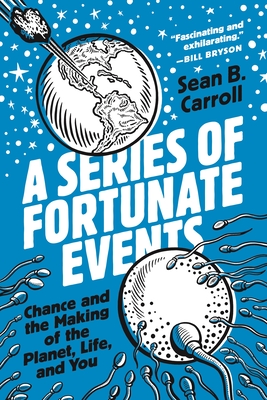
A Series of Fortunate Events: Chance and the Making of the Planet, Life, and You
Fascinating and exhilarating--Sean B. Carroll at his very best.--Bill Bryson, author of The Body: A Guide for Occupants
From acclaimed writer and biologist Sean B. Carroll, a rollicking, awe-inspiring story of the surprising power of chance in our lives and the world
Why is the world the way it is? How did we get here? Does everything happen for a reason or are some things left to chance? Philosophers and theologians have pondered these questions for millennia, but startling scientific discoveries over the past half century are revealing that we live in a world driven by chance. A Series of Fortunate Events tells the story of the awesome power of chance and how it is the surprising source of all the beauty and diversity in the living world.
Like every other species, we humans are here by accident. But it is shocking just how many things--any of which might never have occurred--had to happen in certain ways for any of us to exist. From an extremely improbable asteroid impact, to the wild gyrations of the Ice Age, to invisible accidents in our parents' gonads, we are all here through an astonishing series of fortunate events. And chance continues to reign every day over the razor-thin line between our life and death.
This is a relatively small book about a really big idea. It is also a spirited tale. Drawing inspiration from Monty Python, Kurt Vonnegut, and other great thinkers, and crafted by one of today's most accomplished science storytellers, A Series of Fortunate Events is an irresistibly entertaining and thought-provoking account of one of the most important but least appreciated facts of life.
From acclaimed writer and biologist Sean B. Carroll, a rollicking, awe-inspiring story of the surprising power of chance in our lives and the world
Why is the world the way it is? How did we get here? Does everything happen for a reason or are some things left to chance? Philosophers and theologians have pondered these questions for millennia, but startling scientific discoveries over the past half century are revealing that we live in a world driven by chance. A Series of Fortunate Events tells the story of the awesome power of chance and how it is the surprising source of all the beauty and diversity in the living world.
Like every other species, we humans are here by accident. But it is shocking just how many things--any of which might never have occurred--had to happen in certain ways for any of us to exist. From an extremely improbable asteroid impact, to the wild gyrations of the Ice Age, to invisible accidents in our parents' gonads, we are all here through an astonishing series of fortunate events. And chance continues to reign every day over the razor-thin line between our life and death.
This is a relatively small book about a really big idea. It is also a spirited tale. Drawing inspiration from Monty Python, Kurt Vonnegut, and other great thinkers, and crafted by one of today's most accomplished science storytellers, A Series of Fortunate Events is an irresistibly entertaining and thought-provoking account of one of the most important but least appreciated facts of life.
224 pages, Hardcover
First published October 6, 2020
About the author
Sean B. Carroll
29 books313 followersSean B. Carroll (born September 17, 1960) is a professor of molecular biology, genetics, and medical genetics at the University of Wisconsin–Madison. He studies the evolution of cis-regulation in the context of biological development, using Drosophila as a model system. He is a Howard Hughes Medical Institute investigator. Since 2010, he has been vice-president for science education of the Howard Hughes Medical Institute.
Ratings & Reviews
Friends & Following
Create a free account to discover what your friends think of this book!
Community Reviews
Displaying 1 - 30 of 176 reviews
November 2, 2020
The book jacket for Sean Carroll’s A Series of Fortunate Events says this is the “story of the surprising power of chance in our lives and the world.” So, I assumed the book, like other books about probability, would explore our inability to understand chance, for instance, our belief we can win the lottery jackpot or our misuse of statistically small sample sizes in sports. Although Carroll mentions some of the usual examples, he tackles grander issues like the chance of a large asteroid hitting the earth and the role of chance in evolution. And ultimately, Carroll aims even higher, showing how chance affects who we are and why we are here.
Carroll’s tale is a bumpy ride, lots of positives mixed with some negatives.
First the positives: Carroll begins chapters with fascinating anecdotes, hooks to draw the reader into his story. Who can resist learning about the park ranger hit multiple times by lightning over his lifetime…the roulette wheel that came up black 26 times in a row…or the golfer who (supposedly) recorded five holes-in-one in a round of golf?
But it’s Carroll’s larger story that’s the real positive here. He tells us it’s chance that an asteroid destroyed life on earth so humans could ultimately exist and then thrive; it’s chance that shapes natural selection; and it’s chance that affects when each of us will die. Carroll’s tale is heady, big-picture stuff, well organized, and persuasively told.
That said, there are negatives. Though Carroll pauses to provide summaries from time to time, I occasionally became lost in his detailed explanations, not sure where the book was going. And those detailed explanations were sometimes too long and too complicated for me to follow. Take the explanation of DNA as an example. Though Carroll proceeds step-by-step and includes numerous illustrations, the DNA section at times confused more than enlightened.
Overall, A Series of Fortunate Events left me more educated than confused, more a believer than a doubter, and more positive than negative. However, I will say: Reader beware. Though you’re in for a worthwhile, challenging, thought-provoking ride, expect some turbulence along the way.
One note. For those who believe in a divine maker guiding the universe, you’ll be in for much more than a bumpy ride. Carroll believes chance rules the universe, not divine providence, and he emphasizes that point often. If you believe in a divine entity (say a “watchmaker” guiding mankind’s creation and destiny), prepare to be disappointed or even outraged by this book.
Carroll’s tale is a bumpy ride, lots of positives mixed with some negatives.
First the positives: Carroll begins chapters with fascinating anecdotes, hooks to draw the reader into his story. Who can resist learning about the park ranger hit multiple times by lightning over his lifetime…the roulette wheel that came up black 26 times in a row…or the golfer who (supposedly) recorded five holes-in-one in a round of golf?
But it’s Carroll’s larger story that’s the real positive here. He tells us it’s chance that an asteroid destroyed life on earth so humans could ultimately exist and then thrive; it’s chance that shapes natural selection; and it’s chance that affects when each of us will die. Carroll’s tale is heady, big-picture stuff, well organized, and persuasively told.
That said, there are negatives. Though Carroll pauses to provide summaries from time to time, I occasionally became lost in his detailed explanations, not sure where the book was going. And those detailed explanations were sometimes too long and too complicated for me to follow. Take the explanation of DNA as an example. Though Carroll proceeds step-by-step and includes numerous illustrations, the DNA section at times confused more than enlightened.
Overall, A Series of Fortunate Events left me more educated than confused, more a believer than a doubter, and more positive than negative. However, I will say: Reader beware. Though you’re in for a worthwhile, challenging, thought-provoking ride, expect some turbulence along the way.
One note. For those who believe in a divine maker guiding the universe, you’ll be in for much more than a bumpy ride. Carroll believes chance rules the universe, not divine providence, and he emphasizes that point often. If you believe in a divine entity (say a “watchmaker” guiding mankind’s creation and destiny), prepare to be disappointed or even outraged by this book.

October 18, 2022
Czy przypadek to największa siła działająca we wszechświecie? Wszak to właśnie fart sprawia, że człowiek wygrywa na loterii, i wreszcie może powiedzieć szefowi w twarz co o nim myśli, oczywiście uprzednio rzucając w kadrach wypowiedzenie na stół, również przypadek sprawia, że opuszczając po raz ostatni swoje, byłe już miejsce pracy, ten sam człowiek zostaje śmiertelnie potrącony przez samochód, przechodząc przez pasy na zielonym świetle, przy czym umówmy się – ta druga sytuacja jest niestety o wiele bardziej prawdopodobna.
No dobrze, a jakie jest prawdopodobieństwo, że asteroida o średnicy 10 km uderzy w Ziemię, kończąc tym samym geologiczny okres kredy, przy okazji niosąc Apokalipsę dinozaurom? Między innymi na to pytanie w „Serii fortunnych zdarzeń – Roli przypadku w procesie powstawania, planety, życia oraz ciebie” stara się odpowiedzieć Sean B. Carrol.
Zacznijmy od okładki, bo książeczka - liczy sobie wraz z przypisami i bibliografią zaledwie 240 stron - jest bardzo atrakcyjnie wydana, kolorowa twarda oprawa, bieluteńkie, grube kartki oraz moc rycin sprawiają, że samo trzymanie „Serii…”w dłoniach daje dużo satysfakcji, do czego zresztą wydawnictwo Zysk zdążyło już czytelników przyzwyczaić. O urokliwości (świetna jest ta okładka z komiksowymi asteroidami) wydania nie wspominam bez powodu, ponieważ ta atrakcyjność idealnie koresponduje ze sposobem pisania autora i powinna zainteresować młodszego czytelnika, bo według mnie właśnie dla nastolatków ta książka została napisana.
Sean B. Carrol pisze bardzo lekko, ale co najważniejsze z sensem. Nie stroni od nerdowskich żartów, czasem nawet zdarza mu się rzucić jakimś nie za mocnym bluzgiem. Przykłady „życia wzięte”, jakimi ilustruje zagadnienia poruszane w poszczególnych rozdziałach, są frapujące i dodatkowo pokazują moc przypadku w naszym codziennym życiu, ale Carrol bryluje nie tylko w śmieszkowaniu i ciekawostkach. Z równą łatwością cytuje Ricky’ego Gervais’a, co Jacques’a Monoda, zresztą ten drugi – biolog, noblista z 1956 roku – jest głównym autorytetem przywoływanym przez autora, a niemal 40 z 240 stron „Serii…” to przypisy oraz spis literatury uzupełniającej. Książka składa się z siedmiu rozdziałów podzielonych na trzy części, które dotyczą, jak wskazuje podtytuł: roli przypadku w procesie powstawania planety (wspomniana asteroida), życia (ewolucja) oraz ciebie (dziedziczenie i DNA), część zasadnicza jest poprzedzona solidnym wstępem, kończy ją bardzo interesująco pomyślane posłowie
Sean B. Carrol napisał książkę jakich na naszym rynku wydawniczym brakuje, z jednej strony lekkiej i przyjemnej w odbiorze, z drugiej merytorycznie wartościowej, ale co najważniejsze, na tyle krótkiej, aby nie znudzić czytelnika. Myślę, że idealnie sprawdzi się jako lektura dla nastolatka, chociaż nie tylko, bo sam – nieuchronnie dobijający do bram wieku średniego – świetnie bawiłem się podczas czytania.
Za możliwość przeczytania książki serdecznie dziękuję Klubowi recenzenta portalu nakanapie.pl
No dobrze, a jakie jest prawdopodobieństwo, że asteroida o średnicy 10 km uderzy w Ziemię, kończąc tym samym geologiczny okres kredy, przy okazji niosąc Apokalipsę dinozaurom? Między innymi na to pytanie w „Serii fortunnych zdarzeń – Roli przypadku w procesie powstawania, planety, życia oraz ciebie” stara się odpowiedzieć Sean B. Carrol.
Zacznijmy od okładki, bo książeczka - liczy sobie wraz z przypisami i bibliografią zaledwie 240 stron - jest bardzo atrakcyjnie wydana, kolorowa twarda oprawa, bieluteńkie, grube kartki oraz moc rycin sprawiają, że samo trzymanie „Serii…”w dłoniach daje dużo satysfakcji, do czego zresztą wydawnictwo Zysk zdążyło już czytelników przyzwyczaić. O urokliwości (świetna jest ta okładka z komiksowymi asteroidami) wydania nie wspominam bez powodu, ponieważ ta atrakcyjność idealnie koresponduje ze sposobem pisania autora i powinna zainteresować młodszego czytelnika, bo według mnie właśnie dla nastolatków ta książka została napisana.
Sean B. Carrol pisze bardzo lekko, ale co najważniejsze z sensem. Nie stroni od nerdowskich żartów, czasem nawet zdarza mu się rzucić jakimś nie za mocnym bluzgiem. Przykłady „życia wzięte”, jakimi ilustruje zagadnienia poruszane w poszczególnych rozdziałach, są frapujące i dodatkowo pokazują moc przypadku w naszym codziennym życiu, ale Carrol bryluje nie tylko w śmieszkowaniu i ciekawostkach. Z równą łatwością cytuje Ricky’ego Gervais’a, co Jacques’a Monoda, zresztą ten drugi – biolog, noblista z 1956 roku – jest głównym autorytetem przywoływanym przez autora, a niemal 40 z 240 stron „Serii…” to przypisy oraz spis literatury uzupełniającej. Książka składa się z siedmiu rozdziałów podzielonych na trzy części, które dotyczą, jak wskazuje podtytuł: roli przypadku w procesie powstawania planety (wspomniana asteroida), życia (ewolucja) oraz ciebie (dziedziczenie i DNA), część zasadnicza jest poprzedzona solidnym wstępem, kończy ją bardzo interesująco pomyślane posłowie
Sean B. Carrol napisał książkę jakich na naszym rynku wydawniczym brakuje, z jednej strony lekkiej i przyjemnej w odbiorze, z drugiej merytorycznie wartościowej, ale co najważniejsze, na tyle krótkiej, aby nie znudzić czytelnika. Myślę, że idealnie sprawdzi się jako lektura dla nastolatka, chociaż nie tylko, bo sam – nieuchronnie dobijający do bram wieku średniego – świetnie bawiłem się podczas czytania.
Za możliwość przeczytania książki serdecznie dziękuję Klubowi recenzenta portalu nakanapie.pl

January 9, 2022
Excellent overview of how chance and contingency. Carroll is engaging, and clear, whole using humour to put this stuff in a nice context. The final chapter really brings the whole thing home!

April 1, 2021
I listened to the unabridged audio version of this title (read by the author, Audible.com, 2020).
From the publisher’s description: “Like every other species, we humans are here by accident. But it is shocking just how many things—any of which might never have occurred—had to happen in certain ways for any of us to exist. From an extremely improbable asteroid impact, to the wild gyrations of the Ice Age, to invisible accidents in our parents' gonads, we are all here through an astonishing series of fortunate events. And chance continues to reign every day over the razor-thin line between our life and death.”
Consider the following thought experiment: Draw a line into the past, listing all your female ancestors, going back, say, 10,000 years (your mother, maternal grandmother, and so on). That’s a chain of about 400 generations. Any one of these 400 people could have died as a result of infant mortality, perished by contracting a disease, or been eaten by a wild animal, before she gave birth to the next person on the chain, or could have remained childless into old age. The fact that you exist is a consequence of many chance events all going in your favor. It’s even more perilous than this. Go back a lot further, to your chimp or ape ancestors, or consider also male ancestors, whose genes have contributed to you being who you are. The odds against you existing in the present form are mind-boggling. This is the point of the book’s title, a wordplay on Daniel Handler’s A Series of Unfortunate Events, published under the pen-name Lemony Snicket.
The aforementioned “series of fortunate events” is viewed by some as confirming “that everything happens for a reason.” Yet it also gives support to the opposite view, that there is no rhyme or reason to what happens in our world; that we are all products of chance. Here’s a compelling example of chance. The sequence KKKYMMKHL is part of simian immunodeficiency virus (SIV). A chance replacement of the first M with R created KKKYRMKHL, the corresponding part of the HIV virus, which triggered the AIDS pandemic.
Here’s another example. How and why did the Antarctic Ocean become so cold? Tectonics (the Indian plate splitting from Madagascar, moving northward, and hitting & merging with Eurasia) did it. And what determined the shape and speed of movement for the plates on Earth’s surface? Chance did.
Besides scientists, comedians tend to disbelieve that everything happens for a reason and give chance/randomness its due place. Carroll thinks that it would have been wonderful to bring famous comedians/humorists together to discuss their ideas in this domain. Given the busy schedules of such luminaries, not to mention the fact that some of them are dead, he decided to construct an imaginary discussion, using the spoken and written words of his chosen characters. Here's a sample quote.
Ricky Gervais: “It always comes back to us—why are we here? Well, we just happened to be here, we couldn't choose it. The chance of us being born—that sperm hitting that egg—is 400 trillion to 1. We're not special, we're just lucky; and this is a holiday. We didn't exist for 14 and a half billion years. Then we got 80 or 90 years if we're lucky, and then we'll never exist again. So, we should make the most of it.”
I end my review with this summing-up statement from Carroll: “Chance continues to reign every day over the razor-thin line between our life and death.”
P.S.: I had previously reviewed Sean Carroll’s The Big Picture: On the Origins of Life, Meaning, and the Universe Itself (2016), giving it 5 stars.
https://www.goodreads.com/review/show...
Here’s a presentation by the author (32-minute video):
https://www.youtube.com/watch?v=9eM4K...
From the publisher’s description: “Like every other species, we humans are here by accident. But it is shocking just how many things—any of which might never have occurred—had to happen in certain ways for any of us to exist. From an extremely improbable asteroid impact, to the wild gyrations of the Ice Age, to invisible accidents in our parents' gonads, we are all here through an astonishing series of fortunate events. And chance continues to reign every day over the razor-thin line between our life and death.”
Consider the following thought experiment: Draw a line into the past, listing all your female ancestors, going back, say, 10,000 years (your mother, maternal grandmother, and so on). That’s a chain of about 400 generations. Any one of these 400 people could have died as a result of infant mortality, perished by contracting a disease, or been eaten by a wild animal, before she gave birth to the next person on the chain, or could have remained childless into old age. The fact that you exist is a consequence of many chance events all going in your favor. It’s even more perilous than this. Go back a lot further, to your chimp or ape ancestors, or consider also male ancestors, whose genes have contributed to you being who you are. The odds against you existing in the present form are mind-boggling. This is the point of the book’s title, a wordplay on Daniel Handler’s A Series of Unfortunate Events, published under the pen-name Lemony Snicket.
The aforementioned “series of fortunate events” is viewed by some as confirming “that everything happens for a reason.” Yet it also gives support to the opposite view, that there is no rhyme or reason to what happens in our world; that we are all products of chance. Here’s a compelling example of chance. The sequence KKKYMMKHL is part of simian immunodeficiency virus (SIV). A chance replacement of the first M with R created KKKYRMKHL, the corresponding part of the HIV virus, which triggered the AIDS pandemic.
Here’s another example. How and why did the Antarctic Ocean become so cold? Tectonics (the Indian plate splitting from Madagascar, moving northward, and hitting & merging with Eurasia) did it. And what determined the shape and speed of movement for the plates on Earth’s surface? Chance did.
Besides scientists, comedians tend to disbelieve that everything happens for a reason and give chance/randomness its due place. Carroll thinks that it would have been wonderful to bring famous comedians/humorists together to discuss their ideas in this domain. Given the busy schedules of such luminaries, not to mention the fact that some of them are dead, he decided to construct an imaginary discussion, using the spoken and written words of his chosen characters. Here's a sample quote.
Ricky Gervais: “It always comes back to us—why are we here? Well, we just happened to be here, we couldn't choose it. The chance of us being born—that sperm hitting that egg—is 400 trillion to 1. We're not special, we're just lucky; and this is a holiday. We didn't exist for 14 and a half billion years. Then we got 80 or 90 years if we're lucky, and then we'll never exist again. So, we should make the most of it.”
I end my review with this summing-up statement from Carroll: “Chance continues to reign every day over the razor-thin line between our life and death.”
P.S.: I had previously reviewed Sean Carroll’s The Big Picture: On the Origins of Life, Meaning, and the Universe Itself (2016), giving it 5 stars.
https://www.goodreads.com/review/show...
Here’s a presentation by the author (32-minute video):
https://www.youtube.com/watch?v=9eM4K...

January 10, 2021
a decent little read. saw this on libby and was like hmm sure let’s try something a little different, thought it would be interesting to hear abt how things don’t happen for a reason as this is something I think abt a lot yet have a hard time really internalizing. this was mostly pretty interesting, although I think I zoned out a bit during the descriptions of dna molecules and chromosomes etc. I wasn’t aware until partway through that this book was published in late 2020 so when he started talking abt the coronavirus I was like 😧. which is also what I did before that point when the words “pandemic” and “coup” were read.
for a short book, it went really in depth on a few random subjects. some of which I enjoyed a little more than others. honestly I really liked the chapter on natural selection even if it was mostly a throwback to like.. grade nine science or whatever. biology is confirmed as the best science once again! also thoroughly enjoyed one of the earliest chapters on jacques monod’s book about chance (which just took me way too long to google bc I couldn’t remember the title or how to spell his name). I liked a lot of the quotes/anecdotes that started off the chapters as well. I was a little less interested in the chapters about human genes idk why really.
I guess some problems I had were that obviously science and religion have a tough history together but I also think it’s probably possible to believe in some sort of higher power and also believe in science so I found some of that conversation a little dismissive/essentialist. I’m not even a spiritual person really so idk why I’m bothered. also although I really enjoyed the afterword, which was partially formatted as a fake conversation between comedians and philosophers about chance/the meaning of life, but the figures the author chose were all men of varying moral quality and also sarah silverman lmao. so a bit of a limited perspective there and on some other topics I think, but like I say I still found it mostly interesting. also unfortunately I think I want to read Vonnegut now so idk what that says about me.
in conclusion: learned some interesting things, thought about the meaning of life a little. spoilers but the conclusion this book offers is “tell the truth, be good to others, and create things” which I think is good advice even if it’s a little basic.
for a short book, it went really in depth on a few random subjects. some of which I enjoyed a little more than others. honestly I really liked the chapter on natural selection even if it was mostly a throwback to like.. grade nine science or whatever. biology is confirmed as the best science once again! also thoroughly enjoyed one of the earliest chapters on jacques monod’s book about chance (which just took me way too long to google bc I couldn’t remember the title or how to spell his name). I liked a lot of the quotes/anecdotes that started off the chapters as well. I was a little less interested in the chapters about human genes idk why really.
I guess some problems I had were that obviously science and religion have a tough history together but I also think it’s probably possible to believe in some sort of higher power and also believe in science so I found some of that conversation a little dismissive/essentialist. I’m not even a spiritual person really so idk why I’m bothered. also although I really enjoyed the afterword, which was partially formatted as a fake conversation between comedians and philosophers about chance/the meaning of life, but the figures the author chose were all men of varying moral quality and also sarah silverman lmao. so a bit of a limited perspective there and on some other topics I think, but like I say I still found it mostly interesting. also unfortunately I think I want to read Vonnegut now so idk what that says about me.
in conclusion: learned some interesting things, thought about the meaning of life a little. spoilers but the conclusion this book offers is “tell the truth, be good to others, and create things” which I think is good advice even if it’s a little basic.

July 20, 2023
I agree, but this was very surface level.

October 15, 2020
Really? Well I'll be damned!
I grew up in a world of Germanic Catholicism, where much was ordered and everything needed to make sense. There were golden doors and burning fires at the end of life. About 12 I started thinking it was all bullshit and I've been busy trying to figure out what IS true since. I'm 73 now and this book helped me to realize I can relax. All I have to do now is to get used to the idea that this is it.
I grew up in a world of Germanic Catholicism, where much was ordered and everything needed to make sense. There were golden doors and burning fires at the end of life. About 12 I started thinking it was all bullshit and I've been busy trying to figure out what IS true since. I'm 73 now and this book helped me to realize I can relax. All I have to do now is to get used to the idea that this is it.

March 25, 2024
INTERESANTE 👌🏻
He disfrutado muchísimo de esta lectura porque cada párrafo estaba lleno de alguna enseñanza, acompañada de datos/tablas/ejemplos y unos toques de una narrativa ligera y divertida. 😊
Ojalá todos los libros científicos fuesen así porque ha sido como un paseo con el típico amigo inteligente que te comenta distintos conocimientos random, pero que en este caso te llevan a conocer mejor nuestro mundo y a nosotros mismos a nivel científico.
Sin duda, un libro para guardar, repasar y compartir. 👏🏻
He disfrutado muchísimo de esta lectura porque cada párrafo estaba lleno de alguna enseñanza, acompañada de datos/tablas/ejemplos y unos toques de una narrativa ligera y divertida. 😊
Ojalá todos los libros científicos fuesen así porque ha sido como un paseo con el típico amigo inteligente que te comenta distintos conocimientos random, pero que en este caso te llevan a conocer mejor nuestro mundo y a nosotros mismos a nivel científico.
Sin duda, un libro para guardar, repasar y compartir. 👏🏻

May 2, 2022
Il libro esordisce con un calcolo probabilistico molto simpatico che sintetizzo: si propaganda che Kim Jong-Il, dittatore della Corea del Nord, fece 5 ace (hole in one) in una partita a golf.
Secondo le statistiche di gioco, Tiger Wood, grande campione, ne ha fatti 3 in 24 anni (1 su 2500 colpi nei par 3).
Va da sé che Jong-Il non la racconta giusta. Ma i dittatori, si sa, sono famosi per far credere di averla sempre vinta, sparandole grosse.
Nel mio piccolo io, che sono una dilettante, ho la probabilità di farne 1 su 12.500 colpi, occasione che ho già esaurito il 26 settembre del 1999. Non mi aspetto un altro colpo di fortuna nelle prossime giocate e un po' mi dispiace.
Così è stato per l'occasione del meteorite di centrare lo Yucatan in Messico 66 milioni di anni fa. Se avesse sbagliato il bersaglio di solo mezz'ora avanti o indietro, sarebbe precipitato nell'Atlantico o nel Pacifico, facendo certamente disastri, ma non così catastrofici quali l'estinzione della quasi totalità della vita sulla Terra e ciò non avrebbe permesso lo sviluppo successivo della vita così come la conosciamo, e noi e altre specie non esisteremmo.
Darwin intuì la legge della selezione naturale, ma ogni cambiamento genetico è anche un gioco alla roulette russa moltiplicato per n possibilità che dipendono dal caso, sia per ragioni intrinseche alla fisiologia della replicazione del DNA (fibrillazione quantica, dove un atomo di H si sposta da una perte anziché dall'altra), sia alla quantità esorbitante di ottenere delle mutazioni genetiche rispetto all'originale.
Detto questo e altri esempi macro e micro che l'autore riporta, dobbiamo metterci il cuore in pace perché non c'è nessuna provvidenza divina che regola la nostra sorte, bensì il caso.
Secondo le statistiche di gioco, Tiger Wood, grande campione, ne ha fatti 3 in 24 anni (1 su 2500 colpi nei par 3).
Va da sé che Jong-Il non la racconta giusta. Ma i dittatori, si sa, sono famosi per far credere di averla sempre vinta, sparandole grosse.
Nel mio piccolo io, che sono una dilettante, ho la probabilità di farne 1 su 12.500 colpi, occasione che ho già esaurito il 26 settembre del 1999. Non mi aspetto un altro colpo di fortuna nelle prossime giocate e un po' mi dispiace.
Così è stato per l'occasione del meteorite di centrare lo Yucatan in Messico 66 milioni di anni fa. Se avesse sbagliato il bersaglio di solo mezz'ora avanti o indietro, sarebbe precipitato nell'Atlantico o nel Pacifico, facendo certamente disastri, ma non così catastrofici quali l'estinzione della quasi totalità della vita sulla Terra e ciò non avrebbe permesso lo sviluppo successivo della vita così come la conosciamo, e noi e altre specie non esisteremmo.
Darwin intuì la legge della selezione naturale, ma ogni cambiamento genetico è anche un gioco alla roulette russa moltiplicato per n possibilità che dipendono dal caso, sia per ragioni intrinseche alla fisiologia della replicazione del DNA (fibrillazione quantica, dove un atomo di H si sposta da una perte anziché dall'altra), sia alla quantità esorbitante di ottenere delle mutazioni genetiche rispetto all'originale.
Detto questo e altri esempi macro e micro che l'autore riporta, dobbiamo metterci il cuore in pace perché non c'è nessuna provvidenza divina che regola la nostra sorte, bensì il caso.
December 8, 2020
Thought provoking, but a bit cursory. The importance of chance is that chance events become critical nodes in complex causal chains with far-reaching consequences, which is to say that they are an element of contingency. Carroll even notes this at one point, but without much discussion or consideration before moving one. How does he not discuss Gould and others' notions of the importance of historical contingency? I know that I am biased, contingency being what I study and obsess over, but it is such a clear and illogical thing to elide over that it is astonishing. I enjoyed the book, sure, and I think it will be valuable to non-scientists who read it, but I think its value is more in being a prod to read "Chance and Necessity" and then move on to works that deal directly with the importance of chance to time-ordered historical systems of causation and, yes, contingency.

August 8, 2024
"A Series of Fortunate Events" is, in the time of clickbait titles and filler "content", a refreshing change of pace. The title really says it all.
You, me, people in general, and the planet we inhabit are the result of chance and a series of fortunate events (from our perspective, the dinosaurs and neanderthals weren't so lucky). Or so Carroll argues here at least - meaning that this book would be much less of a breezy summer read for those who believe in some sort of creator than it was for me.
And the book really is perfect for a lazy summer day or cozy winter night if you're looking for something other than fiction. It's well-written, comfortably paced and structured, and tickles just enough of the gray matter to be stimulating without having to show up a hundred percent. IN a word, nice!
That said, while the underlying idea and argument are profound, this book isn't. It doesn't dig particularly deeply and it's just about introductory. However, it was perfect for me at the time of reading and just, well, enjoyable.
So why not give it a go!?
You, me, people in general, and the planet we inhabit are the result of chance and a series of fortunate events (from our perspective, the dinosaurs and neanderthals weren't so lucky). Or so Carroll argues here at least - meaning that this book would be much less of a breezy summer read for those who believe in some sort of creator than it was for me.
And the book really is perfect for a lazy summer day or cozy winter night if you're looking for something other than fiction. It's well-written, comfortably paced and structured, and tickles just enough of the gray matter to be stimulating without having to show up a hundred percent. IN a word, nice!
That said, while the underlying idea and argument are profound, this book isn't. It doesn't dig particularly deeply and it's just about introductory. However, it was perfect for me at the time of reading and just, well, enjoyable.
So why not give it a go!?
January 4, 2026
I learned a lot about DNA and evolution along the way.

November 2, 2023
Briefly - again, listened as audiobook....
For the most part, I was heading toward five stars on this book. It starts light hearted and fast paced - an easy read. As I was listening to the first few chapters, I was thinking, this is a book EVERYONE should "read" and would love. I wished at times that I was forcing my family to listen to this on a road trip... This is all good for the first few chapters - right through big time life on earth, and evolution - all great - along the lines of Bill Bryson's A Short History of Nearly Everything. Then we got to genetics, followed by our immune system and things got a little heavy - and simply not likely fun for a general audience. Even at a high level, hand-waving attempt to explain DNA, Alleles, Chromosomes and chance mutations at all the possible points along the way - this is not the place for anyone without some preliminary understanding to try to learn even the fundamentals. And I am just a hair above that. It wasn't even the digressions into the mathematical probability and combinatorics... I get that stuff. It was the AGCT, T-Cells, B-Cells, varieties of proteins, chromosomes, and the myriad other stuff... Sure, no doubt this as an audio-book is NO place to try to enjoy this without the figures and diagrams that are likely included in a print version. So, if you have the print version, good to go. But I'd still recommend a primer in genetics and immunology before you will get the most out of this book.
ok, its not that bad really. I enjoyed it a lot. Just saying, my perspective changed from something I'd have my kids enjoy listening to on a road-trip audio book, to absolutely not... past the first half.
And again for me, humbling and awe inspiring to remind myself the complexities of life at the genetic and cellular level... and he didn't even delve into embryonic developmental biology -for which I consider a complete mystery in my understanding.
That said, I am inspired to pick up some new reading direction - with Change and Necessity by Jacques Monod, as well as some Kurt Vonnegut. On the to read list.
For the most part, I was heading toward five stars on this book. It starts light hearted and fast paced - an easy read. As I was listening to the first few chapters, I was thinking, this is a book EVERYONE should "read" and would love. I wished at times that I was forcing my family to listen to this on a road trip... This is all good for the first few chapters - right through big time life on earth, and evolution - all great - along the lines of Bill Bryson's A Short History of Nearly Everything. Then we got to genetics, followed by our immune system and things got a little heavy - and simply not likely fun for a general audience. Even at a high level, hand-waving attempt to explain DNA, Alleles, Chromosomes and chance mutations at all the possible points along the way - this is not the place for anyone without some preliminary understanding to try to learn even the fundamentals. And I am just a hair above that. It wasn't even the digressions into the mathematical probability and combinatorics... I get that stuff. It was the AGCT, T-Cells, B-Cells, varieties of proteins, chromosomes, and the myriad other stuff... Sure, no doubt this as an audio-book is NO place to try to enjoy this without the figures and diagrams that are likely included in a print version. So, if you have the print version, good to go. But I'd still recommend a primer in genetics and immunology before you will get the most out of this book.
ok, its not that bad really. I enjoyed it a lot. Just saying, my perspective changed from something I'd have my kids enjoy listening to on a road-trip audio book, to absolutely not... past the first half.
And again for me, humbling and awe inspiring to remind myself the complexities of life at the genetic and cellular level... and he didn't even delve into embryonic developmental biology -for which I consider a complete mystery in my understanding.
That said, I am inspired to pick up some new reading direction - with Change and Necessity by Jacques Monod, as well as some Kurt Vonnegut. On the to read list.

March 18, 2022
A short and snappy book about the role of chance in life, the universe and everything, A Series of Fortunate Events reads like an appetizer that made me want to delve into this topic further. Read my full review at https://inquisitivebiologist.com/2022...

October 3, 2024
Very accessible. As a high school science teacher, this would make a great foray into the power of chance for my students and bring in some key topics on evolution, genetics, and the combination of the two. Not necessarily a bunch of new information, but an especially simple (and I think powerful) look at the power of chance and probability and it's role in our very existence.

Read
October 29, 2022What a beautiful summary of how we came to be, focusing on the role of chance! What a quick and easy read too!
November 23, 2022
We are luck to be here. Chance is an the main influence on life on Earth. Excellent book, a very good description of genetics.

August 6, 2023
I’m giving this three stars because I had to read it for school so that automatically makes it annoying.

October 12, 2023
كتاب علمي مشوق يتحدث عن دور الصدف والأحداث غير المقصودة في تغيير التاريخ.

January 27, 2024
quick, easy, pretty comical read on the biological luck to even be here to write this review

December 13, 2020
An interesting book on the topic of chance and its impact not only on our lives but also on our very existence. As the title suggests, the author presents a series of fortunate events that led to the fact that we, as the people, are here on this planet today. Sean B. Carroll's main field of focus is evolutionary biology, therefore a substantial part of the book is devoted to biological aspects of human evolution the role of chance with respect to human DNA and effects of random mutations (but not only that). I guess that the main message of the book is that much more in our lives is the result of the blind chance or randomness than what we like to think. It is good to be reminded that just as well as our lives came to be, it could easily end up going the opposite direction subject to a blind chance (surprise surprise).
I liked the epilogue of the book which consisted of the author's fictious dialogue with some of the world's most well known scientists and comedians (making a point that scientists and comedians have very much in common). The conclusion of the epilogue, and also of the book in broader sense, was the notion that certain meaning of life, despite its random properties, could be found in creation, kindness toward the others and a good laugh.
I liked the epilogue of the book which consisted of the author's fictious dialogue with some of the world's most well known scientists and comedians (making a point that scientists and comedians have very much in common). The conclusion of the epilogue, and also of the book in broader sense, was the notion that certain meaning of life, despite its random properties, could be found in creation, kindness toward the others and a good laugh.

August 6, 2025
yay ap bio
January 23, 2022
Nice combination of chance and biology
October 28, 2020
A slightly different view
Excellent, easy to understand explanation of how the universe and the life in it came to existence. Carroll makes it clear that only because of very "unlikely" and seemingly minor changes in a specific process then the outcome changed. He calls these changes "accidents" but I call them the results of a plan made by an all powerful, intelligent creator.I
I gove
Excellent, easy to understand explanation of how the universe and the life in it came to existence. Carroll makes it clear that only because of very "unlikely" and seemingly minor changes in a specific process then the outcome changed. He calls these changes "accidents" but I call them the results of a plan made by an all powerful, intelligent creator.I
I gove

July 15, 2021
There are a lot of people (waay too many) who believe that everything happens for a reason. I think this is one of the stupidest things a human can say, yet alone believe. Here comes a long quote from the book:
66 million years ago when the asteroid of all asteroids crashed into the Earth on Mexico's Yucatan Peninsula. "scientists . . . have worked to unravel how the impact triggered a mass extinction and to understand which species perished, which survived, and why."
"The spacerock streaked across the atmosphere covering the last 50,000 feet in one second. The collision induced earthquakes greater than magnitude 11 (100 times more powerful than the worst in recorded history, caused the shelf of the Yucatan to collapse and launched tsunamis more than 200 meters high . . . . The blast leveled everything on the landscape for 1000 miles.
"The mass of this meteor shower was sufficient to coat every square meter of the planet with an average of 10 kg of spherules. . . . The immediate effect of this molten rain was to heat the atmosphere . . . 400-600 F. The heat and falling debris . . . wildfires across the globe.
"The fires in turn produced massive quantities of soot . . . sufficient to dramatically reduce sunlight for several years, and to block photosynthesis and food production on land and in the ocean.
"The story told by pollen in the fossil record is one of utter devastation. . . . . Depending on location, up to 78% of species went extinct."
Tiny burrowing mammals survived, some of them. Fast forward many millions of year and -- here we are!
So if everything happens for a reason . . . finish the sentence.
(I don't know if anyone even reads this reviews)
66 million years ago when the asteroid of all asteroids crashed into the Earth on Mexico's Yucatan Peninsula. "scientists . . . have worked to unravel how the impact triggered a mass extinction and to understand which species perished, which survived, and why."
"The spacerock streaked across the atmosphere covering the last 50,000 feet in one second. The collision induced earthquakes greater than magnitude 11 (100 times more powerful than the worst in recorded history, caused the shelf of the Yucatan to collapse and launched tsunamis more than 200 meters high . . . . The blast leveled everything on the landscape for 1000 miles.
"The mass of this meteor shower was sufficient to coat every square meter of the planet with an average of 10 kg of spherules. . . . The immediate effect of this molten rain was to heat the atmosphere . . . 400-600 F. The heat and falling debris . . . wildfires across the globe.
"The fires in turn produced massive quantities of soot . . . sufficient to dramatically reduce sunlight for several years, and to block photosynthesis and food production on land and in the ocean.
"The story told by pollen in the fossil record is one of utter devastation. . . . . Depending on location, up to 78% of species went extinct."
Tiny burrowing mammals survived, some of them. Fast forward many millions of year and -- here we are!
So if everything happens for a reason . . . finish the sentence.
(I don't know if anyone even reads this reviews)

October 19, 2020
Short but highly informative and thought provoking book on the role of chance in evolution. Well written at the layman level, Carroll explains both general ideas of evolutionary biology, major geological events that have shaped and influenced overall evolutionary pathways, and gives a bit of genetic biology and species specification, all the while with some related and often humorous stories. These stories help keep the reader’s attention and ultimately culminate in an imagined dialogue at the end with several comedians and other historical figures.

August 12, 2025
O conteúdo é bem mais sério do que a capa aparenta (nunca julguem um livro pela capa).
Estamos todos aqui por acaso, seja pela ordem de acontecimentos, pela evolução, ou por cada espermatozóide que ganhou a corrida.
Porquê nós? Por nada, podiam ser outros. Ponto final.
Noutro canto do universo poderá haver outro mundo com vida, certamente diferente, com os seus acasos derivados pela sua ordem de acontecimentos.
Sean B. Carroll aborda toda esta temática recorrendo não só a história da vida na terra, mas também à genética e ao seu estudo e descobertas atuais, em que este último foi para mim bastante esclarecedor, apesar de biologia não ser o meu forte.
Adorei como o autor começa cada capítulo com uma história que acaba por dar caminho ao verdadeiro tema a ser abordado. De fácil leitura, com uma pitada de humor aqui e ali, deu-lhe uma grande vantagem em comparação com alguns cientistas enfadonhos que escrevem obras torturantes de ler. No meu caso "devorei-o" em poucos dias.
Recomendo tanto para aqueles que gostam de ciência, como para os quem têm curiosidade.
Estamos todos aqui por acaso, seja pela ordem de acontecimentos, pela evolução, ou por cada espermatozóide que ganhou a corrida.
Porquê nós? Por nada, podiam ser outros. Ponto final.
Noutro canto do universo poderá haver outro mundo com vida, certamente diferente, com os seus acasos derivados pela sua ordem de acontecimentos.
Sean B. Carroll aborda toda esta temática recorrendo não só a história da vida na terra, mas também à genética e ao seu estudo e descobertas atuais, em que este último foi para mim bastante esclarecedor, apesar de biologia não ser o meu forte.
Adorei como o autor começa cada capítulo com uma história que acaba por dar caminho ao verdadeiro tema a ser abordado. De fácil leitura, com uma pitada de humor aqui e ali, deu-lhe uma grande vantagem em comparação com alguns cientistas enfadonhos que escrevem obras torturantes de ler. No meu caso "devorei-o" em poucos dias.
Recomendo tanto para aqueles que gostam de ciência, como para os quem têm curiosidade.

October 18, 2020
Not funny... unless some crass line about a supermodel hooking up with a billionaire is supposed to be funny?!
Don’t say a third of the way into a book that you’re not going to be forced into describing conception and then spend chapters on it... this book is a mess.
Don’t say a third of the way into a book that you’re not going to be forced into describing conception and then spend chapters on it... this book is a mess.

January 30, 2022
With humour and clear writing for the layman, I’ve been brought up to date ‘paleologically’ and also to a better understanding of DNA, chromosomes, etc. etc. as much as possible for someone who last studied chemistry in 1957! I am not a complete science Luddite as I do read Discover magazine with pleasure. This book was understandable and so refreshing. I couldn’t pass an exam on any of it however. He makes the point about chance so very well…we can be lucky or unlucky. Moreover Carroll has inspired me to read a brick of a book on Darwin being passed around our book group. Thanks so very much Sean B Carroll.

December 24, 2024
This wonderful book looks at how a series of unfortunate events that have occurred to planet Earth, although for us, these have become fortunate events. These events include the mass extension of the dinosaurs that allowed man to then come about and exist because if the dinosaurs had not been wiped up by a massive meteorite 66 million years ago, we might not be here.
– Life is a series of random events with no causal reason or meaningful reason why they all occurred. Just random events, and how scientist see this in a similar way to comedians.
– “When someone says everything happens for a reason, I push them down the stairs and say “do you know why I did that?” – Stephen Colbert 1964
– The book begins with a story about how Seth McFarlane and Mark Wahlberg both missed flights on 911. And then they made Ted, a comedy about a stone teddy bear. Just a random event.
– Life is a series of fortunate, random events. Without them we would not be here, because they just occur for us to exist. Man give himself a lot of meaning yet his existence on this planet Earth is a mere scratch. Life is just a series of random events with no causal reason or meaningful reason why they all occurred. Just random events, and how scientist see this in a similar way to comedians.
- DARWIN: The book looks at stories such as the plight of Darwin crossing the seas with a captain who was purely there by chance. Chance occurred that the captain of the Beagle had a breakdown and had to come back and was then replaced by another captain who ended up as captain of the Beagle. Captain Robert Fitzroy was going to go on a voyage that would take him to the Galapagos Islands. However, the captain was worried about his own insanity, as there was a history of this in his family, so we asked for a Scientist of someone he could then have dinner with and conversation. He asked for a scientist or well-educated man. Two other people were then chosen, but they refused, and this led to Darwin taking that voyage. Because of that voyage, it led to Darwin understanding how evolution occurred. He eventually wrote the book that changed the world in how all life evolved. It was purely by a series of chances.
- Theres a great Mark Twain “which says the greatest inventor of all time was “accident.”
- EVOLUTION: It's remarkable that all RNA and DNA (deoxyribonucleic acid - made up of 4 letters A,G, T, C) and these letters make up sequences or combine with other letters of a certain order (like a recipe book) and there are also 20 protein amino acids and yet from all of this, DNA creates the proteins that we need to form different parts of human body, whether it be skin, eyes colour, hair types and colour and so on. All life is made up of the same approach to build matter from DNA or RNA with a few various exceptions, it’s a remarkable thing. And from the variations occasionally there will arise anomalies or mutations which then give rise to something to cancers and other diseases. That's life.
- One of the remarkable things about DNA and how it evolved, is that it led to certain animals being able to fly at high altitude where the oxygen levels are so low that their blood, with regards to haemoglobin, has managed to adapt to this. But there are also creatures that live in waters that are so cold, e.g. around Antarctica, which was once teaming with greenery and warm tropic currents, has now got animals and fish that can adapt to extreme, cold weather because they have blood that acts like antifreeze. It's so remarkable how certain animals have adapted to certain different conditions due to these building blocks. This has occurred in different ways, in different fish, so we know it is a system that has evolved in different ways over different periods of time and has occurred more than once.
- Mutations have occurred numerous times, e.g. the venom that allows a snake to kill prey or the production of milk lactation that allows animals to grow. It is quite remarkable what DNA can do to evolve and adapt to different situations.
- Men over 50 will have a far greater chance of producing child with autism than those who are under 30. These chances are quite significant in that the older that you have a child, because there will be a more increases in mutation in the DNA resulting in a greater chance you will have a child with autism or Down’s Syndrome.
- People who got HIV and subsequently Aid's and died, and yet there were numerous people who were gay and who acquired the disease or were clearly exposed to it, and yet they never became unwell. Random changes and chance of mutations can help some people fight disease when many others will die of the same disease. Again, random chance, but remarkable how the body works and evolves in that some people have these abilities in their DNA and others don't.
- Except for lung cancer, which is increased by people who smoke tenfold, and even more so with skin cancers such as melanoma, which is caused by sunlight, most cancers are merely caused by chance. Especially in children where there are no faults of anybody, they are just random chance events that can cause profound loss due to the cancer that has occurred in them. They usually have no cause; they are just part of fate and chance. Genetic mutation is evident in cancer. Explaining the evidence of science and random events and evolution will take a long time to change some faiths.
- EXTINCTION OF DINOSAURS: The evidence of a line that can be found in rocks that shows have an asteroid hit this planet, the evidence is all over the planet. Man has known that there has been a shale of black line in different rocks and wherever it has been found, the fossils above contain no dinosaurs remains, but below it, these remains can be found. It was assumed that something happened at this point in time that might have caused the extinction of all the dinosaurs. It was dated as likely to have occurred 66 million years ago, something that wiped out all the dinosaurs. An event that did not last more than 30 minutes. We knew in this black line contained high levels of iridium, which meant something from another planet or outer space had caused the line. But what had happened? This boundary line was found all around the world, something that divided the world between the age of the dinosaur and the age of the mammal. This was when furry mammals emerged from the sea, but we know that tiny creatures and large creatures vanished overnight. Eventually, around 1970’s, the evidence supported the idea that an asteroid slammed into the Yucatán Peninsula in Mexico. which vaporise rock and then sent out into this atmosphere and led to rain falling as burning meteorites. It ejected heat into the air at 400 to 600°F and triggered global wildfires, Impact plume and soot blocks out the sun. Global temperature dropped at least 20 degrees F and the food chains collapses. The blackout lasted 10 to 30 years and ¾ of all the plants and animal species including great dinosaurs went extinct. This with the fifth largest greatest extinction that had occurred.
– It was the mother of all accidents. Destructive power of the plume depends upon mineral content of the rocks it impacted with. Only 1 – 13% of the earth’s surface contained the right kinds of rocks to trigger mass extinction, so with Earth we’re taking of an asteroid hitting Earth at 1000 miles/hour, everything became vaporised. Had this asteroid, which may have been circling the world for billions of years, happened 30 minutes earlier or 30 minutes later, the dinosaurs might not have been wiped as the asteroid would have hit the deep water of the Atlantic or Pacific ocean.
– No fertilised eggs will ever be the same. By each contributing 23 chromosomes, how many genetically unique children could your parents have? Seventy trillion is the answer. This number is even greater due to genetic mistakes.
– When you consider there are only 26 letters, we can still make random mistakes when we write words even with a single letter. The Bible, in the time of King Charles 1, had a single mistake in the line “though shalt commit adultery”. That single error when discovered caused all these bibles to be burnt and one of the printers to die in a debtor’s jail. Just one single letter error.
– What a difference one typo can make: original text: KKKYNMKHL. With one typo error KKKYRNKHL has killed more than 33 million people. That R from M in a protein caused a part of the simian Immunodeficiency virus (SIV). With one single error it became the corresponding part of the HIV virus. The mutation enables chimpanzees to infect humans, which occurred by accident at least three separate times and triggered the AIDS pandemic.
– The double helix holds A, T, G and C. Random mutation is an inescapable fundamental matter of physics – a quantum transition between chemical states – a chance shape shift at the atomic level and change and mutation is inevitable. Chance is the source of all innovation, beauty, and adversity in the living world. We live in a world of mistakes generated by chance – but have led to fins becoming limbs as well as wings.
– Once upon a time the whole of the landmass was in one single area of land. But through tonic plates, it smashed like a China plate and split into the continents we know today.
– Blind chance is the source of all diversity and different forms of life.
– SLAPSTICK: The book is full of interesting stories – my favourite comes from a Kurt Vonnegut book. When we think of random chances, don’t look for theologians but look at writers and comedians. In Kurt Vonnegut novel ‘slapstick’ he talks about his sister Alice who is dying of cancer aged 40. She spends the last day of her life in hospital. The doctors and nurses said she could smoke as much ever she liked. Statistically this would have been an unremarkable death if it were not for one detail. “Her healthy husband, James Carmalt Adams, the editor of a trade journal for purchasing agents, which he put together in a cubicle on Wall Street, had died two mornings before – on ‘The Brokers’ Special’, the only train in American railroading history to hurl itself off an open drawbridge, Think of that. This really happened. Bernard (Vonnegut’s brother) and I did not tell Alice about what had happened to her husband, who was supposed to take full charge of the children after she died, but she found out about it anyway. An ambulatory female patient gave her a copy of the New York Daily News. The front-page headline was about the dive of the train. Yes, and there was a list of the dead and missing inside. Since Alice had never received any religious instruction, and since she had led a blameless life, she never thought of her awful luck as being anything but accidents in a very busy place. Good for her.” Life is just set of random events and accidents.
– Each one of this contains 40 mutations that weren’t in either a mum or a dad.
– Errors and mutations in genetic make-up has kept creating evolution.
– Another event that made humans exist with the constant fluctuation of ice ages in the history of the Earth.
– India broke away from a single landmass, but Teutonic plates made it drift into the continent that we now call Asia and in a short period of time the Himalayas were formed.
– The creation of fire, the gift of language, adaptation and social connection created a complex ape that is man. We are also storytellers. Most apes are solitary or existing exceedingly small groups, humans interacted and communicated with many more humans and developed consciousness and deep thought. Man also noticed cause-and-effect and created rituals and formed belief system such as religion to manage a complex world and existence understandable and easier to comprehend, even if their views weren’t correct or factual.
– How did viruses form and develop.? Viruses are very old. They contain a simple genetic information that can hijack a host. Our DNA contains the remnants of lots of viruses. They sit inside of us all like fossils.
– Homosapien spread across the world 50 or 60 million years ago. Cognition and behaviour through personality from DNA is adapted through its culture to change and evolve.
- COMEDIANS: Science is sometimes best communicated by comedians our truth tellers, trying to explain the truth to people who have created belief systems that are built on no evidence but a book of words.
- There's a lovely end part in this book where the author brings together an imaginary scenario of mainly comedians and other people who can confirm that life is just a service of random accidents and that's all it is and for most of us have been fortunate but not always. If anybody tells us the truth, it's not religious people or people who follow ideologies but comedians because they can sift through all the nonsense that we believe.
– “When someone says everything happens for a reason, I push them down the stairs and say “do you know why I did that?“ – Stephen Colbert 1964
– “It always comes back to us – why are we here? Well, we just happened to be here, we couldn’t choose it. We’re not special, we’re just lucky; and this is a holiday. We did not exist for 13.8 billion years (estimated age of the universe). Then we get 80 or 90 years if we are lucky and then will never exist again. So, we should make the most of it.” – Ricky Gervais
– CONCLUSION: What is the point of life? To enjoy hopefully 80 possible years and treat everyone with kindness and compassion.
- The golden rule live your life and we don’t need a religion to tell us this, is to just be kind to one another and treat others as you would want them to treat you and isn’t just a virtue to be kind to one another, the science it's the one thing that gives us the truth and it doesn't have to fall back on traditional ideas otherwise we'd probably still be treating one another in medicine by placing leeches on our skin. This is a great book, and I loved it.
– Life is a series of random events with no causal reason or meaningful reason why they all occurred. Just random events, and how scientist see this in a similar way to comedians.
– “When someone says everything happens for a reason, I push them down the stairs and say “do you know why I did that?” – Stephen Colbert 1964
– The book begins with a story about how Seth McFarlane and Mark Wahlberg both missed flights on 911. And then they made Ted, a comedy about a stone teddy bear. Just a random event.
– Life is a series of fortunate, random events. Without them we would not be here, because they just occur for us to exist. Man give himself a lot of meaning yet his existence on this planet Earth is a mere scratch. Life is just a series of random events with no causal reason or meaningful reason why they all occurred. Just random events, and how scientist see this in a similar way to comedians.
- DARWIN: The book looks at stories such as the plight of Darwin crossing the seas with a captain who was purely there by chance. Chance occurred that the captain of the Beagle had a breakdown and had to come back and was then replaced by another captain who ended up as captain of the Beagle. Captain Robert Fitzroy was going to go on a voyage that would take him to the Galapagos Islands. However, the captain was worried about his own insanity, as there was a history of this in his family, so we asked for a Scientist of someone he could then have dinner with and conversation. He asked for a scientist or well-educated man. Two other people were then chosen, but they refused, and this led to Darwin taking that voyage. Because of that voyage, it led to Darwin understanding how evolution occurred. He eventually wrote the book that changed the world in how all life evolved. It was purely by a series of chances.
- Theres a great Mark Twain “which says the greatest inventor of all time was “accident.”
- EVOLUTION: It's remarkable that all RNA and DNA (deoxyribonucleic acid - made up of 4 letters A,G, T, C) and these letters make up sequences or combine with other letters of a certain order (like a recipe book) and there are also 20 protein amino acids and yet from all of this, DNA creates the proteins that we need to form different parts of human body, whether it be skin, eyes colour, hair types and colour and so on. All life is made up of the same approach to build matter from DNA or RNA with a few various exceptions, it’s a remarkable thing. And from the variations occasionally there will arise anomalies or mutations which then give rise to something to cancers and other diseases. That's life.
- One of the remarkable things about DNA and how it evolved, is that it led to certain animals being able to fly at high altitude where the oxygen levels are so low that their blood, with regards to haemoglobin, has managed to adapt to this. But there are also creatures that live in waters that are so cold, e.g. around Antarctica, which was once teaming with greenery and warm tropic currents, has now got animals and fish that can adapt to extreme, cold weather because they have blood that acts like antifreeze. It's so remarkable how certain animals have adapted to certain different conditions due to these building blocks. This has occurred in different ways, in different fish, so we know it is a system that has evolved in different ways over different periods of time and has occurred more than once.
- Mutations have occurred numerous times, e.g. the venom that allows a snake to kill prey or the production of milk lactation that allows animals to grow. It is quite remarkable what DNA can do to evolve and adapt to different situations.
- Men over 50 will have a far greater chance of producing child with autism than those who are under 30. These chances are quite significant in that the older that you have a child, because there will be a more increases in mutation in the DNA resulting in a greater chance you will have a child with autism or Down’s Syndrome.
- People who got HIV and subsequently Aid's and died, and yet there were numerous people who were gay and who acquired the disease or were clearly exposed to it, and yet they never became unwell. Random changes and chance of mutations can help some people fight disease when many others will die of the same disease. Again, random chance, but remarkable how the body works and evolves in that some people have these abilities in their DNA and others don't.
- Except for lung cancer, which is increased by people who smoke tenfold, and even more so with skin cancers such as melanoma, which is caused by sunlight, most cancers are merely caused by chance. Especially in children where there are no faults of anybody, they are just random chance events that can cause profound loss due to the cancer that has occurred in them. They usually have no cause; they are just part of fate and chance. Genetic mutation is evident in cancer. Explaining the evidence of science and random events and evolution will take a long time to change some faiths.
- EXTINCTION OF DINOSAURS: The evidence of a line that can be found in rocks that shows have an asteroid hit this planet, the evidence is all over the planet. Man has known that there has been a shale of black line in different rocks and wherever it has been found, the fossils above contain no dinosaurs remains, but below it, these remains can be found. It was assumed that something happened at this point in time that might have caused the extinction of all the dinosaurs. It was dated as likely to have occurred 66 million years ago, something that wiped out all the dinosaurs. An event that did not last more than 30 minutes. We knew in this black line contained high levels of iridium, which meant something from another planet or outer space had caused the line. But what had happened? This boundary line was found all around the world, something that divided the world between the age of the dinosaur and the age of the mammal. This was when furry mammals emerged from the sea, but we know that tiny creatures and large creatures vanished overnight. Eventually, around 1970’s, the evidence supported the idea that an asteroid slammed into the Yucatán Peninsula in Mexico. which vaporise rock and then sent out into this atmosphere and led to rain falling as burning meteorites. It ejected heat into the air at 400 to 600°F and triggered global wildfires, Impact plume and soot blocks out the sun. Global temperature dropped at least 20 degrees F and the food chains collapses. The blackout lasted 10 to 30 years and ¾ of all the plants and animal species including great dinosaurs went extinct. This with the fifth largest greatest extinction that had occurred.
– It was the mother of all accidents. Destructive power of the plume depends upon mineral content of the rocks it impacted with. Only 1 – 13% of the earth’s surface contained the right kinds of rocks to trigger mass extinction, so with Earth we’re taking of an asteroid hitting Earth at 1000 miles/hour, everything became vaporised. Had this asteroid, which may have been circling the world for billions of years, happened 30 minutes earlier or 30 minutes later, the dinosaurs might not have been wiped as the asteroid would have hit the deep water of the Atlantic or Pacific ocean.
– No fertilised eggs will ever be the same. By each contributing 23 chromosomes, how many genetically unique children could your parents have? Seventy trillion is the answer. This number is even greater due to genetic mistakes.
– When you consider there are only 26 letters, we can still make random mistakes when we write words even with a single letter. The Bible, in the time of King Charles 1, had a single mistake in the line “though shalt commit adultery”. That single error when discovered caused all these bibles to be burnt and one of the printers to die in a debtor’s jail. Just one single letter error.
– What a difference one typo can make: original text: KKKYNMKHL. With one typo error KKKYRNKHL has killed more than 33 million people. That R from M in a protein caused a part of the simian Immunodeficiency virus (SIV). With one single error it became the corresponding part of the HIV virus. The mutation enables chimpanzees to infect humans, which occurred by accident at least three separate times and triggered the AIDS pandemic.
– The double helix holds A, T, G and C. Random mutation is an inescapable fundamental matter of physics – a quantum transition between chemical states – a chance shape shift at the atomic level and change and mutation is inevitable. Chance is the source of all innovation, beauty, and adversity in the living world. We live in a world of mistakes generated by chance – but have led to fins becoming limbs as well as wings.
– Once upon a time the whole of the landmass was in one single area of land. But through tonic plates, it smashed like a China plate and split into the continents we know today.
– Blind chance is the source of all diversity and different forms of life.
– SLAPSTICK: The book is full of interesting stories – my favourite comes from a Kurt Vonnegut book. When we think of random chances, don’t look for theologians but look at writers and comedians. In Kurt Vonnegut novel ‘slapstick’ he talks about his sister Alice who is dying of cancer aged 40. She spends the last day of her life in hospital. The doctors and nurses said she could smoke as much ever she liked. Statistically this would have been an unremarkable death if it were not for one detail. “Her healthy husband, James Carmalt Adams, the editor of a trade journal for purchasing agents, which he put together in a cubicle on Wall Street, had died two mornings before – on ‘The Brokers’ Special’, the only train in American railroading history to hurl itself off an open drawbridge, Think of that. This really happened. Bernard (Vonnegut’s brother) and I did not tell Alice about what had happened to her husband, who was supposed to take full charge of the children after she died, but she found out about it anyway. An ambulatory female patient gave her a copy of the New York Daily News. The front-page headline was about the dive of the train. Yes, and there was a list of the dead and missing inside. Since Alice had never received any religious instruction, and since she had led a blameless life, she never thought of her awful luck as being anything but accidents in a very busy place. Good for her.” Life is just set of random events and accidents.
– Each one of this contains 40 mutations that weren’t in either a mum or a dad.
– Errors and mutations in genetic make-up has kept creating evolution.
– Another event that made humans exist with the constant fluctuation of ice ages in the history of the Earth.
– India broke away from a single landmass, but Teutonic plates made it drift into the continent that we now call Asia and in a short period of time the Himalayas were formed.
– The creation of fire, the gift of language, adaptation and social connection created a complex ape that is man. We are also storytellers. Most apes are solitary or existing exceedingly small groups, humans interacted and communicated with many more humans and developed consciousness and deep thought. Man also noticed cause-and-effect and created rituals and formed belief system such as religion to manage a complex world and existence understandable and easier to comprehend, even if their views weren’t correct or factual.
– How did viruses form and develop.? Viruses are very old. They contain a simple genetic information that can hijack a host. Our DNA contains the remnants of lots of viruses. They sit inside of us all like fossils.
– Homosapien spread across the world 50 or 60 million years ago. Cognition and behaviour through personality from DNA is adapted through its culture to change and evolve.
- COMEDIANS: Science is sometimes best communicated by comedians our truth tellers, trying to explain the truth to people who have created belief systems that are built on no evidence but a book of words.
- There's a lovely end part in this book where the author brings together an imaginary scenario of mainly comedians and other people who can confirm that life is just a service of random accidents and that's all it is and for most of us have been fortunate but not always. If anybody tells us the truth, it's not religious people or people who follow ideologies but comedians because they can sift through all the nonsense that we believe.
– “When someone says everything happens for a reason, I push them down the stairs and say “do you know why I did that?“ – Stephen Colbert 1964
– “It always comes back to us – why are we here? Well, we just happened to be here, we couldn’t choose it. We’re not special, we’re just lucky; and this is a holiday. We did not exist for 13.8 billion years (estimated age of the universe). Then we get 80 or 90 years if we are lucky and then will never exist again. So, we should make the most of it.” – Ricky Gervais
– CONCLUSION: What is the point of life? To enjoy hopefully 80 possible years and treat everyone with kindness and compassion.
- The golden rule live your life and we don’t need a religion to tell us this, is to just be kind to one another and treat others as you would want them to treat you and isn’t just a virtue to be kind to one another, the science it's the one thing that gives us the truth and it doesn't have to fall back on traditional ideas otherwise we'd probably still be treating one another in medicine by placing leeches on our skin. This is a great book, and I loved it.
Displaying 1 - 30 of 176 reviews