What do you think?
Rate this book


*LONGLISTED FOR THE WOMEN'S PRIZE 2020*
From the Booker-winning Irish author, a brilliant and moving novel about fame, sexual power, and a daughter’s search to understand her mother’s hidden truths.
This is the story of Irish theatre legend Katherine O’Dell, as told by her daughter Norah. It tells of early stardom in Hollywood, of highs and lows on the stages of Dublin and London’s West End. Katherine’s life is a grand performance, with young Norah watching from the wings.
But this romance between mother and daughter cannot survive Katherine’s past, or the world’s damage. As Norah uncovers her mother’s secrets, she acquires a few of her own. Then, fame turns to infamy when Katherine decides to commit a bizarre crime.
Actress is about a daughter’s search for the truth: the dark secret in the bright star, and what drove Katherine finally mad.
Brilliantly capturing the glamour of post-war America and the shabbiness of 1970s Dublin, Actress is an intensely moving, disturbing novel about mothers and daughters and the men in their lives. A scintillating examination of the corrosive nature of celebrity, it is also a sad and triumphant tale of freedom from bad love, and from the avid gaze of the crowd.
**A SUNDAY TIMES BOOK TO WATCH OUT FOR IN 2020**
269 pages, Kindle Edition
First published March 3, 2020



"What kind of mother was she?"
"Well," I said. "She was mine."
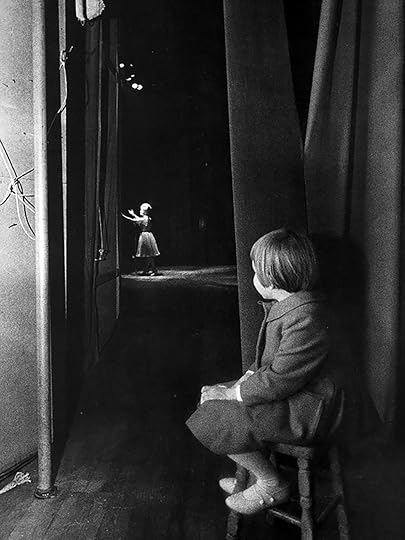
Among the images of my mother that exist online is a black-and-white photograph of me, watching her from the wings. I am four or five years of age, and sitting on a stool, in a little matinee coat and a bowl haircut. Beyond me, Katherine O’Dell performs to the unseen crowd. She is dressed in a glittering dark gown, you can not see the edge so her or the shape her figure makes, just the slice of cheekbone, the line of her chin. Her hands are uplifted.
The phone was otherwise silent in Dartmouth Square, though phones were, at a guess, ringing all over Dublin. The gang of people my mother called friends were now busy being a gang without her. The difference between inside and outside was so swift, it was almost the same thing. She was, from that moment, more spoken about than to. She was the talk of the town.
It was gone. Up in our bedroom, I sat on the edge of the bed and put my head in my hands. If I could just stop looking, I knew, I might remember where it was. You must let the thing go, in order to find it.
She was always looking at the edges of things.