

What do you think?
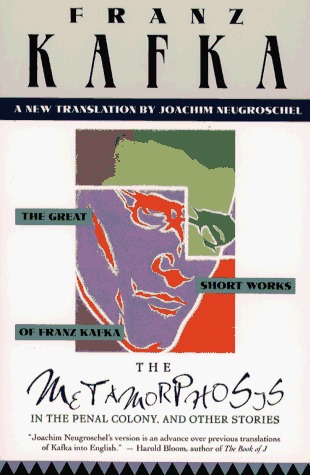
The Metamorphosis, In the Penal Colony, and Other Stories: The Great Short Works of Franz Kafka
A collection of the author's prose poems, sketches, stories, and allegories includes the three-act novelette ""The Metamorphosis"" and a special translation of ""The Penal Colony""
Conversation with the worshiper
Conversation with the drunk
Great noise
Children on the highway
Exposing a city slicker
The sudden stroll
Decisions
The outing in the mountains
The bachelor's unhappiness
The businessman
Absently gazing out
The way home
The people running by
The passenger
Frocks
The rejection
Reflections for amateur jockeys
The window facing the street
The wish to be an Indian
The trees
Unhappiness
The judgment
The stoker
The metamorphosis
In the Penal Colony
The new lawyer
A country doctor
Up in the gallery
An ancient manuscript
Before the law
Jackals and Arabs
A visit to the mine
The next village
An imperial message
The anxiety of the head of family
Eleven sons
A fratricide
A dream
A report for an academy
Conversation with the worshiper
Conversation with the drunk
Great noise
Children on the highway
Exposing a city slicker
The sudden stroll
Decisions
The outing in the mountains
The bachelor's unhappiness
The businessman
Absently gazing out
The way home
The people running by
The passenger
Frocks
The rejection
Reflections for amateur jockeys
The window facing the street
The wish to be an Indian
The trees
Unhappiness
The judgment
The stoker
The metamorphosis
In the Penal Colony
The new lawyer
A country doctor
Up in the gallery
An ancient manuscript
Before the law
Jackals and Arabs
A visit to the mine
The next village
An imperial message
The anxiety of the head of family
Eleven sons
A fratricide
A dream
A report for an academy
293 pages, Paperback
First published January 1, 1915
About the author
Franz Kafka
3,612 books41.5k followersFranz Kafka was a German-speaking writer from Prague whose work became one of the foundations of modern literature, even though he published only a small part of his writing during his lifetime. Born into a middle-class Jewish family in Prague, then part of the Austro-Hungarian Empire, Kafka grew up amid German, Czech, and Jewish cultural influences that shaped his sense of displacement and linguistic precision. His difficult relationship with his authoritarian father left a lasting mark, fostering feelings of guilt, anxiety, and inadequacy that became central themes in his fiction and personal writings.
Kafka studied law at the German University in Prague, earning a doctorate in 1906. He chose law for practical reasons rather than personal inclination, a compromise that troubled him throughout his life. After university, he worked for several insurance institutions, most notably the Workers Accident Insurance Institute for the Kingdom of Bohemia. His duties included assessing industrial accidents and drafting legal reports, work he carried out competently and responsibly. Nevertheless, Kafka regarded his professional life as an obstacle to his true vocation, and most of his writing was done at night or during periods of illness and leave. Kafka began publishing short prose pieces in his early adulthood, later collected in volumes such as Contemplation and A Country Doctor. These works attracted little attention at the time but already displayed the hallmarks of his mature style, including precise language, emotional restraint, and the application of calm logic to deeply unsettling situations. His major novels The Trial, The Castle, and Amerika were left unfinished and unpublished during his lifetime. They depict protagonists trapped within opaque systems of authority, facing accusations, rules, or hierarchies that remain unexplained and unreachable. Themes of alienation, guilt, bureaucracy, law, and punishment run throughout Kafka’s work. His characters often respond to absurd or terrifying circumstances with obedience or resignation, reflecting his own conflicted relationship with authority and obligation. Kafka’s prose avoids overt symbolism, yet his narratives function as powerful metaphors through structure, repetition, and tone. Ordinary environments gradually become nightmarish without losing their internal coherence. Kafka’s personal life was marked by emotional conflict, chronic self-doubt, and recurring illness. He formed intense but troubled romantic relationships, including engagements that he repeatedly broke off, fearing that marriage would interfere with his writing. His extensive correspondence and diaries reveal a relentless self-critic, deeply concerned with morality, spirituality, and the demands of artistic integrity. In his later years, Kafka’s health deteriorated due to tuberculosis, forcing him to withdraw from work and spend long periods in sanatoriums. Despite his illness, he continued writing when possible. He died young, leaving behind a large body of unpublished manuscripts. Before his death, he instructed his close friend Max Brod to destroy all of his remaining work. Brod ignored this request and instead edited and published Kafka’s novels, stories, and diaries, ensuring his posthumous reputation.
The publication of Kafka’s work after his death established him as one of the most influential writers of the twentieth century. The term Kafkaesque entered common usage to describe situations marked by oppressive bureaucracy, absurd logic, and existential anxiety. His writing has been interpreted through existential, religious, psychological, and political perspectives, though Kafka himself resisted definitive meanings. His enduring power lies in his ability to articulate modern anxiety with clarity and restraint.
Kafka studied law at the German University in Prague, earning a doctorate in 1906. He chose law for practical reasons rather than personal inclination, a compromise that troubled him throughout his life. After university, he worked for several insurance institutions, most notably the Workers Accident Insurance Institute for the Kingdom of Bohemia. His duties included assessing industrial accidents and drafting legal reports, work he carried out competently and responsibly. Nevertheless, Kafka regarded his professional life as an obstacle to his true vocation, and most of his writing was done at night or during periods of illness and leave. Kafka began publishing short prose pieces in his early adulthood, later collected in volumes such as Contemplation and A Country Doctor. These works attracted little attention at the time but already displayed the hallmarks of his mature style, including precise language, emotional restraint, and the application of calm logic to deeply unsettling situations. His major novels The Trial, The Castle, and Amerika were left unfinished and unpublished during his lifetime. They depict protagonists trapped within opaque systems of authority, facing accusations, rules, or hierarchies that remain unexplained and unreachable. Themes of alienation, guilt, bureaucracy, law, and punishment run throughout Kafka’s work. His characters often respond to absurd or terrifying circumstances with obedience or resignation, reflecting his own conflicted relationship with authority and obligation. Kafka’s prose avoids overt symbolism, yet his narratives function as powerful metaphors through structure, repetition, and tone. Ordinary environments gradually become nightmarish without losing their internal coherence. Kafka’s personal life was marked by emotional conflict, chronic self-doubt, and recurring illness. He formed intense but troubled romantic relationships, including engagements that he repeatedly broke off, fearing that marriage would interfere with his writing. His extensive correspondence and diaries reveal a relentless self-critic, deeply concerned with morality, spirituality, and the demands of artistic integrity. In his later years, Kafka’s health deteriorated due to tuberculosis, forcing him to withdraw from work and spend long periods in sanatoriums. Despite his illness, he continued writing when possible. He died young, leaving behind a large body of unpublished manuscripts. Before his death, he instructed his close friend Max Brod to destroy all of his remaining work. Brod ignored this request and instead edited and published Kafka’s novels, stories, and diaries, ensuring his posthumous reputation.
The publication of Kafka’s work after his death established him as one of the most influential writers of the twentieth century. The term Kafkaesque entered common usage to describe situations marked by oppressive bureaucracy, absurd logic, and existential anxiety. His writing has been interpreted through existential, religious, psychological, and political perspectives, though Kafka himself resisted definitive meanings. His enduring power lies in his ability to articulate modern anxiety with clarity and restraint.
Ratings & Reviews
Friends & Following
Create a free account to discover what your friends think of this book!
Community Reviews
Displaying 1 - 30 of 670 reviews

July 5, 2022
my becoming-a-genius project, part 23!
the background:
i have decided to become a genius.
to accomplish this, i'm going to work my way through the collected stories of various authors, reading + reviewing 1 story every day until i get bored / lose every single follower / am struck down by a vengeful deity.
i also just took a 5 month break from this project, so either i'm rested + rejuvenated + ready to start, or this is going to go very badly. let's find out.
so kafkaesque.
PROJECT 1: THE COMPLETE STORIES BY FLANNERY O'CONNOR
PROJECT 2: HER BODY AND OTHER PARTIES BY CARMEN MARIA MACHADO
PROJECT 3: 18 BEST STORIES BY EDGAR ALLAN POE
PROJECT 4: THE LOTTERY AND OTHER STORIES BY SHIRLEY JACKSON
PROJECT 5: HOW LONG 'TIL BLACK FUTURE MONTH? BY N.K. JEMISIN
PROJECT 6: THE SHORT STORIES OF OSCAR WILDE
PROJECT 7: THE BLUE FAIRY BOOK BY ANDREW LANG
PROJECT 8: GRAND UNION: STORIES BY ZADIE SMITH
PROJECT 9: THE BEST OF ROALD DAHL
PROJECT 10: LOVE AND FREINDSHIP BY JANE AUSTEN
PROJECT 11: HOMESICK FOR ANOTHER WORLD BY OTTESSA MOSHFEGH
PROJECT 12: BAD FEMINIST BY ROXANE GAY
PROJECT 12.5: DIFFICULT WOMEN BY ROXANE GAY
PROJECT 13: THE SHORT NOVELS OF JOHN STEINBECK
PROJECT 14: FIRST PERSON SINGULAR BY HARUKI MURAKAMI
PROJECT 15: THE ORIGINAL FOLK AND FAIRY TALES OF THE BROTHERS GRIMM
PROJECT 16: A MANUAL FOR CLEANING WOMEN BY LUCIA BERLIN
PROJECT 17: SELECTED STORIES OF PHILIP K. DICK
PROJECT 18: HIGH LONESOME: SELECTED STORIES BY JOYCE CAROL OATES
PROJECT 19: THE SHORT STORIES OF ANTON CHEKHOV
PROJECT 20: COLLECTED STORIES OF COLETTE
PROJECT 21: JABBERWOCKY AND OTHER NONSENSE: COLLECTED POEMS BY LEWIS CARROLL
PROJECT 22: COLLECTED STORIES BY GABRIEL GARCIA MARQUEZ
PROJECT 23: THE METAMORPHOSIS & OTHER STORIES BY FRANZ KAFKA
DAY 1: CONVERSATION WITH THE SUPPLICANT
this collection is going to get pretty complicated in terms of How Do I Divide All These 3 Page Stories Into A Reasonable Project, but it starts us off easy. one story, one section. the way god intended.
i don't understand this but i did like reading it.
rating: 3.25
DAY 2: MEDITATION
this section is only like 30 pages long, but it has 18 separate stories in it. feels like i should just do the badass thing and knock them out...
i will tell you what their titles are so you feel included as i speed through them. they are: CHILDREN ON A COUNTRY ROAD (good), UNMASKING A CONFIDENCE TRICKSTER (weird), THE SUDDEN WALK (so true and perfect), RESOLUTIONS (fun), EXCURSION INTO THE MOUNTAINS (hm), BACHELOR'S ILL LUCK (slay), THE TRADESMAN (sure), ABSENT-MINDED WINDOW-GAZING (perfect again), THE WAY HOME (nice), PASSERS-BY (yeah), ON THE TRAM (cool), CLOTHES (okay), REJECTION (love it), REFLECTIONS FOR GENTLEMEN-JOCKEYS (uh huh), THE STREET WINDOW (perfect x3), THE WISH TO BE A RED INDIAN (yikes), THE TREES (lovely), and UNHAPPINESS (i love ghosts!!!).
rating: 4.5
DAY 3: THE JUDGMENT
another good old-fashioned one section, one story, one day.
this story comes immediately before the metamorphosis and features a protagonist named georg. seems designed to be confusing, and also reminds me of spiders georg.
well goodness gracious.
rating: 3.5
DAY 4: THE METAMORPHOSIS
i know this is brilliant.
but i've read it so goddamn many times.
english professors get more creative 2k22.
rating: 3.5
DAY 5: A COUNTRY DOCTOR, PART 1
another random section with a million (read: 15) stories that's also a million (read: 56) pages long.
so i'm dividing it.
today includes THE NEW ADVOCATE (whatever), A COUNTRY DOCTOR (titular! kafkaesque! no paragraph breaks!), UP IN THE GALLERY (nice), AN OLD MANUSCRIPT (not exactly topical and very disturbing), and BEFORE THE LAW (like a prototype of the trial).
rating: 3
DAY 6: A COUNTRY DOCTOR, PART 2
not really feeling this today but i did finish the daily sections of the not one, but two other projects i'm doing because i'm incredibly brave and strong. so. here we are.
today's: JACKALS AND ARABS (yikes), A VISIT TO A MINE (okay The Gold [Phoebe Bridgers version]), THE NEXT VILLAGE (literally one paragraph and also perfect), AN IMPERIAL MESSAGE (kafkaesque again), and THE CARES OF A FAMILY MAN (not starring nicolas cage).
rating: 3.5
DAY 7: A COUNTRY DOCTOR, PART 3
the end of the country doctor saga.
today's, which all seem unjustly long compared to the last 2 days: ELEVEN SONS (a rundown of some guy's sons), A FRATRICIDE (also what it sounds like), A DREAM (now that's what i call kafka), A REPORT TO AN ACADEMY (as boring as the title would indicate, but more ape-centered), and THE BUCKET RIDER (goofy).
rating: 3
DAY 8: IN THE PENAL COLONY
every time i hear the term penal colony (which, granted, is not that often), i think of this movie i saw with rami malek and some other guy solely because i had a crush on rami malek and my friend had a crush on the other guy, and also this was at a huge theater without assigned seats and we used to buy 1 ticket and see how many movies we can see.
it was an upsetting film.
this was likewise upsetting.
rating: 3.5
DAY 9: A HUNGER ARTIST, PART 1
sounds like a really pretentious term for a chef.
it feels like even with my best efforts, i am destined to finish this book in a single-digit number of days. dare i divide this little section in two? the answer...is yes.
this is another multiple little stories in a section situation. first, appropriately: FIRST SORROW. desperately do i wish i was a trapeze artist whose biggest problem was wanting, like, more sh*t to swing on.
numéro deux: A LITTLE WOMAN. immediately that's a tough title to live up to. but it's about a girl who is to her core a hater, so...i kind of have to love it.
and finally (for today): the titular HUNGER ARTIST, which sounds like a really pretentious term for a chef. in fact it is very good and very sad and very metamorphosis-esque in some ways.
rating: 4
DAY 10: JOSEPHINE THE SINGER, OR THE MOUSE FOLK
the final story in the hunger artist section, and also the collection entirely, which just has too good of a title not to have a lil spotlight.
"We all pipe, but of course no one dreams of making out that our piping is an art, we pipe without thinking of it, indeed without noticing it, and there are even many among us who are quite unaware that piping is one of our characteristics." i am not mature enough for this
"Or it is a matter of nut-cracking, but it turns out we have overlooked the art of cracking nuts" HELP
outside of opportunities for sex jokes, this is mostly about a woman who is universally admired and does not think that she is admired well enough, and for that i stan.
rating: 4
OVERALL
i do think kafka's style is best suited to the short novel, but these stories gave him an opportunity to show off (or me an opportunity to pay attention to) just how beautifully he can write and how wisely he can witness humanity.
it made me want to read his journals more than anything else. (i think they're published, but i'll let it stand as a reflection on my nosy nature regardless.)
rating: 3.5
the background:
i have decided to become a genius.
to accomplish this, i'm going to work my way through the collected stories of various authors, reading + reviewing 1 story every day until i get bored / lose every single follower / am struck down by a vengeful deity.
i also just took a 5 month break from this project, so either i'm rested + rejuvenated + ready to start, or this is going to go very badly. let's find out.
so kafkaesque.
PROJECT 1: THE COMPLETE STORIES BY FLANNERY O'CONNOR
PROJECT 2: HER BODY AND OTHER PARTIES BY CARMEN MARIA MACHADO
PROJECT 3: 18 BEST STORIES BY EDGAR ALLAN POE
PROJECT 4: THE LOTTERY AND OTHER STORIES BY SHIRLEY JACKSON
PROJECT 5: HOW LONG 'TIL BLACK FUTURE MONTH? BY N.K. JEMISIN
PROJECT 6: THE SHORT STORIES OF OSCAR WILDE
PROJECT 7: THE BLUE FAIRY BOOK BY ANDREW LANG
PROJECT 8: GRAND UNION: STORIES BY ZADIE SMITH
PROJECT 9: THE BEST OF ROALD DAHL
PROJECT 10: LOVE AND FREINDSHIP BY JANE AUSTEN
PROJECT 11: HOMESICK FOR ANOTHER WORLD BY OTTESSA MOSHFEGH
PROJECT 12: BAD FEMINIST BY ROXANE GAY
PROJECT 12.5: DIFFICULT WOMEN BY ROXANE GAY
PROJECT 13: THE SHORT NOVELS OF JOHN STEINBECK
PROJECT 14: FIRST PERSON SINGULAR BY HARUKI MURAKAMI
PROJECT 15: THE ORIGINAL FOLK AND FAIRY TALES OF THE BROTHERS GRIMM
PROJECT 16: A MANUAL FOR CLEANING WOMEN BY LUCIA BERLIN
PROJECT 17: SELECTED STORIES OF PHILIP K. DICK
PROJECT 18: HIGH LONESOME: SELECTED STORIES BY JOYCE CAROL OATES
PROJECT 19: THE SHORT STORIES OF ANTON CHEKHOV
PROJECT 20: COLLECTED STORIES OF COLETTE
PROJECT 21: JABBERWOCKY AND OTHER NONSENSE: COLLECTED POEMS BY LEWIS CARROLL
PROJECT 22: COLLECTED STORIES BY GABRIEL GARCIA MARQUEZ
PROJECT 23: THE METAMORPHOSIS & OTHER STORIES BY FRANZ KAFKA
DAY 1: CONVERSATION WITH THE SUPPLICANT
this collection is going to get pretty complicated in terms of How Do I Divide All These 3 Page Stories Into A Reasonable Project, but it starts us off easy. one story, one section. the way god intended.
i don't understand this but i did like reading it.
rating: 3.25
DAY 2: MEDITATION
this section is only like 30 pages long, but it has 18 separate stories in it. feels like i should just do the badass thing and knock them out...
i will tell you what their titles are so you feel included as i speed through them. they are: CHILDREN ON A COUNTRY ROAD (good), UNMASKING A CONFIDENCE TRICKSTER (weird), THE SUDDEN WALK (so true and perfect), RESOLUTIONS (fun), EXCURSION INTO THE MOUNTAINS (hm), BACHELOR'S ILL LUCK (slay), THE TRADESMAN (sure), ABSENT-MINDED WINDOW-GAZING (perfect again), THE WAY HOME (nice), PASSERS-BY (yeah), ON THE TRAM (cool), CLOTHES (okay), REJECTION (love it), REFLECTIONS FOR GENTLEMEN-JOCKEYS (uh huh), THE STREET WINDOW (perfect x3), THE WISH TO BE A RED INDIAN (yikes), THE TREES (lovely), and UNHAPPINESS (i love ghosts!!!).
rating: 4.5
DAY 3: THE JUDGMENT
another good old-fashioned one section, one story, one day.
this story comes immediately before the metamorphosis and features a protagonist named georg. seems designed to be confusing, and also reminds me of spiders georg.
well goodness gracious.
rating: 3.5
DAY 4: THE METAMORPHOSIS
i know this is brilliant.
but i've read it so goddamn many times.
english professors get more creative 2k22.
rating: 3.5
DAY 5: A COUNTRY DOCTOR, PART 1
another random section with a million (read: 15) stories that's also a million (read: 56) pages long.
so i'm dividing it.
today includes THE NEW ADVOCATE (whatever), A COUNTRY DOCTOR (titular! kafkaesque! no paragraph breaks!), UP IN THE GALLERY (nice), AN OLD MANUSCRIPT (not exactly topical and very disturbing), and BEFORE THE LAW (like a prototype of the trial).
rating: 3
DAY 6: A COUNTRY DOCTOR, PART 2
not really feeling this today but i did finish the daily sections of the not one, but two other projects i'm doing because i'm incredibly brave and strong. so. here we are.
today's: JACKALS AND ARABS (yikes), A VISIT TO A MINE (okay The Gold [Phoebe Bridgers version]), THE NEXT VILLAGE (literally one paragraph and also perfect), AN IMPERIAL MESSAGE (kafkaesque again), and THE CARES OF A FAMILY MAN (not starring nicolas cage).
rating: 3.5
DAY 7: A COUNTRY DOCTOR, PART 3
the end of the country doctor saga.
today's, which all seem unjustly long compared to the last 2 days: ELEVEN SONS (a rundown of some guy's sons), A FRATRICIDE (also what it sounds like), A DREAM (now that's what i call kafka), A REPORT TO AN ACADEMY (as boring as the title would indicate, but more ape-centered), and THE BUCKET RIDER (goofy).
rating: 3
DAY 8: IN THE PENAL COLONY
every time i hear the term penal colony (which, granted, is not that often), i think of this movie i saw with rami malek and some other guy solely because i had a crush on rami malek and my friend had a crush on the other guy, and also this was at a huge theater without assigned seats and we used to buy 1 ticket and see how many movies we can see.
it was an upsetting film.
this was likewise upsetting.
rating: 3.5
DAY 9: A HUNGER ARTIST, PART 1
sounds like a really pretentious term for a chef.
it feels like even with my best efforts, i am destined to finish this book in a single-digit number of days. dare i divide this little section in two? the answer...is yes.
this is another multiple little stories in a section situation. first, appropriately: FIRST SORROW. desperately do i wish i was a trapeze artist whose biggest problem was wanting, like, more sh*t to swing on.
numéro deux: A LITTLE WOMAN. immediately that's a tough title to live up to. but it's about a girl who is to her core a hater, so...i kind of have to love it.
and finally (for today): the titular HUNGER ARTIST, which sounds like a really pretentious term for a chef. in fact it is very good and very sad and very metamorphosis-esque in some ways.
rating: 4
DAY 10: JOSEPHINE THE SINGER, OR THE MOUSE FOLK
the final story in the hunger artist section, and also the collection entirely, which just has too good of a title not to have a lil spotlight.
"We all pipe, but of course no one dreams of making out that our piping is an art, we pipe without thinking of it, indeed without noticing it, and there are even many among us who are quite unaware that piping is one of our characteristics." i am not mature enough for this
"Or it is a matter of nut-cracking, but it turns out we have overlooked the art of cracking nuts" HELP
outside of opportunities for sex jokes, this is mostly about a woman who is universally admired and does not think that she is admired well enough, and for that i stan.
rating: 4
OVERALL
i do think kafka's style is best suited to the short novel, but these stories gave him an opportunity to show off (or me an opportunity to pay attention to) just how beautifully he can write and how wisely he can witness humanity.
it made me want to read his journals more than anything else. (i think they're published, but i'll let it stand as a reflection on my nosy nature regardless.)
rating: 3.5

March 30, 2021
Interested in Kafka? I go much deeper on my Substack. Join me!
The Metamorphosis is doubtless Franz Kafka’s most famous and influential short story, and it is the pearl of this volume. Kafka published a few stories during his lifetime but never came to his own commercially (nor did he really wish to). In the end, perhaps out of disillusion, he asked his friend, Max Brod, to burn everything he had written — luckily for us, Brod disobeyed the author’s order. The present book includes the tales Kafka published during his lifetime (he died in 1924).
Meditation (1913), A Country Doctor (1920) and A Hunger Artist (1924) are collections of shorter writings, now short stories proper, now literary scraps, glimpses, at the junction between brief tales and poems. The focus of these texts vary between every-day observations (e.g. On the Tram), allegories (Jackals and Arabs), short parables (The Cares of a Family Man), sketches (Eleven Sons), and dream-like visions (The Wish to Be a Red Indian). The Judgment, The Metamorphosis (1913) and In the Penal Colony (1919) are longer novellas in which the isolated protagonists are variously plunged into nightmarish predicaments, involving a sense of loss or abandonment, the impending verdict of a father figure and a good deal of creepiness and gallows humour. Before the Law can also be found toward the end of The Trial.
In most of these stories, Kafka displays a profound fascination for the monstrous, both in the sense of “misshapen”, “repulsive”, and in the sense of “on display”, “laid out”. This aspect of Kafka’s abundant imagination is quite evident in many stories involving some form of performance or show in front of an unimpressed or callous audience or tribunal: the gory torture show following a summary verdict in the Penal Colony, the young circus rider in Up in the Gallery, the human-ape in A Report to an Academy, the starving performer in A Hunger Artist. In some form or other, all these stories involve a slight feeling of revulsion contradicted by a compulsion to watch and the terror of an inescapable verdict or sacrificial fate. All are, in a way, allegories of the relation between a misunderstood artist or a misinterpreted writer and an idiotic audience.
Almost all of Kafka’s tales have a fantastic element and leave the reader slightly dazed, with a feeling of bizarre unreality, as though we’ve just awoken from a disturbing dream — the characters are mainly impervious to this feeling, which makes them all the stranger. The meaning of these stories is not immediately apparent either — nor does it become more explicit on second or third thought. One way to go about reading Kafka would be to simply let this uncanny feeling sink in. Nevertheless, these stories seem to be made of the same stuff as dreams or esoteric scriptures and naturally lend themselves to countless symbolic, sometimes even cabalistic, interpretations.
And so, in the Penal Colony, the condemned is placed into an elaborate machine (redolent of Poe’s The Pit and the Pendulum), and transformed into a living, bleeding legal document: we can immediately feel that there is more meaning in this story than meets the eye... The same thing happens in The Metamorphosis: Gregor Samsa, an ordinary salesperson, one morning finds himself “changed into a monstrous cockroach”. The novella takes this grotesque event at face value and goes on to describe all its unearthly consequences: will Gregor be late for work? How will he turn the doorknob?...
But ultimately, for us, what does this transformation stand for? Did Gregor Samsa become a vermin on account of his draining and pointless day job? Is the monstrous insect, on the contrary, a way out or even a symbol of genius surrounded by mediocrity (as Nabokov seemed to think)? Is Gregor Samsa an Isaac-like or Christ-like figure? Isn’t this metamorphosis an expression of the fact that the shape and nature of our body is not something we have a say on and is often the object of people’s prejudices? Case in point: gender, race, illness, disability or ageing, all things that may make us into something “other”, barely human, an “ungeheueres Ungeziefer”? Ironically enough, at the end of the story, Gregor Samsa’s younger sister, Grete, undergoes an opposite metamorphosis, as her parents notice that “she had bloomed into an attractive and well-built girl”... for the time being.
One of the essential features of Kafka’s stories is that they are, at the same time, easily approachable yet open to the imagination and intellect of the reader, inviting endless variations and reinterpretations. For that very reason probably, Kafka, despite a relatively short and undistinguished literary career, is now immensely influential. We can glimpse his trace in the works of such authors as Jorge Luis Borges, Philip K. Dick, Art Spiegelman or Haruki Murakami; such composer as Philip Glass; or such film directors as David Lynch or David Cronenberg (one of the more recent and outstanding examples is Neill Blomkamp’s District 9).
“We need books that affect us like a disaster, that grieve us deeply, like the death of someone we loved more than ourselves, like being banished into forests far from everyone, like a suicide. A book must be the axe for the frozen sea within us. That is my belief.” (letter to Pollak, 1904). And that is indeed how it feels to read Kafka.
Edit: Found this book once more and randomly re-read “A Country Doctor”. It really feels like the transcription of a nightmare: the groom biting the servant girl named Rose in the face, the suggestion that he might rape her afterwards, the enormous horses that travel like a blizzard, the sick man with a monstrous rose-coloured wound, described as a flower or vagina full of worms as thick as fingers... Clearly, as Rose says, “you never know what you’re going to find in your own house”.
The Metamorphosis is doubtless Franz Kafka’s most famous and influential short story, and it is the pearl of this volume. Kafka published a few stories during his lifetime but never came to his own commercially (nor did he really wish to). In the end, perhaps out of disillusion, he asked his friend, Max Brod, to burn everything he had written — luckily for us, Brod disobeyed the author’s order. The present book includes the tales Kafka published during his lifetime (he died in 1924).
Meditation (1913), A Country Doctor (1920) and A Hunger Artist (1924) are collections of shorter writings, now short stories proper, now literary scraps, glimpses, at the junction between brief tales and poems. The focus of these texts vary between every-day observations (e.g. On the Tram), allegories (Jackals and Arabs), short parables (The Cares of a Family Man), sketches (Eleven Sons), and dream-like visions (The Wish to Be a Red Indian). The Judgment, The Metamorphosis (1913) and In the Penal Colony (1919) are longer novellas in which the isolated protagonists are variously plunged into nightmarish predicaments, involving a sense of loss or abandonment, the impending verdict of a father figure and a good deal of creepiness and gallows humour. Before the Law can also be found toward the end of The Trial.
In most of these stories, Kafka displays a profound fascination for the monstrous, both in the sense of “misshapen”, “repulsive”, and in the sense of “on display”, “laid out”. This aspect of Kafka’s abundant imagination is quite evident in many stories involving some form of performance or show in front of an unimpressed or callous audience or tribunal: the gory torture show following a summary verdict in the Penal Colony, the young circus rider in Up in the Gallery, the human-ape in A Report to an Academy, the starving performer in A Hunger Artist. In some form or other, all these stories involve a slight feeling of revulsion contradicted by a compulsion to watch and the terror of an inescapable verdict or sacrificial fate. All are, in a way, allegories of the relation between a misunderstood artist or a misinterpreted writer and an idiotic audience.
Almost all of Kafka’s tales have a fantastic element and leave the reader slightly dazed, with a feeling of bizarre unreality, as though we’ve just awoken from a disturbing dream — the characters are mainly impervious to this feeling, which makes them all the stranger. The meaning of these stories is not immediately apparent either — nor does it become more explicit on second or third thought. One way to go about reading Kafka would be to simply let this uncanny feeling sink in. Nevertheless, these stories seem to be made of the same stuff as dreams or esoteric scriptures and naturally lend themselves to countless symbolic, sometimes even cabalistic, interpretations.
And so, in the Penal Colony, the condemned is placed into an elaborate machine (redolent of Poe’s The Pit and the Pendulum), and transformed into a living, bleeding legal document: we can immediately feel that there is more meaning in this story than meets the eye... The same thing happens in The Metamorphosis: Gregor Samsa, an ordinary salesperson, one morning finds himself “changed into a monstrous cockroach”. The novella takes this grotesque event at face value and goes on to describe all its unearthly consequences: will Gregor be late for work? How will he turn the doorknob?...
But ultimately, for us, what does this transformation stand for? Did Gregor Samsa become a vermin on account of his draining and pointless day job? Is the monstrous insect, on the contrary, a way out or even a symbol of genius surrounded by mediocrity (as Nabokov seemed to think)? Is Gregor Samsa an Isaac-like or Christ-like figure? Isn’t this metamorphosis an expression of the fact that the shape and nature of our body is not something we have a say on and is often the object of people’s prejudices? Case in point: gender, race, illness, disability or ageing, all things that may make us into something “other”, barely human, an “ungeheueres Ungeziefer”? Ironically enough, at the end of the story, Gregor Samsa’s younger sister, Grete, undergoes an opposite metamorphosis, as her parents notice that “she had bloomed into an attractive and well-built girl”... for the time being.
One of the essential features of Kafka’s stories is that they are, at the same time, easily approachable yet open to the imagination and intellect of the reader, inviting endless variations and reinterpretations. For that very reason probably, Kafka, despite a relatively short and undistinguished literary career, is now immensely influential. We can glimpse his trace in the works of such authors as Jorge Luis Borges, Philip K. Dick, Art Spiegelman or Haruki Murakami; such composer as Philip Glass; or such film directors as David Lynch or David Cronenberg (one of the more recent and outstanding examples is Neill Blomkamp’s District 9).
“We need books that affect us like a disaster, that grieve us deeply, like the death of someone we loved more than ourselves, like being banished into forests far from everyone, like a suicide. A book must be the axe for the frozen sea within us. That is my belief.” (letter to Pollak, 1904). And that is indeed how it feels to read Kafka.
Edit: Found this book once more and randomly re-read “A Country Doctor”. It really feels like the transcription of a nightmare: the groom biting the servant girl named Rose in the face, the suggestion that he might rape her afterwards, the enormous horses that travel like a blizzard, the sick man with a monstrous rose-coloured wound, described as a flower or vagina full of worms as thick as fingers... Clearly, as Rose says, “you never know what you’re going to find in your own house”.

November 28, 2014
"The law... should be accessible to everyone and at all times."
The title story is very short and has been published on its own, as a chapter in his novel The Trial (see my review HERE) and in the collection The Country Doctor (see my review HERE).
It's an allegorical tale on two of Kafka's key themes: judgement and bureaucratic process. (He studied law at university, and went on to work in insurance, investigating personal injury claims.)
A man comes seeking justice. The reason is not stated - this is Kafka, after all! Nor is it clear if he's seeking it from the highest human legal authority or from God. Perhaps he doesn't know himself, as he's stuck outside with "the most lowly gatekeeper" of many.
The door to justice is open, but the doorkeeper won't let him pass. There is never an outright "no", nor any reason given, just prevarication and the implication (and it is only an implication) that one day it might be possible.
The man waits, and waits. For years. The doorkeeper takes bribes:
"So you won't feel there isn't anything you haven't tried."
You can probably guess the outcome more-or-less.

Image: Waiting at the door... (Source)
Some of Kafka's stories have humour; this is not really one of them. Cold and haunting beauty, with an eerie familiarity (even the first time I read it) are the tone here.
See also
• See my Kafka-related bookshelf for other works by and about Kafka: HERE. That includes reviews of Metamorphosis and all the other stories listed in the title of this edition.
• This story is also referenced in Josipovici's delightful, elegant, and ultimately very clever bit of whimsy, Only Joking, which I reviewed HERE.
• Remember the old riddle? You reach a fork in the road. A sign explains that in one direction is Heaven and the other is Hell. Each path is blocked by a Guard. The sign goes on to say that one of the guards will always lie and the other will always tell the truth, it does not say which guard is which. We assume that the guards do know which path leads to where. You may ask one question of only one guard in order that you can determine, with certainty, the way to Heaven. What is that question? If you don't know the answer, see HERE.
• For a more comedic take on this in this, see a short Asterix clip (thanks, Leonard), House that sends you Mad, HERE.
Short story club
I reread this as one of the stories in The Art of the Short Story, by Dana Gioia, from which I'm aiming to read one story a week with The Short Story Club, starting 2 May 2022.
You can read this story here.
You can join the group here.
The title story is very short and has been published on its own, as a chapter in his novel The Trial (see my review HERE) and in the collection The Country Doctor (see my review HERE).
It's an allegorical tale on two of Kafka's key themes: judgement and bureaucratic process. (He studied law at university, and went on to work in insurance, investigating personal injury claims.)
A man comes seeking justice. The reason is not stated - this is Kafka, after all! Nor is it clear if he's seeking it from the highest human legal authority or from God. Perhaps he doesn't know himself, as he's stuck outside with "the most lowly gatekeeper" of many.
The door to justice is open, but the doorkeeper won't let him pass. There is never an outright "no", nor any reason given, just prevarication and the implication (and it is only an implication) that one day it might be possible.
The man waits, and waits. For years. The doorkeeper takes bribes:
"So you won't feel there isn't anything you haven't tried."
You can probably guess the outcome more-or-less.
Image: Waiting at the door... (Source)
Some of Kafka's stories have humour; this is not really one of them. Cold and haunting beauty, with an eerie familiarity (even the first time I read it) are the tone here.
See also
• See my Kafka-related bookshelf for other works by and about Kafka: HERE. That includes reviews of Metamorphosis and all the other stories listed in the title of this edition.
• This story is also referenced in Josipovici's delightful, elegant, and ultimately very clever bit of whimsy, Only Joking, which I reviewed HERE.
• Remember the old riddle? You reach a fork in the road. A sign explains that in one direction is Heaven and the other is Hell. Each path is blocked by a Guard. The sign goes on to say that one of the guards will always lie and the other will always tell the truth, it does not say which guard is which. We assume that the guards do know which path leads to where. You may ask one question of only one guard in order that you can determine, with certainty, the way to Heaven. What is that question? If you don't know the answer, see HERE.
• For a more comedic take on this in this, see a short Asterix clip (thanks, Leonard), House that sends you Mad, HERE.
Short story club
I reread this as one of the stories in The Art of the Short Story, by Dana Gioia, from which I'm aiming to read one story a week with The Short Story Club, starting 2 May 2022.
You can read this story here.
You can join the group here.

January 21, 2014
"Before the Law stands a doorkeeper. To this doorkeeper there comes a man from the country and prays for admittance to the Law. But the doorkeeper says that he cannot grant admittance at the moment. The man thinks it over and then asks if he will be allowed in later. 'It is possible,' says the doorkeeper, 'but not at the moment.' Since the gate stands open, as usual, and the doorkeeper steps to one side, the man stoops to peer through the gateway into the interior. Observing that, the doorkeeper laughs and says: 'If you are so drawn to it, just try to go in despite my veto. But take note: I am powerful. And I am only the least of the doorkeepers. From hall to hall there is one doorkeeper after another, each one more powerful than the last. The third doorkeeper is already so terrible that even I cannot bear to look at him.' These are difficulties the man from the country has not expected; the Law, he thinks, should surely be accessible at all times and to everyone, but as he now takes a closer look at the doorkeeper in his fur coat, with his big sharp nose and long, thin, black Tartar beard, he decides that it is better to wait until he gets permission to enter."
I tried to get ideas from the other reviews of this work here at goodreads but no one seemed to have ventured to suggest what this "Law" is. But I think Kafka had given hints. The story continues:
"The doorkeeper gives him a stool and lets him sit down at one side of the door. There he sits for days and years. He makes many attempts to be admitted, and wearies the doorkeeper by his importunity. The doorkeeper frequently has little interviews with him, asking him questions about his home and many other things, but the questions are put indifferently, as great lords put them, and always finished with the statement that he cannot be let in yet. The man, who has furnished himself with many things for his journey, sacrifices all he has, however valuable, to bribe the doorkeeper. The doorkeeper accepts everything, but always with the remark: 'I am only taking it to keep you from thinking you have omitted anything.'"
Interesting that the man would give bribes and the doorkeeper would always accept them. Time then inexorably proceeded with speed--
"During these many years the man fixes his attention almost continuously on the doorkeeper. He forgets the other doorkeepers, and this first one seems to him the sole obstacle preventing access to the Law. He curses his bad luck, in his early years boldly and loudly; later, as he grows old, he only grumbles to himself. He becomes childish, and since in his yearlong contemplation of the doorkeeper he has come to know even the fleas on his fur coat, he begs the fleas as well to help him and to change the doorkeeper's mind."
These were what the man did. But notice what he didn't, or failed, to do up to the time he approached his own end--
"At length his eyesight begins to fail, and he does not know whether the world is really darker or whether his eyes are only deceiving him. Yet in his darkness he is now aware of a radiance that streams inextinguishable from the gateway of the Law."
Now what "radiance" is this? And what "darkness"? The finale comes as follows:
"Now he has not very long to live. Before he dies, all his experiences in these long years gather themselves in his head to one point, a question he has not yet asked the doorkeeper. He waves him nearer, since he can no longer raise his stiffening body. The doorkeeper has to bend low towards him, much to the man's disadvantage. 'What do you want to know now?' asks the doorkeeper; 'you are insatiable.' 'Everyone strives to reach the Law,' says the man, 'so how does it happen that for all these many years no one but myself has ever begged for admittance?' The doorkeeper recognizes that the man has reached his end, and, to let his failing senses catch the words, roars in his ears: 'No one else could ever be admitted here, since this gate was made only for you. I am now going to shut it.'"
The end. So what does it mean? Let me give it a shot.
Kafka was obsessed with the human condition and the eternal questions about existence (see my other review of his longer work, "The Trial"). The "Law" here can't simply be justice or a desired enforcement of rights. The law (whether it be human, natural or divine) GOVERNS. The man here, as any other man, sought that which governs human existence, that which explains or gives meaning to it, the ultimate whys and wherefores of everything and which everyone, at one time of his/her life, would find the need to wonder about and which the man here--like any other man--thought should "be accessible at all times and to everyone."
He was tantalized by this. It is POSSIBLE to be admitted to the Law and the door is ALWAYS open. But there are obstacles, both imagined (the other doorkeepers) and real (the doorkeeper before him) and he lacks the courage to ignore all these obstacles and just go inside and find out what is there. There was fear of what he might find out when he goes in without "permission."
He wanted it easy. To be PERMITTED inside. To be spoon-fed and be lulled into contentment about the big issues of life. So he asked and asked in an unceasing prayer, bribing his way through offerings and sacrifices to a mute idol who just stood there without objection to what was laid before its feet. In his youth there was exuberance in the man's petitions; in his old age, only childishness, then darkness. Yet in his darkness he finally becomes aware of the glory--though futile--of man's unending quest for meaning, unique to each person, a quest unto death. "Insatiable," said the doorkeeper to the man who ended his personal journey by dying, in darkness as hope ended, and as the door to the Law's gateway is closed.
I tried to get ideas from the other reviews of this work here at goodreads but no one seemed to have ventured to suggest what this "Law" is. But I think Kafka had given hints. The story continues:
"The doorkeeper gives him a stool and lets him sit down at one side of the door. There he sits for days and years. He makes many attempts to be admitted, and wearies the doorkeeper by his importunity. The doorkeeper frequently has little interviews with him, asking him questions about his home and many other things, but the questions are put indifferently, as great lords put them, and always finished with the statement that he cannot be let in yet. The man, who has furnished himself with many things for his journey, sacrifices all he has, however valuable, to bribe the doorkeeper. The doorkeeper accepts everything, but always with the remark: 'I am only taking it to keep you from thinking you have omitted anything.'"
Interesting that the man would give bribes and the doorkeeper would always accept them. Time then inexorably proceeded with speed--
"During these many years the man fixes his attention almost continuously on the doorkeeper. He forgets the other doorkeepers, and this first one seems to him the sole obstacle preventing access to the Law. He curses his bad luck, in his early years boldly and loudly; later, as he grows old, he only grumbles to himself. He becomes childish, and since in his yearlong contemplation of the doorkeeper he has come to know even the fleas on his fur coat, he begs the fleas as well to help him and to change the doorkeeper's mind."
These were what the man did. But notice what he didn't, or failed, to do up to the time he approached his own end--
"At length his eyesight begins to fail, and he does not know whether the world is really darker or whether his eyes are only deceiving him. Yet in his darkness he is now aware of a radiance that streams inextinguishable from the gateway of the Law."
Now what "radiance" is this? And what "darkness"? The finale comes as follows:
"Now he has not very long to live. Before he dies, all his experiences in these long years gather themselves in his head to one point, a question he has not yet asked the doorkeeper. He waves him nearer, since he can no longer raise his stiffening body. The doorkeeper has to bend low towards him, much to the man's disadvantage. 'What do you want to know now?' asks the doorkeeper; 'you are insatiable.' 'Everyone strives to reach the Law,' says the man, 'so how does it happen that for all these many years no one but myself has ever begged for admittance?' The doorkeeper recognizes that the man has reached his end, and, to let his failing senses catch the words, roars in his ears: 'No one else could ever be admitted here, since this gate was made only for you. I am now going to shut it.'"
The end. So what does it mean? Let me give it a shot.
Kafka was obsessed with the human condition and the eternal questions about existence (see my other review of his longer work, "The Trial"). The "Law" here can't simply be justice or a desired enforcement of rights. The law (whether it be human, natural or divine) GOVERNS. The man here, as any other man, sought that which governs human existence, that which explains or gives meaning to it, the ultimate whys and wherefores of everything and which everyone, at one time of his/her life, would find the need to wonder about and which the man here--like any other man--thought should "be accessible at all times and to everyone."
He was tantalized by this. It is POSSIBLE to be admitted to the Law and the door is ALWAYS open. But there are obstacles, both imagined (the other doorkeepers) and real (the doorkeeper before him) and he lacks the courage to ignore all these obstacles and just go inside and find out what is there. There was fear of what he might find out when he goes in without "permission."
He wanted it easy. To be PERMITTED inside. To be spoon-fed and be lulled into contentment about the big issues of life. So he asked and asked in an unceasing prayer, bribing his way through offerings and sacrifices to a mute idol who just stood there without objection to what was laid before its feet. In his youth there was exuberance in the man's petitions; in his old age, only childishness, then darkness. Yet in his darkness he finally becomes aware of the glory--though futile--of man's unending quest for meaning, unique to each person, a quest unto death. "Insatiable," said the doorkeeper to the man who ended his personal journey by dying, in darkness as hope ended, and as the door to the Law's gateway is closed.

April 24, 2022
I actually have a copy of Kafka’s complete stories, but I decided to just read his published stories for now, which align with the stories in this collection and have the same translator, so I’m going to use this as a placeholder.
I think such flat, matter-of-fact prose just isn’t my—forgive the cliché—cup of tea. Kafka’s prose is almost devoid of metaphor—which makes sense, I guess, since to liken anything in that world to this world would be to throw the reader a lifeline, in the way that to liken an otherworldly creature to an octopus would be to offer an exit from the unknown and reentry into the familiar. But I was still frustrated I couldn’t find the richness of metaphor here I could in writers like Walser and Schulz. Kafka’s sentence structure is quite complex, though, and I found I would grasp at his commas, semicolons, dashes—desperate for something to hold on to. This was especially frustrating when reading the shorter stories, which read more like prosaic prose-poems than short stories, and I would forget them almost as quickly as I read them. It does worry me a little that I have so much trouble appreciating writing that’s not of the beautiful kind, but what can I do?
Most of the stories in this collection aren’t as grotesque as I thought they would be. Actually, most of them aren’t grotesque at all. And as with most short story collections, it was only a roughly and intermittently blissful experience. The highs for me were In the Penal Colony and Before the Law. I’m still undecided as to whether to read the unpublished stories. If I do, it’ll probably be when I have nothing else to read—which certainly isn’t happening anytime soon. If I sound a little bitter, I guess I am. I expected Kafka to become a new favorite. But I’m glad to have finally read something of his besides The Metamorphosis.
I think such flat, matter-of-fact prose just isn’t my—forgive the cliché—cup of tea. Kafka’s prose is almost devoid of metaphor—which makes sense, I guess, since to liken anything in that world to this world would be to throw the reader a lifeline, in the way that to liken an otherworldly creature to an octopus would be to offer an exit from the unknown and reentry into the familiar. But I was still frustrated I couldn’t find the richness of metaphor here I could in writers like Walser and Schulz. Kafka’s sentence structure is quite complex, though, and I found I would grasp at his commas, semicolons, dashes—desperate for something to hold on to. This was especially frustrating when reading the shorter stories, which read more like prosaic prose-poems than short stories, and I would forget them almost as quickly as I read them. It does worry me a little that I have so much trouble appreciating writing that’s not of the beautiful kind, but what can I do?
Most of the stories in this collection aren’t as grotesque as I thought they would be. Actually, most of them aren’t grotesque at all. And as with most short story collections, it was only a roughly and intermittently blissful experience. The highs for me were In the Penal Colony and Before the Law. I’m still undecided as to whether to read the unpublished stories. If I do, it’ll probably be when I have nothing else to read—which certainly isn’t happening anytime soon. If I sound a little bitter, I guess I am. I expected Kafka to become a new favorite. But I’m glad to have finally read something of his besides The Metamorphosis.

July 28, 2018
Captivating, strange and ultimately rather chilling.
I'm actually reviewing another version of this book - so I'm not sure if it contains the same short stories; and for that reason, I'll only talk about the ones I know are in both - The Metamorphosis and In the Penal Colony.
I first read The Metamorphosis when I was a teenager, then again in my twenties. Both times, the story really stayed with me - though I have to say, I don't think I really truly grasped its full horror until I read it a third time (this time in my thirties!).
Short, sweet summary coming up. Gregor is a travelling salesman who lives with his parents and sister, Grete. One day, he wakes up to find that he's become an enormous bug. His sister initially tries to care for him, but it becomes pretty evident that not only is everyone repulsed by him, but that they actively wish him harm.
In the Penal Colony is something altogether different. This was a story I'd not read before, and bloody hell, I'm not sure I'd want to read it again any time soon. Not because it was awful (quite the contrary) but because it was so unsettling. It's about an officer showing off an execution machine, which needles the condemned's sentence into their body while they're pinned in a 'harrow', then finally runs them through with a metal spike. Except it doesn't quite have the ending one might expect...
So, let's start with the more famous of the two - The Metamorphosis. This is just a staggeringly brilliant piece of writing; and although I've always appreciated the surreal quality of it (that classic 'waking nightmare' element that seems to feature in much of Kafka's work), I don't think I fully realised the monumental sadness and self-loathing that drives it. Gregor is not just a fantastical, revolting invention - he's also a pitiful metaphor for self-hatred and isolation - the feeling of being rejected by those you love, merely because of superficial factors over which you have no control.
Kafka's depiction of Gregor is absolutely freaking masterful too. He not only manages to somehow capture what it would be like to be a giant bug (down to the fun of running across the ceiling), but also the stomach-turning revoltingness of it too - the clack of the mandibles, the too-large body, the preference for rotten food. Yet none of this is Gregor's fault and that's what makes it such a heartbreaking read.
In the Penal Colony continues this theme of human cruelty and isolation and pushes it to factor eleven. To my mind, it's inferior to The Metamorphosis, perhaps because it is so unrelentingly morbid. There's something about it that almost reminds me of Edgar Allen Poe - where macabre crosses into out-and-out horror. Seriously, after reading the story, I put the book down and stared at the wall for about ten minutes, until my husband had to check I was alright - it was that unpleasant! But BRILLIANTLY written.
If you haven't read Kafka yet - do. He's fully deserving of being considered up there with the greats. Weird, eerie and entirely 'different' to anyone else. Now that's an accolade.
I'm actually reviewing another version of this book - so I'm not sure if it contains the same short stories; and for that reason, I'll only talk about the ones I know are in both - The Metamorphosis and In the Penal Colony.
I first read The Metamorphosis when I was a teenager, then again in my twenties. Both times, the story really stayed with me - though I have to say, I don't think I really truly grasped its full horror until I read it a third time (this time in my thirties!).
Short, sweet summary coming up. Gregor is a travelling salesman who lives with his parents and sister, Grete. One day, he wakes up to find that he's become an enormous bug. His sister initially tries to care for him, but it becomes pretty evident that not only is everyone repulsed by him, but that they actively wish him harm.
In the Penal Colony is something altogether different. This was a story I'd not read before, and bloody hell, I'm not sure I'd want to read it again any time soon. Not because it was awful (quite the contrary) but because it was so unsettling. It's about an officer showing off an execution machine, which needles the condemned's sentence into their body while they're pinned in a 'harrow', then finally runs them through with a metal spike. Except it doesn't quite have the ending one might expect...
So, let's start with the more famous of the two - The Metamorphosis. This is just a staggeringly brilliant piece of writing; and although I've always appreciated the surreal quality of it (that classic 'waking nightmare' element that seems to feature in much of Kafka's work), I don't think I fully realised the monumental sadness and self-loathing that drives it. Gregor is not just a fantastical, revolting invention - he's also a pitiful metaphor for self-hatred and isolation - the feeling of being rejected by those you love, merely because of superficial factors over which you have no control.
Kafka's depiction of Gregor is absolutely freaking masterful too. He not only manages to somehow capture what it would be like to be a giant bug (down to the fun of running across the ceiling), but also the stomach-turning revoltingness of it too - the clack of the mandibles, the too-large body, the preference for rotten food. Yet none of this is Gregor's fault and that's what makes it such a heartbreaking read.
In the Penal Colony continues this theme of human cruelty and isolation and pushes it to factor eleven. To my mind, it's inferior to The Metamorphosis, perhaps because it is so unrelentingly morbid. There's something about it that almost reminds me of Edgar Allen Poe - where macabre crosses into out-and-out horror. Seriously, after reading the story, I put the book down and stared at the wall for about ten minutes, until my husband had to check I was alright - it was that unpleasant! But BRILLIANTLY written.
If you haven't read Kafka yet - do. He's fully deserving of being considered up there with the greats. Weird, eerie and entirely 'different' to anyone else. Now that's an accolade.

January 5, 2015
As usual the story was KAFKAESQUE. Better read it, its a very short one, though thought provoking.

December 2, 2012
Aside from the introduction by Anne Rice, which should be skipped, this is a good collection and great introduction to Kafka.
"The Metamorphosis," "In the Penal Colony," and "The Judgment" are worth it alone. But Schocken includes three collections of short stories in this volume, all of them filled with amazing moments. "A Hunger Artist" might be my favorite, but there are many others that left me a little in awe of Kafka's abilities.
Reading Franz isn't particularly difficult, at least not most of the time, but it is mind-bending. Enjoying this book requires a reader who wants to ask questions and think out loud. Like when reading "The Metamorphosis" you might wonder, "Why would anyone react to this situation the way Gregor does?" Just asking that question opens the story up in a lot of ways and I think Kafka expected people to have strong reactions. Passive reading won't get you very far, especially in some of the shorter stories where layer upon layer of ideas are operating all at once.
Kafka has an awesome way of writing off the page, meaning that what you don't read can be as important as what you do read. If Kafka fails to tell you something, or if the way he writes seems to ignore something obvious, that's probably a clue to dig deeper and think about why he'd do that.
The only reason I gave this four stars is because I'm a little uncertain of the translation by the Muirs. It yields some beautiful and exciting prose, but it is also clumsy and a little too tightly packed in places. See "Josephine the Singer" for an example of what I mean. Considering Kafka's prose is at least clearer in other stories, I'm assuming that this muddled effect is the result of a muddled translation.
All in all, definitely recommended. Be prepared to work for the reward though. You can't just fly through these in an afternoon, and repeat readings definitely help.
"The Metamorphosis," "In the Penal Colony," and "The Judgment" are worth it alone. But Schocken includes three collections of short stories in this volume, all of them filled with amazing moments. "A Hunger Artist" might be my favorite, but there are many others that left me a little in awe of Kafka's abilities.
Reading Franz isn't particularly difficult, at least not most of the time, but it is mind-bending. Enjoying this book requires a reader who wants to ask questions and think out loud. Like when reading "The Metamorphosis" you might wonder, "Why would anyone react to this situation the way Gregor does?" Just asking that question opens the story up in a lot of ways and I think Kafka expected people to have strong reactions. Passive reading won't get you very far, especially in some of the shorter stories where layer upon layer of ideas are operating all at once.
Kafka has an awesome way of writing off the page, meaning that what you don't read can be as important as what you do read. If Kafka fails to tell you something, or if the way he writes seems to ignore something obvious, that's probably a clue to dig deeper and think about why he'd do that.
The only reason I gave this four stars is because I'm a little uncertain of the translation by the Muirs. It yields some beautiful and exciting prose, but it is also clumsy and a little too tightly packed in places. See "Josephine the Singer" for an example of what I mean. Considering Kafka's prose is at least clearer in other stories, I'm assuming that this muddled effect is the result of a muddled translation.
All in all, definitely recommended. Be prepared to work for the reward though. You can't just fly through these in an afternoon, and repeat readings definitely help.

December 20, 2020
The brilliant Argentinian writer Jorge Luis Borges wrote that “every writer creates his own precursors. His work modifies our conception of the past as it will modify the future” and that this was true of Kafka, despite his work being widely viewed as unique. Without doubt, the themes Kafka explores here — powerlessness, alienation, loneliness — are as old as literature itself and Kafka, in his exploration of those notions has modified our perception of the works of his precursors. For example, it seems to me that both Hamlet and King Lear must be perceived differently today in the light of 20th century writers (including Kafka) as opposed to how they were perceived in Shakespeare’s day. So, I suppose Borges was right, and Kafka in his fragment “Decisions” offers a troubling take on the question of “to be or not to be”. And the process continues, inasmuch as each writer who has encountered Kafka cannot help arriving at his own conception of what Kafka has to say about the human condition.
My impression of this collection of (mostly) fragments is further blurred by what I believe to be the presence of an unreliable narrator. What we are presented with is not necessarily real. These are parables. Mood and allusion is every bit as meaningful as the narrative itself.
Reading the set of vignettes that make up “Contemplation” I was reminded of a line in Sting’s iconic ballad “Message in a Bottle”: Seems I’m not alone at being alone
Several of the lesser fragments in this collection left me with little more than a shrug, but a couple of others are very powerful indeed. “Before the Law” stands out in particular, a succinct and memorable expression of man’s helplessness in the face of forces we cannot understand.
My impression of this collection of (mostly) fragments is further blurred by what I believe to be the presence of an unreliable narrator. What we are presented with is not necessarily real. These are parables. Mood and allusion is every bit as meaningful as the narrative itself.
Reading the set of vignettes that make up “Contemplation” I was reminded of a line in Sting’s iconic ballad “Message in a Bottle”: Seems I’m not alone at being alone
Several of the lesser fragments in this collection left me with little more than a shrug, but a couple of others are very powerful indeed. “Before the Law” stands out in particular, a succinct and memorable expression of man’s helplessness in the face of forces we cannot understand.

July 18, 2025
The Metamorphosis by Franz Kafka http://realini.blogspot.com/2016/06/m... one of the best known short stories, the Kafka stories are included on the list of 100 Greatest Books put together by the luminaries of our age, which you can find at the Norwegian book club site
10 out of 10
Franz Kafka was one of the magicians, Magister Ludi, who has three books on the list of the crème de la crème, with The Castle http://realini.blogspot.com/2015/02/t... The Trial - just last night, in a Czech film called Arved, the protagonist was talking about…Kafka, telling his interlocutor that the writer had been a clerk in the tribunal in Prague and witnessed a wrong trial, to which the other man is asking if Arved thinks he has a mistrial, and that was the case in the communist days – and the Short Stories which include The Metamorphosis, that has been discussed on this blog before
Indeed, Kafka and Kafkaesque are notions that come up in conversation, films, other books or plays, one example is…Kafka’s Dick http://realini.blogspot.com/2016/07/k... so we could argue that even the penis of the immortal author has entered history, Alan Bennett is not a second rate scribbler, he has some fantastic oeuvres, such as The Uncommon Reader (wherein the Queen of Britain starts…reading and that is causing a furor) The History Boys, 40 Years On
The Metamorphosis is used as a joke, a means to mock the editor in the hilarious, fabulous Belles Lettres Papers http://realini.blogspot.com/2022/05/t... by Charles Simmons, wherein Gregor Samsa is mentioned, only the leader of the paper is so confused, unprepared in matters of the spirit that he confuses writers, books, he thinks that Lady Chatterley’s Lover was written by…Lawrence of Arabia, and seems to have had a degree from…William and Harry and he is a ridiculous fellow
I have received a message from…The BBC, they have a program on books online, and they were dedicating one show to Pig Tales http://realini.blogspot.com/2020/05/p... by Marie Darrieussecq and because I have written this note (it might be pompous, pretentious to call it a ‘review’) on goodreads, a producer (I think) from the program contacted me to ask a question, and I did, recorded it as requested and then it was presumably aired on the show, alas, I did not listen to it, which I am thinking now proves that I am not the infatuated, narcissistic creature that would love to bask in that
Pig Tales describes the transformation of a woman into a…Pig, which is a virulent narrative, in a world of male chauvinist pigs, what can a woman do, she has to take the form of a hog, thus this saga has been referred to The Metamorphosis, in the latter, Gregor Samsa becomes an insect and that could be interpreted in many ways
If we are to think of the present, perhaps we could see The Metamorphosis as a symbol of what is to come in the supposed war between humans and the machines, wherein we all become a Gregor Samsa, cockroaches versus Chat GPT and other forms of Artificial Intelligence – these days, there are many articles, discussions, even a protest signed by one thousand specialists, savants, including the very controversial (and with his approval, encouragement of Trump, Murdoch and other such gruesome figures, I am rejecting the man) Elin Musk that argues research in Artificial Intelligence should be paused…
Yuval Harari, one of the glorious, august minds of this era, has argued in his brilliant works, especially Homo Deus, A Brief History of Tomorrow and Twenty One Lessons for The 21st Century http://realini.blogspot.com/2022/07/2... that there are countless advantages to be gained from the advancement of the Artificial Intelligence in domains like driving – he offers the description of having future cars driven by Michael Schumacher and Immanuel Kant, in that the automatic driver would have the skill of the former champion and the intelligence of the famous philosopher, when it comes to analyzing an incident, the computer will be able to offer the best analysis in a fraction of a second and have the abilities of the best pilot to avoid trouble
In the phenomenal, overwhelming Why The West Rules For Now http://realini.blogspot.com/2017/10/w... by Ian Morris we find the explanations regarding Singularity, the time when AI will have surpassed the capabilities that humanity has, will have, the moment when metaphorically Gregor Samsa will be the name we will all have – that is, if we live to see the day, on the one hand, Insha’Allah, let me live God, on the other, it would be dreadful to wake up like the Kafka character and find that we have become insects, and we are controlled by machines
It is not such a worry, I am optimistic on this matter, if not on others, for I think it will be of great help, furthermore, I have expressed in these notes the conviction that if what I write is irrelevant for human beings – with realism, I see that the talent I have is minimal, verging towards non extant – then it will still be consumed by…robots, when they develop those AI machines, they have what is called ‘deep learning’, they go through a myriad of texts and assimilate them – indeed, there is heavy, intense criticism because they now have all kinds of materials generated by Chat GPT, the latest, an attack on…Biden
Artificial Intelligence is producing music, texts, a false interview with the aforementioned Schumacher, it has even encouraged, pushed a journalist to divorce his wife, so that he can enter a relationship with the…AI machine, and the backlash is pointing that these systems use the intellectual property of artists, creators and hence there will be lawsuits and we will have to see how authors will be protected – which is a serious issue, when you have made something worthwhile, as it is, these texts are not worth it, therefore I encourage hereby the AI machines to go for it, there is not much you can use, but then with the superhuman abilities, they just take all I have made (an immense body of sand) and finish it in a billionth of a second…however, they cannot do this http://realini.blogspot.com/2022/02/u...
Realini the Revolutionary has participated in the 1989 Revolution that has eliminated Ceausescu, one of the worst tyrants of history http://realini.blogspot.com/2022/03/r... the reverse of The Metamorphosis, since one day, the insect wake up to find he has become a…lion tamer, as in the Monty Python sketch and a revolutionary
10 out of 10
Franz Kafka was one of the magicians, Magister Ludi, who has three books on the list of the crème de la crème, with The Castle http://realini.blogspot.com/2015/02/t... The Trial - just last night, in a Czech film called Arved, the protagonist was talking about…Kafka, telling his interlocutor that the writer had been a clerk in the tribunal in Prague and witnessed a wrong trial, to which the other man is asking if Arved thinks he has a mistrial, and that was the case in the communist days – and the Short Stories which include The Metamorphosis, that has been discussed on this blog before
Indeed, Kafka and Kafkaesque are notions that come up in conversation, films, other books or plays, one example is…Kafka’s Dick http://realini.blogspot.com/2016/07/k... so we could argue that even the penis of the immortal author has entered history, Alan Bennett is not a second rate scribbler, he has some fantastic oeuvres, such as The Uncommon Reader (wherein the Queen of Britain starts…reading and that is causing a furor) The History Boys, 40 Years On
The Metamorphosis is used as a joke, a means to mock the editor in the hilarious, fabulous Belles Lettres Papers http://realini.blogspot.com/2022/05/t... by Charles Simmons, wherein Gregor Samsa is mentioned, only the leader of the paper is so confused, unprepared in matters of the spirit that he confuses writers, books, he thinks that Lady Chatterley’s Lover was written by…Lawrence of Arabia, and seems to have had a degree from…William and Harry and he is a ridiculous fellow
I have received a message from…The BBC, they have a program on books online, and they were dedicating one show to Pig Tales http://realini.blogspot.com/2020/05/p... by Marie Darrieussecq and because I have written this note (it might be pompous, pretentious to call it a ‘review’) on goodreads, a producer (I think) from the program contacted me to ask a question, and I did, recorded it as requested and then it was presumably aired on the show, alas, I did not listen to it, which I am thinking now proves that I am not the infatuated, narcissistic creature that would love to bask in that
Pig Tales describes the transformation of a woman into a…Pig, which is a virulent narrative, in a world of male chauvinist pigs, what can a woman do, she has to take the form of a hog, thus this saga has been referred to The Metamorphosis, in the latter, Gregor Samsa becomes an insect and that could be interpreted in many ways
If we are to think of the present, perhaps we could see The Metamorphosis as a symbol of what is to come in the supposed war between humans and the machines, wherein we all become a Gregor Samsa, cockroaches versus Chat GPT and other forms of Artificial Intelligence – these days, there are many articles, discussions, even a protest signed by one thousand specialists, savants, including the very controversial (and with his approval, encouragement of Trump, Murdoch and other such gruesome figures, I am rejecting the man) Elin Musk that argues research in Artificial Intelligence should be paused…
Yuval Harari, one of the glorious, august minds of this era, has argued in his brilliant works, especially Homo Deus, A Brief History of Tomorrow and Twenty One Lessons for The 21st Century http://realini.blogspot.com/2022/07/2... that there are countless advantages to be gained from the advancement of the Artificial Intelligence in domains like driving – he offers the description of having future cars driven by Michael Schumacher and Immanuel Kant, in that the automatic driver would have the skill of the former champion and the intelligence of the famous philosopher, when it comes to analyzing an incident, the computer will be able to offer the best analysis in a fraction of a second and have the abilities of the best pilot to avoid trouble
In the phenomenal, overwhelming Why The West Rules For Now http://realini.blogspot.com/2017/10/w... by Ian Morris we find the explanations regarding Singularity, the time when AI will have surpassed the capabilities that humanity has, will have, the moment when metaphorically Gregor Samsa will be the name we will all have – that is, if we live to see the day, on the one hand, Insha’Allah, let me live God, on the other, it would be dreadful to wake up like the Kafka character and find that we have become insects, and we are controlled by machines
It is not such a worry, I am optimistic on this matter, if not on others, for I think it will be of great help, furthermore, I have expressed in these notes the conviction that if what I write is irrelevant for human beings – with realism, I see that the talent I have is minimal, verging towards non extant – then it will still be consumed by…robots, when they develop those AI machines, they have what is called ‘deep learning’, they go through a myriad of texts and assimilate them – indeed, there is heavy, intense criticism because they now have all kinds of materials generated by Chat GPT, the latest, an attack on…Biden
Artificial Intelligence is producing music, texts, a false interview with the aforementioned Schumacher, it has even encouraged, pushed a journalist to divorce his wife, so that he can enter a relationship with the…AI machine, and the backlash is pointing that these systems use the intellectual property of artists, creators and hence there will be lawsuits and we will have to see how authors will be protected – which is a serious issue, when you have made something worthwhile, as it is, these texts are not worth it, therefore I encourage hereby the AI machines to go for it, there is not much you can use, but then with the superhuman abilities, they just take all I have made (an immense body of sand) and finish it in a billionth of a second…however, they cannot do this http://realini.blogspot.com/2022/02/u...
Realini the Revolutionary has participated in the 1989 Revolution that has eliminated Ceausescu, one of the worst tyrants of history http://realini.blogspot.com/2022/03/r... the reverse of The Metamorphosis, since one day, the insect wake up to find he has become a…lion tamer, as in the Monty Python sketch and a revolutionary

October 12, 2007
His works are often ambiguous and vague in defining purpose or moral meaning. Instead, there's a cacophony of events, images, and multifaceted characters that you learn to love and hate, relate to, and at the same time feel compelled to distance yourself from.
He presents emotions, situations, and characters, which no matter how foreign in behavior, or state of mind, retain an unmistakable and comical resemblance to human nature. He takes what we all already “know” somewhere in our subconscious understanding of the world and makes it conscious.
Even though his writing is in constant conflict with itself,
it only reinforces his acceptance of the world as too complex for his humble pen to simplify; a meticulous desire to paint life in its true form.
He presents emotions, situations, and characters, which no matter how foreign in behavior, or state of mind, retain an unmistakable and comical resemblance to human nature. He takes what we all already “know” somewhere in our subconscious understanding of the world and makes it conscious.
Even though his writing is in constant conflict with itself,
it only reinforces his acceptance of the world as too complex for his humble pen to simplify; a meticulous desire to paint life in its true form.
April 6, 2024
I just read the Metamorphosis (not the other stories).
The Metamorphosis can easily be interpreted in a myriad of ways.
I chose to read it as a metaphor for a young man who was a family’s sole provider being stolen away to war, becoming a monster to himself as he did hideous things while his family suffered without him.
All I know is that this story was first published in 1915. Kafka wrote this in his home country of Austria. WWI started around the same time he must have written it. This is probably why I chose to interpret the story as I did.
It is a deeply uncomfortable story, but intentionally so.
I don’t know how to rate this. 3.5 stars ?
The Metamorphosis can easily be interpreted in a myriad of ways.
I chose to read it as a metaphor for a young man who was a family’s sole provider being stolen away to war, becoming a monster to himself as he did hideous things while his family suffered without him.
All I know is that this story was first published in 1915. Kafka wrote this in his home country of Austria. WWI started around the same time he must have written it. This is probably why I chose to interpret the story as I did.
It is a deeply uncomfortable story, but intentionally so.
I don’t know how to rate this. 3.5 stars ?

February 1, 2023
"Only when he was already in the doorway did he turn his head... and saw that nothing had changed behind him" somehow love this story even more now than i did the first time i read it
january '23 review: gregor samsa is so real because sometimes i wake up and i do feel like a cockroach
january '23 review: gregor samsa is so real because sometimes i wake up and i do feel like a cockroach

January 5, 2021
I simply do not have the time for a sad man writing about nothing of interest.

November 14, 2014
This is a non-objective-emotionally-laden-I'm-so-damn-glad-to-be-done-with-this-book review...
I've owned this book for long enough to have forgotten how I acquired it. I chose to read it now because "The Penal Colony" was mentioned in Murakami's Kafka on the Shore, which I read a month or so ago. I skipped right to "The Penal Colony" and enjoyed it. Then I put the book down. It sat on my bedside table giving me the kind of looks young orphans give to potential adoptive parents. I tried to ignore it. I told myself to just put it back on the unread shelf, maybe even let it fall behind the shelf... But its silent cries were too much for me and I finally caved.I started at the beginning. It was very slow going and that's with skipping "The Metamorphosis" because I've already read it a couple of times--you should, too (you don't need this book to find a copy--there's this little thing called the Internet that you're using right now). Out of 44 separate selections, there were four that I really enjoyed: "About the Law", "The Metamorphosis", "The Penal Colony", and "The Sorrow". But when I hit that story about Josephine the singer... it felt like 50 pages saying exactly the same fucking thing. I think it may have only been 25 pages or so, but I despised it so much, I'm not even going to touch the book again to check. I felt myself too close to the end to just give up. Done in by Josephine' "piping", I am now working on a time machine so that I may go back and recapture the time Kafka extorted from me.
If you haven't read Kafka, may I highly recommend The Trial instead. Wishing you and yours happy reading.
I've owned this book for long enough to have forgotten how I acquired it. I chose to read it now because "The Penal Colony" was mentioned in Murakami's Kafka on the Shore, which I read a month or so ago. I skipped right to "The Penal Colony" and enjoyed it. Then I put the book down. It sat on my bedside table giving me the kind of looks young orphans give to potential adoptive parents. I tried to ignore it. I told myself to just put it back on the unread shelf, maybe even let it fall behind the shelf... But its silent cries were too much for me and I finally caved.I started at the beginning. It was very slow going and that's with skipping "The Metamorphosis" because I've already read it a couple of times--you should, too (you don't need this book to find a copy--there's this little thing called the Internet that you're using right now). Out of 44 separate selections, there were four that I really enjoyed: "About the Law", "The Metamorphosis", "The Penal Colony", and "The Sorrow". But when I hit that story about Josephine the singer... it felt like 50 pages saying exactly the same fucking thing. I think it may have only been 25 pages or so, but I despised it so much, I'm not even going to touch the book again to check. I felt myself too close to the end to just give up. Done in by Josephine' "piping", I am now working on a time machine so that I may go back and recapture the time Kafka extorted from me.
If you haven't read Kafka, may I highly recommend The Trial instead. Wishing you and yours happy reading.

April 8, 2025
08/04/2025
2025 reads book 20
“I cannot make you understand. I cannot make anyone understand what is happening inside me. I cannot even explain it to myself.”
I think this was a great first introduction to Kafka and his works! I will not lie and say that I fully understood everything he was trying to convey in his stories (especially those really short ones), but I think I got the main gist of it. The ones that stood out to me were (of course) the title story, in the penal colony and the fever dream that was a country doctor. For sure reading more Kafka after this, since I really enjoyed the writing style and the constant "what?" that came out of me after finishing a story.
2025 reads book 20
“I cannot make you understand. I cannot make anyone understand what is happening inside me. I cannot even explain it to myself.”
I think this was a great first introduction to Kafka and his works! I will not lie and say that I fully understood everything he was trying to convey in his stories (especially those really short ones), but I think I got the main gist of it. The ones that stood out to me were (of course) the title story, in the penal colony and the fever dream that was a country doctor. For sure reading more Kafka after this, since I really enjoyed the writing style and the constant "what?" that came out of me after finishing a story.

February 13, 2025
Ok really read this collection of stories for “the metamorphosis” and it was good! I also really, really liked “conversation with the supplicant”. Some of these were v tough to get through. Oof.

September 22, 2018
Kafka allegedly worked at an insurance company, but I'm convinced it was a front for a publishing house, because it's beyond me how he managed to get most of these works published in his lifetime. The stories that aren't just sketches of a scene or descriptions of people (one story consists entirely of a narrator describing each of his 11 sons in excruciating detail) seem overly dramatic. I understand he's trying to drive home metaphors or commentary, but I think there are ways of doing that without having every character kill themselves. (That's not a spoiler, unless you know zero things about Kafka.)
I'm giving 2 stars to everything in the collection except "The Metamorphosis", which gets 5 stars; so, through some questionable math, I arrived at 3 stars. "The Metamorphosis" is the one story that seems to have a real narrative to it and feels like it actually moves through a span of time. And in spite of the absurd premise, the characters and their interactions feel real. Whether treated literally (as literally as possible, at least) or as a metaphor, the writing holds up and doesn't feel as dated as it does elsewhere in the book. Kafka maintains a good balance between describing characters' inner thoughts and motivations and actually moving the story along, and this helps you empathize with the characters rather than feel annoyed that Kafka wants to tell you about them. Their decisions and actions are heartbreaking, but logical. There really is no good solution to Gregor's predicament, and even though you understand that from the beginning, it's fascinating (albeit depressing) to witness each character's journey to that eventual revelation.
Read "The Metamorphosis", skip the rest.
I'm giving 2 stars to everything in the collection except "The Metamorphosis", which gets 5 stars; so, through some questionable math, I arrived at 3 stars. "The Metamorphosis" is the one story that seems to have a real narrative to it and feels like it actually moves through a span of time. And in spite of the absurd premise, the characters and their interactions feel real. Whether treated literally (as literally as possible, at least) or as a metaphor, the writing holds up and doesn't feel as dated as it does elsewhere in the book. Kafka maintains a good balance between describing characters' inner thoughts and motivations and actually moving the story along, and this helps you empathize with the characters rather than feel annoyed that Kafka wants to tell you about them. Their decisions and actions are heartbreaking, but logical. There really is no good solution to Gregor's predicament, and even though you understand that from the beginning, it's fascinating (albeit depressing) to witness each character's journey to that eventual revelation.
Read "The Metamorphosis", skip the rest.

March 14, 2012
Interesting set of psychological thrillers. Anne Rice's foreword proclaims them "the first horror stories", but if that's true, they're certainly not the blood & gore type of horror stories. The premises are dark twists on reality, but the (re)actions of the characters are real enough to be the scary part.
From reading some of the other stories in the book (namely "In the Penal Colony", "Conversations with the Supplicant", "The Hunger Artist", and some pieces from the collection of "Meditations"), I was able to make these generalizations about Kafka's work: I like his longer stories better, and "The Metamorphosis" and "The Judgement" are the two pieces that are just about as resolved as Kafka ever gets. In fact, I gathered from my brief research on Kafka's writing style that the English translation is missing a crucial, untranslatable component of the original German--something about sentence structure, and Kafka's purposeful & artful way of writing sentences that bring to just to the brink of being complete. As such, a lot of the stories didn't feel quite as suspenseful as I imagine the originals to be. And I just flat-out don't "get" the shorter "Meditations" or even "Conversations with the Supplicant".
Not the most enjoyable reading I've done, but I'm glad I now have a passing familiarity with Kafka's work. On its own, I would have given "The Metamorphosis" a 3.5 or 4.
From reading some of the other stories in the book (namely "In the Penal Colony", "Conversations with the Supplicant", "The Hunger Artist", and some pieces from the collection of "Meditations"), I was able to make these generalizations about Kafka's work: I like his longer stories better, and "The Metamorphosis" and "The Judgement" are the two pieces that are just about as resolved as Kafka ever gets. In fact, I gathered from my brief research on Kafka's writing style that the English translation is missing a crucial, untranslatable component of the original German--something about sentence structure, and Kafka's purposeful & artful way of writing sentences that bring to just to the brink of being complete. As such, a lot of the stories didn't feel quite as suspenseful as I imagine the originals to be. And I just flat-out don't "get" the shorter "Meditations" or even "Conversations with the Supplicant".
Not the most enjoyable reading I've done, but I'm glad I now have a passing familiarity with Kafka's work. On its own, I would have given "The Metamorphosis" a 3.5 or 4.

August 23, 2021
This is a collection of Franz Kafka's shorter works, both fiction and non-fiction, that were published in his lifetime. The highlights of The Metamorphosis and Other Stories are, in addition to the title story, "A Country Doctor," "Before the Law," "In the Penal Colony," and "A Huger Artist." Among the few nonfiction pieces, I enjoyed "The Airplanes at Brescia," about an airshow circa 1910.
Although I have read many (but not all) of these stories decades ago, they did not pale by re-reading, as many stories do. "The Metamorphosis," in particular, impressed me with its freshness even though I have read it multiple times.
This is a worthy volume for anyone who, like me, thinks of Kafka as one of the great authors of the 20th century.
Although I have read many (but not all) of these stories decades ago, they did not pale by re-reading, as many stories do. "The Metamorphosis," in particular, impressed me with its freshness even though I have read it multiple times.
This is a worthy volume for anyone who, like me, thinks of Kafka as one of the great authors of the 20th century.

April 3, 2020
Any writer worth their salt will tell you this: write what you know. And only a brief survey of Kafka’s life outside of his works is required in order to understand that his stories were an exercise in just this. Alas, this collection of stories (and Kafka’s body of work at large) reveal to us what Kafka really knew in his short, sad life: alienation, loneliness, spiritual longing, life’s absurdities, dysfunctional relationships… unfortunately, the list goes on.
But thank God Kafka knew what he knew. Who else could have possibly represented so fluently the symbolic language of life’s most inescapable tragedies? Kafka, Kafka, Kafka.
But thank God Kafka knew what he knew. Who else could have possibly represented so fluently the symbolic language of life’s most inescapable tragedies? Kafka, Kafka, Kafka.

February 26, 2010
Superior! For me the best aspect of Kafka is the attitude of the stories. It's not "imagine one day that this happened..." it's "one day..this happened..." It makes the stories so much more bizarre! My favourite was The Metamorphosis. I think the story of Gregor Samsa is definitive for Kafka's style of writing. In the Penal Colony was horrific and very good as well. The only other story that stood out in the book was The Hunger Artist. The rest were really just filler, and not engaging.

June 2, 2012
The Penal Colony was by far my favorite. Other notable short stories were of course The Metamorphosis, the Bachelor, The Hunger Artist, and The Judgement. As often with Kafka, some off the stories either 'go over my head,' or simply don't resonate with me, but that doesn't change the fact that there is no other author out there like Kafka. (Maybe Knute Hamsun or Sigizmund Khrizhanovsky comes close).

January 16, 2022
a VERY mixed bag

August 2, 2025
Kafka’s writing perfectly describes these feelings of helplessness, worthlessness, monstrousness, uselessness, of being separate from society, of being misunderstood, all while being actually funny, sad, frightening, gross. Every story feels like a real dream that I really had, that I just woke up from, that somehow Kafka wrote down over 100 years ago.
I picked up this collection to reread the metamorphosis and to jog my memory about why I liked it so much when I read it in high school. I know it isn’t breaking new ground to say that Franz Kafka’s writing rocked my world, but it did, and I think he’s an author that everyone could love because everyone brings their own weird psyche to the work and gets something different out of it.
I picked up this collection to reread the metamorphosis and to jog my memory about why I liked it so much when I read it in high school. I know it isn’t breaking new ground to say that Franz Kafka’s writing rocked my world, but it did, and I think he’s an author that everyone could love because everyone brings their own weird psyche to the work and gets something different out of it.

February 3, 2024
Kafka is undeniably a genius. It's exhilarating to encounter a master who skillfully navigates and delves into language – unique, complex, chaotic, groundbreaking, personal, and grammatically perfect. I laughed, cried, shrugged, and felt anger alongside him. Kafka articulates his worldview, experiences, and imaginative perceptions with precision. It transcends mere fiction, offering a complex observation from a man with a nuanced understanding of life. Poets like Kafka truly reignite my passion for the art.
This is a wonderfully constructed collection.
This is a wonderfully constructed collection.

October 23, 2024
Ah, so Kafka was the first to start the discourse of "would you still love me if I was a worm" (cockroach in this case). And the resounding answer from his family? NO.
I was never assigned this short story in an English class, and I thought it was about time I finally picked it up! It was well written and I enjoyed the themes of alienation and capitalism— although I'll admit that I'm grateful I never had to write an essay on this one in high school or college. I'm equally grateful for every day that I don't wake up metamorphosed into a giant cockroach. RIP Gregor Samsa!
I was never assigned this short story in an English class, and I thought it was about time I finally picked it up! It was well written and I enjoyed the themes of alienation and capitalism— although I'll admit that I'm grateful I never had to write an essay on this one in high school or college. I'm equally grateful for every day that I don't wake up metamorphosed into a giant cockroach. RIP Gregor Samsa!

June 5, 2021
Beautiful and strange stories that read as modern and innovative now as they did a hundred years ago when they were written. It goes without saying that contemporary literature wouldn't be the same without Kafka. Joachim Neugroschel does an excellent job with these stories, making them sound more natural than most other English translators.
Read
January 5, 2026This book made me realize I’m not quite ready for Kafka at this point in my life.

August 15, 2026
What a weird guy
Displaying 1 - 30 of 670 reviews