Jump to ratings and reviews
Rate this book

Mrs Eckdorf in O'Neill's Hotel

Rate this book
The denizens of a crumbling Dublin hotel are the subject of a meddling photographer in this Booker Prize–shortlisted “masterpiece” (Irish Times).

Once a flourishing establishment, O’Neill’s Hotel has fallen on hard times. The same could be said for the people who live there. Among them are Mrs. Sinnott, the elderly, deaf, and mute proprietor; her drunkard son, Eugene; Morrissey, a small-time pimp; and the grim, lone porter O’Shea. But what might sound bleak to some holds irresistible allure for globetrotting photographer Ivy Eckdorf.
 
Hearing stories of O’Neill’s Hotel from an ocean liner barman, Eckdorf catches the unmistakable whiff of human interest. Surely some tragic story hides within this crumbling corner of Ireland. Now she intends to uncover that story, frame it just so, and turn it into her next coffee table book. Though she has no connection to these hard-luck souls, she has arrived. And no one’s life will be the same—not even hers.
 
“An astounding richness of pathos, humour and tragedy.” —Francis King
 
“A small work of art [that] reaches antic heights.” —The New York Times
 

308 pages, Kindle Edition

First published January 1, 1969

58 people are currently reading
592 people want to read

About the author

William Trevor

179 books763 followers
William Trevor, KBE grew up in various provincial towns and attended a number of schools, graduating from Trinity College, in Dublin, with a degree in history. He first exercised his artistry as a sculptor, working as a teacher in Northern Ireland and then emigrated to England in search of work when the school went bankrupt. He could have returned to Ireland once he became a successful writer, he said, "but by then I had become a wanderer, and one way and another, I just stayed in England ... I hated leaving Ireland. I was very bitter at the time. But, had it not happened, I think I might never have written at all."

In 1958 Trevor published his first novel, A Standard of Behaviour, to little critical success. Two years later, he abandoned sculpting completely, feeling his work had become too abstract, and found a job writing copy for a London advertising agency. 'This was absurd,' he said. 'They would give me four lines or so to write and four or five days to write it in. It was so boring. But they had given me this typewriter to work on, so I just started writing stories. I sometimes think all the people who were missing in my sculpture gushed out into the stories.' He published several short stories, then his second and third novels, which both won the Hawthornden Prize (established in 1919 by Alice Warrender and named after William Drummond of Hawthornden, the Hawthornden Prize is one of the UK's oldest literary awards). A number of other prizes followed, and Trevor began working full-time as a writer in 1965.

Since then, Trevor has published nearly 40 novels, short story collections, plays, and collections of nonfiction. He has won three Whitbread Awards, a PEN/Macmillan Silver Pen Award, and was shortlisted for the Booker Prize. In 1977 Trevor was appointed an honorary (he holds Irish, not British, citizenship) Commander of the Most Excellent Order of the British Empire (CBE) for his services to literature and in 2002 he was elevated to honorary Knight Commander of the Most Excellent Order of the British Empire (KBE). Since he began writing, William Trevor regularly spends half the year in Italy or Switzerland, often visiting Ireland in the other half. He lived in Devon, in South West England, on an old mill surrounded by 40 acres of land.

Ratings & Reviews

What do you think?
Rate this book

Friends & Following

Create a free account to discover what your friends think of this book!

Community Reviews

5 stars
55 (18%)
4 stars
113 (38%)
3 stars
95 (31%)
2 stars
24 (8%)
1 star
10 (3%)
Displaying 1 - 30 of 58 reviews
Profile Image for Jim Fonseca.
1,166 reviews8,573 followers
November 20, 2025
Trevor has accomplished an amazing thing in this novel – he’s successfully mixed comedy and serious religion. I don’t often do it, but I chuckled at several passages.

The story is set in an old run-down boarding house in Dublin. It’s populated by characters that seem to have crawled out of pages of a Dickens novel. A 90-year-old woman owns the house. All her life, even when her deceased husband ran it as a hotel, she has taken in orphans and homeless people. The woman has no hearing or speaking abilities so she and fellow inhabitants communicate in silence by writing in a notebook.

description

Her divorced son lives in the house but he’s useless – an alcoholic who spends all his time smoking, drinking and playing the dogs and horses with the weekly allowance his mother gives him. The house is actually run by an aging butler, a Uriah Heep type, who cooks and does occasional cleaning. Believe me, you would not want to stay there.

As an example of the kind of characters who live there, let’s take Morrissey. He’s short and skinny; ferret-faced and feckless, people say. He’s a pimp who scouts out men for four women. One of the women is an orphan who wanted to be a nun. Obviously that didn’t work out so she does her business in the boarding house. He shows men their pictures on cards and men frequently react by saying things like “She’s huge and ugly” or “She looks deformed.” Still, he does business – that and shoplifting from Woolworths keeps him going. The butler hates him and his activities, so Morrissey has to sleep on the floor of the lobby.

Into this mix comes an older woman photographer, Mrs. Eckdorf, who has heard about the hotel. She’s a well-known photographer who publishes coffee-table photo books. In the opinion of the local priest, she specializes in exploiting low-class misery to sell books to rich people – which is basically what she does. In a round-about way she has heard of this hotel in Dublin from a bartender who had used Morrissey’s services at some point.

description

SPOILERS FOLLOW: She first wanders Dublin taking photos of down-and-out people who all ask her for money – she refuses. These are folks such as one lady on the street who gets permission to go into bars and drain dregs from glasses into a can she carries. To the amazement of the locals the photographer becomes the first person to actually stay in the hotel in years. To everyone’s annoyance she gets permission from the elderly owner to click away at the matron’s annual birthday party. The butler spreads the false rumor that she wants to buy the hotel. The butler tells the priest he has seen a halo glow around her.

Here’s where the religion comes in. Without giving too much plot away, I’ll say the photographer simultaneously has a religious conversion and a complete mental breakdown. She comes to believe that the elderly, silent matron, welcoming to all these cast-offs, knowing everyone’s thoughts in her notebooks, loving them equally and non-judgmentally, whether her alcoholic son or a prostitute, is God-like. Mrs. Eckdorf argues religion with the local priest, a man who is more comfortable with dead saints than with living people.

A passage I liked about a visitor to the cemetery seeing untended graves: “”The dead live on for a time, she thought, and then they die.”

description

I’m not sure I would say this is my favorite but of those I’ve read I would call it Trevor’s “most accomplished” work. It’s a tough sell to marry serious religious stuff with comedy – not just humor - but he pulls it off. I’m giving it a ‘5’ and adding it to my favorites.

William Trevor is one of my favorite authors and I have read about 15 of his novels and collections of short stories. Below are links to reviews of some others of my favorite novels of his:

After Rain

The Hill Bachelors

Fools of Fortune

Nights at the Alexandra

The Children of Dynmouth


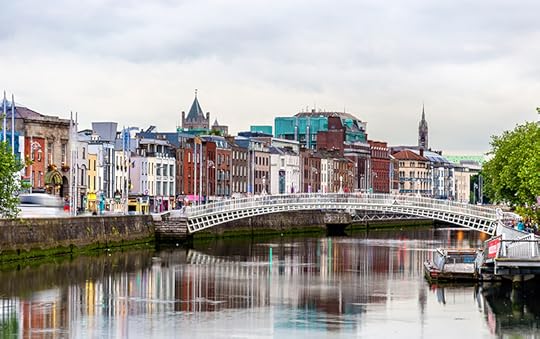
Top photo of Dublin from luxurytraveladvisor.com
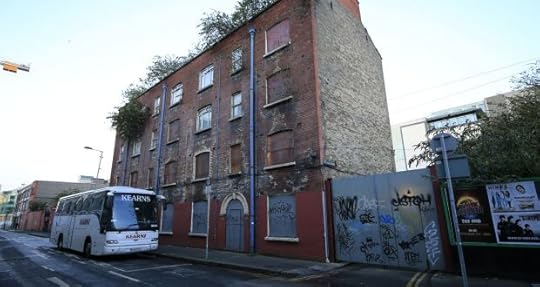
Middle photo from irishtimes.com
The author from businesspost
Profile Image for Vit Babenco.
1,796 reviews5,865 followers
July 22, 2023
Mrs Eckdorf in O’Neill’s Hotel is a farcical tale of decline boasting the very special atmosphere which only William Trevor was able to create.
Mrs Eckdorf is a known photographer of ill renown and she’s a brazen meddler… She accidentally heard a gossip that there was some dark mystery behind O’Neill’s Hotel in Dublin and she hurries there to investigate…
‘You see me as a brash woman. Well, yes, I’m brash. I’m a brash, hard, sick kind of woman: I have no illusions about myself. My marriages failed for unfortunate reasons. I left England because of its unpleasant associations for me: soon I shall have to leave Germany too.’

The proprietress of the hotel is a very old deaf and dumb woman…
‘Mrs Sinnott will be ninety-two tomorrow.’
‘Isn’t she a great woman? There’s not many women like that these days, sir. There’s not many that spend a lifetime in silence and would be smiling at ninety-two.’

She is surrounded by her close relatives and grown-up orphans… All of them are simple-minded failures… They are occupied doing their everyday routines… The city lives its everyday life as well… And on the eve of the old woman’s birthday Mrs Eckdorf barges in…
It is hard to catch a black cat in the dark room especially if it’s not there…
In Reuben Street the woman who had said to her priest that she was not ungrateful for the life she’d been given was measured by local undertakers. In a public house in York Street the old woman who had begged from Mrs Eckdorf poured the dregs from glasses into a can and thanked the publican for allowing her to do so. The cinema projectionist whom Mrs Eckdorf had called a naughty chap hummed to himself in the projection room of one of the cinemas which children were preparing to enter.

Even the most insignificant event is capable to change one’s life crucially.
Profile Image for Hugh.
1,295 reviews49 followers
January 24, 2018
This is another very quirky book from the 1970 Booker shortlist - another book with comic elements and a dark human story at its centre, which is clearly something the judges that year liked, as both the winner The Elected Member and Eva Trout have similarities.

The setting for this one is O'Neill's Hotel, a small and run down hotel in a Dublin back street owned by the largely bedridden deaf and dumb 92 year old Mrs Sinnott. Her son Eugene is a drunk whose only interest in horse and greyhound racing. The hotel is largely run by the aging porter O'Shea, who yearns for a return to more prosperous times, but has very few guests. Mrs Sinnott has a history of taking in and nurturing orphans, and one of these is operating as a prostitute from the hotel, pimped by another misfit with delusions Morrissey.

Ivy Eckdorf is a photographer who produces coffee table books that trade in human stories - she is English but lives in Germany and has twice been divorced from Germans. In the first chapter we meet her via a conversation she starts on a plane with a random stranger who is clearly not interested in what she tells him - we learn that she has heard about the situation at O'Neill's from another random acquaintance and believes there is a tragedy behind it that it is her duty to investigate.

The early chapters follow the various characters in turn, and it only gradually becomes clear that Mrs Eckdorf is just as much of a social misfit herself - she sees a curious form of purity in Mrs Sinnott and proceeds to foist her opinions on everyone else without any thought for the consequences, and she has a fearless disregard for social niceties.

It was interesting reading this one so soon after Trevor's The Children of Dynmouth, whose central character Timothy Gedge is very different but shares the same characteristics - self-delusion and a willingness to persist in conversations way beyond the point any normal person would.

I am glad I read this one, but I still feel that 1970 was a pretty weak year and none of the four I have read really stands out.
Profile Image for Laysee.
631 reviews346 followers
April 15, 2022
William Trevor (1928-2016) is one of my favorite Irish writers. Mrs Eckdorf in O’Neill’s Hotel, the twelveth work I have read by him, is an early novel published in 1969. Very evident is Trevor’s talent for writing stories that feature the dark side of human nature. This novel has a disturbing creepiness that reminded me of The Boarding House (1965). It has an unnerving quality that is later honed to perfection in The Children of Dynmouth (1976).

At the nerve center is Mrs Ivy Eckdorf, a 46-year-old twice-divorced English woman, a professional photographer, whose interest is to publish coffee-table books that, according to her, connects people by showcasing the lives of ordinary folks in their poverty or misery. I began to dislike her as soon as I made her acquaintance. On a plane from Munich to Dublin, she starts to impose herself on the passenger next to her about her life and her plans to unearth what she imagines is the tragic past in O’Neill’s Hotel. It has fallen from its glory days into disorder and disrepute. Mrs Eckdorf reminded me of the Ancient Mariner with a compulsion to tell her story. She describes herself thus: “I’m a brash, hard, sick kind of woman. I have no illusions about myself.” These traits become salient as the story unfolds.

The impetus for her mission? Mrs Eckdorf had heard about O’Neill’s Hotel from a bartender on an ocean liner who mentioned that the hotel was ‘sad and curious.’ Why did she think that a tragedy happened to cause its decline? I could not figure this out.

What is the matter with Mrs Eckdorf? I asked myself this question many times throughout this novel because I cannot quite understand her need to force herself onto people’s private space. Her intrusiveness somehow struck me as rather hard to believe. An astute reviewer commented that Mrs Eckdorf is indecipherable. I agree.

What happened once in O’Neill’s Hotel? It is owned by the near 92-year-old Mrs Sinnott, a deaf-mute lady who communicates with her family and neighbors by writing notes in exercise books. O’Neill’s Hotel is run by O’Shea, an ageing, loyal porter who dreams of restoring the hotel to its former grandeur. Eugene, Mrs Sinnott’s son, lets the hotel go to waste as he is only interested in alcohol and gambling.

The key event is Mrs Sinnott’s 92nd birthday party. Mrs Eckdorf arrives with her camera, uninvited, and inveigles herself into the company of Mrs. Sinnott’s family. Old Mrs Sinnott, a saintly woman who loves orphans, and is patient to a fault, puts up no protest. You have to read for yourself the reactions of the family members to this invasion of privacy.

Mrs Eckdorf aside, there are other intruders who camp in the hotel and refuse to leave, two unsavory adults, once orphans to whom Mrs Sinnott has shown charity in the past. Morrissey is a regular scumbag, a pimp who sneaks his clients into the hotel and beds down in its corridors. Agnes Quinn is Morrissey’s most sought-after prostitute who too finds free board in one of the hotel rooms. Then there is Mr Smedley who calls himself ‘a vigorous man’ in need of female company. Trevor paints a unique portrait of each of these characters and offers us insight into their aspirations, hardship, anxieties, and disappointments.

What slowly emerged is the plight of an unstable woman whose delusions about the family life of the hotel owners reveal some truth about herself. As it was in The Children of Dynmouth, Trevor offered glimpses of the damage suffered by Mrs Eckdorf and the orphans. Trevor was a master at creating eerily seedy characters who are ruined to the point of no return. One detects in Trevor’s intent a note of compassion for the dysfunctional lives but I was unmoved.

Trevor’s prose is impeccable. I admire his ability to evoke a sense of time and place. However, I mostly found this story rather implausible and wish I can more eloquently articulate why.
Profile Image for JimZ.
1,298 reviews774 followers
January 10, 2020
William Trevor is one of my favorite authors. I’ve read almost all of his collection of short stories. But there are two of his early novels I have not read: ‘Mrs. Eckdorf in O’Neill’s Hotel’ and ‘Miss Gomez and the Brethren’. I was a bit disappointed in this novel I think in part because I have pretty much liked everything I have read of his, and this was a big letdown. The novel was a tragicomedy - it had its humorous moments but almost all the characters were troubled or troubling. Also in the first third of the novel I could not keep all the characters straight in my own head. Usually I can grasp who the characters are fairly quickly but the relationships between these characters were not readily apparent. It was a depressing read truth be told, at least for me. I could describe the plot but I am sure it is in the synopsis. Elaborating on that would be tantamount to a spoiler alert. If you are someone who wants to read something by William Trevor for the first time, I would not choose this one.

1.5 stars.
Profile Image for Karen·.
682 reviews903 followers
Read
May 5, 2016
The apparently saintly, sybil-like figure at the centre of O'Neill's hotel dies on August 11, Saint Feast day of St Clare:
St. Clare was designated as the patron saint of television in 1958 by Pope Pius XII, because when St. Clare was very ill, she could not attend mass and was reportedly able to see and hear it on the wall in her room.
Mrs Eckdorf is a photographer. She creates lovely coffee table books of people's misery.
'You are making an ordinary thing seem dramatic when it is not that at all. The truth is simple and unexciting and you are twisting it with sentiment and false interpretations, so that a book will sell to people"

...........................................................................

From The Paris Review interview with William Trevor

INTERVIEWER

There is a strong element of faith in your work, of people coping, enduring, of being borne along in their lives. Is it humanist or spiritual faith?

TREVOR

I don’t think it is humanist; I think it is just a kind of primitive belief in God. I think that certainly occurs in my books. I’m always saying that my books are religious; nobody ever agrees with me. I think there is a sort of God-bothering that goes on from time to time in my books. People often attack God, say what an unkind and cruel figure he is. It is outside formal religion; the people who talk about it aren’t, generally speaking, religious people, but there is a bothering, a gnawing, nagging thing.

......................................................................

I have no messages or anything like that; I have no philosophy and I don’t impose on my characters anything more than the predicament they find themselves in.

......................................................................

I’ve never quite believed in the obvious English eccentric, the man who comes into the pub every night and is known to be a dear old eccentric. I always suspect that that is probably self-invention. What I do believe in is the person who scarcely knows he’s eccentric at all. Then he says something so extraordinary and you realize he perhaps lives in a world that is untouched by the world you share with him.

......................................................................

Profile Image for Dennis.
960 reviews76 followers
February 23, 2022
I am a big fan of William Trevor and was disappointed that he never seemed to be in the running for the Nobel Prize before he died. This book was nominated for the 1970 Booker in the early days of the prize; I had read two of the books for which he was also nominated, “Reading Turgenev” and “The Story of Lucy Gault”, as well as some others and was quite looking forward to this one. And…I was underwhelmed. Coincidentally in 1970, there was another nominee with a dysfunctional family falling apart in the last days of the dying patriarch, “Bruno’s Dream” by Iris Murdoch, which moves me still with its passion when I think about it. This book, revolving around a matriarch, doesn’t come close.

Mrs. O’Neill is about to celebrate her 92nd birthday in the company of family and close acquaintances in the hotel which had been passed on to her by her father and which she hopes to pass on to her son, a wastrel only interested in drinking and gambling. There are other characters such as her daughter-in-law, daughter, son-in-law and grandson, an ancient priest, a bellboy still dreaming of restoring the hotel to its glory days, a pimp and his “employees”, and a customer; into all of this walks the somewhat demented Mrs. Ivy Eckdorf who’s set on photographing this family occasion against the will of all except Mrs. O’Neill, who’s the only really likeable character, and discovering the great secret which led to the hotel’s decline, which turned out to be fairly anticlimactic and cliché. Born deaf-mute, Mrs. O’Neill serves as a sounding board for all the hopes and dreams of the others, communicated in a series of notebooks which she keeps at her side. This has great potential but in my opinion, falls short. Various of the characters are orphans and this is the only home they know and Mrs. O’Neill the only person who seems to care about them, and while I felt bad for them, there wasn’t much to involve my sympathy. Most of them are looking for love and affection (except for the client whose search was more basic) but they only got my pity.

I was quite happy to finish this and get it out of the way; William Trevor wrote much better books and if you’re looking to discover more from this great, undervalued writer, you should probably start somewhere else.
Profile Image for JacquiWine.
679 reviews177 followers
April 20, 2021
Over the past couple of years, I’ve been working my way through some of William Trevor’s novels – mostly the early ones with their notes of dark comedy and undeniable tragedy. Mrs Eckdorf is very much of a piece with the others from this period. First published in 1969, it is something of a bridge between The Boarding House (1965) and The Children of Dynmouth (1976), both of which I adored.

The novel’s catalyst is the titular Mrs Eckdorf – a most annoying and invasive woman who has fashioned a career as a photographer, exploiting the lives of unfortunate individuals around the world, their existences touched by devastation. Large coffee-table style books are this woman’s stock-in-trade – a forerunner of the poverty porn images that are rather controversial today.

As the novel opens, Mrs Eckdorf is on route to Dublin, eager to pay a visit to O’Neill’s Hotel, having heard about the establishment from a bartender on a ship. The hotel itself is central to the book; once grand and distinguished (the sort of place frequented by actors and commercial travellers), it has now fallen into disrepute, its faded glory being a kind of metaphor for declining moral standards.

The hotel is owned by Mrs Sinnott, a ninety-one-year-old deaf-mute woman who can only communicate with others through her notebooks. Various other characters – mostly orphans – frequent the hotel, having been drawn to Mrs Sinnott over the years, confiding their stories to the old lady in a way that feels similar to a religious confession. As a consequence, the notebooks represent a rich source of information, documenting the preoccupations of each of Mrs Sinnott’s visitors – their hopes and dreams, their fears and disappointments.

To read the rest of my review, please visit:

https://jacquiwine.wordpress.com/2021...
Profile Image for Val.
2,425 reviews87 followers
March 8, 2017
We first meet the annoying and intrusive Mrs. Eckdorf on a flight from Munich to Dublin, where she intends to uncover and photograph an imagined tragedy that caused the decline of O'Neill's Hotel. This is not her story however, her investigation provides a link between the stories of the various characters who frequent the hotel and their dreams, disappointments and circumstances. Some of these stories are seen as tragic by the characters themselves, but there is some humour as well for the outside observer.
The now elderly Mrs. Sinnott is the owner of the hotel and it is her the characters are drawn to, her to whom they tell their stories and her who supplies support and comfort, despite or perhaps because she is a deaf-mute who can only communicate through notebooks. The way she draws people to her and lets them tell their own stories, as in a Catholic confessional, is a marked contrast to Mrs. Eckdorf's more confrontational and judgemental method; Trevor's way would definitely be closer to the former.
This is a difficult book to rate, because although the character studies and the individual stories are excellent, the characters' separation from each other makes it is less satisfying as a whole novel. It is beautifully written; Trevor makes adjustments in the style of each notebook entry to suit each character. The individual characters and stories link together well and there is a poignancy in everyone telling them to the receptive but uncommunicative Mrs. Sinnott instead of communicating with each other. There is a resolution of sorts at the end.
I would give it four-and-a-bit stars and recommend it to anyone who likes Trevor's short stories.
Profile Image for Ali.
1,241 reviews395 followers
November 25, 2017
Novels set in hotels are great. The truth is I should have liked this novel more than I did (I didn’t hate it or anything – I just didn’t love it and felt I should have). Mrs Eckdorf in O’Neill’s Hotel was short-listed for the 1970 Booker prize – and despite feeling distinctly underwhelmed I have to admit that something of the mood of the novel has really stayed with me. There is a lot to admire in this beautifully written novel – so perhaps I was simply in the wrong frame of mind.

We first meet the annoyingly intrusive Mrs Eckdorf on board a plane on her way to Dublin from Germany, as she recounts her life story to the man in the seat next to her. A twice married, middle-aged photographer, Ivy Eckdorf is a producer of large coffee table books – in which she has explored the desperate lives of communities in a variety of locations around the world. She had heard about O’Neill’s Hotel in Dublin from a barman – he had described the inhabitants, the hotel’s faded glories, and it had fired her imagination.

“In the pillared hall of the hotel, with its balding maroon carpet that extended up the stairs, eight chairs echoed a grandeur that once had been. They were tall, like thrones, their gilt so faded and worn that it looked in places like old yellow paint, their once-elegant velvet stained with droppings from glasses of alcohol. Behind the row of chairs prone on the carpet lay a man into whose rump O’Shea’s boot was now driven with force. His eyes watched as the shrimpish form of his enemy Morrissey moved swiftly, without speech, across the hall and out of the hotel. O’Shea continued on his way to the kitchen, his greyhound loping behind him. Agnes Quinn and her companion came down the stairs. Early morning in this house wasn’t ever much different.”

O’Neill’s hotel has certainly seen better days, owned by 91-year-old Mrs Sinnott, a collector of orphans, a deaf-mute woman who prefers to communicate with the aid of a notebook. Everyone speaks to Mrs Sinnott through her notebooks, the notebooks piled up on a table near the chair she sits in by the window. Every conversation is recorded, all that the people in her life can’t or won’t say out loud is written down. Now the hotel is home to a collection of misfits and degenerates – ‘run’ after a fashion by Mrs Sinnott’s drunken, gambling son Eugene – a dreamer, allowing the hotel to slip further into ruin and disgrace.

Full review: https://heavenali.wordpress.com/2017/...
Profile Image for Lauren Albert.
1,834 reviews192 followers
May 8, 2012
Such an unexpected book. Mrs. Eckdorf is a vampirish photographer who invades peoples' lives in order to create her expensive coffee table books. To Eckdorf, people only matter as stories and images. After a conversation with a bartender about a hotel that has lost its repute, she comes to Dublin to find the secret she is sure is there behind the dissolution of the place. There, she meets Mrs. Sinnott, the elderly owner of the hotel--deaf and mute since birth. Where Eckdorf parasitically tries to pull stories from people, the same people pour their stories into the notebooks that are Mrs. Sinnott's only means of communication. It seems to be Sinnott's very silence, her lack of desire to do anything with these stories, that makes people feel free to write them. What happens is unexpected and to some extent puzzling.
Profile Image for Claire Fuller.
Author 14 books2,523 followers
August 2, 2019
This felt like Trevor didn't know where he was going with this story. I enjoyed the quirky characters in the hotel - although many were caricatures (the prostitute who wanted to be a nun, the old hotel porter who only cares for the elderly hotel owner, the elderly hotel owner who spends her days watching the street), but Mrs Eckdorf was indecipherable. All the other characters kept saying how odd she was and how they couldn't make her out, and in the end (or actually rather near the beginning), I felt the same, and I had the feeling that so did Trevor.
2.5 stars
Profile Image for Andréa Lechner.
376 reviews14 followers
June 8, 2020
This is my favourite William Trevor to date, the first paragraph is quite breathtaking in its boldness. As it was the first novel I read of his, it was quite a hard act to follow. Stunning characters and an eerie feeling throughout. Stunning.
Profile Image for Jonathan.
208 reviews71 followers
March 15, 2018
The novel begins with Mrs Ivy Eckdorf, a professional photographer, originally from England and who now lives in Munich, brazenly and intrusively engage a man in conversation whilst on a flight to Dublin. She explains, despite the fact that the man doesn't care, about her life:
   'The one who was my husband last,' said Mrs Eckdorf, 'gave me a taste for cognac. Hans-Otto Eckdorf.'
   'Oh yes?'
 'Indeed.' She paused, and then she said: 'That has been my life. A mother, a father who walked away. And then Miss Tample. And then two German businessmen. The only light in my life is my camera.'
   'I see.'
   'We are the victims of other people.'
   'It's often so—'
It's difficult to know where to stop the quotation as the flow of words from Mrs Eckdorf is constant. She intends to visit O'Neill's Hotel in Thadeus Street, Dublin after hearing about it from a bartender on a ship. O'Neill's is owned by a deaf ninety-one year-old called Mrs Sinnott who has offered lodging and employment to a number of orphans over the years. The hotel, once grand, has now fallen into disrepair and is suspected of being little more than a brothel. Mrs Eckdorf believes that something terrible happened in the past and that she can help uncover the source of their problems.

There are too many characters, brilliant characters, to cover them all but it is useful to get to know some of them. Mrs Sinnott's fifty-eight year-old son, Eugene, basically lives off the hotel but does little to help in the running of it, instead he spends his time drinking and gambling. He spends his time analysing his dreams for racing tips. O'Shea is the hotel porter and is mainly responsible for the actual running of the hotel; he dreams of the days when the hotel was elegant and hopes that the current decay can be reversed. When Mrs Eckdorf arrives he mistakenly believes that this elegantly dressed woman intends to purchase the hotel in order to renovate it. He sees himself as Mrs Sinnott's protector, from all the others, who are trying to take advantage of her. The worst of these people, in O'Shea's eyes, is Morrissey; he's a shady character who doesn't actually live in the hotel but has somehow got a key and sneaks in at night to sleep in the hallway, and occasionally pass water in the backyard. Worse, he uses the hotel to pimp out Agnes Quinn to interested men. I always love a vivid character description, so here's a description of Morrissey.
Morrissey was singularly small, a man in his mid-thirties who had once been compared to a ferret. He had a thin trap of a mouth and greased black hair that he perpetually attended, directing it back from his forehead with a clogged comb. He was dressed now, as invariably he was, in flannel trousers and the jacket of a blue striped suit over a blue pullover, and a shirt that was buttoned to the neck but did not have a tie in its collar.
Other characters include Eugene's estranged wife, Philomena, who now lives elsewhere with their son, Timothy John. Timothy John is in love with a girl called Daisy Tulip and he works in an insurance agency under Mr Desmond Gregan, the husband of Enid Gregan, née Sinnott, Eugene's sister. Desmond Gregan dreams of growing and selling tomatoes for a living instead of working in an insurance agency. If that's complicated enough we have a travelling cardboard salesman called Mr Smedley who plays a significant part later on, Mrs Dargan a large prostitute who virtually lives at the Excelsior pub along with Eugene and others.

Ivy Eckdorf knowingly arrives at the hotel on the eve of Mrs Sinnott's ninety-second birthday and the chaos ensues. If her actions at the beginning of the novel seemed erratic and confrontational then what follows is even more so. She knows how to win over O'Shea by telling him what he wants to hear but Eugene, for all his faults, has a keener eye and suspects something. Mrs Eckdorf wheedles her way into Mrs Sinnott's room and communicates with her, as all the others do, by writing in one of her notebooks. Trevor allows us periodically into the thoughts of all the characters. Mrs Eckdorf believes it is her mission to uncover and photograph Mrs Sinnott's birthday party and uncover the truth of past events in O'Neill's hotel. In fact, we get to know more and more about Mrs Eckdorf's life and as the novel continues we start to see that her erratic and obviously manipulative behaviour starts to show cracks in her mental wellbeing. She manages to unburden herself to Father Hennessey but he is unable to help her as she jumps from confession to messianic visions to contrition. It's a glorious book with a host of crazy characters and with a 'car-crash' of an ending.
'Extraordinary things have happened to me in this city,' said Mrs Eckdorf in the bar of her hotel at half-past one on the morning of August 11th. 'You would scarce believe,' she said.
Profile Image for George.
3,286 reviews
February 24, 2020
3.5 stars. A well written, memorable, character based novel set mainly in O’Neill’s very run down Hotel in Dublin. There is not much plot momentum but there are an interesting array of very well described characters including the very oddball Mrs Ivy Eckdorf, who is a nosy professional photographer based in Germany. She decided to visit the hotel after hearing about the characters who resided at the hotel. Mrs Eckdorf has published successful photographic character based books. At the hotel she gets to know Mrs Sinnott, a 92 year old deaf and dumb woman who owns the hotel. The hotel is home to Eugene Sinnott, aged 58, who is a gambler and a drunk. Morrissey is a pimp who hires the hotel rooms for his girls and lives in the hotel - without Mrs Sinnott and Eugene’s knowledge. O’Shea is the hall porter who takes care of the hotel and Mrs Sinnott.

Readers new to William Trevor should begin with the page turning ‘Felicia’s Journey’ or ‘The Story of Lucy Gault’.

Shortlisted for the 1970 Booker Prize.

Profile Image for James Henderson.
2,226 reviews159 followers
November 22, 2016
A beautifully written story of the lives of the inhabitants of the title hotel that made the Booker short list in 1970. A professional photographer, Mrs Eckdorf has come to Dublin convinced that a tragic and beautiful tale lies behind the facade of this crumbling hotel. The characters come alive under Trevor's sure hand as he delineates them. None of the characters is much good at talking to one another, but they feel no constraint in writing down their dreams and hopes for Mrs. Sinnott, the 91-year-old deaf mute who is the owner and proprietor. Thus, Mrs. Sinnott acts as a mother confessor for her sherry-soaked son Eugene; for her unloved daughter Enid; for the messianic hall porter, the doubtful prostitute, the small-time pimp and the other derelict guests. Like an archeologist describing some extinct civilization, Mr. Trevor sifts through the lives of these transients with objective relish creating a world of secrets and piques the reader's interest with Mrs. Eckdorf's own mystery.
Profile Image for Oliver Ho.
Author 34 books11 followers
August 30, 2013
A beautiful novel, told in William Trevor's omnipotent and amazingly empathic style. I love how he delves into the life of each character, showing us what they would or might say or do, but can't, and how they came to be. It's like a constantly moving camera that shifts easily and seamlessly from one character's mind to the next. I love trying to figure out how he's telling the story, and how he handles the point of view from sentence to sentence, paragraph to paragraph. A fascinating series of character studies--I would definitely read this again.
Profile Image for Mary.
1,160 reviews16 followers
February 27, 2018
Well-written, but really uninteresting and dull. Felt it rambled without any real purpose and none of the characters were engaging enough. Had it not been a book club book I might not have finished it.
Profile Image for Helen Meads.
885 reviews
February 23, 2019
Rather strange and depressing in its picture of Dublin first published 1969). The later ‘Children of Dynmouth’ has some aspects in common (people who talk past each other) and is infinitely better. Both are funny in parts, but overall this one remains depressing.
Profile Image for Caroline.
263 reviews20 followers
October 24, 2022
Trevor seamlessly blends religion and comedy. Five stars for that difficult feat alone. Trevor also makes me feel sympathy towards a pimp. Talk about creating love towards all humanity. William Trevor is a genius. I can’t wait to spend more time in his world.
Profile Image for Gill Bennett.
191 reviews3 followers
August 29, 2025
It’s always a treat to read anything by William Trevor and this was no exception. He manages to deftly mix religion and often dark comedy and tragedy together to produce an entertaining story.

This book is set in a rundown Dublin hotel, O’Neills, owned by Mrs Sinnott, a 91 year old deaf and dumb lady who communicates via red notebooks from her bedroom and acts as a kind of mother confessor to her family and all the waifs and strays she has collected over the years, specialising in giving sanctuary to orphans. However the day to day ‘running’ of the hotel has devolved to her dissolute son who spends his days drinking and betting on horses. There is a marvellous selection of characters in the book who are drawn together in horror as a strange photographer from Germany, the eponymous Mrs Eckdorf, tries to uncover an unspecified mystery that she is sure occurred at the hotel. She inveigles herself into the confidence of those associated with the hotel pretending she wishes to buy the hotel whilst taking photos for a projected coffee table book. There are moments of pure comedy, some serious reflections on religion and marvellous atmospheric descriptions of this run down part of 1970s Dublin.

Overall an enjoyable but at times quite bizarre story.
Profile Image for Martha.
474 reviews14 followers
September 3, 2023
Four stars for an interesting cast of characters. Trevor overplayed his hand here, but I was interested enough to wish a fantasy ending for the hotel’s people to be the true one.
Profile Image for Devin.
64 reviews
March 2, 2024
Reading this as part of my books-about-hotels era. I interpreted it as being a critique of the idea of the Artist as mere observer. Mrs Eckdorf, a photographer who never turned her camera on herself, became the subject of her own art. The people on the other side of her lens were unchanged by it except in Mrs Eckdorf’s mind
Profile Image for Frank.
239 reviews15 followers
June 12, 2012
Ivy Eckdorf is a professional photography, the producer of "coffee table" books that document her travels to distant and exotic locations populated with the halt and the lame, the deprived, depraved and despairing. Naturally, these travels bring her to Dublin.

Hearing of an old-style family-run hotel in an out-of-the-way suburb which has declined from respectability through genteel decrepitude and into depravity as a sometimes bawdy house, Mrs Eckdorf flies from her home in Munich to the heart of the Hibernian Metropolis on the eve of a woman's 92nd birthday. The establishment is owned by a Mrs Sinnott, born deaf and dumb, who presides over a rag-tag "family" of unfortunates, including her natural son, Eugene, a middle-aged dipsomaniac who analyses his dreams for betting tips on the dogs and ponies. Ever the friend to orphans, Mrs Sinnott's hotel (named for her father, the founder) is also home to O'Shea (the hall porter who dreams of the establishment's phoenix-like rebirth), a panderer named Morrissey (addicted to caging drinks and spouting horoscopic revelation) and the strumpet Agnes Quin (whose childhood dream was to become a nun)—all of whom were orphans, raised institutionally until they came under the beneficence of Mrs Sinnott.

Mrs Eckdorf is searching for point at which the hotel's fortunes changed. She believes that some particular even caused a seismic shift, and she hopes to reveal the story for her next picture book. And indeed, she is almost correct.

Like many of Trevor's early works, there is a profound mix of humor and pathos. His characterisations are almost caricatures. And yet how many times do we cross paths with these self-same people? People whose life-stories—unbeknownst to us—contain more heart-ache and grief than all the nightly-news feature pieces could ever portray. Ivy Eckdorf's mission was, in a somewhat perverted way, a noble one: she wished to draw our attention to the less fortunate and, if only for a few moments whilst thumbing through her photos, care. Recognise our mutual humanity. And perhaps that is Trevor's mission as well.
Profile Image for Colin Davison.
Author 1 book9 followers
July 25, 2018
This reminded me in an odd way of Under Milk Wood, the author watching over and commenting on all that happens in a slightly off-centre, closed world.
Action centres in and on a once prosperous, now dingy Dublin hotel and its 92-year-old proprietress, her dysfunctional family and eccentric transients. A female photographer, specialising in coffee table narrative books, has heard of dark goings-on there and arrives seeking to record the truth.
The work might be seen in many ways as an allegory, with a sort of reconciliation achieved by the end.
Of all six novels short-listed for the second, 1969 Booker Prize, this would probably have got my vote, narrowly ahead of Iris Murdoch's Bruno's Dream and The Elected Member by Bernice Rubens.
Profile Image for Colin.
1,326 reviews31 followers
July 28, 2019
As far as I'm aware this is the only novel that William Trevor set in contemporary Ireland, and the late-sixties Dublin that he portrays is a seedy, insular, secretive place. To O'Neill's Hotel, an institution much reduced from its glory days of thirty years ago comes Ivy Eckdorf, an Anglo-German documentary photographer with little compunction about making coffee table books for the educated middle classes of Europe from the blighted lives and tragedies of ordinary people. In his usual peerless prose, Trevor reveals the dysfunctional relationships among the owner of the hotel and the assorted family members and hangers-on that inhabit it. It's not cheery reading, but then that's not why you read William Trevor.
Profile Image for Uthpala Dassanayake.
176 reviews10 followers
December 15, 2014
Don’t know whether I missed something here, but I cannot see why it was nominated for booker. If I wasn’t aware that this book is a Booker Nominated one, the title or cover would not tempt me to go for it.
I found the story sort of scattered all over. The characters were Half-baked. Oe nicely written part was that Mr. Gregan’s unintentional crushing of Mrs. Gregan’s spirit. Apart from that, couldn’t see anything other than self-centeredness of all people in the book. There were some humorous theological discussions between Mrs. Eckdorf and Father Hennessey. My overall impression is that this is a boring novel.
Displaying 1 - 30 of 58 reviews

Can't find what you're looking for?

Get help and learn more about the design.