

What do you think?

Virtuoso
Jana was born in Prague shortly after the self-immolating Czech martyrs Jan Palach and Jan Zajic committed their ritual protestations against Soviet influence. As Communism began to crumble, Jana's unremarkable life becomes more remarkable when a precocious young girl named Zorka moves into the apartment building with her mother and sick father. With her signature two-finger salute and abrasive wit, Zorka flavors the girls' days against her mother's protestations to not "be weird." But after scorching her mother's prized fur coat and stealing from a nefarious teacher, Zorka suddenly disappears.
Aimee Saint-Pe married young to an older woman, Dominique, an actress whose star has crested and is in decline. After years of tumult, the couple find themselves on vacation in Portugal when Dominique abruptly passes, with Aimee returning to Paris convinced she's being followed by a blue mist.
A quixotic journey of self-discovery, Virtuoso follows Zorka as she comes of age in Wisconsin and Boston amidst a backdrop of clothing logos, MTV, computer coders, and transgender youth. But it isn't till a Parisian conference hall brimming with orthopedic mattresses and therapeutic appendages when Jana first encounters Aimee, their fates steering them both to a cryptic bar on the Rue de Prague, and, perhaps, Zorka.
With a distinctive prose flair and spellbinding vision, Virtuoso is a story of love, loss, and self-discovery that heralds Yelena Moskovich as a brilliant and one-of-a-kind visionary.
Aimee Saint-Pe married young to an older woman, Dominique, an actress whose star has crested and is in decline. After years of tumult, the couple find themselves on vacation in Portugal when Dominique abruptly passes, with Aimee returning to Paris convinced she's being followed by a blue mist.
A quixotic journey of self-discovery, Virtuoso follows Zorka as she comes of age in Wisconsin and Boston amidst a backdrop of clothing logos, MTV, computer coders, and transgender youth. But it isn't till a Parisian conference hall brimming with orthopedic mattresses and therapeutic appendages when Jana first encounters Aimee, their fates steering them both to a cryptic bar on the Rue de Prague, and, perhaps, Zorka.
With a distinctive prose flair and spellbinding vision, Virtuoso is a story of love, loss, and self-discovery that heralds Yelena Moskovich as a brilliant and one-of-a-kind visionary.
272 pages, Paperback
First published January 3, 2019
About the author
Yelena Moskovich
10 books105 followersYelena Moskovich is a Soviet-Ukrainian American and French writer and artist. She immigrated to America with her family as Jewish refugees in 1991. After graduating with a degree in playwriting from Emerson College, Boston, she moved to Paris to study at the Lecoq School of Physical Theatre, and later for a Masters degree in Art, Philosophy and Aesthetics from Université Paris 8. She co-founded her own theatre company, La Compagnie Pavlov in Paris in 2009 (since inactive). Her plays and performances have been produced in the US, Canada, France, and Sweden. She has also written for Vogue, Frieze, Apartamento, Times Literary Supplement, Paris Review, amongst others. In 2018, she served as a curator and exhibiting artist for the Los Angeles Queer Biennial. She lives in Paris
Ratings & Reviews
Friends & Following
Create a free account to discover what your friends think of this book!
Community Reviews
Displaying 1 - 30 of 106 reviews

November 29, 2022
Nominated for the Dylan Thomas Prize 2020
In her sophomore novel, Ukrainian-born author Moskovich writes about the lives of lesbian women born into the last generation that spent their childhood in the Soviet Union. The main narrative strand revolves around Jana, a shy girl who hides behind obsessively studying languages, and Zorka, a wild child with a mentally ill mother who constantly acts out. Together, the friends grow up in Prague, and after the Iron Curtain comes down, the kids are torn apart. The story follows their destinies, with Jana becoming a translator in Paris and Zorka moving to the States. In two further storylines that intersect the chapters about Jana and Zorka, we meet Parisian medical secretary Aimée who marries an older actress, as well as American teenager Amy who falls in love with a thirty-something Czech housewife via internet chat.
Every narrative thread is a lesbian coming-of-age story, describing pivotal events that shape the beliefs and attitudes of the women presented. Familial troubles, discrimination, sex, and violence leave their marks on evolving identities, but there is not only fear, but also joy, community and hope (watch out for transman Rico: His family loves him and he succeeds in his career, so no "the tragic queer" clichés from Moskovich). And of course there are the effects of having grown up in a place that has ceased to exist: Jana and Zorka face the capitalist, Western system for what it is, and the psychological results are complicated and messy. The two are contrasted, but also paralleled with queer characters from the West, who sometimes see similar experiences through a slightly different lense. Moskovich does not pass judgement, she just shows, and that's a core strength of the text.
The cosmopolitan author's native language is Ukrainian, but she (like Zorka) emigrated to the US with her family, attended an Orthodox Jewish school and studied Hebrew, and now resides in Paris. "Virtuoso" was written in English and has a peculiar, enraptured sound, also due to the synaesthesia (there is A LOT of blue smoke) and the hallucinatory scenes that permeate the psychological evocations. Moskovich works with drastic physical descriptions of bodily fluids, wounds, and lesbian sex, but not for gratuitous shock value, but to ponder questions of self-acceptance, queer existence in the physical world and sheer acts of resistance: Not only does Zorka endure physical abuse and later presents her body in a particularly unapologetic way, Jana sees her own name in the context of two students, Jan Palach and Jan Zajic, who killed themselves by self-immolation in Prague in order to protest the Soviet occupation.
The text requires quite some concentration, as the narrative jumps between the four storylines plus in time and space, and between reality and hallucination. Quite a few characters die, and quite a few re-invent themselves - by choice or out of necessity. Points of view shift, and the chat room conversations between Amy and the older Czech woman are presented as chat protocols. David Lynch is present in the stylistic approach, but we also get direct references to Jon Fosse, the melancholic master of loneliness and spiritual longing.
This novel is a riotous pageturner for readers who enjoy getting thrown off and having their expectations ridiculed by abstruse but engaging plot points - and of course, at the end, all characters intersect. Asked about the topic of her novel, Moskovich stated: "It’s about queerness, diaspora, intimacy between women, anger, eroticism, symbolic and literal death and rebirth." Who am I to contradict: These characters seek nothing less than a personal revolution.
In her sophomore novel, Ukrainian-born author Moskovich writes about the lives of lesbian women born into the last generation that spent their childhood in the Soviet Union. The main narrative strand revolves around Jana, a shy girl who hides behind obsessively studying languages, and Zorka, a wild child with a mentally ill mother who constantly acts out. Together, the friends grow up in Prague, and after the Iron Curtain comes down, the kids are torn apart. The story follows their destinies, with Jana becoming a translator in Paris and Zorka moving to the States. In two further storylines that intersect the chapters about Jana and Zorka, we meet Parisian medical secretary Aimée who marries an older actress, as well as American teenager Amy who falls in love with a thirty-something Czech housewife via internet chat.
Every narrative thread is a lesbian coming-of-age story, describing pivotal events that shape the beliefs and attitudes of the women presented. Familial troubles, discrimination, sex, and violence leave their marks on evolving identities, but there is not only fear, but also joy, community and hope (watch out for transman Rico: His family loves him and he succeeds in his career, so no "the tragic queer" clichés from Moskovich). And of course there are the effects of having grown up in a place that has ceased to exist: Jana and Zorka face the capitalist, Western system for what it is, and the psychological results are complicated and messy. The two are contrasted, but also paralleled with queer characters from the West, who sometimes see similar experiences through a slightly different lense. Moskovich does not pass judgement, she just shows, and that's a core strength of the text.
The cosmopolitan author's native language is Ukrainian, but she (like Zorka) emigrated to the US with her family, attended an Orthodox Jewish school and studied Hebrew, and now resides in Paris. "Virtuoso" was written in English and has a peculiar, enraptured sound, also due to the synaesthesia (there is A LOT of blue smoke) and the hallucinatory scenes that permeate the psychological evocations. Moskovich works with drastic physical descriptions of bodily fluids, wounds, and lesbian sex, but not for gratuitous shock value, but to ponder questions of self-acceptance, queer existence in the physical world and sheer acts of resistance: Not only does Zorka endure physical abuse and later presents her body in a particularly unapologetic way, Jana sees her own name in the context of two students, Jan Palach and Jan Zajic, who killed themselves by self-immolation in Prague in order to protest the Soviet occupation.
The text requires quite some concentration, as the narrative jumps between the four storylines plus in time and space, and between reality and hallucination. Quite a few characters die, and quite a few re-invent themselves - by choice or out of necessity. Points of view shift, and the chat room conversations between Amy and the older Czech woman are presented as chat protocols. David Lynch is present in the stylistic approach, but we also get direct references to Jon Fosse, the melancholic master of loneliness and spiritual longing.
This novel is a riotous pageturner for readers who enjoy getting thrown off and having their expectations ridiculed by abstruse but engaging plot points - and of course, at the end, all characters intersect. Asked about the topic of her novel, Moskovich stated: "It’s about queerness, diaspora, intimacy between women, anger, eroticism, symbolic and literal death and rebirth." Who am I to contradict: These characters seek nothing less than a personal revolution.

May 17, 2018
Nobody writes like Yelena Moskovich, and this novel is aptly named. I consumed Virtuoso in sips like it was the richest hot chocolate I’d ever had. But at the end I was left with a mildly disappointing bitter taste.
It opens with a woman being found dead in a hotel room by her wife, and works both backwards and forwards from there, with a focus on the lives of two characters. One of them is Aimée, the wife in the opening scene. The other is Jana, who will later cross paths with Aimée. Originally from the Czech Republic, Jana is drawn to an event in Paris after receiving an email from a man who claims he ‘knew your friend, the Malá Narcis’. Aimée and Jana are both given cards inviting them to a meeting at a backstreet bar. Gradually, we learn about their formative relationships: Aimée’s with the woman who will become her wife, Dominique; Jana’s childhood friendship with a fiery girl named Zorka whose nickname, Malá Narcis, means ‘Little Narcissus’.
In an echo of Moskovich's debut The Natashas, the main narrative is punctuated by short chapters which tell another story and/or comment on the main one. Related entirely through chatroom transcripts, it’s also about two women who fall in love. They’re called Amy and Dominika, so the obvious assumption is that this is a twisted, inside-out parallel to the tale of Aimée and Dominique. There are too many differences and odd inconsistencies for that theory to feel wholly correct, yet too many similarities to ignore. Ultimately it begins to resemble a modernised, queered fairytale.
Virtuoso reminded me a lot of a book I really loved a couple of years ago, The Eleventh Letter by Tom Tomaszewski, and it struck me that it could have the same tagline – a love story, a ghost story, a murder mystery. Beautifully worded, dreamlike and labyrinthine, Virtuoso is a many-sided, many-layered puzzle of a novel. Reading it, in terms of both prose and plot, is like watching an intricate and mesmerising dance. It’s surreal and provocative, definitely an oddity, definitely not a book everyone will love or even be able to like, but if you’re in sync with its strangeness, it works like magic.
So for much of its length, this was easily a five-star, best-of-the-year read for me. However, the ending... instead of coming together, it falls apart. I couldn’t figure out a proper explanation for the Amy/Dominika narrative, nor what some of the more fantastical elements (the displaced, ghostly children?) were supposed to represent. I am absolutely ready to attribute this to my failings as a reader – Moskovich’s is a style that demands engagement and patience, and while I was able to meet the author halfway for much of the story, I just think the ending asked too much of me. To go back to the puzzle analogy, the novel as a whole is like an incredibly beautiful jigsaw with pieces missing.
As with The Natashas, so many of Moskovich’s turns of phrase caught my eye, or captured my imagination, that I kept pausing to note them down:
I received an advance review copy of Virtuoso from the publisher through NetGalley.
TinyLetter | Twitter | Instagram | Tumblr
It opens with a woman being found dead in a hotel room by her wife, and works both backwards and forwards from there, with a focus on the lives of two characters. One of them is Aimée, the wife in the opening scene. The other is Jana, who will later cross paths with Aimée. Originally from the Czech Republic, Jana is drawn to an event in Paris after receiving an email from a man who claims he ‘knew your friend, the Malá Narcis’. Aimée and Jana are both given cards inviting them to a meeting at a backstreet bar. Gradually, we learn about their formative relationships: Aimée’s with the woman who will become her wife, Dominique; Jana’s childhood friendship with a fiery girl named Zorka whose nickname, Malá Narcis, means ‘Little Narcissus’.
In an echo of Moskovich's debut The Natashas, the main narrative is punctuated by short chapters which tell another story and/or comment on the main one. Related entirely through chatroom transcripts, it’s also about two women who fall in love. They’re called Amy and Dominika, so the obvious assumption is that this is a twisted, inside-out parallel to the tale of Aimée and Dominique. There are too many differences and odd inconsistencies for that theory to feel wholly correct, yet too many similarities to ignore. Ultimately it begins to resemble a modernised, queered fairytale.
Virtuoso reminded me a lot of a book I really loved a couple of years ago, The Eleventh Letter by Tom Tomaszewski, and it struck me that it could have the same tagline – a love story, a ghost story, a murder mystery. Beautifully worded, dreamlike and labyrinthine, Virtuoso is a many-sided, many-layered puzzle of a novel. Reading it, in terms of both prose and plot, is like watching an intricate and mesmerising dance. It’s surreal and provocative, definitely an oddity, definitely not a book everyone will love or even be able to like, but if you’re in sync with its strangeness, it works like magic.
So for much of its length, this was easily a five-star, best-of-the-year read for me. However, the ending... instead of coming together, it falls apart. I couldn’t figure out a proper explanation for the Amy/Dominika narrative, nor what some of the more fantastical elements (the displaced, ghostly children?) were supposed to represent. I am absolutely ready to attribute this to my failings as a reader – Moskovich’s is a style that demands engagement and patience, and while I was able to meet the author halfway for much of the story, I just think the ending asked too much of me. To go back to the puzzle analogy, the novel as a whole is like an incredibly beautiful jigsaw with pieces missing.
As with The Natashas, so many of Moskovich’s turns of phrase caught my eye, or captured my imagination, that I kept pausing to note them down:
There is an extra weight within the room, like a movement finishing itself.
It was an ambling humidity, as August exhaled and the ocean knocked itself against the coasts, beating out the fever.
I was just a particle, a frequency, a rainbow in the sky, a melody on the tip of someone’s consciousness in January 1969, thirteen years before my birth.
Everyone danced like bodies being resurrected in gunfire.
Her eyes were nowhere. They were diamonds being cut from smut.
His regard like a troubadour’s guitar without strings, hers, a saint’s lawyer.
Dominique stared at the dog and thought of the hiking trails on the map like blood sewn into paper.
[The voice] was not so much singing as speaking with moments of melodious bruising.
The sky, like a pool of dark ink, trembled above as if having to hold up its own liquid.
All the kids begin to smile in succession like a circle of budding tulips.
The phrase tilted itself against the moon and fell over the edge.
The morning felt no different than the night and by the time afternoon came, she felt the day dripping off its face.
[The music] played through their thoughts like an itching of memories.
Not just the dress, but also. Gestures, but also. Words, but also: nature’s will.
Sadness like a language dubbed over our lives, to which we are moving out of sync, our feeling swaying outside the lines of our thinking and doing.
The foil was crinkling like stars fighting to keep their light.
I received an advance review copy of Virtuoso from the publisher through NetGalley.
TinyLetter | Twitter | Instagram | Tumblr

February 15, 2020
It's taken a while to know how to talk about this book. In some ways it scratches the same itch as one of my favorite novels (Black Wave by Michelle Tea if you somehow haven't caught me going on about it) - 90s, lesbian subculture, slight moments of surrealism and fantasy - but also the story moves around in time as little pieces are revealed, and much of it is in fragments, which usually works for me. All main characters are female, some are from the newly dissolved Czechoslovakia and struggling with identity, and it all starts with one character finding her wife dead in a hotel room....
Please, more people need to read this so I can discuss it!
I had a copy of this from the publisher and it came out last month.
Please, more people need to read this so I can discuss it!
I had a copy of this from the publisher and it came out last month.

November 5, 2018
I’m not entirely sure what to make of this but at no point did I want to stop reading it. I was sucked in by the imagery and descriptions and was completely engaged in wanting to know more about the characters.
Virtuoso starts off in third person omniscient where the wife gets back to her hotel room and finds the body. There's a dream-like quality to the rushing around of the hotel staff, paramedics and the wife until she has to sign the papers. We've been introduced to Aimée de Saint-Pé.
Then it moves into third person from Jana's point of view. She's just returned Paris from a solo holiday to find she has a translating job at a medical trade fair. The man who has requested her says he knew her childhood friend who everyone called Malá Narcis, the Little Narcissus. At the trade fair, a woman asks for directions and Jana makes the brief acquaintance of Aimée. Staying with Jana's point of view, the story moves to her past, her childhood in Soviet controlled Prague and her first meeting of Zorka, Malá Narcis. We also get Zorka’s point of view of her own family life and friendship with Jana. Sometimes a character’s point of view is in first person, sometimes third.
There’s a jump to a cyber chat room called ‘Girls Only’ where we watch the interaction between 0_hotgirlAmy_0, a 15-year-old in Milwaukee, and Dominxxika_N39, a 35-year-old from Prague.
It's like a collection of string all rolled into a ball. You can see the different strands and you can see where they cross over but it's only when you start unwinding them that you start realising which strings are which. However, there are also strings that are so twisted up that you're not sure why they've been wound onto the ball and you're not sure if you should try and untangle them or just leave them as part of the whole.
It may sound confusing from my description but it’s surprisingly not. There’s a clarity to the writing even when you have no idea where the story is going. I wasn’t bothered by the changes in point of view or by the moving from past to present. It’s filled with unusual descriptions like these:
It’s been a couple of days since I finished reading it and it’s still mulling about in my head. Some of the tangles are still calling me and I may go back to if I can find where they lead.
Book received from Netgalley and Serpert’s Tail for an honest review.
Virtuoso starts off in third person omniscient where the wife gets back to her hotel room and finds the body. There's a dream-like quality to the rushing around of the hotel staff, paramedics and the wife until she has to sign the papers. We've been introduced to Aimée de Saint-Pé.
Then it moves into third person from Jana's point of view. She's just returned Paris from a solo holiday to find she has a translating job at a medical trade fair. The man who has requested her says he knew her childhood friend who everyone called Malá Narcis, the Little Narcissus. At the trade fair, a woman asks for directions and Jana makes the brief acquaintance of Aimée. Staying with Jana's point of view, the story moves to her past, her childhood in Soviet controlled Prague and her first meeting of Zorka, Malá Narcis. We also get Zorka’s point of view of her own family life and friendship with Jana. Sometimes a character’s point of view is in first person, sometimes third.
There’s a jump to a cyber chat room called ‘Girls Only’ where we watch the interaction between 0_hotgirlAmy_0, a 15-year-old in Milwaukee, and Dominxxika_N39, a 35-year-old from Prague.
It's like a collection of string all rolled into a ball. You can see the different strands and you can see where they cross over but it's only when you start unwinding them that you start realising which strings are which. However, there are also strings that are so twisted up that you're not sure why they've been wound onto the ball and you're not sure if you should try and untangle them or just leave them as part of the whole.
It may sound confusing from my description but it’s surprisingly not. There’s a clarity to the writing even when you have no idea where the story is going. I wasn’t bothered by the changes in point of view or by the moving from past to present. It’s filled with unusual descriptions like these:
Jana folded the feelings into one straight line, which drew itself on her lips.
I had veiny-white skin, puddle-coloured hair and flat grey eyes.
But even during the brownest polyester years of Communism in Prague, he still lived his life as if it were a French film.
It’s been a couple of days since I finished reading it and it’s still mulling about in my head. Some of the tangles are still calling me and I may go back to if I can find where they lead.
Book received from Netgalley and Serpert’s Tail for an honest review.

November 29, 2022
Mit etwas Bedenkzeit wird das Buch besser :-)
Von der Machart erinnert es mich an Zukunftsmusik: Fragmente, Sprünge auf der Zeitebene und Surreale Einschübe, die hier allerdings ehr als traumartige Gebilde auftauchen und als Metapher fungieren.
Meines Erachtens ging es der Autorin um das Ideal und die Perfektion.
Als Bild im Hintergrund nimmt sie die technischen Errungenschaften der Medizin (Prothesen, medizinische Matratzen): der Mensch kann wieder so funktionieren, wie wir ihn idealisieren.
Weiter arbeitet sie sich daran ab wie Kinder zu sein haben (Kontext kommunistische Tschechoslowakei), welches Verhalten erwünscht ist, welche optischen Ideale man hat, wie man das ideal der erwachsenen Frau erfüllt, das Ideal des Frauseins, das Ideal der Geschlechterzugehörigkeit, Queernes, Rassismus, Erwartungshaltungen an sich selbst und Erfolgsstreben.
Je nach Person und Ort wechselt der Ton und Stil des Buches. Die Szenen in der kommunistischen Tschechoslowakei sind von skurrilen Bildern und Vergleichen durchzogen. Derbe Sprache, verstörend.
Paris in Verbindung mit Aimee, Dominique und Jana ist fließend, poetisch und elegant gestaltet.
Sobald wir auf Zorka treffen, USA oder Paris wird es wieder schmutzig, grob.
Das Buch ist eigenwillig.
Sie setzt die Tonalität der Charaktere sehr gut um.
Die Brüche sind hart und auf mich wirkte die Komposition unharmonisch. Allerdings ist das vermutlich genau das, was die Autorin bezweckt. Dieses unangepasste, stilistisch keinem Ideal zu entsprechen, ist derselbe Widerstand der sich in Zorka spiegelt, die sich keinem Ideal, keiner Perfektion fügt. Rebellion.
Der Feminismus und dessen Unterdrückung durch das Patriarchat wird in der Chat-Metapher aufgenommen. Ich bin eine Leserin, die diese Szenen nicht als reale Handlung einstuft, sondern dies als großes Bild verstanden hat. Hierzu schafft sie ganz zum Schluss eine eindrückliche Szene. Diese Themenverarbeitung ist auf einer verästelten Metaebene umgesetzt. Bin mir unschlüssig was sie jetzt eigentlich sagen wollte. Ein Werkzeugkoffer ist hier essentiell. Und immer wieder der Mann mit dem blauen Tuch. Alle Figuren fließen ineinander, bilden das Ideal des anderen ab, spiegeln sich, verbinden sich mit Erinnerungen.
Mir hat sie zu viele Themen der Idealisierung für die Länge des Buches aufgemacht. Finde, dass dadurch einige Themen unbefriedigend besprochen werden. Durch den speziellen Stil wird vieles auch nicht recht greifbar. Das werden viele wahrscheinlich nicht mögen. Ich bin von zu viel Meta und nebulös auch kein Fan. Mich haben tatsächlich die sehr starken Szenen aus der Kindheit in der Tschechoslowakei beeindruckt.
Von der Machart erinnert es mich an Zukunftsmusik: Fragmente, Sprünge auf der Zeitebene und Surreale Einschübe, die hier allerdings ehr als traumartige Gebilde auftauchen und als Metapher fungieren.
Meines Erachtens ging es der Autorin um das Ideal und die Perfektion.
Als Bild im Hintergrund nimmt sie die technischen Errungenschaften der Medizin (Prothesen, medizinische Matratzen): der Mensch kann wieder so funktionieren, wie wir ihn idealisieren.
Weiter arbeitet sie sich daran ab wie Kinder zu sein haben (Kontext kommunistische Tschechoslowakei), welches Verhalten erwünscht ist, welche optischen Ideale man hat, wie man das ideal der erwachsenen Frau erfüllt, das Ideal des Frauseins, das Ideal der Geschlechterzugehörigkeit, Queernes, Rassismus, Erwartungshaltungen an sich selbst und Erfolgsstreben.
Je nach Person und Ort wechselt der Ton und Stil des Buches. Die Szenen in der kommunistischen Tschechoslowakei sind von skurrilen Bildern und Vergleichen durchzogen. Derbe Sprache, verstörend.
Paris in Verbindung mit Aimee, Dominique und Jana ist fließend, poetisch und elegant gestaltet.
Sobald wir auf Zorka treffen, USA oder Paris wird es wieder schmutzig, grob.
Das Buch ist eigenwillig.
Sie setzt die Tonalität der Charaktere sehr gut um.
Die Brüche sind hart und auf mich wirkte die Komposition unharmonisch. Allerdings ist das vermutlich genau das, was die Autorin bezweckt. Dieses unangepasste, stilistisch keinem Ideal zu entsprechen, ist derselbe Widerstand der sich in Zorka spiegelt, die sich keinem Ideal, keiner Perfektion fügt. Rebellion.
Der Feminismus und dessen Unterdrückung durch das Patriarchat wird in der Chat-Metapher aufgenommen. Ich bin eine Leserin, die diese Szenen nicht als reale Handlung einstuft, sondern dies als großes Bild verstanden hat. Hierzu schafft sie ganz zum Schluss eine eindrückliche Szene. Diese Themenverarbeitung ist auf einer verästelten Metaebene umgesetzt. Bin mir unschlüssig was sie jetzt eigentlich sagen wollte. Ein Werkzeugkoffer ist hier essentiell. Und immer wieder der Mann mit dem blauen Tuch. Alle Figuren fließen ineinander, bilden das Ideal des anderen ab, spiegeln sich, verbinden sich mit Erinnerungen.
Mir hat sie zu viele Themen der Idealisierung für die Länge des Buches aufgemacht. Finde, dass dadurch einige Themen unbefriedigend besprochen werden. Durch den speziellen Stil wird vieles auch nicht recht greifbar. Das werden viele wahrscheinlich nicht mögen. Ich bin von zu viel Meta und nebulös auch kein Fan. Mich haben tatsächlich die sehr starken Szenen aus der Kindheit in der Tschechoslowakei beeindruckt.

January 30, 2019
1.5 stars
TWs: suicide, sexual assault, rape, physical abuse, racism.
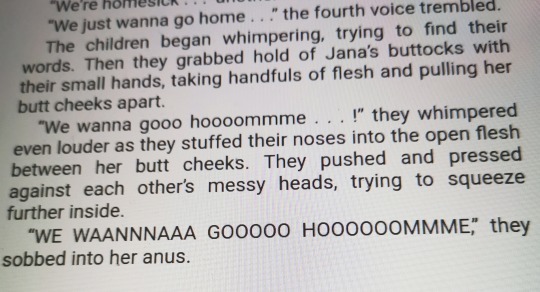
I thought this book was going to be a mesmerising sapphic tale, but sadly it was just very strange and uncomfortable to read. Virtuoso follows two queer couples as their lives intertwine throughout the decades across the US and Czech Republic, and they come to realise what they want out of life. The narrative and plot were both fragmented, meaning it was often difficult to tell which era we were reading about and where the characters were. The pacing was far too slow, and the dialogue didn't captivate me at all. There were several questionably racist remarks throughout the novel, only one of which was challenged, and there was an incredibly disturbing scene where children hold down one of the main characters and molest her. This book is pretty sexual in nature, but it often crosses a line in its content, both in the rape scene, and in another scene where a young girl describes needing to make herself 'more molestable' for older men.
I understand that this book was trying to be literary and subvert genre norms, but on the whole I just found it very uncomfortable and unpleasant to read. Sadly, I wouldn't recommend this one.
TWs: suicide, sexual assault, rape, physical abuse, racism.
I thought this book was going to be a mesmerising sapphic tale, but sadly it was just very strange and uncomfortable to read. Virtuoso follows two queer couples as their lives intertwine throughout the decades across the US and Czech Republic, and they come to realise what they want out of life. The narrative and plot were both fragmented, meaning it was often difficult to tell which era we were reading about and where the characters were. The pacing was far too slow, and the dialogue didn't captivate me at all. There were several questionably racist remarks throughout the novel, only one of which was challenged, and there was an incredibly disturbing scene where children hold down one of the main characters and molest her. This book is pretty sexual in nature, but it often crosses a line in its content, both in the rape scene, and in another scene where a young girl describes needing to make herself 'more molestable' for older men.
I understand that this book was trying to be literary and subvert genre norms, but on the whole I just found it very uncomfortable and unpleasant to read. Sadly, I wouldn't recommend this one.
February 8, 2020
this is a fever dream of a novel—I loved following the wisps of these fragmented narratives as they twisted and tangled. I thought the mystery at the beginning was going to be what resolved at the end, but I was delighted to find several other characters come into the picture, to where when our understanding of the opening developed, it felt more like a thread weaved into the grander picture than a dramatic reveal. (that sentence is too long and makes no sense. read this book instead of this review.)

August 29, 2021
In lieu of a review, I'm just going to leave an excerpt that I think explains my rating as well as why I returned this book right after reading this part:

March 5, 2022
Content Warning: death (including that of children), violence, child abuse, suicide, lesbophobia, racism, lesbophobic slurs, racist slurs, sexual assault, discussion of child sexual abuse, grooming of a minor, adult/minor "relationship." Please note that my review below does discuss some of these topics in detail.
For more of my reviews, check out my blog!
Jana grew up in the Czech Republic, back when it was still a part of the Eastern Bloc. Her days were gray and dull, ruled over by the fears and problems of the adults around her, and the looming terror of Soviet Communism's repression. Then, something shocking: a new girl moves in, Zorka. Zorka is everything a girl's not supposed to be -- weird, loud, obnoxious and sometimes gross. They become best friends. In the present day, Jana works as a translator in stylish Paris. She hasn't seen Zorka in a decade. Aimée is a Parisian by birth, and she falls in love at sixteen with a shrewd theatre actress. They stay together, getting married, living a (relatively) happy life. After Aimée's wife dies, she ends up meeting Jana, and they fall into a relationship while they try to make sense of their pasts and futures...
The summary for this book sounded just like everything I love. A rumination on Communism and the Eastern Bloc, an insight into the lives of sapphic women from Eastern European countries, complicated relationships, the loss (and return?) of a first love... the first page was so promising, written with both dry wit and an undercurrent of glamor, captivating in its strangeness and beauty. As the title and inspiration behind this blog might suggest, I'm also enamored with the strange: I love oddness, things beyond what we might consider the norm, and a fearlessness when it comes to embracing the strange, sometimes repulsive parts of our lives. It seemed like this book would be a match made in heaven for me. Sadly, though, the longer I read, the more I realized that the strangeness here is purposeless, aimless, and perhaps simply odd for the sake of being odd.
There are many interwoven narratives at play here, but the three main characters and motivators of the story are the aforementioned Zorka, Jana, and Aimée. They're all inadvertently crossing back and forth between each other's circles, eventually meeting and twisting together into one another's lives. Are they likable? Perhaps, but in a strange way, despite the plethora of (oftentimes unnecessary) details about their personal lives, I often felt distant from their emotions and feelings. Jana in particular remains slightly blurry in my head, as if she is just not quite there; to me, she felt more of a springboard for the other character's thoughts, memories and personalities, without possessing much individuality herself. Aimée is a little more interesting in her own right, though I wish that we had gotten more a look into her psyche surrounding Dominique's issues and cruelty. It's Zorka that stands out the most, but if you've read this book, you'll understand why everyone else is overshadowed by her -- she is aggressive, odd, opinionated, and overall, easily the most fascinating person in the entire book.
The characters don't need to be likable for me to love a book, but they do have to be complex, unique, and feel genuine. I didn't really mind the very disjointed way that Moskovich tells this story, but I do feel that it sometimes kept me from being able to fully immerse myself into the various plotlines, relationships, and emotions. Something else I would feel remiss not to mention are the multiple relationships that involve a minor and an adult. Aimée meets her wife when she is sixteen and Dominique is 26; there's another small storyline that involves two women meeting in an online lesbian chatroom, which is perhaps meant to parallel Aimée and Dominique's relationship, and one of them is just a girl of fifteen, while her online "lover" (ugh) is a married woman in her 30s. I understand that in France, where Dominique and Aimée live, the age of consent is fifteen, but regardless, their dynamic always feels predatory and as if Dominique is constantly taking advantage of Aimée. Maybe that's the point, but not once is it ever challenged by anyone in this novel, and I did find it off-putting, especially since the entirety of Virtuoso contemplates womanhood, gender politics, and feminism.
Now, though, let me expand on my main problem with this book: racism. It's a bit of a long story, so I'll keep it as short and sweet as I can, but at some point Zorka ends up befriending two black girls, Tiff and Deandra, while she's living in America, and the interactions are so stereotypical it left me totally boggled. Ironically enough, Tiff and Deandra challenge some of Zorka's clueless racism, and they all become quite close, but the text itself continues to perpetuate racist stereotypes nonetheless. There's also a scene of challenged racism, where a man in Zorka's friend group laments the "American need" for equality and diversity, but it felt oddly pointless and performative.
Two other incidents I feel I must mention: there's a weird, disgusting, seemingly pointless, dreamlike-sequence where a character is molested by a group of orphans; and Jana, talking about herself as a child, says that she wanted to be "molestable" and spent her entire childhood wishing to be violated in some way. Absolutely baffling! I think that in the latter case, Moskovich is perhaps attempting to discuss the way that desirability influences women (even as children), but it was done in a way that felt gratuitous and borderline offensive. I think that anyone wanting to pick this book up should be informed of those two instances, as they are not only strange and rather repulsive, but I can only imagine how triggering it might be for someone reading it who might've gone through experiences of sexual abuse or molestation, particularly in their childhood or adolescence.
Finally, I'll say why I decided to give this two stars instead of just one. It's all down to Moskovich's writing: it's beautiful, full of a dreaminess mixed painfully with the brutalities of life, and her ideas are so clever, but with such poor execution. I've wanted to read some of her other books -- her debut, The Natashas, and her newest book, A Door Behind A Door -- but I'm a bit conflicted now on whether it would be worth my time, personally speaking. I can't recommend this, mostly because of the issues I posited above, but I will tentatively say I might give it another go and try one of her other books, in the hopes that they are perhaps just as clever, but without the insensitivity that plagues this one.
One more thing, before I end this review. Moskovich was born in the Ukraine, emigrating to the United States in 1991 with her family as Jewish refugees, and I want to honor her heritage here by listing some ways to help the Ukraine. (Links provided on my blog)
For more of my reviews, check out my blog!
Jana grew up in the Czech Republic, back when it was still a part of the Eastern Bloc. Her days were gray and dull, ruled over by the fears and problems of the adults around her, and the looming terror of Soviet Communism's repression. Then, something shocking: a new girl moves in, Zorka. Zorka is everything a girl's not supposed to be -- weird, loud, obnoxious and sometimes gross. They become best friends. In the present day, Jana works as a translator in stylish Paris. She hasn't seen Zorka in a decade. Aimée is a Parisian by birth, and she falls in love at sixteen with a shrewd theatre actress. They stay together, getting married, living a (relatively) happy life. After Aimée's wife dies, she ends up meeting Jana, and they fall into a relationship while they try to make sense of their pasts and futures...
The summary for this book sounded just like everything I love. A rumination on Communism and the Eastern Bloc, an insight into the lives of sapphic women from Eastern European countries, complicated relationships, the loss (and return?) of a first love... the first page was so promising, written with both dry wit and an undercurrent of glamor, captivating in its strangeness and beauty. As the title and inspiration behind this blog might suggest, I'm also enamored with the strange: I love oddness, things beyond what we might consider the norm, and a fearlessness when it comes to embracing the strange, sometimes repulsive parts of our lives. It seemed like this book would be a match made in heaven for me. Sadly, though, the longer I read, the more I realized that the strangeness here is purposeless, aimless, and perhaps simply odd for the sake of being odd.
There are many interwoven narratives at play here, but the three main characters and motivators of the story are the aforementioned Zorka, Jana, and Aimée. They're all inadvertently crossing back and forth between each other's circles, eventually meeting and twisting together into one another's lives. Are they likable? Perhaps, but in a strange way, despite the plethora of (oftentimes unnecessary) details about their personal lives, I often felt distant from their emotions and feelings. Jana in particular remains slightly blurry in my head, as if she is just not quite there; to me, she felt more of a springboard for the other character's thoughts, memories and personalities, without possessing much individuality herself. Aimée is a little more interesting in her own right, though I wish that we had gotten more a look into her psyche surrounding Dominique's issues and cruelty. It's Zorka that stands out the most, but if you've read this book, you'll understand why everyone else is overshadowed by her -- she is aggressive, odd, opinionated, and overall, easily the most fascinating person in the entire book.
The characters don't need to be likable for me to love a book, but they do have to be complex, unique, and feel genuine. I didn't really mind the very disjointed way that Moskovich tells this story, but I do feel that it sometimes kept me from being able to fully immerse myself into the various plotlines, relationships, and emotions. Something else I would feel remiss not to mention are the multiple relationships that involve a minor and an adult. Aimée meets her wife when she is sixteen and Dominique is 26; there's another small storyline that involves two women meeting in an online lesbian chatroom, which is perhaps meant to parallel Aimée and Dominique's relationship, and one of them is just a girl of fifteen, while her online "lover" (ugh) is a married woman in her 30s. I understand that in France, where Dominique and Aimée live, the age of consent is fifteen, but regardless, their dynamic always feels predatory and as if Dominique is constantly taking advantage of Aimée. Maybe that's the point, but not once is it ever challenged by anyone in this novel, and I did find it off-putting, especially since the entirety of Virtuoso contemplates womanhood, gender politics, and feminism.
Now, though, let me expand on my main problem with this book: racism. It's a bit of a long story, so I'll keep it as short and sweet as I can, but at some point Zorka ends up befriending two black girls, Tiff and Deandra, while she's living in America, and the interactions are so stereotypical it left me totally boggled. Ironically enough, Tiff and Deandra challenge some of Zorka's clueless racism, and they all become quite close, but the text itself continues to perpetuate racist stereotypes nonetheless. There's also a scene of challenged racism, where a man in Zorka's friend group laments the "American need" for equality and diversity, but it felt oddly pointless and performative.
Two other incidents I feel I must mention: there's a weird, disgusting, seemingly pointless, dreamlike-sequence where a character is molested by a group of orphans; and Jana, talking about herself as a child, says that she wanted to be "molestable" and spent her entire childhood wishing to be violated in some way. Absolutely baffling! I think that in the latter case, Moskovich is perhaps attempting to discuss the way that desirability influences women (even as children), but it was done in a way that felt gratuitous and borderline offensive. I think that anyone wanting to pick this book up should be informed of those two instances, as they are not only strange and rather repulsive, but I can only imagine how triggering it might be for someone reading it who might've gone through experiences of sexual abuse or molestation, particularly in their childhood or adolescence.
Finally, I'll say why I decided to give this two stars instead of just one. It's all down to Moskovich's writing: it's beautiful, full of a dreaminess mixed painfully with the brutalities of life, and her ideas are so clever, but with such poor execution. I've wanted to read some of her other books -- her debut, The Natashas, and her newest book, A Door Behind A Door -- but I'm a bit conflicted now on whether it would be worth my time, personally speaking. I can't recommend this, mostly because of the issues I posited above, but I will tentatively say I might give it another go and try one of her other books, in the hopes that they are perhaps just as clever, but without the insensitivity that plagues this one.
One more thing, before I end this review. Moskovich was born in the Ukraine, emigrating to the United States in 1991 with her family as Jewish refugees, and I want to honor her heritage here by listing some ways to help the Ukraine. (Links provided on my blog)

January 29, 2019
Yelena Moskovich’s new novel develops depth and passion as it progresses, while never losing a sense of humour. All its early connections develop and entwine. No character is central, because the novel is multi-voiced and unconcerned about the insistence of plot.
Full review here: https://drb.ie/essays/symphony-in-blue
Full review here: https://drb.ie/essays/symphony-in-blue

November 13, 2022
I liked A Door Behind A Door a little bit better than this one but the same thing goes, it was just as dreamy and I only have a vague idea on what really transpired. Not in a good way for this one though.

April 23, 2024
I soldiered to about the three quarter mark but then skimmed the last bit on the way to the library. What an odd book. Her unique style is not for me unfortunately but I can see the appeal for those who like vapid ramblings.
December 6, 2022
honestly? it's not my taste, but i appreciate what the author was trying to do here. i think i just read this at the wrong time. it's experimental, so it'll either work for you or not; for me— it didn't, but that's OK!
Did Not Finish
June 25, 2020I stopped reading this book cause the romantic relationships between teenagers and adults made me pretty uncomfortable.

Read
April 16, 2020Living in Prague in the 1980's, as communism is declining, Jana's life is rough and lonely until one day a fiery young girl named Zorka moves in next door with her family. The girls become fast friends. Zorka shows Jana what life could be like outside the dull existence she has always known. And then one day Zorka just disappears. The storyline also follows a couple living in Paris, Aimee and her older wife. The storyline flows back and forth through the years between these three women. I finished this a while ago but decided to let it sink in for a bit before reviewing. I did really enjoyed this one, I feel like this is one of thoes books that its better to go into without knowing a lot about it. Its reads like a fever dream dripping with imagry and description. Upon finishing it you might wonder what the hell you just read. But I was mezmorized, how Moskovich weaves these stories and characters together was surreal. A style all her own.
Thank You to the publisher for sending me this book opinions are my own.
•
For more of my book content check out instagram.com/bookalong
Thank You to the publisher for sending me this book opinions are my own.
•
For more of my book content check out instagram.com/bookalong

November 8, 2018
Virtuoso was a weird novel full of peculiar descriptions and metaphors.
Often you found out more from what was in between the lines than of what was said.
I had a few issues.
I usually don't have a problem with vulgar,sexual or strong language or content, but if a 7-year old girl wants to be more "molestable", then that's just not okay for me.
I was not a fan of the constant change of perspective. I believe the author intended to create some confusion, but the layout and jumping around didn't make it an enjoyable read for me.
Sadly this story wasn't what I expected and I wouldn't recommend it to any of my bookish friends.
Thank you Netgalley and Serpentstail for providing me with an eARC.
Often you found out more from what was in between the lines than of what was said.
I had a few issues.
I usually don't have a problem with vulgar,sexual or strong language or content, but if a 7-year old girl wants to be more "molestable", then that's just not okay for me.
I was not a fan of the constant change of perspective. I believe the author intended to create some confusion, but the layout and jumping around didn't make it an enjoyable read for me.
Sadly this story wasn't what I expected and I wouldn't recommend it to any of my bookish friends.
Thank you Netgalley and Serpentstail for providing me with an eARC.
May 14, 2021
I really liked a lot of this, but some parts were a bit tedious, other parts quite confusing, and I think personally the ending was just lost on me. I closed the book and sat for a while, confused about what I actually just read, but not in some great or profound way, and a little dissatisfied by the last couple pages. I feel like I just went on a long journey, only to end up staring at a blank white wall in my own living room. I might have to give it a reread sometime soon, because I'm sure I missed something, but I'm not sure I'll ever like that ending.

October 18, 2019
Virtuoso jumps through time involving three pairs of sapphic women, ranging from childhood friends. marriage, and scandal. The paths of these women sync and blend together like waves, written in an almost abstract form. These are loves intertwined with melancholy and mystery. I will admit sometimes I'm not at all sure what is going on, but nevertheless, I was engaged in its format. As their stories unfold, you may feel like rereading again and again to put together all the pieces.
September 5, 2024
I’m not entirely sure what I just read, but it was compelling and perplexing and I want to read it again.

January 18, 2024
[4.5]
February 29, 2024
Unreadable, in more ways than one. Moskovich clearly knows absolutely nothing about Czechoslovakia, the setting doesn't work at all, it's as if she scraped some names from Wikipedia and Google Maps and called it a day. There were no ration lines to get salt in 1980s Prague. A Czech seven-year-old who has lived her entire life in Prague wouldn't be calling the secret police by its Slovak name. The universal Czech word for "dad" is most definitely not "papka." There is no Christian religious education that a little girl would be receiving in Czech public school and could quote from in the way Zorka does. I could go on, potentially forever. I presume that a lot of what she's basing her descriptions on is her childhood in Ukraine. Czechoslovakia and Ukraine were very different from each other then, and remain very different from each other now. One would think that Moskovich would at least put in a modicum of effort to do her research. Perhaps more importantly, I also hated the writing style (is it really necessary to write "raven-haired" more than once? does every noun have to be attached to two different adjectives in order to convey a point?), the unnecessary violence and vulgarity, the stylization (how many times can you rely on synecdoche before it becomes unbearably stale?)... and on top of all that, I did not even care about the plot. I made it halfway through this novel and it ruined my morning. It may be considered Lynchian only in the worst senses of the word: pretentious, bizarre, grotesque, with horrifyingly bad special effects.

January 19, 2024
Having read "The Natashas" last year and enjoying it I was eager to read more by Moskovich and "Virtuoso" didn't disappoint. The language is the big draw for me here, some brilliantly unusual phrasings which really connect with the writer in me, coupled with a deliciously odd method of telling that washes you in and out of her character's lives like - to use a really standard metaphor - waves crashing on a beach. The novel progresses as a series of vignettes in which it's never really clear (at least to me) what is (genuinely) happening, and in essence is little more than the delineation of several relationships between women over a period of time, however everything is carried by the words: poetic, surprising, intriguing. I'm looking forward to reading her again.
May 30, 2022
really liked the poetry and dreamlike aspects of this book and there were many moments that felt extremely smart and witty but the book fell apart for me a bit at the end, the sexuality turned from being beautiful and necessary to overdone and even a little cringe. 3.5 stars

December 29, 2021
Rep: lesbian mcs, Black side characters, Filipino trans side character, gay side character
CWs: grooming, adult minor relationship, lesbophobia, d slur, racial slurs
CWs: grooming, adult minor relationship, lesbophobia, d slur, racial slurs

February 10, 2022
No dziwna trochę, ogólnie myśle ze jakbym czytała po polsku odrobine bardziej potrafiłabym zrozumieć ogólny zamysł tej powieści
August 14, 2023
A Lynchian lesbian romance exported from the Eastern Bloc. A superbly surreal story although I’m certain I missed something…

June 10, 2025
queer space-time, whirlwind, dreams, big history and small history, fleeting characters, love, absurdity, and violence
February 4, 2020
Beautifully written. It leaves you trying to work out what went on. I have theories and now I want to read it again.

April 22, 2021
A really good life hack that I definitely recommend is to take a book that you already find kind of confusing and hard to follow, and put it down for many weeks before picking it back up halfway through. Somehow I managed to like it anyway!
Displaying 1 - 30 of 106 reviews