

What do you think?

Batman
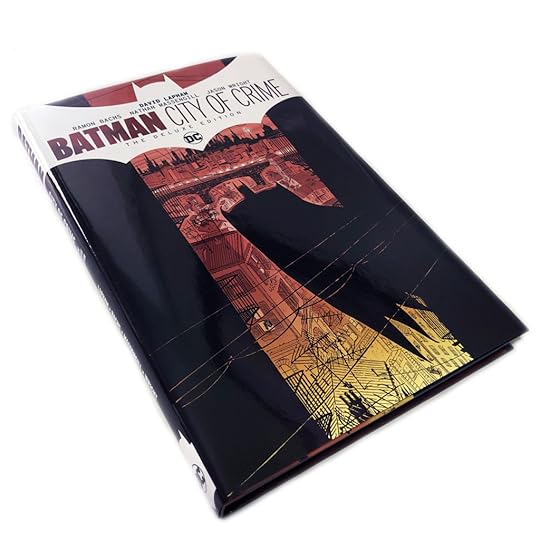
Batman: City of Crime Deluxe Edition
Failing to recognize a young girl's cry for help, which results in the death of six teenage girls, Batman descends into Gotham's underworld, uncovering the city's long-hidden, dark truths.
The Dark Knight is on a mission to shut down a drug ring ruining the lives of the people of Gotham. However, following a series of deaths of teenage girls, some pregnant, Batman vows to find the root of this problem. Believing the culprits to be part of a pregnancy ring, Batman scours the underbelly of Gotham looking for clues...leading to something bigger than anticipated.
Pushing the limits, David Lapham drags Bruce Wayne through one of his most controversial plots in Batman: City of Crime.
Collects Detective Comics #800-808 and #811-814.
The Dark Knight is on a mission to shut down a drug ring ruining the lives of the people of Gotham. However, following a series of deaths of teenage girls, some pregnant, Batman vows to find the root of this problem. Believing the culprits to be part of a pregnancy ring, Batman scours the underbelly of Gotham looking for clues...leading to something bigger than anticipated.
Pushing the limits, David Lapham drags Bruce Wayne through one of his most controversial plots in Batman: City of Crime.
Collects Detective Comics #800-808 and #811-814.
304 pages, Hardcover
First published July 6, 2006
Ratings & Reviews
Friends & Following
Create a free account to discover what your friends think of this book!
Community Reviews
Displaying 1 - 30 of 82 reviews

November 17, 2020
Started off pretty great, very dark and moody, with the disappearance of a pregnant girl and a bunch of other pregnant girls found dead in an apartment fire. And it looks like half of Batman's Rogues are somehow involved with some grand conspiracy called The Body. But it all just fizzles out in the second half. It's overly long, there are whole issues devoted to the people in a neighborhood. We never get any pay off with The Body or even find out what's actually going on. It all just gets wiped away without an explanation. It's a frustrating read. Lapham tends to fail any time he deviates from Stray Bullets. That trend continues.

May 28, 2019
Well that was depressing...but I shouldn't expect anything less from the awesome writer of Stray Bullets.
If anything should take a darker turn, go into the worst places, and the worst of humanity, it's Gotham and Batman. This is the story of Bruce trying to solve a murder. Well, it starts that way anyway. It feels more personal this time as Bruce blames himself for the death of a young teenager and then tries to go on a missing girl hunt. However, as he gets deeper, we learn how twisted the city has become. Someone is hunting people down, killing them, and getting away with it either. Featuring some big villains, and a new one I've never heard of, this intense story arc is Bruce facing some of his greatest threats and fears.
This is a pretty interesting set up. Bruce feels vulnerable in here and his guilt mixed with his act of heroism makes this an intense tale. It's also darker, which is saying a lot for Batman since the majority of his stories are, but this one really is. A lot of young dead people, which is hard to read, and also a lot of focus on Gotham itself. Sometimes even more so than Bruce, and that remains interesting. Gotham is like a even dirtier, more fucked up version, of New York City. I was eager to find out what would happen next to almost every character, while also having a great supporting cast and voice for people like Robin.
I did think sometimes it was stretched a little long and some plot points weren't as interesting as others.
Overall though, this really impressed me. While not AS good as Stray Bullets, it's one of the more interesting self contained Batman stories. A 4 out of 5.
If anything should take a darker turn, go into the worst places, and the worst of humanity, it's Gotham and Batman. This is the story of Bruce trying to solve a murder. Well, it starts that way anyway. It feels more personal this time as Bruce blames himself for the death of a young teenager and then tries to go on a missing girl hunt. However, as he gets deeper, we learn how twisted the city has become. Someone is hunting people down, killing them, and getting away with it either. Featuring some big villains, and a new one I've never heard of, this intense story arc is Bruce facing some of his greatest threats and fears.
This is a pretty interesting set up. Bruce feels vulnerable in here and his guilt mixed with his act of heroism makes this an intense tale. It's also darker, which is saying a lot for Batman since the majority of his stories are, but this one really is. A lot of young dead people, which is hard to read, and also a lot of focus on Gotham itself. Sometimes even more so than Bruce, and that remains interesting. Gotham is like a even dirtier, more fucked up version, of New York City. I was eager to find out what would happen next to almost every character, while also having a great supporting cast and voice for people like Robin.
I did think sometimes it was stretched a little long and some plot points weren't as interesting as others.
Overall though, this really impressed me. While not AS good as Stray Bullets, it's one of the more interesting self contained Batman stories. A 4 out of 5.

August 31, 2020
You can find my review on my blog by clicking here.
There are underworlds that naturally breed evil. At every juncture, there’s something terrifying ready to crawl out of the darkness, spring upon you, and claw at your innocence. Striving for eternal servitude towards the vices that pervades the universe, the people in these worlds remain stuck in a cycle of violence and vengeance. Sometimes, you just can’t help but wonder if the environment isn’t more than a terrain for criminality but a root cause for the immortality of evil. For Batman, it’s his doorway towards the dark truths and terrifying secrets that his city withholds from him. Collecting issues #801-808 and #811-814 of Detective Comics as well as David Lapham’s prologue issue #800 entitled “In the Dark“, this special deluxe edition presents the Eisner Award-winning graphic novelist’s vision of a Batman noir fiction brimming with grit and grim.
What is Batman: City of Crime about? A young girl’s cry for help is dismissed by Bruce Wayne, oblivious to the consequences that it will have as it escalates to the death of several teenage girls in a wild and deadly event in Crime Alley. It is then the desperate desire of a mother for the safe return of her missing daughter that gnaws at Bruce Wayne’s conscious. Consumed by the guilt of his recent inaction, he vows to find the child but his journey leads him into the dark corners of Gotham City, where evil proliferates between the cracks of the underworld and danger is nothing more than an omnipresent companion to all those who lurk in the darkness. However, this descent to the criminal world of Gotham doesn’t come without a cost. The truths he learns from the people and the city he protects will be a burden, unlike anything he’s had to face so far.
Writer David Lapham (Age of Apocalypse, Stray Bullets, Deadpool MAX) brings forth a suffocating and grim story with terrifying events that quickly evokes the darkness of Gotham City. This hard-boiled tale of redemption explores a bleak whodunit that keeps its revelations for its final acts as it allows various sets of characters, from Bruce Wayne to detectives within the Gotham City Police Department, to plunge deep into the thick and deadly layers of its underworld for answers. Despite several plot holes veering the narrative towards unrealistic grounds, it is the writer’s narration that captivated me the most through this graphic novel. The personification of Gotham City as she continuously unveils tragedies after tragedies make for a fascinating exploration of the environment’s own essence, one that is inscribed in crime and death.
Leave it to penciller Ramon Bachs, inker Nathan Massengil, and colourist Jason Wright to illustrate this ghastly story. From the eerie character designs and the creepy smiles to the smothering details of Gotham’s architecture, you would have a tough time seeing any source of hope. The overall tone also captures the city’s much more grisly nature. There’s no telling what she hides from you or when it will decide to regurgitate the gloomier menaces from its underworld. The mysterious new threat introduced in this story is also brilliantly illustrated through shady characters who seem lifeless and programmed for one thing and one thing only: evil. Suffice to say that this creative team did a phenomenal job in depicting various sectors of Gotham throughout the story and there’s nothing more intriguing than to watch Bruce Wayne become part of it if he is to understand criminals and uncover the truth.
Batman: City of Crime is a harsh and enthralling noir whodunit portraying and unveiling the darkness of Gotham City.
Yours truly,
Lashaan | Blogger and Book Reviewer
Official blog: https://bookidote.com/

October 9, 2008
I know I'm the odd-gal out on this, from reading other reviews, but I thought this novel was awesome! It's a dark graphic novel with an artsy feel to it - another reviewer described it as "film-noir", which I feel is an appropriate analogy. The story was convoluted and confusing at first, but I truly felt as if I was trying to solve the mystery with Batman, understanding his mind while he tried to understand the minds of the criminals he was pursuing. The picture certainly become more clear at the end, and the jouney is quite exciting. The nature of the story and the artwork lent a bit of a nightmare quality to the book, which I really appreciated. I couldn't put this one down! This is certainly a very underrated chapter in the Batman tale.

November 10, 2010
I'm at a loss to understand a lot of the previous reviews on this book. It's dark and gritty, very well-written, and loaded with some serious brooding art. This may seriously be one of the best Batman stories I've read.

May 26, 2019
There are a number of complaints about the grimdark turn off Batman both in comics and in movies and at first glance this might seem like one of those because this title is grim and it's dark. But I feel that those criticisms don't land on this title because this is less about darkness as stage setting and pose and more about the atmosphere created by the villains in this piece and the rather existential questions Batman struggles with in this book. It's about the brokenness of people who commit crime as well as the brokenness of the victims, mostly people living in poverty and through their mental and psychological issues, people whose only options place them in the path of violence. It is one of the few titles in the Batman canon that deal with the spiritual weight of the character's choices in what feels like a hopeless but still committed struggle.

July 27, 2010
One of the darkest, eeriest Batman stories ever written. Criminally overlooked, as Lapham's literary style brings Gotham to life like no other story I've read.

September 30, 2020
Batman City of Crime collects Detective Comics issues 800-808 and 811-814. It is written and drawn by David Lapham with assistance by Ramon Bachs and Nathan Massengill.
A Gotham skyscraper apartment complex catches fire killing a group of teenager girls who were pregnant and part of a baby black market. In Batman's investigation, he discovers a mysterious group called The Body who has long controlled the secret underbelly of Gotham's seedy history.
This was a very confusing book that seemed like it was leading up to a huge ending but then just fizzles out. It is a very gritty and dark story and it is written largely in third person which I didn't like. The art style is good, but there are many characters who look alike and it was hard to figure out who was who. One of my favorite Batman villains, Ventriloquist and Scarface, are featured which is one of the story's saving graces. The Body gave me vibes of Scott Snyder's Court of Owls, just not as interesting. I think it was weird DC put out such a nice collected edition of this book because it doesn't seem to be a particularly well liked arc.
A Gotham skyscraper apartment complex catches fire killing a group of teenager girls who were pregnant and part of a baby black market. In Batman's investigation, he discovers a mysterious group called The Body who has long controlled the secret underbelly of Gotham's seedy history.
This was a very confusing book that seemed like it was leading up to a huge ending but then just fizzles out. It is a very gritty and dark story and it is written largely in third person which I didn't like. The art style is good, but there are many characters who look alike and it was hard to figure out who was who. One of my favorite Batman villains, Ventriloquist and Scarface, are featured which is one of the story's saving graces. The Body gave me vibes of Scott Snyder's Court of Owls, just not as interesting. I think it was weird DC put out such a nice collected edition of this book because it doesn't seem to be a particularly well liked arc.

June 22, 2012
Really great, except a little 'jittery' -- it jumps among scenes without clear transitions. Also, quite creepy; not recommended for the innocent or easily frightened. Classic Batman (and Bruce Wayne) fights a creepy crime spree...

November 3, 2012
My comic book-buying dollar has been stretched out pretty thin as of late; not only is the economy still in the gutter, I'm coming off a ten-year layoff period on comic books, so I have a lot of catching up to do. Though random catching-up has been a fun ride so far--filled mostly with pleasant surprises and a few shocking disappointments, it's helped to save time and money by doing a little homework on material that has been out there for a while now. Well, until recently it has, anyway...
Sheesh, after reading so many venomous online reviews for David Lapham's Batman story arc, "City of Crime" (DETECTIVE COMICS, 2005), not only was I prepared for the worst, for a while there I went so far as to hold off from reading the storyline entirely. Reporting feelings of being hopelessly lost in and frustrated by the sprawling plot and the convoluted nature of the storyline, stressed-out readers not only sounded downright angry at but frightened by "City of Crime". I mean, these readers simply could NOT understand why certain characters, such as the Penguin or Mr. Freeze, were even DOING in here, much less why anyone should even care about this grim mess. Those readers who actually DID enjoy the story felt that the whole thing was ruined by the ending, which was apparently beyond unforgivable. Others felt that the story was too dark, even for Batman. Lapham's greatest sin of all, however, was writing a 12-issue storyline that didn't seem to affect official Batman continuity whatsoever!
Whoa. At the time, I had just come off of Grant Morrison's traumatizing "Superman and the Men of Steel", so I took many of these reviews to heart. And yet... I remained intrigued by "City of Crime". I mean, not only were the solid writing talents of David Lapham involved in a Batman book, but I also kept wondering how a Batman book could be too dark these days. In what sense, exactly? Had people already forgotten about "The Dark Knight Returns" or something? Alas, if it hadn't been for eBay, where I stumbled onto a "City of Crime" auction that I just couldn't say `no' to, I would have probably never exposed myself to what turned out to be one of the most intriguing and rewarding Batman storylines that I have ever read. Shame on you, my fellow online comic book readers, shame.
On the surface "City of Crime" is a supernatural detective mystery centered on the disappearance of an underage girl who might be involved in a sinister "adoption-ring" that not only threatens to invlove every level of Gotham society but which also promises to expose the most fearsome of Batman villains to come along in a while. At heart, though, "City of Crime" isn't so much about Batman solving a compelling mystery (and it is compelling), as much as it is about Bruce Wayne coming to terms with The Batman's increasingly complex role as both Gotham City's Dark Knight and its prodigal son; as it explores core Batman themes, such as fear, identity, and parents, the tone of "City of Crime" is reflective, elegiac, even meditative, all of which perhaps explains why this tale seems arbitrary and trivial to readers hoping for something more eventful in the way of a storyline that alters Batman's "official" continuity.
But if it's a mistake to read almost ANY literal connections to official continuity, it's also wrong to form too many connections among the story's events themselves, be they those among the various characters or in their spectral connections to the story's central dramatic mystery, which is meant to remain elusive--even at story's end when it is finally solved. "City of Crime" is a study of individuals drowning in private grief, futilely striving to escape personal hells in which their personal demons have become interchangeable with those of others, including those of very evil men like the Penguin and Mr. Freeze. Therein lies one of "City of Crime's" most subversive qualities: this new evil that threatens to overwhelm Gotham once and for all has not taken root among Gotham's criminal-set, but among its "normal" citizens, of whom Bruce Wayne is still very much a member. Indeed, as The Batman closes in on the source of this new evil, the storyline doesn't so much move forward as much as it spreads, like a widening pool of still-warm blood in which Bruce Wayne's frightened--and frightening--face, is now more clearly reflected than that of the demonic bat.
As such, the real story of "City of Crime" effectively begins when Bruce Wayne is approached at an upscale party by an underage girl who might be covertly reaching out for help, or simply looking for some temporary form of escape herself from some private hell of her own. A repulsed Bruce Wayne, however, cynically dismisses the attentive young girl's artful manner as a studied form of sexual solicitation. When the girl soon goes missing, then, The Batman becomes obsessed with locating her whereabouts as other eerily similar-looking girls also turn up missing or dead. Always arriving too late to save the day, however, Batman spends most of his time here picking up the pieces, as it were, in the process learning increasingly dark and frightening things about his fellow citizens and about the man beneath the mask.
Speaking of which, though I was underwhelmed by the art at first, laid over Lapham's heavily-paneled layouts, Ramon Bach's chiseled and muscular pencil work is effective at conveying the increasing tension and unease with which Bruce Wayne bears the burden of The Batman's unceasing and hopelessly rigid (see: arrogant) moral code: Like Gotham City's "normal" citizens, Bruce Wayne has grown too hardened in his fear, petrified, if you will, uncannily mirroring the elemental horror of a Gotham City that has grown too vast, too robust--and literally crawling with monsters at this point (beautifully rendered), as a stony hardness has started to deaden the man beneath the mask. Bruce Wayne, not The Batman, is now in danger of becoming the true face of the monster.
And yet, The Batman is not the only one forced to confront his personal demons throughout the course of this labyrinthine story. Indeed, though nowhere near as, uh, tenacious or ghastly in its intentions as his YOUNG LIARS series, Lapham's "City of Crime" is nonetheless designed to test the reader's endurance: with each new increasingly grim clue and discovery that he doles out, Lapham skillfully undermines what the reader is prepared to accept not only in a Batman comic but in comic books in general, daring the reader to give up on this challenging and progressively dark mystery every step of the way. Indeed, in "City of Crime" Lapham forces the reader to ask: Has Gotham City finally fallen beyond redemption? High-tailing it out of town or collapsing into a sobbing heap of confusion and self-pity, the Penguin and Mr. Freeze certainly seem to think so. Heck, as he struggles to impose the sign of The Bat back onto a city that might have grown too chaotic and corrupt for even him to control, The Batman himself spends the core of this story struggling to answer this very question.
Heavy stuff. And yet, also similar to his YOUNG LIARS series, Lapham's heaviness in "City of Crime" at times comes dangerously close to caving-in on itself. For instance, too much time is dedicated to unfolding the story's themes through dense, ominous, and sometimes ponderous narration and not enough through actual conflict in active character or story beats, which leads to my real issue with "City of Crime": the story's length.
At 12 issues, Lapham's sprawling and drawn-out plot IS stretched out a bit too thin, in particular at around the midpoint, when the story plunges the reader deeper into Gotham City's social strata. Though refreshingly ambitious in its scope, this deeper look into Gotham City's socio-economic reality not only dilutes the slow-burn intensity with which the plot is meant to be building at this point, it also needlessly challenges the reader's dedication to a surprisingly literary and complex story that requires sustained focus (and repeated readings, I suspect). Elemental and patently slippery, "City of Crime" could have packed even more punch at 10 issues, maybe even at 8.
Alas, don't be scared away, fellow reader. True, part of Lapham's agenda in "City of Crime" is to challenge and shock the jaded reader with material that has grown grotesquely violent and numbingly dark, post-Frank Miller (not to mention in 800 issues and counting of Batman pummeling criminals on the streets of Gotham within the pages of DETECTIVE COMICS, alone). Yet "City of Crime" is not anything if not a deliciously entertaining read--and a darkly humorous one too. What's more, one of Lapham's great accomplishments here is that the story's ending actually lives up to its hugely compelling set-up; though morally elusive and emotionally grim, story-wise and thematically Lapham's resolution of the story's central dramatic mystery is also darkly satisfying, re-establishing the Caped Crusader as Gotham's Dark Knight, just when he was in danger of becoming another masked madman chasing his tail all over a city of crime.
Final verdict: despite the pitch black darkness that pervades (and, at times, obfuscates) a story that is meant to resonate in complex literary terms, you will be hard-pressed to put this one down--yes, even at 12 sprawling issues. Lapham is on his game here, doing what he does best, namely build meticulous labyrinths which compel the reader to keep flipping pages, despite every gruesome and grotesque detail of sad and sordid tales that might reveal more about their characters' personal demons, and about the reader's, than they do about any other horrifying mystery at hand. Highly recommended.
Sheesh, after reading so many venomous online reviews for David Lapham's Batman story arc, "City of Crime" (DETECTIVE COMICS, 2005), not only was I prepared for the worst, for a while there I went so far as to hold off from reading the storyline entirely. Reporting feelings of being hopelessly lost in and frustrated by the sprawling plot and the convoluted nature of the storyline, stressed-out readers not only sounded downright angry at but frightened by "City of Crime". I mean, these readers simply could NOT understand why certain characters, such as the Penguin or Mr. Freeze, were even DOING in here, much less why anyone should even care about this grim mess. Those readers who actually DID enjoy the story felt that the whole thing was ruined by the ending, which was apparently beyond unforgivable. Others felt that the story was too dark, even for Batman. Lapham's greatest sin of all, however, was writing a 12-issue storyline that didn't seem to affect official Batman continuity whatsoever!
Whoa. At the time, I had just come off of Grant Morrison's traumatizing "Superman and the Men of Steel", so I took many of these reviews to heart. And yet... I remained intrigued by "City of Crime". I mean, not only were the solid writing talents of David Lapham involved in a Batman book, but I also kept wondering how a Batman book could be too dark these days. In what sense, exactly? Had people already forgotten about "The Dark Knight Returns" or something? Alas, if it hadn't been for eBay, where I stumbled onto a "City of Crime" auction that I just couldn't say `no' to, I would have probably never exposed myself to what turned out to be one of the most intriguing and rewarding Batman storylines that I have ever read. Shame on you, my fellow online comic book readers, shame.
On the surface "City of Crime" is a supernatural detective mystery centered on the disappearance of an underage girl who might be involved in a sinister "adoption-ring" that not only threatens to invlove every level of Gotham society but which also promises to expose the most fearsome of Batman villains to come along in a while. At heart, though, "City of Crime" isn't so much about Batman solving a compelling mystery (and it is compelling), as much as it is about Bruce Wayne coming to terms with The Batman's increasingly complex role as both Gotham City's Dark Knight and its prodigal son; as it explores core Batman themes, such as fear, identity, and parents, the tone of "City of Crime" is reflective, elegiac, even meditative, all of which perhaps explains why this tale seems arbitrary and trivial to readers hoping for something more eventful in the way of a storyline that alters Batman's "official" continuity.
But if it's a mistake to read almost ANY literal connections to official continuity, it's also wrong to form too many connections among the story's events themselves, be they those among the various characters or in their spectral connections to the story's central dramatic mystery, which is meant to remain elusive--even at story's end when it is finally solved. "City of Crime" is a study of individuals drowning in private grief, futilely striving to escape personal hells in which their personal demons have become interchangeable with those of others, including those of very evil men like the Penguin and Mr. Freeze. Therein lies one of "City of Crime's" most subversive qualities: this new evil that threatens to overwhelm Gotham once and for all has not taken root among Gotham's criminal-set, but among its "normal" citizens, of whom Bruce Wayne is still very much a member. Indeed, as The Batman closes in on the source of this new evil, the storyline doesn't so much move forward as much as it spreads, like a widening pool of still-warm blood in which Bruce Wayne's frightened--and frightening--face, is now more clearly reflected than that of the demonic bat.
As such, the real story of "City of Crime" effectively begins when Bruce Wayne is approached at an upscale party by an underage girl who might be covertly reaching out for help, or simply looking for some temporary form of escape herself from some private hell of her own. A repulsed Bruce Wayne, however, cynically dismisses the attentive young girl's artful manner as a studied form of sexual solicitation. When the girl soon goes missing, then, The Batman becomes obsessed with locating her whereabouts as other eerily similar-looking girls also turn up missing or dead. Always arriving too late to save the day, however, Batman spends most of his time here picking up the pieces, as it were, in the process learning increasingly dark and frightening things about his fellow citizens and about the man beneath the mask.
Speaking of which, though I was underwhelmed by the art at first, laid over Lapham's heavily-paneled layouts, Ramon Bach's chiseled and muscular pencil work is effective at conveying the increasing tension and unease with which Bruce Wayne bears the burden of The Batman's unceasing and hopelessly rigid (see: arrogant) moral code: Like Gotham City's "normal" citizens, Bruce Wayne has grown too hardened in his fear, petrified, if you will, uncannily mirroring the elemental horror of a Gotham City that has grown too vast, too robust--and literally crawling with monsters at this point (beautifully rendered), as a stony hardness has started to deaden the man beneath the mask. Bruce Wayne, not The Batman, is now in danger of becoming the true face of the monster.
And yet, The Batman is not the only one forced to confront his personal demons throughout the course of this labyrinthine story. Indeed, though nowhere near as, uh, tenacious or ghastly in its intentions as his YOUNG LIARS series, Lapham's "City of Crime" is nonetheless designed to test the reader's endurance: with each new increasingly grim clue and discovery that he doles out, Lapham skillfully undermines what the reader is prepared to accept not only in a Batman comic but in comic books in general, daring the reader to give up on this challenging and progressively dark mystery every step of the way. Indeed, in "City of Crime" Lapham forces the reader to ask: Has Gotham City finally fallen beyond redemption? High-tailing it out of town or collapsing into a sobbing heap of confusion and self-pity, the Penguin and Mr. Freeze certainly seem to think so. Heck, as he struggles to impose the sign of The Bat back onto a city that might have grown too chaotic and corrupt for even him to control, The Batman himself spends the core of this story struggling to answer this very question.
Heavy stuff. And yet, also similar to his YOUNG LIARS series, Lapham's heaviness in "City of Crime" at times comes dangerously close to caving-in on itself. For instance, too much time is dedicated to unfolding the story's themes through dense, ominous, and sometimes ponderous narration and not enough through actual conflict in active character or story beats, which leads to my real issue with "City of Crime": the story's length.
At 12 issues, Lapham's sprawling and drawn-out plot IS stretched out a bit too thin, in particular at around the midpoint, when the story plunges the reader deeper into Gotham City's social strata. Though refreshingly ambitious in its scope, this deeper look into Gotham City's socio-economic reality not only dilutes the slow-burn intensity with which the plot is meant to be building at this point, it also needlessly challenges the reader's dedication to a surprisingly literary and complex story that requires sustained focus (and repeated readings, I suspect). Elemental and patently slippery, "City of Crime" could have packed even more punch at 10 issues, maybe even at 8.
Alas, don't be scared away, fellow reader. True, part of Lapham's agenda in "City of Crime" is to challenge and shock the jaded reader with material that has grown grotesquely violent and numbingly dark, post-Frank Miller (not to mention in 800 issues and counting of Batman pummeling criminals on the streets of Gotham within the pages of DETECTIVE COMICS, alone). Yet "City of Crime" is not anything if not a deliciously entertaining read--and a darkly humorous one too. What's more, one of Lapham's great accomplishments here is that the story's ending actually lives up to its hugely compelling set-up; though morally elusive and emotionally grim, story-wise and thematically Lapham's resolution of the story's central dramatic mystery is also darkly satisfying, re-establishing the Caped Crusader as Gotham's Dark Knight, just when he was in danger of becoming another masked madman chasing his tail all over a city of crime.
Final verdict: despite the pitch black darkness that pervades (and, at times, obfuscates) a story that is meant to resonate in complex literary terms, you will be hard-pressed to put this one down--yes, even at 12 sprawling issues. Lapham is on his game here, doing what he does best, namely build meticulous labyrinths which compel the reader to keep flipping pages, despite every gruesome and grotesque detail of sad and sordid tales that might reveal more about their characters' personal demons, and about the reader's, than they do about any other horrifying mystery at hand. Highly recommended.

March 24, 2021
Pretty grim and miserable picture of Gotham City. Why would anyone want to live there? This is a good Batman story, though we never really get an explanation of what was going on. Who or what was The Body? Why was a homeless man spreading fear vibes throughout the hospital? Good, moody art, but ultimately, the storyline was something of a failure...

April 1, 2020
Dark and disturbing. Probably one of the more darker in style that I've read. The heavy dialogue wasnt for me

April 12, 2020
Holy crap, this was terrible. If MST3K riffed graphic novels, they would riff this graphic novel.

May 26, 2020
I'm not a big Batman fan... I've read and enjoyed Dark Knight Returns and Year Zero (hated D.K. Strikes Back and Master Race), Long Halloween and Court of Owls, but I like these stories despite the Superheroes, not because of them.
I'm a massive fan of Ed Brubaker, and would say he is one of my favorite writers period, not just comics but in literature as well. So it shouldn't be surprising that I love dark crime stories, which in turn means I love David Lapham. The Uber Alles edition of Stray Bullets is one of my favorite books in my collection. So Lapham tackling Gotham? Of course it's great. People saying it's "too dark" is a little strange to me. There's only a million other superheroes you could follow if you want happy, bright, positive characters. He's called the DARK knight for a reason... Gotham is New York in purgatory. The people giving this story bad reviews are waiting for Dark Knight in Disneyland, I guess.
The mystery is compelling, the art is amazing, Gotham has never looked more real, and I actually like Robin and Mr. Freeze and other characters I always thought too cheesy. With Nolan's Dark Knight Trilogy and now Phillip's take on Joker, I think people are more welcoming of Superhero stories being somewhat grounded in reality, showing us the underworld of struggling city. Personally, I think Lapham should be lauded for taking some risks and pulling no punches, giving us a Batman story that I could easily see being a great Batman film.
P.S. I've seen a lot of reviews these days for all types of books that just want to find an "ism" in it. As if instead of critical thinking and original takes, one can just pretend to be offended by a line or a character and feel like they've sufficiently understood the material. This is extremely lazy and in most cases, wrong. I'm extremely hard to offend, but I do find it offensive when people slander a writer's name or memory by calling them hateful, closed minded, un-accepting, etc. simply because of a (usually) misinterpreted slight against whatever group is currently in the social conversation. I'm a very left-leaning guy but I think it's disrespectful to those who have really suffered to act like a book or a joke hurt you.
I'm a massive fan of Ed Brubaker, and would say he is one of my favorite writers period, not just comics but in literature as well. So it shouldn't be surprising that I love dark crime stories, which in turn means I love David Lapham. The Uber Alles edition of Stray Bullets is one of my favorite books in my collection. So Lapham tackling Gotham? Of course it's great. People saying it's "too dark" is a little strange to me. There's only a million other superheroes you could follow if you want happy, bright, positive characters. He's called the DARK knight for a reason... Gotham is New York in purgatory. The people giving this story bad reviews are waiting for Dark Knight in Disneyland, I guess.
The mystery is compelling, the art is amazing, Gotham has never looked more real, and I actually like Robin and Mr. Freeze and other characters I always thought too cheesy. With Nolan's Dark Knight Trilogy and now Phillip's take on Joker, I think people are more welcoming of Superhero stories being somewhat grounded in reality, showing us the underworld of struggling city. Personally, I think Lapham should be lauded for taking some risks and pulling no punches, giving us a Batman story that I could easily see being a great Batman film.
P.S. I've seen a lot of reviews these days for all types of books that just want to find an "ism" in it. As if instead of critical thinking and original takes, one can just pretend to be offended by a line or a character and feel like they've sufficiently understood the material. This is extremely lazy and in most cases, wrong. I'm extremely hard to offend, but I do find it offensive when people slander a writer's name or memory by calling them hateful, closed minded, un-accepting, etc. simply because of a (usually) misinterpreted slight against whatever group is currently in the social conversation. I'm a very left-leaning guy but I think it's disrespectful to those who have really suffered to act like a book or a joke hurt you.

June 25, 2020
I’m gonna preface this by saying this really isn’t a book for everyone. It’s dark. And I mean it. This is a story about a city that chews people up and spits them out, and violence percolating around every corner. It’s *that* kind of Batman story. But it’s the good kind of dark. Well written, well paced, and smooth. But it is a not nice story filled with not nice things happening.
I have not read Lapham’s other work, Stray Bullets, but I might check it out. I bet people who liked that will like this. He really has a solid narration style, which isn’t quite as prominent in comics as I’d like. But it also doesn’t suck, like some folks who wanted to be Frank Miller in the 90’s did.
The themes on display here are harsh, but considering what has happened in the comics industry as I read this (I picked it up the week before a whole slew of allegations against men being creepy and predatory towards women broke out. One even writing a Bat book as of this review) it feels more relevant than ever. That ending is gonna stick with me for a while.
The art from Ramon Bachs is moody, and compliments the writing well. Same with the colors from Jason Wright. They’re grounded, but can really pop when they need to. Honestly the only knock against them is in the bonus materials it said Bill Sienkiewicz almost did the art. I think if that happened, this honestly would be considered an all time great Bat-story.
One last thing to add: if you’re looking for a good long Bat-book without an appearance from the Clown Prince of Crime, this is one. Quite refreshing, actually.
I have not read Lapham’s other work, Stray Bullets, but I might check it out. I bet people who liked that will like this. He really has a solid narration style, which isn’t quite as prominent in comics as I’d like. But it also doesn’t suck, like some folks who wanted to be Frank Miller in the 90’s did.
The themes on display here are harsh, but considering what has happened in the comics industry as I read this (I picked it up the week before a whole slew of allegations against men being creepy and predatory towards women broke out. One even writing a Bat book as of this review) it feels more relevant than ever. That ending is gonna stick with me for a while.
The art from Ramon Bachs is moody, and compliments the writing well. Same with the colors from Jason Wright. They’re grounded, but can really pop when they need to. Honestly the only knock against them is in the bonus materials it said Bill Sienkiewicz almost did the art. I think if that happened, this honestly would be considered an all time great Bat-story.
One last thing to add: if you’re looking for a good long Bat-book without an appearance from the Clown Prince of Crime, this is one. Quite refreshing, actually.

March 22, 2018
Man, I bet this story was a bitch to read as a monthly - this was definitely paced as a novel, with long, slow-burn sections - tons of mood, sometimes at the expense of actual detail.
In some respects, I feel that the villain - the Body - was underdeveloped (not as a person, which was not important to this particular villain, but as a movement/threat possessing some quantifiable goal), but I was completely engrossed by the atmosphere and characterization of the city. Lapham really hit a home run with the full issue he spent detailing the life of the Hill and its residents, setting the stage for exactly what Batman had to infiltrate to find answers.
On some level, I felt that certain elements didn't come together completely - how Batman found certain answers, the "horror" sequence at the hospital and the cause of it, and - as noted earlier - the Body's reason for existence. Nevertheless, Lapham crafted a powerful, moving, truly desperate tale of Gotham City.
Ramon Bachs' linework was very nice, and working over Lapham's layouts was an inspired choice. Nobody paces these noir sequences better than Lapham.
In some respects, I feel that the villain - the Body - was underdeveloped (not as a person, which was not important to this particular villain, but as a movement/threat possessing some quantifiable goal), but I was completely engrossed by the atmosphere and characterization of the city. Lapham really hit a home run with the full issue he spent detailing the life of the Hill and its residents, setting the stage for exactly what Batman had to infiltrate to find answers.
On some level, I felt that certain elements didn't come together completely - how Batman found certain answers, the "horror" sequence at the hospital and the cause of it, and - as noted earlier - the Body's reason for existence. Nevertheless, Lapham crafted a powerful, moving, truly desperate tale of Gotham City.
Ramon Bachs' linework was very nice, and working over Lapham's layouts was an inspired choice. Nobody paces these noir sequences better than Lapham.

September 9, 2014
Very much on the depressing side. A lot of this comic deals with the people that Batman doesn't save, because he wasn't in time or wasn't in the right place. And the people he does save are left worse for wear, scarred and broken.
The real villain in this story is Gotham, the city itself. A city where angels fear to thread. The body, a secret organization of shapeshifters, infiltrating all the high places, (like the Owls from New 52) are just tools wielded by the city.
The art is really good but without drawing attention to itself. Every image just works.
I'm knocking off one star for the fact that the story seems to get out of hand. Some important plot threads are left hanging in the end. Not all the questions are answered or perhaps it would be more correct to say that not all the important questions are asked, by Batman. Too much is left unsolved, something which seems out of character for the worlds greatest detective.
But overall a bleak but very engaging comic, that I wouldn't hesitate to put on my list of essential Batman reads.
The real villain in this story is Gotham, the city itself. A city where angels fear to thread. The body, a secret organization of shapeshifters, infiltrating all the high places, (like the Owls from New 52) are just tools wielded by the city.
The art is really good but without drawing attention to itself. Every image just works.
I'm knocking off one star for the fact that the story seems to get out of hand. Some important plot threads are left hanging in the end. Not all the questions are answered or perhaps it would be more correct to say that not all the important questions are asked, by Batman. Too much is left unsolved, something which seems out of character for the worlds greatest detective.
But overall a bleak but very engaging comic, that I wouldn't hesitate to put on my list of essential Batman reads.
August 20, 2023
Lapham does Gotham’s Naked City. “There are eight million stories.” One of the rare Batman tales to actually deliver on the oft-cited line that Gotham is a character. The reviews calling the digressive citizen stories “filler” have deeply missed the point.
Dark, fatalistic bordering on nihilistic. Answers no questions because life rarely has answers. Pure noir.
Dark, fatalistic bordering on nihilistic. Answers no questions because life rarely has answers. Pure noir.

August 11, 2008
Just too dark... I"m getting old & tired of wading through the dark Dark Knight schtick.

July 22, 2020
Depressing story with a disappointing ending.

November 10, 2025
Batman: City of Crime je strip u kojem Batman susreće... Dylana Doga. I tu ne mislim na onaj neobični i relativno zanimljiv crossover između Bonellija i DC-ja, već na situaciju u kojoj bi sam Tiziano Sclavi pisao Batmana. Zapravo, sama premisa ovog stripa podseća na mnoge slučajeve iz Dylan Doga, koji se, bez obzira na sav prikazani užas, mogu prenositi metaforično na druge nivoe značenja. U suštini, isto važi i za ovog Batmana.
Ali tu dolazimo do srži problema. Batman, odnosno Bruce Wayne, donekle se bavi i većinom paradira između društvenih klasa, između užasa bogatih i njihovih ciljeva kako postaju, ostaju bogati i njegovh neprijatelja, koji baš kao i on, uvek uspevaju da prežive, da se izvuku i da se u nekoj sledećoj priči ponovo pojave. Njihova neuništivost odražava se i u Batmanovoj upornoj borbi protiv njih – večitom plesu koji nikada ne prestaje. Ovaj koncept se uporno maskira pričom o “najvećem detektivu”, “mračnom zaštitniku” i sličnim mitovima koji prate lik Batmana. I pored svega tu se javlja i motiv “i bogati plaču”, kao i Bruceova duboko ukorenjena krivica – ona koja mu je, u ovom stripu, jedan od glavnih pokretača i unutrašnjih motiva, koja više verovatno služi da opravda ipak stalež koji može da bude benefitaran i altruistički.
Sama premisa u ovoj noveli je izuzetno primamljiva, upravo pomenuto “parodiranje” ovde najviše dolazi do izražaja. Okosnicu priče čini obespravljena društvena klasa, zatočena u sopstvenom lavirintu beznađa, greha i kriminala, na kojoj stoji – i koju iskorišćava – čizma bogatih. Sve je obavijeno pokušajem mistifikacije, gotovo paranormalnom, primordijalnom silom koja se hrani beskrupuloznošću bogatih, ili možda obrnuto? Ceo koncept je zapravo miks, od čistog trilera, dela kempovskog Batman-a odn. njegovih protivnika Cobblepot, Mr.Freeze, do horora sa elementima fantastičnog realizma. Problem itekako predstavlja ovaj srednji deo, gde svakako bi bolje bilo da su koristili kriminalne porodice u samom Gotamu koje već postoje u ark-u same priče i samog Batman-a.
U celini, Batman: City of Crime funkcioniše kao ono što bi nastalo kada bi Tiziano Sclavi zakoračio u DC univerzum. To nije priča o herojstvu, već o grehu, krivici i beskrajnom ciklusu nasilja koji oblikuje i grad i čoveka u njemu. Mračan, introspektivan i duboko simboličan, ovaj strip pokazuje da Batman može biti više od mita o osvetniku — može biti ogledalo našeg sveta, i našeg straha da se iz njega nikada nećemo izvući.
Kao grafička novela, City of Crime u svemu ostalom – od kadriranja do crteža koji savršeno gradi atmosferu – obavlja svoj posao izvanredno.
Baš imam veliku nedoumicu da li mogu ovu novelu Batman smestim kao vrhunsku ili zbog miksovanja stvari gde im nije mesto samo kao dobar pokušaj. Tu ne pomaže ni poslednjih 10-20ak strani koje liče kao relativno lako razrešenje same priče.
Trenutno 3,5/5 upravo jer ne mogu da je postavim u neku fioku i moraće se pročitati još jedared.
Ali tu dolazimo do srži problema. Batman, odnosno Bruce Wayne, donekle se bavi i većinom paradira između društvenih klasa, između užasa bogatih i njihovih ciljeva kako postaju, ostaju bogati i njegovh neprijatelja, koji baš kao i on, uvek uspevaju da prežive, da se izvuku i da se u nekoj sledećoj priči ponovo pojave. Njihova neuništivost odražava se i u Batmanovoj upornoj borbi protiv njih – večitom plesu koji nikada ne prestaje. Ovaj koncept se uporno maskira pričom o “najvećem detektivu”, “mračnom zaštitniku” i sličnim mitovima koji prate lik Batmana. I pored svega tu se javlja i motiv “i bogati plaču”, kao i Bruceova duboko ukorenjena krivica – ona koja mu je, u ovom stripu, jedan od glavnih pokretača i unutrašnjih motiva, koja više verovatno služi da opravda ipak stalež koji može da bude benefitaran i altruistički.
Sama premisa u ovoj noveli je izuzetno primamljiva, upravo pomenuto “parodiranje” ovde najviše dolazi do izražaja. Okosnicu priče čini obespravljena društvena klasa, zatočena u sopstvenom lavirintu beznađa, greha i kriminala, na kojoj stoji – i koju iskorišćava – čizma bogatih. Sve je obavijeno pokušajem mistifikacije, gotovo paranormalnom, primordijalnom silom koja se hrani beskrupuloznošću bogatih, ili možda obrnuto? Ceo koncept je zapravo miks, od čistog trilera, dela kempovskog Batman-a odn. njegovih protivnika Cobblepot, Mr.Freeze, do horora sa elementima fantastičnog realizma. Problem itekako predstavlja ovaj srednji deo, gde svakako bi bolje bilo da su koristili kriminalne porodice u samom Gotamu koje već postoje u ark-u same priče i samog Batman-a.
U celini, Batman: City of Crime funkcioniše kao ono što bi nastalo kada bi Tiziano Sclavi zakoračio u DC univerzum. To nije priča o herojstvu, već o grehu, krivici i beskrajnom ciklusu nasilja koji oblikuje i grad i čoveka u njemu. Mračan, introspektivan i duboko simboličan, ovaj strip pokazuje da Batman može biti više od mita o osvetniku — može biti ogledalo našeg sveta, i našeg straha da se iz njega nikada nećemo izvući.
Kao grafička novela, City of Crime u svemu ostalom – od kadriranja do crteža koji savršeno gradi atmosferu – obavlja svoj posao izvanredno.
Baš imam veliku nedoumicu da li mogu ovu novelu Batman smestim kao vrhunsku ili zbog miksovanja stvari gde im nije mesto samo kao dobar pokušaj. Tu ne pomaže ni poslednjih 10-20ak strani koje liče kao relativno lako razrešenje same priče.
Trenutno 3,5/5 upravo jer ne mogu da je postavim u neku fioku i moraće se pročitati još jedared.

July 2, 2026
**Batman: Cidade do Crime** é uma HQ que retrata uma Gotham demonizada pelos próprios pecados e crimes. Uma cidade falida, fétida, violenta e inescrupulosa. Aqui, Gotham é praticamente uma protagonista.
A história começa quando Batman e Robin presenciam a explosão de um abrigo e correm para socorrer as pessoas presas no incêndio. No local, Batman encontra um grupo de mulheres grávidas já mortas. A partir daí, cada nova pista revela crimes ainda mais horríveis: desaparecimentos, tráfico de drogas, assassinatos, corrupção policial, cadáveres e experimentos envolvendo medo e alucinações.
Em paralelo, Bruce Wayne participa de um evento beneficente, onde conhece Haddie McNeil, uma adolescente que tenta seduzi-lo. Bruce a rejeita e segue seu caminho, mas depois se arrepende de não ter tentado ajudá-la. Esse sentimento de culpa passa a impulsionar sua investigação.
Grande parte da história acompanha Bruce Wayne infiltrado e disfarçado nos bairros mais miseráveis de Gotham, investigando as mortes das mulheres e o desaparecimento de uma jovem. Apesar de interessante, essa parte da trama acaba ficando um pouco arrastada.
Enquanto isso, surge uma entidade conhecida como **"O Corpo"**, seres de barro capazes de assumir a aparência das pessoas e representar seus lados mais cruéis e perversos.
Alguns dos vilões clássicos do Batman aparecem, como Pinguim, Senhor Frio e Ventríloquo. No entanto, eles têm participação pequena e parecem estar ali mais para compor o universo do Batman do que para influenciar diretamente a trama.
A investigação leva Batman até uma figura misteriosa conhecida como **Smiling Man (Homem Sorridente)**. Ele representa uma espécie de mal absoluto escondido nas sombras de Gotham. A história deixa espaço para interpretações: talvez ele seja um vilão real, talvez seja apenas a personificação da decadência da cidade.
É uma HQ com várias camadas e diferentes significados. No fim, a impressão é que o verdadeiro antagonista não é um criminoso específico, mas a própria Gotham, tomada pela violência, corrupção e miséria.
A arte representa muito bem esse lado podre da cidade e é um dos grandes acertos da obra.
Apesar de achar que a história apresenta alguns buracos e poderia ser um pouco mais objetiva em certos momentos, **Batman: Cidade do Crime** é um quadrinho que vale a pena ler, principalmente para quem gosta do lado investigativo e mais sombrio do Batman.
A história começa quando Batman e Robin presenciam a explosão de um abrigo e correm para socorrer as pessoas presas no incêndio. No local, Batman encontra um grupo de mulheres grávidas já mortas. A partir daí, cada nova pista revela crimes ainda mais horríveis: desaparecimentos, tráfico de drogas, assassinatos, corrupção policial, cadáveres e experimentos envolvendo medo e alucinações.
Em paralelo, Bruce Wayne participa de um evento beneficente, onde conhece Haddie McNeil, uma adolescente que tenta seduzi-lo. Bruce a rejeita e segue seu caminho, mas depois se arrepende de não ter tentado ajudá-la. Esse sentimento de culpa passa a impulsionar sua investigação.
Grande parte da história acompanha Bruce Wayne infiltrado e disfarçado nos bairros mais miseráveis de Gotham, investigando as mortes das mulheres e o desaparecimento de uma jovem. Apesar de interessante, essa parte da trama acaba ficando um pouco arrastada.
Enquanto isso, surge uma entidade conhecida como **"O Corpo"**, seres de barro capazes de assumir a aparência das pessoas e representar seus lados mais cruéis e perversos.
Alguns dos vilões clássicos do Batman aparecem, como Pinguim, Senhor Frio e Ventríloquo. No entanto, eles têm participação pequena e parecem estar ali mais para compor o universo do Batman do que para influenciar diretamente a trama.
A investigação leva Batman até uma figura misteriosa conhecida como **Smiling Man (Homem Sorridente)**. Ele representa uma espécie de mal absoluto escondido nas sombras de Gotham. A história deixa espaço para interpretações: talvez ele seja um vilão real, talvez seja apenas a personificação da decadência da cidade.
É uma HQ com várias camadas e diferentes significados. No fim, a impressão é que o verdadeiro antagonista não é um criminoso específico, mas a própria Gotham, tomada pela violência, corrupção e miséria.
A arte representa muito bem esse lado podre da cidade e é um dos grandes acertos da obra.
Apesar de achar que a história apresenta alguns buracos e poderia ser um pouco mais objetiva em certos momentos, **Batman: Cidade do Crime** é um quadrinho que vale a pena ler, principalmente para quem gosta do lado investigativo e mais sombrio do Batman.

December 28, 2021
Batman: City of Crime, by David Lapham, is an extremely dark and bleak take on Batman and Gotham City. I usually enjoy dark and bleak Batman stories, so this seemed to be the kind of book I'd enjoy immensely. However, I was somewhat dissapointed by it.
There were some good ideas mixed in, and the mistery was compelling right until. the end. The problem is that the story takes too many detours, and spends far too many panels and pages underlining just how dark, depressing and cesspool-like Gotham is to the point where it just loses all subtelty, and becomes a thing of parody to me. It also spends far too much time adressing the lives and atitudes of alot of Gotham inhabitants that have little to no bearing in the story. It should be shorter, and more to he point. The same story could be told, and more effectively, with almost half of its page count.
Its a shame, because in the middle of all this buldgening of misery and horror on the reader's head, there is a decent story to be told; and there are some very good moments. But as it stands, its an over-indulgent excess that really gets in the way of enjoying what could be a smart and dark Batman story.
The artwork by Lapham himself, but mostly by Ramon Sachs, renders that misery to life quite aptly.
Back when I was 25 or so, in my edgelord days, I'd love this stuff. But at 40 years old, and having grown up a bit, this feels like to smugly wallow too much in misery to the point where it almost becomes a parody of itself. But yeah, young edgelords are going to love it.
There were some good ideas mixed in, and the mistery was compelling right until. the end. The problem is that the story takes too many detours, and spends far too many panels and pages underlining just how dark, depressing and cesspool-like Gotham is to the point where it just loses all subtelty, and becomes a thing of parody to me. It also spends far too much time adressing the lives and atitudes of alot of Gotham inhabitants that have little to no bearing in the story. It should be shorter, and more to he point. The same story could be told, and more effectively, with almost half of its page count.
Its a shame, because in the middle of all this buldgening of misery and horror on the reader's head, there is a decent story to be told; and there are some very good moments. But as it stands, its an over-indulgent excess that really gets in the way of enjoying what could be a smart and dark Batman story.
The artwork by Lapham himself, but mostly by Ramon Sachs, renders that misery to life quite aptly.
Back when I was 25 or so, in my edgelord days, I'd love this stuff. But at 40 years old, and having grown up a bit, this feels like to smugly wallow too much in misery to the point where it almost becomes a parody of itself. But yeah, young edgelords are going to love it.
June 22, 2023
Es ist eine sehr gute Storyline mit düsterer Noir-Atmosphäre und Horror-Elementen. Die Zeichnungen finde ich auch klasse, sehen nach Indie- oder Underground aus und nicht nach typisch Mainstream, mal was anderes in einem Batman-Comic.
Es gibt eine große Verschwörung, die am Ende nicht komplett aufgelöst wird und am Ende bleiben einige Fragen offen, aber das ist nicht untypisch sowohl für Noir- als auch für das Horror-Genre. Zudem ist es das Wie? und Warum? vielleicht auch nicht immer so wichtig. Ein Mörder ist ein Mörder und es ist egal, was für Beweggründe er hatte. Es gibt keine Rechtfertigung. Und der Comic zeigt das auch aus meiner Sicht recht deutlich. Es gibt eine Szene, in der Batmans Gegenspieler alles erklären will, aber Batman interessiert es einfach nicht. Also, Leute, die da meckern, dass nicht alles aufgelöst und ins kleinste Detail erklärt wird (und ich denke diesen Leuten verdankt die Story die unangemessene Durchschnittswertung), die sind einfach nicht die Zielgruppe für etwas anspruchsvollere und deepe Comics.
Aus meiner Sicht ein Pluspunkt, für manche in einigen Rezensionen ein Minuspunkt: Batman ist hier kein superschlauer Übermensch, er bekommt hier wirklich große Probleme, kommt zu spät, kann manches Verbrechen nicht verhindern. Das macht die Geschichte aus meiner Sicht spannend und man weiß nie, was als nächstes passieren wird.
Sowohl inhaltlich auch als visuell sehr gut: 4,5 Sterne von mir.
Es gibt eine große Verschwörung, die am Ende nicht komplett aufgelöst wird und am Ende bleiben einige Fragen offen, aber das ist nicht untypisch sowohl für Noir- als auch für das Horror-Genre. Zudem ist es das Wie? und Warum? vielleicht auch nicht immer so wichtig. Ein Mörder ist ein Mörder und es ist egal, was für Beweggründe er hatte. Es gibt keine Rechtfertigung. Und der Comic zeigt das auch aus meiner Sicht recht deutlich. Es gibt eine Szene, in der Batmans Gegenspieler alles erklären will, aber Batman interessiert es einfach nicht. Also, Leute, die da meckern, dass nicht alles aufgelöst und ins kleinste Detail erklärt wird (und ich denke diesen Leuten verdankt die Story die unangemessene Durchschnittswertung), die sind einfach nicht die Zielgruppe für etwas anspruchsvollere und deepe Comics.
Aus meiner Sicht ein Pluspunkt, für manche in einigen Rezensionen ein Minuspunkt: Batman ist hier kein superschlauer Übermensch, er bekommt hier wirklich große Probleme, kommt zu spät, kann manches Verbrechen nicht verhindern. Das macht die Geschichte aus meiner Sicht spannend und man weiß nie, was als nächstes passieren wird.
Sowohl inhaltlich auch als visuell sehr gut: 4,5 Sterne von mir.
This entire review has been hidden because of spoilers.
January 8, 2026
This story started amazingly, very dark, and with a really flawed protagonist, a protagonist that you could say was responsible for something very horrific happening because of these flaws, that's a very bold move.
Batman dealing with guilt is always a good read, and in this occassion one could really feel how unhinged and unstable he was. This is always welcomed because any realistic Batman has to be insane.
The art style is very nice, I liked how the city looked mostly, amazing work.
Two things ruined this story for me: first, the villain was so powerful and omnipresent that the survival of the heroes felt absurd, some of these situations were just dumb, a very common issue with superhero comics. Second, the ending made no sense at all, at first I thought I was missing something (am I?) but I'm more and more convinced that I didn't.
Also, I like to add that the revelation of the fate of the girl that was being looked for felt like a very useless subversion, like I'm not sure if they were trying to be smart with that, but it doesn't add anything to the story really, feels like they were just trying to be shocking and surprise everyone for no reason.
A lot of these issues are very common on these types of stories, but it is always sad when comics with so much potential fall time and time again in these same traps. Maybe I just shouldn't read any stories that happen within a mainstream continuity.
Batman dealing with guilt is always a good read, and in this occassion one could really feel how unhinged and unstable he was. This is always welcomed because any realistic Batman has to be insane.
The art style is very nice, I liked how the city looked mostly, amazing work.
Two things ruined this story for me: first, the villain was so powerful and omnipresent that the survival of the heroes felt absurd, some of these situations were just dumb, a very common issue with superhero comics. Second, the ending made no sense at all, at first I thought I was missing something (am I?) but I'm more and more convinced that I didn't.
Also, I like to add that the revelation of the fate of the girl that was being looked for felt like a very useless subversion, like I'm not sure if they were trying to be smart with that, but it doesn't add anything to the story really, feels like they were just trying to be shocking and surprise everyone for no reason.
A lot of these issues are very common on these types of stories, but it is always sad when comics with so much potential fall time and time again in these same traps. Maybe I just shouldn't read any stories that happen within a mainstream continuity.
March 26, 2025
Un grand et gros morceau que ce City of Crime. Un récit hors du temps dans la chronologie de Batman, dont on ressent grandement l'impact éditorial sur le scénario. Cela donne un récit hors continuité vis-à-vis de War Games et du statu quo de Batman, avec une fin qui semble avoir été précipitée. Est-ce précipité pour des raisons éditoriales ou parce que le scénariste a jeté l'éponge en sachant que son récit n'aurait aucune répercussion ? Et à raison, malheureusement : le nouvel ennemi de l'ombre que City of Crime a introduit n'a jamais été repris, même 20 ans après. Dommage.
Dommage, oui, car cela avait du potentiel. On sent que certains éléments ont été repris avec Court of Owls, ce qui rend effectivement très caduque la présence de cet ennemi surnommé The Body.
Pour en revenir au récit à proprement parler, j'ai beaucoup apprécié. Il s'agit finalement d'une histoire non pas de Batman, mais de Gotham City et de ses habitants. Bruce se rend compte qu'il ne comprend pas aussi bien sa ville qu'il le pensait, et celle-ci le remet finalement à sa place.
C'est assez poétique si l'on se laisse happer par ces pans de vie — et si l'on parvient à prendre le temps de lire les tonnes d'exposition sous forme de narration à la troisième personne.
C'est long, un peu chaotique par moments. On s'y perd un peu avec ces personnages et ces dessins fouillés, complexes et très chargés de détails, mais on se retrouve finalement à apprécier ce moment, comme si nous aussi étions happés et digérés par Gotham City.
Dommage, oui, car cela avait du potentiel. On sent que certains éléments ont été repris avec Court of Owls, ce qui rend effectivement très caduque la présence de cet ennemi surnommé The Body.
Pour en revenir au récit à proprement parler, j'ai beaucoup apprécié. Il s'agit finalement d'une histoire non pas de Batman, mais de Gotham City et de ses habitants. Bruce se rend compte qu'il ne comprend pas aussi bien sa ville qu'il le pensait, et celle-ci le remet finalement à sa place.
C'est assez poétique si l'on se laisse happer par ces pans de vie — et si l'on parvient à prendre le temps de lire les tonnes d'exposition sous forme de narration à la troisième personne.
C'est long, un peu chaotique par moments. On s'y perd un peu avec ces personnages et ces dessins fouillés, complexes et très chargés de détails, mais on se retrouve finalement à apprécier ce moment, comme si nous aussi étions happés et digérés par Gotham City.

May 15, 2019
Crisis Infinita se acercaba en el horizonte de DC, la franquicia de Batman estaba inmersa en Juegos de Guerra... y en Detective Cómics se gestaba una pequeña joya. Con David Lapham en los guiones y haciendo los bocetos y Ramón Bachs dándole forma definitiva, Gotham: Ciudad de Crimen se extendió durante doce números de Detective Cómics. Probablemente la historia no sea la más original posible en cuanto a su planteamiento: una joven de Gotham desaparece, y Batman se compromete a encontrarla.
Pero más allá de este arranque sencillo, la verdadera magia de Ciudad del Crimen se encuentra en cómo está contada, como una especie de oscura poesía a través de muchos puntos de vista que en algunos momentos recuerda a algunos de los episodios del mejor Sandman de Neil Gaiman. Batman, Robin, el comisario Gordon, el Pingüino y Scarface se ven mezclados en una lucha contra un enemigo que parece inaccesible, que hace que no se pueda confiar en nadie... y que en muchas ocasiones parece ser la propia ciudad, que en esta historia se convierte en un personaje más.
Una de las historias más oscuras de Batman que se han escrito, y que debería ser de obligada lectura para cualquier seguidor del Murciélago...
Pero más allá de este arranque sencillo, la verdadera magia de Ciudad del Crimen se encuentra en cómo está contada, como una especie de oscura poesía a través de muchos puntos de vista que en algunos momentos recuerda a algunos de los episodios del mejor Sandman de Neil Gaiman. Batman, Robin, el comisario Gordon, el Pingüino y Scarface se ven mezclados en una lucha contra un enemigo que parece inaccesible, que hace que no se pueda confiar en nadie... y que en muchas ocasiones parece ser la propia ciudad, que en esta historia se convierte en un personaje más.
Una de las historias más oscuras de Batman que se han escrito, y que debería ser de obligada lectura para cualquier seguidor del Murciélago...

May 25, 2022
Cómic de David Lapham, recomendado exclusivamente a fanáticos de Batman. Argumento: "Bruce Wayne no logra percatarse de la llamada de auxilio de una singular joven... y eso desencadena una sucesión de acontecimientos que llega a alcanzar dimensiones grotescas. Un infierno se desata en el Callejón del Crimen. Seis adolescentes mueren de forma horrible. Una madre efectúa una desesperada súplica para que su hija desaparecida vuelva sana y salva a casa. Esas desdichas unen a la ciudad... pero los secretos que revelen podrían hacerla pedazos. Un Hombre Murciélago atormentado por los remordimientos hace honor a su apodo, el de mejor detective del mundo, y desciende a lo más profundo del crimen de la ciudad, donde deja al descubierto las siniestras raíces del mal. En su búsqueda de justicia, el Cruzado de la Capa se enfrenta a algunos de sus más peligrosos enemigos y descubre atroces verdades acerca de las mismas personas a las que ha jurado proteger. Esto es Gotham City. No todos los villanos llevan máscara. Ni todos los héroes llevan capa. Ni todas las víctimas son inocentes. Y hay secretos que deberían permanecer enterrados".

January 21, 2023
What a dog’s dinner of a book - Lapham writing seems to somehow be both weirdly accessible and defiantly labyrinthine and muddled at the same time. It’s a bit like watching something like Inception with the flu/ a terrible headache: the narrative follows the sort of structure narratives tend to take but it makes absolutely no bloody sense at all. It’s almost outsider art at times. People do and say things that should make sense but the dialogue just doesn’t match up. It’s almost absurdly grim as well, as if Lapham tried to push the book as far as it could go but the editors panicked and tried to defang it of the full on gonzo weirdness. Frankly baffling

January 5, 2021
Eu queria ter gostado disso.
O que mais pesou é que a história é meio longa, podia ser contada com menos capítulos e isso cansou. Histórias que nos agradam, podem ter 30 capítulos que a leitura flui muito bem, mas esta aqui mesmo com 12 capítulos se tornou grande e cansativo. O ponto positivo é que a história é bem obscura e a arte é muito bonita, tem parte que o leitor se sente em Gotham. Outro ponto positivo é que tem algumas cenas fortes e não há tantas histórias do Batman com uma violência sendo mostrada.
O que mais pesou é que a história é meio longa, podia ser contada com menos capítulos e isso cansou. Histórias que nos agradam, podem ter 30 capítulos que a leitura flui muito bem, mas esta aqui mesmo com 12 capítulos se tornou grande e cansativo. O ponto positivo é que a história é bem obscura e a arte é muito bonita, tem parte que o leitor se sente em Gotham. Outro ponto positivo é que tem algumas cenas fortes e não há tantas histórias do Batman com uma violência sendo mostrada.
Displaying 1 - 30 of 82 reviews