

What do you think?

Ahalya's Awakening
I searched all these years for myself—and I only found Ahalya, the woman I was supposed to be born as: unblemished, without any faults. I had no hala in me, no sin, no crime, no guilt. What I had done was to respond to the call of life within me…’
Ahalya. Created by Brahma; married to one of the greatest rishis of all time; desired by the king of gods, Indra. A woman maligned and cursed.
But who was Ahalya? What did she want? Did she have ambitions and desires?
In this sparkling retelling of the well-known legend, bestselling author Kavita Kané draws out the voice of a character that lacked one—even before she was turned to stone. Tracing her journey from a precocious child, to a studious and sheltered princess, to the loving wife of Rishi Gautam, Ahalya’s Awakening delves into the mind of a woman who yearns to control her own destiny. In her tale lies the story of every woman, even today.
356 pages, Kindle Edition
Published August 27, 2019
About the author
Kavita Kané
19 books767 followersA senior journalist with a career of over two decades, which includes working for Magna publication and DNA, she quit her job as Assistant Editor of Times of India to devote herself as a full time author. A self-styled aficionado of cinema and theatre and sufficiently armed with a post-graduate degree in English Literature and Mass Communication from the University of Pune, the only skill she knows, she candidly confesses, is writing.
Karna's Wife her debut novel, (2013)was a bestseller. Her second novel - Sita's Sister (2014) also deals with another enigmatic personality - Urmila, probably the most overlooked character in the Ramayan. Menaka's Choice(2015) ,another best-seller, is about the famous apsara and her infamous liaison with Vishwamitra the man she was sent to destroy. Lanka's Princess (2016) is her fourth book based on Ravan's sister, Surpanakha, the Princess of Lanka who was also its destroyer...
Born in Mumbai, a childhood spent largely in Patna and Delhi , Kavita currently lives in Pune with her mariner husband Prakash and two daughters Kimaya and Amiya with Chic the black cocker spaniel and Cotton the white, curious cat.
Karna's Wife her debut novel, (2013)was a bestseller. Her second novel - Sita's Sister (2014) also deals with another enigmatic personality - Urmila, probably the most overlooked character in the Ramayan. Menaka's Choice(2015) ,another best-seller, is about the famous apsara and her infamous liaison with Vishwamitra the man she was sent to destroy. Lanka's Princess (2016) is her fourth book based on Ravan's sister, Surpanakha, the Princess of Lanka who was also its destroyer...
Born in Mumbai, a childhood spent largely in Patna and Delhi , Kavita currently lives in Pune with her mariner husband Prakash and two daughters Kimaya and Amiya with Chic the black cocker spaniel and Cotton the white, curious cat.
Ratings & Reviews
Friends & Following
Create a free account to discover what your friends think of this book!
Community Reviews
Displaying 1 - 30 of 140 reviews

May 3, 2020
Sachi married the man who didn't love her, and she was miserable. Ahalya married the man who loved her, and she too was miserable.
In the end it came down to the search of oneself, and only this brought peace, and completion to her life.
The book starts with a language not so rich, and that put me off, but as the story progresses, the language becomes more meaningful. The author brilliantly talks of Ahalya's beauty, her perfect body and sensuality when she's with Indra, and of her wisdom, curiosity, and aspirations when she meets Rishi Gautam, these attributes are less to describe Ahalya's characters and more to describe that of these two men, it is to show what they see in her.
The book is written beautifully, and talks the rise and fall of Ahalya as a neutral observer. I'm not aware how much of it is from folklores and sacred texts and how much from writers own fiction but it does make a great novel. It talks of Ahalya not as a culprit or a victim, but a woman who lost and found herself, and gained her salvation all by herself, by realising it's not about the world but it's about one's own self.
In the end it came down to the search of oneself, and only this brought peace, and completion to her life.
The book starts with a language not so rich, and that put me off, but as the story progresses, the language becomes more meaningful. The author brilliantly talks of Ahalya's beauty, her perfect body and sensuality when she's with Indra, and of her wisdom, curiosity, and aspirations when she meets Rishi Gautam, these attributes are less to describe Ahalya's characters and more to describe that of these two men, it is to show what they see in her.
The book is written beautifully, and talks the rise and fall of Ahalya as a neutral observer. I'm not aware how much of it is from folklores and sacred texts and how much from writers own fiction but it does make a great novel. It talks of Ahalya not as a culprit or a victim, but a woman who lost and found herself, and gained her salvation all by herself, by realising it's not about the world but it's about one's own self.
September 3, 2019
The story begin when Menaka starts telling the story of Ahalya, Rishi Gautam and Indra Shakra; to the new Indra - Nahusha (who desires to marry Shakra's wife Sachi)
Ahalya was born as Princess of Panchal, daughter of King Mudgal and Nalayani; and twin sister of Prince Divodas. Princes was named Ahalya by Rishi Vashisht (on Lord Brahma's suggestion) which means the beautiful one without blemishes. Ahalya was intelligent than her brother but was very quiet by nature (she had great will and patience). When the Prince had adventure in his blood Princess was driven by her curiousity. Her parents were more fascinated by her beauty than her intelligence.
Ahalya met Indra Shakra when she was trying to convince her mother to allow her to pursue her higher studies in Rishi Vashisht's ashram; Indra was trapped in her beauty. Indra wanted her, he wanted to marry her. So one day Indra professes his love for Ahalya and prop proposes to marry her for which Ahalya gently says no as she's not ready to wed anyone and desires to complete her higher studies. After repeated persuasion Ahalya was permitted to complete her higher studies in Rishi Gautam's ashram. Ahalya was sent to ashram to be protected from a war. There Ahalya gets to know Rishi Gautam is a believer of scientific reasoning and logic and not in rituals and yagnas.
After the war Ahalya was to return to her palace and her swayamvar was planned by her family. Ahalya was not very happy with this news as she now loved Rishi Gautam who she knew she cannot wed. When Indra realises Ahalya does not desire to marry him he was very raged and decided to win her hand after completing the swayamvar task. Unintentionally Rishi Gautam had completed the task assigned for Ahalya's swayamvar. Rishi Gautam and Ahalya were married happily when Indra fumed in haterad and jealousy.
Story keeps going with Ahalya and Rishi Gautam and their for kids (3 sons and a daughter) and Indra with his Indrani (Asura Princess Sachi). Gurukul, new students, new book, kids, chores all this kept Ahalya and Rishi Gautam were very busy with their life and this sometimes made them unhappy. Ahalya revisits her palace to attend her brothers wedding, where she is realises she is nothing but a disappointment (by her mother's words). Helping Gautam with his work and life Ahalya had left back her desire - her education.
Time had created large gap (of love) in Ahalya and Gautam's life and Indra who noticed this gap took a chance to make space for himself. He enters Ahalyas' bed disguised as Gautam, Ahalya had realised him being Indra but her loneliness makes her move closer to Indra who was like Gautam. Rishi Gautam catches them in a private moment and curses Indra for his deed (at this moment Ahalya realises Indra never loved her, what he had for her was nothing but lust). Ahalya and Rishi Gautam realize they both have failed eachother and their marriage. Rishi Gautam leaves her with a blessing/curse of finding herself. Ahalya was mediated to stone and was revived when Prince Ram touches her for seeking her blessings. When Rishi Gautam had come to take her back Ahalya had not returned because she thought they had changed as people.
Rating : 5/5
I always thought what's there to say or write about Ahalya. As an author now you have answered it , and the answer is - Everything.
Ahalya was born as Princess of Panchal, daughter of King Mudgal and Nalayani; and twin sister of Prince Divodas. Princes was named Ahalya by Rishi Vashisht (on Lord Brahma's suggestion) which means the beautiful one without blemishes. Ahalya was intelligent than her brother but was very quiet by nature (she had great will and patience). When the Prince had adventure in his blood Princess was driven by her curiousity. Her parents were more fascinated by her beauty than her intelligence.
Ahalya met Indra Shakra when she was trying to convince her mother to allow her to pursue her higher studies in Rishi Vashisht's ashram; Indra was trapped in her beauty. Indra wanted her, he wanted to marry her. So one day Indra professes his love for Ahalya and prop proposes to marry her for which Ahalya gently says no as she's not ready to wed anyone and desires to complete her higher studies. After repeated persuasion Ahalya was permitted to complete her higher studies in Rishi Gautam's ashram. Ahalya was sent to ashram to be protected from a war. There Ahalya gets to know Rishi Gautam is a believer of scientific reasoning and logic and not in rituals and yagnas.
After the war Ahalya was to return to her palace and her swayamvar was planned by her family. Ahalya was not very happy with this news as she now loved Rishi Gautam who she knew she cannot wed. When Indra realises Ahalya does not desire to marry him he was very raged and decided to win her hand after completing the swayamvar task. Unintentionally Rishi Gautam had completed the task assigned for Ahalya's swayamvar. Rishi Gautam and Ahalya were married happily when Indra fumed in haterad and jealousy.
Story keeps going with Ahalya and Rishi Gautam and their for kids (3 sons and a daughter) and Indra with his Indrani (Asura Princess Sachi). Gurukul, new students, new book, kids, chores all this kept Ahalya and Rishi Gautam were very busy with their life and this sometimes made them unhappy. Ahalya revisits her palace to attend her brothers wedding, where she is realises she is nothing but a disappointment (by her mother's words). Helping Gautam with his work and life Ahalya had left back her desire - her education.
Time had created large gap (of love) in Ahalya and Gautam's life and Indra who noticed this gap took a chance to make space for himself. He enters Ahalyas' bed disguised as Gautam, Ahalya had realised him being Indra but her loneliness makes her move closer to Indra who was like Gautam. Rishi Gautam catches them in a private moment and curses Indra for his deed (at this moment Ahalya realises Indra never loved her, what he had for her was nothing but lust). Ahalya and Rishi Gautam realize they both have failed eachother and their marriage. Rishi Gautam leaves her with a blessing/curse of finding herself. Ahalya was mediated to stone and was revived when Prince Ram touches her for seeking her blessings. When Rishi Gautam had come to take her back Ahalya had not returned because she thought they had changed as people.
Rating : 5/5
I always thought what's there to say or write about Ahalya. As an author now you have answered it , and the answer is - Everything.
March 31, 2020
Ahalya's Awakening by @kavitakane is the first book that I have read by the author and also it is my fifth book of 2020📚📖🔖😊
This book is based on Ahalya who was one of the characters of Ramayana.
I really liked Kavita Kane's style of writing.She portrays all the characters in their truest form.We get an insight into the minds of the characters,their feelings and emotions in a very beautiful way.
Kavita Kane brilliantly gives voice to Ahalya's story.The story points out how men are forgiven and women are blamed in our society,where the responsibility of marriage,household duties,children etc. are put on a women's shoulders without giving it a second thought.The women usually don't complain about the responsibilities and when they do complain then they are accused of being irrational.
The book is an interesting read and I will highly recommend this book.
My rating : 4/5
This book is based on Ahalya who was one of the characters of Ramayana.
I really liked Kavita Kane's style of writing.She portrays all the characters in their truest form.We get an insight into the minds of the characters,their feelings and emotions in a very beautiful way.
Kavita Kane brilliantly gives voice to Ahalya's story.The story points out how men are forgiven and women are blamed in our society,where the responsibility of marriage,household duties,children etc. are put on a women's shoulders without giving it a second thought.The women usually don't complain about the responsibilities and when they do complain then they are accused of being irrational.
The book is an interesting read and I will highly recommend this book.
My rating : 4/5

May 10, 2020
Indian mythology just makes me so uptight and vanquished realizing that this world is just so cruel to women in all aspects.
From a princess who just wants to gain knowledge to someone falling and marring the man she loves, transforming into a doting wife and mother and then finally into the person who ventures into the search of finding her true self, Ahalya's Awakening depicts it in a breathtaking and painful way.
This book holds layers of patriarchy which helps us understand the facet of the society. I am pretty sure we can still relate to them even in today's world. All the characters are being portrayed with intricate qualities that define their core of action in the narration. What I enjoyed the most was the way the author just showed how much layers each character carried and you won't be able to brand them as good or evil.
Ahalya is a simple girl, who can be seen even in today's world as well. A girl labeled as beautiful by society will only be marriage material and it's funny how everyone gives her the power to choose. A suitable groom! She is flawed but has the power to take actions and repercussions for the same.
Even though the story is simple, the story definitely deserves a read. The author has done a great job of retelling the story of one of the powerful women of all time.
From a princess who just wants to gain knowledge to someone falling and marring the man she loves, transforming into a doting wife and mother and then finally into the person who ventures into the search of finding her true self, Ahalya's Awakening depicts it in a breathtaking and painful way.
This book holds layers of patriarchy which helps us understand the facet of the society. I am pretty sure we can still relate to them even in today's world. All the characters are being portrayed with intricate qualities that define their core of action in the narration. What I enjoyed the most was the way the author just showed how much layers each character carried and you won't be able to brand them as good or evil.
Ahalya is a simple girl, who can be seen even in today's world as well. A girl labeled as beautiful by society will only be marriage material and it's funny how everyone gives her the power to choose. A suitable groom! She is flawed but has the power to take actions and repercussions for the same.
Even though the story is simple, the story definitely deserves a read. The author has done a great job of retelling the story of one of the powerful women of all time.

November 9, 2019
I had previously read "The Fisher Queen's Dynasty" by Kavita and was immediately gripped. She has this knack of presenting mythological stories and presenting them through the eyes of a female lead. This book seemed no exception.
Maneka (the ethereal 'Apsara') begins narrating how the previous Indra got cursed by Rishi Gautam for desiring Ahalya. The story starts of slow where a near perfect Ahalya is shown mastering almost everything that is thrown at her and how she tries to battle with the stereotypes. The book did become a little too dramatic in the beginning but the story picks up after the marriage of Ahalya and Gautam. The intertwined lives of Ahalya, Gautam and Indra has been sketched very well and gives you a lot of perspective. I would have definitely liked more detail about the change in behaviour of Gautam. The story did exclude a lot of day to day emotions and could have included it diversely.
I loved the character of Indra the most, mostly because it seemed more developed and out there. Ahalya did seem uninteresting at first but as the layers start to build, she unfurls her detailed character. I was a little disappointed with the character of Gautam and kept wanting to know more of his thoughts throughout the book.
I found the writing, brave and courageous as it held its ground very well and maintained the sanctity of story as well. The bold writing which puts some heavy points across about how we always forgive the men and keep blaming the women, came out powerfully. Overall, it is a good read for people who like mythology and try to experiment with it. Even if you are beginner, it can be a great start.
Book Information:
Pages: 330
Language: English
Genre: Mythological Fiction
My Rating: 3.5/5
Maneka (the ethereal 'Apsara') begins narrating how the previous Indra got cursed by Rishi Gautam for desiring Ahalya. The story starts of slow where a near perfect Ahalya is shown mastering almost everything that is thrown at her and how she tries to battle with the stereotypes. The book did become a little too dramatic in the beginning but the story picks up after the marriage of Ahalya and Gautam. The intertwined lives of Ahalya, Gautam and Indra has been sketched very well and gives you a lot of perspective. I would have definitely liked more detail about the change in behaviour of Gautam. The story did exclude a lot of day to day emotions and could have included it diversely.
I loved the character of Indra the most, mostly because it seemed more developed and out there. Ahalya did seem uninteresting at first but as the layers start to build, she unfurls her detailed character. I was a little disappointed with the character of Gautam and kept wanting to know more of his thoughts throughout the book.
I found the writing, brave and courageous as it held its ground very well and maintained the sanctity of story as well. The bold writing which puts some heavy points across about how we always forgive the men and keep blaming the women, came out powerfully. Overall, it is a good read for people who like mythology and try to experiment with it. Even if you are beginner, it can be a great start.
Book Information:
Pages: 330
Language: English
Genre: Mythological Fiction
My Rating: 3.5/5

September 9, 2019
Watch my detailed video review of Ahalya's Awakening by Kavita Kané: https://youtu.be/xZ7HF2xd1c8
This is the first book I am reading from the author and I really enjoyed her style of writing. I loved how she stuck close to the mythological tale, but also included her own thoughts into the story-line. She has written them in such a way that is even relevant in today's society that readers can connect with. Moreover, Ahalya is a strong character who is independent and wants gain more knowledge and is a good role model. Unfortunately, her only weakness is that she loses focus and falls in love, thus changing her path to becoming a wife and a mother, which does not end up well in her case. Indra also makes for a very interesting villain, where you can see the obsession and lust he has for her and will not give up going after her.
However, the only thing which I found odd in the story was how Gautam suddenly loses interest in Ahalya. It seemed strange how after so many years of loving her and being in a happy marriage, he suddenly becomes grouchy and yells at her and stops teaching her without any reason. I also hoped the there would be some closure to Sachi's storyline as I liked her character, but she disappears towards the end. But overall, I enjoyed reading this book a lot and am keen on picking up some of the author's other works as well.
This is the first book I am reading from the author and I really enjoyed her style of writing. I loved how she stuck close to the mythological tale, but also included her own thoughts into the story-line. She has written them in such a way that is even relevant in today's society that readers can connect with. Moreover, Ahalya is a strong character who is independent and wants gain more knowledge and is a good role model. Unfortunately, her only weakness is that she loses focus and falls in love, thus changing her path to becoming a wife and a mother, which does not end up well in her case. Indra also makes for a very interesting villain, where you can see the obsession and lust he has for her and will not give up going after her.
However, the only thing which I found odd in the story was how Gautam suddenly loses interest in Ahalya. It seemed strange how after so many years of loving her and being in a happy marriage, he suddenly becomes grouchy and yells at her and stops teaching her without any reason. I also hoped the there would be some closure to Sachi's storyline as I liked her character, but she disappears towards the end. But overall, I enjoyed reading this book a lot and am keen on picking up some of the author's other works as well.

December 1, 2021
Ahalya’s Awakening by Kavita Kané brings Ahalya, a complex woman, into the spotlight.
This retelling begins when the newly appointed Indra – Nahusha, king of the heavens, expresses his desire to marry Indra Shakra’s wife, Sachi. Menaka, the celestial beauty, warns him of the consequences as she narrates the story of Ahalya, Rishi Gautam and Indra Shakra.
In Hindu mythology, Ahalya is known mainly for her promiscuity, as she is seduced by Indra, cursed by sage Gautama and liberated by Rama. Kané looks at Ahalya as an ambitious woman who desires for an identity independent of her physical beauty. Born as a princess, the daughter of King Mudgal and Queen Nalayani, Ahalya, is not only beautiful, she is also brave and intelligent. Unfortunately, this aspect of her personality is completely ignored by her parents, especially her mother, who is focused only on her physical beauty.
Her mother wishes Ahalya to be married to Indra Shakra, but Ahalya’s dreams and desires are different. Unlike other female members born into royalty, she wishes to gain education. She dreams of becoming a learned rishika. Her dreams are met by harsh resistance. However, as their kingdom braces for a war with their neighbours, she is sent to Gautama rishi’s ashram for protection.
It is in the ashram; we see Ahalya’s life unfolding as a student, a learner and later as a wife, and a mother. Over time, the husband-wife drift apart, as Gautama struggles between his role as a sage and a husband. Fate plays a twisted game when Indra discovers Ahalya’s loneliness and longings. Disguising himself as Gautama, he enters her room. Despite knowing the identity of the man lying next to her, Ahalya falls into the arms of the man who had been chasing her for long.
An enraged Gautama’s curse turns her into a stone. She lives in deep penance, and is liberated by Rama. But in Kané’s version, Ahalya’s story does not end there. Years later, she encounters Sita, who is now living in the forests with her sons. The unexpected meeting of these two strong women, who have been labelled by society and abandoned by their loved ones, forms the perfect ending to Ahalya’s Awakening.
Though Ahalya’s story is well known, Ahalya’s Awakening does not show Ahalya as a victim. Kavita Kané’s interpretation introduces the readers to a courageous woman, who is not scared to accept her flaws; she is aware of her desires, transgression and the consequences.
Overall, a good re-telling of a well-known mythological tale, with a different perspective on a character who has traditionally been seen as a meek woman.
BLOG
This retelling begins when the newly appointed Indra – Nahusha, king of the heavens, expresses his desire to marry Indra Shakra’s wife, Sachi. Menaka, the celestial beauty, warns him of the consequences as she narrates the story of Ahalya, Rishi Gautam and Indra Shakra.
In Hindu mythology, Ahalya is known mainly for her promiscuity, as she is seduced by Indra, cursed by sage Gautama and liberated by Rama. Kané looks at Ahalya as an ambitious woman who desires for an identity independent of her physical beauty. Born as a princess, the daughter of King Mudgal and Queen Nalayani, Ahalya, is not only beautiful, she is also brave and intelligent. Unfortunately, this aspect of her personality is completely ignored by her parents, especially her mother, who is focused only on her physical beauty.
Her mother wishes Ahalya to be married to Indra Shakra, but Ahalya’s dreams and desires are different. Unlike other female members born into royalty, she wishes to gain education. She dreams of becoming a learned rishika. Her dreams are met by harsh resistance. However, as their kingdom braces for a war with their neighbours, she is sent to Gautama rishi’s ashram for protection.
It is in the ashram; we see Ahalya’s life unfolding as a student, a learner and later as a wife, and a mother. Over time, the husband-wife drift apart, as Gautama struggles between his role as a sage and a husband. Fate plays a twisted game when Indra discovers Ahalya’s loneliness and longings. Disguising himself as Gautama, he enters her room. Despite knowing the identity of the man lying next to her, Ahalya falls into the arms of the man who had been chasing her for long.
An enraged Gautama’s curse turns her into a stone. She lives in deep penance, and is liberated by Rama. But in Kané’s version, Ahalya’s story does not end there. Years later, she encounters Sita, who is now living in the forests with her sons. The unexpected meeting of these two strong women, who have been labelled by society and abandoned by their loved ones, forms the perfect ending to Ahalya’s Awakening.
Though Ahalya’s story is well known, Ahalya’s Awakening does not show Ahalya as a victim. Kavita Kané’s interpretation introduces the readers to a courageous woman, who is not scared to accept her flaws; she is aware of her desires, transgression and the consequences.
Overall, a good re-telling of a well-known mythological tale, with a different perspective on a character who has traditionally been seen as a meek woman.
BLOG

October 30, 2021
"To be or not to be born as a woman - Awakening of every woman"
Ahalya's Awakening is about Ahalya, the creation of Brahma, and what led to her spiritual awakening. The story revolves around Rishi Gautam and Ahalya, and Shakra "Indra" and Sachi, the asura princess. It also talks about Shakra's madness "to have" Ahalya and thus, cheating on Sachi, and Rishi Gautam's "dedication" to his work and thus, neglecting Ahalya.
Though I have no idea how much this story has been fictionalized but then is there anyone who knows what really happened ! We all know only the versions of what might have happened.
It's well written but I did get little bit bored somewhere in the middle of the book.
The last marital discussion between Ahalya and Rishi Gautam, and the conversation between the intellectual women - Sita and Ahalya was exceptionally well written igniting thinking sparks in me !
But to know about it you'll have to read the entire book because it would make no sense otherwise. Isn't it?
Ahalya's Awakening is about Ahalya, the creation of Brahma, and what led to her spiritual awakening. The story revolves around Rishi Gautam and Ahalya, and Shakra "Indra" and Sachi, the asura princess. It also talks about Shakra's madness "to have" Ahalya and thus, cheating on Sachi, and Rishi Gautam's "dedication" to his work and thus, neglecting Ahalya.
Though I have no idea how much this story has been fictionalized but then is there anyone who knows what really happened ! We all know only the versions of what might have happened.
It's well written but I did get little bit bored somewhere in the middle of the book.
The last marital discussion between Ahalya and Rishi Gautam, and the conversation between the intellectual women - Sita and Ahalya was exceptionally well written igniting thinking sparks in me !
But to know about it you'll have to read the entire book because it would make no sense otherwise. Isn't it?

October 16, 2019
An interesting read
This is only the second book I have read by Kane, the first being Karna’s Wife. That one was such a train wreck that I had no hopes for this one. But Kane, I’m happy to say, surprised me.
The book didn’t start off too well, a too-perfect Ahalya grating on the nerves. There were anachronisms galore; people behaving like they belong to modern times, mentions of books and universities in a way that sounded just not right. At one point even ‘six o’clock’ was mentioned! Just to be clear, Ahalya’s story belongs to Treta Yuga, the time of Ramayana. So these modern touches and blatant laziness to get the atmosphere right seriously rankled. Then there’s the mixup of time periods: Bharata-a king of Dwapara Yuga and the ancestor of the heroes of the Mahabharata is mentioned in a story of Treta Yuga, and moreover in a story where his own distant ancestor Nahusha is being told the story where he, the descendant, is already dead and gone! That’s some crazy time travel stuff. But that’s just nitpicking for people who have read the scriptures, so let’s move on.
The obsession of Indra and Ahalya’s treatment of it has been handled badly in places. Seriously, I have read much better. It’s juvenile the way things are handled up to the actual marriage of Ahalya, the swayamvara scene a very melodramatic and farcical depiction. But then, right after that, the story picks up. The post marriage scenario has been written so much better. It’s both mature and interesting. The lives of Ahalya, Gautama and Indra are brought out quite well. There’s even a pattern to it, where when Ahalya is happy Indra is not and vice versa. But it fails to show the actual reason for Gautama’s sudden apathy. It’s been told, but not depicted well as we are never privy to Gautama’s thoughts after a while. Love scenes have been handled well, a feat most female authors writing mytho fiction fail miserably at, so kudos to Kane there.
But again, the end doesn’t quite do justice to the anticipation a good middle part had built up. The curse part was done a bit too brown in philosophy and not enough on simply feelings. Ahalya’s journey to self realization wasn’t deep or clear enough. In the end, although she claims to have found herself, she comes across as a bitter woman mourning for what was lost, which is at odds with her proclaimed happiness with her life. I would’ve loved to have seen her more philosophical and nuanced than a feminist waving the flag of ‘abla nari’. Surely the years of meditation should have come to something! And rightfully the story should have come full circle, ending where it started from as a narration. So the pity party at the end, while dramatic as it brings two heroines together, is not really the end I was looking for, because it left a lot of loose threads.
As for characterizations, Ahalya remains irritating before her marriage as she’s too perfect to be believable, but her discontent and a bit of self absorption later redeems her. Gautama is interesting, but loses out later as his voice is silenced, so after marriage we never know what he’s thinking, reducing him to a caricature. Indra is, ironically, the most reviled as well as the most developed character. He is shown as unabashedly and unapologetically self serving, but frankly he’s too interesting to be hated. After the ‘perfection’ of Ahalya, he’s a welcome relief. Sachi is delightful, though not much developed. Mudgal, Nalayani and Divodasa are walking anachronisms, because frankly the way they behave is like modern and yet slightly traditional people would behave.
What I did not like about this book was the inability, or disinterest, on the part of the author to get the atmosphere right. You have Indra, you have Ahalya, and yet there is no magic! It’s so mundane as to be a 20th century story! Either you go completely rational and make Indra just a mortal king, or if you’re going to make him a king of Devas and rope in Brahma and Narada, then at least make him look like the king of Devas! But you seldom see this before Ahalya’s marriage. This is something that could have elevated the book so much! I never felt like I was reading a story that is several millennia old. Six o’clock, seriously! And then there’s the fact that everyone good looking is also very fair. That’s just sad.
What I liked about the book is the way Kane handled the part post marriage. It’s mature, lucid, interesting and shows character development for everyone. Ahalya’s loneliness, a want for companionship, the need to feel ‘wanted’ is well captured. Her response to Indra is well captured, until it’s spoiled by reducing an honest emotion to a fantasy to maintain the ‘righteousness’ of the heroine. The circumstances in which Kane put her Ahalya in, nobody would blame her for wanting and going for some happiness, so there was no need to worry about maintaining the virtue of her heroine and making her holier than thou even in sin.
All in all, a good book and much, much better than Karna’s Wife. Kane has certainly grown as a writer.
This is only the second book I have read by Kane, the first being Karna’s Wife. That one was such a train wreck that I had no hopes for this one. But Kane, I’m happy to say, surprised me.
The book didn’t start off too well, a too-perfect Ahalya grating on the nerves. There were anachronisms galore; people behaving like they belong to modern times, mentions of books and universities in a way that sounded just not right. At one point even ‘six o’clock’ was mentioned! Just to be clear, Ahalya’s story belongs to Treta Yuga, the time of Ramayana. So these modern touches and blatant laziness to get the atmosphere right seriously rankled. Then there’s the mixup of time periods: Bharata-a king of Dwapara Yuga and the ancestor of the heroes of the Mahabharata is mentioned in a story of Treta Yuga, and moreover in a story where his own distant ancestor Nahusha is being told the story where he, the descendant, is already dead and gone! That’s some crazy time travel stuff. But that’s just nitpicking for people who have read the scriptures, so let’s move on.
The obsession of Indra and Ahalya’s treatment of it has been handled badly in places. Seriously, I have read much better. It’s juvenile the way things are handled up to the actual marriage of Ahalya, the swayamvara scene a very melodramatic and farcical depiction. But then, right after that, the story picks up. The post marriage scenario has been written so much better. It’s both mature and interesting. The lives of Ahalya, Gautama and Indra are brought out quite well. There’s even a pattern to it, where when Ahalya is happy Indra is not and vice versa. But it fails to show the actual reason for Gautama’s sudden apathy. It’s been told, but not depicted well as we are never privy to Gautama’s thoughts after a while. Love scenes have been handled well, a feat most female authors writing mytho fiction fail miserably at, so kudos to Kane there.
But again, the end doesn’t quite do justice to the anticipation a good middle part had built up. The curse part was done a bit too brown in philosophy and not enough on simply feelings. Ahalya’s journey to self realization wasn’t deep or clear enough. In the end, although she claims to have found herself, she comes across as a bitter woman mourning for what was lost, which is at odds with her proclaimed happiness with her life. I would’ve loved to have seen her more philosophical and nuanced than a feminist waving the flag of ‘abla nari’. Surely the years of meditation should have come to something! And rightfully the story should have come full circle, ending where it started from as a narration. So the pity party at the end, while dramatic as it brings two heroines together, is not really the end I was looking for, because it left a lot of loose threads.
As for characterizations, Ahalya remains irritating before her marriage as she’s too perfect to be believable, but her discontent and a bit of self absorption later redeems her. Gautama is interesting, but loses out later as his voice is silenced, so after marriage we never know what he’s thinking, reducing him to a caricature. Indra is, ironically, the most reviled as well as the most developed character. He is shown as unabashedly and unapologetically self serving, but frankly he’s too interesting to be hated. After the ‘perfection’ of Ahalya, he’s a welcome relief. Sachi is delightful, though not much developed. Mudgal, Nalayani and Divodasa are walking anachronisms, because frankly the way they behave is like modern and yet slightly traditional people would behave.
What I did not like about this book was the inability, or disinterest, on the part of the author to get the atmosphere right. You have Indra, you have Ahalya, and yet there is no magic! It’s so mundane as to be a 20th century story! Either you go completely rational and make Indra just a mortal king, or if you’re going to make him a king of Devas and rope in Brahma and Narada, then at least make him look like the king of Devas! But you seldom see this before Ahalya’s marriage. This is something that could have elevated the book so much! I never felt like I was reading a story that is several millennia old. Six o’clock, seriously! And then there’s the fact that everyone good looking is also very fair. That’s just sad.
What I liked about the book is the way Kane handled the part post marriage. It’s mature, lucid, interesting and shows character development for everyone. Ahalya’s loneliness, a want for companionship, the need to feel ‘wanted’ is well captured. Her response to Indra is well captured, until it’s spoiled by reducing an honest emotion to a fantasy to maintain the ‘righteousness’ of the heroine. The circumstances in which Kane put her Ahalya in, nobody would blame her for wanting and going for some happiness, so there was no need to worry about maintaining the virtue of her heroine and making her holier than thou even in sin.
All in all, a good book and much, much better than Karna’s Wife. Kane has certainly grown as a writer.

January 20, 2020
It was my decision. You may call it a mistake, but it was my mistake and I was ready to suffer the consequences and obtain my redemption myself. No one else. Just like my happiness or unhappiness need not depend on any man or anyone else. Both come from within: the joy and the sadness.
Ahalya. Created by Brahma; married to one of the greatest rishis of all time; desired by the king of gods, Indra. A woman maligned & cursed. But who was Ahalya? What did she want? Did she have ambitions & desires?
In this sparkling retelling of the well-known legend of Ahalya, Kavita Kane had attempted to answer this questions by tracing her journey from a precocious child to a studious & sheltered princess, to the loving wife of Rishi Gautam & delves into the mind of a woman who yearns to control her own destiny. In her tale lies the story of every woman, even today
Review:
🍀Although its Ahalya's biography but the author had also added the POVs of rishi Gautam, Devraj Indra & his wife Sachi, which gives a three dimensional perspective of her story.
🍀The story throws light about Ahalya's life before her turning into stone, -- who she was & who was her parent & family; how was she in her childhood; how she comes into contact with rishi Gautam & fell in love, how they got married & how was their married life; how she caught Indra's eyes who became obsessed of about her.
🍀The author had articulately developed Ahalya's character & perfectly captured her transformation from being a pampered princess to a rishi's wife, from being a dutiful wife to an adulteress & ultimately to a Rishika, an awakened one.
🍀The books answered the questions -- why she committed infidelity? whether it was an deliberate act or she was being duped? Is infidelity committed only physically or it can also be done through the mind? - which ultimately compels you to empathize with her.
🍀The story also explores the various social norms of those days & gives an insight into why lust, desire & course of life is everything but also not everything. It is ultimately up to an individual's journey of how they perceive a situation that matters more than the action itself. The mind's eye over the perception of the senses.
🍀The author had given her own twist in the climax, where instead of turning into a stone, Ahalya withdraw inward, become invisible to the society & harden herself against the judgemental world in order to discover her inner self & thereby turned her curse into a blessing.
🍀In the preclude which includes her talks with Sita, the famous character from the Ramayan, who like Ahalaya was also cast aside by her husband, but for a supposed defilement is truly a creative angle of bringing out the feminine POV.
There is nothing that I didn’t like about this book. It is a gripping tale indeed which kept me spellbound till the end. So I would like to recommend everyone who likes mythological fiction & want to read about the forgotten women of Indian mythology to read it.
My Rating: ⭐️⭐️⭐️⭐️⭐️
Ahalya. Created by Brahma; married to one of the greatest rishis of all time; desired by the king of gods, Indra. A woman maligned & cursed. But who was Ahalya? What did she want? Did she have ambitions & desires?
In this sparkling retelling of the well-known legend of Ahalya, Kavita Kane had attempted to answer this questions by tracing her journey from a precocious child to a studious & sheltered princess, to the loving wife of Rishi Gautam & delves into the mind of a woman who yearns to control her own destiny. In her tale lies the story of every woman, even today
Review:
🍀Although its Ahalya's biography but the author had also added the POVs of rishi Gautam, Devraj Indra & his wife Sachi, which gives a three dimensional perspective of her story.
🍀The story throws light about Ahalya's life before her turning into stone, -- who she was & who was her parent & family; how was she in her childhood; how she comes into contact with rishi Gautam & fell in love, how they got married & how was their married life; how she caught Indra's eyes who became obsessed of about her.
🍀The author had articulately developed Ahalya's character & perfectly captured her transformation from being a pampered princess to a rishi's wife, from being a dutiful wife to an adulteress & ultimately to a Rishika, an awakened one.
🍀The books answered the questions -- why she committed infidelity? whether it was an deliberate act or she was being duped? Is infidelity committed only physically or it can also be done through the mind? - which ultimately compels you to empathize with her.
🍀The story also explores the various social norms of those days & gives an insight into why lust, desire & course of life is everything but also not everything. It is ultimately up to an individual's journey of how they perceive a situation that matters more than the action itself. The mind's eye over the perception of the senses.
🍀The author had given her own twist in the climax, where instead of turning into a stone, Ahalya withdraw inward, become invisible to the society & harden herself against the judgemental world in order to discover her inner self & thereby turned her curse into a blessing.
🍀In the preclude which includes her talks with Sita, the famous character from the Ramayan, who like Ahalaya was also cast aside by her husband, but for a supposed defilement is truly a creative angle of bringing out the feminine POV.
There is nothing that I didn’t like about this book. It is a gripping tale indeed which kept me spellbound till the end. So I would like to recommend everyone who likes mythological fiction & want to read about the forgotten women of Indian mythology to read it.
My Rating: ⭐️⭐️⭐️⭐️⭐️
This entire review has been hidden because of spoilers.

October 5, 2020
Ahalya, the woman who was forever cursed by her Husband Gautam for her tryst with Indra. The woman who was liberated by Ram's touch from her stony penance. She was beautiful and exuded sensuality. Maybe, it is, for this reason, she is considered an adulteress by many. They forget that she is a Panchakanyaka and wants to reduce her to an object to be shackled and liberated at the whims of men.
The men are highly hypocritic in nature. They call women Goddess, but the minute she steps out from the shadow of her husband, her father, or her brother she becomes a slut. She is not an individual, she is just reduced to that 4 letter word that induces a perverted pleasure in men. This is true for the majority and the current situations only warranty this scenario.
Maybe, it is for this reason that I became attracted to the title of the book. The story of the most beautiful woman marrying an old decrepit, but a great Sage. And her eventual downfall.
The storytelling is brilliant and the facts are laid out from a neutral point of view. The language is easy to comprehend and is beautifully written. The intimate scenes exude sensuality but manages not to be erotic. it went a little too far in conveying jealousy and I think the author overdid the philosophical side a tad too much. It didn't make any sense at places, but hey it is no philosophical treatise. Just a story to tickle our imagination.
The character development and the transitions of Ahalya was a treat to watch. Indra and Sachi were also portrayed brilliantly. She took time in building the characters and made sure that the reader understood what each character needed. And the extent to which they would go to achieve their needs. It conveyed need as a physical blow, the one that will always throb underneath.
Kavita Kane did all this without deviating from the original story. All she did was to change the perspectives. The perspective in which the story was viewed. As they say, there are 3 sides to a story. His side, her side and the true story. The third side is often the ignored one.
The men are highly hypocritic in nature. They call women Goddess, but the minute she steps out from the shadow of her husband, her father, or her brother she becomes a slut. She is not an individual, she is just reduced to that 4 letter word that induces a perverted pleasure in men. This is true for the majority and the current situations only warranty this scenario.
Maybe, it is for this reason that I became attracted to the title of the book. The story of the most beautiful woman marrying an old decrepit, but a great Sage. And her eventual downfall.
The storytelling is brilliant and the facts are laid out from a neutral point of view. The language is easy to comprehend and is beautifully written. The intimate scenes exude sensuality but manages not to be erotic. it went a little too far in conveying jealousy and I think the author overdid the philosophical side a tad too much. It didn't make any sense at places, but hey it is no philosophical treatise. Just a story to tickle our imagination.
The character development and the transitions of Ahalya was a treat to watch. Indra and Sachi were also portrayed brilliantly. She took time in building the characters and made sure that the reader understood what each character needed. And the extent to which they would go to achieve their needs. It conveyed need as a physical blow, the one that will always throb underneath.
Kavita Kane did all this without deviating from the original story. All she did was to change the perspectives. The perspective in which the story was viewed. As they say, there are 3 sides to a story. His side, her side and the true story. The third side is often the ignored one.
July 25, 2020
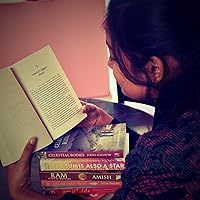
Ahalya's awakening is the story of Ahalya the unblemished who was created by Brahma.
We get to know about her in Ramayana but it is usually restricted to few pages.
.
In this book, Kavita kane takes us to Ahalya's childhood where we get to know about her beauty, her intellect and her ambition to become a Rishika.
.
As she grew up she rebelled against her mother's will that was to get her married and become a queen.
She went to Rishi Gautam's ashram and ends up falling in love with him.
.
The story unfolds the events that were responsible for the mistake she committed.
.
Over those years when she was a stone she saw her life in a flash and realised that she had misunderstood herself.
In the stillness, she found herself back and awakens to see the light, to see who she really was 'Ahalya' - the one with no Hala, no sin, no crime, no guilt.
.
.
.
The book is a must read for the mythology lovers.
It was little dramatic in the beginning but as the story moves forward it becomes really intriguing. And I absolutely loved its epilogue
We get to know about her in Ramayana but it is usually restricted to few pages.
.
In this book, Kavita kane takes us to Ahalya's childhood where we get to know about her beauty, her intellect and her ambition to become a Rishika.
.
As she grew up she rebelled against her mother's will that was to get her married and become a queen.
She went to Rishi Gautam's ashram and ends up falling in love with him.
.
The story unfolds the events that were responsible for the mistake she committed.
.
Over those years when she was a stone she saw her life in a flash and realised that she had misunderstood herself.
In the stillness, she found herself back and awakens to see the light, to see who she really was 'Ahalya' - the one with no Hala, no sin, no crime, no guilt.
.
.
.
The book is a must read for the mythology lovers.
It was little dramatic in the beginning but as the story moves forward it becomes really intriguing. And I absolutely loved its epilogue

December 31, 2020
Was it wrong for Ahalya to succumb to her desire of being loved by her husband? Wasn't it wrong for her husband Rishi Gautam to have neglected his duty as a husband towards her wife? How can love and lust be a phase in a man's life? How easy it is for society to ask a woman to accept everything happening to her - Being neglected by her (Ahalya) husband or Being left by her (Urmila) husband? What does it means to find oneself?
The contents of the book are relevant to date.
The contents of the book are relevant to date.

April 24, 2021
Another engrossing book by Kavita Kane. Her mastery over Indian mythology and weaving it into a compelling story is truly remarkable. She has the art of conveying the plight of women in the Indian context through these female protagonists. However, the best part of the book comes at the end. The conversation between Sita and Ahilya is like the icing on the cake. The poignancy of this conversation takes your breath away. In it lies the essence of the entire story.

February 26, 2025
Homie could have sipped wine and enjoyed life but had to turn to a stone to realise she was torn between someone who didn't understand consent and someone who took her for granted.

April 24, 2023
12th Book of 2023
When it comes to India’s historical stories or mythology – howsoever you want to refer it – we are always provided only an overview of them since childhood. Thankfully, the world of books enables us to know more about each of these characters we want to delve into. One such character who is always referred to be turned into stone for cheating her husband is Ahalya. That is how we know her since we know about her. Kavita Kane’s latest book named “Ahalya’s Awakening” is an attempt to retell her story and let the readers know what prompted her to take such a decision which would change her image for years to come.
The book is of almost 350-pages but has been narrated in a wonderful thrilling manner which makes it a perfect page-turner. You would always want to know what next decision will Ahalya take as most of them are against her family, brother, husband or the people who wanted to confine her personality as per their convenience. This is the 1st book I have read from the pen of Kavita Kane and I must say, her command over the English language and sense of narration is terrific. The way she has written crisp sentences and powerful dialogues makes everything so imaginable and impactful that you can visualize the whole thing happening in front of you. All the conversations between the characters make you love them for what they are- right or wrong.
The story begins with lots of characters hence it is quite a slow-read in initial few pages as you want to understand background of each of them and how they are related with Ahalya. After that, the story is very interesting until her wedding with Rishi Gautam. The book gets quite slow after that but the pre-climax and climax are enough to bring you back into the story. Author has not shied away while talking in negative sense about the historical characters such as Indra, Gautam, Ahalya, her parents or anyone else. It shows her clarity towards her understanding of the tale and how she wants to convey it to us.
Kavita has tried speaking about many contemporary issues through her protagonist, Ahalya, which is quite evident right from the start of the book. The initial page focuses on how Ahalya is adamant to complete her studies rather than getting married – which is considered to be the only option for girls after they reach a respective age. Author emphasizes on the point regarding how essential it is for the girl to study than getting married early. A girl needs to have her own identity rather than always being referred as someone’s daughter, sister, wife or mother. Later, Ahalya, again stands against the society and choses to marry a rishi who has been a teacher to her rather than the boy her family preferred for her. It shows her strong character and how she took all the important decisions for herself.
The complexity in her character arises after she gets married and finds herself not getting the same attention as she deserves. Here onwards, there are many philosophical aspects mentioned in big paragraphs which discusses her dilemmas and traumas. I really enjoyed reading these sections and wanted to highlight all of them. I liked how the last chapter is based upon her conversation with Sita, another character from Ramayan who is supposedly said to be treated unfairly by her husband because of the citizens. It is one of the unexpected and unique ending to this book. The way Kavita describes the love, romantic and love-making scenes as well makes you go crazy. Haha! The book, basically, talks about women empowerment majorly and will be loved by young girls who can relate with it better.
Now, talking about the drawbacks, I must say that there aren’t too many subplots in the book for which it was needed to be spoken in 350 pages. The book could have been easily summed up within 250 pages and it would have sounded more effective. It is stretched and dragged at many instances. The book is written to woo the modern feminists for whom anything that the female gender does is right and justified even if it is completely wrong. Author has tried to speak everything from the same lenses and made all the male characters sound wrong and women characters sound extremely right even though they have made mistakes from their end too. You can always preach such social message through your book in few instances but every sentence of the book screams toxic feminism on your face which becomes irritating and annoying after a point of time. Similarly, I feel author could have restricted talking about the Sita’s part from Uttar Ramayan which is still a controversy whether it’s an original text from our history or a morphed one.
Overall, this is an interesting read and gives you insight about one of the important tales of our culture. I give this book 4 stars out of 5. Kavita Kane’s writing style is unmissable.
Thanks!
WRITING BUDDHA
When it comes to India’s historical stories or mythology – howsoever you want to refer it – we are always provided only an overview of them since childhood. Thankfully, the world of books enables us to know more about each of these characters we want to delve into. One such character who is always referred to be turned into stone for cheating her husband is Ahalya. That is how we know her since we know about her. Kavita Kane’s latest book named “Ahalya’s Awakening” is an attempt to retell her story and let the readers know what prompted her to take such a decision which would change her image for years to come.
The book is of almost 350-pages but has been narrated in a wonderful thrilling manner which makes it a perfect page-turner. You would always want to know what next decision will Ahalya take as most of them are against her family, brother, husband or the people who wanted to confine her personality as per their convenience. This is the 1st book I have read from the pen of Kavita Kane and I must say, her command over the English language and sense of narration is terrific. The way she has written crisp sentences and powerful dialogues makes everything so imaginable and impactful that you can visualize the whole thing happening in front of you. All the conversations between the characters make you love them for what they are- right or wrong.
The story begins with lots of characters hence it is quite a slow-read in initial few pages as you want to understand background of each of them and how they are related with Ahalya. After that, the story is very interesting until her wedding with Rishi Gautam. The book gets quite slow after that but the pre-climax and climax are enough to bring you back into the story. Author has not shied away while talking in negative sense about the historical characters such as Indra, Gautam, Ahalya, her parents or anyone else. It shows her clarity towards her understanding of the tale and how she wants to convey it to us.
Kavita has tried speaking about many contemporary issues through her protagonist, Ahalya, which is quite evident right from the start of the book. The initial page focuses on how Ahalya is adamant to complete her studies rather than getting married – which is considered to be the only option for girls after they reach a respective age. Author emphasizes on the point regarding how essential it is for the girl to study than getting married early. A girl needs to have her own identity rather than always being referred as someone’s daughter, sister, wife or mother. Later, Ahalya, again stands against the society and choses to marry a rishi who has been a teacher to her rather than the boy her family preferred for her. It shows her strong character and how she took all the important decisions for herself.
The complexity in her character arises after she gets married and finds herself not getting the same attention as she deserves. Here onwards, there are many philosophical aspects mentioned in big paragraphs which discusses her dilemmas and traumas. I really enjoyed reading these sections and wanted to highlight all of them. I liked how the last chapter is based upon her conversation with Sita, another character from Ramayan who is supposedly said to be treated unfairly by her husband because of the citizens. It is one of the unexpected and unique ending to this book. The way Kavita describes the love, romantic and love-making scenes as well makes you go crazy. Haha! The book, basically, talks about women empowerment majorly and will be loved by young girls who can relate with it better.
Now, talking about the drawbacks, I must say that there aren’t too many subplots in the book for which it was needed to be spoken in 350 pages. The book could have been easily summed up within 250 pages and it would have sounded more effective. It is stretched and dragged at many instances. The book is written to woo the modern feminists for whom anything that the female gender does is right and justified even if it is completely wrong. Author has tried to speak everything from the same lenses and made all the male characters sound wrong and women characters sound extremely right even though they have made mistakes from their end too. You can always preach such social message through your book in few instances but every sentence of the book screams toxic feminism on your face which becomes irritating and annoying after a point of time. Similarly, I feel author could have restricted talking about the Sita’s part from Uttar Ramayan which is still a controversy whether it’s an original text from our history or a morphed one.
Overall, this is an interesting read and gives you insight about one of the important tales of our culture. I give this book 4 stars out of 5. Kavita Kane’s writing style is unmissable.
Thanks!
WRITING BUDDHA

November 16, 2022
The two great Indian epics - Ramayana and Mahabharata are full of brave women whose stories have been overshadowed by those of men. Ahalya is one such woman revered for her beauty but not for her intelligence, from the Ramayana. This is her story.
Ahalya is the daughter of King Mudgal and Queen Nalayani and twin sister of Prince Divodas from Panchaal. She is said to be created by Lord Brahma himself. When the king of Gods, Indra helps her brother win a battle, he is invited to their palace, where he is left awestruck by Ahalya's beauty. He can't think of anything other than marrying her, but Ahalya wants to study further at an Ashram.
Ahalya's mother, Nalayani wants to see her daughter married as soon as possible but her adamant daughter won't give up on her studies. Nalayani surprisingly relents one day and Ahalya is sent to study at Rishi Gautam's Ashram, whom she marries after sometime. But why was she cursed? How did she turn to stone? Read to know!
I loved the way this book portrays the character of Ahalya so realistically. The author tells the story in a very interesting manner right from her birth. It shows how Ahalya yearned to control her own destiny and how it is relatable to every woman, even today. A must-read!
Ahalya is the daughter of King Mudgal and Queen Nalayani and twin sister of Prince Divodas from Panchaal. She is said to be created by Lord Brahma himself. When the king of Gods, Indra helps her brother win a battle, he is invited to their palace, where he is left awestruck by Ahalya's beauty. He can't think of anything other than marrying her, but Ahalya wants to study further at an Ashram.
Ahalya's mother, Nalayani wants to see her daughter married as soon as possible but her adamant daughter won't give up on her studies. Nalayani surprisingly relents one day and Ahalya is sent to study at Rishi Gautam's Ashram, whom she marries after sometime. But why was she cursed? How did she turn to stone? Read to know!
I loved the way this book portrays the character of Ahalya so realistically. The author tells the story in a very interesting manner right from her birth. It shows how Ahalya yearned to control her own destiny and how it is relatable to every woman, even today. A must-read!

July 6, 2020
Ahalya's Awakening is my first book by the author and rest are in my list to read. The book is written in a plain yet intriguing way that make you stick to it. The story of Ahalya's, a powerful King's daughter and later a powerful and knowledgeable Rishi's wife. She wad one lady who was blessed with captivating beauty by the Lord Brahma himself. But not only was she beautiful, she was witty and intelligent - which she acknowledged more than just been called pretty.
The thing that striked the most was how her life was judged between the ignorance of Rishi Gautam and obsession of Lord Indra. Was the judgement fair, was an awakening of her mind was required just because she felt a natural human desire.
She indeed became a fool for a man's love and care forgetting about herself and her passion. Till now, she is one woman who is cursed for cheating on her husband, but was it this all only her fault? Wasn't she the victim of long ignorance? Wasn't she the one who was deceived by the great Lord Indra? Was it her fault to be attractive in a way, Indra couldn't hold her lust after years? Was she not the victim of his husband lack of judgement and understanding?
The thing that striked the most was how her life was judged between the ignorance of Rishi Gautam and obsession of Lord Indra. Was the judgement fair, was an awakening of her mind was required just because she felt a natural human desire.
She indeed became a fool for a man's love and care forgetting about herself and her passion. Till now, she is one woman who is cursed for cheating on her husband, but was it this all only her fault? Wasn't she the victim of long ignorance? Wasn't she the one who was deceived by the great Lord Indra? Was it her fault to be attractive in a way, Indra couldn't hold her lust after years? Was she not the victim of his husband lack of judgement and understanding?

March 27, 2021
Yes, we all are aware of Ahalya's story since she was fleetingly mentioned in the great epic of Ramayana. But mostly we view her as either completely black or completely white - the one who cheated on her husband or the one who was tricked and seduced by Indra dressed as her husband, Rishi Gautam.
But there is more to her story than this and Kavita Kane has presented to us this beautiful rendering of her story. We get to see Ahalya as a princess, a student, a wife, a mother and most of all - a woman on the path of self exploration.
Here, we are taken through Ahalya's entire journey to make us understand why she did what she did. She hasn't been shown as completely faulty or completely innocent, Rishi Gautam was equally at fault too. And this is what I liked the best about this book - Ahalya hasn't been needlessly glorified in the name of Feminism!
Apart from Ahalya, we also come across Sachi's (Indra's wife) story here and this tale too amazed me!
If you love mythology, then you need to read this book! You are missing out on a gem♥️
But there is more to her story than this and Kavita Kane has presented to us this beautiful rendering of her story. We get to see Ahalya as a princess, a student, a wife, a mother and most of all - a woman on the path of self exploration.
Here, we are taken through Ahalya's entire journey to make us understand why she did what she did. She hasn't been shown as completely faulty or completely innocent, Rishi Gautam was equally at fault too. And this is what I liked the best about this book - Ahalya hasn't been needlessly glorified in the name of Feminism!
Apart from Ahalya, we also come across Sachi's (Indra's wife) story here and this tale too amazed me!
If you love mythology, then you need to read this book! You are missing out on a gem♥️

April 29, 2020
We often see Mythology from a Male perspective, their heroic acts, their valor but forget the small yet important role these females play in shaping these stories. If they are given their spotlight, they have their own Interesting story to tell which is full of exhilaration, strength and sacrifices and helps in shaping the bigger picture. So is one story of Ahalaya's Awakening by Kavita Kane.
Like all Kavita Kanè's books where she talks about the lesser significant characters in the mythology, Ahalaya is no different. All women are defined by the roles the society chooses for her, but few ponder upon the fact that she is a woman with desires and this book conveys the mere fact. A woman so enchanting that compelled Lord of the Devas, Indra to cross all boundaries and so brilliant that forced the famous Rishi Gautam to fall in love. Yet no one could comprehend her inner turmoil , that is so magically captured by Kavita Kanè.
The very theme of this book is the balance we have to create between love and loyalty and the underlying deception which is looming in the background. What intrigued me to this book was the fact that through her trials and tribulations, her redemption and retribution she found herself ; just the way she was born - pure without any faults. She doesn't need anyone's sanction or blessings, she sought her own salvation.
Like all Kavita Kanè's books where she talks about the lesser significant characters in the mythology, Ahalaya is no different. All women are defined by the roles the society chooses for her, but few ponder upon the fact that she is a woman with desires and this book conveys the mere fact. A woman so enchanting that compelled Lord of the Devas, Indra to cross all boundaries and so brilliant that forced the famous Rishi Gautam to fall in love. Yet no one could comprehend her inner turmoil , that is so magically captured by Kavita Kanè.
The very theme of this book is the balance we have to create between love and loyalty and the underlying deception which is looming in the background. What intrigued me to this book was the fact that through her trials and tribulations, her redemption and retribution she found herself ; just the way she was born - pure without any faults. She doesn't need anyone's sanction or blessings, she sought her own salvation.

May 17, 2021
Ahalya's Awakening, I have been wanting to read this book for more than a year now. Got it finally, started reading it, and found it terribly boring. 😃 And then I skipped the middle few chapters, and started the part where Indra comes to the Ashram to seduce Ahalya. Read till the end in a few hours.
And then got back to the boring part again.
Not sure what to believe.
Is Ahalya innocent?
Was she taken advantage of? Or did she surrender to the seduction willingly, according to this author?
Did a bit of research on the net. Most of the sites, I checked made Ahalya the traitor, only one website, insisted on her innocence.
And then got back to the boring part again.
Not sure what to believe.
Is Ahalya innocent?
Was she taken advantage of? Or did she surrender to the seduction willingly, according to this author?
Did a bit of research on the net. Most of the sites, I checked made Ahalya the traitor, only one website, insisted on her innocence.

June 8, 2020
It is awakeing in true sense not only for Ahalya but for everyone reading this. The internal turmoil of virtuousness and desire is beautifully narrated by the author. It is every woman's story. Succumbing to one's desire is something for which most of the women are still judged in our society. And it is important to mention that the book has one of the most beautifully written epilogue. It is a must read!

September 10, 2020
This book is full of wisdom. Some blame Indra and Ahalya , some blame Indra alone. But no one tried to understand what Ahalya actually thought , how she lived and what she went through. This book will take to the journey of Ahalya's life and her choices. I am sure this book's wisdom will force you to question your own moral judgements.
P.S:- Read the epilogue at last don't rush to it and read it with a calm and an open mind to completely absorb the wisdom it imparts, its life changing.
P.S:- Read the epilogue at last don't rush to it and read it with a calm and an open mind to completely absorb the wisdom it imparts, its life changing.

April 3, 2020
Swept by Amazon reviews. A nice book that could have been much better.
March 15, 2021
A modern interpretation of Ahalya's story. As per original story Ahalya is married to Rishi Gautam and Indra in the guise of Gautam beds her and Gautam curses her to be a rock till Ram redeems her aeons later.
In Kavita's interpretation Ahalya is a very intelligent girl who is not allowed to grow her learning thanks to the patriarchy around her and ironically her mother wishes to get her married to Indra who is a constant visitor at their palace and is smitten by her beauty. Ahalya flatly refuses to marry Indra.
During a war she is sent to the ashram of Gautam with whom she has a lot of intellectual discussions and in the process the fall in love, without either one of them expressing it explicitly.
After her return home she becomes forlorn and it is exacerbated by the fact that her father and brother are arranging for a swayamvar for her. She finally spills her being in love with someone else, but succumbs to the pressure and agrees to the swayamvar which everyone predicts will be won by Indra.
Fortune favours her and Gautam surprisingly wins her hand and he comes and weds her too. The initial days of marital bliss turn bitter as she gives birth to one child after another, looks after and runs Gautam's ashram. Her learning comes to a grinding halt as the burden of managing everything keeps increasing. The bonhomie between her and Gautam evaporates and Gautam appears another masochist.
Indra comes in at the opportune moment and Ahalya willingly gives in.
The question the author asks is should Ahalya be punished the way she was. The author's answers come out when Ahalya meets Sita in the forest after she has been banished by Ram. The discussion between the two women is worth reading.
One wonders does it make sense to look at millenniums old events through the coloured glasses of present day feminism.
A decent read.
In Kavita's interpretation Ahalya is a very intelligent girl who is not allowed to grow her learning thanks to the patriarchy around her and ironically her mother wishes to get her married to Indra who is a constant visitor at their palace and is smitten by her beauty. Ahalya flatly refuses to marry Indra.
During a war she is sent to the ashram of Gautam with whom she has a lot of intellectual discussions and in the process the fall in love, without either one of them expressing it explicitly.
After her return home she becomes forlorn and it is exacerbated by the fact that her father and brother are arranging for a swayamvar for her. She finally spills her being in love with someone else, but succumbs to the pressure and agrees to the swayamvar which everyone predicts will be won by Indra.
Fortune favours her and Gautam surprisingly wins her hand and he comes and weds her too. The initial days of marital bliss turn bitter as she gives birth to one child after another, looks after and runs Gautam's ashram. Her learning comes to a grinding halt as the burden of managing everything keeps increasing. The bonhomie between her and Gautam evaporates and Gautam appears another masochist.
Indra comes in at the opportune moment and Ahalya willingly gives in.
The question the author asks is should Ahalya be punished the way she was. The author's answers come out when Ahalya meets Sita in the forest after she has been banished by Ram. The discussion between the two women is worth reading.
One wonders does it make sense to look at millenniums old events through the coloured glasses of present day feminism.
A decent read.

June 29, 2021
*Blurb as on Goodreads
I searched all these years for myself—and I only found Ahalya, the woman I was supposed to be born as: unblemished, without any faults. I had no hala in me, no sin, no crime, no guilt. What I had done was to respond to the call of life within me…’
Ahalya. Created by Brahma; married to one of the greatest rishis of all time; desired by the king of gods, Indra. A woman maligned and cursed.
But who was Ahalya? What did she want? Did she have ambitions and desires?
In this sparkling retelling of the well-known legend, bestselling author Kavita Kané draws out the voice of a character that lacked one—even before she was turned to stone. Tracing her journey from a precocious child, to a studious and sheltered princess, to the loving wife of Rishi Gautam, Ahalya’s Awakening delves into the mind of a woman who yearns to control her own destiny. In her tale lies the story of every woman, even today.
The two liner infidelity story of Ahalya, Indra and Gautam which is mentioned in Ramayana, mostly only to display Ram’s ability to forgive and provide nirvana to struggling souls has always fascinated me. Ram touches Ahalya who was turned into stone because of her husband’s curse. But there wasn’t enough mention anywhere to understand the relation between the three main characters of the story and the detailed reasons behind Gautam’s curse.
Kavita Kane has done justice to the story by explaining the reasons of their choices and relationship between the three. Her storyline is definite powerful although I wasn’t impressed by her storytelling skills. I found it a bit clumsy. What I liked about the author was her realistic way of presenting each character. They had their strengths, weaknesses and made choices based on their need & desires.
Marriage, household and duties soon conflicted with Ahalya’s passion. Her conjugal life which was blissful in the initial years, soon changed colours.
Gautam’s ideas of women’s sexual desires appeared quite progressive when he imparted his regular lessons. But when it came to practicing what he preached, Gautam failed terribly. Aspiring to be a Maharishi, working on the creation of Dharmasutras, travelling across the country to build ashrams, he distanced himself from his household. After his fourth child, he did not even acknowledge the fact that as a husband he was supposed to provide emotional, physical and mental support to his wife. Kavita Kane brilliantly gives voice to Ahalya’s anguish, sexual frustration and the development of thoughts that clashed with marital vows. Indra, took advantage of Ahalya’s vulnerability, but what makes this book different is that Ahalya refuses to call herself an innocent victim, duped by Indra. She violated marital norms, but had her own reasons. Gautam who realized his imprudence after a long conversation with his wife, chose to abandon her instead of working on their marriage. Indra was cursed to have thousand vulvas in his body, but he was forgiven over time and he was still a God. It was Ahalya who stood stagnant in time, and self inflicted the curse of immobility, remaining a silent victim of social conventions.
The first thing I loved about the book was the concept of Indra. I had no idea that Indra is a position (king of heaven) and not a name. So if you are bad Indra and you couldn’t do justice with your role, you can be voted out. I also liked how the complex emotions like infatuation, love, jealousy, longing, infidelity and helplessness are explained in this complex story. The relationship between Indra and his wife is also captured beautifully. Overall, it’s a good read to understand the complexities of marriage and infidelity and very much relevant to today’s world as well.
I searched all these years for myself—and I only found Ahalya, the woman I was supposed to be born as: unblemished, without any faults. I had no hala in me, no sin, no crime, no guilt. What I had done was to respond to the call of life within me…’
Ahalya. Created by Brahma; married to one of the greatest rishis of all time; desired by the king of gods, Indra. A woman maligned and cursed.
But who was Ahalya? What did she want? Did she have ambitions and desires?
In this sparkling retelling of the well-known legend, bestselling author Kavita Kané draws out the voice of a character that lacked one—even before she was turned to stone. Tracing her journey from a precocious child, to a studious and sheltered princess, to the loving wife of Rishi Gautam, Ahalya’s Awakening delves into the mind of a woman who yearns to control her own destiny. In her tale lies the story of every woman, even today.
The two liner infidelity story of Ahalya, Indra and Gautam which is mentioned in Ramayana, mostly only to display Ram’s ability to forgive and provide nirvana to struggling souls has always fascinated me. Ram touches Ahalya who was turned into stone because of her husband’s curse. But there wasn’t enough mention anywhere to understand the relation between the three main characters of the story and the detailed reasons behind Gautam’s curse.
Kavita Kane has done justice to the story by explaining the reasons of their choices and relationship between the three. Her storyline is definite powerful although I wasn’t impressed by her storytelling skills. I found it a bit clumsy. What I liked about the author was her realistic way of presenting each character. They had their strengths, weaknesses and made choices based on their need & desires.
Marriage, household and duties soon conflicted with Ahalya’s passion. Her conjugal life which was blissful in the initial years, soon changed colours.
Gautam’s ideas of women’s sexual desires appeared quite progressive when he imparted his regular lessons. But when it came to practicing what he preached, Gautam failed terribly. Aspiring to be a Maharishi, working on the creation of Dharmasutras, travelling across the country to build ashrams, he distanced himself from his household. After his fourth child, he did not even acknowledge the fact that as a husband he was supposed to provide emotional, physical and mental support to his wife. Kavita Kane brilliantly gives voice to Ahalya’s anguish, sexual frustration and the development of thoughts that clashed with marital vows. Indra, took advantage of Ahalya’s vulnerability, but what makes this book different is that Ahalya refuses to call herself an innocent victim, duped by Indra. She violated marital norms, but had her own reasons. Gautam who realized his imprudence after a long conversation with his wife, chose to abandon her instead of working on their marriage. Indra was cursed to have thousand vulvas in his body, but he was forgiven over time and he was still a God. It was Ahalya who stood stagnant in time, and self inflicted the curse of immobility, remaining a silent victim of social conventions.
The first thing I loved about the book was the concept of Indra. I had no idea that Indra is a position (king of heaven) and not a name. So if you are bad Indra and you couldn’t do justice with your role, you can be voted out. I also liked how the complex emotions like infatuation, love, jealousy, longing, infidelity and helplessness are explained in this complex story. The relationship between Indra and his wife is also captured beautifully. Overall, it’s a good read to understand the complexities of marriage and infidelity and very much relevant to today’s world as well.

August 5, 2020
Kavita Kane's latest book 'Ahalya's Awakening' narrates the ironic tale of the most beautiful woman on the face of the Earth - Ahalya. It is perceived that Ahalya is the creation of Lord Brahma. However, Kavita Kane narrates Ahalya's tale from infancy and states that she is the daughter of King Mudgal and Queen Nalayani. She is bestowed with all the desirable qualities that a woman wishes for be it beauty, wit, grace and most importantly intelligence. Ahalya wishes to seek knowledge rather and be a 'rishika' rather than marry a king and be his queen. Due to a family crisis, she is sent away to stay at Rishi Gautam's ashram for protection. Here she channelizes this golden opportunity to learn various scriptures and get involved in intellectual discussions with Rishi Gautam. Such discussions ranged across diverse topics such as justice, administration and even infidelity. Rishi Gautama expressed a quite liberal mindset when it came to infidelity but when reality hit hard the tables turned upside down.
.
.
.
Rishi Gautama liked Ahalya for her intellectual abilities and Ahalya's affection towards him increased day by day. Much to her mother's chagrin, Ahalya married Rishi Gautama and begetted children from him. Post marriage and her involvement with the kids, Ahalya couldn't spare time to pursue her studies or even talk to Rishi Gautama on other research topics except mundane affairs. Rishi Gautama too got involved in severe austerities and was busy training his students. Hence he could not devote time to Ahalya leaving behind a void.
.
.
.
Meanwhile, Indra is obsessed with Ahalya's beauty since a long while and has expressed his desire to marry her quite often. Each time Ahalya rejectes his proposal on the grounds that he is too vain. Even after her marriage with Rishi Gautam he still pines for her and is waiting for a chance to prey upon her. Unfortunately, that dreaded day arrives and Indra manages to do the most unthinkable act.
How does Indra manage to commit this heinous crime?
What curse is imposed by Rishi Gautama on Indra when he knows the truth?
Who frees Ahalya from her curse and when ?
How exactly is Ahalya awakened due to her curse?
Read this book to find the answers to these questions and many more which are teeming up in your mind right now as you read the post!
.
.
.
Rishi Gautama liked Ahalya for her intellectual abilities and Ahalya's affection towards him increased day by day. Much to her mother's chagrin, Ahalya married Rishi Gautama and begetted children from him. Post marriage and her involvement with the kids, Ahalya couldn't spare time to pursue her studies or even talk to Rishi Gautama on other research topics except mundane affairs. Rishi Gautama too got involved in severe austerities and was busy training his students. Hence he could not devote time to Ahalya leaving behind a void.
.
.
.
Meanwhile, Indra is obsessed with Ahalya's beauty since a long while and has expressed his desire to marry her quite often. Each time Ahalya rejectes his proposal on the grounds that he is too vain. Even after her marriage with Rishi Gautam he still pines for her and is waiting for a chance to prey upon her. Unfortunately, that dreaded day arrives and Indra manages to do the most unthinkable act.
How does Indra manage to commit this heinous crime?
What curse is imposed by Rishi Gautama on Indra when he knows the truth?
Who frees Ahalya from her curse and when ?
How exactly is Ahalya awakened due to her curse?
Read this book to find the answers to these questions and many more which are teeming up in your mind right now as you read the post!

November 9, 2019
One of the most brilliant books that I read recently.
If you have been following me for a while, you must already know how much i love mythology ❤️
Ahalya's Awakening by Kavita Kane is the retelling of a well-known legend. Ahalya has been mentioned in the great epic Ramayana, but this book gives a great understanding of her life from a princess to a rishi's wife and also her curse.
Ahalya was the Princess of Panchal, daughter of the great King Mudgal and Queen Nalayani and twin sister of Prince Divodas. Created by Lord Brahma himself she was named 'Ahalya' by Rishi Vashisht which means the beautiful one without any blemishes.
She was the most beautiful girl in the three world and was desired by Indra, the Lord of heavens himself. But Ahalya was a girl driven by curiosity, she wanted to study more, wanted to be praised for her intelligence rather than her beauty.
She was sent to Rishi Gautam's ashram for higher studies and that was when she fell in love with him and he with her.
But both of them were fighting their feelings as they knew they couldn't be together. But Lord Brahma had some plans and Ahalya and Gautam get married eventually. What was Indra's reaction to this? How did he take this rejection?
Ahalya and Gautam led a blissful married life, they had four children. Ahalya shouldered all the responsibilities of the ashram so bravely along with her children and her studies.
Then what changed this? Why did Ahalya commit adultery? What did she want? Was it wrong having desires? What was Gautam's reaction to this act? What happened after the curse, to Ahalya and Gautam and the children too?
You need to grab your copy to read about this!
Trust me, the story is unveiled so beautifully that nothing is portrayed as right and wrong, we are to judge and take away what we want from the story!
Definitely Must Read!
If you have been following me for a while, you must already know how much i love mythology ❤️
Ahalya's Awakening by Kavita Kane is the retelling of a well-known legend. Ahalya has been mentioned in the great epic Ramayana, but this book gives a great understanding of her life from a princess to a rishi's wife and also her curse.
Ahalya was the Princess of Panchal, daughter of the great King Mudgal and Queen Nalayani and twin sister of Prince Divodas. Created by Lord Brahma himself she was named 'Ahalya' by Rishi Vashisht which means the beautiful one without any blemishes.
She was the most beautiful girl in the three world and was desired by Indra, the Lord of heavens himself. But Ahalya was a girl driven by curiosity, she wanted to study more, wanted to be praised for her intelligence rather than her beauty.
She was sent to Rishi Gautam's ashram for higher studies and that was when she fell in love with him and he with her.
But both of them were fighting their feelings as they knew they couldn't be together. But Lord Brahma had some plans and Ahalya and Gautam get married eventually. What was Indra's reaction to this? How did he take this rejection?
Ahalya and Gautam led a blissful married life, they had four children. Ahalya shouldered all the responsibilities of the ashram so bravely along with her children and her studies.
Then what changed this? Why did Ahalya commit adultery? What did she want? Was it wrong having desires? What was Gautam's reaction to this act? What happened after the curse, to Ahalya and Gautam and the children too?
You need to grab your copy to read about this!
Trust me, the story is unveiled so beautifully that nothing is portrayed as right and wrong, we are to judge and take away what we want from the story!
Definitely Must Read!

September 8, 2020
Ahalya's Awakening by Kabita Kané
📓Genre: Mythological Fiction Retelling Rendition
Star: 🌟🌟🌟🌟
🔖This book was recommended to me by a friend.
🔖What I liked about this book is the author's choice to write about the rarely explored characters of the Hindu epic Ramayana.
🔖The legend of Ahalya is pretty well-known, where she was seduced by Lord Indra, cursed by her husband for infidelity and ultimately liberated from the curse by Lord Rama. But there are very few texts which talk about Ahalya as a human being.
🔖Behind the known legend of Maharishi Gautam's wife being cursed to turn into stone ― there lies the tale of who Ahalya truly was. She was a creation of Brahma, who grew up as an intelligent & beautiful princess of Panchal & became the wife of a great sage. But most importantly, she was an individual, a woman, with her own sets of dreams & desires. And through this story, the author gives a voice to this unsung tale.
🔖The story begins with Menaka narrating the tale of Ahalya. Gradually, a beautiful story describing ― Ahalya's joy, love, desires, pain and sacrifices ― unfolds before the readers.
🔖Having previously read other books by the author, I was already familiar with the fluid style of narration. And in this one too, the author didn't disappoint in presenting a smooth & beautiful narrative.
🔖The book is a good choice for lovers of mythological-fiction.
🔸Final verdict: Great
🔸Book cover: The partially fading hues symbolizes the legend.
🔸Writing style: Engaging.
🔸Character development: Some of the secondary characters could've been explored a bit more.
📓Genre: Mythological Fiction Retelling Rendition
Star: 🌟🌟🌟🌟
🔖This book was recommended to me by a friend.
🔖What I liked about this book is the author's choice to write about the rarely explored characters of the Hindu epic Ramayana.
🔖The legend of Ahalya is pretty well-known, where she was seduced by Lord Indra, cursed by her husband for infidelity and ultimately liberated from the curse by Lord Rama. But there are very few texts which talk about Ahalya as a human being.
🔖Behind the known legend of Maharishi Gautam's wife being cursed to turn into stone ― there lies the tale of who Ahalya truly was. She was a creation of Brahma, who grew up as an intelligent & beautiful princess of Panchal & became the wife of a great sage. But most importantly, she was an individual, a woman, with her own sets of dreams & desires. And through this story, the author gives a voice to this unsung tale.
🔖The story begins with Menaka narrating the tale of Ahalya. Gradually, a beautiful story describing ― Ahalya's joy, love, desires, pain and sacrifices ― unfolds before the readers.
🔖Having previously read other books by the author, I was already familiar with the fluid style of narration. And in this one too, the author didn't disappoint in presenting a smooth & beautiful narrative.
🔖The book is a good choice for lovers of mythological-fiction.
🔸Final verdict: Great
🔸Book cover: The partially fading hues symbolizes the legend.
🔸Writing style: Engaging.
🔸Character development: Some of the secondary characters could've been explored a bit more.

October 17, 2019
I love Kavita Kane's work but this somehow didn't have the same zing her books usually have. It felt a little rushed and somehow I didn't empathize with Ahalya as much as I would've liked it, given her personality and circumstances. If you've never read Kane's works before, I'd recommend trying one of the others before this one. Still a good read, just that I knocked off a star because it wasn't as good as her others for me.
Displaying 1 - 30 of 140 reviews