Jump to ratings and reviews
Rate this book

The Temple in Man: Sacred Architecture and the Perfect Man

Rate this book
This book contains the first published results of Schwaller's 12 years of research at the temple of Luxor and its implications for interpreting the symbolic and mathematical processes of the Egyptians through their sacred architecture.?

132 pages, Paperback

First published January 1, 1949

32 people are currently reading
826 people want to read

About the author

R.A. Schwaller de Lubicz

32 books113 followers
Known to English readers primarily for his work in uncovering the spiritual and cosmological insights of ancient Egypt. In books like Esotericism and Symbol, The Temple in Man, Symbol and the Symbolic, The Egyptian Miracle, and the monumental The Temple of Man--whose long awaited English translation has finally appeared--Schwaller de Lubicz argued, among other things, that Egyptian civilization is much older than orthodox Egyptologists suggest, a claim receiving renewed interest through the recent work of Graham Hancock and Robert Bauval.

If his view of Egyptian antiquity wasn't enough to place him securely beyond the pale, he also argued that the core of ancient Egyptian culture was a fundamental insight into "the laws of creation." Everything about Egyptian civilization, from the construction of the pyramids to the shape of a beer mug, de Lubicz claimed to be motivated by a central metaphysical vision about the nature of cosmic harmony and an awareness of humanity's place in the evolution of consciousness. As his translator Deborah Lawlor remarks (introduction to Nature Word 47), Schwaller de Lubicz's Egyptian studies are only a part of his overall work as a metaphysician and philosopher.

Born in Alsace-Lorraine, then part of Germany, René Schwaller grew up in a polyglot atmosphere. (He was later given the title "de Lubicz" by the Lithuanian poet and diplomat O. V. de Lubicz Milosz, for his efforts on behalf of Lithuania in the aftermath of World War I.) Alsace-Lorraine has oscillated between French and German rule many times since Schwaller's birth, and this Franco-Germanic blend lends a curious characteristic to his work. As Christopher Bamford (introduction to Schwaller’s Study of Numbers 1) suggests, Schwaller thought in German, but wrote in French. Added to the inherent difficulties of expressing nonlinear, "living" insights in "dead" linear language, this odd combination places many obstacles before a first-time reader. As he wrote apropos the insights into "functional consciousness," presented in his truly hermetic work, Nature Word (129): "Nature had shown me a great mountain, crowned with a peak of immaculate whiteness, but she was unable to teach me the way leading to it."

Readers wishing to grasp Schwaller's insights may feel that they, too, have found themselves at the foot of a very steep mountain. This challenging prospect would not have fazed Schwaller. He believed knowledge was the right only of those willing to make the effort to achieve it, the elite who would endure suffering in their pursuit of wisdom. This sensibility influenced his political views as well.

(extracted from "Rene Schwaller de Lubicz and the Intelligence of the Heart", by Gary Lachman: http://www.unitedearth.com.au/lubicz....)

Ratings & Reviews

What do you think?
Rate this book

Friends & Following

Create a free account to discover what your friends think of this book!

Community Reviews

5 stars
89 (50%)
4 stars
53 (29%)
3 stars
26 (14%)
2 stars
7 (3%)
1 star
2 (1%)
Displaying 1 - 18 of 18 reviews
Profile Image for David Beers.
7 reviews1 follower
July 15, 2014
I found as Schwaller De Lubicz by reading the bibliography of works by Graham Hancock and others. This is true esoteric knowledge here, and in my opinion De Lubicz is light years ahead of everyone else as far as understanding Egyptian mythology, religion, and culture. This work is an "entry level" into De Lubicz's work, simply wetting your taste for more. As you read this, you will feel your brain being stretched and pulled into a different configuration, as the knowledge within operates on many levels of understanding. One of the hermetic and alchemical masters, his work is a treasure of knowledge.
Profile Image for Suzanne Frank.
Author 13 books101 followers
October 26, 2017
There aren't words for this book. I had the joy of taking it to Luxor and walking through all of SdL's insights. A must for anyone into esoteric Egypt -- who is looking beyond and beneath the beautifully painted facades of this culture.
Profile Image for Radwa.
82 reviews
May 17, 2024
Not sure was it the writing style or the translation 🤔.. probably the writing style of Schwaller de Lubicz.
Profile Image for Mrekhy ET.
172 reviews174 followers
April 25, 2022
«إن الغموض لا يكمن في الشيء نفسه، ولكن في نتيجة فهمنا، وقدرتنا العقلية، وذكائنا الذي لا يتناغم ولا يتوافق مع العقلية التي صنعت الفكرة، وكل ما هنالك أن تعليمنا الحالي يمنعنا من الإعتراف بهذا.»
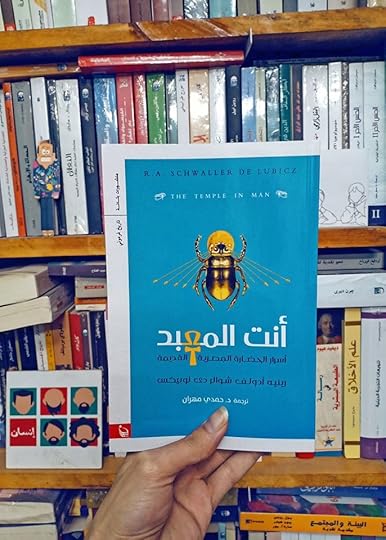

الكتاب ده تجربة ظريفة. هو بيتكلم عن فكرة محورية وهي إن المصريين القدماء كانوا بيبنوا المعابد بأشكال معينة لإيصال فكرة معينة من التصميم، وإن التصاميم دي بتعكس البنية الجسدية للإنسان، وقد إيه إن كل تصميم مليان رموز. رينيه أدولف هنا عايز يوصّل من الكتاب الصغير ده إن المصريين القدماء كان عندهم علم بالفلك والفيزيولوجيا أكبر بكتير مما كان متعارف عليه في وقت كتابة الكتاب، وبيحاول ينقل على قد ما يقدر روح الحضارة المصرية.

الكتاب لغته مش صعبة، ولكن لغة بتحاول تشرح الفكر اللي وضحته فوق، فهي لغة هندسية بشكل كبير، وده اللي هيمنع ناس كتير من الفهم المباشر لقصد وشرح الكاتب، ولكن في نفس الوقت الكاتب عنده بُعد فلسفي وروحي ومفيش نقاش هتشعر قد إيه هو عنده فهم لروح المصريين القدماء، وده اللي بيحاول يعكسه بالفعل طول الكتاب. اللطيف كمان في الكتاب إنه مليان صور ورسومات توضح كلام الكاتب.

للأسف الكتاب محتاج حد مهتم أكتر علشان يستثمر وقت أكبر في فهم البعد الروحي في التصاميم الهندسية المصرية القديمة، وأعتقد كمان محتاج فهم ولو بسيط للهندسة والبناء والتصاميم. كان نفسي الكتاب يكون شرح أكتر لفلسفة المصريين القدماء اللي أنا متأكد إن الكاتب متمكن منها؛ لأنه قدر يجذبني بشدّة بملاحظاته البسيطة اللي بين السطور. والترجمة جميلة جدًا.


Profile Image for Stefanie Dettmers.
Author 5 books13 followers
January 25, 2023
Back in the days when I studied archeology this small volume would have opened up my eyes for the much broader meaning behind historical sites and artifacts. But well, it crossed my path just now, many years after I exited the world of the alma mater, so I assume its perfect timing. In fact Schwaller de Lubicz's fascinating and insightful study of the temple of Luxor ties in with so many concepts I'm trying to amalgamate right now. And now it opens me up to look behind the barriers of our modern mind's concepts, to look at the mentality in which ancient buildings, artifacts, writings, philosophies have been created, to look at the actual creators, their world, their believe sytsems. Something I always considered to be of much more value than to cling to the physical archeological evidence. Schwaller de Lubicz's insights into the underlying principles of symbols is mind boggeling at first and then just delightful and enlightening!

This book enriched my studies on an overall level. Schwaller de Lubicz appears to have been the kind of universal scholar acting as agents to propell science in new directions for ages. Sadly, whenever these kind of people surface their contemporaries try their best to ignore them and (at best) mock their insights. A fate Schwaller de Lubicz shared with many of his predecessors and successors. Being brought up in the world of archeology I can picture the ridicule this brilliant man must have been submitted to. (I endured my fair share of it. Other than Schwaller I have been professionally trained in this science, the ridicule I took mostly stemmed from my disposition of being female. But it was also brought on by elderly scholars just knowing best (there were also women among them), because well ... because. And yes, this doesn't mean because they took any amount of time to look at the actual research or possessed any expertise in the topic presented.)

Schwaller de Lubicz's knowledge and broad perspective do not only stem from the fact that he was experienced in many fields of science, but most all he understood the true meaning of consciousness - the underlying principle of all life. Without it this book would be nothing and there would be no conclusion. To say the least: Schwallers evidence for his case is striking. Although nobody (or not many?) at his time seems to have listened or followed his lead.

So, my deepest symphathy goes out to Schwaller, but also my deepest gratitude. And I guess this is why people like him exist through the ages: to act as catalyst of knowledge WHENEVER and WHEREVER it is needed and appropriate. There are always ears eager to hear and eyes eager to see and brains eager to go CLICK. This makes taking on all the ridicule of the world worth it. Or as the equally brilliant Robert Temple puts it in A New Science of Heaven: How the new science of plasma physics is shedding light on spiritual experience: "When someone shouts "crazy" at you, put your fingers in your ears and carry on."
Profile Image for Giacomo Mantani.
88 reviews3 followers
September 14, 2018
Un riassunto del famoso ed enciclopedico libro Il Tempio dell'Uomo sempre di R.A. Schwaller De Lubicz. Ovviamente per la brevità dell'opera, molti dei concetti sono stati solamente accennati e si è cercato di fare trasparire nel modo più sintetizzato possibile il messaggio che voleva trasmettere l'autore.

I concetti fondamentali ripresi sono:

Noi dobbiamo, una volte er tutte, concepire il tempio faraonico come un seme che ha in gestazione il proprio frutto. Per loro la costruzione deve vivere, Herbert Ricke la considera addirittura come "vegetale".La crescita avviene in tre dimensioni; una gestazione è una trasformazione costante sino alla perfezione del seme nuovo.

Il mito è un tutto, la sintesi di ogni scienza, dato che trascrive la Conoscenza fondamentale delle Leggi di Genesi che si applicano a tutto. Così i Neter hanno il loro significato, sia in medicina che in astronomia, o in teologia che è la metafisica del Divenire con Ritorno.

La mentalità faraonica è tipicamente indiretta. Ci si servirà di una forma definita per evocare l'Idea di questa forma, cioè il complesso astratto che presiede a questa forma definita.

Tutto nella Natura che è Viva, è provocato dall'azione del complemento. Questo costituisce l' "incrocio" e il gioco della resistenza.

Quando gli Antichi tracciano una figura, non è più la figura che guardano, ma ciò che vi proiettano da se stessi: fisicamente la guardano come un'ombra, un traforo nella luce della sua assenza. Individuano i suoi contorni. Quando tracciano una figura geometrica, non è più questa figura ad interessarli, la la Legge fatale che la impone e la conseguenza fatale che esse provoca. Così la geometria assume lo stesso carattere di vita delle immagini che scolpiscono o tracciano.

E' impressionante vedere dalla moltitudine di raffigurazioni riportate nel libro, come ogni dettaglio avesse un senso, una Causa, diventando quindi Simbolo vivente.
Profile Image for Frederik.
89 reviews2 followers
May 16, 2021
One of those books that stuck with me. I read it 15 years ago when I was twenty and remember vividly how the extraordinary way it was written left me with a living insight in Ancient Luxor. De Lubicz was able and committed not to show ancient Egypt from how we in our age would look at it, but to convey how the Egyptians themselves have meaning and depth to their world.
Now, fifteen years later I have discovered that his wife Isha also writes wonderful books and that this particular work is a small version of a much more vast work called The Temple Of Man.
Profile Image for Karla.
4 reviews2 followers
February 14, 2024
Magnificent! Completely blew my mind...
"The Temple in Man" is a profound exploration of ancient Egyptian philosophy, symbolism, and the intricate connection between human consciousness and the architectural design of temples. Can't wait to read the rest of de Lubicz's books.
Profile Image for Chris.
67 reviews
December 13, 2019
Impenetrable! It might be genius but from my point of view was just numbers & data not explained in any meaningful way.
Profile Image for Daniel Jansky.
90 reviews3 followers
August 12, 2024
Wow, what a good book. Good studies of Hermeticism in architecture and philosophy of ancient Egypt with corresponding Catholic metaphysics.
Profile Image for Cesar Alexander Lara.
24 reviews
January 9, 2021
Muy interesante los estudios y los simbolismos descritos. Ahora toca investigar y no dejar solo la aceptación sin dudar.
17 reviews
October 11, 2007
There is much to learn from the ancients -- in many ways they (especially the architects of Luxor) were ahead of us in understanding of the spiritual nature of man and the secrets of the brain. The temple of Luxor is a an architectual puzzle meant to convey wonders of the human body and brain.
Profile Image for Maria.
5 reviews2 followers
Read
December 28, 2012
Quite hard to read in places (the math places mostly) but overall very interesting. It was weakest where it left math and surveying and went into mystical of the style of turn of the century spiritualists.
Profile Image for Bob Ladle.
28 reviews5 followers
January 14, 2019
reading this in tandem with De Lubicz's Sacred Science. Both convey a world view that is hermetic. Has whet my appetite to read his Temple of Man.
Displaying 1 - 18 of 18 reviews

Can't find what you're looking for?

Get help and learn more about the design.