More than a decade ago, Mira fled her small, segregated hometown in the south to forget. With every mile she traveled, she distanced herself from her past: from her best friend Celine, mocked by their town as the only white girl with black friends; from her old neighborhood; from the eerie Woodsman plantation rumored to be haunted by the spirits of slaves; from the terrifying memory of a ghost she saw that terrible day when a dare-gone-wrong almost got Jesse—the boy she secretly loved—arrested for murder.
But now Mira is back in Kipsen to attend Celine’s wedding at the plantation, which has been transformed into a lush vacation resort. Mira hopes to reconnect with her friends, and especially, Jesse, to finally tell him the truth about her feelings and the events of that devastating long-ago day.
But for all its fancy renovations, the Woodsman remains a monument to its oppressive racist history. The bar serves antebellum drinks, entertainments include horrifying reenactments, and the service staff is nearly all black. Yet the darkest elements of the plantation’s past have been carefully erased—rumors that slaves were tortured mercilessly and that ghosts roam the lands, seeking vengeance on the descendants of those who tormented them, which includes most of the wedding guests.
As the weekend unfolds, Mira, Jesse, and Celine are forced to acknowledge their history together, and to save themselves from what is to come.
LaTanya McQueen is the author of When the Reckoning Comes, a novel with Harper Perennial, and And It Begins Like This, an essay collection with Black Lawrence Press. Her work has been published in TriQuarterly, New Ohio Review, West Branch, Florida Review, Bennington Review, New Orleans Review, Fourteen Hills, The North American Review, Indiana Review, Passages North, Ninth Letter, Black Warrior Review, and several other journals. She received her MFA from Emerson College, her PhD from the University of Missouri, was the Robert P. Dana Emerging Writer Fellow at Cornell College, and is now an Assistant Professor at Coe College where she teaches English and Creative Writing. She edits creative nonfiction for the literary journal Gigantic Sequins. Her website is www.latanyamcqueen.com.
Closer to a 4.5 Ahhh, this was so good. So dark and haunting and atmospheric and I really loved the characters in this. Really great and relevant discussion about plantations and why it’s so inappropriate to have weddings and celebrations on land like this. I can’t wait to see what this author writes in the future!
Mira fled her small and segregated North Carolina town over a decade ago and never looked back. One day she receives an wedding invitation from a white friend she long grew apart from. The venue is the newly renovated Woodsman plantation. Mira still holds memories from an excursion gone awry on the those old grounds that almost cost her friend Jesse his freedom.
Mira knows it's a bad idea to stay on these lands that are rumored to be occupied by the ghosts of a slave revolt, but the prospect of seeing Jesse again and seeing what could've been fuels her return. It doesn't hurt that her friend Celine is completely funding this trip. As she find herself sipping antebellum themed cocktails by the bar and watching performances by slave reenactors she can't help but notice how privileged she is compared to the other workers. She's very aware of her presence as the sole Black guest among white guests who can blissfully overlook the memories this place holds.
Haunting visions of cruel and horrifying acts blend with present day reality and flashbacks of past memories Mira tries is trying to grapple with. There's the shame she felt growing up in a poor Black neighborhood in the part of town that white folks dare not visit. Memories of a mother who saw herself as better than the other Black people held white perception in high regard while drilling that "Good Negro" mindset into Mira.
This novel was not what I expected. Going in I just expected the white people to get their comeuppance courtesy of the ghosts that still haunt the land. Which this does deliver on to an extent. But this is also a story about a woman confronting her own anti-Blackness. It's a novel that tackles revisionist history in the US; a reminder to never forget the past and brush aside the true horrors of slavery in all it's gory details. Sometimes it's downplayed just how barbaric it was and how Black people never get justice. Even the ending is quite bittersweet.
Not too long ago I used to see the word slavery attached to a story and run in the opposite direction. And like Mira I had to stop disregarding the past because it made me feel uncomfortable. While we can't go back in time and give those people the justice they deserved we can recover what we can of their stories and respect the sacrifices they made to survive.
LaTanya McQueen is a skilled writer. I'm not someone who usually has a running picture going throughout my head while reading but there were many times throughout the text I could clearly picture the plantain grounds. And I think reading the words on page while listening to the audio helped me become fully immersed into this story. The interstitial passages in this story were some of the most haunting of all. And the most horrific parts of this story come from the memories of long erased history. This was a truly haunting tale that took an unexpected turn for me.
I received an arc from Harper Perennial in exchange for an honest review.
I'm so torn on the rating for this book - some parts I really loved, others just didn't work for me. So I guess heads up that this is going to be a pretty subjective review!
The core idea is fantastic - Mira, who left her small town home years ago, is drawn back by the wedding of her childhood friend. Even before she learns her white friend is having a wedding on a plantation, she has misgivings; when we're given more of her backstory, it starts to become clear that she probably should have listened to them. But what kind of horror would it be if she had?
There were just some choices made here that ended up getting right in the way of what could have been an amazing horror novel that made the reader confront all-too-true horrors of the past. There are interludes that were beautifully written, but the main sections were choppy, at times even edging into incoherence, especially towards the end. I never felt properly connected to the characters, either. We're given their histories, events they shared that do absolutely affect them now, but it didn't translate into knowing them. Almost half of the novel is story-setting, too, and I feel like that left the ending rushed.
With that aside though - it was absolutely worth reading this book anyway. It's quick, for a start, and some of the writing is just absolutely beautiful in those interludes.
A really solid, slow burn supernatural horror/thriller!! I went into this blind and wasn’t sure what to expect, and I was hoping the ending would be a bit crazier and wish the pace was a bit faster, but overall this was eerie, upsetting, and creeped me out a few times.
What did I read? Why did I read it? Where exactly is the reckoning?
I support the author and the story being told. The horrors of slavery, from the wild unimaginable true behavior of slave owners to the unimaginable endurance and long suffering of slaves. These are stories that should be gathered from the dark and brought to light.
I kept wondering if this story was for me...a Black woman...like was I the intended audience the author had in mind when writing? Because I could have gone without reading this. Not because I shy away from the dark truths of slavery, but because I am well aware of them, don't take it lightly, and don't take part in (read, watch, etc) to just take part in. Just like I don't watch reality drama just to watch drama. I need a point, a goal, an arc, a journey, a purpose and I didn't find those in this story.
It was message heavy but not preachy. It was more of a story to give a history lesson. A display of the crazy that has happened and still happens.
Some parts blurred together, I think to have the reader experience how reality and time blurred together for Mira and incidents today. I did find myself questioning the year this was set it because some things seem bizarre (not that bizarre doesn't happen today, it just seemed over dramatized or played up in places).
It was great writing, decent story, but I could have gone without reading this. Something felt missing from this story that made it flat for me.
The horrors of slavery aren't to be ignored but I don't want to read about it in fiction just to be reading about it. Again, point out the reckonings that occurred in this story for me, please. I could assume some reckonings but they weren't worth or impactful enough to warrant all that those slaves endured and that I had to read.
I would not read again. I'd recommend to certain readers with disclaimers.
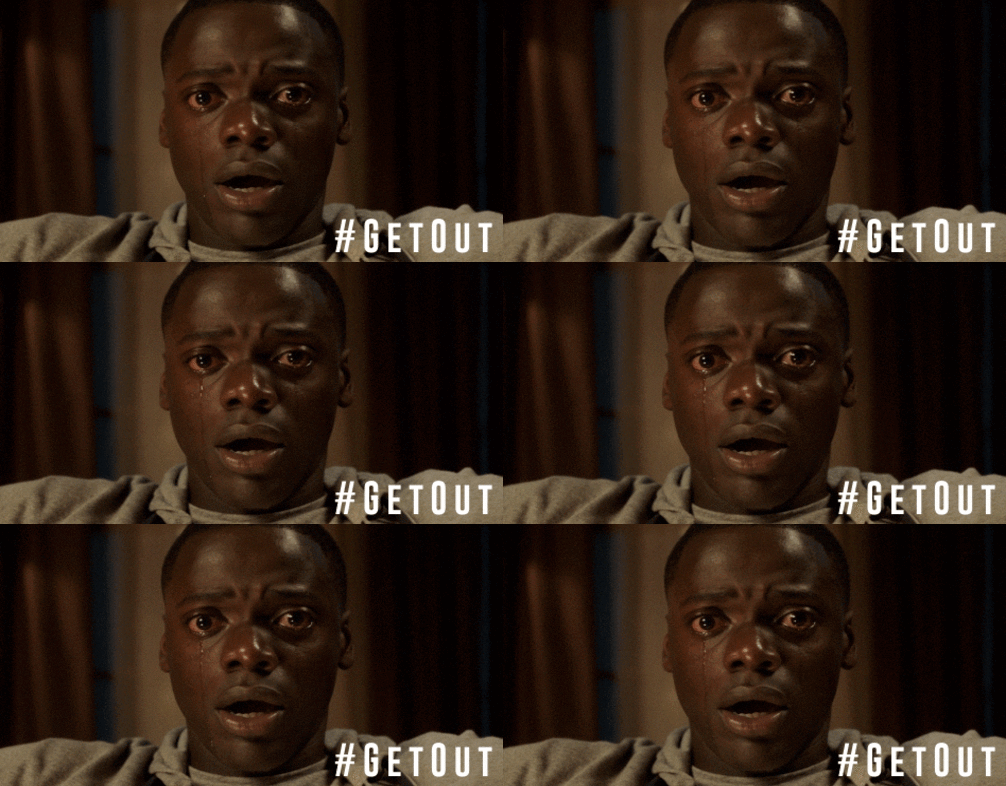
When the Reckoning Comes is an immersive Southern Gothic horror story transporting the reader through the dark, violent history of a tobacco plantation narrated by a black woman named Mira. Mira had a troubling experience at the Woodsman plantation as a teenager when she and her friend Jesse explored the abandoned grounds together. What they encountered eventually caused Jesse to be accused by racists of homicide; considered guilty by public opinion. After at least a decade, Mira returns to her hometown when a mutual friend, Celine, invites her to attend her wedding at the newly renovated Woodsman plantation. Mira hopes Jesse will be there. What ensues is an actual nightmare beginning with Mira’s discovery that the plantation is now operating as a tourist attraction complete with White tour guides and black laborers reenacting the power dynamic of enslavement. These opening scenes are difficult to read, reminiscent of Jordan Peele’s horror/thriller, GET OUT. It’s uncomfortable to visualize the era of enslavement romanticized in a modern, public venue. As the wedding ceremony draws near, Mira is increasingly troubled by her past trauma on these same grounds as well as the felt trauma supernaturally communicated by the ghosts of enslaved people. Mira is haunted by horrible, graphic visions of brutality, rape, torture, and murder. The story builds to a climax and the pages fly, will history repeat itself when Celine, the bride-to-be, doesn’t show up to her own wedding? Will injustices committed at Woodsman be avenged? While the subject matter here is extremely disturbing and graphically detailed, LaTanya McQueen successfully employs effective literary techniques like the voices of the enslaved, multiple timelines, and sensory visions from the past in order to break out from the one narrator POV to enrich the storytelling. These transitions keep the reader engaged like a thriller providing a layered, textured experience to the horrors being depicted. The perfect blend of horror and thriller. Definitely recommend to fans of historical-horror fiction, and books like Toni Morrison’s Beloved or P. Djeli Clark’s, Ring Shout.
4.0 Stars This is a well written own voices horror story that explored topics of race and privilege. I really appreciated the social commentary, which was woven quite seamlessly into the narrative. The horror in this book were fairly quiet and understated. In some ways, this read more like a suspense novel.
I would recommend this one to readers who enjoy character driven stories that tackle heavy and important themes through fiction.
Disclaimer I received a copy of this book from the publisher.
Move over Jordan Peele ‘cause there’s a new scary storyteller you’re going to have to share the spotlight with who also adds a little social commentary in with her heebie jeebies. That comparison is probably low hanging fruit, but I never claimed to be the brightest bulb in the box so you get what you get. And seriously if you don’t get at least a little of these vibes . . . .
You might be reading it wrong.
My friend Laurie/LOHF gets credit for putting this one on my radar. I saw it marked as to-be-read by her while scrolling the Goodreads feed and the cover caught my eye so I figured what the hell. Horror isn’t typically my go-to genre (which may be a warning for all of you aficionados that you may not end up loving this), but I think I’m trying to invoke Fall-ish weather rather than the 90+ that we continue to have here in flyover country by lining up all the cozies and creepies.
The story here is about Mira who returns to her pretty much segregated even though it’s the present time (gross) town to attend an antebellum style wedding (gross) of a former bestie as pretty much one of two guests who isn’t white (gross). Oh and said wedding is being held at a former plantation (grosser) where an entire staff of black people work doing slave reenactments (grossest). Mira is there because she’s a good (although absent) friend and also to confront her past where one moment ended up changing the life of her friend Jesse monumentally. Little does she know the ghosts she will be confronting are both figurative as well as literal.
I dug this book. As I said – I’m not sure who else will love it because it’s kind of out of my usual wheelhouse, but boy oh boy do I appreciate good storytelling and this one really delivered for me.
I listened to this video audio from Harper Audio in exchange for an honest review.
When The Reckoning Comes is a gothic horror novel set in North Carolina. Our main character, Mira, moved away from home after high school and left her friends and all the bad memories back in North Carolina. But now, she’s back. Her childhood friend, Celine, is getting married and her other childhood friend, Jessie, will be there too. Mira was hesitant to go home and for good reason. Once she’s there, she’s reminded of the reasons she left: racism being one of the many reasons and possibly ghosts ?
First off, this audio is AMAZING. The narrator has a raspy drawl that is perfect for a gothic horror novel and I highly recommend reading it this way. Overall, I enjoyed the story but I wanted more from it. I didn’t feel connected to Mira and that made it hard for me to care what happened to her. There is a ghost element to the story but also I was confused at times if it was actually ghosts or just in Mira’s mind. There are some moments of body horror, so you’ve been warned. And the setting is definitely eerie, especially with the history of the area and the people who are attending the wedding. I think this needed more character depth and a stronger plot. The ending was slightly confusing and rushed to me and in general, it wasn’t “dark” or “horrific” enough for me — that sounds bad. A solid read though and I’ll be interested to read more from this author.
Siiiiiiiiiiiiiiiiiiiiiiiiiiigh. You guys, I wanted to love this. I wanted to SO BAD. I've had this book on my TBR for a year and a half, and it was always hovering right near the top of my "Want to get to soon" mental list. But the timing was never quite right, and my ADHD brain insists that I must be in THE MOOD for books (or anything) that I really anticipate, so I waited. And I deferred my library hold again and again.
Then the audiobook came in over the summer, and I borrowed it. And I listened to... I don't know, the first few pages? And I hated. HATED. the reader. Terrible. So I returned it, and got in line for the ebook. And then deferred that a few times - you know, to give my mind time to forget the awful high-pitched singsongy DER-AW-ULL that was the reader. (See how successful I was? >_>)
Anyway, then, a couple days after my birthday, a few days before October, which I decided would be strictly horror - something I haven't done in far too long!... I decided it was time. I borrowed it. I restarted. And from September 26 through November 13th I trudged through it.
48 days. FORTY-EIGHT DAYS. To read a 237 page book. A book that is, or should be, right up my alley both in terms of genre and theme.
Was it worth it? Not really.
Did a reckoning come? Debatable.
This book just did not work for me pretty much all of the levels. The only enjoyable parts for me were the interludes looking into the past - though, they were pretty brutal, so "enjoyable" isn't really the right word, but, compared to the enjoyability of the rest of the book? I stand by it.
Spoilery shit below. You know the drill.
I didn't like the characters, ESPECIALLY the main character, Mira. I couldn't identify with her, I seriously could not understand how she just could not use her mouth to make sounds that would communicate her thoughts to people. Particularly those people that she counted as her best friends. And this right here started killing this book almost from the start for me. Because there's nothing I hate more than a plot that relies on a lack of communication. I hate it so SO much.
And Mira just WOULD NOT SAY WORDS. So much of the book was her just WISHING she had said something way back when, and kicking herself for it, but NOT SAYING ANYTHING NOW EITHER, and me screaming into the fucking void that is the plot of this book that keeps circling this point again and again and again. But if she had... then the book wouldn't happen!
Exhibit A: the fact that she's at this White girl fantasy plantation wedding at all. Her "BeSt fRiEnD" that she hasn't even spoken to in 20 years manipulation-guilt-trip NEEEEEEEEEEEEEEEDS her to be there and Mira... mumblemumble something something obligation-justification agrees?
WHY? You last spoke when you were in MIDDLE SCHOOL. You aren't even being invited to be IN the wedding, BEST FRIEND SHE CAN'T LIVE WITHOUT. Should have said "No. Sorry... You managed the last 20 years of your life without me. You can manage another two days." BUT NO. She can't refuse. She can't make her mouth say the things she wants to. So we just keep being shunted around by Mira's inability to have any say in her own life. Because if she did... then the book wouldn't happen!
Jesse, the love interest that Mira again just couldn't say words to until too late, was... fine. I guess? He didn't really make much impression on me. At least not adult Jesse. The best part of the story, the most relatable and realistic part, was the flashback to when they were kids, and Jesse and Mira went exploring the plantation, only for a body to be found murdered there. In a COMPLETELY SHOCKING TURN OF EVENTS - they tried to pin it on Jesse despite a lack of evidence, or motive, etc. Then, for some reason, they just didn't, and I don't remember why... but by then, everyone believed he had done it, and they all but ran him out of town.
And then he moved back. And got a job there, not just in town, but as a groundskeeper at the VERY plantation where he was accused of killing someone. And attended this wedding, where the guests all still think he's a killer. Because if he didn't... then the book wouldn't happen!
Not like Mira's decisions made much more sense. Her decision making skills are anything at all but on point. Things like wandering off alone at night into the acres of unfamiliar plantation land after a mysterious woman in a white dress - MULTIPLE TIMES. And getting lost. MULTIPLE TIMES. Or following a giggling child (at a child free wedding) to a random area of the plantation house. (I could go on.) Mira keeps acting like this shit is perfectly normal. I mean, who HASN'T followed random people into the wilderness when they ignore repeated attempts to speak to them? Probably they are just in-character performers, working and staying in character. Just like at Disney. I can't count the number of times that I followed Mickey Mouse into the swamplands when he wouldn't stop for a picture with me. So rude, Mickey!
Seriously, this shit was ridiculous, and I couldn't figure out what purpose this repeated stupidity served. I mean, it's OBVIOUS to the reader that the point is for Mira to see/experience the last days of the enslaved people back when it was a slaveholding/working plantation. But WHY was Mira so oblivious to this happening to her, except for maybe an to attempt to keep the "IS IT A PERSON OR IS IT A GHOST??" question open? The fact that she was so annoyingly, stupidly slow to catch on to what was happening made my eyeballs bleed.
And then when she FINALLY arrived at the correct conclusion (that these are vengeful spirits of the enslaved) AND COMMUNICATED IT OUT LOUD TO ANOTHER HUMAN PERSON (so proud), her excellent decision making prowess leads her to go back to the plantation wedding, where the bride has gone missing, and chaos has ensued, and they ONCE AGAIN THINK JESSE DID IT... to *checks notes* save the racist people who ignored her at best, insulted her, GROPED HER, and treated her and Jesse like shit... all after they decided that THIS plantation, where the above horrors, and an uprising and subsequent massacre happened, was an EXCELLENT place for a White Power Rally wedding. Because if they didn't... (say it with me now) ...then the book wouldn't happen!
(The eyeball bleed makes for great lubrication for all the rolling they are doing.)
Obviously, the guests (at least the most prevalent and racist ones) faced those spirits... and now I'm left, after the end, thinking about the real-life situation that will shortly ensue when the bodies of all those white guests are found (or maybe not found)... and the only survivors of this massacre are two Black people.
That's the real horror facing Mira, one Jesse had previously narrowly escaped. Her ancestors faced theirs, and now hers is likely. But you know, the story ends before that point, so people can conveniently forget about the racist justice system and how easy it would be to pin this slaughter on them. Plenty of evidence (prints, DNA, hair, etc), no alibis, both have history in town, both admittedly present the last time a body showed up.
Maybe THIS is the reckoning the title refers to.
Anyway, obviously I didn't enjoy this as much as I had hoped. I was determined to finish it though, in case the ending really justified the rest. I clearly don't think it did. On paper, this should have been a slam dunk for me. But it fell apart so early and so pointlessly. This could have been easily written in such a way as to NOT rely on lack of communication, or bad decisions, or constant internal whining about all the regrets Mira has about those things.
This was all going amazingly well up until the last 30%. The tension keeps building, there's so much promise about what's going to happen when the titular reckoning is commencing, there's lots to think about (please tell me there are no re-enactments of slavery happening in actual plantations-turned-amusement-parks right now, PLEASE), especially with the chapters that are from the ghosts' POVs, there's history, there's moral dilemma, it's great.
But then the novel takes a sharp nosedive and deflates like a sad balloon. The reckoning (or what I expected that to look like based on all the descriptions of the ghosts effectively sharpening their blades) NEVER happens. The climax of the story is the main character, who is one of the two (2) black main characters, being taken on a ghost joyride into black pain, having to witness/ experience what the slaves went through firsthand. Let me say that again, the ONE character that didn't *need*, narratively speaking because there's no lesson to be learned for her character because she already knew all that AND already felt the effects of generational trauma, to experience any of that, did. It didn't even make sense in a "this is a black character having to suffer while white characters are a-OK because rampant racism" way because we already got that when she had to sit through the re-enactments and the rewriting of history that went on the estate. The asshole guests all get to leave and there's even a mob of what is essentially a KKK mob without the hoods forming. Nothing happens to those people. From their perspective, they went to a literal plantation, had their fun, and left after their fun is spoiled when Celine is found dead, while the two black characters are even further traumatized.
Mira says, towards the end, that she had to "reckon with her history" Given the choice of words, the author wrote exactly what she wanted to write and there was never meant to be a reckoning like the one I imagined and the blurb promises ("to save themselves from what is to come" ....There was nothing coming). But I don't get why we needed yet another book of black people suffering, on page, in excruciating detail, and it going absolutely nowhere. All those chapters of the ghosts sharpening their weapons? Went nowhere. I'm sorry if I'm missing the point but the only thing that came out of the story was Mira, the only character with any empathy, being traumatized for her troubles and being the only one who "learned" something..... that she already knew before!!
There was also the issue of editing, with the book repeating itself a lot, facts that have already been established getting re-introduced like brand new information later on, or the characters remembering a specific quote that the other character never said (the reader was "present" for the entire scene with them before), like the quote existed in a previous draft but had since been taken out. Did I accidentally read an ARC or what?
Still gets 3 stars because it was written very well and I'd LOVE to read more from this author in the future.
This entire review has been hidden because of spoilers.
What in the world did I just read?! This was totally out of my comfort zone, but I made it through. My head is spinning from this one. I felt this way after I finished Kindred by Octavia Butler. This is a story about a haunted Plantation, but so much more than that. This Plantation that once held slaves where horrible acts happened was haunted by the enslaved that were murdered there. They wanted their story told and vengeance for the ones that took part in these horrific acts. These people made this Plantation a resort of sorts in recent time, but did these re-enactments that made my blood boil. The staff was black that worked there, and everyone (white people) turned a blind eye as to the horrific nature that took place in the past.
Some parts were so hard and painful to get through, and could be very triggering for some. The way this author wrote this story blew my mind. The way the slavery and these haunting visions were woven in the tapestry of modern times taking us back in flashbacks that felt so real. The audio, the narrator was spectacular! I truly felt teleported in time while listening and at times I was chilled to the bone. That’s a phenomenal storyteller.
I really liked how the author had the heroine, Mira, come to the realization of the “good Negro” mindset that is drilled into so many black people today.
This author didn’t shy away from the grotesqueness that really happened during this time, which made it difficult, but important to get through. This definitely felt like a Jordan Peele film, and there’s a reason I don’t read or watch many films such as this kind…but I’m glad I read this one.
I would give the horror aspect of this 3.5 stars but the overall book 4 stars. The writing was particularly wonderful, though I did have quibbles with how the plot got put together & executed (that's why I knock it a bit on the horror side - the ingredients were here for it to be even more horrifying and chilling). A great debut!
It's official, I need more books in my life that center around ghost/supernatural revenge on racist assholes!!
Mind blown! 11/10 I loved this book so much.
I'll be recommending to family, friends, coworkers, anyone that will listen......The whole time reading I kept thinking about how this book could translate well on screen. Which I don't say too often just because movie adaptions tend to not be as satisfying compared to the book. But this could be the exception! Someone needs to make it happen.
This is a bone-chilling, truly horrifying story about the ghosts of slaves getting revenge for all the shit they went through. It'll make you angry (hopefully) learning more of the history and disgusting ways slave owners took advantage of their power. I rarely say this, but I felt this book was too short for some of the plot points, and I would've read 300 more pages of this writing.
When you explore the antebellum south, and the horrors it entailed, and implement that into a modern-day horror story, then you have the ingredients for something special, and that's exactly what Ms. McQueen has done here with her debut! When The Reckoning Comes was an original, chilling, atmospheric, gothic and eye-opening horror story I will not soon forget! Just finished this one last night, so more thoughts to come soon - needless to say I recommend this for those of you craving a fast-paced literary horror to fulfill your Halloween reading cravings!
McQueen takes many of the horror tropes you know and puts them into the setting of a Southern plantation, truly ripe territory for horror. There is a very solid structure here, the childhood friends scarred by a tragedy who now return to where it all happened is a tried and true horror trope. So is the way trauma and vengeance can trickle down through generations. It is very fertile ground and the images the author invokes are vivid and unforgettable, but I didn't feel like I got enough of the characters themselves.
I love a horror novel that touches on real traumas, but ultimately I need the characters to bring me into the story and to have a deep understanding of them for the book to work as a whole. Mira never came fully alive for me, she was so overly defined by her backstory, as if nothing else had ever happened to her. I would have liked a closer perspective, a fuller experience of her. Instead it's the plantation setting that really comes alive.
There has been a lot of conversation lately in tv and film about the way Black pain generally and slavery specifically are used in genre, whether they go too far in depicting torture and suffering. It is a very complex issue and one where everyone's personal boundaries are different. But I think it's important to note that this book is one where the suffering of slaves is frequent, on the page, and some readers may find that it's excessive. (There is certainly some subject matter overlap between this book and the movie ANTEBELLUM--I did not see it, but I have read the Wikipedia summary--though the tone is quite different.) I suspect every single thing that happens in this book is based on real events, but much of it is trying to shock and horrify you. For some readers that will be just fine, part of the territory when we confront the realities of slavery. For others, it will be too much and I just want those readers to know this ahead of time. McQueen's tone is important, and she approaches the material with a deep respect and reverence for the enslaved people whose ghosts now haunt the plantation. She also comes at it from a perspective of the descendants of enslaved people and analyzing the way generational wealth and trauma can be handed down.
This moves at a pretty slow pace until the last third. The ending is just fine, though it does leave a lot of loose threads. This is so common in horror that I do not mind it so much.
I have so many things to say about this book that I don’t even know where to start. This story is going to forever haunt me. And I mean that in the best damn way possible. It’s a stunning horror novel on so many different levels and I’ve never read anything like it. Not only does it feature supernatural horror but it also explores the very real horrors of slavery and plantations and the still very present horror of racism. All of those things combine together to create one hell of heart wrenching and terrifying story of Black life and history. I love horror like this so much because it goes beyond just guts and gore and really becomes a play on your emotions as well. When a horror novel gives me more than just scares is when I truly enjoy the genre the most and this book just does that SO well. Side note: If you’re a horror movie fan and enjoyed this book then I highly recommend the movie Antebellum. The movie is both stunning and horrifying and plays along the same lines as this story but in a different way.
4.5 stars. I loved how McQueen was able to weave the horrific and traumatic past through current day events, perfectly demonstrating the haunting history of this plantation and how its effect still lingers. It’s a really intelligent horror novel that chilled me to the bone whilst leaving a lasting impression.
The premise of When the Reckoning Comes really grabbed my attention and I was happy to have the opportunity to receive a review copy. The story starts off with the backstory of Mira, Jesse, and Celine and how their unlikely friendship came together and fell apart as they got older; which is the jumping off point of the main plot. The Woodsman Plantation and the rumors of its haunting draws Mira and Jesse into an incident that changes their friendship and stays with Mira until her return home for Celine's wedding that is being held at the infamous plantation. In my opinion that should have been a deal breaker for Mira, but there is an explanation for why it wasn't. There are quite a few decisions and actions by Mira that I didn't understand throughout the story. She was slow to catch on to things and her reactions to some big disturbing occurrences she found herself in were confusing and sometimes frustrating. The voices of the enslaved people who were abused at Woodsman Plantation gave added creepiness and an ominous atmosphere to the story. Adding in the horrific history of the plantation and the people who owned and worked it as well as examples of current racism and injustices also helped with the oppressive eeriness of the story but even as a scaredy cat reader I didn't feel that this was full-on horror. When the Reckoning Comes put me in mind of When No One is Watching by Alyssa Cole, so if you enjoyed that one you may want to give this one a try.
I received a review copy in exchange for an honest review.
FAFO: The plantation wedding edition. The cover is a pretty solid match for the vibe of the book so if that speaks to you you know what to do.
There's a sprinkle of love, an exploration of how race can enter the chat in both subtle and overt ways in friendships and all wrapped up in a tidy package. The pacing was just snappy enough to keep things moving at a steady pace without feeling rushed.
Whoa! I LOVED this. It wasn't overly frightening at all. I loved the concept of the enslaved haunting the descendants of those who enslaved them. Perfection I removed a star because of some awkward story elements. CW: this contains aspects of the most traumatizing acts that occur under chattel slavery. Quite harrowing at times.
This was just ok. The most horrifying things was the disgusting treatment of enslaved people in America during the ghost sightings, but they came across as a history lesson and a way to tie in the treatment of Black people now. Which, for me, isn't wrong, but I didn't need it.
The main plot was flat; it didn't really go anywhere. It felt like a tool to tell the enslaved's story. I found that story to be more interesting, mostly because I had an emotional reaction to it (anger), while I had none for any of the main characters.
This is a story of discovery and the main character's journey through her inaction and poor decisions when it comes to her Blackness and other's. The writing was very good; the descriptions and ghost sightings were detailed and atmospheric.
Overall, I don't know that this one did enough for me to recommend, but I'd give McQueen another shot because of her writing.
What a disappointment. I do not understand how such a good concept could be messed up so badly. For one, it should have been a short story that started on the day of the wedding and allowed the backstories and dynamics between all the characters to come through naturally. A sense of dread and foreboding also could have started to build, as it was utterly lacking here because everything was so obvious from the get-go.
But the main problem is that everything is so over-explained. I was reminded of the criticism that nowadays TV characters all speak like they're on Twitter: this seemed like the Twitter thread summary/Cliff notes explanation of itself. It is not enough to paint a scene of Mira as the only black guest at a plantation wedding serviced by nameless black staff, she has to acknowledge and name her privilege in-text as well in case you didn't get it. Did you get that the police officer believed the white girl immediately and not the two black kids? Were you wondering why the ghosts appeared to Mira and not Jesse? Well no worries, that's explained immediately as well.
The characters were also incredibly aggravating in how inconsistent they were. Their strongest characterisation occurs when they're children and there's some decent contrasts drawn between their younger and older selves, especially with Jesse. But McQueen never fully commits to making Celine a villain, her apparent indifference or even her relishing the plantation's history not feeling fully realised, in part because we never see her fully partake in it. The surrounding white people are much more stereotypical in their racism and partly more shallow for it. While Mira starts off interesting she tends to flip back and forth between compliance and indignation, which sounds realistic but isn't written strongly enough to be a true character trait. She also becomes more moronic as the story goes on - we just established there are no children at this wedding and Jesse told you about the slave child, why are you surprised at the ghost slave child!
Which leads me to how disappointing the ghosts are. Which is a shame, because the italic interludes are some of the strongest chapters in the book. For one, there are a few too many cliches here: surprise, the wedding happens on the anniversary of the failed revolt, and oh look at that, Mira has been transported to the past (I have read this climax in at least three other ghost stories). The climax was also not bloody enough - there were far too many white people that actively enjoyed seeing slavery re-enactments walking out alive. But overall I felt that there wasn't enough historical grounding for there to truly be weight to what the story was trying to tell. Not that I wanted or needed explicit details, but that the writing didn't make it feel real.
For example, there's some confusion at the end in regards to a mob and if it's a mob from the past or a modern day one - same monsters, same anger, same injustice etc. Thematically important, yes, but on a practical level it doesn't make sense because Mira is talking about hearing guns and there is almost zero overlap between guns they would have had in the 1800s and the guns a bunch of white North Carolinians would have nowadays. Are we just supposed to assume that when she talks about hearing shot after shot that those are actually a few minutes apart as they took the time to reload their muskets?? Yes, this is a nit-pick, except that it's also indicative of the general sense of ahistoricism present in the book. The author clearly conducted research and it's used very effectively, like the suppression of slave's stories in the 1920s, but she often seems to embellish for the sake of drama or horror in an already incomprehensibly gruesome historical event. Like, why were the white men wearing masks at the rape party? Who, exactly, was going to prosecute them for raping slaves? Perhaps this is my own ignorance shining through and this really did happen, but the writing wasn't immersive enough for me to fully feel how horrible this was.
Ultimately, this book felt kind of whitewashed. Like yes, it's bad that white people have weddings on plantations because they're the sites of unspeakable horrors but it's ok because a) the black character also has to "face her history" and b) only the people that DIRECTLY benefitted from this specific site got their comeuppance and we'll just side-eye those that are complicit. It makes me wonder if there is a better version of this book that the publisher didn't get their hands on.
This entire review has been hidden because of spoilers.
Those ~adorable~ plantation aesthetics? Lies. Straight up lies. Those frilly petticoats, puffy sleeves and lacy parasols are covering up hatred and violence against Black people. That chivalry is a veneer over a bone-deep rot.
Anywho, not quite what I was expecting, but horrifying as hell.






![Profile Image for laurel [the suspected bibliophile].](/_next/image?url=https%3A%2F%2Fi.gr-assets.com%2Fimages%2FS%2Fcompressed.photo.goodreads.com%2Fusers%2F1645808644i%2F7494844._UX200_CR0%2C6%2C200%2C200_.jpg&w=128&q=75)