

What do you think?

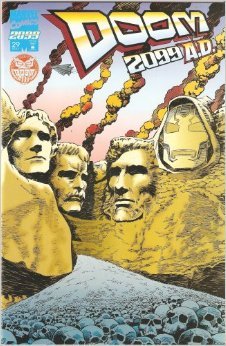
Doom 2099 (1992) #24-39
Doom 2099: The Complete Series by Warren Ellis
Collects Doom 2099 #24-39 and material from 2099: The World Of Doom.
The year is 2099. Victor von Doom, having mysteriously survived from the Heroic Age of the early 21st century, has risen anew in this technologically advanced future. Having retaken his beloved Latveria from those who ruled it in his absence, Doom has turned his gaze to America, once the home of his greatest foes. He sees unrest. He sees disharmony. He knows the struggling nation needs an iron fist to bring it back under control. And he knows just the man for the job. All hail President Doom! Superstar writer Warren Ellis’ maniacal overhaul of Dr. Doom’s futuristic solo series is collected in one volume, featuring technological horror, dystopian despots and more sheer wrongness than you can shake a gauntlet at!
The year is 2099. Victor von Doom, having mysteriously survived from the Heroic Age of the early 21st century, has risen anew in this technologically advanced future. Having retaken his beloved Latveria from those who ruled it in his absence, Doom has turned his gaze to America, once the home of his greatest foes. He sees unrest. He sees disharmony. He knows the struggling nation needs an iron fist to bring it back under control. And he knows just the man for the job. All hail President Doom! Superstar writer Warren Ellis’ maniacal overhaul of Dr. Doom’s futuristic solo series is collected in one volume, featuring technological horror, dystopian despots and more sheer wrongness than you can shake a gauntlet at!
422 pages, Kindle Edition
First published January 1, 1995
About the author
Warren Ellis
1,928 books5,776 followersWarren Ellis is the award-winning writer of graphic novels like TRANSMETROPOLITAN, FELL, MINISTRY OF SPACE and PLANETARY, and the author of the NYT-bestselling GUN MACHINE and the “underground classic” novel CROOKED LITTLE VEIN, as well as the digital short-story single DEAD PIG COLLECTOR. His newest book is the novella NORMAL, from FSG Originals, listed as one of Amazon’s Best 100 Books Of 2016.
The movie RED is based on his graphic novel of the same name, its sequel having been released in summer 2013. IRON MAN 3 is based on his Marvel Comics graphic novel IRON MAN: EXTREMIS. He is currently developing his graphic novel sequence with Jason Howard, TREES, for television, in concert with HardySonBaker and NBCU, and continues to work as a screenwriter and producer in film and television, represented by Angela Cheng Caplan and Cheng Caplan Company. He is the creator, writer and co-producer of the Netflix series CASTLEVANIA, recently renewed for its third season, and of the recently-announced Netflix series HEAVEN’S FOREST.
He’s written extensively for VICE, WIRED UK and Reuters on technological and cultural matters, and given keynote speeches and lectures at events like dConstruct, ThingsCon, Improving Reality, SxSW, How The Light Gets In, Haunted Machines and Cognitive Cities.
Warren Ellis has recently developed and curated the revival of the Wildstorm creative library for DC Entertainment with the series THE WILD STORM, and is currently working on the serialising of new graphic novel works TREES: THREE FATES and INJECTION at Image Comics, and the serialised graphic novel THE BATMAN’S GRAVE for DC Comics, while working as a Consulting Producer on another television series.
A documentary about his work, CAPTURED GHOSTS, was released in 2012.
Recognitions include the NUIG Literary and Debating Society’s President’s Medal for service to freedom of speech, the EAGLE AWARDS Roll Of Honour for lifetime achievement in the field of comics & graphic novels, the Grand Prix de l’Imaginaire 2010, the Sidewise Award for Alternate History and the International Horror Guild Award for illustrated narrative. He is a Patron of Humanists UK. He holds an honorary doctorate from the University of Essex.
Warren Ellis lives outside London, on the south-east coast of England, in case he needs to make a quick getaway.
The movie RED is based on his graphic novel of the same name, its sequel having been released in summer 2013. IRON MAN 3 is based on his Marvel Comics graphic novel IRON MAN: EXTREMIS. He is currently developing his graphic novel sequence with Jason Howard, TREES, for television, in concert with HardySonBaker and NBCU, and continues to work as a screenwriter and producer in film and television, represented by Angela Cheng Caplan and Cheng Caplan Company. He is the creator, writer and co-producer of the Netflix series CASTLEVANIA, recently renewed for its third season, and of the recently-announced Netflix series HEAVEN’S FOREST.
He’s written extensively for VICE, WIRED UK and Reuters on technological and cultural matters, and given keynote speeches and lectures at events like dConstruct, ThingsCon, Improving Reality, SxSW, How The Light Gets In, Haunted Machines and Cognitive Cities.
Warren Ellis has recently developed and curated the revival of the Wildstorm creative library for DC Entertainment with the series THE WILD STORM, and is currently working on the serialising of new graphic novel works TREES: THREE FATES and INJECTION at Image Comics, and the serialised graphic novel THE BATMAN’S GRAVE for DC Comics, while working as a Consulting Producer on another television series.
A documentary about his work, CAPTURED GHOSTS, was released in 2012.
Recognitions include the NUIG Literary and Debating Society’s President’s Medal for service to freedom of speech, the EAGLE AWARDS Roll Of Honour for lifetime achievement in the field of comics & graphic novels, the Grand Prix de l’Imaginaire 2010, the Sidewise Award for Alternate History and the International Horror Guild Award for illustrated narrative. He is a Patron of Humanists UK. He holds an honorary doctorate from the University of Essex.
Warren Ellis lives outside London, on the south-east coast of England, in case he needs to make a quick getaway.
Ratings & Reviews
Friends & Following
Create a free account to discover what your friends think of this book!
Community Reviews
Displaying 1 - 24 of 24 reviews

June 19, 2020
Wow. That was pretty awful. I was conned into buying this when I saw Warren Ellis wrote this. My mistake.
This is set in the awful 2099 timeline. It's a convoluted story about multiple Dooms (which one is real?) and the big thing is Dr. Doom takes over the US. The artwork is just as awful as the story. If there is something nice to be said for this series, well it is the fact that this series has been defunct for awhile. I can see why.
Bad art, worse story, overly complicated. This is a perfect example of the low quality dreck that passed for comics back in the 90's. It's pretty awful and don't let Warren Ellis' work throw you off-this isn't good. At all.
This is set in the awful 2099 timeline. It's a convoluted story about multiple Dooms (which one is real?) and the big thing is Dr. Doom takes over the US. The artwork is just as awful as the story. If there is something nice to be said for this series, well it is the fact that this series has been defunct for awhile. I can see why.
Bad art, worse story, overly complicated. This is a perfect example of the low quality dreck that passed for comics back in the 90's. It's pretty awful and don't let Warren Ellis' work throw you off-this isn't good. At all.

April 18, 2016


One of the best Doom stories ever, but the rushed ending really needed at last 4-5 issues more to be good.
But of that it is a great saga deserving to be read and reread,.
It aged far better than other 90s comics and if you love reading about cyberpunk dystopian futures you are really going to have a blast of a read.
Long live to Doom 2099!!!


Read
May 7, 2013In the 1990s, Marvel envisaged a dystopian future where corporations ruled the world, suborning politics and laws in the service of profit and creating an ever-more unequal society as the environment crumbled. They placed it in 2099 which, as we now know, was at least 90 years further forward than they needed for those conditions to apply. That world was peppered with radically different versions of their big characters - except for Doctor Doom. This was the same despotic genius*, thrust forward into a world where, comparatively speaking, he was the good guy. His first concern has always been the protection of his nation, Latveria; here he realises that the best way to protect Latveria from overweening US corporations is to take over the US and reactivate the dormant powers of the Presidency. The pacing is shot, and the art is at times deeply (nineteen)nineties, but still one is left mainly with the feeling that we could use a Doom or two right now.
*There was some 'who am I?' bollocks about cloning in the previous writer's run, which Ellis wisely wraps up as soon as possible before getting on with the main story.
*There was some 'who am I?' bollocks about cloning in the previous writer's run, which Ellis wisely wraps up as soon as possible before getting on with the main story.

March 27, 2021
John Francis Moore's DOOM 2099 remains one of my all time favorite Comic books and the first four issues of that series together make up one of my favorite comic book stories. Moore created a truly fascinating cyber-punk 90's vision of the future that had significant themes and an incredible depth of setting and character. Pat Broderick's art was incredible, and equally a favorite. Unfortunately, the series gradually declined as Doom became more and more reactive and the stories ranged around the 2099 world tying up smaller leads that Moore had baked into the story. The editors seemed to know that Doom needed a larger ambition and brought in Warren Ellis to write a story of Doom taking over the USA. This volume opens with Ellis finishing Moore's storylines and then goes into Doom's assault on the US which is currently run by technocrats and megacorporations. Unfortunately, the series quickly descends from its Cyber-punk glory into a loud, mean-spirited, and misanthropic Judge Dread echo. Ellis claims he wanted to make the series more political, but this mainly more hatred for the rich rather than more of the complex political world that Moore had created.
Ellis's Doom 2099 run had some fun issues, particularly at the beginning, but it ends in a grotesque flop and the art with it as Broderick is replaced with increasingly stylized artists who perhaps properly illustrate Ellis's more gruesome stories with more gaudy and cartoonish depictions.
I miss what could have been, and will certainly revisit Moore's contributions to the this title. I doubt I will re-read Ellis's.
Ellis's Doom 2099 run had some fun issues, particularly at the beginning, but it ends in a grotesque flop and the art with it as Broderick is replaced with increasingly stylized artists who perhaps properly illustrate Ellis's more gruesome stories with more gaudy and cartoonish depictions.
I miss what could have been, and will certainly revisit Moore's contributions to the this title. I doubt I will re-read Ellis's.

March 7, 2014
Love some of Doom's quotes:
"Your current President does not consider you his protectorate. He doesn't consider you at all. Your lives are indentured to corporations, or else treated as diseases to be stamped out."
"The American Presidency is a vestigial organ, the president acts as arbitrator in disputes between the Megacorps that truly rule America."
"Presidential elections are merely circuses disguising the investiture of one sympathetic to certain business practices."
"Your current President does not consider you his protectorate. He doesn't consider you at all. Your lives are indentured to corporations, or else treated as diseases to be stamped out."
"The American Presidency is a vestigial organ, the president acts as arbitrator in disputes between the Megacorps that truly rule America."
"Presidential elections are merely circuses disguising the investiture of one sympathetic to certain business practices."

February 21, 2016
Reseña de Luis Javier Capote Pérez para Zona Negativa:
http://www.zonanegativa.com/doctor-mu...
Prólogo
En la tercera parte de este particular regreso al futuro, es el momento de hablar sobre uno de los títulos mejor valorados de la línea 2099. Después de Spider-Man y de Ravage, llegaba el turno del villano. El Doctor Muerte, veterano enemigo de los Cuatro Fantásticos y némesis de Reed Richards, sería el tercer elegido para la gloria futurista. Su trayectoria en el otrora futuro oficial de Marvel dejaría para la posteridad una serie que profundizaría como pocas en el mundo en el que se producían las aventuras del 2099. Los elegidos para la tarea serían el guionista John Francis Moore -que, en aquellos días, era reconocido por su colaboración con Howard Chaykin en la primera serie televisiva de Flash- y el dibujante Pat Broderick -que volvía a la casa de las ideas, después de una larga y fructífera temporada en DC-.
Camelot en los tiempos de Internet
La historia comienza cuando en la Latveria del final del S. XXI hace su aparición un individuo que viste como el Doctor Muerte que conocemos. La armadura de aterradora máscara y el sobreveste color verde tapete / mesa de billar son fácilmente identificables, pero convierten al recién llegado en un curioso anacronismo, evocador de los ecos de la perdida edad heroica. Con la calmada y humilde actitud que le caracteriza, el caballero intenta convencer amablemente a las gentes del lugar de que él es el monarca legítimo de esas tierras, pero pronto descubrirá que su puesto está ocupado por otro dictador. Tiger Wylde, un ciborg, antiguo componente del Ojo Público de Alchemax -la multinacional en la que trabaja Miguel O’Hara- le derrota con suma facilidad, planteando una serie de misterios que serán las tramas secundarias de la colección durante buena parte de su existencia. Este supuesto Doctor Muerte no parece haber sufrido los efectos de la edad y carece de la faz desfigurada por la que el auténtico era bien conocido. ¿Estamos, pues, ante un impostor? ¿O quizá un clon? ¿Qué pinta un monarca absoluto del pasado allí? ¿Tiene algo que ver con la reaparición de otros iconos relacionados con la era de esplendor de los seres súper-poderosos? A la dolorosa derrota se unirá el deseo de conocer la verdad sobre su identidad. Pocos meses después, Tom DeFalco y Paul Ryan orquestarán la desaparición de Doom y Richards en la colección de los Cuatro Fantásticos, por lo que se planteará la posibilidad de que ambos hayan caído (je, je, je) o de que el buen Doctor hubiera dado un salto hacia delante en el tiempo. El hecho de que don Víctor no tenga la memoria completa, añadirá un factor de intriga a una mixtura que, como premisa, se presentaba interesante.
En las primeras entregas de la colección, Moore y Broderick orquestan un arco argumental en el que el pretendido Doctor Muerte abraza la tarea de recuperar el trono de Latveria. Derrotado, pero no cautivo, encuentra ayuda y apoyo en el clan Céfiro, un grupo latveriano que, como el Doom original, pertenece a la etnia gitana. Para esta parte del pueblo romaní, el antiguo monarca es un héroe que luchó contra la tiranía de los reyes precedentes y trató de tú a tú a las grandes potencias del pasado. La imagen del rey Víctor como una versión oscura de Arturo -esbozada en aquel memorable viaje a Camelot con el Hombre de Hierro- se plantea aquí en unos términos más próximos a la visión que el mundo contemporáneo tiene de los mitos artúricos. Poco importa lo que el Doctor Muerte fuera como personaje histórico; su dimensión mítica se ha superpuesto y casi impuesto entre los romaníes latverianos. Es su campeón, su defensor, su patrón y, como Arturo Pendragón, ha vuelto a la patria en una hora de necesidad. Los integrantes del clan Céfiro -que guardan una relación muy próxima con el legado de Doom- serán sus cicerones en un mundo que le es extraño.
A través de la derrota infligida por el nuevo amo de Latveria, los autores aprovechan para dar a Doom una lección de humildad que ayuda a que el personaje pierda parte de su proverbial y bien conocida arrogancia. Eso y las dudas -nunca reconocidas- sobre su identidad harán que el buen Doctor tenga una actitud menos prepotente, pero no por ello menos determinada. Quizá este nuevo mundo le dé la oportunidad de alcanzar el anhelo que en el pasado se le negó pues, no lo olvidemos, verdadero o falso, este buen señor va a actuar como quien dice ser. Ello no será óbice para que muestre una actitud menos orgullosa y soporte ciertas actitudes del tipo de las que en el pasado hubieran producido por su parte una reacción letal.
Política, tecnología y otros ingredientes del guiso
La serie dedicada a Muerte sirve para que los autores profundicen, como indicaba en el prólogo, en el contexto político del mundo del 2099. El hecho de que el Doctor pretenda recuperar su trono, lleva a la reflexión sobre el papel de los Estados en un futuro dominado por las mega-corporaciones y la tecnología relacionada con la sociedad de la información. ¿Busca el protagonista un objetivo obsoleto? ¿Puede sobrevivir un reino de reminiscencias decimonónicas en ese contexto? A través del elenco de personajes secundarios, el propio Víctor -y con él, la audiencia- conocerán del funcionamiento de ese nuevo mundo. Entre ellos hay que destacar a Fortuna, líder del clan Céfiro y servidora contra su voluntad de Tiger Wylde (en un papel muy parecido al de Solitaire, la echadora de cartas de Vive y deja morir) y a Wire, un surfista de la realidad virtual. La primera renovará el compromiso entre Víctor y su pueblo; el segundo, ilustrará al recién llegado sobre las posibilidades del mundo virtual, haciendo patente que las batallas pueden librarse en dos niveles de realidad (un poco al estilo de Tron). Pronto comprobaremos si un hombre que se jactaba de ser el mejor de su tiempo, sigue pudiendo sostener tamaña afirmación cien años después.
En conclusión
La colección fue, con diferencia, una de las mejores de la línea 2099. Moore y Broderick construyeron una serie en la que los trajes, los poderes y los combates estaban supeditados a una trama en la que la detentación del verdadero poder era y es el objetivo. Un cuarto de siglo después, hay que decir que las historias contenidas en esta cabecera aguantan bien el paso del tiempo, tanto desde el punto de vista literario como gráfico. Don Pat no era en ese momento un artista de primera línea, pero contaba con un estilo sólido, que dotó de cohesión a la serie. Nada mal, para un caballero que tuvo que abandonar la casa de las ideas durante la década anterior porque el editor en jefe de entonces, el todopoderoso Jim Shooter, consideraba que su estilo de dibujo era horrendo.
Como apunte, hay que destacar los números de relleno elaborados en la colección por el artista Ernie Colon haciendo de autor total. Ambientados en el mundo digital, sirven para conocer un poco mejor las posibilidades que se imaginaban para la realidad virtual en aquellos días.
Guión - 8.2
Dibujo - 7.1
Interés - 8
7.8
Vosotros puntuáis: 8.46 ( 2 votos)
http://www.zonanegativa.com/doctor-mu...
Prólogo
En la tercera parte de este particular regreso al futuro, es el momento de hablar sobre uno de los títulos mejor valorados de la línea 2099. Después de Spider-Man y de Ravage, llegaba el turno del villano. El Doctor Muerte, veterano enemigo de los Cuatro Fantásticos y némesis de Reed Richards, sería el tercer elegido para la gloria futurista. Su trayectoria en el otrora futuro oficial de Marvel dejaría para la posteridad una serie que profundizaría como pocas en el mundo en el que se producían las aventuras del 2099. Los elegidos para la tarea serían el guionista John Francis Moore -que, en aquellos días, era reconocido por su colaboración con Howard Chaykin en la primera serie televisiva de Flash- y el dibujante Pat Broderick -que volvía a la casa de las ideas, después de una larga y fructífera temporada en DC-.
Camelot en los tiempos de Internet
La historia comienza cuando en la Latveria del final del S. XXI hace su aparición un individuo que viste como el Doctor Muerte que conocemos. La armadura de aterradora máscara y el sobreveste color verde tapete / mesa de billar son fácilmente identificables, pero convierten al recién llegado en un curioso anacronismo, evocador de los ecos de la perdida edad heroica. Con la calmada y humilde actitud que le caracteriza, el caballero intenta convencer amablemente a las gentes del lugar de que él es el monarca legítimo de esas tierras, pero pronto descubrirá que su puesto está ocupado por otro dictador. Tiger Wylde, un ciborg, antiguo componente del Ojo Público de Alchemax -la multinacional en la que trabaja Miguel O’Hara- le derrota con suma facilidad, planteando una serie de misterios que serán las tramas secundarias de la colección durante buena parte de su existencia. Este supuesto Doctor Muerte no parece haber sufrido los efectos de la edad y carece de la faz desfigurada por la que el auténtico era bien conocido. ¿Estamos, pues, ante un impostor? ¿O quizá un clon? ¿Qué pinta un monarca absoluto del pasado allí? ¿Tiene algo que ver con la reaparición de otros iconos relacionados con la era de esplendor de los seres súper-poderosos? A la dolorosa derrota se unirá el deseo de conocer la verdad sobre su identidad. Pocos meses después, Tom DeFalco y Paul Ryan orquestarán la desaparición de Doom y Richards en la colección de los Cuatro Fantásticos, por lo que se planteará la posibilidad de que ambos hayan caído (je, je, je) o de que el buen Doctor hubiera dado un salto hacia delante en el tiempo. El hecho de que don Víctor no tenga la memoria completa, añadirá un factor de intriga a una mixtura que, como premisa, se presentaba interesante.
En las primeras entregas de la colección, Moore y Broderick orquestan un arco argumental en el que el pretendido Doctor Muerte abraza la tarea de recuperar el trono de Latveria. Derrotado, pero no cautivo, encuentra ayuda y apoyo en el clan Céfiro, un grupo latveriano que, como el Doom original, pertenece a la etnia gitana. Para esta parte del pueblo romaní, el antiguo monarca es un héroe que luchó contra la tiranía de los reyes precedentes y trató de tú a tú a las grandes potencias del pasado. La imagen del rey Víctor como una versión oscura de Arturo -esbozada en aquel memorable viaje a Camelot con el Hombre de Hierro- se plantea aquí en unos términos más próximos a la visión que el mundo contemporáneo tiene de los mitos artúricos. Poco importa lo que el Doctor Muerte fuera como personaje histórico; su dimensión mítica se ha superpuesto y casi impuesto entre los romaníes latverianos. Es su campeón, su defensor, su patrón y, como Arturo Pendragón, ha vuelto a la patria en una hora de necesidad. Los integrantes del clan Céfiro -que guardan una relación muy próxima con el legado de Doom- serán sus cicerones en un mundo que le es extraño.
A través de la derrota infligida por el nuevo amo de Latveria, los autores aprovechan para dar a Doom una lección de humildad que ayuda a que el personaje pierda parte de su proverbial y bien conocida arrogancia. Eso y las dudas -nunca reconocidas- sobre su identidad harán que el buen Doctor tenga una actitud menos prepotente, pero no por ello menos determinada. Quizá este nuevo mundo le dé la oportunidad de alcanzar el anhelo que en el pasado se le negó pues, no lo olvidemos, verdadero o falso, este buen señor va a actuar como quien dice ser. Ello no será óbice para que muestre una actitud menos orgullosa y soporte ciertas actitudes del tipo de las que en el pasado hubieran producido por su parte una reacción letal.
Política, tecnología y otros ingredientes del guiso
La serie dedicada a Muerte sirve para que los autores profundicen, como indicaba en el prólogo, en el contexto político del mundo del 2099. El hecho de que el Doctor pretenda recuperar su trono, lleva a la reflexión sobre el papel de los Estados en un futuro dominado por las mega-corporaciones y la tecnología relacionada con la sociedad de la información. ¿Busca el protagonista un objetivo obsoleto? ¿Puede sobrevivir un reino de reminiscencias decimonónicas en ese contexto? A través del elenco de personajes secundarios, el propio Víctor -y con él, la audiencia- conocerán del funcionamiento de ese nuevo mundo. Entre ellos hay que destacar a Fortuna, líder del clan Céfiro y servidora contra su voluntad de Tiger Wylde (en un papel muy parecido al de Solitaire, la echadora de cartas de Vive y deja morir) y a Wire, un surfista de la realidad virtual. La primera renovará el compromiso entre Víctor y su pueblo; el segundo, ilustrará al recién llegado sobre las posibilidades del mundo virtual, haciendo patente que las batallas pueden librarse en dos niveles de realidad (un poco al estilo de Tron). Pronto comprobaremos si un hombre que se jactaba de ser el mejor de su tiempo, sigue pudiendo sostener tamaña afirmación cien años después.
En conclusión
La colección fue, con diferencia, una de las mejores de la línea 2099. Moore y Broderick construyeron una serie en la que los trajes, los poderes y los combates estaban supeditados a una trama en la que la detentación del verdadero poder era y es el objetivo. Un cuarto de siglo después, hay que decir que las historias contenidas en esta cabecera aguantan bien el paso del tiempo, tanto desde el punto de vista literario como gráfico. Don Pat no era en ese momento un artista de primera línea, pero contaba con un estilo sólido, que dotó de cohesión a la serie. Nada mal, para un caballero que tuvo que abandonar la casa de las ideas durante la década anterior porque el editor en jefe de entonces, el todopoderoso Jim Shooter, consideraba que su estilo de dibujo era horrendo.
Como apunte, hay que destacar los números de relleno elaborados en la colección por el artista Ernie Colon haciendo de autor total. Ambientados en el mundo digital, sirven para conocer un poco mejor las posibilidades que se imaginaban para la realidad virtual en aquellos días.
Guión - 8.2
Dibujo - 7.1
Interés - 8
7.8
Vosotros puntuáis: 8.46 ( 2 votos)

May 7, 2020
Só Warren Ellis para se atrever uma diatribe anti-sistema político americano num comic da Marvel. Este D00m 2099 lê-se como o filho bastardo de um cruzamento entre o simplismo moral de Stan Lee e o futurismo destravado de Transmetropolitan. Em 2099, novos heróis estão numa Terra muito alterada, e o Doutor Destino caminha na linha fina entre déspota iluminado, vilão e herói amoral. Tudo o que quer é salvar o mundo, e para o fazer, decide derrubar o governo americano com um golpe de decapitação, que lhe permite proclamar-se presidente. Mas apesar de todo o seu planeamento, que incluiu orquestrar hackers, forças de elite, mercenários e justiceiros de rua, comete um erro. Não elimina a verdadeira liderança americana, os representantes das grandes corporações, pensando que o temor que inspira será o suficiente para assegurar a sua obediência (isso, e o eliminar com extremo prejuízo, um deles, que se revela ser um alienígena). Mas estes, não querendo perder os seus privilégios, e reagindo contra um novo sistema que redistribui a riqueza pela população (Doom como socialista, só mesmo Warren Ellis para ir por este caminho), aliam-se a um homem que guarda tecnologias proibidas. Um louco que quer exterminar a vida na Terra, para ir para Marte fundar uma nova humanidade. Que liberta as armas mais exóticas do seu arsenal contra Doom, e ressuscita o velho Capitão América para liderar o país.
Uma série alucinante, com Warren Ellis a fazer o que faz melhor, cruzar futurismo destravado com fetiches tecnológicos e especulação entre o bizarro e o assustador.
Uma série alucinante, com Warren Ellis a fazer o que faz melhor, cruzar futurismo destravado com fetiches tecnológicos e especulação entre o bizarro e o assustador.

June 17, 2020
I didn't realize Warren Ellis wrote this final arc for Doom 2099. I never found all these issues as this was around the time I stopped collecting physical comics so it's only now that I finally read the whole thing. And man, that was a weird story.
The only real highpoint of this volume is Doom seizing control of future America in order to save it from itself. It led to the whole One Nation Under Doom stamp across the 2099 books and was sort of fun in theory but it didn't last long enough to matter and the way he was pushed out was...unsatisfying, to say the least.
The way this full arc progressed, especially the parts after Doom gets kicked out of America in a manner of speaking, just felt odd. Like there wasn't a really firm grasp of the Doom 2099 character and what they wanted to do with him. And his supporting cast just collapsed around him, leaving him without the voices of reason that kept the book a bit more focused.
Not the best ending for a comic series, but it probably made more sense at the time of release.
The only real highpoint of this volume is Doom seizing control of future America in order to save it from itself. It led to the whole One Nation Under Doom stamp across the 2099 books and was sort of fun in theory but it didn't last long enough to matter and the way he was pushed out was...unsatisfying, to say the least.
The way this full arc progressed, especially the parts after Doom gets kicked out of America in a manner of speaking, just felt odd. Like there wasn't a really firm grasp of the Doom 2099 character and what they wanted to do with him. And his supporting cast just collapsed around him, leaving him without the voices of reason that kept the book a bit more focused.
Not the best ending for a comic series, but it probably made more sense at the time of release.

October 14, 2019
This is one of those storylines that could only exist in an alternate version of the Marvel Universe; like the Ultimates Line or 2099 (as it so happens).
The 2099 Universe was a universe 100 years in the future, that was heavily corporatized and cyberpunk. The Doom series featured Victor Von Doom (and some trickery regarding identity) and in this future he sees the discord and chaos this America is strewing...so he stages a second American revolution where he nationalizes the corporations.
Some of his ideas are even good, sound and potentially noble--yet, like all dicatorships, it starts to crack at the seems. It's a fun run by Warren Ellis, that has things like an impostor Captain America, alliances with a futuristic Wakanda, etc.
The 2099 Universe was a universe 100 years in the future, that was heavily corporatized and cyberpunk. The Doom series featured Victor Von Doom (and some trickery regarding identity) and in this future he sees the discord and chaos this America is strewing...so he stages a second American revolution where he nationalizes the corporations.
Some of his ideas are even good, sound and potentially noble--yet, like all dicatorships, it starts to crack at the seems. It's a fun run by Warren Ellis, that has things like an impostor Captain America, alliances with a futuristic Wakanda, etc.

June 23, 2017
Doom decides that the only way to proceed is to become President of the United States. To run it like Latvia, for the good of all and not just the corporations. Things do not go according to plan.
I have to say that out of the 2099 series that I've read the Doom one is the one that has really grabbed me. It's nice seeing him as a hero in this, and not a misunderstood dictator. However, this run is not as good as the previous run, so that is why only 3 stars. A good read.
I have to say that out of the 2099 series that I've read the Doom one is the one that has really grabbed me. It's nice seeing him as a hero in this, and not a misunderstood dictator. However, this run is not as good as the previous run, so that is why only 3 stars. A good read.
October 27, 2025
I like doom as a character and the story is neat but the writing is almost serviceable. it doesn't get unbearable until doom goes back in time and Jeff and Vince take over as artists, if you cut that out and wrote a different ending or have the ending be dooms loss, it would actually be pretty good. Ellis has a lot of the same flaws in his writing Dennis O'Neil does and I can't tell if its editorial but at least Dennis got to finish his story.

July 7, 2025
More relevant now than ever before... a rather more rational Doctor Doom takes over a world so crooked that you end up rooting for him. The book manages to provide a vision of the future that hasn't become outdates, and tells a complete story to boot. It may help to be familiar with the previous Doom 2099 run by John Francis Moore in order to fully appreciate it, though.

March 1, 2019
Very interesting series, and possibly one of the best of the 2099 books. Great 90s artwork, and Ellis is pretty adept to writing the character of Doom, not surprisingly. Couldn't help but see some parallels between this and the Secret Wars event from a few years ago.
November 9, 2019
Fun brisk read.

January 6, 2020
I wanted to give 5 stars soo badly but this needed a glossary...

December 27, 2020
Oddly enough I mostly didn’t hate this. That’s surprising for a 90s comic.
October 2, 2022
Big dumb fun. It's incredibly 90s, especially with its depiction of cyberspace and the internet. Turn off your brain and just read how wild things get.

October 13, 2024
I must say, that is actually good. However, one must be (or have been) into Marvel 2099 lore in order to appreciate it fully.

October 12, 2019
I’d never read a 2099 comic, and this seemed a good place to start because 1) Warren Ellis, and 2) Doctor Doom. I’m a big fan of both these gentlemen. For those unaware, during the 90’s Marvel envisioned their universe 100 years in the future, where corporations rule a technologically advanced world and new versions of 20th century heroes exist. As for Doctor Doom, he mysteriously appears during this era and reclaims Latveria as his own (what a great premise). Ellis took over the series from another writer and quickly explains Doom’s reason for being in 2099 before moving on to the main story: Doom instigating a revolution to make himself President of the United States. He does this first to protect Latveria from corporate takeover, but soon realizes America needs his iron fist in more ways than one. This is a compelling character study for Doom. He’s the same proud yet honorable despot we know from the main Marvel universe; he does some terrible things, but you still sympathize with him. Doom’s genius is on display here, too, what with all the new tech allowing for creative avenues in communication and power. The storytelling is somewhat clunky, especially towards the beginning, and the art is very 90’s, but I enjoyed this political cyberpunk character piece. Then again, Doom is one of my favorite comic characters so I’m predisposed to like most of his stories.

December 29, 2013
This is fun reinterpretation of Doom for the 21st century that that reminded me a lot of the 70s era Super-Villain Team Up title. It does a great job of giving Doom sufficient depth and complexity that he becomes an engaging and even sympathetic character. It's very much of its time. In this way it remionds me of Steve Gerber's Defenders or Jim Starlin's Warlock series. It's totally engaged in the SF culture of its day, in this case late-cyberpunk tanshumanism that now feels a little bit quaint, given 20 years' distance. Ellis'sstyle is also a little bit raw: there's usually too much going on and the cuts between the different strands give it a disjointed feeling. The captions and dialogue are also of what one might term a comics standard level - certainly equal of Starlin or Gerber, but without the poetry of Moore or Gaiman, or the ease of Morrison. That's not really what we're doing here, though as Ellis uses Doom as a canvas for a broad and enjoyable cyberpunk satire. The art is good throughout and the repro in this version was vivid and exciting. A real pleasure!

May 3, 2013
I have to say, I'd never thought much of ol' metalhead before, but between this and Brubaker's "Books of Doom" I have begun to see him as an engaging, intelligent, interesting character... and much more interesting than most of his usual superhero-universe opponents. The first part of the book is a bit slow and muddly, probably because it's putting a pre-Ellis storyline to bed; but once it gets going, what good fun. The future setting is clearly a great help in permitting him to be (essentially) the hero of the piece... but even so, I have a renewed interest in reading the more 'classic' portrayals now. Thank you Mr Ellis - I always enjoy having my preconceptions challenged, and this book rewards the reader handsomely.
August 29, 2013
Recommended mainly for Ellis completists. Ellis introduces some of the ideas that he explores more fully in later works, but the pacing and prose reveal that he has grown a lot over the years when compared to his later work. The art is OK, but suffers from some of the same problems that plagued other '90s comics. Still an enjoyable read if you like Ellis' other comics work and novels.
July 10, 2013
A rambling free jazz riff on NEUROMANCER, guest-starring all of Ellis’s worst excesses and none of his strengths.

June 5, 2014
Having read comics for decades and being quite familiar with Dr. Doom, I just didn't like the story. I couldn't get into it. I just felt it was just too far from the character I used to know.
Displaying 1 - 24 of 24 reviews